Загрузка видео...

Не удалось загрузить видео

На главную

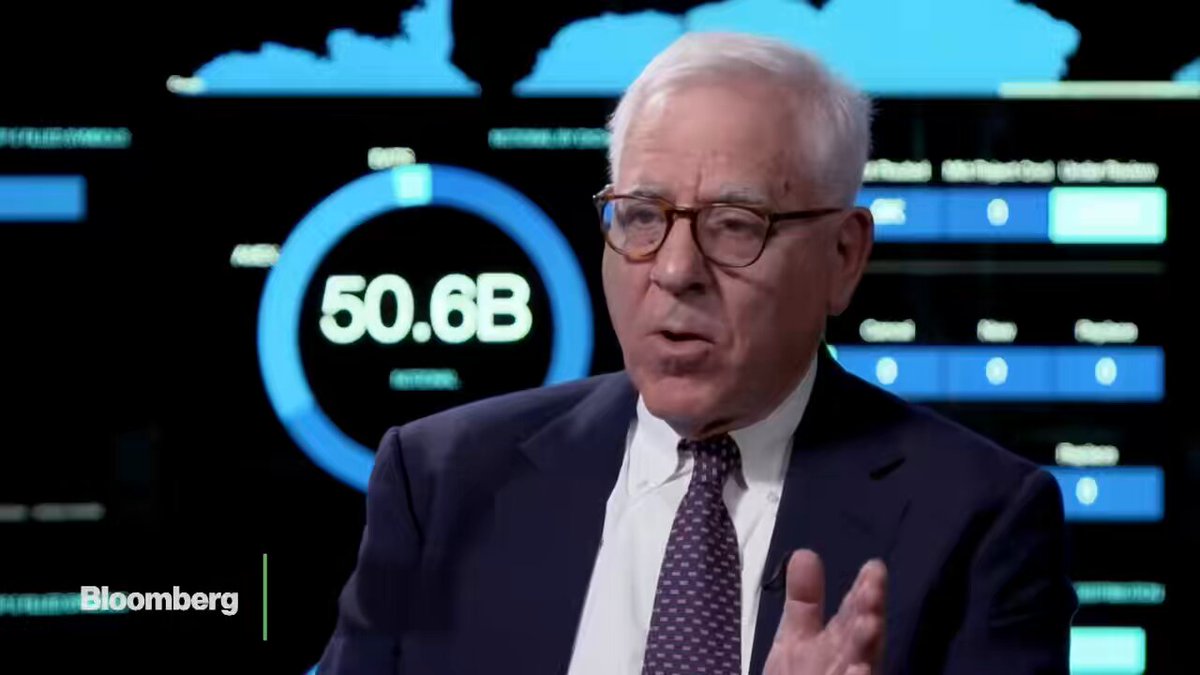
why Ron Baron makes billions while most people lose everything when asked how he turned a little money into $40 billion by just ignoring the news - he dropped the cold truth: "guys stare at screens all day trying to guess what happens next - we buy a company...

515,732 просмотров • 1 месяц назад •via X (Twitter)

Комментарии: 0

Нет доступных комментариев

Здесь появятся комментарии из оригинального поста

Похожие видео

When Adam’s stock price dropped by 92% he borrowed money to buy back $6 billion in stock. That bet made the company more than $60 billion: “If no one's going to buy our shares why don't we just start buying our own shares? The company at the bottom was worth $3.8 billion. And we were generating over a billion dollars of EBITDA. Well in theory we could buy back 20% of the shares of the company just in the next year if we really believed in the path we were on. So we kicked that off. But we did it a little bit differently than what most companies do. Most companies go out and say I'm going to buy shares from the public markets and just take shares back. But you don't know who's on the other side of that trade. On the other hand we knew that we had a cap table where about 50% of the shares were going to sell at some point over the coming years. We had private equity investors that owned roughly 50% of the shares of the company alongside some other founders that were no longer there. So instead of going to the public we went to the shareholders that we knew were going to sell and got them to agree to sell back to us over time. And so for the following 18 months we ended up deploying around $6 billion of buybacks using our own capital and we leveraged some to buy back shares in the company. And over time that ended up creating somewhere in the neighborhood of $50 to $60 billion of actual proceeds from the buyback. It was one of the most successful buybacks in the history of companies.”

David Senra

127,813 просмотров • 26 дней назад

When Adam’s stock price dropped by 92% he borrowed money to buy back $6 billion in stock. That bet made the company more than $60 billion: “If no one's going to buy our shares why don't we just start buying our own shares? The company at the bottom was worth $3.8 billion. And we were generating over a billion dollars of EBITDA. Well in theory we could buy back 20% of the shares of the company just in the next year if we really believed in the path we were on. So we kicked that off. But we did it a little bit differently than what most companies do. Most companies go out and say I'm going to buy shares from the public markets and just take shares back. But you don't know who's on the other side of that trade. On the other hand we knew that we had a cap table where about 50% of the shares were going to sell at some point over the coming years. We had private equity investors that owned roughly 50% of the shares of the company alongside some other founders that were no longer there. So instead of going to the public we went to the shareholders that we knew were going to sell and got them to agree to sell back to us over time. And so for the following 18 months we ended up deploying around $6 billion of buybacks using our own capital and we leveraged some to buy back shares in the company. And over time that ended up creating somewhere in the neighborhood of $50 to $60 billion of actual proceeds from the buyback. It was one of the most successful buybacks in the history of companies.”

David Senra

518,747 просмотров • 2 месяцев назад

Peter Lynch, the man who turned $20 million into $14 billion running Fidelity's Magellan Fund, averaging 29.2% annual returns for 13 straight years (Save this). And his most famous lesson is the simplest one: "Know what you own, and know why you own it." He's talking about something that happens every day, people spend hours researching which refrigerator to buy. They'll spend days hunting for the best airfare deal to save $50 then they'll hear a stock tip on the bus and drop $10,000 on it without a second thought. "The reason I own this is the sucker is going up" Lynch said that's the actual answer he gets when he presses most investors on why they own a stock and that, he says, is not a reason. His test is brutal and simple, if you can't explain to a 10 year old in two minutes or less why you own a stock, you shouldn't own it because if you don't understand the business, you have no idea when to hold, when to add, or when to sell. You're just riding price movement blind. This is why most retail investors lose money not because they pick bad stocks but because they panic out of good ones during normal volatility. When you don't understand why you own something, every 10% dip feels like a reason to sell. Lynch built his entire career on the opposite approach, find simple businesses, understand exactly what they do, know why they'll be worth more in five years, and hold with conviction while everyone else panics. The most important thing isn't your stock screener or your price target but rather being able to look at what you own and say, I understand this, I know why it goes up, and I can handle it going down 30% without losing my mind.

StockMarket.News

170,010 просмотров • 2 месяцев назад