Video yükleniyor...

Video Yüklenemedi

Ana Sayfaya Dön

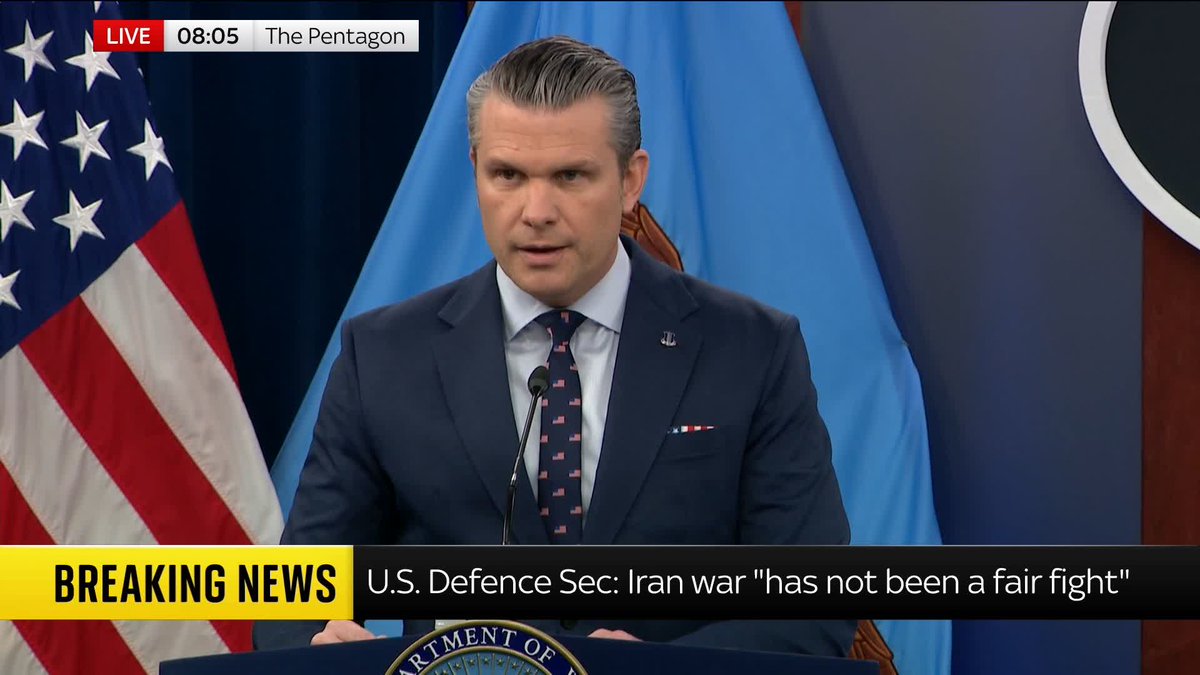
🇺🇸🇮🇷 Will Chamberlain: The U.S. underestimated Iran. That doesn’t make the war a failure. He acknowledges two major Iranian capabilities surprised American planners: the resilience of its missile and drone arsenal and its ability to disrupt the Strait of Hormuz. But he rejects comparisons to American quagmires like Vietnam...

33,411 görüntüleme • 16 saat önce •via X (Twitter)

2 Yorum

Southern "Belle" profil fotoğrafı
Southern "Belle"16 saat önce

Today we are making the ultimate choice for our children’s future. The midterm elections are here, and the stakes have never been higher. 🚨 We need to VOTE RED‼️ Our young people are being captured through an education system that pushes communism, socialism, and radical Islamic ideology. Our Christian community and our foundational values are under direct attack. We are at a critical crossroads, and we cannot afford to sit this one out. I was shocked to learn how many Christians don’t vote. If we stay home, or if we let people vote for Dems who have been captured by the DSA and dangerous ideologies, our children will be the ones paying the price. It is time to stand up, show up, and support Republican candidates. Bring your family, your friends, your neighbors, and your church members to the polls. The time is now! Let's protect our kids and vote RED‼️❤️🙏🇺🇸‼️

Elham profil fotoğrafı
Elham15 saat önce

Adaptation speed is the key metric

Benzer Videolar

🇺🇸🇮🇷 There is one question hanging over virtually every argument about the Iran war: If Tehran still has the ability to dramatically escalate, why hasn’t it? Will Chamberlain thinks the simplest answer is being overlooked. Maybe Iran can’t. The Iranian economy is under enormous pressure. Its oil exports have been squeezed. The Strait of Hormuz is seeing increasing traffic again. Yet Iran has not launched the kind of sustained missile campaign that could exhaust American interceptors, nor has it managed to seriously reverse the recovery in Gulf shipping. Will thinks Iranian behavior matters more than estimates of what weapons Tehran supposedly still possesses. “If they had actually had those capabilities, they’d use them because their current situation is untenable.” His theory is that the opening phase of the war damaged Iran more deeply than is generally understood. Its remaining missiles and drones may still be dangerous, but its stockpiles, production infrastructure and command structure could be sufficiently degraded that Tehran simply cannot employ them at the scale many analysts assume. That would explain something otherwise difficult to reconcile. Iran has every reason to impose more pain on Washington, yet repeatedly stops short of doing so. And Will gives himself a clear test. If Iran suddenly reverses the trend in Hormuz and begins making a meaningful dent in Gulf shipping again, he says he would reassess. Until then, his argument is straightforward: Iran’s unused escalation ladder may not be a hidden reserve of strength. Some of those rungs may no longer exist. Will Chamberlain

Mario Nawfal

285,163 görüntüleme • 17 saat önce

Military and political analyst Elijah Magnier says the clearest sign the U.S lost the Iran war is that nobody is talking about Tehran's nuclear program anymore; they're fighting over the Strait of Hormuz. America went into this focused on Iran's nuclear program, its ballistic missiles, and regional proxies. Now Trump is arguing about who gets to control Hormuz, and Elijah thinks that tells you everything about how badly the original strategy failed. Iran's missile programme is still operational, its nuclear programme has been pushed into future negotiations, and its regional proxies remain part of Tehran's strategic calculations. Yet Washington's attention is now almost entirely consumed by a source of Iranian leverage that barely existed before the war: Hormuz. Elijah says Iran has effectively pulled off a strategic sleight of hand. For years, the world obsessed over Tehran's nuclear programme while Iran quietly built an enormous missile arsenal. Those missiles eventually gave Iran the ability to absorb American and Israeli attacks and continue retaliating across the region. Now he thinks they're doing it again. Everyone is staring at the Strait of Hormuz. Meanwhile, Iran is rebuilding missiles, maintaining its regional relationships, and buying time on the nuclear issue. Trump even briefly proposed charging ships a 20% fee to pass through the Strait. That lasted barely 24 hours before he replaced it with demands for massive Gulf investment in America. To Elijah, the whole episode exposed something much deeper. Washington says this is about freedom of navigation. But Trump accused Iran of monetizing Hormuz, then immediately tried to monetize it himself. Suddenly, the argument wasn't whether the Strait should be used as leverage; it was who gets to control it and collect the money, and Iran jumped on the contradiction immediately. Elijah's argument is that Trump has trapped himself. He entered the war determined to strip Iran of its leverage, but instead, he's handed Tehran a weapon it didn't have before. Elijah J. Magnier 🇪🇺

Mario Nawfal

317,382 görüntüleme • 2 ay önce

🇮🇷🇺🇸 Prof. Mohammad Marandi: Iran isn’t interested in another deal. It’s waiting for America to honor the last one. Washington appears to be betting that economic pressure will eventually force Iran back to the negotiating table. Prof. Mohammad Marandi thinks that fundamentally misunderstands Tehran’s position. Iran, he says, believes the negotiation is already over. Trump signed an agreement. Tehran now expects Washington to implement it, and until that happens, Marandi says there will be no new negotiations. “We have a deal. You signed that piece of paper. Whenever you implement the deal, then come talking.” That creates a dangerous problem. The U.S. is continuing its economic siege while Iran has explicitly warned that if Washington succeeds in seriously damaging its economy, Tehran will respond militarily. Iran cannot sanction American banks or shut down the U.S. economy, Marandi argues, so its response would be against U.S. economic assets, or assets it considers linked to Washington, across the region. Then America faces pressure to retaliate. And the cycle starts again. Marandi says a larger war in the coming weeks or months is now a serious possibility, whether triggered by Iranian retaliation, a desperate U.S. escalation, or another Israeli attack that pulls Washington back in. The two sides aren't negotiating toward the same finish line anymore. Washington is waiting for Iran to concede. Iran, meanwhile, is waiting for Washington to concede first. Seyed Mohammad Marandi

Mario Nawfal

335,898 görüntüleme • 20 gün önce