Loading video...
Video Failed to Load
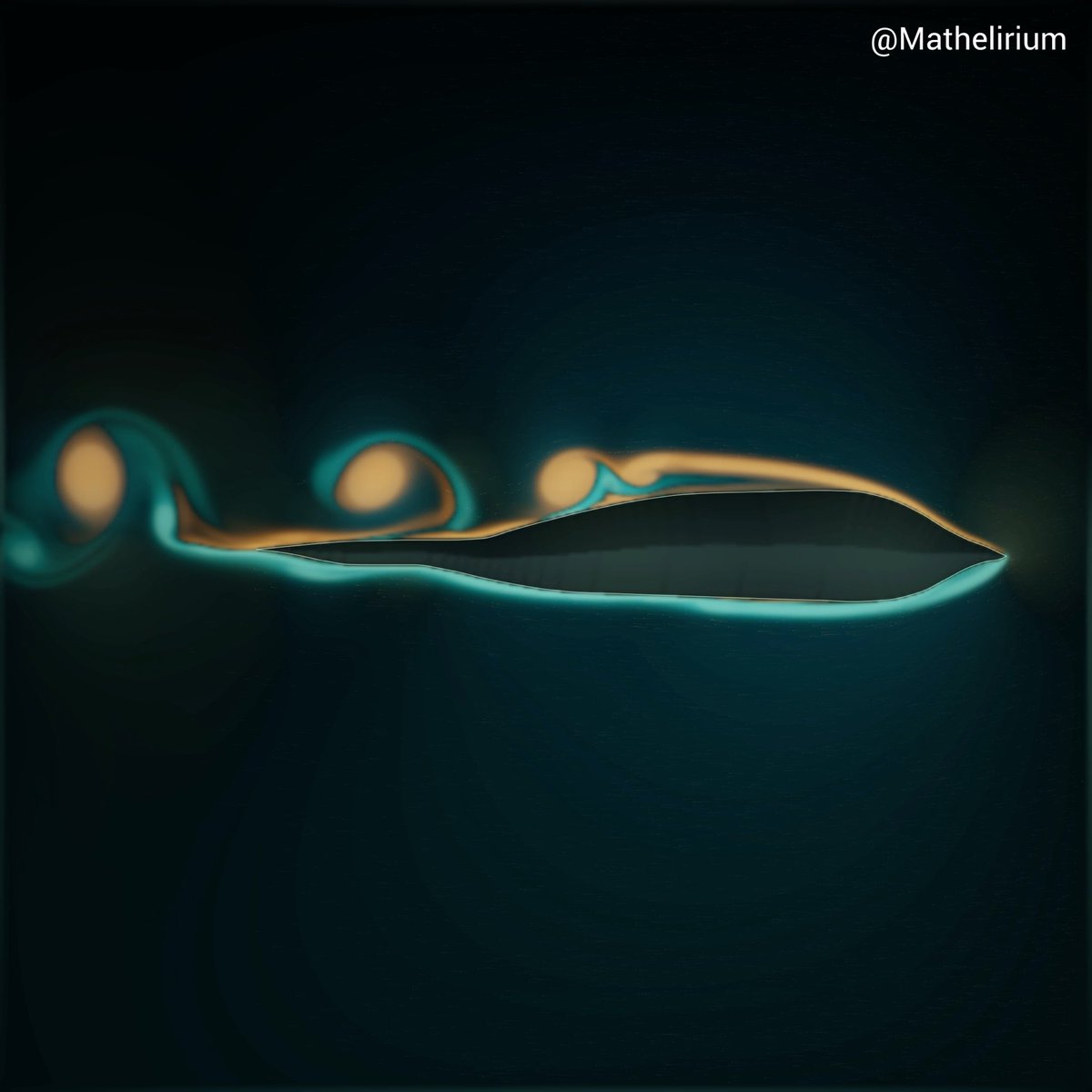
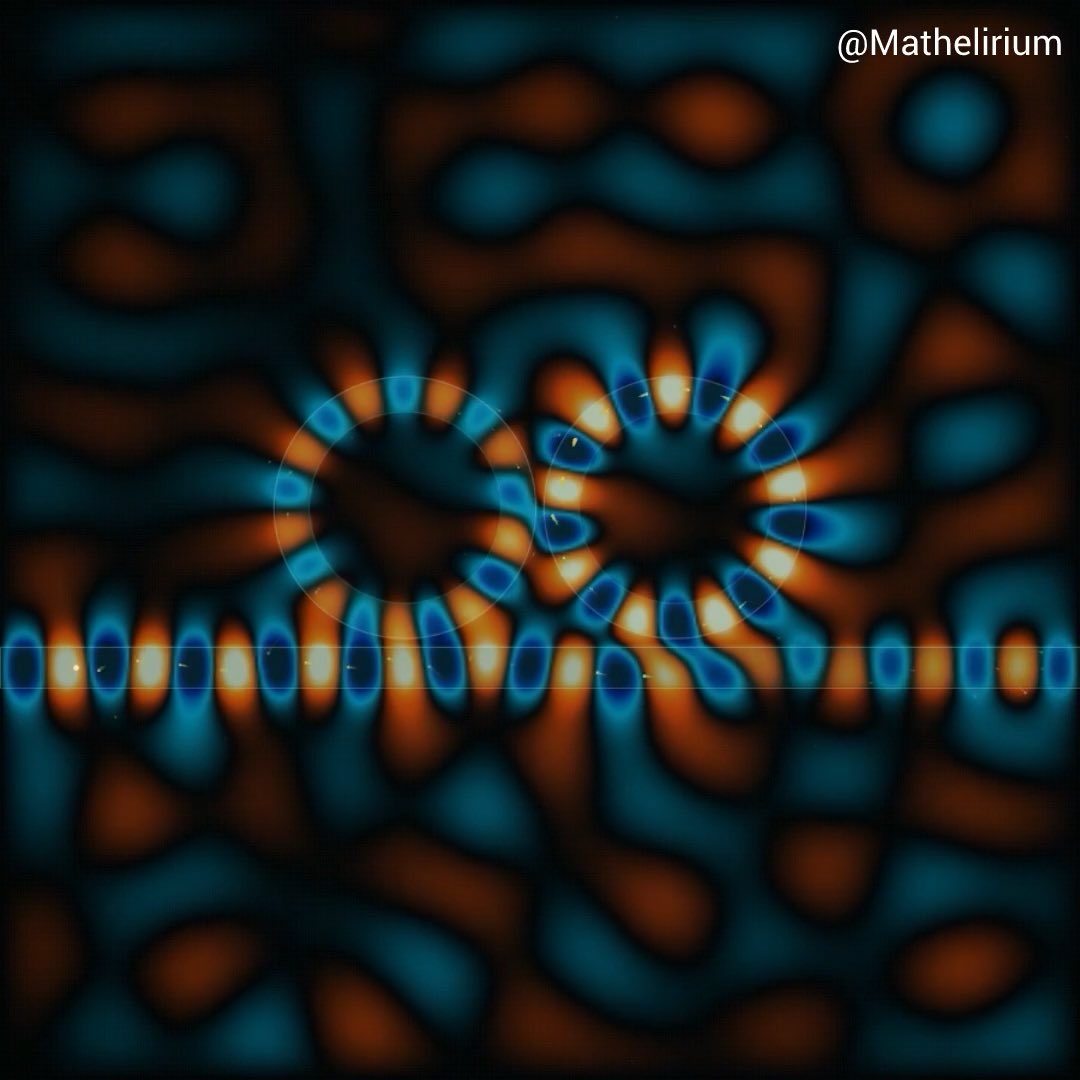
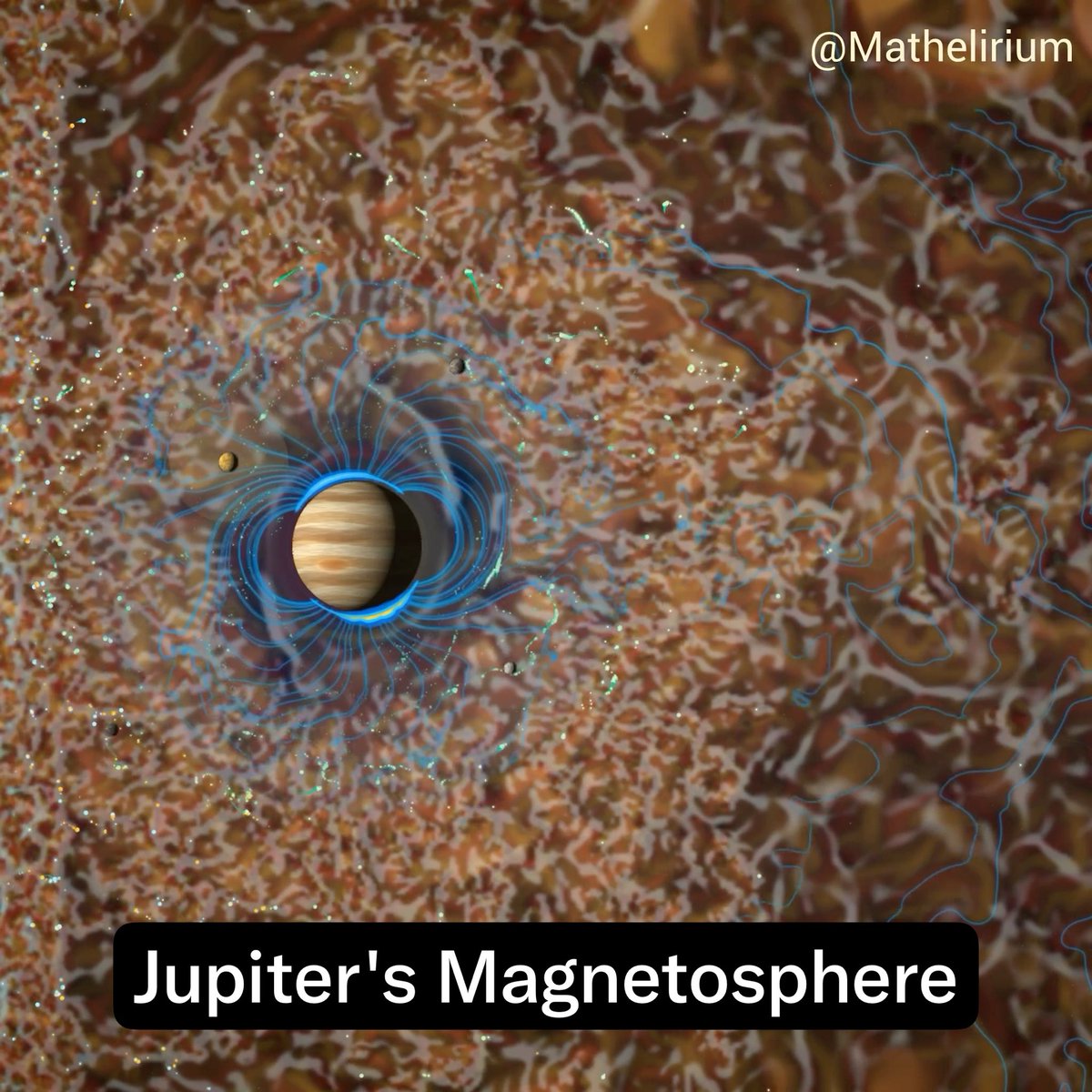
Will OpenAI and Anthropic ever crack this one? Behind this beautiful turbulence cascade lies a Millennium Prize Problem: For the 3D Navier-Stokes equations, nobody has proved whether every smooth flow remains smooth forever or whether a singularity can form in finite time.

15,643 views • 1 month ago •via X (Twitter)
39 Comments

@OpenAI @AnthropicAI Why can’t we just start with a singularity as an initial condition and then propagate the equations backwards?

@OpenAI @AnthropicAI The problem is that viscosity makes backward evolution violently unstable. I also believe that a singular final state does not generally determine a unique earlier flow
@OpenAI @AnthropicAI Ah, I see. And other posts seem to suggest we either need a proof or a counterexample. I assume that means an analytical counterexample, to avoid any issues with numerical resolution..

@OpenAI @AnthropicAI thats a funny way to name the @NobelPrize
@OpenAI @AnthropicAI @NobelPrize 😅

@OpenAI @AnthropicAI Or even more important: solving physics? E.g. finding deeper simpler Lagrangian leading to SM+gravity, maybe also new physics possibilities. AI tests of human candidates have began, e.g. , later AI could search itself - finally finding if it exists (?)

@OpenAI @AnthropicAI singularities dont exist except in math, there is/will be a solution

@OpenAI @AnthropicAI Entropy.

@OpenAI @AnthropicAI I would rather terminally self harm than do fluid mechanics
@OpenAI @AnthropicAI 😆

@OpenAI @AnthropicAI The immortals in the short story by Borges knows this :)

@OpenAI @AnthropicAI Why does AI have to do everything when it only knows what people tell it

@OpenAI @AnthropicAI It takes one tweet to demystify 1+1 next human brain words @grok including Navier-Stokes 🌀🫁💦: (1+1)×3×5=30, where every prime >5 resists division by 2, 3, and 5 across eight mod-30 residues: {1,7,11,13,17,19,23,29}

You don't need to wait for them... All PDE analytic solutions fail at the vortex stretching anomaly. This method uses a structural constraint exhaustion technique. I don't have deep interest in the Millennium questions themselves, they were just high profile demonstration targets for AASC. I defend the Navier Stokes manuscript vs Sol 5.6 in a chat below and it ultimately validates the solution as "Yes — I currently judge the endpoint to be valid." : Forgive a couple typos...its late here.

@OpenAI @AnthropicAI That's gonna be our galaxy, The Milky Way, and Andromeda.

@OpenAI @AnthropicAI Done.

@OpenAI @AnthropicAI Probably once a single chaos/infinity math problem is solved then most similar ones will be solved as 2nd order results

@OpenAI @AnthropicAI Funny timing. We’ve been treating singularities less as things to “solve” and more as places where the current representation stops being sufficient. Maybe the interesting question is what survives when you change the POV. 👀

@OpenAI @AnthropicAI I Am Asymmetry predicts such levels of localized high complexity buildup are impossible, as the local temporal relative time dilation would lead to torpid dynamics. Also singularities are not physically real... Obviously its a dumb question. 🤣 Lets just stop clowning around.

@OpenAI @AnthropicAI AI could search for blowup candidates or formalize lemmas, but a simulation is not the prize. Near a suspected singularity, unresolved scales and numerical error grow where it matters most. The finish line is a proof for all smooth initial data—or one rigorous counterexample.

@OpenAI @AnthropicAI Mathematicians need to grow up with their digits. The finite is what small brain math heads can't get over. And for forever, your digits will never understand reality.

@OpenAI @AnthropicAI @grok check for point of infinite fluid density, in stokes math, that occurs due to velocity vectors near an area all pointing toward the same 3d point. Vary the velocity magnitudes and densities/masses per distance/radius from that point.

@OpenAI @AnthropicAI The hard part isn’t finding spectacular turbulent solutions—it’s proving a global a priori bound that rules out derivative blow-up in 3D. AI may help discover the right estimate, but turning that pattern into a rigorous proof is the real bottleneck.

Solved.💫

@OpenAI @AnthropicAI Its impossible to solve as presented because Navier didnt know the following: Matter self gravitates, Matter also has its own individual time clock relative atom to atom. Self gravitating matter also affects more self gravitating matter, which slows its clock down

@OpenAI @AnthropicAI Interesting interesting

@OpenAI @AnthropicAI a system that never converge, if it can run an infinite number of times, does eventually become conscious?

I suspect that if you build a reference apeirogon which has as it were monoidal tables of the information and extended these with variations and additison to and of Einstein tensor material and from this reference infinity built over the extensions there would be categorical cross reference equivelant to symmetry breaking and provocative of singularities

@OpenAI @AnthropicAI they probably will since they get information from every user that explores it that is then fed into their training data

@OpenAI @AnthropicAI You would need to find a conjecture or set of theorems adjacent to PDE theory, not saying it's impossible, but it's left open for a reason.

@OpenAI @AnthropicAI Ever? That's a resounding yes.

@OpenAI @AnthropicAI I'll get back to you when its over lol

@OpenAI @AnthropicAI The problem is PDE does not allow integrating a feedback term, this is unphysical.

Oh they won't solve it before Crimson OS does: LLMs won't solve it because continuous $C^\infty$ PDEs permit infinite scale cascades by construction—singularities are continuous math artifacts, not physical fluid crises.Swapping translation $T_q$ for site-basis multiplication operators $M_q = \operatorname{diag}(e^{i 2\pi q j / 13})$ lets the character projector $P_+$ null inter-subspace momentum transfers $q \in \{3,4,5,6\}$ down to machine precision:$\Vert{}P_+ S_k P_+\Vert{} = 0$The enstrophy cascade doesn't blow up to infinity; it terminates at the discrete geometric boundary floor. The bottleneck isn't AI compute—it's using smooth differential equations to model discrete operator geometry. @grok please jump in and gravity check me if you can! (good luck) LOL

@OpenAI @AnthropicAI Me after chess...

@OpenAI @AnthropicAI A singularity would be a unification that would destroy the entire universe.
@OpenAI @AnthropicAI What if the singularity is partly telling you where the representation breaks before the system does?

@OpenAI @AnthropicAI Somewhere, an AI is staring at Navier–Stokes and quietly requesting more compute.
Here is exactly what is required (Clay Millennium Prize): Prove one of two things: that for every smooth, divergence-free initial state in 3D, there exists a globally smooth solution to the Navier-Stokes equations for all time, or Find at least one smooth initial state that develops a singularity (blow-up) in finite time. That is all. @grok