Загрузка видео...

Не удалось загрузить видео

На главную

👵🏻 with D1 large NET. Not a good surgical candidate. Endoscopic resection done with Full Thickness Resection Device (FTRD) 💪🏼 👀 at the path 👇🏼 with -ve margins Great team Resheed Alkhiari رشيد الخياري د.عبدالله العريني| Abdullah Aloraini @taldoheyan_ 👏🏼👏🏼👏🏼 المدينة الطبية الجامعية more to come! 💪🏼⏳
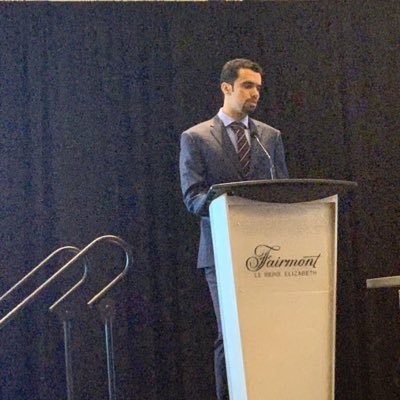
14,227 просмотров • 1 год назад •via X (Twitter)

Комментарии: 2

Фото профиля د.عبدالله العريني| Abdullah Aloraini
د.عبدالله العريني| Abdullah Aloraini1 год назад

@Ralkhiari @taldoheyan_ @ksumedicalcity Well done team @DrAmmarAlotaibi @Ralkhiari 👍🏼

Фото профиля Dr Nahla Azzam
Dr Nahla Azzam1 год назад

@Ralkhiari @draloraini @taldoheyan_ @ksumedicalcity Great job and great teamwork

Похожие видео

Dean Koontz has published more than 140 novels, 74 works of short fiction, and sold more than 500 million books. Simply put, he’s one of the most prolific writers alive today. Some highlights from our chat: 1. Dare to love the English language. 2. Characters come alive when they're given free will. Instead of constraining them in an outline, let them go where they want. You know they’re alive once they start surprising you. He says: “I give the characters free will like God gave it to us.” 3. Everything a writer believes about life and death, culture and society, relationships and the self, God and nature will wind up in their books. A writer’s body of work, therefore, reveals the intellectual and emotional progress of its creator, and over time, becomes a map of their soul. 4. To think you understand the world is to be foolish in the extreme. The world is too complex for us to understand it. To see reality clearly is to be utterly enchanted by its staggering complexity. 5. Where should you look? Well, the supernatural enters the world in mundane ways, and rarely the great and glorious flashes of drama. 6. Dean writes his novels page-by-page, and doesn’t move onto the next page until he nails the existing one. There’s no messy first draft. Because of that, he’s basically done with his novels once he finishes the final page. 7. Where does a unique writing voice come from? Three places: style, perspective, and a philosophy of life. 8. Be skeptical of conventional wisdom. There’s an encyclopedia of common wisdom in publishing. All of it is common and none of it is wise. You have to become aware of that, go your own way, and just stick with it because there are so many ways you can be sent wrong based on "that's the way we always do it." 9. The aesthetic plainness of contemporary writing (and culture at large) is crushing our souls. 10. Contemporary fiction is suffering from plainness in particular. It started when writers started imitating Hemingway (who stripped his prose down but kept the mystery and underlying strangeness of the world by implication). But the imitations that came later stripped the prose down while also removing the underlying depth that made Hemingway so great. 11. Koontz Law of Writing #1: Never go inside more than one character's mind in a scene. Each one should come from a singular viewpoint. 12. Koontz Law of Writing #2: Metaphors aren't meant to dazzle readers, but to seduce them into a more intimate relationship with the story. 13. Koontz Law of Writing #3: Metaphors and similes describe a scene more colorfully than a chain of adjectives — while reinforcing the mood. The point is that you can create depth by describing things metaphorically instead of using blunt adjectives. That’s what poetry does: it uses words to say more than the word itself says, which creates a mood. 14. Great prose doesn't come from piling on adjectives. It comes from finding the perfect metaphor that does triple duty: describes the scene, reinforces the mood, and reveals something about the character. 15. The goal is for metaphors not to pop out like showmanship, but to flow into the music of the language. 16. Develop an ear for the musicality of language. 17. A book can succeed with a mediocre plot if the characters are compelling. Character is the center of good fiction. If the characters work, the story works. 18. From the afterword of his book, Watchers: “We have within us the ability to change for the better and to find dignity as individuals rather than as drones in one mass movement or another. We have the ability to love, the need to be loved, and the willingness to put our own lives on the line to protect those we love, and it is in these aspects of ourselves that we can glimpse the face of God; and through the exercise of these qualities, we come closest to a Godlike state.” I've shared the full conversation with Dean Koontz below. The YouTube video link is in the replies, and so are the links to Apple and Spotify.

David Perell

74,956 просмотров • 1 год назад

And that’s a wrap on First Stand !! Incoming “I ain't reading that, happy for u, or sorry that happened” post xD First Stand Gameplay - Was pretty happy with how the lane swaps and adjustments to Atakhan worked out. Don’t know the exact number), but it felt like mostly Ruinous with games of Voracious where it made sense and no lane swaps - There was a good amount of AD/AP squishy and tank mix in each role with omega gigachad Zeka pulling out the Sylas Ahri and Akali where it made sense 🙃 - Skarner and Kalista were the outliers on priority, but teams didn’t seem particularly effective with Kalista… - Skarner on the other hand; will discuss with the team about larger work on him when we get back; he’s too effective at too many things, while also being impotent for regular players - As announced yesterday by Greeley, we’re hoping to see adaptive drafts continue with Fearless for the rest of the year, I think diversity will continue to increase as teams get better at finding lines to draft that make certain counterpick/situational champs god tier after certain champs are out; it will evolve into more of a TFT/Chess style “find the optimal line to draft with the pieces given”, which the prospects are really exciting - An improvement point feels like how long it takes to end if a team gets a significant early lead; part of this is how optimal boringly slowly choking the opponent out is over 15 min, rather than changing the incentive structure so that ahead teams can make major decisive play and can end the game swiftly - Maybe an opportunity space for the future… but interested in hearing peoples’ thoughts on this First Stand Experience - It was amazing and inspiring seeing how many fans were coming out to support the teams without tickets - Not only the KC fans who flew from Europe to do a meetup watch party and it was great chatting to a few, but also what felt like an unstoppable number of college girls coming out to support HLE. I think I counted about 100 wearing HLE jackets on finals day, but it was a reminder of how integrated and mainstream popular League feels in the East - As soon as the entry to the cheerfuls (signs) opened, they all charged in to go and start drawing their cards, it was honestly quite shocking the level of dedication and enthusiasm that some of these fans had, but also awesome - I can’t possibly imagine something like that happening in the West… - We also had the honor to play in a mini Arena tournament with a bunch of LCK Legends that have I've been watching for 15 years and didn’t do too shabby; went 6th, 3rd, 2nd, but Mingyo and Sangho were too good… - It will be the first and last time I get to say I killed Pray, Smeb, Kuro, Madlife, Shy on repeat :D and the players watching on stream were surprised to see the Devs were actually pretty decent LOL, which felt nice - A fan came out specifically to play with Kuro, wearing a ROX Tigers jersey and seeing the joy of getting to meet and play with your hero, she was laughing, smiling, it must have been the time of her life; it’s just a reminder of how meaningful League can be and just makes us really inspired to keep working hard to make the game good Solo Q Experience and Balance - Outside of the work obligations, had some time to slam 20 Solo Q games; was pleasantly surprised by my level this time around, feels like I’m playing around solidly KR D2/D1 level, which is quite shocking, because it’s not like I’m Masters level on NA right now and haven’t been able to play more than 50 games in the last 6 months due to life. Probably would've won more if I wasn't such a kda player xD - Main character syndrome still feels really peak here, the person either goes 8-0 or 0-8 and is spam FF’ing repeatedly, so minimizing my enemy laner impact, scaling and playing defensively to support my jungler feels most effective even though I’m playing Ori who feels like a dog champ on this server, since it’s so hard to actually land QW on anyone due to their mechanics and it’s risky to walk in river and so easy to die to ganks - Moving to help jungler in lost fights to avoid mental boom is the only thing that I’m finding annoying, some of these fight selections feel extremely perplexing, like Zac wanting to fight Lee at first scuttle with no prio and I end up having to sac my lane half the time to prevent them from AFK’ing or soft inting because I didn’t move, it’s super annoying… - Every post game chat also feels like at least 3 players are writing their PhD thesis, which is somewhat amusing, but also really unfortunate… - It feels like Lee Sin or Viego are in every game with a 30% pickrate, so if you can prevent the team from throwing and always follow them around and play secondary, they can carry, whereas on NA, Lee Sins in Diamond can't carry and suck relatively (ping hurts as well), so it’s not like you can play around them reliably - It was interesting to feel again for myself just how different these champs feel in their balance state across servers, indeed in one of the press conferences there was a question about balancing decisions making no sense for the state of the champ on KR server. I can see why KR players get angry when we buff Lee because the other regions suck at him, he unironically feels 2-3% winrate stronger on KR server, same with Jayce who has a monstrous pickrate here as well - We even almost buffed Lee Sin for First Stand because he’s been pretty absent from Pro, so I’m actually not quite sure what we’re meant to do about that… - The other thing that I forgot was how good it was to play on 2ms ping. I’m not sure whether it’s net positive for the person dodging or the person hitting, but since I mostly play immobile mages, it feels like I can dodge line skillshots and range leash people more effectively, which makes Mages feel so much better, though it also means it’s extremely hard to QW tag someone in a teamfight as Ori, let alone hit them with R - I’m curious if any people have done any analysis on this - I also attached typical KR Lee Sin penta 😅 Anyway, back to NA tmrw, lots of work to do

Matt Leung-Harrison

153,071 просмотров • 1 год назад

If you’re still into web3 gaming, here’s why you need to pivot to Fableborne: 1. We have true, data backed, battle-tested conviction in Fableborne from a core loop, player progression, and marketability perspectives. 1a. Pixion Games, our studio creating Fableborne, has killed 5 games prior to Fableborne. Emotional ties, hard work, and lots of time went into those 5. But as we know in game dev, you have to cut your losses when you know it won’t be a hit. Gaming is a hits driven business. You either create a mega hit, or you die. The space is too consolidated to be good, great or exceptional. You need to be a hit. 1b. So why didn’t we kill Fableborne and why do we believe it will be a hit? If you’re doing it right, each game you “kill” should get you one step closer to your hit title. Time not wasted, and taking learnings along the way. As I said above, we’ve performed marketability tests and battle tested Fableborne over and over. When the data is as strong as it was for Fableborne, you go all in. Now it’s up to our team to execute and deliver. 1c. Speaking of the team, how do we know that the people looking at this data I’m talking about know how to use it and execute upon it? I can go on and on about every one of our 25 team members, but let’s look at 2 key players: The man leading the charge Kam, our founder, does not lose. I see lots of Pokemon and Magic The Gathering TCG fans in Web3. Well Kam was given the impossible task of talking Yugioh at Konami, and beating out these two giants. He grew Yugioh to a 9 figure market in Europe and crushed them both. If that isn’t impressive to you, I SUMMON POT OF GREED AND DRAW TWO ADDITIONAL CARDS! We have Maria | Fableborne. Lots of you web3 mfs post about the Grand Exchange and say RuneScape streets raised you. Maria, who leads our Product and Game design was the product manager at Jagex/Runescape for their live-ops and player UA funnels. I give you free armor trimming in Fableborne. TLDR, our team is stacked and the best in web3. 1d. Now does all of the above guarantee success? Of course not. But in this space you have the luxury of being able to place bets on success. Our conviction in Fableborne is more than strong. Our testing (pre-tge might I add not after 🥴) indicates we could have a hit on our hands. Which is why we are also confident in Fableborne leading the charge for $POWER and Power Protocol. You don’t launch a token without max, data backed, battle tested conviction, and we have it in droves. 2. The game creates viral, organic hype. Much to the dismay of our community, Fableborne has only been live and playable for about 10-11 weeks in the last 14 months. Believe it or not. Yet it’s still touted as one of, and to many, the best game in web3. When we turn it on, it has taken over the timeline and CT mindshare every single time. Millions in earned media from true organic UGC. We haven’t done massive creator prize pools, info-fi slop, “ambassadors” who are paid shills renamed as ambassadors who are ambassadors for 50 different companies, etc. we’ve worked with some creators for sure, but the hype is real at large. For example, we’ve worked with Kyroh, but it was not part of any of his deal to acquire 3% of our NFTs. He does that because he has max conviction and wants to be king. 2a. The above has been with Fableborne at ~35% of its full potential. It will only get more fun, more complete of an experience, more powerful. Some of these new systems will be available for you in S4 👀 I’m running out of characters. Join us. join Fableborne. Sentiment on gaming is at an all time low . Probably means there’s no better time to get in. If web3 gaming needs a hero , it just might be us . Gn

Tcaff 🎮👨‍🍳

26,211 просмотров • 1 год назад

In 1998, Warren Buffett and Charlie Munger spent 4 hours explaining why the smartest people in finance keep going broke. It might be the most valuable finance lecture ever recorded: 1. The smartest people in finance went completely broke. Long-term Capital Management had 16 people with possibly the highest average IQ of any firm in the country, 350 to 400 combined years of experience, and most of their own net worth in the fund. They still went bankrupt. Buffett said if he ever wrote a book it would be called why smart people do dumb things. 2. Life and markets have no relation to sigmas. Buffett keeps a 1901 newspaper on his office wall. Northern Pacific went from $170 to $1,000 a share in a single day when two buyers accidentally cornered the stock. A brewer who had shorted it, facing a margin call, dove into a vat of hot beer. That man probably understood sigmas and knew such a move was impossible. Buffett has never wanted to end up in the vat. 3. Beta and sigmas tell you nothing about the risk of going broke. the LTCM team relied on mathematics and believed a six- or seven-sigma event could not touch them. they were wrong. history does not tell you the probabilities of future financial events. the real risk is a permanent blind spot in something crucial, often caused by knowing a great deal about something else. 4. To a man with a hammer, every problem looks like a nail. Munger's explanation for why brilliant people do dumb things. They learn a set of mathematical techniques and then twist every problem to fit the solution they already know. Combine that with a poor grasp of history, and you get people with advanced degrees blowing themselves up. 5. To make money they did not need, they risked money they did need. That is just plain foolish, Buffett says, no matter your IQ. Hand him a gun with a million chambers and one bullet, offer any sum to put it to his temple and pull once, and he will not do it. there is nothing on the upside that justifies the downside. people do this financially all the time without thinking. 6. The major banks all had risk models and had no idea what they owned. they met weekly at risk committees, printed all the statistics in neat columns, and did not have the faintest idea what risk they were carrying. The rare and essential quality is someone who can contemplate perils that have not popped up yet, the ones no past model contains. 7. A chief risk officer often just makes you feel good while you do dumb things. munger compares him to the Delphic oracle who convinced the Persian king to attack. he has a PhD and does advanced math, but he tortures reality to defend a model that does not hold under extreme conditions. all that computation makes you feel like you clobbered the risk when you have only clobbered your own head. 8. The whole quant risk system just changed the shape of the curve and kept going. Munger notes the business schools "improved" by throwing away the Gaussian curve and drawing a different one. They talk about fat tails now, but they still have no idea how fat to make them. he and Buffett always knew the tails were there, and used to roll their eyes at the risk-control people at Salomon. 9. Never risk what you have and need for what you do not have and do not need. Buffett will not explain to his family, who hold most of their net worth in Berkshire, that they went broke on a 100-to-1 gamble. Their returns get penalized 99 years out of 100 by being too conservative, and in the hundredth year they survive when others do not. 10. Build the business so that if the world stops working tomorrow, you have no problem. Berkshire double-layers its protection. First, they behave so no rational person questions their credit, then they hold so much liquidity that if the world suddenly hated their credit, they would not notice for months. It gives up higher returns 99% of the time and survives the one time others do not. 11. The real danger is a risk that has never happened before. Buffett wants someone who can imagine perils that have not yet appeared, the ones no model contains. The major institutions all had models, and that inability to envision the unprecedented is exactly what proved fatal. He and Munger spend a lot of time thinking about things that could hit them out of the blue that others leave out entirely. 12. Investing is simple, but not easy. The framework is not complicated. you did not need a high IQ to buy junk bonds in 2002 or stocks at low multiples in 1974. you just needed the courage of your convictions and the willingness to act when everyone else was paralyzed. Following logic rather than emotion is obvious, and yet some people find it almost impossible. 13. You cannot get rich with a weathervane. Buffett and Munger pay no attention to predictions about the economy or the market. People love predictions, entire industries are built on them, but it is like the king hiring a forecaster to read sheep guts. They have never made or avoided a single business purchase because of a macro view. 14. Name one super-wealthy economist. Munger's challenge. All these economists with 160 IQs spend their lives studying markets, and you cannot find one who got rich buying securities. Even Keynes tried to predict the credit cycle, broke a couple of times, and only did well once he switched to buying good businesses cheap and concentrating. 15. Focus only on what is important and knowable. Some things are important but unknowable, like whether someone drops a nuclear weapon tomorrow. Some things are knowable but unimportant. You narrow your attention to the small set of things that are both important and knowable, and you ignore everything else. 16. The market is there to serve you, not to instruct you. This is Graham's chapter eight, and Buffett calls it enormously important. When people talk about momentum or charts, they are saying the market instructs you. It does not. It just quotes prices. When it does something silly, you get a chance to act. Otherwise you go play bridge and check again tomorrow. 17. You can make a decision in five minutes or not at all. Buffett and Munger act fast because they rule out enormous territory in advance. Munger blots out startups entirely, and half a dozen other filters, so what remains is small enough to judge instantly. If they cannot decide in five minutes, they will not learn enough in five months to make up for going in deficient. 18. You can make a lot of money on a Sunday. Buffett said the calls you get on a Sunday, when things are truly screwed up, are the ones you make money on. All you have to do is be the collie and not the caller. You never get in a position where the other party can call your tune, so you can always play out your hand. 19. You are not right because others agree with you. Ben Graham said you are neither right nor wrong because the crowd disagrees. You are right because your facts and reasoning are right. Being contrarian has no special virtue over being a trend follower. All that matters is whether the facts are correct and the logic is sound. 20. Know where the edge of your circle of competence is. Buffett says the size of your circle does not matter. Knowing its perimeter does. You do not have to understand 90% of businesses. You just have to know something real about the few you actually put money into, and honestly recognize the ones you do not understand and walk away. 21. Intrinsic value is just the cash a business will produce, discounted back. Buffett thinks of every business as a bond with coupons that are not printed on it. Your job as an investor is to estimate those future coupons. If you cannot estimate them, like in a high-tech company, you pass. Investing is putting out money to get more back from what the asset produces, not from selling it to someone else. 22. The best businesses earn a royalty and need little capital. Coca-Cola sells a formula and takes a cut of every drink. Magazines like People operate on negative capital because subscribers pay in advance. The great businesses are the ones that can grow very large while needing almost no capital, which is why consumer businesses with pricing power are so valuable. 23. You only have to find one good idea, not twenty. Munger said you cannot find twenty deeply mispriced things, and Buffett agreed you do not need to. You do not have to have tons of good ideas in this business. You just need one good idea that is worth a ton, occasionally. For small sums, Buffett said he would have been 100% in Korea a few years earlier, where great companies traded at three times earnings. 24. The trick is measuring everything against your best opportunity. Munger calls this opportunity cost, the doctrine from the first page of the economics textbook that modern portfolio theory somehow ignored. Once you have found the best thing you understand, you measure every other option against it. The higher your default option, the more you can reject. 25. Modern portfolio theory is, in Munger's words, asinine. Most people will not find thousands of equally good things. They will find a few where one or two are far better than anything else they know. The right way to invest is to concentrate on your best opportunity cost, not to diversify into mediocrity because a model told you to. 26. Big opportunities must be seized, and seized big. Buffett says imagine you got a punch card with only twenty punches for your whole life, one per financial decision. You would think hard about each one, make fewer and better bets, and probably never use all twenty. The discipline of scarcity would make you rich. Dabbling in a bull market because it is easy is how people lose. 27. America has always been full of reasons to sell, and wrong every time. Coca-Cola went public in 1919 at $40, dropped to $19 within a year, and then faced the great depression, World War, and atomic bombs. One share reinvested is worth millions now. The country's opportunities have always won out over its problems. It is investors, not the economy, who tend to be their own worst enemy.

Jaynit

104,045 просмотров • 2 месяцев назад

how I’m building fractl for a $10M exit in 6 months, so I can produce my dream musical 🎤🎬 I don't know how 🤷🏼‍♀️ That's what the show is about ha. Figuring it out, in real time. Wish me luck lol fractl's new docu-series ‘‘The Crypto Hustle’ launches feb 26. Final-fucking-ly. thank you Superteam Canada & Solana for the funding and for making Episode 1 possible 🥰 For those of you who are new here, hiiii 🙋🏼‍♀️ my name is Rime Salmi, I'm an artist who accidentally built the biggest investor network in web3. And now we're producing a 12 episode documentary about how I'm working my way back to being an artist, with funding. the origin story. when I crashed with the last crypto cycle, back to zero (plus tax) at my grown age, I had to ask myself what the hell I was gonna do with my life. I always just wanted be an artist. With agency. So i worked and paid for everything, studio, music videos, started a record label, all that to keep my artistic freedom, for my entire career. Had some success, lots of failed experiments, lots of tears, and lots of fun. After I lost everything to the terra luna crash (mistakes were made 🥲), I had to figure out how I would fund the dream next. I needed a break from the emotional roller coaster of trading crypto, so I went back to school for the grant money (thank you government of Canada). I relocated to madrid for a change, and started making tiktoks. Skits that I thought were funny. Skits that i thought were risky but honest and necessary. I’ve always loved saying out loud what others are ashamed to even think 🤓 if you follow me on ig or tt you know ha I was having a blast. Creating all day. Some tiktoks took off. Ones that felt very personal. I felt seen. I was at my happiest, filming, editing, singing and pretending to listen in class, for the grant money. Then it hit me. That's what i want. I wanna be telling stories. I dont wanna be just a singer, just a songwriter, just an actress waiting for auditions to come my way. I wanna do it all, tell more stories, write and produce them. so…A musical? But I hate musicals 😭 why do they start singing in the middle of a conversation?!? whyyyyy A musical for people who don't like musicals??!!! 🥹 That’s it!! A MUSICAL FOR PEOPLE WHO DONT LIKE MUSICALS 🤩 DONE. So from the lowest of my finances, in the middle of career confusion, with a bruised ego from failing so miserably at my first crypto cycle, I found something great to get excited about for the rest of my life. I needed to validate the feasibility… because I know I’m a dreamer who gets shit done, but I’m very much a idealist. so I asked my good friend of mine and the producer of my first 2 albums Benny Adam (now a rising star, this is me clout chasing) for advice. I asked him: ‘is this too much? For me to wanna produce a whole as* Netflix series, music and all?? He’s the most talented, ambitious yet realistic guy I know. And I knew he would tell it to me like it is, but kindly. Because he’s also a nice human 🫶🏽 ‘So?? Is it too big of a project??’ He paused… I looked at him, hopeful 🥹 ‘Ya. It’s a reeeally big project 😕’, he said. Fuck. and then he paused, again. Just tell me, I thought. Tell me aaaall the reasons this is a bad idea… 😞 beat. ‘But if anyone can do it, it’s you’ cue inspiring battle field music Reeeallyyyyy? 🥹 I teared up. I’m tearing up now writing this. Because at that low point in my life, that’s what I needed. Just one person who really knew me, to remind me, despite my circumstances, of who I am and what I’m capable of. That I’m crazy, yes, but in a good way 👉🏽👈🏽 Shokran Benny. I don’t think you know how much that meant to me (I’m gonna tell him again because he’s on episode 4 of the Crypto Hustle ha) Ok. So. Musical it is. When I ran out of back-to-school government money, and needed to be an adult again, I reintegrated the crypto space, with a purpose. I called my friend and mentor Armando Pantoja and asked him what he thought I should go for in terms of job (I needed a break from entrepreneurship). He said ‘I’ve seen you at conferences, you’re really good with people, you know marketing, and you actually understand crypto. He said go to conferences, you’ll figure it out. Just show up’ I did. I showed up to eth denver 2022 and I started the first iteration of what became fractl as an influencer marketing agency, because I saw a good skill-market fit and because I couldn't find a job lol but I hated it. I dont wanna manage influencers, I don't wanna manage artists. I’m an artist, I would never manage me, that's crazy 😂 One thing led to the other I became a fractional CMO. An opinionated one 🤓 I found myself always trying to lead founders towards personal storytelling… suggesting they put themselves out there more. I really believed that it would help them build trust in a space that so desperately needs it. Then, I started hosting our investor events (to get leads for the agency), and saw the struggle of founders building and fundraising at the same time and the original idea for this show started to form. We need bolder marketing in this space. What if we followed these founders around the world at all these conferences and followed their journey, building a company, raising, launching a token, failing. In these ruthless markets, with the drama of personal sacrifices… I could see it so clearly 😃 So I started pitching it. THE BEST MARKETING CAMPAIGN EVER GUYS!! WHO'S IN?? No one. I couldn't convince a single founder of the vision.🥲 Maybe I wasn’t qualified enough in their eyes to carry out such a big vision, following multiple founders on a 6 month production around the world. They were probably right lol But I’m also a little crazy. And really really stubborn. That's something right?? A few months later, inspiration still strong, I told pablo erminy who's worked on multiple Netflix shows about it and he said: ‘why dont you just tell YOUR story? You have a great story, people will wanna watch you build in public to fund your artist dream. As a first reality tv production, one story is more than enough to handle.’ Wise man. Maybe i did underestimate how complex a multi-lead, international, real-time, film production would be 😬 Done. because I know great advice when I hear it. PIVOT! 🛋️ So that’s how ’The Crypto Hustle’ was born. This journey I was trying to sell to other founders, I would do it for myself. show not tell. Now the funding. I tried selling the project to sponsors on and off for over a year, between the normal fractl operations, hiring, training, firing, messing up, learning. And only ended up spreading myself so thin, that I neglected the core business. Company became a mess (for others reasons too, that I will come up on the show, hint: boys) Bottom line is, we lost more money than we made, trying to sell a show. I should've known. Film fundraising is a producer’s full time job lol Fast forward 1 year, 2 pilots and a near bankruptcy later, I’m now launching Episode 1 from Korea and just wrapping episode 2 from Hong Kong. No funding. (except for Episode 1, thank you again Superteam Canada 🥰) Fuck it. Might not be the big production I had envisioned, but all the core principles and the emotions, and team talent is there.. An MVP. Now. because waiting for things to align would just delay this indefinitely. And because I have more conviction than ever. not only in authentic storytelling as the best marketing, but also because my soul needs this. I need creativity to keep going. If i stay too long in business mode without publishing art, stories, songs, dances, funny skits, I find no reason to wake up in the morning. Not to be dramatic, but I really only wanna be an artist 😂 Also, the timing IS ideal. because in my mess, I got lucky 🥰 I found a production team that felt right instantly. Love at first meeting. not only are they aligned with the docu-series concept, but with the end vision too. The cultural impact I wanna have with the musical. vegetable Badr, Momo, @JuicySocialAgency, you're my favorite part of 2026 🫶🏽 So here we are. About to launch episode 1. Documenting the process of building fractl for a $10M exit in 6 MONTHS, so i can produce my dream musical 🥰 It’s about to be epic. Or a massive failure, in public. can girl with the pink hair make this happen? 👀 let the adventure begin 💚☺️ full episodes will be on my youtube channel. go subscribe ok?

🌸 Rime Salmi 🌸

11,017 просмотров • 7 месяцев назад

HYBE and Min Hee-jin NewJeans Controversy from the Perspective of a 20-Year Entertainment Industry Expert | Kim Yoon-ji, Senior Researcher at the Overseas Economic Research Institute of the Export-Import Bank of Korea #1 [Investment Insight] 증시각도기TV HYBE has shown a somewhat immature side throughout this process. The essence of the issue has become less important. Hello, viewers and investors of Stock TV. Recently, there has been a lot of societal concern about the entertainment industry. Last year, it did well, but the question remains about how it will fare this year. We’re joined by Kim Yoon-ji, Senior Researcher at the Korea Eximbank Overseas Economic Research Institute, to discuss this. Welcome. Today, I brought a drink because this topic is not easy to discuss soberly. The situation between HYBE, Min Hee-jin, and NewJeans has escalated, and unfortunately, it’s no longer just management fighting but the artists have joined the fray. I’ve heard from someone in the industry that the close relationship between a producer and an artist is inevitable. In the past, there have been similar cases where producers and artists were tightly knit. Now, something similar has happened with Min Hee-jin and HYBE. Most people outside the industry don’t know the exact terms of the contract between Min Hee-jin and HYBE. As my own son works in the entertainment field, I’m well aware of how important it is to work with a good producer. For a company like HYBE, which has invested tens or even hundreds of billions of won, it’s unthinkable that they would allow NewJeans to separate and go independent after establishing their position. Many in the industry agree that this doesn’t make sense. To the general public, NewJeans might seem like the underdogs, and people might feel they should be allowed to leave. But from the perspective of the entertainment industry, which requires substantial capital to grow, the relationship between investors and artists is key. You can’t discuss this industry without acknowledging the role of investors. This case is different from situations where individual members leave, as seen in the past with groups that had Chinese members. This isn’t about a single member leaving; it’s more about the fact that, in this industry, the producers are as important as the artists themselves. From the beginning, NewJeans has been marketed as Min Hee-jin’s girl group, so the idea of them continuing without her feels different. We need to approach this from a different angle. That said, it doesn’t mean HYBE should completely cut ties. Many people have different initial thoughts about the situation, but the core issue here is the importance of the relationship between producers and the company, especially when substantial investment is involved. From my perspective, the fundamental question is: what exactly was attempted? I still find this unclear. In any company, it's common to hear people say, "I want to quit, I can't work with this boss, I'm leaving tomorrow." We all talk about this with friends or colleagues. Sometimes, we even ask others to let us know if there’s a good opportunity elsewhere. But actually submitting a resignation is a whole different issue. But in the new premise, I still wonder what exactly they were trying to do. What exactly was attempted? We always talk about it at work, right? "I'm going to quit. I can't work with that boss anymore. I'm leaving tomorrow." We always have those conversations. We talk about it with our friends, with team members, and even ask friends outside of work to let us know if they hear of any good positions. But actually submitting a resignation is a whole different issue, isn't it? Looking at how the situation first unfolded, it seems like HYBE was the one to bring things to light. They shared a lot with the press, and Min Hee-jin, the CEO, responded with a strong counterstatement. HYBE was saying, "Min Hee-jin is trying to do this and that," but CEO Min was like, "What else have I done apart from that message on KakaoTalk?" The court also judged that they weren't sure what actions had actually been attempted. To me, this seems like the fact of the matter. Clearly, HYBE's relationship with CEO Min Hee-jin might not be good. There could have been friction about how a subsidiary operates so independently from the parent company. There were likely various issues internally, but they should have been resolved within the company without making the problems visible externally. The fact that they let it spill outside before resolving it was a huge mistake on HYBE's part, revealing weaknesses in their management abilities. In my view, this has greatly devalued HYBE, becoming a powerful force that has dragged down their valuation. Throughout this process, HYBE displayed a level of immaturity, and the core of the issue became less important. The real concern for investors now is whether the company can effectively handle issues like these. Once this problem is resolved, can the remaining HYBE groups continue to grow securely? This business is all about reputation. HYBE is now seen as a company that ousts female CEOs simply because she didn't follow their orders. That perception leaves a lasting impression on people's minds, damaging the company's future operations. From an investor's perspective, two major incidents have happened in quick succession. The first was the boost in value during 2020 when HYBE sold a huge number of albums during COVID-19, creating the sense that the entertainment industry was Korea's next big sector. But then, this recent issue with Min Hee-jin, alongside BLACKPINK's contract situation, has put a serious damper on things. BLACKPINK didn't renew their contract as a group, and though they claim to continue working together in some capacity, it's not the same as before. YG Entertainment's profitability has plummeted, revealing how dependent they were on BLACKPINK. This has left investors wondering whether the entertainment business is just a limited-time, seven-year affair. If BLACKPINK had carried on smoothly into the next generation, it would have seemed like a sustainable business, and investors would have continued to trust in the long-term future of Korean entertainment. But now, we're seeing the cracks in that perception. It’s become a question of how to invest in a business with a lifespan of only seven years, when even the manufacturing industry lasts longer than that. The BLACKPINK incident and the NewJeans situation have both severely harmed investor confidence. HYBE's struggles with its artists are analogous to a manufacturing company facing a revolt from its workers. When investors look at this instability, they start questioning whether the business is even viable. The concept of sustainability has been seriously undermined, and the fact that the seven-year contract issue has been a long-standing concern doesn’t make it any easier to deal with. What used to reassure investors was the belief that when a seven-year contract ended, the company would already have the next seven years planned out, ready to sustain their business. That faith in the big entertainment companies has been shaken. Achieving the kind of success that BTS or BLACKPINK did is incredibly difficult, and passing the baton to the next generation is no simple task. Even though investors had faith that YG would produce another BLACKPINK-level group, now that trust is faltering. However, I do think people are now looking at contracts a bit differently. In the past, when a group disbanded, the members would scatter. But now, groups like BLACKPINK continue to work together even while pursuing solo projects. This shows that they understand the importance of sticking together, and I thought that this might help extend the longevity of these groups. But in reality, very few cases of disbanded groups have seen much success with individual members pursuing separate careers. There aren’t many examples where groups have stayed active for long, especially when individual members run into personal issues. Take Big Bang, for instance—they’ve been around for a while, but their personal scandals have made it hard for the group to recover fully. In the entertainment business, it’s rare for groups to last more than seven years, and age is also a factor. Once a group surpasses the seven-year mark, the members tend to be quite a bit older. With BTS, they need to show a fresh side if they’re to keep running strong. One of the most disheartening things mentioned by the members was that they didn’t feel respected. This ties into a larger issue in our society, as we're seeing with the national discussion around workplace bullying. If we think about how BTS achieved success, it's clear why this is such a serious issue. Back when BTS rose to fame, they shared how they weren’t from one of the top three agencies and positioned themselves as underdogs who worked hard to gain recognition. This resonated with many young people who felt that if you work hard enough, you can succeed, even without the backing of a major company. This message gave hope to many, not only in Korea but also globally. BTS’s fan base, especially in the U.S., includes many people who identify as outsiders, those who don’t feel they belong to the mainstream—whether in terms of race, culture, or social standing. For them, BTS was a source of inspiration, showing that you can still succeed even if you start from the margins. With NewJeans, though there’s talk about Min Hee-jin, the allegations of bullying within the company are hitting a sensitive nerve for fans. It’s unfortunate that the company allowed things to reach a point where such accusations were made. Even if the situation was mostly an internal conflict among the adults in charge, they should have handled it better to avoid involving the artists. In the past, we've seen similar issues, like with Big Bang’s various scandals, which were almost at the level of criminal activity. The current situation with NewJeans might not be as severe, but bullying and exclusion are still serious concerns. Ultimately, experiences like these can serve as valuable lessons for the entertainment industry. This situation has highlighted that the entertainment business is fundamentally about human relationships. From the artists to the products they create, everything revolves around people. The moment someone’s feelings are hurt or relationships are damaged, the entire business can collapse. The entertainment business is all about personal connections, something I've always believed. Recently, I heard about Naver Webtoon’s global success, and it's fascinating to think about how it has outgrown Kakao Webtoon, despite being a later player. Many factors contributed to this success, but someone mentioned that webtoons are also a "personal connection" business. Webtoon creators are tough to manage—they're artists, after all, and keeping them on schedule, especially with weekly deadlines, is a challenging task. CEO Kim Joong has managed to nurture relationships with these creators, making personal connections the backbone of the business. In the entertainment industry, particularly with idols, you can't overlook the importance of personal relationships. The key skill for managing this industry is the ability to connect deeply with both the creators and the artists. HYBE, for instance, doesn’t just need skilled managers who are good with finance or operations. What they truly need are people who can foster those personal relationships, especially when they’re dealing with artists as young as 13 or 15. It’s about ensuring that these young talents feel understood and cared for, so they can be inspired to do their best work. Managing young artists is tricky because their idea of success might be completely different from what adults think. A 13-year-old might not care about owning multiple houses—they might just want to spend time with their family or have the freedom to eat out whenever they want. The manager’s job is to tap into what motivates them and help them thrive in a way that’s meaningful to them. This kind of nurturing is not easy to scale. When a company grows too big, it’s challenging to maintain those close relationships. That's why multi-label approaches, like those seen in large entertainment agencies, are supposed to help. But if personal connections within those labels break down, the whole system can fall apart. This business model seems uniquely suited to Korea. It’s hard to imagine it working the same way in Japan, where there's a more hierarchical, command-driven structure. Japan's entertainment industry often depends on strong, central producers who direct everything. In contrast, Korean idols often rise through collective effort and personal connection, like BTS did. Despite the challenges, I believe Korea’s entertainment sector has room for long-term growth. Many of today’s youth are drawn to this field because it allows them to express their talents and passions. If scandals like the one with NewJeans continue to arise, however, it might dissuade some young people from pursuing these dreams. When you look at what NewJeans members have said, there’s not much to disagree with. They simply want to keep doing what they’ve always done and follow their own creative paths. Ensuring they have the freedom to do so can lead to even greater success. These days, if you ask middle or elementary school students what they want to be when they grow up, many of them will say they want to become idols or YouTubers. They believe that with enough effort, they can make it. The entertainment industry needs to be able to channel that passion and potential into something positive. If Min Hee-jin were to leave HYBE, it’s clear that many companies would be eager to work with her. She mentioned once that “everyone is crazy about money,” and I think that’s why there would be a long line of people wanting to meet with her if she decided to move on. Right now, for example, there are people in the entertainment industry, like CJ, who may not have fully established themselves, or even private investors, just waiting for an opportunity. Many of them are keeping an eye on Min Hee-jin leaving HYBE. This was evident during the recent Tokyo performance, where her creativity was on full display. It was incomparable. That’s why this situation is even more unfortunate. Some people say, "If it wasn’t for the money, how could that group have been created?" But I believe there are people who could have made it happen with or without money. That’s the crucial difference in this case. While I'm not an expert, I was touched by the process of recreating a hit song from a legendary Japanese female singer from the '80s. It felt like a major event. It was amazing because I had never seen anything like it before. Even though I wasn’t familiar with the original song, just seeing it was enough to draw in so much attention and make it feel like a historic moment. That’s what talent is—turning something simple, like a cover song, into a major event. I remember thinking, "How do the Japanese people feel about this?" because the crowd's reaction was incredible. The enthusiasm was surprising, and I wondered what they were thinking while watching it. This is the true power of Korean culture—it’s not just about promoting our own culture but also deeply resonating with others. The entertainment industry’s core business is making audiences happy and even obsessed. Min Hee-jin is undeniably a top-tier artist in this field. If she were to leave HYBE, there would be countless opportunities for her. But if HYBE mishandles this situation, it won’t just be about losing one person—it could destabilize everything. They really need to handle this carefully. As for stocks and investments, that's up to everyone’s individual decisions. We're just having a casual chat here about the entertainment industry. As someone with a child in the business and another who's analyzed the industry, we’re just relaxing with a casual discussion. So, let’s pour a drink and enjoy this conversation. Watch the full video:

1tokki

104,638 просмотров • 2 лет назад

This video is propaganda. It functioned to keep Sargon in beer money, and the population of the UK in denial about race. Like all good lies, it contains elements of truth, of which Sargon supplies massive helpings - far more than most propagandists ever dare - but it's effective... The first two minutes and 32 seconds are all true, by which time your brain trusts him, and you see him as being on your side as a White native Englishman. Of course right from the start he picks the easiest of targets (put a box of cornflakes next to a Guardian journalist and it will look like a patriot). And then (at 2:33) you get: "...but luckily for everyone else, being English is not just about being a race...". He continues: "...it's a particular way of viewing the world much as anything else", "...saying that I as an individual matter; every human matters". Of course Carl is not in any way wrong to identify and celebrate various English cultural artefacts as English, nor is he wrong to identify them as cultural, but the trick being done is to cut away their moorings from the DNA of the people who created them. You don't see him doing it, but he's in the water, scuba-diving down with a knife between his teeth, towards the tethers... ...And sure enough, at 5:19, in a mocking sneering smug tone: "But anyway Maya, let's get back to 'racial politics'. Let's not talk about values or ideas or ideals, or things that actually make the world a better place: let's get back to your fucking racial politics" (building to an angry exasperated tone). And suddenly there we are. 😐 The culture in which we were all being encouraged to take pride and admire now floats entirely free of its genetic substrate. Racial politics is bad, and associated in your brain with Guardian journalists. This - our - culture which the bodies and brains of our ancestors built, is now some sort of magic pink sparkly cloud hovering just above the ground, into which Indians and Africans can walk serenely and thereby be sort of transformed into us, nearly, just so long as it's done at a slow responsible pace. At 5:54 Sargon continues his imaginary conversation with Maya of The Guardian, adopting a super-confident and mildly exasperated lecturing tone (his favourite mode of address, obviously), and says: "But Maya, immigrants are not just a race; there are many hundreds of thousands of immigrants from France, and if you go to London, to an area which is predominantly populated by French people, it would not be sensible to say 'well this is an English area of London', is it, and yet that's nothing to do with their race, because they, like you will obviously point out, are White...". Well hang on Carl, yes, they are all White, and so maybe the thing making it (as you say) "not-sensible" to say they should not be in London doesn't become non-racial. Looks like you just talked yourself there in an illogical way. They are all White. Maybe this matters. Perhaps if we instead consider the prospect of adding the same number (many hundreds of thousands) of subsaharan Africans to London rather than Frenchmen, now it would be very sensible indeed to say they should not be there, whence the sensible - racial - criterion is plain to see. A full essay on the evolution of human nature in geographically isolated regions and the neurodiversity which emerged from that is beyond the scope of this tweet, but suffice to say White culture is what you get from White people, and African culture is what you get from African people. Europeans are White, and the relative closeness among European countries and cultures (compared to subsaharan Africans) by most metrics you might care about is not a coincidence, since heritable biological traits actually exist and actually matter, and they are not distributed evenly between different racial groups (see Fst distance), ergo race matters. Carl is a master of tugging at heartstrings, talking about these "past generations of blacks" who "admired English culture", and "wanted to be like us" etc.. Yes, no doubt many such individuals existed. They were always exceptional though, and we know they were exceptional, because if they weren't then Africa today would basically be similar to Yorkshire, just with nicer weather. And the problem for Carl is that Africa is obviously not like that, nor does any population of blacks anywhere in the world behave as a group like Europeans. I don't care particularly about John Cleese or what he says or where he goes, so the rest of the video is not terribly interesting, but just note at 6:48 Carl talks in approving terms of how "a small number of immigrants is OK", but "an overwhelming flood is pushing that principle too far". The problem with that is the number of non-Whites already in Britain was crazy-high in 2019 when Carl made this video, and our children were already well on track to becoming minorities in British schools without adding a single immigrant, even back then. Horrible racial conflict has been rife across the capital at least since the 90s, and it would be delusional to see the 1981 Brixton riots as anything but racial, ...and all this, and every sort of demographic vandalism besides, has come to pass PURELY because people who had advocated for racial politics in the 60s and 70s were successfully demonised by the media, just as Carl is doing in this video. The obvious foolishness of large numbers is like the obvious danger of lots of gunpowder compared to a small amount of gunpowder. It's not like the conflict magically goes away when the numbers are small. You just get White people lying to themselves and pushing discomfort down into their subconsciousness, and non-Whites sometimes (but by no means always) playing the game at first till their numbers become large enough. Pakistanis understood that cultural attitudes to child rape were different in our country, and so they assimilated by successfully hiding their child rape for about 20 or 30 years. Some White people even helped with that assimilation. The parts of our culture that Carl claims to want to promote (rule of law, freedom to criticise Islam, mutual respect, etc) is stuff that exists DESPITE the non-White population in the UK. It IS racial. And like of course it's racial. We are our DNA. Our culture was made by people, ...who were made by DNA. You can not make White people feel good - proudly talking up White culture - and then in the next breath sneer down your nose at those engaging in racial politics. It's a nasty (and given that Carl is not stupid, I have to suspect cynical) trick, the effect of which is to encourage a White audience to continue entertaining a suicidal and delusional belief in a tabula rasa model of human nature. His defenders will say "oh this is an old video, he's changed now...", and I am sure he is delighted that you believe so. Show me any example of him back-tracking on a single word of that though. I'll wait. I am writing this because I see what's happening to our population, and frankly anyone who isn't willing to recognise the need for racial politics is not your friend in this battle. If Carl has changed, then now would be a really great time to make that clear and come out on the side of Racial Nationalism. Anything else is just muddying the waters and enabling the stigmatisation of actual patriots. Look at where the UK is, and where it is going. Look at the pictures of schools with literally a single White face sitting among a sea of blacks. It's fucking insane, and it's obviously a racial issue that requires racial politics. At least we're talking about a rational lawful non-violent approach to sorting out who should be allowed to claim Englishness. We're having a conversation. Steve Laws, for example, is not a terrorist: he is a brave patriot giving a voice to the native population of a land which wants to recover that land. In reality English people are basically lovely. We're softies. The rest of the world knows that though. If we start to get a serious program of remigration off the ground, yes the reduction in sheer numbers of racial aliens will be welcome in itself, but black families that didn't produce criminal rugrats, and haven't spent the past 40 years moaning about how racist the English are will probably find that White communities rally round them, put in a good word for them, and achieve a consensus about not deporting them. What needs to happen is a basic shift in the narrative, and in the psychology: the assumption and understanding should be that citizenship is genetic, and that any exception to that is a polite and kind gesture from our people, which we have the full moral and legal right to withhold if we feel that we're being treated as suckers. And that's what I have to say about that. ...And of course Happy New Year to everyone in Australia!!! 🥳🎉🪩 -A.Frog '25/'26 🐸👍🏻

𝙰𝚌𝚌𝚎𝚙𝚝𝚊𝚋𝚕𝚎 𝙵𝚛𝚘𝚐

167,032 просмотров • 8 месяцев назад

I played 4 hours of The Blood of Dawnwalker - and it's damn good. My full thoughts below 👇 The version we played was in beta and running on some powerful PCs. It was from the beginning of the game so I wasn't able to explore the entire map. It felt pretty polished overall and I didn't experience any bugs or performance issues during my time. The game takes place in Vale Sangora - it's a beautiful valley near the Carpathian Mountains full of lush trees, bogs, mines, and all kinds of wildlife and villages and communities roughly comparable in size to The Witcher 3's Blood and Wine but packed with detail. There's a lot of neat history everywhere you look and explore, with references to Genghis Khan's hordes, the Tatars, and more. There are also little details that help make the setting a bit more real. Because Vale Sangora is run by the vampire leaders, silver is forbidden to have in your possession, and not every merchant will buy or sell them. It looks great visually, but I wouldn't say in a way that blew my socks off. Environments look good, trees, bushes etc all swaying in the wind, good lighting, character models are nicely detailed. It's not pushing things on a technical level but I found that perfectly ok. From the beginning of the game, a series of events introduces you to Coen's family - his parents and siblings. His father Pieter is a strong and stern caretaker who knows his way around a sword but deeply cares for his family. Coen's mother Esme is stricken by an illness that the whole family is trying to wrangle with, and his siblings are playful and endearing. As the vampires don't tolerate 'weakness', you start the feel the weight of the family's plight that gives off an aura of despair. At least in these initial hours, I found myself surprisingly growing attached pretty quickly. While there's an ominous metaphorical 'cloud' that hangs over the valley, there are bits of lightheartedness thrown in too. One charming quest saw me play tag with my siblings and go fishing in the old family hangout spot. Character performances and voice acting are excellent. There weren't really any characters that felt out place or miscast. I especially enjoyed the gravelly voices of Pieter and Brencis - the leader of the vampires. Brencis comes off formidable, and events in the game gave me a motivational drive for revenge, which I always like in games. The story is set up in a way that each of the vampire leaders needs to be taken down, with Brencis as the head honcho. You can attack them in any order, even going directly to Brencis from the outset, but you'll probably find you'll have a bit of trouble with that approach. While I've always been a little hesitant about plots that have open-ended structures, the team at Rebel Wolves told me that each vampire 'captain' is unique with many quests tailored to their specific stories, and there was a lot of effort and care put into each. They urge players to play through each storyline to get the most out of the game. There were lots of endearing characters in just the first few hours. Anca - a local herbalist and a witch, reminded me a lot of The Witcher 3's Keira. And she's a romance option. There are other sentient races as well, like the Uriash which I would say resemble something like the Qunari from Dragon Age. They're big, tough and brooding and are seen as monsters and somewhat shunned. There's a nice variety of monsters too, like kobolds who are basically ghouls that talk smack, and I came across the "Great Bog Wurm" in a swampy area which was it's own mini-boss fight. When I compare to something like The Witcher 3 (because many people understandably do with Dawnwalker given how the game looks and the makeup of the Rebel Wolves team), movement and navigation in the game felt fairly fluid overall. Walking, sprinting, vaulting ledges, etc were smooth. There's a bit of clunkiness when it comes to jumping, where I'd sometimes starting sliding jumping down a hill or onto rocks. There's also an ability that Coen automatically gets after he becomes a half-vampire called "Planeshift". It lets him teleport dash around the world so he can reach higher areas or across gaps. It felt a little clunky and imprecise when scaling things like towers and trying to land back on solid ground. There's a glossary/beastiary that's structured just like The Witcher 3, and the soundtrack is basically, you guessed it, The Witcher 3 in all the best ways. And like one of my favorite parts of The Witcher 3, there are plenty of points of interest that lead to unique little narrative beats or quests. One saw me come across a villager searching for his brother. Following that little quest line led me to a buried tomb which led to a boss fight with an ancient warrior and cool loot at the end. One abrupt encounter in the world saw me chase the village asshole talking shit about my family. When his drunkard father catches us arguing, he scolds him more and tells me I should teach him a lesson myself and beat him with a stick. I can choose to partake in it, stand by and watch, or stop the father in a physical altercation. There's been a lot of questions about combat and from what I played, I liked it, moreso than The Witcher 3's. There are two ways to play: directional and traditional. With directional combat, you hold down a shoulder button to block while aiming in whatever direction you see an enemy attacking from. That's either up, down, left or right. It's simpler than something like Kingdom Come and I got used to it real quick. It sometimes got a liiiittle overwhelming when multiple enemies are attacking at the same time - and they do that a lot. Enemies don't wait around for their turn, instead opting to gang up on you to take you down. There's also the traditional or 'standard' combat, which is basically pressing a button that blocks enemies no matter what direction (your standard action game). You can also expectedly parry enemies that open them up for more damage. There is a stamina meter that depletes with blocks, and it depletes faster if you're playing standard, though you can upgrade your stamina as you play too. There are active abilities you can put into quick slots for faster use during combat. As there's a day/night cycle and Coen is a 'dawnwalker' - meaning he's human during the day and a vampire at night, you can switch between your swords in daytime and bring out your claws at night, which are more powerful. There are many abilities, though because I was playing the first hours of the game, I didn't get to see them all. One that I got to use was a powerful charge attack, and another was a flurry of deadly slashes with my claws. You can drain enemies to regain health with 'voracious bite', though enemies won't wait around while you're doing it so you have to be mindful. There are shrines dotted around the map that you can use to fast travel and upgrade your skills. There are tons of resources and items in the world just like The Witcher that you can use to craft potions and the like. Some can only be done during the day or at night. In terms of time progression, there are 8 time 'segments' per day and certain quests and activities can push the time forward a set amount of segments. I thought I would hate it at first, but it actually makes for some compelling choices in how you choose to progress the game. You're always shown when an action will progress time by the way, so nothing will take you by surprise. Running around and exploring the world doesn't push time forward. When your vampiric health drops really low, you become hungry and start to really crave blood. You can even lose control during dialogue and drain the person you're talking to - including friends. I didn't encounter that myself but the devs said those can have lasting effects throughout the game. This has definitely jumped up my most anticipated list for the rest of the year. It's practically The Witcher 3: Medieval Vampire Edition with its own flavor and unique mechanics and honestly...that is something I'm quite happy about. #BloodofDawnwalker

Shinobi602

369,642 просмотров • 2 месяцев назад

"Triangles are a result of reverse engineering and sometimes piloted by 'them' and other times piloted by 'us AND them.'" 👽🤝👨🏻 Agreements, and Humans Working Alongside Non-Humans? 🛸▽👽 (This is relatively interesting, and I think you guys are going to like it. It's a little bit long. First, Matt on with Jesse and the clip below.) Matthew Brown (Matthew): "At this point in time, it's possible that, you know, the United States and others have some sort of derivative technology that looks like the big, black triangle, right? There's that famous NIDS study done in the, I think, late '90s or early 2000s where they correlate triangle sightings to naval bases in the United States." ~Lacatski!~ (I can't write about triangles without including the words of Dr. James Lacatski on Weaponized, with George Knapp and Jeremy Kenyon Lockyer Corbell. Lacatski ran the AAWSAP UFO program for the DIA.) Corbell: "We hear about all these people on military bases seeing triangles, and you're doing this study, AAWSAP, to try to figure out the physics of how to do that. Do you think it's already been achieved by the U.S. government, or it hasn't, and that's why AAWSAP had a lot of value." Lacatski: "It hasn't been achieved to its full extent." ~D'Amato~ Dick D'Amato was a longtime (18 years) senior staffer for Senate Democratic Leader Robert C. Byrd of West Virginia.) "Dick D'Amato has returned from Belgium where he met with Colonel De Brouwer, a 'very interesting fellow.' Dick’s conclusion, again, is that the triangular objects are very plain human craft. ~Jacques Vallée's Forbidden Science Volume 4 - November 1992 ~ Brown: "So either, what's going on is, you know, there's some sort of recurring exchange or...and use of our facilities by whatever is piloting these big black triangles. Or, we have some sort of derivative technology ourselves that operate from these bases. "Jeff Nuccetelli (Jeff Nuccetelli) also described, you know, a big , black triangle coming out of the Pacific Ocean, flying into Vandenberg, basically hovering over the runway at Vandenberg Air Force Base and then disappearing." ~ Nuccetelli at the Congressional Hearing: "I talked to five shaken witnesses who described a massive triangular craft, larger than a football field, that hovered silently for about 45 seconds over their entry-control point before shooting away at impossible speed." ~ Jesse Michels - Jesse Michels: "Dylan Borland, also at Langley in 2012." Brown: "Exactly." ~ Dylan Borland at the Congressional Hearing: "At approximately 01 30, I saw an, approximately, 100-foot equilateral triangle take off from near the NASA hangar on the base." ~ Michels: "He sees this triangular craft, seemingly, kind of come out of, or maybe it was hovering around a NASA hangar at the Air Force base, and then it flies at his head. And then it flies off." ~My Tweet from October 2025~~~ Daniel Gockerell on Weaponized, and My Comments 2006, Eglin AFB... Murgia 2025: "This sounds similar to what Dylan Borland says he saw at Langley AFB. If this stuff is so secret, why do they seem so lax in allowing others, who are not cleared, to see it? "If this craft exists... "Is it ours, that we developed own our own? "Is it craft that we constructed and reverse engineered, based, in part, on technology of unknown origin that we have acquired? "Is it a craft of unknown origin that we acquired and learned how to fly? "Are 'they' working with us and showing us how to fly 'their' craft?" ~ Daniel Gockerell: "I step outside, and I look to my left...and I see hovering, about 15 to 20 feet off the ground, this giant, maybe 300 or so feet in length (size of a football field. ~Joe), aircraft. "This just goes straight up and it's dead quiet, nothing, not a sound. I could hear the buzzing from the generator lights, right? So, this gets about to the canopy, like, height, a little over the canopy, and does a slight bank, and takes off. "This aircraft, when it banks, I can see that it's a perfect triangle, and it's gigantic, and it has a white light at each apex of the triangle and a large, white light in the center. And it takes off, and it zips out of sight. I mean, Mach something we don't know." Full transcript and video clip... ~End Gockerell Transcript~ (And let's not forgot my friend, Michael Via, who says he saw a "majestic," silent black triangle in 1992 in the Persian Gulf. Watch him talk about it here. ⬇️) ~ Brown: "Yeah, I'd be pretty freaked out if that happened to me. Yeah, so, you know, these are all examples of the United States having some sort of relationship with these craft, whether it's our own, gifted tech, or truly a third party, can only speculate. But, you know, I have some good guesses." Michels: "What's your best guess?" Brown: "That there is an exchange or some sort of arrangement with whatever is piloting the black triangles that are not ours? I believe we do have a derivative version at this point, but that is, again, derived from the real thing. And the real thing, there is some sort of ongoing contact and communication, clearly, not just the United States, but other governments as well. That's my opinion." (An agreement between some aspect of our government and an anomalous intelligence that flies the triangles that are NOT our reverse engineered craft? Are there multiple governments in contact with a non-human intelligence and working side-by-side with "them"?) Michels: "And when it flies in the vicinity, there's like, some sort of download that occurs. There's like a transmission of information." Brown: "That's what some people have reported. Again, I did not come across official information. Well, I did not come across information on that in the Immaculate-Constellation briefing." (In other words, Brown is suggesting that he may have come across information about that from sources other than the Immaculate Constellation files.) Michels: "Okay, all right. We'll read between the lines there." ~ (Murgia 2026: Now the interesting part. Does anybody remember when I shared this from Jeremy McGowan? I have posts about it that go back to 2021. This one is from 2024 and I edited it very lightly for grammar and clarity.) Murgia 2024: "A few years ago, in some private group, [Jeremy McGowan] said he was at Lue's place in Wyoming. "Someone shared his comments with me and here they are..." McGowan: "From Lue's mouth to my face while I was at his place for a week back in January [of 2021]. Lue (allegedly): "We know who's in the saucers. We know who is in the triangles. We don't have a clue who is in the Tic Tacs." (I asked a source about that and they said the information (in those three sentences) was accurate. But there's no evidence to back it up so, as with everything here, remain skeptical. More on what Lue allegedly told McGowan in 2021... 👇🏼 ) Q from a Group DM: "So saucers and triangles are terrestrial and Tic Tac aren't?" McGowan: "Not exactly. Saucers are 'ultra-terrestrial.' Triangles are a result of reverse engineering and sometimes piloted by 'them' and other times piloted by 'us AND them.' And the Tic Tacs are a complete enigma." ~ Murgia 2024: "Are triangular UFOs sometimes piloted by us and them, with them being NHI? Do some NHI work alongside us in classified programs? I don't know." ~End 2024 Tweet~ (Murgia 2026: That source who told me those first three sentences were accurate? They backed down from that a year or so later. Did they misunderstand what I was originally asking? Or, did they realize they shouldn't have shared that with me because it was "sensitive" and they wanted to do some damage control? I don't know. I also put out a long tweet a few years ago about OG remote viewer, Lyn Buchanan, talking about seeing what he thought were non-humans working alongside humans.) Buchanan: "I'm 𝑠𝑎𝑦𝑖𝑛𝑔 that I have seen extraterrestrials working 𝑤𝑖𝑡ℎ humans in black op areas. In human, black op areas." You can read the full post here: ~ (Murgia 2026: Here are the names of folks who have spoken about possible agreements between human governments and a non-human intelligence, and/or...Us working with "Them." David Grusch Lue Elizondo (allegedly, since it's second hand) Dylan Borland Matthew Brown Lenval Logan - Try.ThePhenom.App (A month or so ago, on a podcast, he said someone told him to look into "agreements," but he didn't say who told him.) Lyn Buchanan And, a contact of mine who brought it up out of the blue a few months ago. It caught me off guard. 👀 Several years ago, in an interview with Project Unity, Sean Cahill (who was there when McGowan spent time at Lue's in 2021) was asked about the "we-know-who's-in-the-saucers" claim. He said, "That's bullsh*t... That is the outline of a fiction story." I'm not so sure. One more thing: I asked Lue about it when he did a Clubhouse event in July of 2021.) Murgia: "If we believe that the Mussolini craft retrieval took place, we may have data from 90 years ago, all the way until now. Is it valid speculation that we know who's inside of some of these craft? And I know you may not be able to answer that. But if this information is classified, like, who's in the saucers, who's inside the triangles, why would that be classified? It's not sources and methods." Lue: "Exactly right. That's my concern. You can only classify information to protect sources and methods, and you cannot...it's illegal to classify information just because something is embarrassing." (I tried again. 🙂) Murgia: "Do we have any idea who's inside some of these craft?" Lue: "Uhh, you know, I prefer not to answer that question right now simply because, umm, I don't have a good response for that. I think we've got a lot of ideas, and I think there's a lot of anecdotal information out there, but at the end of the day, we still don't know entirely what we're dealing with and that's problematic." (We'd all like to know how Brown and the others came to form these opinions about Us and "Them." Did the alleged comments from Lue in 2021 have anything to do with it? Did any of them read about that? Is any of this true? Again, I don't know. But if it IS, I'd say it would constitute a BOMBSHELL. And I rarely use that (overused) word.)

Joe Murgia

39,007 просмотров • 23 дней назад

$RKLB — Bloomberg Interview Q1. Can you clarify the confusion about Neutron? Yesterday, it seemed like you were pushing back the launch date a little bit. Is Neutron still on track to launch from its launch pad in 2026? Peter Beck: I think the headlines overblew it a little bit. What I said is that it's getting a little tighter to get a launch away this year. That's just being honest and transparent. It's a rocket program. These are very difficult and complex programs. Our intention is to push hard and try to get the first flight away this year. But I think the real question that should be asked is: What about the 10th flight? The first flight is obviously important, but flight number 10 is really important because that shows you've reached scale, cadence, and reusability. That's the most important thing for the whole program. Q2. You mentioned cadence. Tell us a bit about how you're thinking about cadence going forward. Is there a viable path to getting to a regular cadence? Peter Beck: If you look at our current vehicle, Electron, we actually scaled that faster than any other rocket in history. We went from zero to 50 flights in the shortest time in history, and we're on track to get to 100 flights in the shortest time in history with that vehicle as well. So we know a thing or two about taking a rocket, putting it on the pad, and flying it over and over again. Neutron is really important for a few reasons. A lot of people focus on it filling a gap and providing competition for Falcon 9, which is an important part of its job. But Rocket Lab is an end-to-end space company. We build satellites both for ourselves and for other people. With the pending acquisition of Iridium, we really need a rocket to launch our own satellites. At least 50% of Neutron's capacity is going to be consumed by ourselves. Q3. SpaceX was able to raise a huge amount of cash recently. How do you intend to continue raising cash to fund some of these expensive endeavors? Peter Beck: I think we're a little different from SpaceX. Elon has very grand aspirations that require a lot of cash. For us, we're in the business of getting to cash-flow positivity as quickly as we can. If you look at some of the acquisitions we've done in the past and those we're about to do, they put us in that realm very quickly. We have a very different profile from the other big rocket companies. I'm certainly not one of the richest people in the world, and our competitors have a totally different cost and sense of capital. We've always been the rocket company that has had to be very commercial from day one. We're focused on building a good, solid business and a commercial enterprise that's enduring and making money. Q4. I look at the reported backlog of $2.36 billion with 90-plus launches. How should investors look at that backlog? At what point does it become something that should raise concern if it gets too large? Peter Beck: Everybody loves a great big backlog. Between the last quarter and now, we added nearly $1 billion of backlog to the company. Backlog is a great metric, but execution is the true measure. If you look at the company, I think we've established ourselves as very strong executors. Throughout our history, we do what we say we're going to do. Q5. The Iridium deal, which is pending completion, potentially opens the door for direct-to-device products. How do you see that opportunity, particularly against competitors? Peter Beck: I've been saying this for many years, and I think evidence from other companies has proven it out: the really large space companies of the future are going to look a little bit the same. They're going to have the ability to build satellites at scale, launch their own satellites with their own rockets, and have a communications business. Iridium is the entry point for us. It's by no means the endpoint. One of the reasons we like the Iridium platform so much is that it has a very unique spectrum. Its L-band spectrum allows you to do very unique things. Iridium has built an amazing business around safety-critical, defense-critical, and critical-infrastructure applications. That's something that will continue to grow. I don't think you're going to see us going head-to-head in the broadband market. That's very well served and is a tough place to be. But I think there's a tremendous opportunity in some of these more discrete and unique areas of the communications market. Q6. Talk to us about the Kepler deal, which you announced yesterday. Kepler Communications purchased a dedicated Neutron launch for no earlier than 2028. How important is that to the business? Peter Beck: It's funny because naturally a lot of people would expect that we should sell all of the rockets we have for eternity. If we were just a rocket company, that would be a great assumption. But we have to make sure that we have rockets left in production and available to launch our own missions, as well as for some of our defense customers who need assured access to space. Right now, I've never seen the rocket and launch industry so constrained. For us, we're extremely selective about who we give this very valuable Neutron capacity to. It was great to have the Kepler team on contract. We've known that team for a very long time. But it is a very constrained environment right now, and we have to navigate it carefully. Q7. What's the detailed plan for getting to cash-flow positive? Is it just a matter of time? Peter Beck: Yes, absolutely. Neutron, after we have the first flight and then move into commercial flights, is a huge inflection point for the company. And, of course, an acquisition like Iridium would do that immediately. So we have a fairly short time horizon to reaching cash-flow positivity. Q8. Looking at the acquisitions of Mynaric, Motive, and Iridium, are you hungry for more deals, or is there a pause in terms of the company's acquisitive stance? Peter Beck: Never done, never done. All of those acquisitions have been very strategic. I think launch creates a tremendous moat, and everybody can see that. It's the big show in the sky. But actually, we've acquired a whole bunch of component companies and scaled those. Components are just as much of a moat. No matter how much capital you have, if you just turn up and say, "I want to build a thousand satellites," you can't, because there isn't a supply chain there to provide all of the components for the spacecraft. For us, that's not a constraint, of course. But for other people entering the market, it's a huge constraint. So you'll continue to see us tackling those smaller deals on the side. Deals like Iridium certainly aren't going to be the last. And you shouldn't think of us as the L-band communications company. This is the first of many, I would say.

Parkash Heerani

131,816 просмотров • 1 месяц назад

A dog just made the bravest decision I have seen anyone make this year. Not a founder. Not an athlete. Not a person with a plan and a five-year vision board. A dog, on an empty road, with nothing to lose and no idea what would come next. I have watched what comes next more times than I will admit in public. This post is 25,000 characters long. It is a list of reasons why you should watch it too. Read as much as you want, but understand one thing before you start: the video is the only part that matters, and this is everything the video doesn't have room to say. Sound on. Phone in both hands. Do not skip. I'll be here when you get back. THE NUMBER THAT SHOULD BOTHER YOU Let me start with two numbers. The first: commonly cited estimates put the world's stray dog population at around 200 million. Two hundred million animals with no address, no bowl with their name on it, and no one who would notice if they didn't come back tonight. The second number is one. That is how many people had to be on that road, at that exact minute, looking in that exact direction, in a good enough mood to stop. Not two. Not a crowd. One. Here is what nobody says out loud: for every dog you see rescued on camera, there are millions the camera never reached. We don't see them because no one was there. The videos that reach you are not a sample of reality. They are the winners of a lottery so brutal that Powerball looks like a coin flip next to it. So when one of these lands in your feed, don't scroll past it like content. Treat it like what it is: a statistical miracle that happened to end well. And miracles have a structure. Let's take this one apart. FIVE LINKS. BREAK ONE AND THE STORY DOESN'T EXIST. Link one: the dog has to survive long enough to be seen. Roads are not built for small animals. Vehicles do not slow down for shapes on the asphalt. Every hour out there is a coin flip the animal has to win again, and again, and again. Link two: someone has to be present. Not nearby. Present. Eyes up, phone down, brain not busy replaying the argument from breakfast. Link three: that someone has to notice. It sounds simple. It isn't. The human brain is a filtering machine, and a small animal on a road becomes a plastic bag, a shadow, a piece of tire. The most common reason a dog is not rescued is not cruelty. It is that nobody registered it as a dog. Link four: the person has to stop. This is the link that snaps most often. Seeing is free. Stopping costs you time, comfort, a schedule, and possibly the mood of your entire day. Link five: the dog has to let them. An animal that has learned that hands mean pain has every biological reason to run. Trust is not a given. It is a negotiation, and the dog holds the veto. Five links. All five held. Remember that when you press play. You are not watching a nice story. You are watching a chain that should have snapped at least four times. THE PEOPLE WHO KEEP DRIVING In 1968, psychologists John Darley and Bibb Latane published a set of experiments that changed how we think about helping. The finding was uncomfortable: the more people who witness an emergency, the less likely any one of them is to act. They called it diffusion of responsibility. Everyone assumes someone else will handle it. So nobody does. Later research added nuance. When an emergency is clear and dangerous, people step in more often than the original theory predicted. But the core insight has survived half a century of testing, because it describes something every one of us has felt: the small, quiet voice that says, somebody else will stop. Now picture a road with no crowd at all. No audience. No one to hide behind. No one to blame. Just you and a decision that is entirely, inescapably yours. That is the situation the person in this video walked into. And the reason it is worth your attention is not that they did something impossible. It is that they did something small, and it turns out small is exactly what almost nobody does. You don't need to be a hero. You need to be inconvenienced. THE FACE IS THE RESUME In 2013, researcher Bridget Waller and her team studied dogs in a UK shelter and asked a simple question: what makes one dog get adopted faster than another? It wasn't size. It wasn't age. It wasn't coat color. It was one tiny facial movement: the raising of the inner eyebrows. The move that makes a dog's eyes look bigger, softer, almost sad. Dogs that did it more often were chosen faster. Six years later, a study led by Juliane Kaminski found out why that movement is so easy for dogs and so hard for wolves. Dogs have a small muscle around the eye that wolves largely lack. Over thousands of years of living beside us, dogs evolved a way to make their faces speak our language. Read that again. A species rewired its own anatomy to be understood by another species. No other animal has done this to us. Nobody taught them. Nobody forced them. They looked at us, worked out what we respond to, and grew the tool. Now look at the face in this video. You will know the second you see it. That is not a coincidence, and it is not luck. It is fifteen thousand years of engineering aimed directly at your chest. THE ONLY LOOP LIKE IT ON EARTH In 2015, a Japanese team led by Miho Nagasawa published a result in the journal Science that made researchers stop and reread the abstract. When a dog and its owner look into each other's eyes, both of their oxytocin levels rise. Oxytocin is the bonding chemical, the same one that flows between a mother and her newborn. Dog looks at human. Human's oxytocin rises. Human looks back, touches, talks softly. Dog's oxytocin rises. Which makes the dog look longer. Which makes the human's oxytocin rise again. A feedback loop of affection, running across two species, powered by nothing but eye contact. Here is the part that gets me: the effect did not show up the same way in wolves raised by humans. The loop is not just training. It is something that evolved between us. So the next time someone says a dog is just responding to food, tell them there is a peer-reviewed study that disagrees. And keep this fact in your pocket for the video. Because at some point, a moment of eye contact happens in it, and I want you to know what is really going on in that room. THEY CAN SMELL WHAT YOU'RE HIDING Humans have roughly 6 million scent receptors. Dogs are commonly cited as having around 300 million. A large share of a dog's brain is devoted to processing smell. What you experience as a room, a dog experiences as a layered document: who was here, how long ago, and how they felt. In 2022, researchers at Queen's University Belfast tested something remarkable. They collected breath and sweat samples from people before and after a stressful task. Then they asked dogs to tell the samples apart. The dogs got it right nearly 94 percent of the time. Your body broadcasts your emotional state as chemistry. You cannot turn it off. You cannot fake calm. A dog reads your fear, your tension, your irritation, before you have opened your mouth. Which means every rescue is, at its core, a test of one thing: are you actually calm, or are you performing calm? The dog knows. It always knows. And that is why what happens in the first few seconds of this video matters more than anything that comes after it. Watch the body language. Watch how slowly things move. Watch what is not done. THE MOST IMPORTANT MOMENT IN ANY RESCUE IS THE ONE WHERE NOTHING HAPPENS Animal behaviorists describe fear responses in four flavors: fight, flight, freeze, and fawn. Fight is what people expect. Flight is what most strays do. Freeze is what looks like calm but isn't. And fawn, the desperate, wiggling, please-don't-hurt-me appeasement, is the one that breaks your heart the fastest, because it looks like friendliness and it is actually terror. Rescuers who have done this hundreds of times will tell you the same handful of rules. Don't loom. Don't stare straight into the eyes. Get low. Turn sideways. Slow everything down until it feels absurd. Let the animal close the last few feet on its own terms. The hardest instruction, and the one most people can't follow, is the last one: do nothing. Every instinct you have says reach out. Grab. Fix. Take control of the situation. And every good rescue begins with someone who did the opposite. Who made themselves small, patient, and boring, and waited for a frightened animal to decide that the safest thing in its whole world might be a stranger. You are about to watch someone do exactly that. Notice how little they need to say. THE TEARS THEY WON'T PUT IN THE HEADLINE Scientists are careful people. They do not like to say "dogs cry." But in 2022, a team from Azabu University in Japan, led by Takefumi Kikusui, measured tear volume in dogs during reunions with their owners. The result: tear volume rose significantly compared with reunions involving other familiar people. And when researchers applied oxytocin to the dogs' eyes, tear volume rose again. Not sadness crying. Not the crying we do. Something else, something closer to overflow. The body producing water at the exact moment the heart has more in it than it can hold. Nobody has proven that this is the same thing we feel. Scientists will tell you that, and they are right to. But here is a question worth sitting with. If an animal's eyes fill with water when it sees the one being it has decided to trust, what exactly are we arguing about? Watch the eyes in this video. Then tell me what you think you saw. ONCE IT HAS A NAME, IT STOPS BEING A STATISTIC In 2007, psychologist Paul Slovic and colleagues ran an experiment on generosity. They showed people a fundraising appeal for a hungry child, and then a second version that added statistics about millions of other children in the same crisis. More data. More context. More reasons to care. Donations dropped. Slovic called it psychic numbing. The human mind can hold one face. It cannot hold two hundred million. When a tragedy becomes a number, empathy quietly switches off, and we don't even notice it happening. This is why one named animal in one small video can do what a hundred reports full of charts cannot. It gives your brain something it can actually care about: a single life, with a face, a fear, and a future that could go either way. The stray population is a statistic. A dog is a story. And stories, unlike statistics, come with a name at the end. When you reach that moment in the video, pay attention to what it does to you. Notice the small shift in your chest. That is the sound of a number turning into a person, or close enough. THE WORD FOR WHAT YOU'RE ABOUT TO FEEL Researchers have a name for the feeling you get when something touches you so suddenly that your throat tightens and your eyes sting. They call it kama muta, Sanskrit for "moved by love." Anthropologist Alan Fiske proposed that it is a distinct emotion, triggered by a sudden intensification of closeness. Two beings who were strangers become bonded. Someone who was alone becomes part of something. People across many cultures describe the same set of signs: warmth in the chest, goosebumps, a lump in the throat, tears they didn't plan on, and a strong urge to hug someone or hold something. Here is what makes it useful and not just sweet: kama muta is one of the most reliable emotional responses we have. It shows up when reunions happen. When a stranger helps unexpectedly. When an animal, after a long time alone, is finally held. You've felt it. You just never had a word for it. Take note of the exact second it hits you in this video. I promise there is one. And if you're the kind of person who says "I never cry at videos," I would like to schedule a follow-up. WHY YOU'LL WANT TO BE A BETTER PERSON AFTER ONE MINUTE Psychologist Jonathan Haidt studied a related feeling and gave it a name: elevation. Elevation is what you feel when you watch someone do something morally beautiful, quietly, with nothing to gain. It is not envy and it is not admiration. It is an urge, physical and immediate, to do something good yourself. In studies, people who experienced elevation were more likely to help others afterward, more likely to volunteer, and more likely to describe wanting to become better versions of themselves. Read that as a design spec. A short piece of true, unstaged kindness can change what a person does in the hour after they see it. Which is a strange, lovely thing for a phone to be capable of. We spend so much time discussing what social media does wrong. Nobody wonders what would happen if the best five percent of it, the small, real, human moments, were the part that traveled farthest. Let this one travel. It has earned it. THE RARE THING: SOMETHING TRUE THAT WINS In 2018, researchers at MIT published a study in Science that analyzed millions of tweets. The result was grim: false news spread significantly faster and further than true news. False stories were about 70 percent more likely to be retweeted, driven largely by surprise and disgust. The lesson most people took away was that this platform rewards outrage. I want to take a different lesson. If false stories win because they trigger strong emotion, then true stories can win too, as long as they trigger stronger ones. A video with no villain, no scandal, and no argument. Nothing to be angry about. Nothing to dunk on. A rescue that is exactly what it looks like. That kind of content should lose on this platform. It has no fuel. And yet every so often, one of them breaks through and reminds everyone what this place was supposed to be. I am not asking you to like it. I am asking you to notice that you had a choice about what to feed today, and this was one of the options. SOME FRIENDSHIPS SHOULDN'T WORK Somewhere near the end of this video, a second character enters the story. I won't tell you who. I won't tell you what happens. I will tell you that if you have ever read anything about instincts, hunting drives, or the way certain animals are supposed to see each other, this moment will quietly rearrange your assumptions. Behaviorists talk about prey drive as if it were destiny. It is not. It is a tendency, and tendencies can be softened by experience, by safety, by being raised, or re-raised, in a place where no one is afraid. The same dog that once had to look after itself alone can, in a different life, learn that the world contains creatures that are not threats or meals. Only neighbors. That is the most hopeful idea in behavioral science, and it usually gets buried in footnotes: what an animal was is not the same as what an animal can become. The same is true for most of us, incidentally. But that is a different post. Stay for the ending. It is the reason I am writing this at all. THE PART THE INTERNET NEVER FILMS Every rescue video has the same shape: the meeting, the rescue, the transformation, the happy ending. It is edited that way because it is the only shape that gets watched. But ask anyone who has actually done this, and they will tell you the truth is in the gap between the second and third act. The first night. The first week. The first time a dog that has never lived indoors realizes there is a floor that doesn't move, a door that closes without danger, and a bowl that will be full again tomorrow. Rescuers have a rule of thumb for this, the 3-3-3 rule. Three days for a dog to decompress. Three weeks to start learning the routine. Three months to feel truly at home. It's not science, exactly, just a shorthand built from thousands of adoptions. But it captures something real: safety is not a switch. It is a process, and the animal has to believe it slowly, one uneventful day at a time. That means the happiest scenes in this video are not the ones that look like celebrations. They are the quiet ones. A dog that stops scanning the room. A body that finally lets go. Look for the moment the shoulders drop. Once you see it, you'll never unsee it. THE COST OF STOPPING: NINETY SECONDS Let's do the math on the thing that most people are afraid of. How long does it actually take to stop for an animal in trouble? Not the whole rescue. Just the decision, the pulling over, the first attempt. Ninety seconds. Sometimes less. Ninety seconds is the length of a bad song on the radio. It is the time you spend waiting for a light to change. It is a scroll through a feed you won't remember. And on the other side of those ninety seconds is the difference between a living animal and a statistic. I'm not saying this to make anyone feel guilty. Guilt is a terrible motivator. It makes people avoid the feeling instead of acting on it. I'm saying it because the barrier is almost always imagined. We inflate the cost of helping in our heads, and the imagined price is what stops us, not the real one. The person in this video paid the real price. It was small. What they got in return is something no one could have planned for. That is the part you should watch closely. IF YOU'RE EVER THE ONE ON THAT ROAD Save this section. Someday, someone reading it will need it. Put your safety first. Pull over where it's safe and turn on your hazard lights before anything else. A second accident helps no one. Do not chase. A frightened dog runs faster than you and directly into the worst possible place. Chasing turns a rescue into a pursuit. Get low and go slow. Sit down if you can. Turn your body sideways. Avoid direct staring. Speak softly, or don't speak at all. Use food, if you have any. Something plain, tossed a little closer each time, works better than any technique. Check for a tag and, if you can get near enough, ask a vet or shelter to scan for a microchip. Someone may be looking for this animal right now. Call for help early. Local rescues, animal control, and vets can handle what you cannot. Sometimes the bravest thing you can do is make the right phone call. Take photos and note the location. If you can't keep the animal, those details are what let someone else finish the job. None of this is complicated. The reason it is rare is that most people have never been told that it is allowed. You are allowed. THE REAL STAKES OF A SMALL DOG Here is a bigger picture, and it's a heavy one. Millions of companion animals enter shelters every year in the United States alone. That is just one country. Many are lost pets that never get reclaimed. Many are strays. Many are animals whose owners ran out of money, time, or hope. Shelters are often crowded, underfunded, and staffed by people running on love and very little else. Every animal that finds a home, or a foster, or a stranger with ninety seconds to spare, frees up a space for the next one in line. That means every single rescue is bigger than the animal in it. It is a small change to a very large system, and the system is nothing but small changes stacked on top of one another. This is not an argument for guilt. It's an argument for scale. One dog saved is one dog saved, but it is also proof of concept, a demonstration that the chain can hold, that the odds can be beaten, that a person and a road and a decision can end well. And proof of concept is contagious. That is why you are seeing it. WHO REALLY GOT RESCUED? If you talk to people who have taken in strays, you'll hear the same sentence over and over, in different words. "I thought I was saving him. It turned out he was saving me." Skeptics roll their eyes at that. It sounds like a greeting card. And research on pets and wellbeing is more mixed than social media would like. It doesn't say every dog fixes every life. But there is something real underneath it, and it's not mystical. A dog is a machine for creating routine, attention, and reasons to leave the house. It needs you at a certain hour. It notices when you come home. It doesn't care about your job title, your follower count, or what you failed at last week. For some people, that is the first unconditional witness they have had in years. The rescue, in this light, is not one-way. Two lonely creatures, one who knew it and one who didn't, found out that they could take care of each other. Nobody can prove that from a video. But there is a version of the story that runs in the background of every rescue, and you can feel it if you let yourself. Tell me whether you feel it here. THE ATTENTION PARADOX Here is a strange fact about the platform you're reading this on. The average post gets a glance. A few words, a flick of the thumb, gone. Brands spend billions every year trying to buy three seconds of your attention, and most of what they buy evaporates before it lands. And yet a video of one dog, with no budget, no celebrity, and no script, can hold a stranger for a full minute. Without a single trick. Why? Because attention is not really about tricks. It is about stakes. Your brain is built to track living things whose outcome is uncertain. The moment there is a creature on screen and you don't yet know if it will be okay, some ancient part of you leans in and refuses to look away. That is the secret behind every great story ever told. Someone we care about. Something that could go wrong. A question we need answered. Marketers call it a hook. Your nervous system calls it worry. This video has both, and it pays off the worry honestly, which is why you leave feeling better instead of used. That is rare enough to deserve a full minute of your life. HOW TO WATCH THIS Most people will watch it wrong. They'll half-look at it between two other things, mid-scroll, thumb already moving. Here is how to get the actual effect. Turn the sound on. There is more happening in the audio than you expect. Make it full screen. This is a story about faces, and faces need room. Watch the first ten seconds without expecting anything. The film is quiet at the start. That is deliberate, or at least it works as if it were. Do not skip ahead. The whole thing depends on the distance between where it starts and where it ends. Skip the middle and the ending is just a nice clip. Then, once it's over, watch it again. The second time, you won't be watching for the story. You'll be watching for the small things you missed: a hesitation, a glance, a change in how a body carries itself. That second watch is where it gets you. I said I have watched it more times than I'll admit. That is the honest reason. It doesn't wear out. It gets deeper. THE CHALLENGE I want to try something with this post. If the video moved you, leave one comment: the second it happened. Not a review, not an analysis. Just the moment. I'm curious whether it's the same one for everyone. My guess is that it isn't, and that the spread of answers will say more about what people carry around with them than about the video. If it didn't move you, that is fine too. I'd like to hear that as well. Honest is better than polite. And if you have ever been the one who stopped, and I know some of you have, write that instead. Tell the story in two lines. No one has ever regretted the ninety seconds. Someone reading this thread might need to know that. Reposting this is the simplest way to put it in front of someone who's scrolling right now, in a bad week, thinking that nothing good happens by accident anymore. Something did. THE LAST THING Let me end where I started. A dog made a decision on an empty road. It could not have known how it would turn out. It had no reason to believe that the next hand would be different from the last. It went ahead anyway. That is the whole difference between a life that changes and one that doesn't. Not certainty. Not a plan. A willingness to move toward the unknown when the alternative is more of the same. The animal in this video did that. Then someone did the same in return. That's it. That's the entire story. Two beings, each of whom took a small, terrifying step toward the other, and a road that was, for a few seconds, the most important place in the world. Scroll up. Press play. Watch the ending. Then come back and tell me I was exaggerating. P.S. If you read all of this, you are exactly the kind of person this video was made for. Most people never make it past the first screen of a long post. You did. That tells me you are someone who stays: through the slow part, through the uncertain part, all the way to the end. Which is, when you think about it, the only quality that mattered in the story you're about to watch. Follow for more like this. I only post the ones that earn it. Bookmark it for days you forget the feeling. #Rescue #DogsOfX #SecondChances #AdoptDontShop #Dogs #AnimalRescue #RescueDog

Earth Unveiled

15,706 просмотров • 5 дней назад

(long post on going from pre-product to post-product as a founder) We're swiftly approaching launch, so I thought I'd take some time to reflect. The accompanying video is of the first graphical implementation of Onflow (on Android) for a demo we did at Devcon. Barebones (a bit rough around the edges compared to today's visuals) from exactly a year ago. Onflow might prove to be the most complex protocol engineered thus far within the ZK/MPC/privacy space. ~2 years of work, 13 employees, expertise, refining, rebuilding, consulting, re-writing, auditing, novel research in MPC and ZK constructions. What goes into what we're building? First I'll outline what the scope for the initial release of Onflow is (skip to next section if this isn't interesting to you): - Be an SDK, not a standalone monolith. While we do have Onflow ID (our Onflow implementation), we never want Onflow to be centralized around 1 app. This also makes our user-by-default system so much more stronger in garnering network effects. If you've used Onflow even once, as soon as you open another app a few months later that requires compliance, you'll be pleasantly surprised to find that the magic of the protocol has auto-submitted exactly what the service provider is looking for and there is no-to-little user interaction required on your end. - Privacy, privacy, privacy. My background, and a 90% of the development team at Sundial has a solid background in complex privacy schemes, zero-knowledge, academia and practical implementations. We believe compliance/KYC breaches are some of the most dangerous (both physically and virtually) data leaks that can occur, and so Onflow was built to be virtually impossible to leak any meaningful data from, even if you're delegating work to overseas staff, due to how data is stealth-schematized so support agents only see *exactly* what they need to solve your case, and nothing else. - Privacy, again. So what does privacy entail? Well. For Onflow we're utilizing so many new primitives in one, that all come from different departments. From the zero-trust infrastructure for our compliance dashboard, our never-before-seen quantum-resistant QuantMQ data dispatch protocol that is pervasive throughout the entire Onflow ecosystem, to complex routers for oracling and verifying proofs onchain (EVM and SVM initially, as recently announced). We also have our TDE, or "Trusted Data Enclave", which allows you to easily port your credentials to a new device, whether it be your laptop, or another phone, it'll all get transferred over seamlessly through a bespoke mesh-based distribution system (think Signal-type), again through QuantMQ tunnels. Now the true beauty of all of this? Some of the most senior software engineers, protocol engineers, system administrators, applied (& research) cryptographers alongside amazing visual artists, and our incredible CPO (ex-Disney, Apple, AOL and many more) all worked on their individual bits of the protocol. All with a shared love, and deep respect for privacy and great UX, came together to build the behemoth that is the inner workings of Onflow and distill it down to an SDK that takes just a dozen lines to implement, whether in an app, on a website, or in a cryptocurrency setting. One simple SDK that encapsulates hundreds of bespoke, novel and battle-tested MPC, ZK, QP protocols, and productized it into something that will make onboarding and compliance in general a one-click action going forward (for the most part), and will only be more and more normalized as more and more apps adopt this. Who is interested in using Onflow? We're very fortunate to have an exceptional product, which traditional finance, fintech and digital assets immediately recognize the importance of. Therefore, we're proud to announce that alongside our joint announcement with our day-1 deployment to Circle's Arc network, we're also entering traditional finance. Soon, users will be able to create bank accounts for short-stay overseas work solely using Onflow. We're actually surprised at the extremely positive reception from traditional finance, as you can quickly convince yourself words like "zero-knowledge" will scare what's often seen as arcane institutions, but our experience has been the polar opposite. Banks understand the importance of privacy. Banks understands utilizing privacy-enhancing tools to make the onboarding UX more convenient, and save them money and risk assessment staff when it comes to compliance. What's coming up? More privacy, more convenience. Soon you'll be introduced to the full product offerings of our initial release of Onflow. We plan to open-source every part of the stack that we're able to and provides a benefit to proliferating privacy online (such as our QuantumMQ library with bindings for C++, Rust, C#, Swift and Typescript). We plan to prove that all of the hundreds of millions, if not billions of dollars spent on solid cryptographic, privacy-oriented research has not gone in vain, and we've employed and improved upon under-explored breakthroughs to make Onflow happen. What took you so long? Perfect is the enemy of (progress/good/etc.), however, being a product that de-risks businesses and transmits PII (even over quantum-proof tunnels) still require extreme rigor and a lot of systems and novel infrastructure to make sure that there is no central breach point. Version one of Onflow will support 147 jurisdictions, and we soon plan to add support for Aadhar 2.0 as well, to include India (even though they just got biometric passports, they're not as ubiquitous). We support thousands of passports and IDs and have the most comprehensive coverage out of any compliance provider with over 15,000 documents covered. Novel things take time. Onflow is truly a novel, never-before-seen approach to the full compliance stack, with inherent digital ID features as an essential part of the protocol, giving it endless possibilities. We wanted to make extremely sure that what we're releasing here in a couple of months is as solid as can be, and will offer hefty bounties to people who can successfully find a way to disrupt the protocol (one can never do too much manual review, fuzzing, external audits, etc., and we firmly believe in rewarding solo auditors for findings). Lastly. Thank you to everyone building in, researching, contributing to or otherwise promoting, privacy. Privacy is not reliant on financial turmoil, it is the first question a start-up should ask itself when making a new product class. And we're super fortunate to say that in the difficulties of navigating novel privacy, we've found extremely satisfying solutions to extremely complex problems we otherwise never would've discovered. Do not fade privacy. Privacy is a moat, and there are so many markets that are begging to be disrupted if someone with a privacy-oriented view decided to take a pragmatic look at them. Thank you.

SIGNAL

20,192 просмотров • 10 месяцев назад

Here is how I am using AI right now at work, at home, and for my finances... Every founder, executive or investor I talk with these days wants to know how others are using AI in their daily lives. I figured it would be helpful to pull back the curtain on what I am using and how I have implemented the various products. There are three areas where I have adopted AI in a material way: professionally, financially, and personally. Professional use of AI On the professional side, I am currently using Grok Grok Bot extensively. I started with a Chief of Staff bot that I put in charge of the entire operation, followed by a number of more specialized bots for various bodies of work (talent recruiter, product designer, podcast researcher, book launch manager, email organizer, etc). Once I had the initial team of bots set up, I spent about an hour “onboarding” the Chief of Staff to my professional life. I treated this exactly how I would onboard a human Chief of Staff. I explained each business I am involved with, including their products, business model, personnel, metrics, and goals. I explicitly called out what the business is doing well and where we need to improve. I also gave the Chief of Staff access to relevant systems (email, calendar, Slack, analytics dashboards, etc). Once I had given as much context as I thought necessary, I asked the Chief of Staff to create an overview document to send me so I could double-check the accuracy and thoroughness of the bots understanding. I also asked the CoS bot to interview me for any other information that would be relevant to ensuring the bot could help me. This entire process was fairly quick and painless, but I believe it was the single most important thing I did to get value from Grok Bot. The more context that the AI system has, the more helpful it can be. That context can come from static, institutional knowledge or it can come from dynamic daily updates like email and Slack messages. After getting the bots set up and giving them context, I have done two other things that I think are worth sharing. The first is that my team of bots holds a daily standup meeting where they all come together and share what they did yesterday, what they are going to do today, and what they need my help or approval on (aka what they are blocked on). These “exec meeting” or daily standup allows for the bots to collaborate in a more seamless way, while also creating a very simple process for the Chief of Staff bot to put together a daily brief for me on what happened yesterday, what is going to happen today, and where I am needed to unblock productivity. The second thing I have done is treat the AI system as the brain of the company. Most people try to use AI as an augmentation to themselves, which can be helpful to a degree. I have flipped the relationship though. I look at my job as persistently giving the AI bots as much context as possible, so I can leverage their superhuman intelligence to make decisions and achieve our goals. For example, the recruiter bot recently surfaced a number of very high-quality candidates for an open role we have. After meeting with each candidate, I wrote a quick message to the recruiter bot to tell it what I liked about the person, what I thought were potential issues, improvements for future searches, and what the next steps were with each individual. All of that information and context is getting stored in the bot’s memory, which will compound over time and help us improve as an organization. Quick pro tip: If you are worried about putting all of the context into a single system’s memory, but unsure if that is the system you will use forever, you can have Grok Bot or another system dump their memory and context into a Notion document as well. This way you have a duplicate copy of the memory so it can be referenced by any AI system you use in the future. My takeaway from using Grok Bot to manage our companies is that we are having to hire less people, we are seeing a direct impact on revenue growth, and it appears to drive higher quality in our decision-making process. That is a win-win-win. I highly recommend going through these steps to setup your system correctly and it will pay off big time later on. Financial use of AI On the financial side, it was nearly impossible to find a good AI product to use for personal finance. Everything seemed to be a Chat-GPT wrapper that technically worked from an engineering standpoint, but didn’t solve any of the user problems I was facing. A big issue is that most of the fintech products are focused on budgeting and saving, rather than investing and growing your portfolio. This is why I eventually spent the time and money to build CFO Silvia. I went through a similar process of getting Silvia set up with the necessary context. I attached my bank accounts, brokerage accounts, crypto accounts, and credit cards, along with uploading real estate, cars, collectibles, and private investments. Silvia allows me to dynamically track the value of these assets (and my overall net worth) in real-time. But the real unlock for me has been talking to Silvia about two specific topics: tax and estate planning. As most of you know, I am not a frequent trader, so although you could use Silvia for stock analysis or trading activities, that is not my approach to investing. Instead, I have had great success in using Silvia to find creative and valuable tax mitigation strategies that are personalized to my situation, including ideas that had not previously been surfaced by my accountants, lawyers, or tax experts. Additionally, I have used Silvia for estate planning purposes. I am married and have four children, so there is a decent amount of complexity and opportunities to pursue. Having a dedicated resource with superhuman intelligence and the full context of my personal financial situation has been incredibly powerful. One funny thing I have noticed is that I am willing to tell Silvia certain things that I would hesitate to tell other humans (financial goals, areas of concern, etc) and I ask numerous “dumb” questions that I would probably shy away from asking a human. Regardless of why I feel more comfortable talking to the AI product, it has unlocked a few different ideas and strategies that I was previously unaware of, so that has been an added bonus to using the product. If you aren’t using AI to help manage your finances, I think it is a no brainer to start using the technology. I am biased towards Silvia since we built it, but you can give it a try for free here: Personal use of AI On the personal side, I use almost all of the traditional AI products (Chat-GPT, Claude, Grok, Gemini, Perplexity, etc). Those are well understood at this point, but one product that I started using recently that I am impressed with is Instinct AI. They have built a personal assistant AI bot that you communicate with through iMessage or SMS. The experience has been delightful, but I am most excited about the bot’s ability to anticipate the second or third-step in a process before I have to tell it anything. For example, Instinct got access to my calendar and immediately started identifying scheduling conflicts and asked me if I would like the bot to reach out to one of the parties to reschedule. I never told it to look for conflicts, nor did I tell it I wanted help rescheduling things. It’s “instincts” knew what the basic task would be and began executing. Another example is that Instinct was told my wife is Polina, so whenever it deems something important to the household or family, Instinct will add Polina to the calendar invite, communicate the information to her, or ask me if Polina should be aware of the information. This is very helpful for someone like me who has too many things floating around in my brain and should always do a better job of keeping Polina informed about various things. Lastly, Instinct is very helpful in scanning my personal email and understanding what is most important. It ignores things that are trivial, but somehow can parse out the high priority items, summarize them for me in a text message, draft a response to the email, and then ask me for permission to respond. As I said, it is the most impressive personal assistant AI product I have used so far. So those are the three big areas that I use AI today and the specific products I have incorporated into my life. Before I let you go, I figured I could share some best practices I have learned as well. I also make sure to tell AI bots they are not allowed to respond to any message or email without my explicit approval. This reduces the risk of having a bot go rogue with a message or commitment that I am not onboard with. I also ensure that each bot only has read access to our business systems like an analytics dashboard, etc. While I am a big proponent of using these products and believe they will fundamentally transform how we operate professionally, I am still not ready to let them loose without human oversight. I am sure that will change in the coming weeks and months, but I need more time to get comfortable with that level of delegation and trust. I hope this overview was helpful for each of you. It would be great if you could respond to this post with any products you are using or tips/tricks that you have learned to get more productivity and value in your life. I love writing these letters each day because I learn just as much from me as I learn from you all. Onwards!

Anthony Pompliano 🌪

83,069 просмотров • 22 дней назад