Video wird geladen...
Video konnte nicht geladen werden
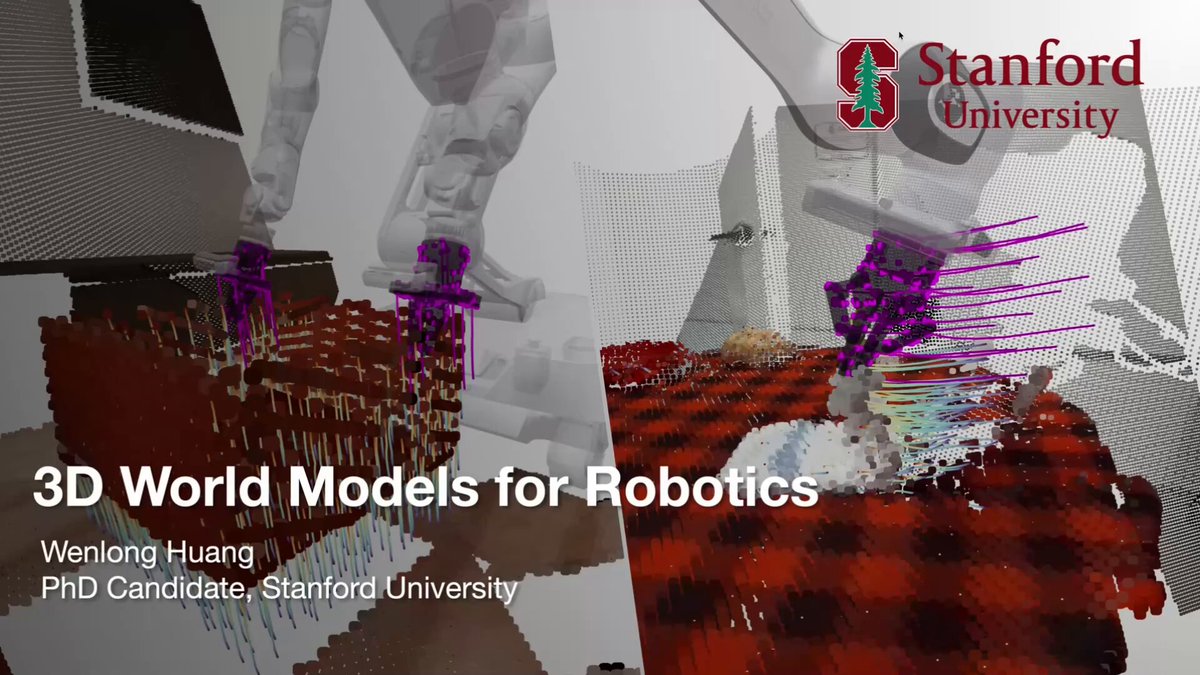
With enough data, robots and AI can learn “world models” that let them predict the results of their actions. These models are a way to learn how embodied AI agents can perform a wide variety of useful tasks — but they require a huge amount of data. The team... show more

85,927 Aufrufe • vor 10 Monaten •via X (Twitter)
0 Kommentare
Keine Kommentare verfügbar
Kommentare vom Original-Post werden hier angezeigt




![General Intuition CEO Pim de Witte, who's building foundation models trained on video game controller input data ("action-labeled gameplay clips"), says general intelligence won't "taste like an LLM": "We have a scale of data that's going to allow us to jump to the frontier in one capability — which is any system that can be controlled with a game controller (which is most robots) — and then, you can use that to create a sufficiently general intelligence." "As humans, the decision to talk or type is a very, very small subset of the actions that we can actually take." "So in order to create a sufficiently general intelligence to play 10,000+ video games, the model has to be able to predict across the entire action space of human cognition when they're interacting with these environments. Which are 2D and 3D environments, interfaces, long-horizon tasks, short-horizon tasks, [etc.]." "It has to be a sufficiently general intelligence in order to predict actions. Therefore, the type of model you get out is not going to taste like an LLM. This model is going to be incredibly good at navigating unforeseen environments. It's going to be incredibly good at zero-shotting any task that can be done with a game controller."](https://image.24vids.com/tw-2071731641366806768/amplify_video_thumb/2071731439247523840/img/Ar0HzGY4TZXz_4fN.jpg)