Video yükleniyor...

Video Yüklenemedi

Ana Sayfaya Dön

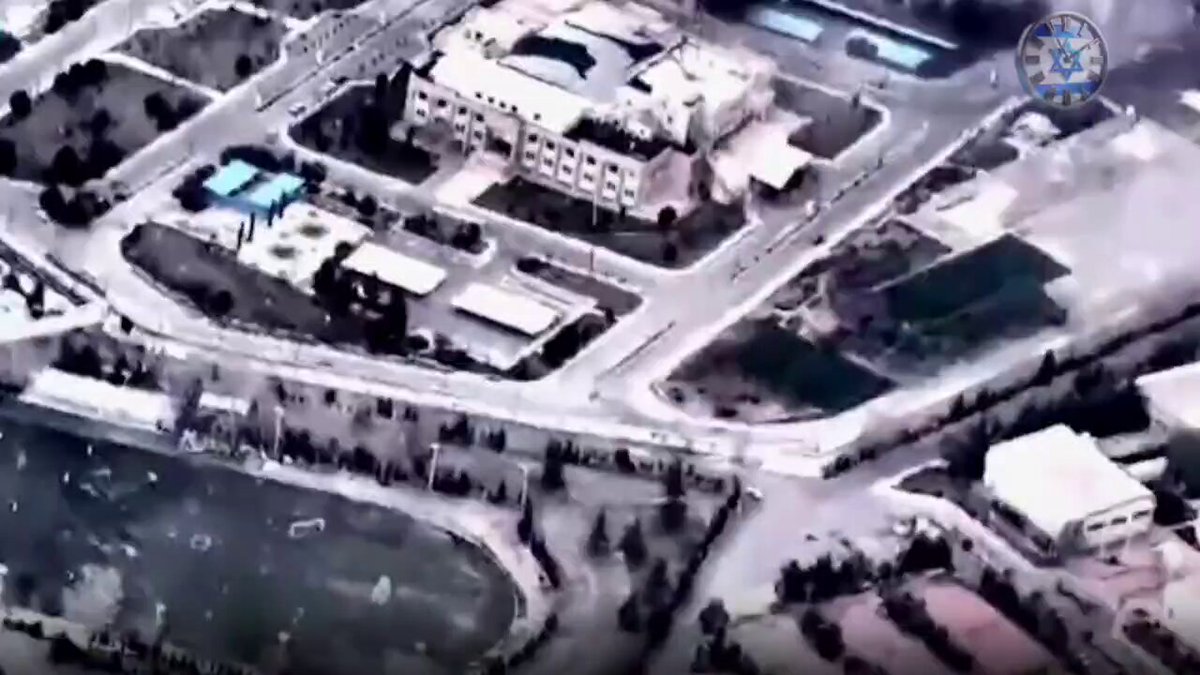
With less than 48 hours until the total solar eclipse crosses Greenland, Iceland, and Spain on August 12, local infrastructure across Southern Europe is reaching a breaking point. Hotel rates in the path of totality have quadrupled, while regional authorities in Spain prepare emergency traffic plans to manage millions...

51,402 görüntüleme • 1 gün önce •via X (Twitter)

0 Yorum

Yorum bulunmuyor

Orijinal gönderinin yorumları burada görünecek

Benzer Videolar

A spectacular “Ring of Fire” just blazed across the Antarctic sky today, February 17, 2026 — the first solar eclipse of the year, and a rare annular one that turned the Sun into a blazing celestial halo. In this stunning alignment, the Moon slipped between Earth and the Sun but — because it was near the farther point in its elliptical orbit (close to apogee) — appeared slightly smaller than the Sun's disk. Instead of total darkness, a brilliant ring of sunlight encircled the Moon's dark silhouette, creating that iconic fiery annulus for up to about 2 minutes and 20 seconds at maximum.The path of true annularity carved a narrow corridor roughly 616 km (383 miles) wide and 4,282 km (2,661 miles) long across the icy expanse of Antarctica — one of the most remote and inhospitable places on Earth. Very few humans witnessed the full “Ring of Fire”: perhaps a handful at research stations like Concordia Station, where the peak hit around 19:47 local time (12:13 UTC / 7:13 a.m. EST), with the Sun about 96% obscured.Everywhere else in the vast southern regions, the eclipse appeared as a dramatic partial bite taken from the Sun. Partial phases were visible across:Much of southern Africa (including South Africa, Mozambique, Madagascar) The southern tips of Argentina and Chile Broad swaths of the Southern Ocean, Pacific, Atlantic, and Indian Oceans The event kicked off with the first partial shadows around 09:56 UTC, reached maximum at 12:13 UTC, and wrapped up by 14:27 UTC — a roughly 4.5-hour celestial dance viewed from half a hemisphere away.Astronomy enthusiasts and scientists alike marveled at the precision of orbital mechanics on display: the Moon's apparent size just shy of perfect coverage, the Sun's corona faintly visible around the edges in safe-filtered views, and the eerie dimming of daylight in partial zones.This remote spectacle kicks off what many are calling a golden age of eclipses — with a total solar eclipse coming up on August 12, 2026 (visible from Greenland, Iceland, and northern Spain), followed by more totals and annulars through 2028.A reminder of cosmic rhythm: even in the harshest, loneliest corners of our planet, the universe puts on a show of breathtaking beauty and perfect timing.(Sources: NASA eclipse resources, Wikipedia Solar Eclipse of February 17, 2026, EarthSky, and related astronomical reports.)

Black Hole

11,992 görüntüleme • 5 ay önce

🚨OPERATIONAL UPDATE: ISRAEL U.S. WAR WITH THE ISLAMIC REPUBLIC - Reporting Window: 3/14 to 3/16 • The war widened further into the Gulf economy, with drone incidents near Dubai Airport, disruption at Fujairah energy infrastructure (also in the UAE), and continued pressure around the Strait of Hormuz • Israel continued deep strike waves inside Iran while expanding ground operations against Hezbollah in southern Lebanon • Iran continued missile salvos toward Israel while activating proxy pressure fronts across Iraq • The U.S. began pushing for a multinational Hormuz security coalition while calibrating escalation to avoid a global oil shock The last 48 hours showed that the war is no longer just about missile exchanges between Israel and Iran. It is increasingly a contest over the regional system itself: energy flows, maritime routes, proxy networks, and command infrastructure. While Israel continues to degrade Iran’s military capabilities, Iran is trying to widen the battlefield economically and geographically. 📽️VIDEO 1: U.S. strikes on Iran’s Kharg Island oil export hub. 📽️VIDEO 2: Smoke rising from oil infrastructure in Fujairah after drone debris caused a fire. *⃣ GULF FRONT: THE ECONOMIC WAR DEEPENED This remained the most strategically important development. Following earlier strikes around Kharg Island and threats to the Strait of Hormuz, pressure on Gulf infrastructure continued. Drone incidents and debris related fires disrupted operations near Fujairah’s energy infrastructure, one of the world’s largest bunkering hubs in the UAE. Shortly afterward, a drone related incident near Dubai International Airport ignited a fuel tank and temporarily disrupted flight operations before authorities contained the fire and resumed traffic. These incidents show the war repeatedly touching civilian energy and logistics infrastructure in the UAE, not just military facilities. Even limited disruptions matter in this region. The Strait of Hormuz handles roughly 20 percent of global oil supply, and repeated incidents have pushed oil prices above $100 during the week. Iran does not need to fully close Hormuz to achieve strategic leverage. Persistent disruption alone can force insurance spikes, rerouting of shipping, and higher global energy prices. *⃣ KHARG ISLAND: IRAN’S ECONOMIC JUGULAR IS NOW UNDER DIRECT PRESSURE One of the most consequential developments in the war involves Kharg Island, Iran’s primary oil export terminal. Historically, roughly 85 to 90 percent of Iran’s crude exports pass through Kharg, making it the single most important node in the country’s energy economy. Recent U.S. strikes targeted military infrastructure associated with IRGC naval operations near the island, particularly facilities linked to mine laying capability and coastal missile systems. These strikes appear connected to Washington’s warning that Iran must not deploy naval mines in the Strait of Hormuz. There are also scattered reports of secondary explosions and possible infrastructure damage near the port, though there is no credible confirmation that the export terminal itself has been destroyed. That distinction is important. Destroying Kharg outright would cripple Iran’s oil exports overnight and likely trigger a massive oil price spike. Instead, the current targeting pattern appears designed to threaten Iran’s economic lifeline without fully collapsing it, maintaining pressure while avoiding the most extreme global economic consequences. *⃣ IRAN: STRIKES INSIDE THE CORE CONTINUED Inside Iran, Israeli strike activity remained intense. Over the last 48 hours, strikes targeted command infrastructure, missile launch systems, air defense networks, and military production sites across Tehran and other strategic locations. The campaign also hit Mehrabad Airport, where Israeli officials reported destroying aircraft associated with Iran’s leadership. Across central and western Iran, the strike map remains broad. Tehran, Karaj, and several other military zones have continued to appear in overnight strike reporting. This suggests the campaign is still focused on systematically degrading Iran’s military capacity, particularly missile infrastructure and command networks. Rather than shifting toward a narrow endgame phase, the strikes indicate a continued effort to keep Iran’s launch capabilities suppressed. *⃣ LEBANON: THE NORTHERN FRONT IS EXPANDING The Lebanon front also escalated further. Israeli forces expanded ground operations in southern Lebanon and reportedly encircled Khiyam, pushing westward toward the Litani River. This represents a larger ground posture than earlier border operations and indicates Israel is attempting to shape the battlefield against Hezbollah rather than simply retaliating against rocket launches. At the same time, Hezbollah continued firing rockets and drones toward northern Israel, maintaining pressure on the northern front even after suffering extensive infrastructure losses earlier in the war. Israel has continued heavy strikes on Hezbollah infrastructure in Lebanon, including operational sites and logistical facilities tied to the group’s missile network. The northern theater now appears to be entering a phase of attrition and positional pressure, rather than the limited cross border exchanges that characterized earlier weeks. *⃣ IRAQ: PROXY PRESSURE ON THE UNITED STATES CONTINUES Iran aligned militias continued attacks on U.S. positions across Iraq. Over the past several days these groups have launched drones and rockets against American bases and diplomatic infrastructure, including a missile strike on the helipad area of the U.S. embassy compound in Baghdad. These attacks serve two purposes: ➡️First, they impose direct costs on U.S. operations in the region. ➡️Second, they force the United States to divert resources toward base defense and interception missions. Even when damage is limited, the attacks expand the battlefield and complicate the operational environment for U.S. forces. *⃣ IRANIAN MISSILE ATTACKS CONTINUE Iran continued launching missiles toward Israel during this period. Several salvos targeted southern Israel and the Negev region, triggering repeated air raid alerts. Despite continued launches, the overall military impact of these attacks appears limited. Israeli air defense systems including Iron Dome, David’s Sling, and U.S. systems such as THAAD have maintained high interception rates. Iran is still able to launch missiles and drones, but the sustained strikes on launchers, command centers, and production facilities appear to be reducing the scale of its barrages compared to the opening days of the war. *⃣ WASHINGTON: TRUMP SIGNALS A LONGER STRATEGIC GAME The political messaging from Washington over the past 48 hours has also clarified the broader strategic direction. Publicly, Trump has suggested the war could end soon and that most major Iranian targets have already been struck. Operationally, however, the signals point toward preparation for a longer campaign. Washington has begun pushing for a multinational coalition to secure the Strait of Hormuz, urging countries that depend on Gulf energy flows to participate in maritime security operations. At the same time, the United States has been careful not to push escalation to the point of triggering a global energy shock. This balancing act helps explain why certain targets, such as Kharg Island’s export terminal, have been threatened but not completely destroyed. The strategic posture appears to be: ➡️sustain pressure on Iran’s military capability ➡️protect global energy flows ➡️avoid triggering a catastrophic oil price spike Israel’s priorities are somewhat different. Israel is focused primarily on maximizing military degradation of Iran and Hezbollah, even if that increases regional escalation risks. The dynamic between Washington’s economic caution and Israel’s military pressure is likely to shape the next phase of the conflict. *⃣ WHAT CHANGED IN THE LAST 48 HOURS Three developments stand out: ➡️First, the Gulf economic front is becoming central to the war. Drone incidents near Dubai and Fujairah show that the conflict is now directly touching regional infrastructure and global energy flows. ➡️Second, Israel continues to widen the battlefield rather than narrow it. Deep strikes inside Iran and expanded operations in Lebanon suggest the campaign is still in a degradation phase. ➡️Third, the United States is beginning to shift toward coalition management of the conflict, particularly around Hormuz, while trying to prevent the war from triggering a global energy crisis. In short, the war is evolving from a direct military confrontation into a broader struggle over regional stability, energy flows, and long term strategic balance in the Middle East.

Inside_Israel_Intel

460,417 görüntüleme • 4 ay önce

🚨 OPERATIONAL UPDATE: ISRAEL U.S. WAR WITH IRAN - Reporting Window: Last 24 Hours The last 24 hours reinforce the structure that has been developing across the war. Activity remained steady across Iran, Israel, Lebanon, and the Gulf, with no single breakthrough moment but continued pressure applied across every layer of the conflict. ━━━━━━━━━━━━━━━━━━ ✈️ STRIKES INSIDE IRAN Strikes continued across multiple areas inside Iran, including Tehran, Shiraz, Kermanshah, and Ahvaz. The targeting profile remains consistent with recent days, focused on systems tied to weapons development and military sustainment. In Tehran, reporting points to continued strikes on military-industrial infrastructure, including: *⃣ Weapons production and research facilities *⃣ Infrastructure around Mehrabad Airport *⃣ Sites linked to Iran’s advanced weapons programs, including SPND-related supply nodes There are also indications that some of these locations had secondary roles, including use by Basij-linked personnel. That aligns with the broader pattern of targeting not just hardware, but the networks that support it. The key point in this 24 hour window is continuity. The same categories of targets are being hit repeatedly, suggesting an effort to ensure these systems are not just damaged, but unable to recover quickly. ━━━━━━━━━━━━━━━━━━ 🚀 IRANIAN RESPONSE Iran continues to respond. Current intelligence assessments indicate that roughly half of Iran’s missile launchers remain intact, along with a large drone inventory. At the same time, the operational pattern remains limited. Iran is still launching missiles and conducting attacks, but still not at the scale seen earlier in the war. The response appears to rely on: *⃣ Smaller salvos rather than sustained barrages *⃣ Continued willingness to strike civilian-adjacent targets *⃣ Expansion of pressure beyond Israel itself This reflects pressure on launch systems and coordination, not a lack of overall capability. ━━━━━━━━━━━━━━━━━━ 🔥 LEBANON FRONT The Lebanon front remained active during this window, with both ground and air components continuing. Israeli forces carried out a targeted ground operation in southern Lebanon, resulting in direct engagement with Hezbollah fighters. Reporting indicates: *⃣ Israeli troops pushed deeper into southern لبنان *⃣ Hezbollah operatives were killed in close-quarters combat *⃣ Additional strikes were carried out against infrastructure using air, naval, and ground assets This is consistent with ongoing efforts to shape the immediate border area and reduce launch capability from southern Lebanon. At the same time, the front remains contained geographically, but active in terms of daily engagement. ━━━━━━━━━━━━━━━━━━ 🌍 GULF AND REGIONAL ACTIVITY Regional expansion continues to be one of the most consistent elements of the war. Over the last 24 hours, Iranian attacks again targeted Gulf infrastructure, including: *⃣ A Kuwaiti oil refinery and desalination facility *⃣ Additional aerial threats across UAE airspace, including ballistic missiles, cruise missiles, and drones *⃣ Civilian injuries linked to interception and debris in the UAE These are functional targets tied to energy and water systems, reinforcing the broader strategy of applying pressure beyond Israel. ━━━━━━━━━━━━━━━━━━ ⚓ STRAIT OF HORMUZ Hormuz remains central to the strategic picture. Developments in this window include: *⃣ Ongoing discussions among multiple countries regarding how to reopen and secure the strait *⃣ Continued Iranian signaling around its ability to influence maritime traffic *⃣ Early indications of mediation channels involving Oman There is no resolution here yet, but the focus on Hormuz is becoming more operational and less theoretical. ━━━━━━━━━━━━━━━━━━ ⚠️ IRAQ Iraq emerged more clearly in this window the last 24 hours as a continued potential point of escalation. The U.S. embassy issued a warning that Iran-aligned militias could conduct attacks in Baghdad within 24 to 48 hours, with potential targets including: *⃣ Diplomatic facilities *⃣ Commercial and infrastructure sites *⃣ Areas frequented by U.S. personnel This aligns with the broader pattern of pressure expanding through proxy channels when direct options are constrained. ━━━━━━━━━━━━━━━━━━ 📌 WHAT MATTERS MOST RIGHT NOW The structure of the war remains stable, but fully active: *⃣ Inside Iran, strikes continue to focus on production and sustainment systems *⃣ Iran retains significant capability, but is operating under constraints *⃣ Lebanon remains an active front with ongoing ground and air operations *⃣ The Gulf is consistently targeted, particularly energy and infrastructure systems *⃣ Iraq is showing early signs of becoming more active through proxy activity ━━━━━━━━━━━━━━━━━━ 🧠 MY ASSESSMENT This 24-hour window of time does not introduce a new dynamic. It confirms the current one. Israel is continuing to apply pressure across the systems that allow Iran to produce and coordinate military activity. Iran is continuing to respond within its constraints while expanding pressure across the region where it can. The result is a conflict that is not concentrated in one place, but distributed across multiple active fronts at once. That remains the defining characteristic of the war right now.

Inside_Israel_Intel

49,879 görüntüleme • 4 ay önce

🚨 OPERATIONAL UPDATE: ISRAEL U.S. WAR WITH THE ISLAMIC REPUBLIC - Reporting Window: Last 24 Hours ✳️The war is entering its final phase, but the battlefield is becoming more dangerous, not less. For the first time since the conflict began, the United States has signaled that its objectives against Iran have largely been achieved and that military operations could conclude within 2 to 3 weeks. At the same time, the operational picture tells a more complex story. Strikes inside Iran are intensifying, not slowing. Iran’s responses are becoming less concentrated but more geographically expansive. And across the region, the risk of broader escalation remains very real. This is no longer an open-ended war. It is a race between final military objectives and the risk of wider regional destabilization. ━━━━━━━━━━━━━━━━━━ 🏁 POLITICAL ENDGAME SIGNAL EMERGES President Donald Trump stated that the war could end within weeks, indicating that core objectives have been achieved, including the degradation of Iran’s strategic capabilities and the disruption of its leadership structure. He also signaled that the United States does not intend to remain indefinitely engaged, suggesting that responsibility for securing critical global nfrastructure, particularly the Strait of Hormuz, may shift to regional and international stakeholders. At the same time, tensions with NATO allies are surfacing. Frustration over limited allied participation in the war has raised the possibility of a broader fracture within the Western alliance structure. Parallel reporting indicates that elements within Iran are signaling openness to a ceasefire framework, particularly if maritime access through Hormuz is restored. Taken together, this marks a clear transition: the war now has a defined political end state, even as military operations continue. ━━━━━━━━━━━━━━━━━━ ✈️ FINAL PHASE STRIKE CAMPAIGN INSIDE IRAN The intensity of strikes over the past 24 hours reflects what appears to be end-stage shaping operations. Israeli and US-aligned strikes targeted a wide range of sites across Iran, including weapons production facilities, research and development centers, and critical infrastructure nodes tied to the regime’s military capabilities. Tehran remains a central focus. Approximately twenty military-industrial sites were struck, along with infrastructure at Mehrabad Airport and locations linked to Basij coordination. A senior Quds Force engineering figure, Mahdi Vafaei, was eliminated in a precision strike. His role in developing underground weapons infrastructure across Lebanon and Syria made him a key long-term asset for Iran’s regional military network. Additional strikes hit industrial targets, including steel production facilities and a site identified as supporting materials linked to Iran’s chemical weapons development pipeline. This is not a campaign aimed at symbolic damage. It is a systematic effort to dismantle Iran’s ability to produce, coordinate, and sustain war over time. ━━━━━━━━━━━━━━━━━━ 🎯 IRANIAN RESPONSE AND CIVILIAN IMPACT Iran continues to launch missiles toward Israel, but at a reduced scale compared to earlier phases of the war. Limited salvos were recorded over the past 24 hours, causing injuries and localized damage. One of the most significant developments was the reported use of cluster munitions in central Israel, critically injuring a child and causing multiple casualties. At the same time, Iran appears to be adapting operationally. Rather than attempting large-scale saturation attacks, it is increasingly relying on smaller strikes, drones, and diversified targeting strategies. This does not indicate de-escalation. It reflects an effort to remain operational under sustained pressure. ━━━━━━━━━━━━━━━━━━ 🌍 REGIONAL EXPANSION: THE WAR SPREADS While direct attacks on Israel have become more limited in scale, Iran is expanding the conflict across the region. In the Gulf, infrastructure in Kuwait and Bahrain was struck, including fuel storage facilities at Kuwait International Airport. Fires and damage were reported, adding to a growing pattern of attacks on energy and logistical nodes. A commercial tanker was also struck near Qatar, further extending the conflict into maritime space. These developments mark a continued shift where Iran is targeting not just Israel, but the broader economic and energy architecture of the region. ━━━━━━━━━━━━━━━━━━ 🚢 THE STRAIT OF HORMUZ The strategic center of gravity in this war is now unmistakable. The Strait of Hormuz remains contested, with ongoing disruption to global shipping and energy flows. The United States is actively evaluating options to reopen and secure the waterway, including potential direct military action against Iranian coastal capabilities. At the same time, Gulf states, particularly the UAE, are pushing for a coordinated military effort to ensure the strait is reopened. However, regional positioning remains complex, with some actors balancing public caution and private pressure. Notably, the United States has signaled that it may not take long-term responsibility for securing Hormuz, instead shifting that burden to global stakeholders. The implication is clear: control of Hormuz will determine not only the outcome of the war, but its aftermath. ━━━━━━━━━━━━━━━━━━ 🔥 NORTHERN AND PROXY FRONTS Iran’s proxy network remains active, but increasingly strained. In Lebanon, Israeli strikes continue to target Hezbollah leadership and infrastructure, including the reported elimination of a senior commander in Beirut. Rocket fire persists, but Israeli operations are steadily degrading launch capabilities. In Yemen, the Houthis have formally entered the fight against Israel and are likely contributing to the expanding pattern of regional attacks, including those affecting Gulf infrastructure. Across Iraq and Syria, Iranian-aligned militias remain engaged, while underlying instability continues to create openings for additional actors. This is now a multi-front conflict, but one in which Iran’s network is under pressure across every axis. ━━━━━━━━━━━━━━━━━━ 🧠 WARFARE EVOLUTION A critical and often overlooked development is the role of advanced targeting systems. Israel is employing AI-assisted capabilities to identify threats, prioritize targets, and synchronize strikes across multiple theaters in near real time. This has significantly compressed the operational cycle, allowing for rapid follow-up strikes and reduced recovery time for Iranian forces. The result is a battlefield environment where Iran has less time to act, less time to adapt, and fewer opportunities to rebuild degraded capabilities. ━━━━━━━━━━━━━━━━━━ 📊 THE BIG PICTURE The trajectory of the war is now coming into focus. The United States and Israel are executing a campaign designed to dismantle Iran’s ability to function as a coherent military actor. Iran, in response, is expanding the conflict geographically in an attempt to impose broader costs. At the same time, political signals indicate that the war is approaching a defined end state. Markets are already reacting to this expectation, with oil prices declining and global indices rising on the assumption that the conflict may soon conclude. However, the final phase carries its own risks. As Iran’s conventional capabilities degrade, its reliance on asymmetric and regional tactics is increasing. The decisive question is no longer how the war is fought day to day. It is whether the final objectives can be secured before broader escalation overtakes them. ━━━━━━━━━━━━━━━━━━ 📘 BOOK RECOMMENDATION If you want a deeper understanding of the history, narratives, and strategic realities behind this conflict: Contested Land, Uncontested Truth This book breaks down the ideological, geopolitical, and historical forces that led directly to moments like this, with clarity and evidence. 👉 If you found this report valuable, share it. Follow for daily operational updates.

Inside_Israel_Intel

60,835 görüntüleme • 4 ay önce

NEW ROBOT: SOLAR PANEL DEPLOYER 🌞 San Francisco Gritt (a.k.a. Gritt AI) is probably one of the hottest robotics startups you have never heard of. Founded in 2023 by two CMU roboticists, it came out of stealth on July 21, 2026 with a $26M Series A ,led by Obvious Ventures . Gritt does not make robots. It bolts an off-the-shelf Kawasaki robotic arm onto heavy equipment for construction, and runs its own AI to unload utility-scale solar panels. They also carry them, and set them onto metal racking with sub-millimeter precision. A human then has to fasten them. It replaces the manual overhead lifting of ~100-lb glass panels on solar farms. Solar is for now their only market, but they will expand to data centers (of course) and other large infrastructures. Solar was chosen first because it's the most factory-like task on an outdoor site. Gritt is making the bet on buying, while most of its competitors are building the robots. Their own capex is therefore near-zero, and moves the scaling constraint to ops crews and software -> it does not make it necessarily easier! All depends where your strengths lie. Gritt has currently two systems deployed in the field, over signed contracts to install ~2.8–3 GW of solar over 18 months. They plan to reach 48 systems within six months -> a ~24× deployment ramp in half a year! Gritt says the first skills took weeks to train but rebar tying took a single day on the same software pipeline after the solar work. That's a ~10–30× drop in per-skill training cost! And goes against the idea that deployment data is near-worthless, since novelty is the scarce input. Also worth mentioning: Gritt has a Chinese competitors, Trinabot. Trinabot is vertically integrated: tied to Trina, a giant Chinese solar-panel maker. Make the panel and the robot that installs it, while Gritt's hardware-agnostic. Interesting to see another example where China integrates manufacturing plus robot, and the US startup goes capex-light software on rented equipment.

Léo

42,379 görüntüleme • 12 gün önce

Kiev is raising the alarm: society is ready for "lynch mob" justice. Ukrainian Human Rights Commissioner Dmytro Lubinets has suddenly become the leading public accuser of the mobilization machine in Ukraine. He states that society has reached a point of "lynch mob" justice, and military recruitment centers have become a legitimate target for public outrage. According to Lubinets, Ukrainians no longer believe in a "legal response" to the actions of the Territorial Recruitment Centers (TRCs), so they are starting to take justice into their own hands. In his assessment, only about 10% of mobilizations are carried out according to procedure, while in the remaining cases, there are direct violations of citizens' rights. People are being detained without protocols, without police, wearing balaclavas and without insignia. He openly admits that the breaking point is almost reached, and Ukrainian society is on the verge of a violent confrontation with the authorities, while the recent events in Lviv are just the first mass outburst. It is noteworthy that the Human Rights Commissioner cites specific examples. He talks about people with broken ribs who were held in TRCs, a mobilized man who died the next day, whose death was concealed from his family and attempts were made to bury him without an autopsy, and cases where people were simply murdered in recruitment centers. According to him, the premises of the TRCs have effectively been turned into places of detention, where men are brought in like detainees, being forcibly removed from their normal lives. "He literally went out to take out the trash and was found six days later at a training ground." Against this backdrop, today's attacks on TRC facilities in the Chernihiv region are a cruel military irony. For Ukrainian conscripts, this looks extremely cynical: those who broke their ribs during detention and dragged them to the recruitment center yesterday are now themselves under attack from drones. This is how the paradox of wartime is born. Russian "Geran" drones are objectively becoming allies of Ukrainian conscripts, because they are attacking the very structure that has turned mobilization into a hunt for people. Kyiv is getting a rare opportunity when its own Human Rights Commissioner and Russian drones are saying the same thing – the mobilization system is not just cracking, it is working against the very foundations of the Ukrainian state. However, unlike Lubinets, we do not see anything wrong with this. Александр Коц

🇷🇺 STANISLAV KRAPIVNIK 🇷🇺

18,157 görüntüleme • 21 gün önce

Viktor Orbán is once again one of the very few leaders in Europe willing to say what every rational observer already knows — the European elite is fully committed to prolonging the war in Ukraine, no matter how much it costs in lives, economic ruin, or regional stability. Instead of working toward peace, they’ve chosen to escalate, blindly following the disastrous path laid out by the Biden administration and its enablers in Brussels. The fact that this latest war council took place in London is fitting. The same British establishment that cheered on every disastrous intervention over the past two decades is now at the forefront of pushing Ukraine into further bloodshed — all while European economies collapse under the weight of sanctions, energy crises, and spiraling inflation. None of these leaders have the courage to admit the obvious: Ukraine is losing, Zelensky has no path to victory, and the only real option left is negotiation. Orbán’s opposition to this madness isn’t just common sense — it’s a recognition that the survival of European economies and the long-term security of the continent depend on ending this war, not prolonging it. Every day the war drags on is another day European industries bleed out, farmers go bankrupt, and working families watch their savings vanish. All for what? To protect the pride of globalist elites who refuse to admit they were wrong from the start. The reality is that the people pushing to extend this war have nothing to lose. It’s not their sons being dragged into trenches. It’s not their businesses closing under the weight of energy costs. And it’s certainly not their luxurious lifestyles at risk. They can sit in their ivory towers, safe from consequence, while the rest of Europe pays the price. Orbán stands on the side of peace — and history will show that it was the only responsible position to take.

Torsten Prochnow

52,208 görüntüleme • 1 yıl önce

🚨 CHINA IS RACING TO BUILD A SPACE SOLAR POWER PLANT THAT COULD BEAM ELECTRICITY FROM ORBIT TO EARTH. Scientists at Xidian University have successfully tested a ground-based system that can wirelessly transmit kilowatt-level power over 100 meters using microwaves. Their ultimate goal is far more ambitious: placing large solar power stations in geostationary orbit (36,000 km up), where sunlight is available 24/7 with no weather or atmosphere blocking it. The project, called Zhuri (“chasing the sun”), uses mirrors to concentrate sunlight onto solar panels, converts the electricity into microwaves, and beams it down to a receiving antenna (rectenna) on Earth. Why this matters: • In space, solar energy is up to 6 times more efficient than on Earth because there’s no night, clouds, or atmospheric filtering • A single large space solar station could theoretically generate gigawatts of continuous clean power enough for millions of homes • The team has already proven the system can beam power to multiple moving targets at once • China is now among the world leaders in this technology, alongside the US and Japan The deeper implication: Space-based solar power has been a dream for decades because it could provide truly baseload renewable energy. While the technical and financial challenges are enormous (building massive structures in orbit, precise microwave beaming, and safety), steady progress like this brings the concept closer to reality. If successful, it could fundamentally change how humanity generates and distributes energy moving power collection off the planet entirely. Near-term applications could include wirelessly charging satellites or powering future lunar bases. Do you think space-based solar power will become a major energy source in the coming decades, or will it stay too expensive and complex? Follow for more frontier energy and space technology developments.

TheNewPhysics

15,361 görüntüleme • 1 ay önce

This isn’t Shanghai or Beijing. This is Ürümqi, the capital of Xinjiang. A region once seen as remote is now becoming China’s rising star. Xinjiang stands as a powerful symbol of development at the crossroads of geography, strategy, and ambition. Often in the headlines for geopolitical reasons, Xinjiang is one of the most economically transformative regions in China. Geographically, Xinjiang is huge, over 1.6 million km², sharing borders with eight countries. Historically underdeveloped, it’s now becoming a key node in China’s Belt and Road Initiative (BRI), serving as a gateway for trade routes stretching from Central Asia to Europe. Economically, China has poured billions into infrastructure in Xinjiang: 🤜 New railways and expressways connecting the region to coastal hubs 🤜 Smart agriculture in the Taklamakan Basin 🤜 Investments in renewable energy, making Xinjiang one of China’s largest producers of wind and solar power 🤜 Urbanization and digital infrastructure in cities like Urumqi and Kashgar Incomes of Uyghurs are rising, access to education and healthcare is expanding, and industrial zones are attracting businesses in textiles, logistics, and high-tech. Xinjiang’s GDP has more than doubled over the last decade. Xinjiang is a case of regional convergence policy in action, where China invests heavily to reduce the gaps of income and development between western China and the eastern seaboard. China-haters often miss something fundamental! Development in Xinjiang is a part of China’s macroeconomic vision for national resilience, cross-border trade influence, energy and strategic security. As an economist living in China for over a decade, I can say this with confidence, Xinjiang is undergoing undeniable and significant development which is inspiring.

Evrim Kanbur

68,626 görüntüleme • 1 yıl önce

🚨OPERATIONAL UPDATE: ISRAEL U.S. WAR WITH THE ISLAMIC REPUBLIC - Reporting Window: 3/11 to 3/12 • Iran widened pressure on the Gulf energy system, with tankers hit near Basra, a container vessel struck near the UAE, and fuel infrastructure targeted in Bahrain and Oman, sending oil back above $100. • Israel expanded its campaign inside Iran, striking IRGC command infrastructure, missile production sites, and drone launch networks in and around Tehran. • Hezbollah launched one of its largest rocket barrages of the war, triggering heavy Israeli strikes on command centers and weapons infrastructure in Beirut’s southern suburbs. • Iranian proxies and aligned forces continued attacks on U.S. positions across the region, bringing the total number of incidents targeting American sites or personnel to at least 25 since the war began. The central story of the last 24 hours is that the conflict is increasingly moving beyond the battlefield and into the systems that keep the region functioning. Iran continues to pressure shipping, energy infrastructure, and U.S. positions across the Middle East, while Israel is pushing deeper into the regime’s military and security architecture. The result is a war that now looks less like a contained exchange of strikes and more like a widening struggle over the region’s economic stability, military balance, and internal political control. ━━━━━━━━━━━━━━━━━━ *⃣ PERSIAN GULF: IRAN CONTINUES TO PRESSURE THE ENERGY SYSTEM The Persian Gulf remained the most strategically significant theater over the last 24 hours. Multiple reports confirmed additional attacks affecting shipping and energy infrastructure across the region. Two oil tankers were reported burning in Iraqi waters near Basra after earlier strikes on vessels in the Gulf, while another container ship was reportedly hit near the UAE. Fuel and logistics infrastructure also came under pressure. Bahraini authorities reported that Iranian aggression targeted fuel tanks at a facility in Muharraq near Bahrain International Airport, while additional reports indicated that oil storage facilities at Oman’s Port of Salalah were struck. These attacks reinforce a clear pattern: Iran may not be able to fully close the Strait of Hormuz, but it is demonstrating that it can disrupt the broader logistical network surrounding the Gulf’s energy system. The market reaction was immediate. Oil prices moved back above $100 despite coordinated moves by the United States and its partners to release large volumes from strategic petroleum reserves. The International Energy Agency and several governments have moved to inject supply into the market, but these measures are temporary buffers. As long as shipping through the Gulf remains at risk, the global energy market will continue to price in disruption. ━━━━━━━━━━━━━━━━━━ *⃣ TEHRAN: THE CAMPAIGN IS NOW HITTING THE REGIME’S CORE SECURITY NETWORK The latest strike waves inside Iran appear to be moving beyond general bombardment and toward a systematic dismantling of the regime’s security infrastructure. Israeli strikes reportedly targeted the IRGC Air Force headquarters in Tehran, ballistic missile storage and production facilities, Basij paramilitary command centers, and a compound at Imam Hossein University that functions as an operational hub for the Revolutionary Guards. Additional strikes were reported against Iranian intelligence ministry facilities and internal security infrastructure, indicating that the campaign is beginning to focus not only on missile capability but on the regime’s ability to control events inside the country. Separate strikes in western Iran reportedly hit drone launch teams preparing attacks toward Israel, suggesting that launch infrastructure is now being targeted dynamically as it emerges rather than only through preplanned strikes against fixed installations. Satellite imagery also confirmed damage to Iranian F-14 fighter aircraft at Isfahan’s 8th Tactical Air Base, further degrading an already aging Iranian air force that has struggled to contest Israeli and U.S. air superiority throughout the conflict. Taken together, the targeting pattern suggests that the coalition is increasingly focusing on the regime’s operational nervous system: command networks, launch infrastructure, and internal security forces that allow the government to coordinate and sustain military operations. ━━━━━━━━━━━━━━━━━━ *⃣ LEBANON: ISRAEL IS NOW TARGETING HEZBOLLAH’S OPERATIONAL COMMAND STRUCTURE The northern front also escalated sharply over the last 24 hours. Hezbollah launched one of its largest barrages of the war, firing large numbers of rockets and drones toward northern Israel in coordinated strikes linked to Iran’s broader regional campaign. Israel’s response focused heavily on Hezbollah’s command and operational infrastructure rather than simply retaliating against launch sites. Israeli aircraft struck multiple facilities in Beirut’s southern suburbs (Dahieh), including command centers, operational headquarters, and weapons storage sites linked to Hezbollah’s Radwan forces, the elite unit responsible for cross-border operations against Israel. Additional strikes targeted missile launch infrastructure and militant positions across southern Lebanon, as well as logistical sites used to support ongoing rocket attacks. The concentration of strikes in Dahieh is significant. The area functions as Hezbollah’s central military and intelligence hub, and repeated attacks there suggest Israel is attempting to disrupt the group’s command-and-control structure rather than merely suppress individual launch cells. This shift indicates that the northern theater may be entering a new phase where Israel seeks to systematically degrade Hezbollah’s operational leadership and coordination networks, not just reduce the immediate rocket threat. ━━━━━━━━━━━━━━━━━━ *⃣ REGIONAL SPILLOVER: U.S. POSITIONS AND GLOBAL SECURITY CONCERNS Regional spillover continues to grow. Iranian proxies and aligned groups have carried out repeated attacks targeting American facilities or sites hosting U.S. personnel across the Middle East. Analysts now count at least 25 attacks targeting U.S. sites or locations housing American personnel since the war began. One of the most significant recent incidents involved a drone strike on a large U.S. diplomatic facility near Baghdad International Airport. The attack caused damage but did not produce casualties, and U.S. officials suspect it was carried out by Iranian-aligned militias operating in Iraq. Beyond the Middle East itself, intelligence warnings suggest the conflict could reach further. U.S. authorities have warned about potential Iranian retaliation targeting American interests abroad, including scenarios involving drone launches from maritime platforms. Cyber activity linked to Iran has also been detected in Europe, including an attempted attack on a nuclear research facility in Poland that officials say bears multiple indicators of Iranian involvement. These developments show that while the war’s kinetic center remains in the Middle East, the broader confrontation between Iran and its adversaries is beginning to manifest across multiple domains: military, cyber, and economic. ━━━━━━━━━━━━━━━━━━ *⃣ WHAT MATTERS MOST RIGHT NOW The key takeaway from the past 24 hours is that the war is continuing to widen in practice even as some political messaging suggests it could be nearing a conclusion. Iran is still capable of imposing meaningful costs through attacks on shipping, energy infrastructure, and proxy operations across the region. Israel, meanwhile, is expanding its strike campaign into deeper layers of Iran’s military and security architecture while escalating pressure on Hezbollah in Lebanon. Neither side appears close to a decisive breakthrough. Iran’s leadership structure remains intact despite heavy strikes, and its network of proxies continues to generate pressure across multiple fronts. At the same time, Israel and the United States retain overwhelming military superiority and appear committed to degrading Iran’s ability to sustain a prolonged conflict. For now, the trajectory remains clear: the war is evolving from a direct exchange of strikes into a broader contest over the region’s economic stability, military balance, and political future. --------------------------------- END REPORT

Inside_Israel_Intel

30,124 görüntüleme • 5 ay önce