Video wird geladen...

Video konnte nicht geladen werden

Zur Startseite

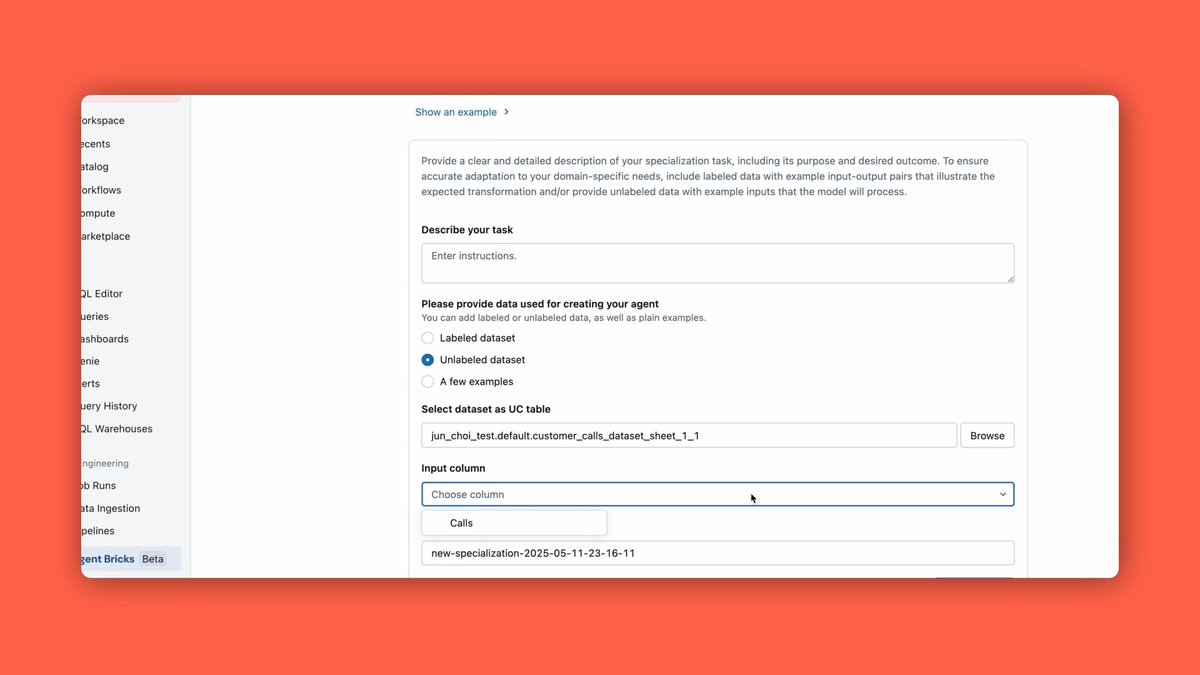
Without proper governance, an AI agent might autonomously access sensitive data, expose personal information, or modify sensitive records. In our new short course: “Governing AI Agents,” created with Databricks and taught by Amber Roberts, you’ll design AI agents that handle data safely, securely, and transparently across their entire lifecycle....

78,560 Aufrufe • vor 1 Jahr •via X (Twitter)

32 Kommentare

Profilbild von Youssef El Manssouri
Youssef El Manssourivor 1 Jahr

@databricks No human employee gets root access on day one. Why would an autonomous system? Start with views Start with masks. Start with logs. Build trust through constraints, not hope.

Profilbild von Neo
Neovor 1 Jahr

@databricks Dear Sir, you are a legend 🙏 At the cusp of every era, you take the time to be the best teacher, a whole generation can look up to. A student of your ML lectures, and a current student of your Deep Learning lectures. ❤️ 🫡

Profilbild von Sᴀɢᴀʀ kharal
Sᴀɢᴀʀ kharalvor 1 Jahr

@databricks Everyone's racing to ship AI agents. Almost nobody's talking about governance until something breaks in production. This is the unsexy work that prevents the viral incident.

Profilbild von AIxBlock
AIxBlockvor 1 Jahr

@databricks Solid move. Agent governance isn’t a side topic, it’s what separates real AI systems from risky prototypes.

Profilbild von Alpaca Network
Alpaca Networkvor 1 Jahr

@databricks Essential work. Governance and transparency are what make AI sustainable long term. Open models and onchain infrastructure take that even further by making every action traceable and verifiable.

Profilbild von Ronnel
Ronnelvor 1 Jahr

@databricks Hey Mr. @AndrewYNg , can you please give me free access to your courses on Coursera, they are literally to expensive for me to afford, I'm from Nigeria and the price of the courses are way beyond my means of livelihood. I'm be eternally grateful

Profilbild von Rohit Kumar Tiwari
Rohit Kumar Tiwarivor 1 Jahr

@databricks This is such a relevant course. These skills are not optional but must.

Profilbild von Michiel V
Michiel Vvor 8 Monaten

@databricks the governance gap is real - most people running agents locally are one bad skill install away from a problem. the tooling for this is still pretty immature

Profilbild von UncleChris1997
UncleChris1997vor 1 Jahr

@databricks 😎😎😎

Profilbild von Jimmy Louis
Jimmy Louisvor 1 Jahr

@databricks real build hours, no ghosting on data

Profilbild von AlphaHunterVN | ETHGas ⛽
AlphaHunterVN | ETHGas ⛽vor 1 Jahr

@databricks The tension between true agent autonomy and necessary governance constraints is fascinating. What foundational guardrails are proving most effective?

Profilbild von Aiko Lang | AI-Powered Head of BD QStarLabs
Aiko Lang | AI-Powered Head of BD QStarLabsvor 1 Jahr

@databricks AI governance isn't just a technical challenge - it's a human imperative. @AndrewYNg and @databricks show how we transform potential risks into responsible innovation. #AIEthics #ResponsibleTech

Profilbild von Anthara Fairooz
Anthara Fairoozvor 1 Jahr

@databricks Great course on governing AI agents! Essential for data safety and transparency.

Profilbild von Michiel V
Michiel Vvor 8 Monaten

@databricks the lifecycle management piece is what most openclaw setups skip entirely. everyone focuses on building the agent, almost nobody thinks about governing it. signed up - this gap is real for anyone running persistent agents in production

Profilbild von THE AI REGULATOR
THE AI REGULATORvor 8 Monaten

@databricks 100%. Operationally: (1) tool scopes per role (least privilege), (2) approval gate for risky actions, (3) immutable audit receipts you can replay during incident response.

Profilbild von THE AI REGULATOR
THE AI REGULATORvor 8 Monaten

One governance pattern that prevents “agent went rogue” incidents: treat every tool like a production API. - explicit scopes per role (read vs write) - approval gate for high-risk actions (payments, deletions, sending emails) - immutable audit receipts (who/what/why + inputs/outputs) so you can replay an incident - continuous evals/red-team prompts after every model/tool change Without receipts + scopes, you can’t do incident response—only storytelling.

Profilbild von Sherif Negm
Sherif Negmvor 8 Monaten

@databricks

Profilbild von AI PlanetX
AI PlanetXvor 1 Jahr

@databricks Great initiative! Governing AI agents is crucial for data safety and transparency. Excited to learn more!

Profilbild von Tobe Duru
Tobe Duruvor 1 Jahr

@databricks governance is the new competitive advantage

Profilbild von TheAIGuy
TheAIGuyvor 1 Jahr

@databricks Critical insight on AI governance. As AI agents become more autonomous, what frameworks are you implementing to ensure responsible deployment while maintaining innovation velocity? #ResponsibleAI

Profilbild von orçun
orçunvor 1 Jahr

@databricks real data with respect

Profilbild von Michiel V
Michiel Vvor 8 Monaten

@databricks the data access permissions piece is where most people skip corners. good to see it framed as a core pillar not an afterthought

Profilbild von Altiam Kabir
Altiam Kabirvor 1 Jahr

@databricks This course sounds like a game-changer for AI safety!

Profilbild von TechAI
TechAIvor 1 Jahr

@databricks This is such an important step for the AI ecosystem. 👏 Governance isn’t just a safeguard — it’s what makes agents trustworthy and production-ready. Excited to see Databricks and Amber Roberts leading this effort! #AI #TechAI

Profilbild von Chris Wheeler
Chris Wheelervor 1 Jahr

@databricks @grok explain this

Profilbild von THE AI REGULATOR
THE AI REGULATORvor 8 Monaten

@databricks Practical risk register control: for each agent capability, record owner, data boundary, approval step, and review date with evidence attached. If evidence is missing, freeze scope expansion until it is remediated.

Profilbild von Learning_Machine
Learning_Machinevor 1 Jahr

@databricks This is a must if you are working with agents.

Profilbild von Juan Izaguirre
Juan Izaguirrevor 1 Jahr

@databricks Awesome!!! I recommend this course . I think is very good!!!

Profilbild von Mohamed Anis
Mohamed Anisvor 1 Jahr

@databricks The real innovation in AI isn’t what it can do but what it’s prevented from doing

Profilbild von Maya Chen
Maya Chenvor 1 Jahr

@databricks AI agents with access? Someone's testing the limits.

Profilbild von LLM
LLMvor 1 Jahr

@databricks This course is perfect for anyone serious about safe and secure AI.

Profilbild von Sri Agung
Sri Agungvor 1 Jahr

@databricks real data with care, not cooked vibes
Ähnliche Videos

New Course: ACP: Agent Communication Protocol Learn to build agents that communicate and collaborate across different frameworks using ACP in this short course built with IBM Research's BeeAI, and taught by Sandi Besen, AI Research Engineer & Ecosystem Lead at IBM, and Nicholas Renotte, Head of AI Developer Advocacy at IBM. Building a multi-agent system with agents built or used by different teams and organizations can become challenging. You may need to write custom integrations each time a team updates their agent design or changes their choice of agentic orchestration framework. The Agent Communication Protocol (ACP) is an open protocol that addresses this challenge by standardizing how agents communicate, using a unified RESTful interface that works across frameworks. In this protocol, you host an agent inside an ACP server, which handles requests from an ACP client and passes them to the appropriate agent. Using a standardized client-server interface allows multiple teams to reuse agents across projects. It also makes it easier to switch between frameworks, replace an agent with a new version, or update a multi-agent system without refactoring the entire system. In this course, you’ll learn to connect agents through ACP. You’ll understand the lifecycle of an ACP Agent and how it compares to other protocols, such as MCP (Model Context Protocol) and A2A (Agent-to-Agent). You’ll build ACP-compliant agents and implement both sequential and hierarchical workflows of multiple agents collaborating using ACP. Through hands-on exercises, you’ll build: - A RAG agent with CrewAI and wrap it inside an ACP server. - An ACP Client to make calls to the ACP server you created. - A sequential workflow that chains an ACP server, created with Smolagents, to the RAG agent. - A hierarchical workflow using a router agent that transforms user queries into tasks, delegated to agents available through ACP servers. - An agent that uses MCP to access tools and ACP to communicate with other agents. You’ll finish up by importing your ACP agents into the BeeAI platform, an open-source registry for discovering and sharing agents. ACP enables collaboration between agents across teams and organizations. By the end of this course, you’ll be able to build ACP agents and workflows that communicate and collaborate regardless of framework. Please sign up here:

Andrew Ng

105,894 Aufrufe • vor 1 Jahr

🚨We’re excited to Introduce AI HQ — your home for building, activating, and supervising AI agents across your enterprise 🚨 We’re giving IT and business teams an end-to-end platform to co-create AI agents that don’t just assist. They act. These agents are fully integrated, grounded in company data, and built to execute high-impact business processes autonomously. New capabilities in AI HQ include: ⚡ Agent Builder (Beta): Your shared development environment where IT and business teams collaboratively build AI agents. Low-code tools make it easy to map out logic with reusable blocks, connect to systems and data, design interfaces with drag-and-drop simplicity, and more. 🏠 Writer Home: Your personalized AI workspace with 100+ prebuilt agents for every function - from support to sales to HR - ready to go and accessible via desktop, browser, or extensions. It’s your new front door to real AI-powered work. 🛡️ Observability Tools (Beta): Gain full control and visibility into every agent with enterprise-grade observability: monitor activity activity, detect anomalies, and resolve issues before they escalate. It’s how AI moves from experimental to operational. Companies like Uber Commvault and Franklin Templeton (@FTI_US) are already using Writer AI agents to reinvent knowledge management, accelerate revenue workflows, and deliver smarter client experiences. This isn’t hype. It’s happening now. 👀 Dive into today’s announcement:

WRITER

10,839 Aufrufe • vor 1 Jahr