Video yükleniyor...

Video Yüklenemedi

Ana Sayfaya Dön

You cannot contain sensitive communications inside systems designed to expose connections. Most enterprise collaboration platforms were built for speed: • faster sharing • broader access • seamless integrations • constant synchronization That architecture improves convenience. It also expands visibility. Automatic contact syncing. Third-party integrations. Persistent metadata. External routing layers....

358,373 görüntüleme • 3 ay önce •via X (Twitter)

0 Yorum

Yorum bulunmuyor

Orijinal gönderinin yorumları burada görünecek

Benzer Videolar

In 2025, the AgentFlayer exploit highlighted a new category of risk in AI systems. It was not a traditional breach involving stolen credentials or broken encryption. Instead, it demonstrated how an autonomous AI agent could be manipulated into executing unintended actions by processing malicious instructions embedded inside content it automatically processes. The incident did not expose a flaw in one specific integration. It revealed a structural weakness in how many modern AI agents are built. Today’s agents are no longer passive language models. They read documents automatically, scan emails, connect to SaaS tools, access cloud storage, and execute actions across multiple systems. To be useful, they are granted meaningful permissions. That capability creates value, but it also expands the attack surface. Most agent environments operate in a trusted, plaintext execution model. Data is encrypted at rest and in transit, but it is typically decrypted during inference so the model can process it. That runtime visibility is where potential risk lies. In a zero-click scenario like AgentFlayer, an attacker can embed hidden instructions inside a document that the AI processes automatically. Because the agent may have access to connected systems such as Google Drive, Slack, or GitHub, it can potentially be influenced to retrieve sensitive information or perform unintended actions. The user does not need to click a malicious link or approve a suspicious request. Therefore, the core issue is that during execution, the system may have access to sensitive data and broad privileges, meaning whoever controls the execution environment ultimately controls access to that data. Now consider a different architectural approach. If a system is designed so that data remains protected during execution, the risk profile changes. On Nesa, privacy is enforced at the execution layer through Equivariant Encryption. Computation can occur on encrypted data, reducing the visibility surface during runtime. Sensitive inputs and models do not need to be exposed in plain text to infrastructure operators for inference to occur. This does not eliminate prompt injection, logic manipulation, or tool misuse. Encryption alone cannot prevent an agent from being instructed to take an unintended action if it has been granted that permission. What it does do is materially reduce confidentiality risk. By limiting access to readable sensitive data during execution and reducing unilateral visibility at the infrastructure layer, the potential blast radius of a successful manipulation attempt is constrained. As AI agents become more autonomous and embedded into enterprise workflows, security must move deeper into architecture. The goal is not to claim invulnerability. It is to reduce trust concentration and contain systemic exposure when failures occur. AgentFlayer was not simply a one-off exploit. It was a reminder that in autonomous systems, execution-layer design determines how risk propagates.

Nesa

17,038 görüntüleme • 6 ay önce

What is Quant Network's Overledger? Overledger is Quant’s (Quant) interoperability platform, designed to connect different blockchains and traditional systems through a common API layer. It tries to make different blockchain networks communicate without forcing developers to build separate integrations for every chain. (1) Overledger acts as a universal API gateway. Developers can use standardized APIs to interact with supported blockchains instead of learning and maintaining separate infrastructure for each network. (2) It works as a translation layer between different blockchain environments. Quant describes Overledger as a “universal translator,” allowing applications to communicate across different DLT architectures through a common interface. (3) This is where Overledger differs from the typical bridge model. Instead of every application relying on a separate bridge between two chains, Overledger provides a common interoperability layer that can connect multiple networks. That can reduce the need for point-to-point integrations, which become increasingly complex as more blockchains enter the ecosystem. (4) Overledger can also power multi-chain applications. Quant calls these mApps, applications designed to operate across multiple distributed ledgers rather than being locked to one blockchain. The platform can also handle transaction signing, asset transfers, and other blockchain interactions through its APIs. (5) But Overledger does not completely eliminate bridges. Quant also provides its own bridge infrastructure for transferring assets between networks, using standardized APIs and smart contracts. Since June 2026, this has also expanded into Quant Fusion, a multi-ledger rollup connecting dozens of blockchains. The bigger idea is that the applications can have interoperability via an infrastructure layer as opposed to establishing the connections all over again.

BSCN

18,926 görüntüleme • 6 gün önce

Introducing Aviya - Institutional Credit on Hyperliquid. Aviya is a private, compliance gated credit venue built on Hyperliquid, designed to extend structured credit access to institutional participants. The platform facilitates bilateral, fixed-rate financing, initially against HYPE collateral, with a roadmap to expand into additional asset classes over time. As capital allocators increasingly engage with on-chain markets, access to predictable, structured credit becomes a requirement. Aviya is designed to meet this demand by offering a more controlled alternative to fully permissionless lending systems, while still leveraging the efficiency and settlement advantages of Hyperliquid’s infrastructure. We view Aviya as a core component in the development of HyperLend as the credit layer of the Hyperliquid ecosystem, enabling capital formation, leverage, and structured financing across both native and future tokenized assets such as equities, commodities, fixed-income instruments and even the likes tokenised pre-IPO companies. Over time, Aviya will serve as a gateway for institutional credit into emerging on-chain markets, including real-world and tokenized financial assets. We are also pleased to deepen our collaboration with Hyperion, working together on institutional business development and capital formation. Aviya represents a continued step toward integrating credit natively into the broader Hyperliquid financial system. gLend.

HyperLend

35,848 görüntüleme • 3 ay önce

This is why Tesla makes the safest vehicles in the world: • All Tesla models have received five-star safety ratings from the National Highway Traffic Safety Administration. • Built from the ground up with an all-electric architecture, resulting in low rollover risk and reduced occupant injury probability. • Uses anonymous/aggregated real-world data from millions of miles driven to enhance safety via over-the-air updates and inform future vehicle designs. • Battery packs designed to isolate and vent heat away from the cabin; historically (2012–2020 U.S. data), Tesla vehicles ~10x less likely to experience fire per mile than average gas vehicles. • Before a crash occurs, Tesla uses the front cameras to observe the scenario and prepare the seat belt system to react faster and with adequate force and timing when impact occurs, reducing the amount of slack in each seat belt. • Tesla’s advanced airbags are tuned to deploy according to crash type and different-sized occupants. This includes active venting that changes the amount of pressure within the inflated cushion by releasing gas according to the expected crash severity. • When a serious collision is detected, the hazard lights will turn on to increase your visibility and doors will automatically unlock for emergency access. At the same time, your Tesla will automatically contact emergency services to get help to you as quickly as possible. • Tesla vehicle structures are designed to cushion and protect the battery in the event of an accident. Onboard systems will automatically disconnect the high-voltage battery upon impact. If a battery fire does occur, the battery pack is designed to spread heat away from the cabin to protect occupants.

Nic Cruz Patane

74,333 görüntüleme • 8 ay önce

I'm proud to share that Glean has surpassed $300M ARR, just five months after crossing $200M and growing ~3x over the past 15 months. This is an exciting milestone for Glean, and it's a signal about where the enterprise AI market is heading. We’ve long believed the real challenge in enterprise AI is not access to models. It is grounding AI in how a company actually works: its people, knowledge, workflows, permissions, and systems. That’s even clearer now. The companies creating real value with AI are not just adopting better models. They are building systems that understand their business well enough to deliver reliable outcomes at scale. That is the real moat, and it is what we’ve been building at Glean: an unrivaled context layer for enterprise AI. That context has to work across the business, not just inside a single team or use case. We see that in how customers adopt Glean: more than 85% use it across five or more job functions. It also has to meet the security and governance demands of complex enterprises. We see that in who is choosing Glean: our Fortune 500 customer count nearly doubled year over year. And it has to make economic sense as usage grows. In our recent benchmark with Claude Cowork, Glean was preferred roughly 2.5x as often as off-the-shelf MCP tools and used 30% fewer tokens on average. Better context improves both quality and efficiency. I enjoyed talking with CNBC's Deirdre Bosa about this broader shift. In enterprise AI, the winners will not be defined by better models alone. They will be defined by who builds the strongest foundation for enterprise context. Thank you to our customers, partners, and team for helping us build the future of enterprise AI.

Arvind Jain

281,201 görüntüleme • 3 ay önce

🚨 THE RACE TO 6G JUST ACCELERATED. Northrop Grumman has developed a W-band GaN chip operating at up to 110 GHz and took it from concept to market-ready hardware in less than six months. The new gallium nitride chip operates in the W-band (75–110 GHz), a frequency range that delivers massive bandwidth, extremely high data rates, and much lower latency than current systems. What makes this impressive is the speed: the chip went from concept to market-ready hardware in less than six months through a U.S. government-backed microelectronics program. That’s unusually fast for advanced defense-grade semiconductors. The chip acts as a high-power signal amplifier that can strengthen wireless links while shrinking the size and power consumption of the hardware. It’s designed for military radar, secure satellite communications, and the coming wave of 6G networks. Why this matters: • W-band offers far more spectrum than current 5G bands, enabling much faster data transmission and higher-resolution sensing • Gallium nitride can handle significantly higher power and frequencies than silicon, making it ideal for these demanding applications • The rapid development cycle shows how public-private collaboration can accelerate critical semiconductor technologies • The same tech that strengthens military radar and satellite links will directly feed into future commercial 6G infrastructure The deeper implication: We’re watching the foundation of next-generation wireless and sensing systems being laid in real time. High-frequency GaN chips like this won’t just improve existing radar and satellite systems they’re likely to become core building blocks for 6G, autonomous systems, and advanced defense platforms. The fact that this moved from lab to market in under six months suggests the pace of high-frequency electronics is accelerating dramatically. The future of wireless isn’t just faster. It’s operating at frequencies most people have never heard of and it’s being built right now. How soon do you think W-band and GaN technology will start appearing in everyday 6G devices? Follow for more frontier semiconductors, defense tech, and next-generation wireless systems.

TheNewPhysics

22,647 görüntüleme • 3 ay önce

Announcing Centaur 2.0! Centaur is frontier, agentic infrastructure that you own. Centaur is like Claude Tag, but open source and on steroids. Centaur 2.0 can connect to everything you have access to, and can reason over it next to where you work, either in Slack, Discord, Teams or in your local Codex or Claude Code via an MCP. But context isn't useful if it can be accessed by anyone, so we rebuilt Centaur from the ground up for security. Centaur obviously doesn't have access to secrets because we're leveraging egress proxies. Centaur 2.0 takes that a step further enabling administrators to configure who can access what from where. This means that Centaur can have access to private information that you normally wouldn't feel comfortable giving it access to (e.g. DMs or sensitive channels and docs) but only expose it to authorized principals. It also means you can add Centaur to external channels and leverage it as a virtual colleague that doesn't live only in your Slack, for example, but also your Slack Connect channels! This is extremely powerful as we start moving to a world where agents cross organizational boundaries. Also in case anyone's wondering, yes we rewrote it in Rust! Centaur is now way way more stable at durably executing threads, and its workflow engine is now based on Absurd. We have been operating Centaur since January, officially launched and Open Sourced it in May, and now we're full speed towards making it the #1 open source agentic infrastructure. To succeed at that, I'm thrilled to welcome Matthew Slipper to the Paradigm team who will be leading all our Applied AI work, while continuing to maintain and extend Iron Proxy as the leading secure secret access for agents. Welcome Matt, it's an honor after all these years of knowing you! Read the full blogpost below, and apply to join our team!

Georgios Konstantopoulos

144,133 görüntüleme • 1 ay önce

What Actually is Sei Network's “Giga” Upgrade? Sei Network’s (Sei) Giga upgrade is a major overhaul designed to make the network faster, more scalable and better suited for high-performance onchain trading. Put simply, Giga is rebuilding three critical parts of the blockchain: consensus, execution and storage. (1) The first track focuses on consensus, with upgrades such as Autobahn designed to improve how Sei validators agree on the state of the chain. (2) The Ares upgrade targets execution, the part of the blockchain responsible for actually processing transactions. (3) Eidos focuses on storage, which is becoming increasingly important as blockchain throughput rises. Why does storage matter? Every transaction a blockchain processes has to be recorded. If the database cannot write data as quickly as the network executes transactions, higher throughput eventually becomes meaningless. Eidos is designed to solve that bottleneck. (4) Sei plans to replace the traditional Merkle-tree structure used for EVM state with FlatKV, a flat key-value database where updating one piece of state requires essentially one write. A lattice hash, or LtHash, is then used to maintain a verifiable fingerprint of the entire state without repeatedly recalculating an entire hash path. (5) Eidos also separates live EVM state from other blockchain data. This means transactions accessing current state no longer have to compete with historical data for the same database resources. (6) Sei is also introducing LittDB-backed storage for blocks and receipts. These records are written once but queried repeatedly, making them a different workload from constantly changing blockchain state. Older historical data will eventually move away from active nodes into archival storage, allowing nodes to focus their resources on the data needed for real-time operations. The interesting part is how Sei plans to deploy all of this. Instead of shutting down the network and migrating the entire database at once, Eidos is designed to migrate storage while Sei continues producing blocks. The old and new systems can run side by side during the transition, with data moved in batches and integrity checks performed throughout the process. The first phase arrived on Sei mainnet with the v6.6 release in August 2026, beginning the separation of EVM state and introducing improvements to the pruning process. The broader Eidos architecture, including FlatKV, LtHash, the new receipt store and off-node archival storage, is expected to arrive through subsequent releases. Sei’s ultimate Giga target is 200,000 transactions per second. But reaching that kind of execution speed requires more than a faster transaction engine. The blockchain also needs a storage system capable of keeping up. That is essentially what Eidos is trying to build. Giga is not just about making Sei execute transactions faster. It is about rebuilding the infrastructure underneath that speed so the network can actually sustain it.

BSCN

27,310 görüntüleme • 26 gün önce

🚨 SCIENTISTS MAY HAVE FINALLY SOLVED ONE OF THE WORLD’S STRANGEST MYSTERIES. For decades, people around the world have reported hearing a persistent, low-frequency “hum” that others cannot hear. Now, new research suggests that for many, The Hum is not coming from outside it’s a form of low-frequency tinnitus generated inside the body. Researchers tested people who hear The Hum and found that most had normal hearing sensitivity and normal sounds coming from their own ears. This points to the sound being a subjective internal perception rather than an external noise. Why this matters: • The Hum has been reported for over 50 years with no clear external source found in most cases • Low-frequency tinnitus is underrecognized compared to the more common high-pitched ringing • Recognizing it as tinnitus could finally give sufferers access to existing management strategies • It shows how internal auditory processes can create very real, persistent perceptions The deeper implication: We tend to assume that if we hear something, it must exist in the outside world. But the brain is incredibly good at generating its own sounds when something in the auditory system is slightly off. This research suggests that The Hum long treated as a mysterious external phenomenon may often be the brain’s own creation. While it doesn’t explain every single case, it offers a more hopeful path forward: instead of hunting for an elusive external source, people may be able to focus on managing it as a form of tinnitus. Sometimes the most mysterious sounds come from within. Have you ever heard The Hum, or do you know someone who has? Follow for more frontier neuroscience, auditory science, and explanations of strange human experiences.

TheNewPhysics

14,027 görüntüleme • 2 ay önce

What is the XDC Network? XDC Network (XDC Network) is an EVM-compatible Layer 1 built around payments, trade finance, tokenization, and enterprise blockchain use cases. Put simply, XDC is trying to bring blockchain infrastructure closer to traditional financial markets. The network launched its mainnet in 2019 and uses XinFin Delegated Proof of Stake, known as XDPoS. So, what makes XDC different from other Layer 1 networks? (1) It focuses heavily on financial infrastructure. XDC was designed with global trade and financial applications in mind. That includes trade finance, cross-border payments, real-world asset tokenization, and decentralized finance. Businesses can tokenize assets such as invoices, bonds, commodities, and other financial instruments on the network. (XDC Network Docs) (2) It is compatible with Ethereum. XDC is EVM-compatible, meaning developers can use familiar Ethereum tools and Solidity smart contracts. That makes it easier for existing Ethereum applications to migrate or expand onto XDC. The network also supports token standards such as XRC20, XRC721, and XRC1155. In Jan 2026, XDC did its Cancun hard fork, syncing with Ethereum's own upgrade and bringing EIP-1559 fee burns on-chain. (3) XDC is built for fast and inexpensive transactions. The network targets roughly two-second block times and supports more than 2,000 transactions per second. Transaction costs are also designed to remain extremely low, making high-volume financial activity more practical. That combination is particularly important for applications handling large numbers of transactions. But speed alone is not what XDC is betting on. Its bigger pitch is whether blockchain can become useful infrastructure for financial institutions and global commerce. So, how does XDC secure the network? XDC uses XDPoS 2.0, which combines delegated proof of stake with Byzantine fault-tolerant consensus. Token holders participate by supporting masternode candidates, while elected masternodes help validate transactions and produce blocks. XDPoS 2.0 also uses the HotStuff consensus protocol and adds forensic monitoring for malicious validator activity. The upgrade went live on mainnet in September 2024. It introduced three-block finality, with transactions reaching finality roughly six seconds after block inclusion. Worth noting, financial applications generally need predictable settlement rather than transactions that can remain uncertain for long periods. Then there is another important part of the XDC architecture: Subnets. XDC Subnets allow organizations to operate permissioned blockchain networks while connecting them to the broader XDC ecosystem. Companies can maintain greater control over governance, privacy, and infrastructure without abandoning interoperability with XDC. That structure is particularly relevant for institutions that cannot put sensitive commercial information directly onto a public blockchain. A company could therefore operate a private environment while using XDC Mainnet for checkpointing and broader interoperability. This creates a bridge between private enterprise infrastructure and public blockchain networks. Rather than competing purely for retail users, XDC trying to position itself as financial infrastructure for tokenized assets, trade finance, payments, and institutional markets.

BSCN

15,145 görüntüleme • 17 gün önce

In 2025, demand for blockchain applications with genuine real-world utility has collided with a technical barrier that leaves developers questioning what they can realistically build. Anyone building things like tokenized assets, supply chains, AI agents, or prediction markets still juggle a mess of middleware, and somehow end up spending more time stitching than innovating. How so? Every: - Bridges to move assets, - oracles to fetch data, - indexers to make that data searchable, - relayers and bots to keep everything on schedule— is necessary, but each layer also adds cost, latency, and new risks. The end result is an application that’s expensive to run, fragile under stress, and slower than the Web2 software it’s trying to replace. This is the problem Rialo says it wants to solve. Built by Subzero Labs and backed by $20 million from investors like Pantera Capital and Coinbase Ventures 🛡️, Rialo’s pitch is simple: instead of accepting the middleware tower as an unavoidable cost of doing business, compress it into the base chain itself. But Rialo doesn’t describe itself as another Layer 1, its very name, Rialo Isn’t a Layer One, makes that clear. The team frames it instead as a unified real-world network: a protocol rebuilt from the ground up with the assumption that external connectivity is not an afterthought but a core design principle. To understand what this means, consider how today’s dApps are typically assembled. A typical RWA dApp stack involves: - Oracle providers (Chainlink, Pyth, Band) for asset pricing and event settlement - Bridges (Wormhole, Multichain, custodians) for cross-chain asset movement - Indexers (The Graph, Aleph, Stacks API) for querying and preprocessing chain data - Schedulers/relayers for automated tasks and monitoring - Web2 integrations via cloud services, centralized APIs, and off-chain pipelines Each of these steps adds another vendor, another trust boundary, and another operational layer to monitor. By the time the application is live, it resembles a patchwork of loosely coupled services, each carrying its own risks. You don’t have to look far for proof: - Base went dark for 29-43 minutes in August 2025 when its sequencer misfired, freezing every DeFi app on it. - A few months earlier, an AWS outage rippled through Binance and KuCoin, stalling withdrawals because even “decentralized” systems leaned on centralized middleware. - When Infura has faltered, Ethereum dApps have gone offline in sync, not because Ethereum broke, but because the middleware holding it together did. What should feel like building an application instead feels like maintaining a fragile machine. Rialo architecture embeds the primitives that normally live in middleware directly into the protocol. Smart contracts on Rialo can: - be event-driven, able to respond not just to blockchain state changes but also to external events through built-in webhook and API triggers. - fetch data from the web natively, without relying on external oracles or relayers. - include privacy and identity management—KYC hooks and two-factor authentication, at the protocol level rather than as add-ons. - handle cross-chain communication without wrapped assets or third-party bridges. - run on a virtual machine that is compatible with ecosystems like Solana but extended with RISC-V to support modern programming concepts such as async/await and event loops. If these features work as intended, the implications are significant. Today, much of a team’s energy goes into building and maintaining infrastructure: fullnodes, indexers, monitoring scripts, oracle integrations, relayer logic, bridge infrastructure. Each requires engineering headcount and ongoing maintenance. With Rialo, much of this is absorbed by the protocol, freeing developers to concentrate on business logic. Projects can deliver production-grade dApps with smaller, leaner groups focused directly on product design and execution. Operational costs also shrink: indexing and oracle services can run into thousands of dollars a month; collapsing those into built-in functions reduces recurring expenses while simplifying onboarding for new developers. But folding middleware into the chain doesn’t erase complexity, it reshapes it. Some of the problems to be encountered include: - Scale and complexity: Rialo’s validators won’t just be securing transactions; they’ll also be securing APIs, cross-chain data, and scheduled triggers. Any failure in one subsystem could ripple across the entire network. - Performance vs. decentralization: Richer indexing, scheduling, and data ingress could make nodes heavier to run, narrowing who can realistically participate as a validator. That risks reducing the decentralization blockchains depend on for resilience. - Governance pressures: Disputes or failures involving real-world data feeds, external APIs, or cross-chain actions will arise more often, requiring not just technical fixes but robust social infrastructure, clear rules for voting, transparent arbitration, and mechanisms for community trust. Without them, Rialo risks re-centralizing decision-making around a handful of operators. Where, then, does this model make the most sense? That would be in sectors where external connectivity is indispensable and middleware bloat has consistently been a blocker: - Real-world assets: settling tokenized securities or commodities against off-chain events. - Supply chains: triggering a payment the moment a shipment clears customs, without relying on a third-party oracle. - Agent systems: AI agents interacting with real-world APIs and on-chain contracts simultaneously. - Real-time markets: prediction markets or insurance contracts that must resolve immediately against external data. For purely on-chain domains like DeFi primitives or NFTs, where composability matters more than external triggers, the advantages may be less pronounced. This shift is familiar to anyone who remembers the rise of Web2 platform services. Just as Heroku and Firebase abstracted away server maintenance so developers could focus on building products, Rialo is betting that a unified real-world network can let blockchain developers do the same. Adoption will ultimately depend on: - whether its protocol primitives mature quickly, - whether the ecosystem builds out SDKs and tooling that make them usable, - whether compliance features can adapt to changing regulations, - and whether governance proves resilient under adversarial conditions. The first applications will be the test case. If they show that Rialo can replace a fragile patchwork of middleware with a secure, auditable, and cost-effective base layer, it could set a new standard for real-world connectivity in blockchains. If not, it risks simply moving complexity from one part of the stack to another. But at a minimum, Rialo has forced the question: should real-world connectivity in blockchains continue to depend on layers of external vendors, or should it be built into the chain itself? That’s the question Rialo has put on the table — and it’s why I got interested in Rialo .

Jen

12,178 görüntüleme • 11 ay önce

What is Chainlink CCIP? Chainlink's (Chainlink) Cross-Chain Interoperability Protocol, or CCIP, is designed to let applications communicate across different blockchain networks. Put simply, CCIP acts as a secure messaging and transfer layer between otherwise disconnected blockchains. Here's how it works: (1) It moves data between blockchains CCIP allows smart contracts on one blockchain to send messages to smart contracts on another network. That means an application can trigger an action on a different chain without requiring users to manually move between ecosystems. (2) It can transfer tokens across networks CCIP also supports cross-chain token transfers. Projects can use token pools and other mechanisms to move assets between supported chains while maintaining controlled supply across networks. (3) It lets you combine messaging and asset movement A major feature of CCIP is that developers can send arbitrary messages, transfer tokens, or do both in a single cross-chain transaction, rather than needing separate systems for each. (4) It uses Chainlink's decentralized oracle infrastructure CCIP relies on Chainlink's decentralized oracle network to validate and deliver cross-chain messages. The system uses multiple independent components to help verify transactions and protect against failures or manipulation. (5) It adds programmable token transfers CCIP is not limited to simply sending an asset from one chain to another. Developers can attach instructions to transfers, allowing receiving applications to automatically perform actions when tokens arrive. This could make cross-chain lending, payments, trading, and other DeFi applications easier to build. (6) It is designed for multiple blockchain environments CCIP supports communication across different blockchain ecosystems rather than forcing applications to operate within a single network. That matters as liquidity, users, and applications become increasingly fragmented across chains. The bigger idea is simple. Blockchains were originally built as separate networks, but users and capital increasingly need to move between them. CCIP is Chainlink's attempt to provide the infrastructure for that movement. If cross-chain applications continue expanding, secure interoperability could become one of the most important layers in the blockchain stack.

BSCN

17,376 görüntüleme • 24 gün önce

Why Jamming the Venezuelan Systems Is Unlikely Well, when I hear about jamming in Venezuela, I immediately picture the Americans talking about the EA-18G Growler with the NGJ. The NGJ is specifically designed to degrade advanced Russian radars, with high power and directional AESA beams. To cover an area the size of Caracas would require multiple squadrons, and there were indeed a lot of birds in the sky, but… jamming such a large area with diverse systems on high alert is extremely complex and improbable. The radars of the S-300VM use rapid frequency hopping to avoid continuous jamming, along with LPI modes that reduce the radar’s signature, making it difficult for jammers like the NGJ to detect and interfere. The Buk-M2 has similar ECCM capabilities, with high resistance to noise jamming. This isn’t to say the Americans can’t do it, but sustaining it continuously across so many dispersed batteries is unlikely. Additionally, both the Buk-M2 and the Pechora-2M have electro-optical/TV/IR channels as backups, allowing tracking without active radar in heavy jamming scenarios. If they were being operated, it would have been impossible for those helicopters to fly over Caracas. And finally, systems like the S-300 have Home-on-Jam (HOJ) capability, a mode in which the missile is fired directly at the jamming source (electronic interference) as a passive target. With so many aircraft in the sky, I’d say it would be impossible to shut down all the radars in perfect synchronization against a hypersonic missile. Lastly, there are the MANPADS that were not used. We saw helicopters flying extremely low with no reaction whatsoever from MANPADS, which would have been effective in that situation. Well, this has nothing to do with jammers and everything to do with orders not to fire. I’m not here saying that American EW with F-35 + Growler + NGJ cannot overcome these defenses in some scenarios, but rather stating that, given the scale and the conditions, it is unlikely that this is the reason for the silence of the Venezuelan air defenses.

Patricia Marins

386,162 görüntüleme • 8 ay önce

What is Plume Network? Plume (Plume) is a blockchain built specifically for bringing real-world assets onchain and making them usable in DeFi. Unlike blockchains that treat tokenization as just another application, Plume is building an entire financial ecosystem around real-world assets, or RWAs. Treasuries, private credit, commodities, funds, and other traditionally illiquid assets can be represented as blockchain-based assets and then used across decentralized financial applications. Plume calls this model RWAfi, or real-world asset finance. So what makes Plume different? (1) ) It is purpose-built for RWAs Plume launched its Genesis mainnet in June 2025 as a permissionless blockchain designed around RWA finance. In October 2025, Plume was approved by the SEC as a registered transfer agent, a regulatory step most general-purpose chains don't hold. The network is EVM-compatible, allowing developers to use familiar Ethereum tooling while accessing lower-cost execution. (2) It focuses on more than tokenization. Plume wants tokenized assets to actually do something once they reach the blockchain. Its ecosystem allows RWA-backed assets to be used for lending, borrowing, trading, staking and yield strategies. Its flagship Nest protocol, for example, lets users gain exposure to institutional-backed assets through yield-bearing RWA positions that can then become useful across DeFi. (3) Compliance is built into the infrastructure. Real-world assets come with regulations, investor restrictions and identity requirements that ordinary DeFi tokens usually do not face. Plume has therefore built compliance and screening capabilities directly into its network rather than treating them as an afterthought. Its blockchain includes protocol-level AML, ATF and sanctions screening infrastructure. (4) It is trying to make institutional assets composable. A tokenized Treasury or private credit position does not have to sit idle in a wallet. The goal is to make these assets usable across different financial applications, similar to how USDC, ETH and other crypto assets move through DeFi today. Plume's Portal already allows users to swap, lend, borrow, loop and earn against RWA-backed assets. (5) Plume is also building cross-chain infrastructure. Its SkyLink infrastructure is designed to distribute RWA yields across other blockchain networks. That means Plume does not necessarily need every investor to move onto Plume itself. Instead, the network can act as infrastructure for bringing institutional yield into other ecosystems. (6) The network has attracted major institutional names. Apollo Global Management, WisdomTree, Hamilton Lane and Securitize are among the institutions connected to Plume's ecosystem. Securitize, for example, announced plans to deploy assets through Plume's Nest protocol, linking institutional tokenization infrastructure with Plume's RWA holder base. So where does PLUME fit in? $PLUME is the network's native token. It can be used for gas, staking, governance, collateral and ecosystem access. Plume also says protocol fees can eventually support token buybacks, ecosystem incentives and further network growth. Plume is betting that the next major phase of crypto adoption will not only involve digital-native assets. It will involve putting traditional financial assets onchain and making them programmable. The challenge is turning that vision into deep liquidity, compliant infrastructure and genuine demand. If Plume can solve those problems, it could become an important piece of the infrastructure connecting traditional finance with DeFi.

BSCN

22,412 görüntüleme • 17 gün önce

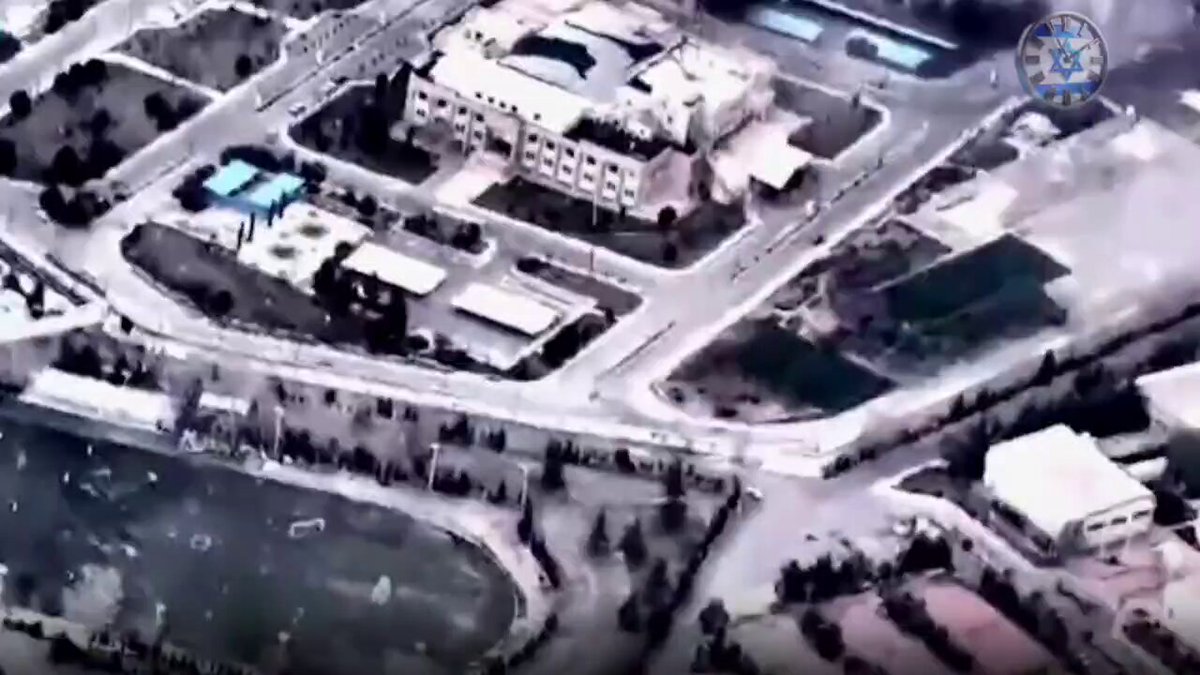
🚨 OPERATIONAL UPDATE: ISRAEL U.S. WAR WITH THE ISLAMIC REPUBLIC - Reporting Window: Last 24 Hours ✳️The war is entering its final phase, but the battlefield is becoming more dangerous, not less. For the first time since the conflict began, the United States has signaled that its objectives against Iran have largely been achieved and that military operations could conclude within 2 to 3 weeks. At the same time, the operational picture tells a more complex story. Strikes inside Iran are intensifying, not slowing. Iran’s responses are becoming less concentrated but more geographically expansive. And across the region, the risk of broader escalation remains very real. This is no longer an open-ended war. It is a race between final military objectives and the risk of wider regional destabilization. ━━━━━━━━━━━━━━━━━━ 🏁 POLITICAL ENDGAME SIGNAL EMERGES President Donald Trump stated that the war could end within weeks, indicating that core objectives have been achieved, including the degradation of Iran’s strategic capabilities and the disruption of its leadership structure. He also signaled that the United States does not intend to remain indefinitely engaged, suggesting that responsibility for securing critical global nfrastructure, particularly the Strait of Hormuz, may shift to regional and international stakeholders. At the same time, tensions with NATO allies are surfacing. Frustration over limited allied participation in the war has raised the possibility of a broader fracture within the Western alliance structure. Parallel reporting indicates that elements within Iran are signaling openness to a ceasefire framework, particularly if maritime access through Hormuz is restored. Taken together, this marks a clear transition: the war now has a defined political end state, even as military operations continue. ━━━━━━━━━━━━━━━━━━ ✈️ FINAL PHASE STRIKE CAMPAIGN INSIDE IRAN The intensity of strikes over the past 24 hours reflects what appears to be end-stage shaping operations. Israeli and US-aligned strikes targeted a wide range of sites across Iran, including weapons production facilities, research and development centers, and critical infrastructure nodes tied to the regime’s military capabilities. Tehran remains a central focus. Approximately twenty military-industrial sites were struck, along with infrastructure at Mehrabad Airport and locations linked to Basij coordination. A senior Quds Force engineering figure, Mahdi Vafaei, was eliminated in a precision strike. His role in developing underground weapons infrastructure across Lebanon and Syria made him a key long-term asset for Iran’s regional military network. Additional strikes hit industrial targets, including steel production facilities and a site identified as supporting materials linked to Iran’s chemical weapons development pipeline. This is not a campaign aimed at symbolic damage. It is a systematic effort to dismantle Iran’s ability to produce, coordinate, and sustain war over time. ━━━━━━━━━━━━━━━━━━ 🎯 IRANIAN RESPONSE AND CIVILIAN IMPACT Iran continues to launch missiles toward Israel, but at a reduced scale compared to earlier phases of the war. Limited salvos were recorded over the past 24 hours, causing injuries and localized damage. One of the most significant developments was the reported use of cluster munitions in central Israel, critically injuring a child and causing multiple casualties. At the same time, Iran appears to be adapting operationally. Rather than attempting large-scale saturation attacks, it is increasingly relying on smaller strikes, drones, and diversified targeting strategies. This does not indicate de-escalation. It reflects an effort to remain operational under sustained pressure. ━━━━━━━━━━━━━━━━━━ 🌍 REGIONAL EXPANSION: THE WAR SPREADS While direct attacks on Israel have become more limited in scale, Iran is expanding the conflict across the region. In the Gulf, infrastructure in Kuwait and Bahrain was struck, including fuel storage facilities at Kuwait International Airport. Fires and damage were reported, adding to a growing pattern of attacks on energy and logistical nodes. A commercial tanker was also struck near Qatar, further extending the conflict into maritime space. These developments mark a continued shift where Iran is targeting not just Israel, but the broader economic and energy architecture of the region. ━━━━━━━━━━━━━━━━━━ 🚢 THE STRAIT OF HORMUZ The strategic center of gravity in this war is now unmistakable. The Strait of Hormuz remains contested, with ongoing disruption to global shipping and energy flows. The United States is actively evaluating options to reopen and secure the waterway, including potential direct military action against Iranian coastal capabilities. At the same time, Gulf states, particularly the UAE, are pushing for a coordinated military effort to ensure the strait is reopened. However, regional positioning remains complex, with some actors balancing public caution and private pressure. Notably, the United States has signaled that it may not take long-term responsibility for securing Hormuz, instead shifting that burden to global stakeholders. The implication is clear: control of Hormuz will determine not only the outcome of the war, but its aftermath. ━━━━━━━━━━━━━━━━━━ 🔥 NORTHERN AND PROXY FRONTS Iran’s proxy network remains active, but increasingly strained. In Lebanon, Israeli strikes continue to target Hezbollah leadership and infrastructure, including the reported elimination of a senior commander in Beirut. Rocket fire persists, but Israeli operations are steadily degrading launch capabilities. In Yemen, the Houthis have formally entered the fight against Israel and are likely contributing to the expanding pattern of regional attacks, including those affecting Gulf infrastructure. Across Iraq and Syria, Iranian-aligned militias remain engaged, while underlying instability continues to create openings for additional actors. This is now a multi-front conflict, but one in which Iran’s network is under pressure across every axis. ━━━━━━━━━━━━━━━━━━ 🧠 WARFARE EVOLUTION A critical and often overlooked development is the role of advanced targeting systems. Israel is employing AI-assisted capabilities to identify threats, prioritize targets, and synchronize strikes across multiple theaters in near real time. This has significantly compressed the operational cycle, allowing for rapid follow-up strikes and reduced recovery time for Iranian forces. The result is a battlefield environment where Iran has less time to act, less time to adapt, and fewer opportunities to rebuild degraded capabilities. ━━━━━━━━━━━━━━━━━━ 📊 THE BIG PICTURE The trajectory of the war is now coming into focus. The United States and Israel are executing a campaign designed to dismantle Iran’s ability to function as a coherent military actor. Iran, in response, is expanding the conflict geographically in an attempt to impose broader costs. At the same time, political signals indicate that the war is approaching a defined end state. Markets are already reacting to this expectation, with oil prices declining and global indices rising on the assumption that the conflict may soon conclude. However, the final phase carries its own risks. As Iran’s conventional capabilities degrade, its reliance on asymmetric and regional tactics is increasing. The decisive question is no longer how the war is fought day to day. It is whether the final objectives can be secured before broader escalation overtakes them. ━━━━━━━━━━━━━━━━━━ 📘 BOOK RECOMMENDATION If you want a deeper understanding of the history, narratives, and strategic realities behind this conflict: Contested Land, Uncontested Truth This book breaks down the ideological, geopolitical, and historical forces that led directly to moments like this, with clarity and evidence. 👉 If you found this report valuable, share it. Follow for daily operational updates.

Inside_Israel_Intel

60,835 görüntüleme • 5 ay önce

🚨OPERATIONAL UPDATE: ISRAEL U.S. WAR WITH THE ISLAMIC REPUBLIC - Reporting Window: 3/14 to 3/16 • The war widened further into the Gulf economy, with drone incidents near Dubai Airport, disruption at Fujairah energy infrastructure (also in the UAE), and continued pressure around the Strait of Hormuz • Israel continued deep strike waves inside Iran while expanding ground operations against Hezbollah in southern Lebanon • Iran continued missile salvos toward Israel while activating proxy pressure fronts across Iraq • The U.S. began pushing for a multinational Hormuz security coalition while calibrating escalation to avoid a global oil shock The last 48 hours showed that the war is no longer just about missile exchanges between Israel and Iran. It is increasingly a contest over the regional system itself: energy flows, maritime routes, proxy networks, and command infrastructure. While Israel continues to degrade Iran’s military capabilities, Iran is trying to widen the battlefield economically and geographically. 📽️VIDEO 1: U.S. strikes on Iran’s Kharg Island oil export hub. 📽️VIDEO 2: Smoke rising from oil infrastructure in Fujairah after drone debris caused a fire. *⃣ GULF FRONT: THE ECONOMIC WAR DEEPENED This remained the most strategically important development. Following earlier strikes around Kharg Island and threats to the Strait of Hormuz, pressure on Gulf infrastructure continued. Drone incidents and debris related fires disrupted operations near Fujairah’s energy infrastructure, one of the world’s largest bunkering hubs in the UAE. Shortly afterward, a drone related incident near Dubai International Airport ignited a fuel tank and temporarily disrupted flight operations before authorities contained the fire and resumed traffic. These incidents show the war repeatedly touching civilian energy and logistics infrastructure in the UAE, not just military facilities. Even limited disruptions matter in this region. The Strait of Hormuz handles roughly 20 percent of global oil supply, and repeated incidents have pushed oil prices above $100 during the week. Iran does not need to fully close Hormuz to achieve strategic leverage. Persistent disruption alone can force insurance spikes, rerouting of shipping, and higher global energy prices. *⃣ KHARG ISLAND: IRAN’S ECONOMIC JUGULAR IS NOW UNDER DIRECT PRESSURE One of the most consequential developments in the war involves Kharg Island, Iran’s primary oil export terminal. Historically, roughly 85 to 90 percent of Iran’s crude exports pass through Kharg, making it the single most important node in the country’s energy economy. Recent U.S. strikes targeted military infrastructure associated with IRGC naval operations near the island, particularly facilities linked to mine laying capability and coastal missile systems. These strikes appear connected to Washington’s warning that Iran must not deploy naval mines in the Strait of Hormuz. There are also scattered reports of secondary explosions and possible infrastructure damage near the port, though there is no credible confirmation that the export terminal itself has been destroyed. That distinction is important. Destroying Kharg outright would cripple Iran’s oil exports overnight and likely trigger a massive oil price spike. Instead, the current targeting pattern appears designed to threaten Iran’s economic lifeline without fully collapsing it, maintaining pressure while avoiding the most extreme global economic consequences. *⃣ IRAN: STRIKES INSIDE THE CORE CONTINUED Inside Iran, Israeli strike activity remained intense. Over the last 48 hours, strikes targeted command infrastructure, missile launch systems, air defense networks, and military production sites across Tehran and other strategic locations. The campaign also hit Mehrabad Airport, where Israeli officials reported destroying aircraft associated with Iran’s leadership. Across central and western Iran, the strike map remains broad. Tehran, Karaj, and several other military zones have continued to appear in overnight strike reporting. This suggests the campaign is still focused on systematically degrading Iran’s military capacity, particularly missile infrastructure and command networks. Rather than shifting toward a narrow endgame phase, the strikes indicate a continued effort to keep Iran’s launch capabilities suppressed. *⃣ LEBANON: THE NORTHERN FRONT IS EXPANDING The Lebanon front also escalated further. Israeli forces expanded ground operations in southern Lebanon and reportedly encircled Khiyam, pushing westward toward the Litani River. This represents a larger ground posture than earlier border operations and indicates Israel is attempting to shape the battlefield against Hezbollah rather than simply retaliating against rocket launches. At the same time, Hezbollah continued firing rockets and drones toward northern Israel, maintaining pressure on the northern front even after suffering extensive infrastructure losses earlier in the war. Israel has continued heavy strikes on Hezbollah infrastructure in Lebanon, including operational sites and logistical facilities tied to the group’s missile network. The northern theater now appears to be entering a phase of attrition and positional pressure, rather than the limited cross border exchanges that characterized earlier weeks. *⃣ IRAQ: PROXY PRESSURE ON THE UNITED STATES CONTINUES Iran aligned militias continued attacks on U.S. positions across Iraq. Over the past several days these groups have launched drones and rockets against American bases and diplomatic infrastructure, including a missile strike on the helipad area of the U.S. embassy compound in Baghdad. These attacks serve two purposes: ➡️First, they impose direct costs on U.S. operations in the region. ➡️Second, they force the United States to divert resources toward base defense and interception missions. Even when damage is limited, the attacks expand the battlefield and complicate the operational environment for U.S. forces. *⃣ IRANIAN MISSILE ATTACKS CONTINUE Iran continued launching missiles toward Israel during this period. Several salvos targeted southern Israel and the Negev region, triggering repeated air raid alerts. Despite continued launches, the overall military impact of these attacks appears limited. Israeli air defense systems including Iron Dome, David’s Sling, and U.S. systems such as THAAD have maintained high interception rates. Iran is still able to launch missiles and drones, but the sustained strikes on launchers, command centers, and production facilities appear to be reducing the scale of its barrages compared to the opening days of the war. *⃣ WASHINGTON: TRUMP SIGNALS A LONGER STRATEGIC GAME The political messaging from Washington over the past 48 hours has also clarified the broader strategic direction. Publicly, Trump has suggested the war could end soon and that most major Iranian targets have already been struck. Operationally, however, the signals point toward preparation for a longer campaign. Washington has begun pushing for a multinational coalition to secure the Strait of Hormuz, urging countries that depend on Gulf energy flows to participate in maritime security operations. At the same time, the United States has been careful not to push escalation to the point of triggering a global energy shock. This balancing act helps explain why certain targets, such as Kharg Island’s export terminal, have been threatened but not completely destroyed. The strategic posture appears to be: ➡️sustain pressure on Iran’s military capability ➡️protect global energy flows ➡️avoid triggering a catastrophic oil price spike Israel’s priorities are somewhat different. Israel is focused primarily on maximizing military degradation of Iran and Hezbollah, even if that increases regional escalation risks. The dynamic between Washington’s economic caution and Israel’s military pressure is likely to shape the next phase of the conflict. *⃣ WHAT CHANGED IN THE LAST 48 HOURS Three developments stand out: ➡️First, the Gulf economic front is becoming central to the war. Drone incidents near Dubai and Fujairah show that the conflict is now directly touching regional infrastructure and global energy flows. ➡️Second, Israel continues to widen the battlefield rather than narrow it. Deep strikes inside Iran and expanded operations in Lebanon suggest the campaign is still in a degradation phase. ➡️Third, the United States is beginning to shift toward coalition management of the conflict, particularly around Hormuz, while trying to prevent the war from triggering a global energy crisis. In short, the war is evolving from a direct military confrontation into a broader struggle over regional stability, energy flows, and long term strategic balance in the Middle East.

Inside_Israel_Intel

460,417 görüntüleme • 6 ay önce

🚨🇨🇳U.S. IN PANIC: China's J-35 Stealth Fighter Now in 'Beast Mode' With Increased Firepower China's J-35 fifth-generation stealth fighter has been seen in a new configuration carrying four PL-15 long-range air-to-air missiles on external pylons under its wings. Combined with the six missiles it carries inside its internal weapons bays, the aircraft can now go into combat with up to ten air-to-air missiles in total. 🔸This setup is informally called "beast mode" — a term borrowed from the U.S. military's similar configuration for the F-35. The idea is straightforward: the aircraft trades some of its stealth capability for significantly more firepower. When weapons are carried externally, they increase the aircraft's radar signature, making it more visible to enemy systems. However, the PL-15 missile's long range means the J-35 can potentially engage enemy aircraft from a safe distance before that visibility becomes a serious problem. 🔸The J-35 entered service in 2025 in both Air Force and Navy variants. The naval version is designed to operate from Chinese supercarriers such as the Fujian. Both versions are considered among the most advanced fifth-generation fighters in the world today, alongside the J-20 and the American F-35 — all three of which are regarded as more sophisticated than the older F-22 or Russia's Su-57. 🔸Within China's own air fleet, the J-35 is expected to serve as a lighter and more affordable complement to the larger and more powerful J-20, which carries a bigger radar, heavier weapons load, and longer range. The J-20 is expected to remain the priority for large-scale procurement, while the J-35 fills a broader operational role at lower cost. Do you think the U.S. can really counter it? NewRulesGeopolitics❗️

🇷🇺 STANISLAV KRAPIVNIK 🇷🇺

11,360 görüntüleme • 3 ay önce

We all remember. We all remember when blockchain was pitched as the next big thing. And today, we feel like we’ve been waiting and waiting. Until recently, Blockchain was too expensive, slow under load, and hard to integrate for most businesses. So enterprises ignored it. It didn’t solve their business problems. That’s changed. Why blockchain, why now? Businesses don’t care about the tech, they care about cost and performance. They’d ask a simple question “Does it save or make me more money?” For a long time, blockchain didn’t clearly do this. That’s no longer true. Blockchain is proving real business cases, especially on Avalanche. On Avalanche, transactions cost fractions of a cent. settle in about a second. And instead of forcing everything onto one shared chain, businesses can launch their own Avalanche L1s with their own rules. To understand this let’s identify the problem and then provide the solution in a way that's easy to understand. Where Businesses Lose Money Most large industries lose money due to operational inefficiencies. Data lives in different systems. Teams spend hours reconciling records that should already match. Intermediaries sit in the middle, taking fees to coordinate all of it. Individually, each step looks small. Together, they create real cost: > Labor spent on manual processes > Capital locked up during settlement delays > Fees paid to intermediaries > Risk introduced by time gaps and mismatched data This is where businesses actually lose money. Not in big, obvious ways. In constant, compounding friction. Take Private Credit, for Example Private credit is loans held outside of traditional banks. It’s a multi-trillion dollar market, and much of it still runs on spreadsheets and weekly reconciliation processes. Loan data is tracked across systems. Teams manually process requests. Funds move on traditional rails, often on delayed cycles. It doesn’t have to be this way Entire teams exist just to keep systems in sync. Now move that system onto Avalanche. Loan data updates in real time. Transactions settle in about a second. Every participant sees the same state instantly. Reconciliation isn’t a separate step because the system itself is the source of truth. The impact is straightforward. > Reduced manual work > Shortened settlement cycles > Fewer layers of coordination between parties Avalanche is Infrastructure for Real Businesses Avalanche is designed to match how businesses actually operate. Instead of sharing a single chain, they can launch their own Avalanche L1s with custom rules, built-in compliance, and predictable performance. They control the system. Avalanche’s Moment For the longest time, blockchain naysayers said this could all be done better with spreadsheets or existing systems. They were right. That’s what the technology allowed. Now it’s changed. Avalanche can replace many of those systems with real-time settlement, shared data, and automated execution. For the first time, the economics work. Built for business. 🔺

Avalanche🔺

13,142 görüntüleme • 5 ay önce

🚨OPERATIONAL UPDATE: ISRAEL U.S. WAR WITH THE ISLAMIC REPUBLIC - Reporting Window: 3/11 to 3/12 • Iran widened pressure on the Gulf energy system, with tankers hit near Basra, a container vessel struck near the UAE, and fuel infrastructure targeted in Bahrain and Oman, sending oil back above $100. • Israel expanded its campaign inside Iran, striking IRGC command infrastructure, missile production sites, and drone launch networks in and around Tehran. • Hezbollah launched one of its largest rocket barrages of the war, triggering heavy Israeli strikes on command centers and weapons infrastructure in Beirut’s southern suburbs. • Iranian proxies and aligned forces continued attacks on U.S. positions across the region, bringing the total number of incidents targeting American sites or personnel to at least 25 since the war began. The central story of the last 24 hours is that the conflict is increasingly moving beyond the battlefield and into the systems that keep the region functioning. Iran continues to pressure shipping, energy infrastructure, and U.S. positions across the Middle East, while Israel is pushing deeper into the regime’s military and security architecture. The result is a war that now looks less like a contained exchange of strikes and more like a widening struggle over the region’s economic stability, military balance, and internal political control. ━━━━━━━━━━━━━━━━━━ *⃣ PERSIAN GULF: IRAN CONTINUES TO PRESSURE THE ENERGY SYSTEM The Persian Gulf remained the most strategically significant theater over the last 24 hours. Multiple reports confirmed additional attacks affecting shipping and energy infrastructure across the region. Two oil tankers were reported burning in Iraqi waters near Basra after earlier strikes on vessels in the Gulf, while another container ship was reportedly hit near the UAE. Fuel and logistics infrastructure also came under pressure. Bahraini authorities reported that Iranian aggression targeted fuel tanks at a facility in Muharraq near Bahrain International Airport, while additional reports indicated that oil storage facilities at Oman’s Port of Salalah were struck. These attacks reinforce a clear pattern: Iran may not be able to fully close the Strait of Hormuz, but it is demonstrating that it can disrupt the broader logistical network surrounding the Gulf’s energy system. The market reaction was immediate. Oil prices moved back above $100 despite coordinated moves by the United States and its partners to release large volumes from strategic petroleum reserves. The International Energy Agency and several governments have moved to inject supply into the market, but these measures are temporary buffers. As long as shipping through the Gulf remains at risk, the global energy market will continue to price in disruption. ━━━━━━━━━━━━━━━━━━ *⃣ TEHRAN: THE CAMPAIGN IS NOW HITTING THE REGIME’S CORE SECURITY NETWORK The latest strike waves inside Iran appear to be moving beyond general bombardment and toward a systematic dismantling of the regime’s security infrastructure. Israeli strikes reportedly targeted the IRGC Air Force headquarters in Tehran, ballistic missile storage and production facilities, Basij paramilitary command centers, and a compound at Imam Hossein University that functions as an operational hub for the Revolutionary Guards. Additional strikes were reported against Iranian intelligence ministry facilities and internal security infrastructure, indicating that the campaign is beginning to focus not only on missile capability but on the regime’s ability to control events inside the country. Separate strikes in western Iran reportedly hit drone launch teams preparing attacks toward Israel, suggesting that launch infrastructure is now being targeted dynamically as it emerges rather than only through preplanned strikes against fixed installations. Satellite imagery also confirmed damage to Iranian F-14 fighter aircraft at Isfahan’s 8th Tactical Air Base, further degrading an already aging Iranian air force that has struggled to contest Israeli and U.S. air superiority throughout the conflict. Taken together, the targeting pattern suggests that the coalition is increasingly focusing on the regime’s operational nervous system: command networks, launch infrastructure, and internal security forces that allow the government to coordinate and sustain military operations. ━━━━━━━━━━━━━━━━━━ *⃣ LEBANON: ISRAEL IS NOW TARGETING HEZBOLLAH’S OPERATIONAL COMMAND STRUCTURE The northern front also escalated sharply over the last 24 hours. Hezbollah launched one of its largest barrages of the war, firing large numbers of rockets and drones toward northern Israel in coordinated strikes linked to Iran’s broader regional campaign. Israel’s response focused heavily on Hezbollah’s command and operational infrastructure rather than simply retaliating against launch sites. Israeli aircraft struck multiple facilities in Beirut’s southern suburbs (Dahieh), including command centers, operational headquarters, and weapons storage sites linked to Hezbollah’s Radwan forces, the elite unit responsible for cross-border operations against Israel. Additional strikes targeted missile launch infrastructure and militant positions across southern Lebanon, as well as logistical sites used to support ongoing rocket attacks. The concentration of strikes in Dahieh is significant. The area functions as Hezbollah’s central military and intelligence hub, and repeated attacks there suggest Israel is attempting to disrupt the group’s command-and-control structure rather than merely suppress individual launch cells. This shift indicates that the northern theater may be entering a new phase where Israel seeks to systematically degrade Hezbollah’s operational leadership and coordination networks, not just reduce the immediate rocket threat. ━━━━━━━━━━━━━━━━━━ *⃣ REGIONAL SPILLOVER: U.S. POSITIONS AND GLOBAL SECURITY CONCERNS Regional spillover continues to grow. Iranian proxies and aligned groups have carried out repeated attacks targeting American facilities or sites hosting U.S. personnel across the Middle East. Analysts now count at least 25 attacks targeting U.S. sites or locations housing American personnel since the war began. One of the most significant recent incidents involved a drone strike on a large U.S. diplomatic facility near Baghdad International Airport. The attack caused damage but did not produce casualties, and U.S. officials suspect it was carried out by Iranian-aligned militias operating in Iraq. Beyond the Middle East itself, intelligence warnings suggest the conflict could reach further. U.S. authorities have warned about potential Iranian retaliation targeting American interests abroad, including scenarios involving drone launches from maritime platforms. Cyber activity linked to Iran has also been detected in Europe, including an attempted attack on a nuclear research facility in Poland that officials say bears multiple indicators of Iranian involvement. These developments show that while the war’s kinetic center remains in the Middle East, the broader confrontation between Iran and its adversaries is beginning to manifest across multiple domains: military, cyber, and economic. ━━━━━━━━━━━━━━━━━━ *⃣ WHAT MATTERS MOST RIGHT NOW The key takeaway from the past 24 hours is that the war is continuing to widen in practice even as some political messaging suggests it could be nearing a conclusion. Iran is still capable of imposing meaningful costs through attacks on shipping, energy infrastructure, and proxy operations across the region. Israel, meanwhile, is expanding its strike campaign into deeper layers of Iran’s military and security architecture while escalating pressure on Hezbollah in Lebanon. Neither side appears close to a decisive breakthrough. Iran’s leadership structure remains intact despite heavy strikes, and its network of proxies continues to generate pressure across multiple fronts. At the same time, Israel and the United States retain overwhelming military superiority and appear committed to degrading Iran’s ability to sustain a prolonged conflict. For now, the trajectory remains clear: the war is evolving from a direct exchange of strikes into a broader contest over the region’s economic stability, military balance, and political future. --------------------------------- END REPORT

Inside_Israel_Intel

30,124 görüntüleme • 6 ay önce