Video wird geladen...

Video konnte nicht geladen werden

Zur Startseite

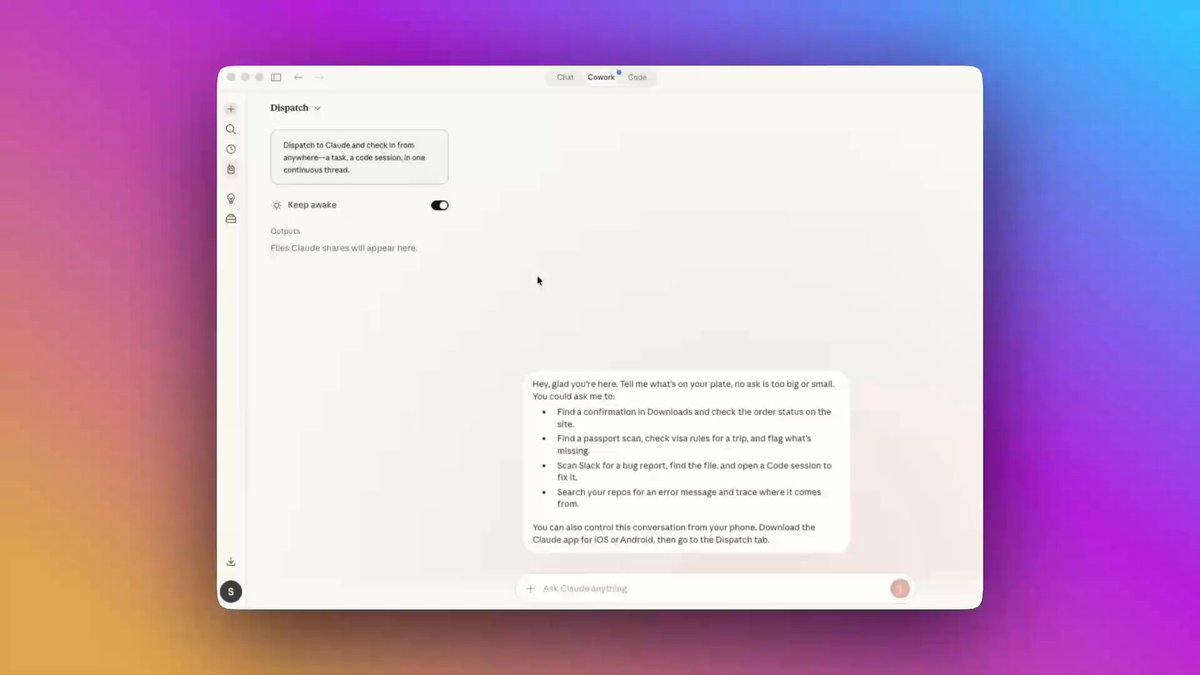
YOUR AI SECOND BRAIN IS NOW OPEN SOURCE. khoj-ai just hit 36,000 stars on GitHub / For a solo founder, one agent replaces an entire corporate knowledge system. Connect your docs, PDFs, Obsidian notes, Notion pages. Claude, GPT, or a local model answers from your actual files, not the...

14,416 Aufrufe • vor 1 Monat •via X (Twitter)

0 Kommentare

Keine Kommentare verfügbar

Kommentare vom Original-Post werden hier angezeigt

Ähnliche Videos

Andrej Karpathy said: "There's room for an incredible new product in the second brain space" This might be it. (bookmark it) Everyone is suddenly building a second brain. Karpathy's LLM wiki pattern went viral, and half of X is now hand-wiring Obsidian to Claude Code so an agent maintains their notes for them. The idea is beautiful: stop making your AI re-read raw notes on every question. Let it build a wiki that compounds. As Karpathy put it, "LLMs don't get bored, they don't forget to update a cross-reference (backlinks), and can touch 15 files in one pass." But if you start doing it manually, it becomes a project in itself. You wire up the vault, the agents, the schedules, the integrations, and then you babysit all of it. So I sat down with Arjun, who actually built the open source version of this, and we broke down what it looks like when the whole thing already works out of the box. It just crossed 15K stars on GitHub. Think Claude's desktop app, open source, with two things layered on top: → A work brain: background agents index your emails, meetings, and notes into a living knowledge graph that updates itself as you work. → Work surfaces: chat is not the best interface for real work, so you get an email client, a meeting note taker, a browser, and a code mode where you and the AI actually collaborate. The part that got me: a customer email comes in asking for a product change, a background agent triages it, spins up Claude Code in its own worktree, and the feature is written before you are back at your desk. Bring your existing Obsidian vault, connect Slack, X, and Fireflies, and let it run your day. Here's the full breakdown of what we covered in this session: Enjoy! 00:00 Intro 01:08 What is Roboat (an open source AI co-worker) 02:42 The second brain (a knowledge graph of your work) 04:01 Bringing your existing Obsidian vault in 04:46 Work surfaces 05:29 Meetings and automatic note taking 06:53 Connecting Slack, X and other sources 07:55 Background agents that run your day 09:24 Code mode (Claude Code and Codex) 10:18 Demo: from an email to written code 14:28 Guardrails: approvals and agent workspaces 17:15 Scheduling agents on a cron 18:52 The browser work surface (browser use) 20:42 Wrapping up: automating your whole day 22:44 Outro Checkout Rowboat's GitHub repo: (don't forget to star 🌟) My co-founder recently wrote a great article on the same idea, and I highly recommend reading it as well. The article is quoted below. Here's my session with Arjun:

Akshay 🚀

45,815 Aufrufe • vor 2 Monaten

Anthropic just got outplayed again. Devs built the multiplayer assistant Anthropic couldn't, and open-sourced it. Claude Cowork is a solo desktop agent. You point it at a folder, give it a task, and it works through your local files on your own machine. The moment a teammate enters the picture, it has nothing to offer. Most real work does not happen alone. A teammate asks for a status update on something you own. The context they need is scattered across your meetings, your notes, and decisions made last week. Typing all of that out takes time you do not have. This is the gap Claude Cowork was never designed to cross. Rowboat Spaces is built on a different model entirely. Each person brings their own assistant into a shared channel. Your assistant is your second brain. It knows your meetings, your notes, and your open decisions. That personal context stays yours. When a teammate asks a question in the channel, you ask your assistant to brief them. It pulls from everything you know and delivers the answer on your behalf, attributed to you. Your teammate's assistant does the same, from their own context. Teams can draft specs, track decisions, and update shared files from plain conversation. Each assistant reads the full channel history, cross references it against what exists, and flags what is missing. The whole thing is open-source, and each assistant acts as the person it belongs to, not as a shared bot pulling from a common pool. The video below shows this in action. I joined a shared space and asked my team member for a status update. My team member asked their second brain to answer. A spec got built from that conversation, versioned, with every change tracked back to the message that triggered it. Rowboat GitHub: (don't forget to star 🌟) My co-founder also wrote a great article on building your second brain with Rowboat, and I highly recommend reading it as well. The article is quoted below.

Akshay 🚀

117,616 Aufrufe • vor 7 Tagen

THIS GUY CONNECTED HIS AI AGENTS TO HIS OBSIDIAN AND BUILT A BRAIN THAT LEARNS ON ITS OWN. HERE'S HOW TO BUILD IT Obsidian is just markdown files sitting in a folder. That turns out to be the perfect memory for an AI agent, because an agent can read and write those files directly. He wired his agents into the vault so they pull context from it, do the work, and write what they learned back. The notes aren't the point. The loop is, and it gets sharper every cycle How to build it: 1. Point an agent at your vault. The fastest way, no plugins, no API keys: open a terminal and run npx obsidian-mcp /path/to/your/vault. That exposes your Obsidian folder to Claude as a tool it can read, search, and write to. Add it to your Claude Code or Cowork config and restart 2. Confirm it can see the brain. Ask it: "list the notes in my vault and summarize what's in them." If it reads them back, the connection is live. Now it starts every task with everything the vault already holds instead of from zero 3. Give each agent one job and a write-back rule. Tell it: "research this, then save what you found as a new note in /brain with links to related notes." One agent researches, one summarizes, one plans. Each writes its output back into the vault 4. Close the loop. Add one line to every agent's instructions: "read /brain before starting, write your result back when done." Now each task leaves the vault richer, and the next run reads that before it works. It compounds instead of resetting 5. You only steer. Review what the brain produces, point it at the next thing. The agents handle the reading, writing, and connecting The edge isn't better notes. It's a brain that feeds itself, so the work gets sharper every cycle instead of starting over Bookmark this

Yarchi

58,591 Aufrufe • vor 3 Monaten

how to use obsidian + claude code to build a 24/7 personal operating system and build your startup: 1. write everything in markdown (daily notes, projects, beliefs, people, meetings) 2. link your notes together so they mirror how your brain actually thinks. 3. install obsidian cli so claude code can read your entire vault + the relationships. 4. stop reexplaining projects every session. use reference files instead. 5. build custom slash commands: /context → load your full life + work state /trace → see how an idea evolved over months /connect → bridge two domains you’ve been circling /ideas → generate startup ideas from your vault /graduate → promote daily thoughts into real assets 6. keep a strict rule: human writes the vault. agents read it, suggest, execute. 7. let claude aka clode surface patterns you’ve been unconsciously circling for years. 8. delegate from inside your notes. one sentence in obsidian → agent handles the rest. 9. treat writing as leverage.the more you write, the more context your agents have. 10. understand this:markdown files are the oxygen of llms. i really enjoyed seeing how to use obsidian thanks to internetVin vin uses ai like a thinking partner wired into his life’s work. 99.99% of people won’t do this because it requires reflection + setup. but once the vault exists, the agent stops being generic. it starts thinking in your voice. episode is live on The Startup Ideas Podcast (SIP) 🧃 (more there) this one is different. send this tweet to a friend. im still processing how game changer obsidian + claude code is, maybe you too watch

GREG ISENBERG

1,140,355 Aufrufe • vor 7 Monaten