Video wird geladen...

Video konnte nicht geladen werden

Zur Startseite

احتفلنا باليوم العالمي للشوكولاتة في مقرنا الرئيسي مع Fix Dessert Chocolatier واستمتعنا بطعم الكنافة بالشوكولاتة الشهيرة وحلاوتها! 💙 يوم سعيد لكل عشاق الشوكولاتة.😍 We celebrated #WorldChocolateDay 🍫 at our HQ with Fix Dessert Chocolatier and their famous knafeh chocolate bar! 🤩 we finally got to taste it & celebrate...

277,374 Aufrufe • vor 2 Jahren •via X (Twitter)

6 Kommentare

Profilbild von أَحْـمَـد
أَحْـمَـدvor 2 Jahren

انتو الجوكليت

Profilbild von الزعيم العيناوي ⭐️⭐️
الزعيم العيناوي ⭐️⭐️vor 2 Jahren

تبقى الاتصالات رقم واحد@eAndUAE

Profilbild von WAZEEM
WAZEEMvor 2 Jahren

Du customers are at high risk of credit card scam /theft, plz do something against fake websites

Profilbild von H-Ghanim
H-Ghanimvor 2 Jahren

شو الخرابيط ذي

Profilbild von Ahmad
Ahmadvor 2 Jahren

اريد 🏃🏃↗️

Profilbild von عبدالله العيدروس🇦🇪
عبدالله العيدروس🇦🇪vor 2 Jahren

يبالنا نجرب شو رأيكم @saudTalreyami @AltenaijiMusab @talalalyammahi

Ähnliche Videos

I would like to wish all my compatriots a happy Independence Day, happy Independence Zimbabwe. The independence of our country, unlike many other African countries, came through blood that was shed. There are so many Zimbabweans who lie in unmarked graves from Tanzania to Zambia to Botswana to Mozambique, and they put their lives on the line so that you and I could have the independence that we did not have under colonial rule. There is a distinct difference between those who fought for the independence of our country and died, never seeing an independent Zimbabwe, and those who took over from colonial rule and then destroyed our country through incompetence, corruption, and many other afflictions that should never have been there. I am in no doubt at all that had our country not become independent, I and many Black citizens would probably not be where we are today, thanks to the early gains of independence. Sadly, I now find myself as a journalist and a Zimbabwean with NO freedom to speak, to write, and to exist as a full citizen in my country post independence after the derailment of the independence dream. Many of our people did not have the opportunities that I personally got, and many others got, to advance our lives. It is unfortunate that we find ourselves where we are today, not because independence is bad, but because we ended up with selfish, corrupt, and incompetent individuals who abandoned the principles and aspirations that inspired many Zimbabweans to go out there and fight so that their country could be free. So on this day, when we celebrate 46 years of independence, the same zeal and drive that defined those who died fighting for our country must be carried forward by those who are alive today, to make sure that the country is restored to where it is supposed to be. Zimbabwe is one of the richest countries under the sun. It has almost every mineral that you can think of, and it has some of the best soils in the world. There is no reason for any Zimbabwean to be unemployed, to fail to earn an income, or to go to bed on an empty stomach. There is absolutely no reason for any Zimbabwean to struggle if the country is led by people who know what they are doing and who put the country first, the national interest first, ahead of their own selfish needs. Whilst colonialism was a terrible stain on the history of our country, there are lessons that can be drawn from that period. Rhodesia was run like a business, not like a fiefdom. The fact that most of the central hospitals that exist today were built during the colonial period, with the exception of Chitungwiza, tells us that infrastructure was prioritised, even if it was designed to serve a minority. That reality does not excuse colonial injustice, but it exposes the scale of failure after independence. Forty-six years later, the government has built only one central hospital. Around 2,500 women die every year during childbirth due to a lack of adequate maternity facilities. The largest hospital in Zimbabwe still relies on a maternity theatre built in 1977, and even then only one of its two theatres is functional, with the working one having been refurbished by a South African bank. That is a damning indictment on the current leadership. The fact that millions of Zimbabweans have been forced to leave the country to take up menial jobs in South Africa, as waiters or farm workers, is an indictment on the current leadership. The fact that people like myself and many others have had to leave home out of fear for our lives is an indictment on the current leadership. Whilst the leadership has failed, we as citizens of Zimbabwe also carry a responsibility towards our country, in whatever space we occupy. We must stop following personalities and start following ideas, whether in the ruling party or in the opposition. Our country has been destroyed because we follow personalities, many of whom are vacuous and empty, and when they fail, they drag the nation down with them as our leaders have done. We must not wait for a Messiah to come and save us from the afflictions we face today. We have a responsibility to do what is right for our country. During the liberation struggle, leaders were changed at different points because the struggle was never about personalities, it was about an idea, an independent Zimbabwe where every Zimbabwean, black, white, green, or yellow, has the same rights and opportunities to pursue a better life. So as we celebrate, and we should celebrate, we must also reflect on our responsibilities going forward. We celebrate because independence itself was a noble idea and remains a noble idea. When things are bad, you do not burn down the house, you fix what is broken. We must honour and remember those who lost their lives so that people like myself could go to college, become journalists, and be recognised internationally, as many Zimbabwean professionals have been, some even advising presidents across the continent and beyond. Zimbabwe has some of the most accomplished people anywhere in the world, and it should not be where it is today. It is therefore up to us, as Zimbabweans, to make sure that we do what is right for our country. Once again, happy Independence to my compatriots, and thank you to all the stalwarts who laid down their lives for us to be independent and to the countries that supported our struggle. We could not have achieved independence in 1980 without Mozambique, Zambia, Tanzania, Botswana, and many others who stood with us. They did well for us and we thank them. It is those who destroyed the country who should hang their heads in shame today. My heart bleeds when I see so many young Zimbabweans with university degrees, yet ending up as victims of drug abuse because there is no work to go to. There are no opportunities available that are aligned with what they went to university to study. It is a tragic indictment of the situation we find ourselves in today. Today we have become a nation where boreholes are being drilled in the middle of cities because the rulers have failed to do something as basic as delivering water into people’s homes. Today we have become a nation where the rest of the region laughs at us because our roads are riddled with potholes, yet the leadership drives Ferraris on those same roads. Today we have become a nation where even our O-level pass rate has not gone beyond 34% because of the failure of leadership to do what needs to be done. Today we cannot even feed ourselves. We have to rely on food aid, and yet we were once colloquially referred to as the breadbasket of the region. These are some of the realities we should reflect on. I could go on and on, but at this point, it is not necessary. To our leaders, I say, how does it feel when you hear the very people you lead saying Ian Smith was better, when they say colonialism was better? How do you feel? Or do you even feel anything at all when those words are spoken? Of course, colonialism was brutal. Of course, Ian Smith was a racist leader who upheld a minority regime built on exclusion and oppression. But it is a damning indictment of your failed leadership that some of our own people now feel pushed to the point of romanticising that dark past. Independence was meant to usher in dignity, opportunity, and shared prosperity for every Zimbabwean, regardless of colour or creed. It was meant to restore ownership of our future to the people. Yet today, you cannot deny that a small, privileged few are the primary beneficiaries of that independence, while the overwhelming majority are trapped in poverty, penury, and relentless suffering. That is not what liberation was fought for. However, nothing can justify a failure to be grateful to those who fought and died for the independence of our country. They did their part. It is now up to us to do our part and ensure that our country becomes what it is meant to be. Happy Independence Zimbabwe.

Hopewell Chin’ono

12,473 Aufrufe • vor 5 Monaten

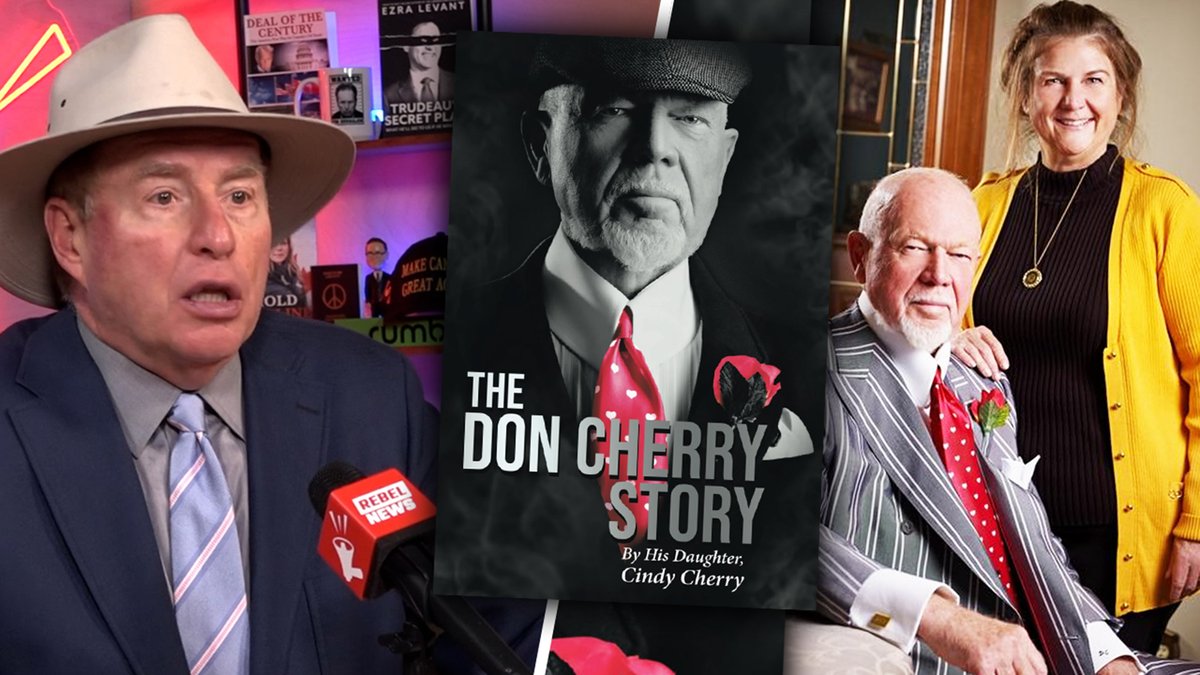
Must-read: Cindy Cherry, Don Cherry’s late daughter, tells all in new book about her father and his cancellation Cindy writes that after 38 years of compelling television, her father was cancelled simply for saying “you people love our milk and honey” and the “least you could do” is buy a poppy on Remembrance Day. Hard to believe it’s been more than five years since the most highly viewed segment on Canadian TV was abruptly cancelled and its star maliciously thrown under the bus. All for no valid reason, well, other than cowardly corporate suits bending the knee to a tiny woke mob of leftwing zealots. We speak of Don Cherry, the coach in Coach’s Corner. Whether you loved or loathed Grapes, Coach’s Corner was must-see TV. Again, you either loved Don for his unvarnished honesty and frankness, which is an endangered species in the world of sports broadcasting today. Or you loved to hate Don Cherry, as you would love to hate an entertaining villain cutting promos in the bizarre biosphere that is professional wrestling. The point is, millions of Canadians would tune into Hockey Night in Canada every Saturday night at approximately 7:50 p.m. E.S.T. Coach’s Corner was many things to many people. But it was never, ever boring. We make mention of the cancellation of this cherished slice of Canadian culture thanks to the recent release of a new book entitled, The Don Cherry Story by His Daughter, Cindy Cherry. Cindy Cherry doesn’t waste any time cutting to the chase. Thus, she begins the story at the end of the story. Namely, when her father’s tenure on network TV came to an abrupt and shocking end on November 9, 2019. That first chapter is entitled “Poppygate” – which is a fitting term given that what happened to Don Cherry was indeed scandalous. Cindy writes that after 38 years of compelling television, her father was cancelled simply for saying “you people love our milk and honey” and the “least you could do” is buy a poppy on Remembrance Day. We have viewed that excerpt over and over and over again. We have analyzed Don’s words for any alleged racism or bigotry or xenophobia. And we come up empty every single time. Indeed, Don Cherry was simply speaking the truth. You know it, we know it, everybody knows it. He was bemoaning that not enough people in Canada honour the war dead and our veterans come November 11. This is not conjecture; it’s the indisputable truth. Indeed, on Remembrance Day 2019, the day Don was officially fired by the way, we visited Yonge-Dundas Square in downtown Toronto at 10 a.m. to observe how many people were wearing poppies. In other words, there we were at this busy intersection just 60 minutes before the 11th hour of the 11th day of the 11th month. And we can tell you that less than 5% — yes, less than 5% — of passersby were wearing poppies that day. It was disgraceful, disgusting, and disrespectful. Oh no… was that a little harsh? Is Team Cancel Culture going to come for us now? Yet, the fact that Don Cherry was cancelled for speaking the truth makes for more proof in the pudding that freedom of speech is on thin ice in Canada these days. Due to political correctness, or its new name, “wokeness”, one is forbidden to speak the truth IF the truth hurts. That’s not freedom of speech — that’s censorship. Indeed, Don’s words somehow hurt the feelings of the uber-intolerant left. Or more accurately, these wokesters pretended to suffer from hurt feelings. Finally, these Marxists had some flimsy excuse to derail the career of a common sense patriotic Canadian that they loathed because of… oh, we don’t know… toxic masculinity? And let’s not forget the role of one particular liberal in this saga, namely Ron “The Rat” MacLean. Indeed, if Don’s words were so repugnant, then why didn’t Ron object? Rather, as Cindy Cherry notes, Ron was “bobbing his head in agreement throughout the dialogue, gave Dad the thumbs-up and at the end said, ‘love you for it.’” Furthermore, Cindy notes: “HNiC repeated this Coach’s Corner for their central Canadian viewers. How bad could they have felt it was if they rebroadcasted it?” But no, the cowardly suits at Rogers — caved to the vocal minority and quickly pulled the plug on Coach’s Corner. And when they did, Ron MacLean could’ve and should’ve taken a stand. He could’ve and should’ve said words to the effect of, “Hey, if Don goes, I go.” But then again, that would have made for a principled stand. And second banana rats aren’t all that concerned about principles, not when there’s a juicy six-figure salary on the line. It’s just business, baby. To add insult to injury, MacLean appeared the following Saturday to make a groveling apology. And soon thereafter Hockey Night in Canada went woefully woke in terms of the content aired between periods. It was insufferable and unwatchable. In the days that followed this cancellation, Cindy became further upset about the spin Poppygate was receiving. She writes: “The narrative that Rogers/Sportsnet and Ron put out to the rest of the media was that all Don had to do to keep his job was apologize and he wouldn’t. This is what a lot of the corporate media shills and people on social media jumped on—why didn’t Don just say he’s sorry and then he would have gotten back his job?” But Cindy says that narrative was completely bogus; that the fix was always in. She further writes: “To me, there was no doubt Rogers wanted Dad gone, so they backed him into a corner knowing he wouldn’t kneel to their demands. I believe many people knew there was more to the story about Dad’s firing but didn’t bother looking into it and just went with the corporate narrative.” In fact, it should be noted that it was never Cindy’s intention to write a book even though she always had a ringside seat when it came to being near her famous father. But there came a point during this raging controversy when she simply couldn’t take the B.S. any longer. She had to set the record straight. And for that, we owe her a debt of gratitude. Alas, it’s too bad the Cindy Cherry never got to see the fruits of her labour. Cindy passed away last July at the age of 67 after a brief illness. This was very hard on Don. Regardless, her legacy is a book that dispels the lies and myths that the left and the cowards at Rogers concocted when it comes to the Don Cherry saga. We owe her a debt of gratitude for setting the record straight about this great Canadian. Of note, Don Cherry is 91 years old. At this point, we must wonder how long this national treasure will remain with us. We can tell you this much: when Don passes, millions of Canadians will mourn that day. Some speculate Ron will be remembered as a backstabber and a betrayer, whereas Don spoke his mind, told the truth, and stood by his principles even when threatened with career cancellation — which did indeed come to fruition. One final thought: Don Cherry was and remains immensely popular. And once upon a time, he was responsible for the single most watched segment of TV in the nation. He was a cash cow when it came to attracting advertisers and sponsors. Thus, in the final analysis, the really disturbing thing about his unceremonious cancellation is this: if the powers-that-be can cancel Don Cherry, they can cancel anyone.

Rebel News

231,508 Aufrufe • vor 1 Jahr

A dog just made the bravest decision I have seen anyone make this year. Not a founder. Not an athlete. Not a person with a plan and a five-year vision board. A dog, on an empty road, with nothing to lose and no idea what would come next. I have watched what comes next more times than I will admit in public. This post is 25,000 characters long. It is a list of reasons why you should watch it too. Read as much as you want, but understand one thing before you start: the video is the only part that matters, and this is everything the video doesn't have room to say. Sound on. Phone in both hands. Do not skip. I'll be here when you get back. THE NUMBER THAT SHOULD BOTHER YOU Let me start with two numbers. The first: commonly cited estimates put the world's stray dog population at around 200 million. Two hundred million animals with no address, no bowl with their name on it, and no one who would notice if they didn't come back tonight. The second number is one. That is how many people had to be on that road, at that exact minute, looking in that exact direction, in a good enough mood to stop. Not two. Not a crowd. One. Here is what nobody says out loud: for every dog you see rescued on camera, there are millions the camera never reached. We don't see them because no one was there. The videos that reach you are not a sample of reality. They are the winners of a lottery so brutal that Powerball looks like a coin flip next to it. So when one of these lands in your feed, don't scroll past it like content. Treat it like what it is: a statistical miracle that happened to end well. And miracles have a structure. Let's take this one apart. FIVE LINKS. BREAK ONE AND THE STORY DOESN'T EXIST. Link one: the dog has to survive long enough to be seen. Roads are not built for small animals. Vehicles do not slow down for shapes on the asphalt. Every hour out there is a coin flip the animal has to win again, and again, and again. Link two: someone has to be present. Not nearby. Present. Eyes up, phone down, brain not busy replaying the argument from breakfast. Link three: that someone has to notice. It sounds simple. It isn't. The human brain is a filtering machine, and a small animal on a road becomes a plastic bag, a shadow, a piece of tire. The most common reason a dog is not rescued is not cruelty. It is that nobody registered it as a dog. Link four: the person has to stop. This is the link that snaps most often. Seeing is free. Stopping costs you time, comfort, a schedule, and possibly the mood of your entire day. Link five: the dog has to let them. An animal that has learned that hands mean pain has every biological reason to run. Trust is not a given. It is a negotiation, and the dog holds the veto. Five links. All five held. Remember that when you press play. You are not watching a nice story. You are watching a chain that should have snapped at least four times. THE PEOPLE WHO KEEP DRIVING In 1968, psychologists John Darley and Bibb Latane published a set of experiments that changed how we think about helping. The finding was uncomfortable: the more people who witness an emergency, the less likely any one of them is to act. They called it diffusion of responsibility. Everyone assumes someone else will handle it. So nobody does. Later research added nuance. When an emergency is clear and dangerous, people step in more often than the original theory predicted. But the core insight has survived half a century of testing, because it describes something every one of us has felt: the small, quiet voice that says, somebody else will stop. Now picture a road with no crowd at all. No audience. No one to hide behind. No one to blame. Just you and a decision that is entirely, inescapably yours. That is the situation the person in this video walked into. And the reason it is worth your attention is not that they did something impossible. It is that they did something small, and it turns out small is exactly what almost nobody does. You don't need to be a hero. You need to be inconvenienced. THE FACE IS THE RESUME In 2013, researcher Bridget Waller and her team studied dogs in a UK shelter and asked a simple question: what makes one dog get adopted faster than another? It wasn't size. It wasn't age. It wasn't coat color. It was one tiny facial movement: the raising of the inner eyebrows. The move that makes a dog's eyes look bigger, softer, almost sad. Dogs that did it more often were chosen faster. Six years later, a study led by Juliane Kaminski found out why that movement is so easy for dogs and so hard for wolves. Dogs have a small muscle around the eye that wolves largely lack. Over thousands of years of living beside us, dogs evolved a way to make their faces speak our language. Read that again. A species rewired its own anatomy to be understood by another species. No other animal has done this to us. Nobody taught them. Nobody forced them. They looked at us, worked out what we respond to, and grew the tool. Now look at the face in this video. You will know the second you see it. That is not a coincidence, and it is not luck. It is fifteen thousand years of engineering aimed directly at your chest. THE ONLY LOOP LIKE IT ON EARTH In 2015, a Japanese team led by Miho Nagasawa published a result in the journal Science that made researchers stop and reread the abstract. When a dog and its owner look into each other's eyes, both of their oxytocin levels rise. Oxytocin is the bonding chemical, the same one that flows between a mother and her newborn. Dog looks at human. Human's oxytocin rises. Human looks back, touches, talks softly. Dog's oxytocin rises. Which makes the dog look longer. Which makes the human's oxytocin rise again. A feedback loop of affection, running across two species, powered by nothing but eye contact. Here is the part that gets me: the effect did not show up the same way in wolves raised by humans. The loop is not just training. It is something that evolved between us. So the next time someone says a dog is just responding to food, tell them there is a peer-reviewed study that disagrees. And keep this fact in your pocket for the video. Because at some point, a moment of eye contact happens in it, and I want you to know what is really going on in that room. THEY CAN SMELL WHAT YOU'RE HIDING Humans have roughly 6 million scent receptors. Dogs are commonly cited as having around 300 million. A large share of a dog's brain is devoted to processing smell. What you experience as a room, a dog experiences as a layered document: who was here, how long ago, and how they felt. In 2022, researchers at Queen's University Belfast tested something remarkable. They collected breath and sweat samples from people before and after a stressful task. Then they asked dogs to tell the samples apart. The dogs got it right nearly 94 percent of the time. Your body broadcasts your emotional state as chemistry. You cannot turn it off. You cannot fake calm. A dog reads your fear, your tension, your irritation, before you have opened your mouth. Which means every rescue is, at its core, a test of one thing: are you actually calm, or are you performing calm? The dog knows. It always knows. And that is why what happens in the first few seconds of this video matters more than anything that comes after it. Watch the body language. Watch how slowly things move. Watch what is not done. THE MOST IMPORTANT MOMENT IN ANY RESCUE IS THE ONE WHERE NOTHING HAPPENS Animal behaviorists describe fear responses in four flavors: fight, flight, freeze, and fawn. Fight is what people expect. Flight is what most strays do. Freeze is what looks like calm but isn't. And fawn, the desperate, wiggling, please-don't-hurt-me appeasement, is the one that breaks your heart the fastest, because it looks like friendliness and it is actually terror. Rescuers who have done this hundreds of times will tell you the same handful of rules. Don't loom. Don't stare straight into the eyes. Get low. Turn sideways. Slow everything down until it feels absurd. Let the animal close the last few feet on its own terms. The hardest instruction, and the one most people can't follow, is the last one: do nothing. Every instinct you have says reach out. Grab. Fix. Take control of the situation. And every good rescue begins with someone who did the opposite. Who made themselves small, patient, and boring, and waited for a frightened animal to decide that the safest thing in its whole world might be a stranger. You are about to watch someone do exactly that. Notice how little they need to say. THE TEARS THEY WON'T PUT IN THE HEADLINE Scientists are careful people. They do not like to say "dogs cry." But in 2022, a team from Azabu University in Japan, led by Takefumi Kikusui, measured tear volume in dogs during reunions with their owners. The result: tear volume rose significantly compared with reunions involving other familiar people. And when researchers applied oxytocin to the dogs' eyes, tear volume rose again. Not sadness crying. Not the crying we do. Something else, something closer to overflow. The body producing water at the exact moment the heart has more in it than it can hold. Nobody has proven that this is the same thing we feel. Scientists will tell you that, and they are right to. But here is a question worth sitting with. If an animal's eyes fill with water when it sees the one being it has decided to trust, what exactly are we arguing about? Watch the eyes in this video. Then tell me what you think you saw. ONCE IT HAS A NAME, IT STOPS BEING A STATISTIC In 2007, psychologist Paul Slovic and colleagues ran an experiment on generosity. They showed people a fundraising appeal for a hungry child, and then a second version that added statistics about millions of other children in the same crisis. More data. More context. More reasons to care. Donations dropped. Slovic called it psychic numbing. The human mind can hold one face. It cannot hold two hundred million. When a tragedy becomes a number, empathy quietly switches off, and we don't even notice it happening. This is why one named animal in one small video can do what a hundred reports full of charts cannot. It gives your brain something it can actually care about: a single life, with a face, a fear, and a future that could go either way. The stray population is a statistic. A dog is a story. And stories, unlike statistics, come with a name at the end. When you reach that moment in the video, pay attention to what it does to you. Notice the small shift in your chest. That is the sound of a number turning into a person, or close enough. THE WORD FOR WHAT YOU'RE ABOUT TO FEEL Researchers have a name for the feeling you get when something touches you so suddenly that your throat tightens and your eyes sting. They call it kama muta, Sanskrit for "moved by love." Anthropologist Alan Fiske proposed that it is a distinct emotion, triggered by a sudden intensification of closeness. Two beings who were strangers become bonded. Someone who was alone becomes part of something. People across many cultures describe the same set of signs: warmth in the chest, goosebumps, a lump in the throat, tears they didn't plan on, and a strong urge to hug someone or hold something. Here is what makes it useful and not just sweet: kama muta is one of the most reliable emotional responses we have. It shows up when reunions happen. When a stranger helps unexpectedly. When an animal, after a long time alone, is finally held. You've felt it. You just never had a word for it. Take note of the exact second it hits you in this video. I promise there is one. And if you're the kind of person who says "I never cry at videos," I would like to schedule a follow-up. WHY YOU'LL WANT TO BE A BETTER PERSON AFTER ONE MINUTE Psychologist Jonathan Haidt studied a related feeling and gave it a name: elevation. Elevation is what you feel when you watch someone do something morally beautiful, quietly, with nothing to gain. It is not envy and it is not admiration. It is an urge, physical and immediate, to do something good yourself. In studies, people who experienced elevation were more likely to help others afterward, more likely to volunteer, and more likely to describe wanting to become better versions of themselves. Read that as a design spec. A short piece of true, unstaged kindness can change what a person does in the hour after they see it. Which is a strange, lovely thing for a phone to be capable of. We spend so much time discussing what social media does wrong. Nobody wonders what would happen if the best five percent of it, the small, real, human moments, were the part that traveled farthest. Let this one travel. It has earned it. THE RARE THING: SOMETHING TRUE THAT WINS In 2018, researchers at MIT published a study in Science that analyzed millions of tweets. The result was grim: false news spread significantly faster and further than true news. False stories were about 70 percent more likely to be retweeted, driven largely by surprise and disgust. The lesson most people took away was that this platform rewards outrage. I want to take a different lesson. If false stories win because they trigger strong emotion, then true stories can win too, as long as they trigger stronger ones. A video with no villain, no scandal, and no argument. Nothing to be angry about. Nothing to dunk on. A rescue that is exactly what it looks like. That kind of content should lose on this platform. It has no fuel. And yet every so often, one of them breaks through and reminds everyone what this place was supposed to be. I am not asking you to like it. I am asking you to notice that you had a choice about what to feed today, and this was one of the options. SOME FRIENDSHIPS SHOULDN'T WORK Somewhere near the end of this video, a second character enters the story. I won't tell you who. I won't tell you what happens. I will tell you that if you have ever read anything about instincts, hunting drives, or the way certain animals are supposed to see each other, this moment will quietly rearrange your assumptions. Behaviorists talk about prey drive as if it were destiny. It is not. It is a tendency, and tendencies can be softened by experience, by safety, by being raised, or re-raised, in a place where no one is afraid. The same dog that once had to look after itself alone can, in a different life, learn that the world contains creatures that are not threats or meals. Only neighbors. That is the most hopeful idea in behavioral science, and it usually gets buried in footnotes: what an animal was is not the same as what an animal can become. The same is true for most of us, incidentally. But that is a different post. Stay for the ending. It is the reason I am writing this at all. THE PART THE INTERNET NEVER FILMS Every rescue video has the same shape: the meeting, the rescue, the transformation, the happy ending. It is edited that way because it is the only shape that gets watched. But ask anyone who has actually done this, and they will tell you the truth is in the gap between the second and third act. The first night. The first week. The first time a dog that has never lived indoors realizes there is a floor that doesn't move, a door that closes without danger, and a bowl that will be full again tomorrow. Rescuers have a rule of thumb for this, the 3-3-3 rule. Three days for a dog to decompress. Three weeks to start learning the routine. Three months to feel truly at home. It's not science, exactly, just a shorthand built from thousands of adoptions. But it captures something real: safety is not a switch. It is a process, and the animal has to believe it slowly, one uneventful day at a time. That means the happiest scenes in this video are not the ones that look like celebrations. They are the quiet ones. A dog that stops scanning the room. A body that finally lets go. Look for the moment the shoulders drop. Once you see it, you'll never unsee it. THE COST OF STOPPING: NINETY SECONDS Let's do the math on the thing that most people are afraid of. How long does it actually take to stop for an animal in trouble? Not the whole rescue. Just the decision, the pulling over, the first attempt. Ninety seconds. Sometimes less. Ninety seconds is the length of a bad song on the radio. It is the time you spend waiting for a light to change. It is a scroll through a feed you won't remember. And on the other side of those ninety seconds is the difference between a living animal and a statistic. I'm not saying this to make anyone feel guilty. Guilt is a terrible motivator. It makes people avoid the feeling instead of acting on it. I'm saying it because the barrier is almost always imagined. We inflate the cost of helping in our heads, and the imagined price is what stops us, not the real one. The person in this video paid the real price. It was small. What they got in return is something no one could have planned for. That is the part you should watch closely. IF YOU'RE EVER THE ONE ON THAT ROAD Save this section. Someday, someone reading it will need it. Put your safety first. Pull over where it's safe and turn on your hazard lights before anything else. A second accident helps no one. Do not chase. A frightened dog runs faster than you and directly into the worst possible place. Chasing turns a rescue into a pursuit. Get low and go slow. Sit down if you can. Turn your body sideways. Avoid direct staring. Speak softly, or don't speak at all. Use food, if you have any. Something plain, tossed a little closer each time, works better than any technique. Check for a tag and, if you can get near enough, ask a vet or shelter to scan for a microchip. Someone may be looking for this animal right now. Call for help early. Local rescues, animal control, and vets can handle what you cannot. Sometimes the bravest thing you can do is make the right phone call. Take photos and note the location. If you can't keep the animal, those details are what let someone else finish the job. None of this is complicated. The reason it is rare is that most people have never been told that it is allowed. You are allowed. THE REAL STAKES OF A SMALL DOG Here is a bigger picture, and it's a heavy one. Millions of companion animals enter shelters every year in the United States alone. That is just one country. Many are lost pets that never get reclaimed. Many are strays. Many are animals whose owners ran out of money, time, or hope. Shelters are often crowded, underfunded, and staffed by people running on love and very little else. Every animal that finds a home, or a foster, or a stranger with ninety seconds to spare, frees up a space for the next one in line. That means every single rescue is bigger than the animal in it. It is a small change to a very large system, and the system is nothing but small changes stacked on top of one another. This is not an argument for guilt. It's an argument for scale. One dog saved is one dog saved, but it is also proof of concept, a demonstration that the chain can hold, that the odds can be beaten, that a person and a road and a decision can end well. And proof of concept is contagious. That is why you are seeing it. WHO REALLY GOT RESCUED? If you talk to people who have taken in strays, you'll hear the same sentence over and over, in different words. "I thought I was saving him. It turned out he was saving me." Skeptics roll their eyes at that. It sounds like a greeting card. And research on pets and wellbeing is more mixed than social media would like. It doesn't say every dog fixes every life. But there is something real underneath it, and it's not mystical. A dog is a machine for creating routine, attention, and reasons to leave the house. It needs you at a certain hour. It notices when you come home. It doesn't care about your job title, your follower count, or what you failed at last week. For some people, that is the first unconditional witness they have had in years. The rescue, in this light, is not one-way. Two lonely creatures, one who knew it and one who didn't, found out that they could take care of each other. Nobody can prove that from a video. But there is a version of the story that runs in the background of every rescue, and you can feel it if you let yourself. Tell me whether you feel it here. THE ATTENTION PARADOX Here is a strange fact about the platform you're reading this on. The average post gets a glance. A few words, a flick of the thumb, gone. Brands spend billions every year trying to buy three seconds of your attention, and most of what they buy evaporates before it lands. And yet a video of one dog, with no budget, no celebrity, and no script, can hold a stranger for a full minute. Without a single trick. Why? Because attention is not really about tricks. It is about stakes. Your brain is built to track living things whose outcome is uncertain. The moment there is a creature on screen and you don't yet know if it will be okay, some ancient part of you leans in and refuses to look away. That is the secret behind every great story ever told. Someone we care about. Something that could go wrong. A question we need answered. Marketers call it a hook. Your nervous system calls it worry. This video has both, and it pays off the worry honestly, which is why you leave feeling better instead of used. That is rare enough to deserve a full minute of your life. HOW TO WATCH THIS Most people will watch it wrong. They'll half-look at it between two other things, mid-scroll, thumb already moving. Here is how to get the actual effect. Turn the sound on. There is more happening in the audio than you expect. Make it full screen. This is a story about faces, and faces need room. Watch the first ten seconds without expecting anything. The film is quiet at the start. That is deliberate, or at least it works as if it were. Do not skip ahead. The whole thing depends on the distance between where it starts and where it ends. Skip the middle and the ending is just a nice clip. Then, once it's over, watch it again. The second time, you won't be watching for the story. You'll be watching for the small things you missed: a hesitation, a glance, a change in how a body carries itself. That second watch is where it gets you. I said I have watched it more times than I'll admit. That is the honest reason. It doesn't wear out. It gets deeper. THE CHALLENGE I want to try something with this post. If the video moved you, leave one comment: the second it happened. Not a review, not an analysis. Just the moment. I'm curious whether it's the same one for everyone. My guess is that it isn't, and that the spread of answers will say more about what people carry around with them than about the video. If it didn't move you, that is fine too. I'd like to hear that as well. Honest is better than polite. And if you have ever been the one who stopped, and I know some of you have, write that instead. Tell the story in two lines. No one has ever regretted the ninety seconds. Someone reading this thread might need to know that. Reposting this is the simplest way to put it in front of someone who's scrolling right now, in a bad week, thinking that nothing good happens by accident anymore. Something did. THE LAST THING Let me end where I started. A dog made a decision on an empty road. It could not have known how it would turn out. It had no reason to believe that the next hand would be different from the last. It went ahead anyway. That is the whole difference between a life that changes and one that doesn't. Not certainty. Not a plan. A willingness to move toward the unknown when the alternative is more of the same. The animal in this video did that. Then someone did the same in return. That's it. That's the entire story. Two beings, each of whom took a small, terrifying step toward the other, and a road that was, for a few seconds, the most important place in the world. Scroll up. Press play. Watch the ending. Then come back and tell me I was exaggerating. P.S. If you read all of this, you are exactly the kind of person this video was made for. Most people never make it past the first screen of a long post. You did. That tells me you are someone who stays: through the slow part, through the uncertain part, all the way to the end. Which is, when you think about it, the only quality that mattered in the story you're about to watch. Follow for more like this. I only post the ones that earn it. Bookmark it for days you forget the feeling. #Rescue #DogsOfX #SecondChances #AdoptDontShop #Dogs #AnimalRescue #RescueDog

Earth Unveiled

15,706 Aufrufe • vor 12 Tagen

Like seemingly everyone on this app I have plenty of opinions about Twitter > X and figure now is a good time to open up a bit about my experience at the company. I tweeted for years into the void for the love of it like many of you, but after selling my startup to Twitter in 2020 I finally got to see it from the inside. Up close it was both amazing and terrible, like so many other companies and things in life. As someone with a maniacal sense of urgency built into me, Twitter often felt siloed and bureaucratic. Dumb power plays, reorgs and team name changes for the sake of someone’s ego were distractions that occurred too regularly. You couldn’t just be a builder — you also needed to be a politician. I was shocked by how old and bespoke the infrastructure was, but there was little will to think beyond quarterly earnings calls because we were all beholden to the masters of mDAU and revenue growth as a public company. It often felt like things were held together with duct tape and glue, and that many people had just accepted that a small product change could take months or quarters to build. Management had become bloated to accommodate career growth and the company culture felt too soft and entitled for my own taste. Healthy debate and criticism was replaced by a default refrain of “no, that can’t be done” or “another team owns that so don’t touch it”. Teams could spend months building a feature and then some last-minute kerfuffle meant it’d get killed for being too risky. Just talking directly to customers could turn into a turf war and create deadlocks between functions. I recall one such episode where a teammate spent a month trying to get clearance to reach out to some creators. He went through 3 layers of management and 6 different functional teams. In the end 4 executives were involved in the approval. It was insanity, and unfortunately I saw several top performers get burnt out and demoralized after exhausting experiences like that. Most people were good at their jobs but it was nearly impossible to fire poor performers — instead they got shuffled around to other teams because few managers had the will or resources to figure out how to get them out. A high performance culture pulls everyone up, but the opposite weighs everyone down. Twitter often felt like a place that kept squandering its own potential, which was sad and frustrating to see. The person who was best at cutting through the BS and inspiring a vision during my tenure was Kayvon Beykpour, but he wasn’t fully empowered to run the company since he wasn’t the CEO. Despite those real issues, I was lucky enough to work with some of the most talented people in the business at Twitter in product, design, engineering, research, legal, BD, trust & safety, marketing, PR and more. Often it was a small cross-functional team of intrinsically motivated people who made the biggest impact by challenging some core assumption. Those teams were very fun to be on but they felt like the exception rather than the rule. The months of waiting for the deal to close in 2022 were particularly slow and painful; it felt like leadership hid behind lawyers and legal language as all answers about the company’s future notoriously included the phrase “fiduciary duty”. Colleagues openly talked about how Twitter was being sold because leadership didn’t have conviction in their own plan or ability to fix longstanding problems. Although I didn’t know much about Elon I was cautiously optimistic – I saw him as the guy who built incredible and enduring companies like Tesla and SpaceX, so perhaps his private ownership could shake things up and breathe new life into the company. My take on what’s happened since then is full of lived nuance. When people ask why I stayed it’s easy to answer: optimism, curiosity, personal growth and money. From the beginning I saw that some changes Elon was going to make were smart and others were stupid, but when I’m on a team I uphold the philosophy of “praise in public and criticize in private”. I was far from a silent wallflower. I shared my opinions openly and pushed back often, both before and after the acquisition. I made peace with the fact that I didn’t have psychological safety at Twitter 2.0 and that meant I could be fired at any moment, and for no reason at all. I watched it happen repeatedly and saw how negatively it impacted team morale. Although I couldn’t change the situation I did my best to shine a light on folks who were doing important work while being an emotionally supportive leader for those who were struggling to adapt to the more brutalist and hardcore culture. In person Elon is oddly charming and he’s genuinely funny. He also has personality quirks like telling the same stories and jokes over and over. The challenge is his personality and demeanor can turn on a dime going from excited to angry. Since it was hard to read what mood he might be in and what his reaction would be to any given thing, people quickly became afraid of being called into meetings or having to share negative news with him. At times it felt like the inner circle was too zealous and fanatical in their unwavering support of everything he said. When individuals encouraged me to be careful about what I said I politely thanked them and said I would not be taking their advice. I had no interest in adding to a culture of fear or walking on eggshells around Elon. Either he would respect me for being real or he could fire me. Either outcome was okay. I quickly learned that product and business decisions were nearly always the result of him following his gut instinct, and he didn’t seem compelled to seek out or rely on a lot of data or expertise to inform it. That was particularly frustrating for me since I believed I had useful institutional knowledge that could help him make better decisions. Instead he'd poll Twitter, ask a friend, or even ask his biographer for product advice. At times it seemed he trusted random feedback more than the people in the room who spent their lives dedicated to tackling the problem at hand. I never figured out why and remain puzzled by it. I don’t think things had to be as difficult or dramatic as they turned out to be but I can’t say I’d bet against Elon or count him out. He’s smart and has enough money to make a lot of mistakes and then course correct when things go awry. As the largest shareholder he can tank the value in the short-term, but eventually he’ll need things to turn around. His focus on speed is incredible and he’s obviously not afraid of blowing things up, but now the real measure will be how it get reconstructed and if enough people want the new everything app he is building. I learned a ton from watching Elon up close – the good, the bad and the ugly. His boldness, passion and storytelling is inspiring, but his lack of process and empathy is painful. Elon has an exceptional talent for tackling hard physics-based problems but products that facilitate human connection and communication require a different type of social-emotional intelligence. Social networks are hard to kill but they’re not immune from death spirals. Only time will tell what the outcome will be but I hope X finds its footing because competition is good for consumers. In the meantime, I have a lot of empathy for the employees who are working tirelessly behind the scenes, the advertisers who want a stable platform to sell their stuff on, and the customers who are experiencing chaotic updates. It’s been a madhouse. Twitter moved at the speed of molasses and suffered from bureaucracy but now X is run by a mercurial leader whose instinct is driven by the unique and undoubtedly weird experience of being the biggest voice on the platform. Many of you know me from the sleeping bag incident where I slept on a conference room floor, so I figure, let’s talk about that too. Going viral was an odd and interesting experience. I was attacked by people on the left and called a billionaire bootlicker, while simultaneously being attacked by people on the right for being a working mom who was demonized as an example of a woman choosing her career over her family. Thankfully I can laugh at myself and I don’t take armchair keyboard ideologues too seriously. Being the main character on the timeline, even for a few minutes, requires a thick skin and a strong sense of self. The real story is pretty simple. I was given a nearly impossible deadline for his first project and as the product lead I would never ask anyone to do anything I wasn’t willing to do myself. So I worked round the clock alongside an amazing team spanning many timezones, and we delivered it on schedule – truly against the odds. It was intense but also fun. Those first few months were wildly crazy but I wanted to be there and I have no regrets. Showing up and giving it your all should, in most cases, be celebrated. Obviously you can’t work at that pace forever but there are moments where bursts are mission critical. I’ve pulled many all-nighters in my career and also when I was a student for something that mattered to me. I don’t regret putting in long hours or being ambitious, and feel proud of how far I’ve come from where I started thanks in part to that type of work ethic. I think of life as a game, and being at Twitter after the acquisition was like playing life at Level 10 on Hard Mode. Since I like taking on difficult challenges I found it interesting and rewarding because I was growing and learning so rapidly. I realize our society today trends toward polarization but when it comes to this app, its owner, and its future, I am neither a fangirl nor a hater — I’m an optimistic pragmatist. This may really irritate the internet but you cannot pigeonhole me into some radical position of either loving or hating every change that’s occurred. I escaped my fundamentalist upbringing and am a free thinker these days. Everyone can be seen as both a hero or a villain, depending on who is telling what angle of the story. Elon doesn’t deserve to be venerated or vilified. He’s a complicated person with an unfathomable amount of financial and geopolitical power which is why humanity needs him to err on the side of goodness, rather than political divisiveness and pettiness. I disagree with many of his decisions and am surprised by his willingness to burn so much down, but with enough money and time, something new & innovative may emerge. I hope it does. Sometimes I get asked about how I felt when I got laid off, and the truth is it was the best gift I’ve ever received. Sure the headlines and punchlines wrote themselves but I was battle hardened by then. I knew that I’d worked in a way where I could walk out with my head held high. I have no bitterness about the Product Management team being dismantled, and it made sense for me to exit as nearly all of the remaining PMs were let go. Going on a sabbatical afterward has been exactly what I needed to decompress and I’m finally feeling rested and relaxed. I’m a creative and a builder, so sooner than later I’ll jump back into a high intensity company but I’m grateful for this season of thinking, reading, traveling and being with people I love. After having time to reflect I believe more than ever that the very best outcomes flow from great leadership that combines the head and the heart. I’d be remiss if I didn’t note that in all of this there is also a cautionary tale for anyone who succeeds at something — which is that the higher you climb, the smaller your world becomes. It’s a strange paradox but the richest and most powerful people are also some of the most isolated. I found myself frequently looking at Elon and seeing a person who seemed quite alone because his time and energy was so purely devoted to work, which is not the model of a life I want to live. Money and fame can create psychological prisons which may worsen mental health conditions. We’ve all seen high profile cases of celebrities who end up with some combination of depression, paranoia, delusions of grandeur, mania and/or erratic behavior. Living in an echo chamber is dangerous and being at the top makes a person even more susceptible to being surrounded by yes people when nearly everyone around you is on the payroll and somehow stands to benefit from being in your orbit. Figuring out how to keep “better angels” around in the form of family, friends, and teammates is critical to staying on the rails and enduring intense ups and downs. Everyone needs to hear hard truths sometimes and if you fire all the people who speak up then the reality distortion field may just turn into a vortex. I was drawn to Twitter because I’m obsessed with the problem of loneliness and connection between people. I find it fascinating & troubling that humans are getting lonelier as we simultaneously create a world that’s both safer and wealthier. I don’t believe that trade-off has to exist, which is why I keep returning to that theme in my personal and professional life. I realize this is too long of a tweet but Twitter was a weird and special place on the internet, and I’m grateful to have played a teeny tiny role in its story and evolution. I’m here for whatever comes next — on this app and in new places. Consumer social is very much alive and at a fascinating juncture, so I’ll be watching and participating and sharing hot takes because I don’t want to, and probably can’t, turn that part of me off. Perhaps X becomes a resounding success. Or it fails epically. Either way, I expect it will continue to be a very entertaining ride. 🫡

Esther Crawford ✨

5,507,251 Aufrufe • vor 3 Jahren