Video yükleniyor...

Video Yüklenemedi

Ana Sayfaya Dön

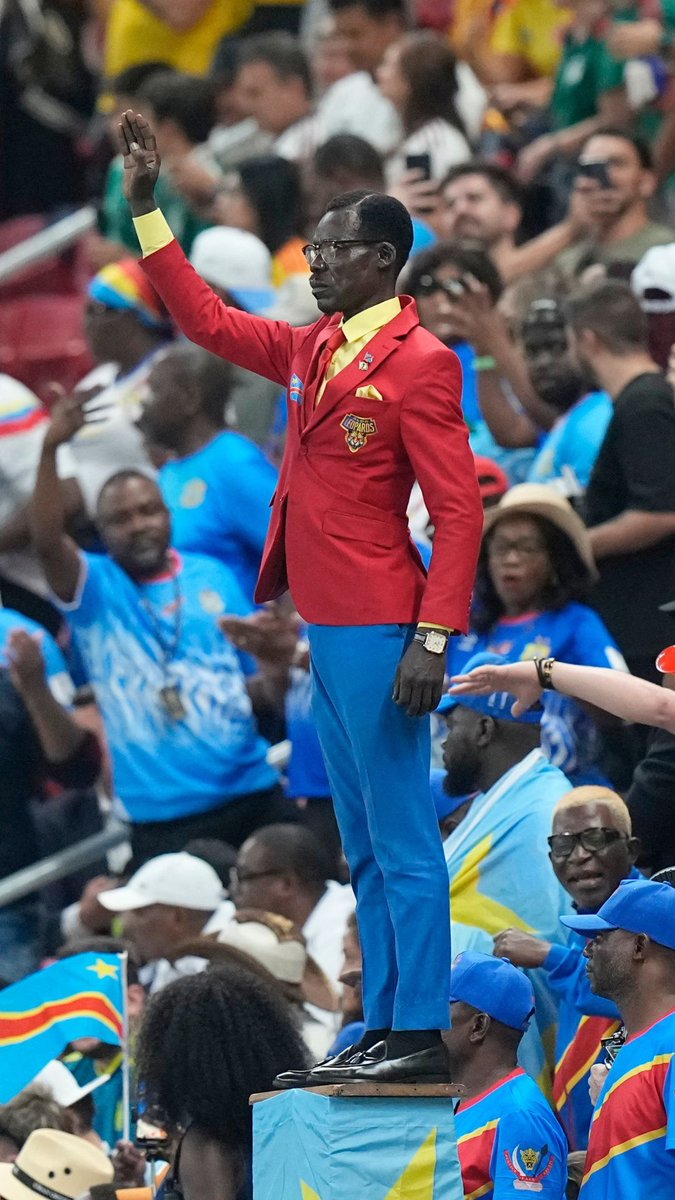
تعامل غير أخلاقي وغير رياضي من اللاعب الجزائري محمد عمورة تجاه المشجع الكونغولي الشهير (المعروف بـ"لومومبا" أو "التمثال")، الذي يجسد من خلال وقوفه الساكن طوال المباريات قصة كفاح باتريس لومومبا، بطل الاستقلال في الكونغو الديمقراطية، مما أثار جدلاً واسعاً وأدى إلى بكاء المشجع بعد الخسارة الدرامية أمام الجزائر في...

838,932 görüntüleme • 7 ay önce •via X (Twitter)

0 Yorum

Yorum bulunmuyor

Orijinal gönderinin yorumları burada görünecek

Benzer Videolar

LUMUMBA DISCIPLE'S FIGHT FOR A FREE CONGO Many people worldwide celebrate the life and legacy of Congolese Pan-Africanist Patrice Lumumba (1925-61). After his assassination at the hands of Western-backed Congolese forces, guerilla warfare broke out across the Democratic Republic of the Congo (DRC) to restore the power of revolutionary Pan-Africanists and socialists. African Stream's Inem Richardson delves into the story of Pierre Mulele (1929-68), a 'Lumumbaist' who led the historic Kwilu Rebellion in the country's centre while revolutionaries waged the Simba rebellion in Eastern Congo. These socialist revolutionaries drew inspiration from Pan-Africanists, such as Lumumba and Ghana's Kwame Nkrumah (1909-72), as well as Karl Marx (1818-83), Vladimir Lenin (1870-2024), and Mao Zedong (1893-1976). The Simba rebellion led to the declaration of a Peoples' Republic of the Congo, with Stanleyville as the capital (not to be confused with the Peoples' Republic of the Congo with Brazzaville as the capital). Countries such as China and Cuba provided material support and training to the rebels. Ernesto 'Che' Guevara, the Argentine revolutionary who won a place in history for his role during the Cuban revolution, travelled with other Cuban militants in the Congo to fight alongside the Congolese guerillas. Women also played a key role in the rebellion, with one scholar estimating women made up as much as 25 to 30 per cent of Kwilu rebels. Léonie Abo, now 80 years old, stands out as a combattant who fought alongside her husband, Pierre Mulele. Ultimately, internal disorganisation, low morale, and competing factions within the rebel forces crushed both the Simba and Kwilu rebellions. Some say various imperialist forces also worked together to thwart a revolution and prop up reactionaries. Nevertheless, Mulele, like Lumumba, remains a hero in the Democratic Republic of the Congo today.

African Stream

11,779 görüntüleme • 1 yıl önce

On this day in 1925, Congo’s🇨🇩 independence leader and pan-African hero Patrice Lumumba was born. He gained prominence as a charismatic and vocal advocate for independence from Belgian colonial rule, which led to his involvement in the Congolese National Movement (MNC). Upon Congo's independence in June 1960, Lumumba was appointed as the country’s first Prime Minister. He faced immediate crises, thanks to neocolonial meddling in the country, including a mutiny within the army and the secession of the mineral-rich province of Katanga, orchestrated and backed by Belgium, the country which tortured Congo under colonialism for many years. His appeal for Soviet aid to quash the Belgium-backed secessionist movement led to Western leaders immediately beginning to plot against Lumumba. His rule would end in tragedy, when he was captured in Lodi by the troops of coup leader Joseph-Désiré Mobutu. The coup was backed by the US and Belgium, with US President Eisenhower ordering the CIA to ‘eliminate’ Patrice Lumumba. For daring to oppose Belgian colonialism and US domination of Congo’s natural resources, Lumumba was executed by firing squad on the 17th of January 1961 after being tortured. Before being killed, the colonial conspirators tried to force Lumumba to eat the paper on which his Independence Day speech was written on. After being executed, his body was dissolved in acid. Lumumba still remains an icon of pan-Africanism to this day, with his image and memory being a rallying point for Africans across the continent against neocolonialism.

Afshin Rattansi

223,510 görüntüleme • 1 ay önce

CIA AND LUMUMBA'S ASSASSINATION The US-backed assassination of Patrice Lumumba, the first prime minister of the DRC and the country’s independence hero, took place 64 years ago today, on 17 January 1961. The gruesome murder was the culmination of multiple plots by the American, British and Belgian governments, which relied on paid Congolese accomplices and a Belgian execution squad to carry out the hit. Declassified CIA documents revealed the American government’s desire to assassinate Lumumba even before the country’s independence, and the director of the CIA had called him "worse than Castro." The straight-talking pan-Africanist stated numerous times that his interests were those of the Congolese people and described himself as a nationalist. He wanted full independence and full control over natural resources to improve the lives of the Congolese people - and that irked imperialists. While discussing the Congo crisis with Lord Home, Britain’s foreign secretary, US President Dwight Eisenhower said he wished “Lumumba would fall into a river full of crocodiles.” After failed attempts to use a Georgian hitman and a poison expert to spike Lumumba’s toothpaste, the CIA pulled strings behind the scenes, exploiting the country’s political situation following independence to paint Lumumba as a ‘Commie.’ Lumumba and two of his associates were executed by firing squad. Their bodies were hacked to pieces and dissolved in sulphuric acid. Our video recalls the chilling details surrounding the assassination, one of the most significant in the 20th century.

African Stream

26,562 görüntüleme • 1 yıl önce