Sensitive content

This media may contain sensitive content.

Loading video...

Video Failed to Load

Go Home

د معتادینو د روغتون فاجعه ډیره دردونکې ده، لا اوس هم مرستندویه ټیمونه لګیا دي د شهیدانو د جسدونو غوښې او ټوټې را جمع کوي. حسبنا الله ونعم الوکیل The incident at the drug addiction treatment hospital is a heartbreaking tragedy. Even now, rescue personnel remain actively engaged in...

13,143 views • 6 months ago •via X (Twitter)

0 Comments

No comments available

Comments from the original post will appear here

Related Videos

د پښتنو د ایستلو طرحه چې د سویس له‌خوا د قومي توپیر پر بنسټ روانه ده، نه یوازې د بشري حقونو او پناهندګۍ له اصولو سره ښکاره تضاد لري، بلکې دا د افغانستان د ټولنیز او سیاسي جوړښت په اړه خطرناک او ناسم درک ښيي. پښتانه د افغانستان د نورو شریفو قومونو په څېر د تېرو څو لسیزو د جګړو اصلي قربانیان پاتې شوي دي. طالبان نه د کوم قوم استازیتوب کوي، او نه د خلکو د مشروع ارادې نمایندګي، بلکې دا یوه وسله‌واله او افراطي ډله ده چې د دیني ایدیولوژۍ له نامه څخه په استفادې، خپلې غوښتنې پر افغان ملت تپلې دي. په وروستیو کلونو کې، زرګونه پښتني کورنۍ د طالبانو پر ضد د مقاومت یا د جګړې د کرښې منځ ته د راپېښېدو له امله، له خپلو کورونو بې‌ځایه شوي، خپل عزیزان یې له لاسه ورکړي او مهاجرت ته اړ شوي دي. د طالبانو د یوه قوم استازو په توګه انځورول، د واقعیت ښکاره تحریف او د میلیونونو سولې‌غوښتونکو او مظلومو پښتنو پر وړاندې ستر ظلم دی. نړیواله ټولنه، په ځانګړې توګه هغه هېوادونه چې د بشري حقونو دعوه کوي لکه سویس، باید په خپلو مهاجرتي او سیاسي ــ قضايي پالیسیو کې د یوه افراطي ډلې او د یوه شریف قوم ترمنځ توپیر درک کړي، او پرېنږدي چې تاریخي او سیاسي بې‌عدالتۍ د اداري او حقوقي پرېکړو له لارې بیا تکرار شي. #پښتونوالی_جرم_نه_دی. The plan to deport Pashtun citizens from Switzerland based on ethnicity is not only a clear violation of human rights and refugee protection principles, but also reflects a dangerous and deeply flawed understanding of Afghanistan’s social and political structure. Like all other honorable ethnic groups in Afghanistan, Pashtuns have been among the primary victims of the past decades of war. The Taliban do not represent any particular ethnicity, nor do they speak for the legitimate will of the people. They are an armed extremist group that has imposed its demands on the Afghan nation through the instrumental use of religious ideology. In recent years, thousands of Pashtun families have lost their homes and loved ones, or have been forced into exile—either because of their resistance against the Taliban or because they were caught in the crossfire of conflict. Portraying the Taliban as representatives of an ethnic group is a blatant distortion of reality and a grave injustice to the millions of peace-loving and victimized Pashtun citizens. The international community—particularly countries that claim to champion human rights, such as Switzerland—must recognize the difference between an extremist group and a noble ethnic community in their immigration policies and political-judicial decisions. They must not allow historical and political injustices to be repeated in the form of administrative and legal actions. #Being_Pashtun_is_not_a_crime

Razia Barakzai -راضیه بارکزی🇦🇫

20,563 views • 1 year ago

A true masterpieces of Ghani Khan Baba, titled "مرثیه (حسین رض) performed by Sardar Ali Takkar! This poem chronicles the battle of Karbala & the struggle of Hussain rh but more than that, this poem inspires us to not bow down to the tyrant in the face of death even if that is the price to pay for living an honorably life 🩶 مرثیه (حسین رض) دا قيامت دی كه معراج دی او كه ورځ د كربلا؟ دى دا شګو كښې سرې وينې كه ګلونه د لاله؟ سُور خمار زهرو كښې ګډ دی ترې نه ډكه ده پياله څه په جوش ورته روان دی د مئينو سربالا ولې خپل عاشق ته اچې د سكروټو كټمالا چا ته وې ګلاب بچی دې درنه غواړم حلاله چا ته اور صليب او دار كړې هم خمار شې هم وصال چا نه سر چا نه ګلونه د ژوند حسن او كمال نن باچا د عاشقانو در روان دی ای جانانه! شان د مينې درته ښایي, توان د دې خاورې بې توانه ټول جهان تيارو كښې رپى يو بڅری ځى روښانه ګوره سترګې يې ځليږي په څۀ نوى نُور مستانه ستا منصور ورته پسخيږي ستا عيسى ورته حېرانه دا د دۀ د درد لمبې دى كه د نُور ستوری روښانه يو ګلاب ځان له روان دی تک تور سوى بيابان کښې يوه سپينه شمع خاندي د يو قهر په طوفان كښې ولې كوم خوا ته روان يې ای حُسېنه! ولې ولې؟ كربلا نه ده بلا ده په دې شګو كښې څۀ ګورې ولې غم دې لا ښائسته كړې پستې ښکې سترګې تورې زور او زر اقبال او بخت دې هم هما دی هم يې سوری يزيد خان دی د جهان نن انسان اوږی او كمزوری د انسان د شان مثال ښئ دې خرڅ شوي ورک غلام ته د سبا د ستورى نُور ښئ د دې ژمى تور ماښام ته بره مه ګوره حُسېنه ! نن ستا خدای دی ستا جانان نۀ مدد كړي نۀ پره كړي ستا دی وخت د امتحان ستا اختيار او تقدير يو شو په دې ورځ په دې مكان ستا د مينې مستى ګورى زور دې ګورى د ايمان ای د سرو ګلابو څانګې نن ماښام دی د خزان دا كافرې شګې تږې ستا د وينو په ارمان ځه ورځه زما جانانه ساقي لرې مېخانه كړه د سُور اور او سُور خمار نه تا له يې ډکه پېمانه كړه ای زما غمګينه ياره! غم د مينې ده حصه سوز د ساز ښائست خمار او د يقين مور تلوسه چا چې موندی دی جانان خپل په ارام په دلاسه نوم نشان يې مرګي ورک كړل وخت يې وركه كړه قيصه چې د سر سره پې داؤ کړي، مستي حُسن ارمانونه سرور زر قسمه مستي شي خمار زر قسمه نشه ګوره ګوره ای حُسېنه! ګوره دغه دی عيسى دغه مست ملنګ موسی دی ابراهيم د رب اشنا يـو په دار بل د اور مېنځ كښې حُـسن وليد د دلبر بې ګناه يو په صليب شو د ازغو تاج يې په سر ستا لپاره ای حُسېنه! دغه سپين تېغ د شمر هم ايمان دی هم نرتوب دی هم قسمت دی هم باور ای د مينې بل مشاله رڼا راغله د سحر دا د قهر طوفان راغی كه يزيد سره لښكر ګوره ګوره پاكه ربه! عجيبه مېدان د جنګ دی يو خوا زور تُورې صفونه بل خوا تش د حُسېن ننګ دی يو خوا زورغرور اوحرص قط په قط اوڅنګ په څنګ دی بل خوايومئين ايمـان دی مستانه اوپـه غورځنګ دی ربه وګوره فرعون نن بيا موسى سره پـه جنګ دی عـجيبه شين ازمری دی هم بادشاه دی هم ملنګ دی يـو خوا سترګې دي د كاڼو هر ضمير خـوړلی زنګ دی بل خوا وړوکی خوارټولی دی، مرى له تندې په سا تنګ دی د هر يو نظر کښې ګوره نرتوب څه چې لېونتوب دی د ادم د شان قيصه ده كلک يقين د سړيتوب دی ټول جهان توره تيارۀ دی دوي د نُور ليدلی خوب دی جنګ په تاج كړي نه په تخت، جنګ په حق دسړيتوب دی دا مغروره فرعون ناست دی كه يـو مست ببر حيوان يخ بې رحمـه چمچمار چجه شوی په ډېران مري له تندې وهى لتې وړوكي وړوكي ماشومان چار چاپېره ترې ولاړ دى قطارونه لښكريان يو يو ګل له تندې رژي د رسول د ګلستان او يزيد ولاړ دی اوري دا سلګۍ او هاۍ سُوران دا بلا د كربلا وه نيم لېوۀ او نيم شېطان په دنيا كښې دي تېر شوي ډېر بې رحمه بلاګان داسې ظلم نۀ دی شوی نۀ به وشي په جهان د چينې په غاړه مړۀ شول ټول له تندې ماشومان اخېر چغه كړه حسېن نر بچی زۀ د حېدر يم څه كه نن يم اوږی تږی خو په اصل شېر ببر يم راشه ګوره فرعونه د حېدر د وينې اور لږ راودانګه مېدان ته چې ښكاره کړو سره زور خو يزيد ترې شا ته پټ شو چارچاپېره جنګ شروع شو كربلا په وينو رنګ شوه بيابان ډک د نعرو شو دا د لسو او د زرو جنګ خو نه وى قتل عام وى په لكاؤ په زرو خرڅ د خپل حرص هر يو غلام وى د حسېن ملګرى واړه په نرتوب كښې حېدرى وو خو سېلاب د تُورو ډوب كړل كه سل ځله زمرى وو سترګې تږې خوږ يواځې حسېن وكتل اسمان ته ؤ على مسكی ولاړ يې كتل ښکته مېدان ته وې ای حسېنه! زمونږ وينه تل ده خدای له بهيدلې ستا نيكۀ او بابا دواړو څو څو ځله بيولې اور بس اور دی ای بچيه! چې پاكيږي پرې فولاد د شهيد وينه مستيږي تل په توره د جلاد ټول جهان تيارو کښې ګېر ؤ خپل غېرت ايمان ترې هېر ؤ چې بنده د بل بنده شى ډېر نسلونه کړي برباد زور هم زهر هم شراب دى له سړى نه ځان خطا كړى د غرور ماڼۍ وى دنګه خو كچه يې وى بنياد د ادم نمسه نمسو كښې نه بادشاه شته نه غلام خپله خېټه سړی سپی کړي سړيتوب يې شی برباد بل په مكر په فرېب په دوكو په چلولونو نيم لومبړ نيم زمری وى په خپل علم كښې استاد رحم ورك شى ظلم ډېر شى سړيتوب له سړو هېر شى يو سور اور ترېنه چاپېر شى هرڅرک خپل عذاب كښې ګېر شى قانون مړ شى زور نادر شى نر تالا ګيدړ دلېر شى بې غېرته عزتمن شى سپی غړمبيږي ببرشېر شى زر شى زور د هرچا خان شي خوارغريب په ژوندستومان شى بد خنزير د هر چا پلار شى كه خنزير سره مال ډېر شى وزير غل امير ډاكو شى ايماندار په سيند لاهو شى روغ به مرى يا به غل كيږى چې ټول غلۀ ترې نه چاپېر شى ټول وطن يو تور ځنګل شى يو د بل په غوښو پائى ځناور ترې امان غواړي چې انسان په كومه تېر شى علم چل شى مذهب دام شى رنګ حلالو کښې حرام شى هر سبا لكه ماښام شى ژوند په تور آفت كښې ګېر شي دغه وخت کښې د خدای رحم او رحمت په جوش كښې راشى چرته غلی د چا كور كښې يو حسېن پکښې پېدا شى چې دې ښۀ كلک پالوان شى ورته جوړه كربلا شى مرګ ته نوې معنا وركړي ژوند كښې نوې رڼا راشى اخر چرته په سپرلى كښې پرې باران او پړقا راشى ناګهان وچ صحرا ټول سرۀ ګلونه د لاله شى ځه ورځه ورځه حسُېنه په خپل بخت شكرګزار شه ستا شمر سره نېټه ده سپېلنې له مخ د يار شه كه رښتيا پرې تۀ مئين يې په خندا ورته تيار شه ای په غم سوى ګلابه ورشه څمله په قلار شه حُسېن ووې مرحبا دا ارزانه ده سودا كاش چې وې مې په تنه قط سرونه په زرها او يو يو وركولی ما په زر قسمه كربلا دا دې درغلم بابا لا اله الا الله ای بادشاه د يزيدانو ای مالكه د جهان ستا تقدير هسې يو اور دی ځى په مخه دی روان كله وسيزى بې وجې سپين ګلونه ماشومان كله تاج د سرو په سر كړى ګيدړسترګي شرمخان د يزيد په لوی محل كښې د شرابو رود روان د رسول بچى دې مړۀ کړل اوچې شونډې په مېدان د يزيد په سُور پالنګ كښې په ژوندون حورې غلمان د حسېن جانان مرګی دی او پالنګ يـې رېګستـان ظلم ظلم دومره ظلم وران دې نه كړو پرې جهان د حسېن په ځنكدن كښې د يو ګوټ اوبو ارمان امتحان دې کړو د مينې، د حسېن څۀ امتحان؟ ولې زوی د حېدر نۀ ؤ، شېرببر مرد مېدان؟ مكوه, مكوه ای اجله! دا سر نه دی د وژلو د ادم شان او سينګار دی تا پرې اور ولګولو موټې خاوره داسې مسته د زهره په شان ځليږي سترګې سرې یې داسي اور کی، لښکرونه تری تښتیږي یو مشال د حریت دی، د خپل زړه په زور بلیږي پټ د زړۀ په تارخانو كښې يو سرود دی چې غږيږي حسېن وكتل چاپېره وې شوې ژونده اور شوې اور دې بې حِسه تور ماحول كښې هره سا شرم پېغور په دې ظلم په دې اور كښې يو ساعت ژوندون حرام دی دا دی درغلم مرګيه زور او صبر مې تمام دی كربلا ذره ذره ستا وائى به چغې تر قيامته چې انسان به زوراور ته په هيڅ شان نه كړى سر ښكته غلامۍ نه هر څۀ ښۀ دى دا چې تېر شو او تېريږي ربه داسې زمانه ده ژوند د مرګ په بيه كيږي په خپل ژوند كښې په هر چا به كربلا يوه جوړيږي چې څوک ځي د جانان كور ته په دې لاره به تېريږي دا يو ستړی غمګين سر دی لوګی كومه يې له تا نه دا وروستی مړاوی سُور ګل دی د حېدر له ګلستانه سر دې وركړو لكه نر شېر بچی د شېر ببر د ښائست دې څوک ثانى شته نۀ د تورې برابر ای بادشاه د شهيدانو نره خانه د نرانو ستا مرګ هغه ياد تازه كړ چې هېر كړی هر انسان ؤ تا د ژوند او د مرګ تول ما ته وښود كربلا كښې څۀ رنګين سرور دې واچو لا اِله اِلا الله کښې ځکه كله كله زۀ اوس هم د شپې ژاړمه ستا د ښائست او نُور كمال بيا په دنيا غواړمه مدام كوم درته منت دعا ای حُسېنه! راشه هر قدم شوكربلا ای حسېنه! راشه غني خان بابا رحمته الله علیه 🇦🇫✊👊

Ghani Khan 🇦🇫 غني خان بابا

16,672 views • 3 years ago

🚨⚠️ Attention 🚨⚠️ پاملرنه پاکستاني رژیم ادعا کوي چې دوی د اسلامي امارت په ستر مشر، امیرالمؤمنین، شیخ هیبت الله اخوندزاده حفیظ الله برید کړی دی. دا خبر دروغ دی، او هیڅ شی نه دی شوی، الحمد لله. دوی پدې کې بریالي نشي کیدی ځکه چې، لومړی او تر ټولو مهم، الله زموږ ساتونکی دی. حتی کله چې امریکا هڅه وکړه چې موږ په نښه کړي او ناکام شي، دا ګوډاګی رژیم دا سست رژیم دا نشي ترلاسه کولی، حتی په سلو کلونو کې هم نه. دوهم، دا ډول خبرونه د پاکستاني تبلیغاتي رسنیو لخوا په مکرر ډول خپاره شوي دي. څو ورځې وړاندې، کله چې د پاکستان او افغانستان ترمنځ شخړه پیل شوه، دوی ورته غلط راپورونه په ډیری تبلیغاتي حسابونو کې خپاره کړل، مګر دا ټول جعلي وو. دوی په مکرر ډول ادعا کړې چې په افغانستان کې یې د تحریک طالبان پاکستان مشر نور ولي محسود په نښه کړی او هغه یې له منځه وړی دی. په هرصورت، دا راپورونه له دریو یا څلورو ځله څخه ډیر خپاره شوي، او هر ځل، دوی دروغ ثابت شوي. نو، اندیښنه مه کوه. په افغانستان کې هرڅه سم دي، الحمدالله. افغانستان خوندي دی. حتی د پاکستان د پوځي رژیم "پلار"، امریکا ونه توانیده چې طالبان یا د دوی مشرتابه له منځه یوسي، نو د هغې "زوی" به هیڅکله ونه شي کولی، حتی په سلو کلونو کې هم نه. The Pakistani regime claims that they have attacked the Supreme Leader of the Islamic Emirate, Amirul Momineen, Sheikh Haibatullah Akhundzada Hafizullah. This news is false, and nothing has happened, praise be to Allah. They cannot succeed in this because, first and foremost, Allah is our protector. Even when the U.S. attempted to target us and failed, this puppet regime this sl..ave regime cannot achieve it, not even in a hundred years. Secondly, such news has been repeatedly spread by the Pakistani propaganda media. A few days ago, when the conflict between Pakistan and Afghanistan began, they circulated the same false reports across multiple propaganda accounts, but it was all fake. They have also repeatedly claimed to have targeted Noor Wali Mehsud, the leader of Tehrik-e-Taliban Pakistan, in Afghanistan and eliminated him. However, these reports have been posted more than three or four times, and each time, they proved to be false. So, do not worry. Everything is fine in Afghanistan, Alhamdulillah. Afghanistan is protected. Even the “father” of the Pakistani military regime, the U.S was unable to eliminate the Taliban or their leadership, so its “son” will never be able to, not even in a hundred years.

احمد راشد

34,300 views • 6 months ago

I find the Minister’s response almost impossible to reconcile with the figures published today. Scotland has recorded 1,133 drug deaths, an increase of 11 per cent in a single year. Eight hundred and thirty of those who died were men. Male deaths increased by 19 per cent while female deaths fell by 5 per cent. The highest death rates remain among people aged 35 to 54, and in our poorest communities the drug-death rate is now fifteen times that of our wealthiest. These are catastrophic figures. Yet we are told again about the “progress” of the National Mission and offered substantially more of the same. At what point does failure actually count as failure? Another fund. Another advisory forum. Another executive group. Another pilot. Another promise to listen, learn and redouble efforts. Scotland has been "listening and learning " for years. People are still dying. One of the fundamental problems is that government continually confuses activity with outcomes. We hear how many naloxone kits have been distributed, how many rehabilitation placements have been funded, how many projects have received money and how many times the Glasgow drug consumption room has been used. Those are measures of activity. They are not measures of success. The Glasgow consumption room opened in January 2025. Glasgow City subsequently recorded 196 drug deaths, up from 185, an increase of around 6 per cent. It is not working as an answer to Glasgow's drug-death crisis. Government can tell us how busy the facility is and how many emergencies have been managed inside it. But Glasgow ended the year with more dead people, not fewer. Indeed, when the Scottish Government was asked for its analysis quantifying the consumption room’s impact on drug deaths, it confirmed that it held no completed internal analysis specifically quantifying that impact. So stop presenting activity as outcome. Now we are offered drug checking. I support gathering accurate intelligence about an increasingly dangerous drug supply. Nitazenes were implicated in 247 deaths last year and cocaine in 589. If checking a substance prevents somebody dying tonight, good. But checking somebody’s drugs is not treating their addiction. There is a peculiar naivety in believing that people in the grip of severe addiction will behave like rational consumers if only we give them sufficient information about the product in front of them. Addiction is characterised precisely by the progressive loss of control. Harm reduction and stabilisation have a proper place. Keeping someone alive tonight matters enormously. But keeping somebody alive must be the beginning of our ambition for that human being, not the end of it. Scotland has become trapped in the belief that addiction can be indefinitely managed if only we become sophisticated enough at managing its risks. And after years of catastrophic outcomes, remarkably little changes about who gets to decide what happens next. The same system remains standing. Many of the same institutions remain influential. The response to failure is another structure populated by government, local government, “key partners” and the same professional establishment. Where is the fundamental examination of why Scotland remains such an extreme international outlier? Where is the accountability? And where is the willingness to ask whether the institutions that designed, operated and defended this system should continue to dominate the conversation about reforming it? People in recovery have been saying for years what is required. People need rapid routes into detoxification, treatment and residential rehabilitation. They need recovery communities, housing, relationships, employment, responsibility, belonging and purpose. Above all, they need a system which believes they can get well rather than one organised around indefinitely managing their deterioration. And we urgently need to confront something else. What is happening to Scotland’s men? Eight hundred and thirty men died from drugs last year. That is 131 more dead men in a single year. These are sons, fathers, brothers, partners and friends, many dying in the middle of their lives. We need to examine drugs alongside alcohol, suicide, homelessness, deprivation, isolation, family breakdown and social disconnection. Something profound is happening to working-age men in Scotland, and we seem remarkably reluctant even to name it. The Minister says: “We must be better.” No. Government must do something different. After 1,133 deaths, another commitment to strengthen the existing approach is not change. It is doing substantially the same things again while hoping for a different result. The families burying their sons, fathers, brothers, daughters and mothers deserve more than that.

Annemarie Ward 💜

22,654 views • 3 days ago

As of now, already 5 people have been reported killed in Kyiv as a result of last night’s Russian attack. My condolences to their families and loved ones. Around 40 people have been injured in the capital, and another 7 in the Kyiv region. There are already 28 injured in Kharkiv. And two people have been injured in the Odesa region. In total, 180 sites have been damaged across the country, including more than 50 ordinary residential buildings. A search and rescue operation is still ongoing in Kyiv’s Darnytskyi district. Efforts continue to find people under the rubble. More than 10 people are reported missing. All necessary services are also operating in the Obolonskyi district. And recovery efforts are underway after Russian strikes in the Poltava region. Overall, more than 750 personnel of the State Emergency Service of Ukraine and nearly 750 police officers have already been engaged across the country to eliminate the consequences of the attack. I am grateful to all who help the rescuers and the police Also, earlier today, during a humanitarian mission in Kherson, the Russians twice attacked a vehicle of the UN Office for the Coordination of Humanitarian Affairs with FPV drones, and the Russians could not have been unaware of which vehicle they were targeting. The Head of the UN Office for the Coordination of Humanitarian Affairs and eight other staff members were inside. Fortunately, no one was injured. The mission personnel have been evacuated. Even so, a significant number of missiles and drones were shot down during these attacks – the overall interception rate is over 93%. Of course, it needs to be higher. And of course, the most difficult challenge is defending against ballistic missiles. I thank everyone who is helping us with this. There must be a just response to all these strikes. And pressure on Moscow must be such that they feel the consequences of their terror there. It is important that global sanctions against Russia remain in place. Russia’s accountability for this war, and our sanctions pressure, must work at full strength. And it is also very important that the world does not stay silent about this terror and stands with Ukraine.

Volodymyr Zelenskyy / Володимир Зеленський

389,155 views • 4 months ago

🚨 OPERATIONAL UPDATE: ISRAEL U.S. WAR WITH THE ISLAMIC REPUBLIC - Reporting Window: Last 24 Hours ✳️The war is entering its final phase, but the battlefield is becoming more dangerous, not less. For the first time since the conflict began, the United States has signaled that its objectives against Iran have largely been achieved and that military operations could conclude within 2 to 3 weeks. At the same time, the operational picture tells a more complex story. Strikes inside Iran are intensifying, not slowing. Iran’s responses are becoming less concentrated but more geographically expansive. And across the region, the risk of broader escalation remains very real. This is no longer an open-ended war. It is a race between final military objectives and the risk of wider regional destabilization. ━━━━━━━━━━━━━━━━━━ 🏁 POLITICAL ENDGAME SIGNAL EMERGES President Donald Trump stated that the war could end within weeks, indicating that core objectives have been achieved, including the degradation of Iran’s strategic capabilities and the disruption of its leadership structure. He also signaled that the United States does not intend to remain indefinitely engaged, suggesting that responsibility for securing critical global nfrastructure, particularly the Strait of Hormuz, may shift to regional and international stakeholders. At the same time, tensions with NATO allies are surfacing. Frustration over limited allied participation in the war has raised the possibility of a broader fracture within the Western alliance structure. Parallel reporting indicates that elements within Iran are signaling openness to a ceasefire framework, particularly if maritime access through Hormuz is restored. Taken together, this marks a clear transition: the war now has a defined political end state, even as military operations continue. ━━━━━━━━━━━━━━━━━━ ✈️ FINAL PHASE STRIKE CAMPAIGN INSIDE IRAN The intensity of strikes over the past 24 hours reflects what appears to be end-stage shaping operations. Israeli and US-aligned strikes targeted a wide range of sites across Iran, including weapons production facilities, research and development centers, and critical infrastructure nodes tied to the regime’s military capabilities. Tehran remains a central focus. Approximately twenty military-industrial sites were struck, along with infrastructure at Mehrabad Airport and locations linked to Basij coordination. A senior Quds Force engineering figure, Mahdi Vafaei, was eliminated in a precision strike. His role in developing underground weapons infrastructure across Lebanon and Syria made him a key long-term asset for Iran’s regional military network. Additional strikes hit industrial targets, including steel production facilities and a site identified as supporting materials linked to Iran’s chemical weapons development pipeline. This is not a campaign aimed at symbolic damage. It is a systematic effort to dismantle Iran’s ability to produce, coordinate, and sustain war over time. ━━━━━━━━━━━━━━━━━━ 🎯 IRANIAN RESPONSE AND CIVILIAN IMPACT Iran continues to launch missiles toward Israel, but at a reduced scale compared to earlier phases of the war. Limited salvos were recorded over the past 24 hours, causing injuries and localized damage. One of the most significant developments was the reported use of cluster munitions in central Israel, critically injuring a child and causing multiple casualties. At the same time, Iran appears to be adapting operationally. Rather than attempting large-scale saturation attacks, it is increasingly relying on smaller strikes, drones, and diversified targeting strategies. This does not indicate de-escalation. It reflects an effort to remain operational under sustained pressure. ━━━━━━━━━━━━━━━━━━ 🌍 REGIONAL EXPANSION: THE WAR SPREADS While direct attacks on Israel have become more limited in scale, Iran is expanding the conflict across the region. In the Gulf, infrastructure in Kuwait and Bahrain was struck, including fuel storage facilities at Kuwait International Airport. Fires and damage were reported, adding to a growing pattern of attacks on energy and logistical nodes. A commercial tanker was also struck near Qatar, further extending the conflict into maritime space. These developments mark a continued shift where Iran is targeting not just Israel, but the broader economic and energy architecture of the region. ━━━━━━━━━━━━━━━━━━ 🚢 THE STRAIT OF HORMUZ The strategic center of gravity in this war is now unmistakable. The Strait of Hormuz remains contested, with ongoing disruption to global shipping and energy flows. The United States is actively evaluating options to reopen and secure the waterway, including potential direct military action against Iranian coastal capabilities. At the same time, Gulf states, particularly the UAE, are pushing for a coordinated military effort to ensure the strait is reopened. However, regional positioning remains complex, with some actors balancing public caution and private pressure. Notably, the United States has signaled that it may not take long-term responsibility for securing Hormuz, instead shifting that burden to global stakeholders. The implication is clear: control of Hormuz will determine not only the outcome of the war, but its aftermath. ━━━━━━━━━━━━━━━━━━ 🔥 NORTHERN AND PROXY FRONTS Iran’s proxy network remains active, but increasingly strained. In Lebanon, Israeli strikes continue to target Hezbollah leadership and infrastructure, including the reported elimination of a senior commander in Beirut. Rocket fire persists, but Israeli operations are steadily degrading launch capabilities. In Yemen, the Houthis have formally entered the fight against Israel and are likely contributing to the expanding pattern of regional attacks, including those affecting Gulf infrastructure. Across Iraq and Syria, Iranian-aligned militias remain engaged, while underlying instability continues to create openings for additional actors. This is now a multi-front conflict, but one in which Iran’s network is under pressure across every axis. ━━━━━━━━━━━━━━━━━━ 🧠 WARFARE EVOLUTION A critical and often overlooked development is the role of advanced targeting systems. Israel is employing AI-assisted capabilities to identify threats, prioritize targets, and synchronize strikes across multiple theaters in near real time. This has significantly compressed the operational cycle, allowing for rapid follow-up strikes and reduced recovery time for Iranian forces. The result is a battlefield environment where Iran has less time to act, less time to adapt, and fewer opportunities to rebuild degraded capabilities. ━━━━━━━━━━━━━━━━━━ 📊 THE BIG PICTURE The trajectory of the war is now coming into focus. The United States and Israel are executing a campaign designed to dismantle Iran’s ability to function as a coherent military actor. Iran, in response, is expanding the conflict geographically in an attempt to impose broader costs. At the same time, political signals indicate that the war is approaching a defined end state. Markets are already reacting to this expectation, with oil prices declining and global indices rising on the assumption that the conflict may soon conclude. However, the final phase carries its own risks. As Iran’s conventional capabilities degrade, its reliance on asymmetric and regional tactics is increasing. The decisive question is no longer how the war is fought day to day. It is whether the final objectives can be secured before broader escalation overtakes them. ━━━━━━━━━━━━━━━━━━ 📘 BOOK RECOMMENDATION If you want a deeper understanding of the history, narratives, and strategic realities behind this conflict: Contested Land, Uncontested Truth This book breaks down the ideological, geopolitical, and historical forces that led directly to moments like this, with clarity and evidence. 👉 If you found this report valuable, share it. Follow for daily operational updates.

Inside_Israel_Intel

60,835 views • 5 months ago

VIDEO: A mother sent me video of a suspected gas explosion and fire reported on Thursday at an apartment building in the Oak Cliff neighborhood of Dallas. The fire was reported around 1:15 p.m. near the corner of East 9th Street and North Patton Avenue. Dallas Fire-Rescue confirmed there were fatalities from the explosion. "There have been fatalities at this point. We can all confirm that there are fatalities. We are still working through the recovery phase. So let us work through the recovery phase and give you a total number," Chief Mark Berry said. At least four people have been taken to a hospital for treatment. Officials now confirm they are now in recovery mode, which could take two to four hours or more. Sources told FOX 4 that DFR crews were en route to the location to investigate reports of a gas leak when the explosion occurred. Images from SKY 4 showed a small apartment complex that was fully engulfed in flames. The windows on neighboring buildings appeared to be blown out and debris was scattered across the street. There also appeared to be a utility truck that was affected by the fire. A large plume of black smoke was initially visible in Dallas for miles. At about 3:30 p.m., DFR upgraded its response to five alarms with more than 100 firefighters. While people in the area reported hearing an explosion, the exact cause of the fire is still unknown. Dallas police and city leaders held a news conference on Thursday afternoon but would not answer any questions from reporters. It's still not yet clear how many people were in the building at the time and how many people were hurt in total. "The fire is contained, but our members are still working on the scene to do primary searches. We put a drone in the air to canvas the area to see if we have any, if we see any victims or anything around," said DFR Assistant Chief James Ross. "At this time, it's unknown how many possible fatalities we may have." Dallas Mayor Eric Johnson and other city leaders did take a moment to ask for prayers for the families who are affected. "I want to encourage our entire city, this entire state and entire nation, to come together and pray for all the people, all the families who are affected by this tragedy we are experiencing here today in our city. We ask everyone to please pray for our Dallas Fire-Rescue personnel who are still fighting this fire. They do an amazing job under very, very difficult circumstances like this. And we just pray that they will be safe while they try to save and help every single person they can affected by this," said Dallas Mayor Eric Johnson. Neighbors said they heard a loud boom, and they felt their own apartments shake. "I was chilling in my living room and bam, loud explosion. I mean, what I now know to be an explosion. But I thought a car ran into my house was my guess. My dogs went nuts. I started to kind of check in just through the windows. I'm like, ‘What the hell was that?’ I walked outside and then some of my neighbors were already outside kind of looking to the east from Bishop Arts District and there was a massive plume of smoke," said Mike Sirois, who lives nearby.  Sirois was initially worried that the smoke was coming from Adamson High School, which is nearby. Thankfully, it was not. Dallas radio personality Hawkeye, from Hawkeye in the Morning on 96.3, was also in the area at the time. "I just saw the flames, the smoke. You can see the smoke from about two miles away," he said. "I didn't hear the explosion, but I will tell you there are a number of ambulances here. I mean a ton of them here." The Dallas Independent School District confirmed that everyone is safe at Adamson High School, which is near where the explosion happened. School is out for the summer, but there were reportedly some teachers in the building. Those staff members were sent home out of an abundance of caution, the district said.

David Sentendrey

26,330 views • 4 months ago

🚨 OPERATIONAL UPDATE: TALKS ADVANCE, PRESSURE HOLDS - Reporting Window: Last 24 Hours *⃣ If you find these reports useful, PLEASE consider sharing them, this is how more people get access to clear, open source breakdowns of what’s actually happening. Diplomacy is now fully underway, but the underlying structure of the war has not changed. U.S. and Iranian officials are actively engaged in talks in Islamabad, while Israel continues operations in Lebanon and regional pressure points remain unresolved. Negotiations are real, but they are happening alongside continued military activity, not in place of it. ━━━━━━━━━━━━━━━━━━ 🧠 MY ASSESSMENT The disconnect in this phase of the war is no longer just military. It is perceptual. Iran is negotiating like a peer power. It is not operating like one. The regime has taken real damage across leadership, infrastructure, and military capability. That much is clear from weeks of sustained strikes and the cumulative effect they’ve had on its systems. At the same time, the United States and Israel retain clear escalation dominance, including the ability to threaten core Iranian infrastructure on a scale that would put the regime itself at risk. And yet, Iran continues to negotiate from a maximalist position. That is not because it holds superior leverage. It is because the leverage it does have is concentrated in disruption, not control. Hormuz remains the clearest example. Iran does not need to shut it permanently to create pressure. It only needs to make it unstable enough to raise global economic costs and force urgency into negotiations. The same applies to its proxy network. Hezbollah does not need to win in Lebanon. It only needs to remain active enough to prevent a clean separation of fronts. So the reality is more specific than either extreme. Iran is not negotiating from strength. But it is not negotiating without leverage. It is negotiating from a weakened position, using time, disruption, and regional pressure to offset what it has lost militarily. That is what makes this phase unstable. The United States is trying to convert military advantage into a negotiated outcome. Iran is trying to convert limited leverage into constraints on that outcome. Israel is continuing to act where it is not constrained. Those dynamics do not resolve cleanly. They drag. And the longer they drag, the more the outcome depends not just on capability, but on tolerance for escalation and time. Now let's break down all the different theaters contributing to this assessment: ━━━━━━━━━━━━━━━━━━ 🇵🇰 ISLAMABAD TALKS: REAL, HIGH-STAKES, BUT FAR APART The most significant development in this window is the shift to direct U.S.–Iran engagement in Pakistan. Senior delegations are now physically present in Islamabad under heavy security, with Pakistan acting as the central intermediary trying to convert a temporary ceasefire into something more durable. But the gap between the two sides remains wide: • Iran’s reported framework focuses on sanctions relief, security guarantees, and preserving proxy influence • The U.S. framework demands nuclear dismantlement, missile limits, and a permanently open Hormuz Both sides are treating these as opening positions, not final terms. At the same time, Iranian negotiators are still pushing to include Lebanon in ceasefire guarantees, a condition that continues to complicate progress. ━━━━━━━━━━━━━━━━━━ 🇱🇧 LEBANON REMAINS ACTIVE Despite the diplomatic push, Lebanon remains an active combat zone. Israeli strikes continued across southern Lebanon in this window, including deadly strikes in Nabatieh and surrounding areas. Reporting indicates: • More than two dozen killed in a single strike event, including members of Lebanese security forces • Additional strikes on urban areas, shops, and infrastructure • Continued clashes on the ground, with IDF personnel wounded in exchanges along the border At the same time, Hezbollah fire has not stopped entirely, with intermittent launches toward northern Israel continuing. The key continuity point holds: Lebanon is not covered by the ceasefire structure being negotiated in Pakistan, and it is not behaving like it is. ━━━━━━━━━━━━━━━━━━ ⚓ HORMUZ: STILL UNRESOLVED The Strait of Hormuz remains the central strategic lever. U.S. officials are signaling active efforts to secure the waterway, including naval movements and mine-clearing operations, though some claims remain unverified. At the same time, Iran continues to threaten rapid retaliation against U.S. vessels operating in the area. This is the same unresolved issue sitting underneath the negotiations: • The ceasefire depends on Hormuz being open and stable • That condition has not yet been fully met • Both sides are still signaling willingness to escalate if it breaks down ━━━━━━━━━━━━━━━━━━ 🌍 REGIONAL PRESSURE AND SPILLOVER The regional layer of the war remains active even as talks proceed. Recent reporting highlights: • Continued Iranian-linked pressure on Gulf infrastructure, which has already disrupted Saudi industrial capacity in recent days • Pakistan increasing its own military posture, including sending fighter jets to Saudi Arabia as part of broader defense coordination • European pressure, particularly from France, to expand the ceasefire framework to include Lebanon This reinforces the broader pattern: The war is no longer confined to one front, and it cannot be easily paused in one place without consequences elsewhere. ━━━━━━━━━━━━━━━━━━ 🇮🇷 INTERNAL IRAN DYNAMICS Additional reporting in this window provides a clearer picture inside Iran. • Iran’s current Supreme Leader, Mojtaba Khamenei, remains seriously injured from earlier strikes but is still actively governing through remote coordination • The regime continues to maintain tight control domestically, including extended internet blackouts • There are increasing indications of information control and narrative shaping as negotiations proceed Separately, reporting suggests the regime has encouraged civilians to position themselves near key infrastructure as a deterrence tactic, reinforcing a pattern of using civilian presence as part of its defensive posture. ━━━━━━━━━━━━━━━━━━ 📌 WHAT MATTERS MOST RIGHT NOW • Direct U.S.–Iran talks are now fully underway in Pakistan, but positions remain far apart • Lebanon remains an active battlefield, with continued Israeli strikes and ongoing casualties • Hormuz is still not fully stabilized, leaving the entire diplomatic framework conditional • Regional actors are adjusting posture, including Gulf states and Pakistan, signaling continued instability • Iran continues to operate from a constrained but still functional position, both militarily and internally

Inside_Israel_Intel

15,357 views • 5 months ago

//The Wire//2300Z March 13, 2026// //ROUTINE// //BLUF: TERROR ATTACKS CONTINUE IN THE AMERICAN HOMELAND. WAR CONTINUES IN THE MIDDLE EAST. AMERICAN AIRCRAFT CRASHES IN IRAQ, NO SURVIVORS REPORTED.// -----BEGIN TEARLINE----- -International Events- Persian Gulf: Last night CENTCOM reported the loss of one KC-135 Stratotanker, which crashed in western Iraq. Rescue operations were conducted immediately, however all six crew members have been confirmed deceased. The incident occurred as a result of a mid-air collision, which involved another KC-135 aircraft that was also damaged. Strait of Hormuz: This morning another commercial vessel was struck while attempting to transit the Strait, which resulted in catastrophic damage to the vessel. The crew abandoned ship, and several crew members remain missing. Turkey: Another ballistic missile was intercepted overnight, as Iranian forces continue to target Incirlik Airbase. This is the third such interception since the war began. UAE: Overnight drone attacks continued to strike Dubai, with the International Financial Center being struck by a Shahed drone yesterday evening. Analyst Comment: Today was also the third day in a row that the UAE has changed their reporting criteria. Social media reports no longer list the total number of drones that impact within their country, with the daily rollup reports instead stating the number of drones and missiles that were "dealt with". Due to the video confirmation of drones impacting within Dubai overnight, these reports are now openly misleading, as the number of successful Iranian strikes remains unreported. -HomeFront- Michigan: Yesterday afternoon a vehicle ramming and small arms attack was reported at Temple Israel, one of the largest synagogues in Michigan. The attack began as a vehicle ramming attack targeting the main entrance to the facility. After the suspect breached the entrance, he exited the vehicle and was engaged by security personnel on site, who neutralized the attacker. Initial reports claim that the suspect also had explosives inside his vehicle, however authorities have not confirmed this yet as the vehicle caught fire during the incident and burned down a substantial portion of the structure, including the suspect. No one but the attacker was killed during the attack. Analyst Comment: The suspect in this case has been identified as Ayman Mohamad Ghazali, a naturalized US Citizen originally from Lebanon. Some sources claim that he conducted the attack due to to his family being killed in an Israeli airstrike on a refugee camp in Beirut yesterday, however these claims cannot be independently verified at this time. Either way, the suspect attacked the 12,000-member synagogue on a Thursday afternoon when almost no one was at the facility, which is an indicator that the terrorist did not have much time to plan the attack. More information is expected later on, as forensic analysis of the remains and vehicle debris is conducted. Virginia: Yesterday a mass shooting was reported at Old Dominion University after a terrorist entered a classroom and began targeting students. Local authorities state that a lone gunman entered an ROTC classroom at ODU shortly before 11:00am yesterday morning, first shooting the instructor, who has been identified as LTC Brandon Shah. Immediately after the first shots were fired, the cadets in the classroom mounted a counterattack, using violence of action to subdue the attacker. At some point during the attack one cadet produced a pocket knife which was subsequently utilized in stabbing the attacker to death. The assailant was found dead by police at the scene after being stabbed 22x times. Analyst Comment: The suspect in this case has been identified as Mohamad Bailor Jalloh, a naturalized US citizen from Sierra Leone and former National Guard soldier who had previously been convicted of attempting to carry out a terrorist attack. In 2016, Jalloh was arrested after attempting to procure firearms with the intent to carry out a Fort Hood-style mass shooting, which resulted in him being imprisoned in 2017 before he was released in 2024. -----END TEARLINE----- Analyst Comments: In the Middle East, local pro-Iranian militia groups such as the infamous Popular Mobilization Forces (PMF) have claimed credit for downing the KC-135 over western Iraq last night. However, it's extremely unlikely that the aircraft was shot down based on the damage that was sustained by the other KC-135 involved in the incident. The damaged tail section of the surviving aircraft contained no fragmentation or blast damage indicative of a missile strike, which would be expected in the event of combat damage. Analyst: S2A1 Research: Disclaimer: No LLMs were used in the writing of this report. //END REPORT//

S2 Underground

19,340 views • 6 months ago

//The Wire//1500Z November 27, 2025// //ROUTINE// //BLUF: DC SHOOTER IDENTIFIED AS FORMER AFGHAN SOLDIER BROUGHT TO USA AFTER THE FALL OF KABUL. HONG KONG FIRE RESULTS IN DOZENS OF FATALITIES.// -----BEGIN TEARLINE----- -International Events- Africa: A military coup was reported yesterday in Guinea-Bissau, with President Umaro Sissoco Embaló being arrested at his residence in Bissau. This follows a few weeks of election issues after the President disqualified his political opponent from the election. Analyst Comment: The fall of Guinea-Bissau is the latest addition to what has been colloquially referred to as the "coup belt", a line of nations stretching east-west across Africa, which have been host to overthrowing their governments over the past five years. Hong Kong: Yesterday a multiple-alarm fire broke out at a series of high-rise apartment buildings that were undergoing renovation in Tai Po. Around one thousand firefighters, medical, and police officers worked to extinguished the fires, which involved 7 of the 8 skyscrapers that comprise the Wang Fuk Court housing project. Concerning casualties, 65x fatalities are confirmed so far, however potentially hundreds of people remain missing as this complex provided housing for roughly 4,000 people. A few hours after the fire broke out, three people who worked for the construction company conducting repairs on the buildings were arrested on suspicion of arson. Analyst Comment: Although several people were arrested, it's not clear as to if this was a deliberate attack or a preventable accident. Right now, locals suspect criminal negligence: the contractor is said to have cut corners during the renovation project, by using highly flammable netting and foam insulation during construction. If this is really what happened, this would explain the rapid spread of the fire to seven different structures. An investigation will be needed to confirm the origin and explain the rapid spread of the fire, but right now this incident bears striking resemblance to the Grenfell Tower fire, which rapidly consumed the London apartment building in a similar manner back in 2017. That incident occurred in nearly the same manner, with highly flammable foam insulation being used to insulate the structure, which caught fire and allowed the flames to spread rapidly. -HomeFront- Washington D.C. - The suspect in yesterday's shooting has been identified as Rahmanullah Lakanwal, a former Afghan soldier who worked with the United States as part of the Afghan intelligence services during the Global War on Terrorism. Ramanullah was granted entry to the United States in 2021 under Operation ALLIES WELCOME, the program to evacuate Afghans who worked with the US government during the occupation. Regarding the attack itself, more details have come to light which help explain how the attack was carried out. Rahmanullah approached the two soldiers with a revolver, shooting one in the head immediately and severely wounding the other. This took both soldiers out of the fight immediately, as neither had time to react. By happenstance, one of their officers (a Major) was walking on foot in their vicinity, conducting an informal spot check of the various security posts set up in the area. This Major was not armed with a service weapon, but was the primary responder at the time of the attack. After the two soldiers were engaged, the Major took up a position of cover and concealment near the shooter. When the shooter stopped firing and began reloading, the Major attacked the shooter with a personally owned pocket knife, stabbing the attacker in the head and torso. As this hand-to-hand engagement was occurring, another armed soldier arrived and engaged the attacker with his firearm, striking the suspect several times in the extremities. From there, a dogpile situation occurred and the attacker was detained. Analyst Comment: Though details will certainly be clarified in due time, at present this appears to be a classic case of everyone doing everything right, and tragedy still being the result. Both soldiers were armed and wearing body armor at the time, however the speed and extremely close range of the attack rendered these tools ineffective. The Major who helped end the attack was not armed as he was not occupying a security post himself, so this is not out of the ordinary. The soldier who was armed and shot the suspect, arrived almost immediately after hearing the shots. Concerning the wounded, yesterday afternoon confusion emerged regarding the status of the soldiers. Governor Morrisey retracted his statement on their condition, as both soldiers have not succumbed to their wounds and still remain in critical condition at local hospitals. Prayers are strongly encouraged all around for their recovery. -----END TEARLINE----- Analyst Comments: The shooting in Washington also highlights the importance of having fast *and* accurate information during a crisis. Immediately after the shooting, one photo of the suspect being loaded into an ambulance began circulating online. However, some people took this photo and ran it through AI models to clean up the image, as a shaky photo taken with a smartphone from a long distance doesn't usually offer the best image quality. The problem is that the AI models significantly altered the face of the suspect. In short, someone tried to clean up the image with AI, but in doing so, the face of the suspect was slightly altered and no longer looked like him. The effect was subtle, but enough to actually change what the man looked like. This photo spread like wildfire, with everyone craving the higher-resolution photo of the suspect, despite this AI-manipulated photo not actually being accurate. At the height of a terror attack, the primary photo of the suspect that circulated social media...was an AI photoshop job. In most cases, the fact that this image was AI "enhanced" was NOT disclosed...people had no idea they were looking at (and sharing) a manipulated photo. As if this wasn't serious enough, a second wave of AI-manipulated photos hit the timeline shortly after the suspect was identified. The actual photo of the suspect as leaked on social media was a cellphone photo of a computer screen, and not the best quality. So, some journalists took it upon themselves to manipulate yet another photo of the suspect, which once again changed details of the suspect's face. In this case, the AI-model was a little more accurate, and did a better job of cleaning up a poor-quality image, but the concerns still stand...no one disclosed that this image was generated by AI, and based on a different photo. Sometimes, we have to be content with the information that we have at the time of a crisis. Not everything can be in 4k ultra-high resolution, and right now all AI models have shown weaknesses in producing false information at times. This would be very wise to consider as this situation is very likely to happen again; some fugitive wanted by police might only have one or two blurry photos to share with the media. And if the media decide to alter the photos themselves, changing the physical features of the suspect, the public will be on the lookout for the wrong man. During the heat of the moment, the fast-paced nature of an emergency might result in the internet not realizing that AI-models are being used by people who are not disclosing it. During a crisis, photos of suspects are often released very quickly, especially if there are continued threats. These photos are usually never high resolution or perfect quality, but due to the speed at which the public must be aware of something, authorities share what information they have at the time. If journalists are going to start taking the photos given to them by the police, and running those photos through AI models before publishing them to the public...this is a major problem. This has been a concern for some time, however now the proof is in the pudding. In effect, this was a test that most people on the internet failed. It is not just theoretically possible for inaccurate and manipulative AI-generated content to slip in during a real-time disaster...this case proves that it already happened, and very few people noticed. If we recall, this exact same situation has already happened as well. In the hours after the Charlie Kirk shooting, for example, AI-manipulated renderings of the suspect circulated more widely than the official photos as released by the FBI. In that case, a wanted fugitive was actively being sought, and the fake photos of the suspect circulated more widely than the official photos. People want pretty pictures, but this is almost never the reality of emergencies that are in progress. Nevertheless, the nature of engagement farming on social media often impacts the situation, as AI-created content is often more desirable than the truth. As such, when it comes to future emergencies, one of the major concerns will now be imagery of a suspect or a crime scene, which may be heavily manipulated by AI. Analyst: S2A1 Research: Disclaimer: No LLMs were used in the writing of this report. //END REPORT//

S2 Underground

23,409 views • 10 months ago

🚨 An Appeal to the World While all eyes are focused solely on Venezuela, we are witnessing what amounts to an attempted assassination of the greatest conservative leader in Latin America, Jair Messias Bolsonaro. He has stated in countless interviews that if he were arrested, they would kill him. What we are witnessing now is not negligence, but blatant political persecution and a complete lack of equal treatment, especially when another former president, suffering from far milder health conditions, has been granted house arrest. The world knows he is innocent and that there was no coup attempt. What is unfolding is unacceptable and constitutes a violation of every principle and article of human rights recognized by any international organization. Below is the appeal published in a post by his son, Carlos Carlos Bolsonaro : “Today, as previously agreed, my visit was scheduled to take place after Michelle’s. When I arrived at the Federal Police, strangely, she had not yet entered. We were informed that doctors were assessing a fall involving my father. I did not understand. When I finally saw him, I noticed a bruise on his face and bleeding on his feet. I asked what had happened, and he, clearly dazed, changed the subject. Later, I spoke with Michelle Bolsonaro, who was visibly and understandably extremely distressed. When she spoke with him, she learned that he had fallen during the early morning hours, possibly after a nightmare. He could not say what time it happened or how it occurred. The police only became aware of the incident in the morning, when they unlocked the bedroom door and found the elderly man disoriented. Given this account, we requested medical evaluations, which were carried out. We have now been informed that the President can only be taken to a hospital if his lawyers formally file a petition with the Supreme Court. Hours have passed. Everyone is shaken and acting under extreme distress. Imagine my father. Reports are being prepared for further measures aimed at preserving his life. He also suffers from labyrinthitis and, regrettably, is not being monitored as he should be. A physical therapist has even been prevented, on two separate occasions, from providing treatment for this related condition while he remains in custody. Michelle is in contact with those responsible, and I am accompanying her at this moment until the POSSIBLE authorization for my father to undergo medical examinations, if he is still alive. We have been waiting for him at the hospital for nearly two hours now. My God.” Jair M. Bolsonaro Flávio Bolsonaro Eduardo Bolsonaro🇧🇷 Jason Miller Mike Lee Rep. María Elvira Salazar Secretary Marco Rubio Christopher Landau Embaixada EUA Brasil President Donald J. Trump Donald J. Trump

🇧🇷Claudia Aker🇧🇷🇺🇸2️⃣2️⃣

25,237 views • 8 months ago

Emergency Call for Action on the Nnamdi Azikiwe Expressway: Gross Negligence Must End We are once again confronted with a painful and avoidable tragedy on the Nnamdi Azikiwe Expressway in Kaduna. The latest incident, which occurred at Kamlik Filling Station, claimed the lives of two innocent Nigerians after a heavy-duty truck carrying a container fell onto a commercial tricycle (keke napep). What is even more disturbing is not just the accident itself, but the disgraceful response that followed. For 8 to 10 hours, the scene was left unattended with no crane, no urgent intervention, no sense of responsibility. Lives were lost, and yet the system remained slow, silent, and indifferent. Allah says in the Qur’an: “Whoever kills a soul… it is as if he had slain mankind entirely; and whoever saves one – it is as if he had saved mankind entirely.” (Qur’an 5:32) What we are witnessing is not just negligence, it is a collective failure to protect life, which Islam holds as sacred above all. This is not an accident, it is a failure of leadership and accountability. The level of recklessness on that expressway both from drivers and, more importantly from the authorities responsible for regulating and maintaining the road has reached an unacceptable level. Human life has been reduced to mere numbers. We have repeatedly raised alarms, called for action, and demanded safety measures, yet those in power have chosen silence and inaction. The Prophet ﷺ said: “Each of you is a shepherd, and each of you is responsible for his flock.” (Sahih al-Bukhari & Muslim) Those in authority will answer not just to the public but before Allah for every life lost under their watch due to negligence. Let it be clearly stated: The continued delay in completing this road project, coupled with the absence of emergency response infrastructure, is a direct threat to public safety. The authorities and contractors handling this project have consistently failed in their duty, and the Kaduna State Government must no longer remain passive. We demand immediate and decisive action such as: - Deploy proper emergency response systems along the expressway, including cranes and rapid rescue teams. - Enforce strict regulations on heavy-duty vehicles operating on this route. - Fast-track the completion of the road project without further excuses. - Hold all negligent parties accountable. The Prophet ﷺ also said: “There should be neither harm nor reciprocating harm.” (Ibn Majah) What is happening on this expressway is continuous harm, and allowing it to persist is injustice. Enough is enough. We will not continue to normalize death caused by preventable negligence. Every life lost on that road is a stain on the conscience of those entrusted with leadership. Act now or be held responsible, in this world and the Hereafter, for every life that is lost going forward. May Allah grant the deceased Jannatul Firdaus and give their families the strength to bear this loss. Ameen. Cc Senator Uba Sani Sen Lawal Adamu Usman MR LA Rayyan Hussein Kaduna State Roads Agency

I Z A L A

33,912 views • 5 months ago

Yuri Bezmenov was right. MAGA has become the perfect case study in everything he warned about. The former Soviet defector turned KGB whistleblower laid out a blueprint for what he called "ideological subversion." A long-term, systematic process designed to alter a target population's perception of reality to such an extent that they can no longer make rational, self-defensive decisions, and ultimately participate in their own subjugation. A conquered imagination will build its own cage and defend it with passion. It will offer itself willingly to the very system it believes it is fighting. MAGA has become a pristine example of that process. It began as a vessel for suspicion of power, bureaucracy, and empire. What remains is an unthinking chorus that chants on cue, mouths moving in sync to words they did not write, serving ends they will never taste. Stage One: Demoralization Demoralization begins where a population loses its grip on reality. Lies alone are cheap. They break apart under pressure. Demoralization creates a mind that requires lies in order to function. The lie becomes a form of emotional infrastructure and a prosthetic for identity. Remove it, and the person feels as though he is being stripped of his own world. We are living through a moment where a group of people do not just disagree, they do not even acknowledge a shared fundamental reality. There is no common frame of reference, no mutual set of facts from which discourse can even begin. They can be shown, in real time, the unraveling of their worldview, and they will patch over the holes with fantasy rather than face the anxiety of revision. Contradiction no longer wounds the narrative. It gets absorbed, metabolized, and reissued as proof of the narrative's strength. Demoralization destroys the ordinary relationship between belief and evidence. They will sanctify the narrative precisely because it has become impossible to defend by ordinary reasoning. The more absurd the claim, the more intense the loyalty required to sustain it. The absurdity becomes a test of belonging. Trump built his appeal on opposition to the very order he has become. He rose by presenting himself as the enemy of the ruling apparatus and now governs as just another custodian of that same machinery. Every reversal, betrayal, and contradiction is absorbed and excused. Nothing breaks the spell, because the spell depends only on identification. The lie only needs to remain emotionally necessary. Most people cannot bear the thought that they have wasted years in service to a fraud. They cannot tolerate the possibility that their emotional investments, friendships, rituals, humiliations, and hostilities were built around a con. The ego protects itself. Relentlessly. It retroactively justifies the allegiance. The person stops thinking in order to preserve the image of himself as someone who never needed to think. That is why demoralization is so adhesive. It fuses political loyalty to a deep-seated sense of self-preservation. A society cannot remain healthy under these conditions. Stage Two: Destabilization Once a population can no longer think clearly, it can be herded through crisis after crisis, each one burning attention, exhausting energy, and preventing any sustained confrontation with structural power. The target becomes reactive. It lives from panic to panic. It does not build, organize, or discipline itself toward durable objectives. It flails. MAGA has been locked into a permanent crisis cycle for years. Its energy is fed into outrage that never touches the machinery governing its life. Each wave of panic is selected for emotional charge and strategic uselessness. Culture war stimuli keep the base in motion while surveillance grows, corporate concentration deepens, government overreach hardens, and the institutional architecture of control remains untouched. The movement is kept angry enough to remain engaged and scattered enough to remain harmless. A population can be pacified by despair. It can also be pacified by a constant promise that someone else is handling everything. "Trust the plan" they say. Justice is always around the corner. The revelation is imminent. The arrests are coming. The hidden war is being won in silence. The faithful are asked to wait, watch, believe, and hold the line. That formula converts political energy into passivity. The result is paralysis. Destabilization also works by degrading the sense of proportion. Proximate irritants are made to feel civilizational. Meanwhile the actual architecture of dependence remains unexamined. People exhaust themselves hunting phantoms while the systems shaping their material and civic lives continue to consolidate. The movement becomes easier to steer because it has lost the ability to rank threats. Everything is urgent and the calendar fills with outrage. What makes MAGA especially tragic is that it once contained people who could have resisted this trap. It contained dissidents, skeptics, anti-establishment instincts, and a genuine hostility to centralization. Those impulses have been metabolized by the machine they were supposed to challenge. The people who might have torn at the apparatus are now subdued, then mobilized on its behalf. There is something especially grotesque about the object of this devotion. A person might at least understand the seduction of a great disciplined empire. MAGA never offers even that. It offers the cheapest carnival of corruption imaginable, an administration packed with greed, vanity, opportunism, incompetence, patronage, and self-service. Promises unravel almost as soon as they are spoken. The spectacle barely bothers with disguise. The followers drink it as if it is salvation anyway. Stage Three: Crisis The crisis phase in Bezmenov's schema concerns a society worn down enough to demand deliverance. The public does not ask for liberty under those conditions. It asks for relief, order, revenge, reassurance, certainty, and someone who appears large enough to absorb its fear. Trump has always fit that role. He functions as a pressure-release valve for populist rage. He gathers anti-establishment energy, gives it a face, dramatizes its grievances, then routes it back into the same structure that generated those grievances in the first place. That is a magnificent service to the system. The movement believed it was backing a destroyer of entrenched power. It instead received a broker of that power. The Deep State, war machine, surveillance apparatus, mass financial manipulation, all of these remain. In several respects these structures have grown even stronger. The architecture was preserved because preservation was always the function. What remains of MAGA now resembles a congregation of political ventriloquism. The individual vanishes. The script speaks through him. He mouths phrases that did not arise from his own judgment. He absorbs humiliations that would once have provoked disgust. He dedicates years of his finite life to protecting a leader who regards him as expendable, a donor class that sees him as inventory, and grifting opportunists feeding on his loyalty. He experiences that degradation as purpose. There is a special misery in watching people hand their lives away so cheaply. Human beings receive only a narrow stretch of years. They could use them to think, create, love, build, and govern themselves. Instead they turn themselves into instruments for a slogan and become placeholders for a collective impulse. They should feel shame, a severe and clarifying shame, because they are consenting to their own diminishment. Yet shame requires enough independence to recognize the fall. Many no longer possess that reserve. Stage Four: Normalization Years of contradiction, panic, excuse, humiliation, and managed outrage dull the senses. There is no rebellion, only obedience, conformity, devotion to hierarchy, and utter submission. The machine rolls on, and the crowd cheers. Around it, the abnormal becomes routine. Conduct that once would have triggered scandal now barely interrupts the cycle. Public figures lie without craft, humiliate themselves without consequence, contradict themselves in broad daylight, and still move through the culture with an aura of legitimacy. The shameless becomes expected. The wider public learns to witness absurdity without resistance, then to accommodate it, then to speak as though it had always been there. A society's nervous system gets trained to stop recoiling. The final victory of ideological subversion does not require everyone to love the system. Resentment, fury, distrust, and even acquiescence can all be captured, directed, and fed back into the same arrangement so long as the subverted never recover themselves. The captured person is severed from his own judgment and handed back to himself as a member of a managed mass. He still feels intense, righteous, and awake. Yet his interior life has been entirely annexed. MAGA has made the process visible in almost unbearable detail. The people who imagined themselves the last defense against collectivist capture have become its most complete expression. This is the endgame. What comes next is a country hollowed into a ritual corpse, still draped in its symbols while power feeds openly on the wreckage. Once subversion is complete, collapse becomes the atmosphere itself.

Dylan Allman

407,376 views • 6 months ago

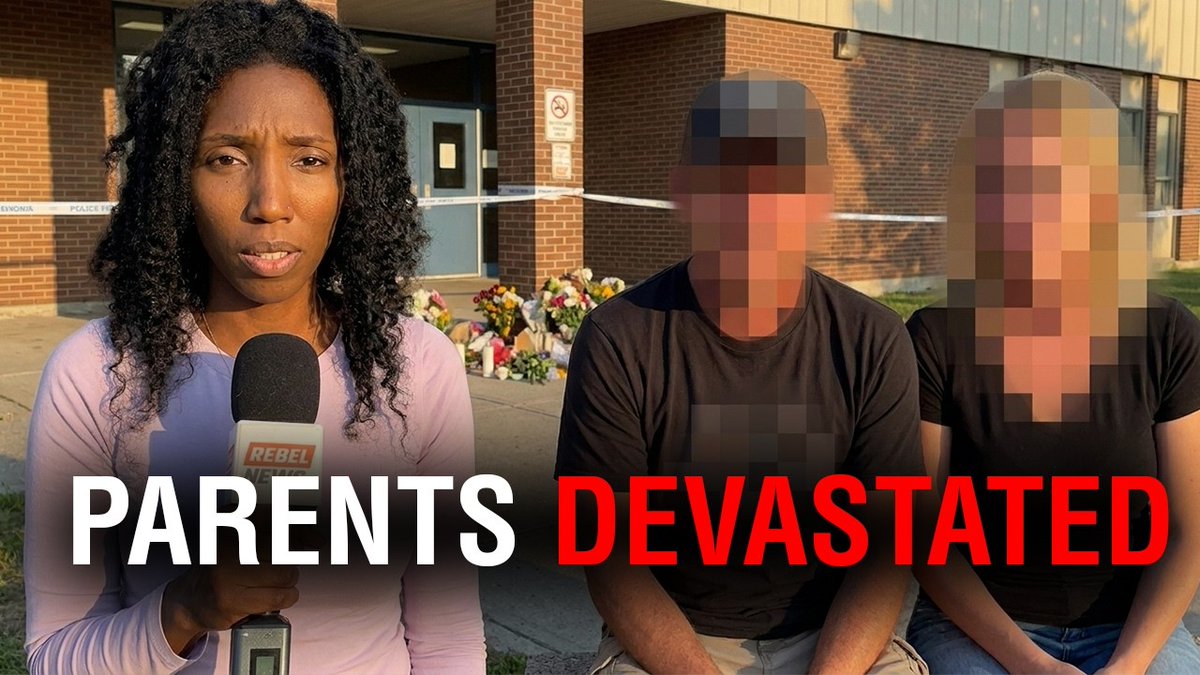
Trans tween stabber in BC? What the media isn't telling you 🏳️‍⚧️ After weeks of investigating and dealing with legal hurdles, Rebel News' Drea Humphrey uncovers what really happened during a stabbing incident at Springvalley Middle School in Kelowna, British Columbia. When reports first emerged that Springvalley Middle School had gone into lockdown in Kelowna, British Columbia, and a youth had been arrested, the public was left with the impression that it was a frightening but relatively minor event. RCMP initially described what occurred as "suspicious circumstances" at the school, and media reports suggested a student had suffered little more than a superficial scratch from a dull kitchen knife. But after weeks of investigation, I’ve uncovered a far more disturbing account. ➡️ Family members and others close to some of the victims claim four girls were impacted by the traumatic event, where an intruder believed to identify as transgender, terrorized the girls in and around the girls' washroom while declaring, "I need to kill someone today." In today's report, I speak with the parents of one of the victims, who describe the horror their 11-year-old daughter went through. "They stabbed our daughter in the back and said to the children, 'I need to kill someone today,' proceeded to push the other children and push our child against the wall and continue to hit her continuously in the face and the head and the chest." The child's mother and father, whom we are not identifying to protect the identities of the youths involved, say it wasn't until a friend yelled her name that the attack shifted. “This person then grabbed her wrist and gave her scratch wounds on her arms that drew blood, and all her bracelets were broken, and then they were able to get away and find a teacher." Adding salt to the wounds for the family is both how little support they say they received initially, including being called and told to come get their child instead of the school calling an ambulance to provide immediate medical care, and the "mere scratch" narrative that was fed to the public in an already widely underreported story. "The fact that they did not do their due diligence to check on my child's well-being after being stabbed... everything they went about, they dropped the ball and it was not okay. Things need to change," the girl's mother told Rebel News. "There was an attacker. There were children. There were injuries," her father said. "Don't lie in the media. Stop trying to sweep it under the rug." The parents also described weeks of frustration trying to obtain basic answers from both the school and authorities, saying repeated emails went largely unanswered until they unexpectedly returned to the school themselves. Those frustrations mirror those raised by families in the rural community of Falkland, B.C., located about two hours away. A concerned grandmother also joined me in this report to discuss how parents had to take the matter of school safety into their own hands after a troubled youth's kill list targeting students was discovered. The youth was still living across from and walking around an elementary school they were expected to trust sending their children and grandchildren to. These events, the Springvalley Middle School attack, the Falkland kill list, and the tragic Tumbler Ridge school massacre resulting in the deaths of eight, mostly young people, all taking place this year in B.C., show that public awareness and attention to the topic of school safety is an important matter of public interest. Lori-Ann describes how, despite the potential threat, the reasonable uncertainty, and the nearest police detachment being 30 minutes away, no RCMP officers or security personnel were assigned to keep watch for a reasonable period during school hours. "It shouldn't have to take a tragedy for things to change," said the father. Bringing this story, the real story, to light wasn't an easy task. In addition to digging for on-camera and off-camera statements from those close to the victims, I had to navigate publication bans under the Youth Criminal Justice Act that, even now, prevent me from disclosing much of the ordeal. To ensure the other side of this important story could be told, the victims' experiences could be validated, and enough awareness could hopefully be raised to create meaningful school safety policy changes, Rebel News sought legal assistance through the Independent Press Gallery. The non-profit, which protects freedom of the press through donor support, retained Kyle Bienvenu of Hira Rowan LLP to provide legal advice throughout portions of my investigation. According to the BC Prosecution Service, the youth apprehended in the Springvalley attack now faces seven charges: two counts of assault with a weapon, three counts of assault, one count of uttering threats, and one count of possessing a weapon for a dangerous purpose. The case remains before the courts, and because the accused is a youth, much of the evidence and proceedings remain protected from publication.

Rebel News

20,044 views • 1 month ago

I agree with Trevor Noah’s analysis of the immigration debate in South Africa, and I also agree with Julius Malema’s noble desire for Africa to be one. From the outset, I must be clear that the biggest obstacle to African unity has been African leadership. Some of our countries have been independent for more than 60 years, yet we are still far from achieving the level of integration many Pan-Africanists envisioned. The failure to get there is fundamentally a leadership issue. I want to focus on what Julius Malema has said. He is one of the continent’s most outspoken Pan-Africanists, and his vision of a more united Africa is both admirable and inspiring. Unfortunately, because of the dysfunctionality of leadership across much of the continent, Pan-Africanism has, in some circles in South Africa, become a dirty word. That is a tragedy because the principle itself is not the problem. The problem is that many African leaders have failed to create the political, economic, and institutional conditions necessary to make that vision a reality. So let us look carefully at what Julius Malema is saying. I have great respect for Julius Malema when it comes to his Pan-African outlook, but I am afraid to say that the idea of an Africa with one passport, one currency, and a fully integrated political and economic system is unlikely to happen within our lifetime. It is good to dream and to idealise the kind of Africa we would like to see, but in its current political and economic format, the continent is nowhere near achieving that goal. I am 55 years old, so when I talk about a lifetime, I am talking about the next 25 years. If I live to 80, that would be wonderful, but I do not believe Africa will achieve that level of integration within that timeframe. The reason is quite simple. If you look at the European Union, countries do not simply join because they want to. They must first meet a long list of requirements and benchmarks. These include economic standards, institutional capacity, governance standards, judicial independence, and human rights protections. Even if we set aside the human rights question in Africa, because we know that remains a long journey, the economic question alone presents a major obstacle. A truly united continent can only emerge if its member states are led by competent, educated, and trustworthy leaders who build functioning economies capable of providing opportunities for their own citizens. The current xenophobic, Afrophobic, and anti-immigration discourse taking place in South Africa is often crude and sometimes ugly. However, stripped of the crudeness, there is an important point being raised that cannot simply be ignored. For Africans to unite successfully, they cannot first unite in one country. They must first unite across the continent by creating broadly comparable economic opportunities and living standards. For example, a Ghanaian should be able to travel to Zimbabwe visa-free. That is largely a political decision. But if that Ghanaian wants to relocate permanently to Zimbabwe, then the economies of Ghana and Zimbabwe should have a reasonable degree of parity. People should not be compelled to migrate primarily because one country is functioning while another is failing. The same applies across the continent. Someone should not feel forced to leave the Democratic Republic of Congo for South Africa purely because of economic collapse at home. If integration is driven solely by economics, then the countries that are relatively well managed will inevitably carry the burden of those that are not. This is an intellectual discussion that Africa cannot avoid. Resource competition is often what inflames tensions. If someone moves from a poor community in Mozambique to a poor community in South Africa, both groups are competing for the same clinics, schools, housing, jobs, and social services. That is where tensions arise. Interestingly, illegal immigrants from Europe are rarely part of the immigration debate in South Africa. Many people immediately attribute this to race, but there is another factor that deserves consideration. Wealthy immigrants generally live in affluent communities where there is little or no competition for scarce public resources. Take Chatunga Mugabe, for example. He lived in Hyde Park, drove expensive cars, and socialised in Sandton. Nobody was concerned about his immigration status. Likewise, where I live in South Africa, there are immigrants from the United Kingdom, Spain, Germany, Kenya, and elsewhere. They are largely affluent people. The South Africans living there are often excited when newcomers arrive. When I moved from Zimbabwe and bought a house on my road, both black and white South Africans invited me into their homes for dinner and wine. There was no hostility because there was no competition for resources. That reality matters. If Africa is ever going to have one passport and one currency, we must first deal with the economic fundamentals. Most Africans do not realise that this is not primarily a political project. It is an economic one. Turkey, for example, has spent decades seeking membership of the European Union but has not been admitted because it has not met all the requirements. Countries such as Bulgaria and Romania had to meet strict standards before joining. Their judicial systems, governance structures, healthcare systems, and institutions had to reach certain benchmarks. The same logic applies to Africa. If every African citizen were suddenly free to seek healthcare anywhere on the continent, countries with stronger healthcare systems such as South Africa, Botswana, and Namibia would immediately face enormous pressure from people seeking treatment, including specialised care for conditions such as cancer. That is why this discussion is important. We must have it honestly and without slogans. We must discuss it not only in universities and intellectual circles but also in townships, villages, and communities across Africa. The dream of one Africa is a noble one. I support it. But before we get there, we must first address the economic, institutional, and governance realities that stand in the way. Until those challenges are resolved, the vision Julius Malema speaks about will remain an aspiration rather than a practical reality. The tragedy we face today is that we are focusing on the sideshows created by tribalists and rogue political actors who are taking advantage of a genuine problem that exists in South Africa and, indeed, in other parts of Africa as well. We amplify their voices and focus on what they are saying instead of focusing on the real issue. We should be asking ourselves a simple question. Julius Malema is right about the ideal he is advocating, but why are we not getting to where he wants us to get? Once we ask that question honestly, we are forced to examine the root causes. There can be no economic harmony, political harmony, or any other form of harmony between countries that are operating at vastly different levels of development and functionality. Take Zimbabwe and South Africa as an example. Zimbabwe has not had a working radiotherapy machine in its public healthcare system for more than four years. The country’s largest hospital has only one maternity theatre, built in 1977. Then look at South Africa. Its public healthcare system has some problems and could be much better, but by African standards it remains among the most advanced on the continent. If those two countries stand side by side, as they physically do, how do you integrate them when one is dysfunctional and the other remains a functioning state? These are the root causes we need to confront. This discussion must be held in a comprehensive and honest manner, not in fragments. We can speak about the noble aspirations of Pan-Africanism, and we can also discuss the obstacles that stand in its way. Both conversations must be held together. Only then can we identify what needs to be done and begin serious scenario planning around how to get there. Instead, we often get beautiful speeches delivered at the African Union, one of the most ineffective continental organisations in the world. People make grand declarations, earn generous salaries, and then nothing happens. Great speeches have been delivered since the days of the Organisation of African Unity. One of those speeches was even immortalised by Bob Marley in his song War. Yet more than 60 years later, many of the same challenges remain unresolved. That is an indictment not only of African leaders but also of African elites. Too many are content to make money while ignoring the underlying governance failures that hold the continent back. Consider Aliko Dangote, the richest black man in the world and Africa’s most successful entrepreneur. He requires 34 visas to enter dozens of African countries. Yet if I hold a British passport, my movement across much of Africa can often be easier than his. How can Africa speak seriously about integration when one of its own leading business figures faces such barriers within the continent? Until influential African business leaders such as Aliko Dangote, Strive Masiyiwa, Patrice Motsepe, and others begin speaking more forcefully about governance, corruption, economic mismanagement, and state dysfunction, progress will remain slow. As long as these issues are accommodated because money can still be made, Africa will continue to talk about unity without creating the conditions necessary to achieve it. So, back in the townships of South Africa, there is a crisis. I have always said that Zimbabwe is no longer a foreign policy issue. It is a domestic issue because the South African government must deal with its consequences in hospitals, social services, employment, housing, education, and many other facets of daily life. If the South African government does not have the courage to stand up to leaders such as Emmerson Mnangagwa and Mozambique’s President, Daniel Chapo, and say, “The way you are running your economies is creating problems for us,” then the situation will continue to deteriorate. The tragedy is that it is always the poor, the ordinary, and those living in abject poverty who end up fighting amongst themselves. Yet the root causes of these tensions are often created at the highest levels of political leadership. The people competing for jobs, housing, healthcare, and other scarce resources did not create the conditions that led to mass migration. Those conditions were created by policy failures, corruption, poor governance, and economic mismanagement. I would go even further and say that this is also an indictment of South African leadership. SADC already has protocols, principles, and governance frameworks that were specifically designed to prevent member states from becoming dysfunctional and destabilising their neighbours. The problem is not the absence of rules. The problem is the absence of enforcement. Those protocols exist on paper, but too often they are ignored in practice. When governance standards are violated, when economies collapse, when democratic institutions are weakened, and when corruption flourishes, there is rarely any meaningful consequence from the region. As a result, the effects spill across borders and eventually become someone else’s problem. That is why the immigration debate cannot be separated from the governance debate. They are two sides of the same coin. If African leaders are serious about reducing migration pressures, they must first address the political and economic failures that are pushing people to leave their countries in the first place. We all know why that conversation is avoided. So, coming back to Trevor Noah’s analogy, it is ultimately a human analogy. It reflects a reality that has existed throughout history and even in nature itself. If lions have abundant access to zebras and other prey, there is very little competition between lions, leopards, and other predators. But when food becomes scarce, competition intensifies. The struggle is no longer about identity. It becomes a struggle over limited resources. The same principle applies in human societies. When jobs are plentiful, when healthcare functions, when housing is available, and when opportunities are expanding, people are generally more tolerant and welcoming. But the moment resources become scarce, tensions rise. People begin competing for the same opportunities, and that competition often manifests itself through politics, nationalism, tribalism, xenophobia, or other forms of social conflict. This is not unique to South Africa. It is not unique to Africa. It is part of the human condition. In many ways, what we are witnessing is both a human story and an animal kingdom story. The underlying dynamic is remarkably similar. Scarcity creates competition. Competition creates tension. Tension creates conflict. That is why discussions about immigration cannot be separated from discussions about governance, economic growth, service delivery, and opportunity. If we focus only on the symptoms while ignoring the underlying causes, we will never solve the problem. The real challenge is not merely getting people to live together. The real challenge is creating societies and economies that produce enough opportunity for people to live together peacefully.

Hopewell Chin’ono

92,159 views • 3 months ago