Загрузка видео...

Не удалось загрузить видео

На главную

دشّنت #الخطوط_الجوية_الكويتية أولى رحلاتها المباشرة إلى مدينة دمشق، بواقع رحلة يوميًا، في خطوة تعزز شبكة وجهاتها وتوفر لعملائها المزيد من خيارات السفر والمرونة. نتطلع لاستقبالكم على متن الخطوط الجوية الكويتية. #kuwait_airways launches its first direct flights to Damascus, with one daily flight, a move that strengthens its network and...

49,858 просмотров • 1 месяц назад •via X (Twitter)

Комментарии: 0

Нет доступных комментариев

Здесь появятся комментарии из оригинального поста

Похожие видео

Astranis is building a new satellite for Taiwan. 🇹🇼 With our customer, Chunghwa Telecom, we will bring Taiwan its first-ever dedicated communications satellite. Chunghwa Telecom is the largest telco in Taiwan, with a market cap of more than $30 billion USD. Independent, secure internet infrastructure has never been more geopolitically important — and because it’s impossible to replicate with LEO constellations or even terrestrial links, it merits some spelling out. Astranis was founded on the belief that access to secure, reliable communications infrastructure is foundational to peace, prosperity, and self-determination. The satellite we’re bringing to Taiwan represents resilience. It will serve as a critical backbone for cellular connectivity, maritime communications, and essential government services across Taiwan. And it will ensure that Chunghwa Telecom’s network remains operational in times of crisis, whether in the face of natural disasters or other disruptions to terrestrial infrastructure. Importantly, Astranis provides more than just a satellite — we give our customers a standalone, dedicated network. A network that can be rapidly deployed and fully spans their geography of choice. With enterprise-grade security, customizability, and deep insights into the configuration and operation of the network. And as an independent piece of infrastructure, it safeguards against geopolitical risks, and is beyond the reach of hostile neighbors. Those are the benefits of having your own, dedicated satellite and network. And that’s why so many customers are choosing Astranis. We at Astranis are honored to be part of this moment, and to have a product that has proven so uniquely needed in today’s world. We look forward to continuing to support Taiwan and its people for many years to come.

John Gedmark

202,802 просмотров • 1 год назад

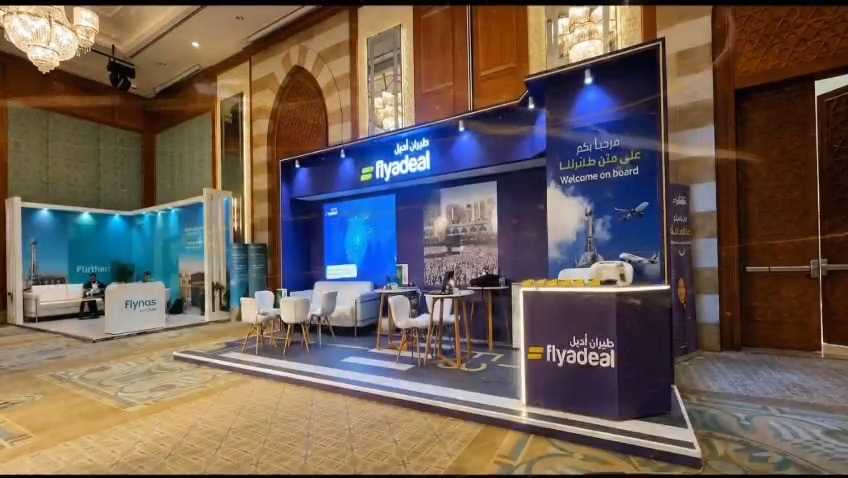
تعزيز الشراكات... وتوسيع آفاق الفرص. في إطار التزامنا بتعزيز حضورنا الإقليمي ودعم منظومة السفر، شاركت طيران أديل، بالتعاون مع فريق المبيعات، في مؤتمر الحج والعمرة بالقاهرة. وقد شكّل المؤتمر منصةً مميزة للتواصل مع شركائنا في القطاع، وتبادل الخبرات، واستكشاف فرص جديدة تسهم في الارتقاء بخدمات السفر للحج والعمرة. وتبقى الشراكات الاستراتيجية طويلة الأمد ركيزةً أساسية في مسيرة نمو طيران أديل، بما يدعم خططها التوسعية ويعزز القيمة المقدمة لضيوفها وشركائها. وتجسد هذه المشاركة التزام طيران أديل المستمر بدعم مستهدفات قطاعي الطيران والسياحة في المملكة، والإسهام في تحقيق مستهدفات رؤية السعودية 2030. نتقدم بجزيل الشكر لجميع شركائنا وزوار جناحنا على لقاءاتهم المثمرة، ونتطلع إلى المزيد من التعاون والنجاحات المشتركة في المستقبل. Strengthening partnerships. Expanding opportunities. As part of our commitment to growing our regional presence and supporting the travel ecosystem, flyadeal participated in the Hajj and Umrah Conference in Cairo in collaboration with our Sales team. The conference provided an excellent platform to connect with industry partners, exchange insights, and explore new opportunities that will further enhance the Hajj and Umrah travel experience. Building strong, long-term partnerships remains at the heart of our growth strategy as we continue to expand our network and deliver greater value to our customers. Our participation reflects flyadeal's ongoing commitment to supporting the Kingdom's tourism and aviation ambitions while contributing to the objectives of Saudi Vision 2030. We thank all our partners and visitors who met with our team during the event, and we look forward to continued collaboration and future success together.

flyadeal | طيران أديل

17,511 просмотров • 1 месяц назад

Excited to announce UtilitySat, the world’s first multi-mission geostationary satellite, that we're launching at the end of this year. This is a first of its kind. And a new product line-- providing on-demand connectivity for disaster relief, bridge capacity, and other missions. We started Astranis to build something new: small communications satellites that provide dedicated broadband capacity for our customers. At the end of this year we’re launching four more of them on a dedicated Falcon 9 rocket, with many more to come after that. That launch of four satellites includes one satellite for Peru, two satellites for in-flight connectivity, and a fourth satellite that had been previously kept under wraps. Until now. Introducing UtilitySat, the Swiss Army Knife of satellites This is a new product— the world’s first multi-mission commercial GEO satellite, capable of conducting multiple fully-operational broadband connectivity missions. And it is just the first of many. We’ll plan to launch many UtilitySats in the years to come. UtilitySat can provide connectivity on standard Ku, Ka, and Q/V bands, and has the flexibility to dial in exact frequencies using Astranis’s proprietary ultra-wideband software-defined radio. It can also relocate dozens of times around the GEO belt over its lifetime. It does this using our unique on-board dual-propulsion architecture, which includes both a chemical monopropellant system and an electric ion thruster. A new mission every year, or every month When we first began development of UtilitySat almost 2 years ago, we had many different missions in mind. UtilitySat can serve as bridge capacity for a customer that is waiting for a dedicated satellite, as an on-orbit spare, or as extra, surge capacity that can be brought in to supplement the broadband service we’re providing to one of our customers. There are acute needs as well — a natural disaster can wipe out terrestrial connectivity over a huge geographic area. One of the top priorities for first responders and during disaster relief is reliable comms on the ground. With multiple UtilitySats on orbit, Astranis can bring in extra capacity on incredibly short notice. Capacity that is compatible with existing, low-cost GEO ground terminals. In initial conversations with customers for UtilitySat, we’ve seen huge demand — these customers often want to lease the entire capacity of the satellite once they learn what UtilitySat can offer. Customers need all the capacity they can get, and new capacity that can be deployed on short notice is a huge deal and a huge departure from traditional GEO satellites. We see a future where customers will be able to call up extra capacity on demand to augment their existing capacity needs, and we’re making that future a reality. US Government applications The first UtilitySat mission will be a commercial one, but we are seeing enormous demand from both from commercial companies and from our government customers. The US Government has unique needs — Combatant Commanders need to be able to task dedicated satellites to specific AORs at a moment’s notice — and surge communications would give them a new tool in their toolbox, helping them win even in a contested environment. And more broadly speaking our military leaders have said the one priority in national security space is to add resiliency to our fleets, using larger numbers of smaller, flexible, and maneuverable satellites so we’re not dependent on just a handful of huge satellites in GEO. UtilitySat shows that Astranis can do just that. Not traditional GEO satellites UtilitySat is only possible because of Astranis’s unique technology — including our proprietary software–defined radio. The flexibility of having on-board digital signal processing allows us to build a standardized satellite design, and move a lot of what used to be done in hardware, into software. UtilitySat uses the standard Astranis MicroGEO platform, adding more frequency bands and some new software capabilities to make maximum use of the available spectrum, no matter where the satellite is on orbit. Traditional geostationary satellites are designed to sit in one orbital slot for up to 20 years, with a set of frequency bands that is hardwired in at the factory. Their single mission must be predetermined many years before they are launched. Astranis does not build traditional GEO satellites. From day one we knew there had to be a better way, and we’re doing it.

John Gedmark

122,069 просмотров • 3 лет назад

Can United States manufacture robots? Matic Robots says "yes." It makes the best floor cleaning robot, that has won many perfect scores from Wired to many others. We love ours. But my trip there to get a tour from AI pioneer Navneet Dalal Navneet Dalal provided some real insights into how hard it is for a hardware company to make hardware in the United States. And how deeply AI is changing consumer electronics products that are going to be in many more homes soon. In this first part (Part II coming tomorrow) we get a look at how long it took for this company to go through prototypes to a shipping product. In the second part, you'll see the scaling hell that it takes to even ship a few thousand robots and the kinds of problems that scaling up a factory brings. Matic is one of my favorite small Silicon Valley companies. It has found what we call "product market fit." I just came back from CES where I saw many of its competitors, and the Matic wins because of not just the product thinking of Mehul and Navneet Dalal but because of their AI leadership. In a way their robot took many lessons from Tesla, from where to put the batteries to its bet on computer vision, which Navneet has been a pioneer in for years, working quietly behind the scenes. It is about to move into a new location that will allow it to grow to meet the demand that now is showing up (the boxes in its lobby show that it's outgrowing its current facilities). In terms of AI, it has aspirations of making a humanoid too, but it is taking a far more measured approach to getting there. By starting on the floor it can not just build world models based on real world data (customers are given a choice whether to allow its data to be used that way. Most customers choose to keep their data on the robot only, for privacy reasons, but if you opt in you can help them improve their models). They are using that data to understand homes. Navneet told me they hit very unusual situations in people's homes already that they couldn't really predict in simulators, like full-wall mirrors that confuse computer vision systems, or pools and water features in people's homes. Having real customers brings a ton of customer feedback about how to further improve the robot, and, as Navneet demonstrates in the second video, forces them to build a manufacturing muscle memory. Getting teams to work together, figuring out how to solve supply chain problems, from Trump's tarriffs, to a new one that showed up over the past couple of weeks. A supplier for its bags (one of the cheaper parts that goes into the robot) changed the glue it used, which caused robots to fail quality tests and the manufacturing line to stop. Reminds me a lot of the hell Elon Musk faced in its Fremont factory when Tesla was first starting to manufacture its Model 3, which almost bankrupted the company. Off the record Mehul and Navneet 🇮🇳 showed me some of the prototypes and plans for its next products that will show up over the next few years. Certainly not as sexy as Tesla, Figure, 1x_tech, and all the Chinese manufacturers are showing off already, but far better thought out for the typical Western home and AI plays a huge role in its future. It is the product that speaks for itself. It's amazing, and is about to get better this year due to AI. It's the first real vision-only robot to be in my home and I bet it won't be the last from this company. Real honor that they invited me over with my Insta360 camera (another company launched in my home, just like Matic was last year). In Part II we go into the factory.

Robert Scoble

69,229 просмотров • 6 месяцев назад

I did promise since last year that we would bring agriculture and food systems to center stage at COP28, and here we are! Celebrating together, a MILESTONE MOMENT IN HISTORY for food systems and agriculture at a COP in the first session. I'm happy to confirm that COP28 UAE Declaration on Sustainable Agriculture, Resilient Food Systems, and Climate Action has so far received 134 endorsements from heads of state and government. With these countries on board, we cover more than 5.7 billion people and 70% of all the food we eat. The signatories of the declaration are home to nearly 500 million farmers and represent 75% of all emissions from global food systems. To support the funding and innovation part of the declaration, it gives me great pleasure to announce a significant funding partnership with a very dear partner to the UAE. The partnership will focus on agricultural research and development and scaling up innovations, which is so desperately needed to adapt food systems to the growing threats of climate change. The Bill and Melinda Gates Foundation, together with the UAE, will fund a total sum of… 200 million US dollars of new investments into food and ag research and scaling up innovations. With the majority of this investment flowing into the CGIAR network, the UAE is delighted to become a core partner of the CGIAR System Council and support its work. A big thank you to all the countries who have endorsed the declaration and contributed to this watershed moment for the food and climate agenda. We look forward to many more joining over the next few days! #FoodSystems #agriculture #COP28UAE #cgiar

Mariam Almheiri | مريم المهيري

179,930 просмотров • 2 лет назад

DMRC Introduces Multiple Journey QR Ticket (MJQRT) to Enhance Passenger Convenience As part of its ongoing ‘Ease of Booking’ initiative through digitalization, the Delhi Metro Rail Corporation (DMRC) today launched the Multiple Journey QR Ticket (MJQRT), a cutting-edge technology designed to offer greater convenience for passengers by eliminating the need for purchasing daily QR tickets. DMRC’s Managing Director, Dr. Vikas Kumar launched the new feature today at Metro Bhawan in the presence of other senior officials. Key Features and Benefits of MJQRT: First-of-its-kind solution: MJQRT is a revolutionary digital initiative, marking the first time in India that a QR-based multiple-journey product is being introduced. Exclusively on दिल्ली सारथी (Momentum 2.0): Available exclusively on DMRC’s Delhi Metro Sarathi (Momentum 2.0) app, MJQRT provides passengers with a seamless, efficient way to manage multiple journeys on the Delhi Metro. Availability: This feature will be available for App users from tomorrow. Comprehensive journey management: Passengers will be able to view their journeys, including fare payments and recharges, directly on the app. Simple onboarding: To avail the MJQRT, users must register on the दिल्ली सारथी (Momentum 2.0) app and can start with an initial amount of Rs. 150, which can be used for metro travel. No security deposit: There is no security deposit required for the MJQRT. Flexible recharge options: Users can easily add value in multiples of Rs. 50 through digital payment methods such as UPI, credit cards, and debit cards, with a maximum balance limit of Rs. 3,000. Minimum balance for travel: A minimum balance of Rs. 60 is required to travel using the MJQRT. Discounts on travel: MJQRT offers passengers a 10% discount during peak hours (8 AM - 12 PM and 5 PM - 9 PM) and a 20% discount during off-peak hours. Eco-friendly alternative: MJQRT serves as an eco-friendly and economical alternative to the traditional smart cards currently in use. Secure and recoverable: In case of theft, loss, or damage to the mobile device, the remaining balance will remain intact, and passengers can continue using the MJQRT by logging in on another device. The ‘Ease of Booking’ program by DMRC emphasizes multiple modes of ticket booking, multiple fare media, and multiple payment options. The MJQRT is the latest addition to the existing fare media options, including single journey QR tickets, NCMC, and DMRC smart cards. Dr Vikas Kumar MD DMRC while launching this initiative said “We are pleased to launch the Multiple Journey QR Ticket (MJQRT) as part of our ‘Ease of Booking’ initiative. MJQRT simplifies travel with a single QR code, enhancing convenience and offering eco-friendly benefits. This innovation reflects our commitment to improving the passenger experience on Delhi Metro” With the launch of MJQRT, DMRC reaffirms its dedication to enhancing passenger experiences through digital innovation, making metro travel more convenient and environment friendly.

Delhi Metro Rail Corporation

14,325 просмотров • 1 год назад

English Below⤵️ يسعدني أن أشارككم انضمامي إلى قناة الجزيرة الإنجليزية Al Jazeera English مراسلاً لها من السودان. ونأمل أن تكون هذه البداية مرحلة جديدة يكتب الله فيها التوفيق والسداد. يتناول تقريري الأول من أم درمان أزمة الطاقة والوقود، وكيف أن حربًا تدور بعيدًا عن حدود السودان تعيد تشكيل الحياة هنا. سنواصل التغطية في بلادنا مع زملائي في الجزيرة الإنجليزية، ننقل قصصها وحكاياتها، على أمل أن تضع الحرب أوزارها قريبًا وذلك بعد ما يقارب الثلاث سنوات مع شبكة العربية، حيث بدأت رحلتي هناك في تغطية الحرب في بلادنا، كانت تجربة مميزة عملت خلالها وجمعتني مع زملاء وأصدقاء متميزين، نقلنا فيها الواقع وقصة الإنسان. دعواتي للجميع بالتوفيق والسداد. كان معي العزيز Mohamed Eisa في التصوير والمونتاج I’m pleased to share that I have joined Al Jazeera English Al Jazeera English as a correspondent based in Sudan. I hope this marks the beginning of a new chapter, one that God willing will bring success and guidance. My first report from Omdurman looks at the energy and fuel crisis, and how a war far beyond Sudan’s borders is reshaping life here. We will continue our coverage from across the country with my colleagues at Al Jazeera English, telling its stories and human experiences, in the hope that this war will come to an end soon. This comes after nearly three years with Al Arabiya, where I began my journey covering the war in our country. It was a valuable experience that brought me together with dedicated colleagues and friends, through which we reported on reality and human stories from the ground. Wishing everyone success and all the best.

AlMigdad Alruhaid

28,015 просмотров • 4 месяцев назад

$RKLB — Bloomberg Interview Q1. Can you clarify the confusion about Neutron? Yesterday, it seemed like you were pushing back the launch date a little bit. Is Neutron still on track to launch from its launch pad in 2026? Peter Beck: I think the headlines overblew it a little bit. What I said is that it's getting a little tighter to get a launch away this year. That's just being honest and transparent. It's a rocket program. These are very difficult and complex programs. Our intention is to push hard and try to get the first flight away this year. But I think the real question that should be asked is: What about the 10th flight? The first flight is obviously important, but flight number 10 is really important because that shows you've reached scale, cadence, and reusability. That's the most important thing for the whole program. Q2. You mentioned cadence. Tell us a bit about how you're thinking about cadence going forward. Is there a viable path to getting to a regular cadence? Peter Beck: If you look at our current vehicle, Electron, we actually scaled that faster than any other rocket in history. We went from zero to 50 flights in the shortest time in history, and we're on track to get to 100 flights in the shortest time in history with that vehicle as well. So we know a thing or two about taking a rocket, putting it on the pad, and flying it over and over again. Neutron is really important for a few reasons. A lot of people focus on it filling a gap and providing competition for Falcon 9, which is an important part of its job. But Rocket Lab is an end-to-end space company. We build satellites both for ourselves and for other people. With the pending acquisition of Iridium, we really need a rocket to launch our own satellites. At least 50% of Neutron's capacity is going to be consumed by ourselves. Q3. SpaceX was able to raise a huge amount of cash recently. How do you intend to continue raising cash to fund some of these expensive endeavors? Peter Beck: I think we're a little different from SpaceX. Elon has very grand aspirations that require a lot of cash. For us, we're in the business of getting to cash-flow positivity as quickly as we can. If you look at some of the acquisitions we've done in the past and those we're about to do, they put us in that realm very quickly. We have a very different profile from the other big rocket companies. I'm certainly not one of the richest people in the world, and our competitors have a totally different cost and sense of capital. We've always been the rocket company that has had to be very commercial from day one. We're focused on building a good, solid business and a commercial enterprise that's enduring and making money. Q4. I look at the reported backlog of $2.36 billion with 90-plus launches. How should investors look at that backlog? At what point does it become something that should raise concern if it gets too large? Peter Beck: Everybody loves a great big backlog. Between the last quarter and now, we added nearly $1 billion of backlog to the company. Backlog is a great metric, but execution is the true measure. If you look at the company, I think we've established ourselves as very strong executors. Throughout our history, we do what we say we're going to do. Q5. The Iridium deal, which is pending completion, potentially opens the door for direct-to-device products. How do you see that opportunity, particularly against competitors? Peter Beck: I've been saying this for many years, and I think evidence from other companies has proven it out: the really large space companies of the future are going to look a little bit the same. They're going to have the ability to build satellites at scale, launch their own satellites with their own rockets, and have a communications business. Iridium is the entry point for us. It's by no means the endpoint. One of the reasons we like the Iridium platform so much is that it has a very unique spectrum. Its L-band spectrum allows you to do very unique things. Iridium has built an amazing business around safety-critical, defense-critical, and critical-infrastructure applications. That's something that will continue to grow. I don't think you're going to see us going head-to-head in the broadband market. That's very well served and is a tough place to be. But I think there's a tremendous opportunity in some of these more discrete and unique areas of the communications market. Q6. Talk to us about the Kepler deal, which you announced yesterday. Kepler Communications purchased a dedicated Neutron launch for no earlier than 2028. How important is that to the business? Peter Beck: It's funny because naturally a lot of people would expect that we should sell all of the rockets we have for eternity. If we were just a rocket company, that would be a great assumption. But we have to make sure that we have rockets left in production and available to launch our own missions, as well as for some of our defense customers who need assured access to space. Right now, I've never seen the rocket and launch industry so constrained. For us, we're extremely selective about who we give this very valuable Neutron capacity to. It was great to have the Kepler team on contract. We've known that team for a very long time. But it is a very constrained environment right now, and we have to navigate it carefully. Q7. What's the detailed plan for getting to cash-flow positive? Is it just a matter of time? Peter Beck: Yes, absolutely. Neutron, after we have the first flight and then move into commercial flights, is a huge inflection point for the company. And, of course, an acquisition like Iridium would do that immediately. So we have a fairly short time horizon to reaching cash-flow positivity. Q8. Looking at the acquisitions of Mynaric, Motive, and Iridium, are you hungry for more deals, or is there a pause in terms of the company's acquisitive stance? Peter Beck: Never done, never done. All of those acquisitions have been very strategic. I think launch creates a tremendous moat, and everybody can see that. It's the big show in the sky. But actually, we've acquired a whole bunch of component companies and scaled those. Components are just as much of a moat. No matter how much capital you have, if you just turn up and say, "I want to build a thousand satellites," you can't, because there isn't a supply chain there to provide all of the components for the spacecraft. For us, that's not a constraint, of course. But for other people entering the market, it's a huge constraint. So you'll continue to see us tackling those smaller deals on the side. Deals like Iridium certainly aren't going to be the last. And you shouldn't think of us as the L-band communications company. This is the first of many, I would say.

Parkash Heerani

130,416 просмотров • 9 дней назад

Beam just raised $7M! every year, over $150 trillion moves across borders. those funds reach everything from global commerce and payroll to humanitarian aid and migrant remittances. unfortunately, most of that money still flows through old systems weighed down by delays, fees, and opacity. we started beam (acq Modern Treasury) in 2022 to fix this. we knew stablecoins would be a foundation for a financial system that finally works at internet speed. a system that moves value globally, instantly, and transparently. but to get there, we had to connect it to the infra businesses already rely on. so we built something from the ground up: a first-of-its-kind payment service provider (PSP) that pairs the efficiency of stablecoins (the world’s first truly global settlement layer) with the familiarity of instant payment networks (RTP, FedNow, Visa Direct, Mastercard Send, etc.). the end result being the fastest, cheapest, and smartest way to get money into the hands of businesses, governments, nonprofits, and people. today, companies like Morse (formerly Sling Money), CoalaPay.org, Antimetal, Hyperspace, Braid, Shaga Team, Shield, and goldenvoice use Beam to power everything from bulk creator payouts and wallet top-ups to treasury management and vendor disbursements. it’s clear there’s never been a better way to move money from point A to point B. the last few months have marked a major shift in momentum. we welcomed Frank Pinto (Frank) as our Engineering Lead and Scott Elliot as our Compliance Lead. we’ve seen a surge in demand, we’re shipping faster than ever, and the timing feels right. regulations are shifting. corporates are jumping in. the market is finally catching up to the future we’ve been building toward. to keep up with the pace, we’re going to need more hands on deck. starting with a Senior AE to help bring stablecoins to even more businesses around the world. the next few months will be even more exciting. we have a lot on the roadmap to deliver more value to banks, fintechs, traditional PSPs, merchants and the builders modernizing financial infra at every layer. to everyone who’s supported us on this journey, thank you. building a startup comes with many sacrifices. but when you believe deeply in what you’re building, and you feel the momentum from partners, customers, and supporters… you know you’re on the right track. to our investors, Castle Island Ventures, Archetype, Arca, BanklessVC, Verda Ventures MiniPay fund, and Shack15 Ventures, we’re grateful for your conviction in what comes next. we’re now one step closer to connecting stablecoins natively to every instant payment rail in the world. P.S. huge thanks to Ryan Lawler from Axios for covering the raise! check out the article in the comments to learn more about this round

daniel mottice

54,150 просмотров • 1 год назад

Thought for today…. I would like to thank Alexander Isak for his behaviour and forcing to leave Newcastle. I would also like to thank Liverpool for the duplicitous way they unsettled him. Why FFS you may ask? Hear me out… 1. The bloke is not a team player as he showed last season with his performances at the start and end of last season and we only want fully committed players at our club. 2. At some point due to the corrupt PSR rules we were going to have to sell a big player to enable us to move to the next level. It might as well be one with the lack of character and morality that he has shown. 3. Isak and Liverpool have handed us a massive windfall that has the potential to transform the club over the next few seasons. Without this we would not be able to move forward as quickly and we would all be waiting for the axe to fall on another star player. That is less likely now. 4. We now, potentially,have the strongest squad in my living memory (with the possible exception of Keegan’s Entertainers but who knows they may surpass even them) 5. The new CEO and Sporting Director (both of whom are top class if reports are correct) will be walking into a club that is united from top to bottom and in a very strong financial position. A club that has qualified for the Champions League in two of the last 3 season and won its first domestic trophy in 70 years. A club that is clearly on the up. 6. PIF will hopefully have learned lessons from what happened this summer and even though it was a little late they acted in the last few weeks and made sure the end to they transfer window could be deemed a big success despite the circumstances (next up get the CEO and Sporting Director in and announce a new stadium) 7. Eddie Howe, Andy Howe, Jamie Reuben and Steve Nickson have cemented their reputations. In particular Eddie’s handling of the whole Isak affair has been a masterclass in diplomacy, hard work, and man management - we truly have an absolute gem and a gentleman leading the team. 8. In summary we have a club that is united from top to bottom, in a healthy financial position, a much stronger squad with players committed to the club, new top class senior personnel to be added very shortly, a second Champions League season to look forward to and hopefully more silverware. Thanks Isak (you are still a rat) and Liverpool (your £135m will move us to the next level head of time) HWTL 🖤🤍🖤🤍

Toontalk News

156,412 просмотров • 11 месяцев назад

FINAL UPDATE ON KENYAN AIRWAYS/GLORIA OMISORE/OTHERS The Nigeria Civil Aviation Authority is initiating maximum enforcement action against Official Kenya Airways for a large number of consumer protection infractions. Frame 1: Official Kenya Airways Country Manager in Nigeria apologized for the Gloria Omisore incident. Frame 2: The airline admits that they should never have boarded the passenger from Lagos. The airline failed to discover the lack of a France transit visa and flew this passenger to Nairobi where she had a 17-hour layover, only to be told that she would have to endure a further 10-hour wait if she must be flown to the UK. Passenger then asks to be provided care for that 10-hour period as she is bleeding and needs to bathe. The actions of the airline staff following her request were down to poor passenger handling. Gloria Omisore was not an unruly passenger on the first leg of the flight, nor was she rude on the Lagos-Nairobi flight. Frame 3: We put the facts of the matter to the airline and rejected the misleading official statement put out by them. The determination was for the airline to update its initial statement to reflect the facts of the case. There has been no compliance. Rather, the original statement that obfuscated facts, in all of its royal 'misleading-ness', has been allowed to grow wings and fly. Take the blog post by one Charles Onyango-Obbo for instance. The writer still asserts that Gloria Omisore blatantly refused the offer to fly to London. This lie is being told despite the admission of Kenya Airways Country Manager in Nigeria, James Nganga, that the passenger only became frustrated when the 10-hour wait attached to that offer did not come with accommodation. This was a bleeding woman who had already experienced the inconvenience of a 17-hour layover. She needed to clean up, possibly have a bathe. If the airline was not going to provide the care, its staff could have handled the matter professionally. In the viral video, the airline's staff could be heard hurling insults and raising her voice in response to the infuriated passenger. James Nganga admitted in one of the videos below, that the staff's behaviour was against airline policy. The writer also claimed that the meeting between my team and the ailine held in Lagos. Simple research would have told him that the NCAA HQ is in Abuja. This is what happens when people are more interested in narrative-creation rather than facts. They know their audience. Frame 4. "Truth shouldn't be hard to tell." The NCAA gave the airline an opportunity to fix what was wrong. The airline has failed to do so. Earlier yesterday, the airline asked for an extension of one hour, after which they still failed to comply with the determination of the CAA. On Thursday, in a separate issue, the airline failed to send in a compliance report about a scheduled flight that was delayed for 7 hours with no compensation for the passengers. When confronted over a phone call, the Kenya Airways team claimed ignorance of the NCAA Regulations. We are sending them a copy of it. But, how can you operate in a foreign country with no recourse to the relevant regulations? How is this different from those who claimed that Omisore should have known the travel documents she needed for her trip? To this end, we are organising a retreat for ALL airlines operating in Nigeria to learn and relearn Part 19 of the NCAA Regulations 2023. One would expect that knowledge of all necessary regulations is essential. Added to the other long-ignored cases read out to the KQ team that attended the meeting, the CAA is dismayed by the actions of this airline. Cases of refunds not paid, lost baggage not compensated for despite admitting to losing them, and failure to honour commitments. The NCAA is, therefore, initiating stiff enforcement action against Kenya Airways. This action will go through due process. I have put our legal department on notice.

Michael Achimugu

118,298 просмотров • 1 год назад

Option analysis and tooling is now improved on OpenMarket First: the GEX heatmap is now more accurate, and you can pick how it computes. Two modes: Dealer flow (new, the default): dealer positioning measured from the tape. Open interest (classic): the standard convention, dealers long calls, short puts. How the measured mode works: Every options trade has an aggressor and a quoter. Whoever crossed the spread is the customer. Whoever was quoting and got hit is the dealer. So every trade tells us what a dealer just took on: you buy a call, some dealer is now short that call. We add that up, trade by trade, contract by contract, and keep a running picture of what dealers are actually holding. Giant prints don't fool it. A block 25x the normal size is almost always two institutions moving a position between themselves, not a customer trading against a dealer, so it barely counts. The totals get sanity-checked against open interest every day (our estimate can't hold more contracts than actually exist), and when a contract expires, its position leaves the books, same as real life. And when we can't see enough, we say so. If our tape covers less than 60% of a contract's open interest, we don't pretend: that contract uses the classic assumption instead, and the chip on the chart shows exactly how much of the board is measured vs assumed. The two are never mixed inside one contract. In classic mode, a "wall" is just the strike with the most contracts outstanding. In dealer flow it's the strike where dealers actually have the most to hedge. Usually the same. When they differ, the measured one is the one that moves price. The rest of the update: Double-click any options panel and it takes over the chart. The IV smile expands to show every expiry with its date, the GEX curve gets a live readout of flip, walls, and totals. Drag the sensitivity slider and the heatmap re-colors under your cursor. No reload, no flash. The blocky look is gone: the surface now blends smoothly between strikes. Six new themes for every options panel, new heatmap palettes, and a little legend on the chart that always tells you what the colors mean. Live now.

OpenMarket

20,803 просмотров • 1 месяц назад

Bill Gates in 1984 on why he dropped out of Harvard and what actually drove him: At the time of the interview, Microsoft was on track to do "just over 100 million" in annual revenue. Gates was 28. His first big contract had come nine years earlier, when he was 21. The interviewer pressed him on the money. Was he a millionaire? Gates deflected: "Microsoft's a company owned primarily by its employees, and it's not easy to put a value on it." Then came the more interesting question. Was he in it for the money? Gates's answer: "I don't think anyone at the company's in it for the money. It's a much more exciting field than trying to measure exactly how much we're selling or how much it's worth. The creation of these programs is something you can sit down and see people enjoying and solving real problems." On dropping out of Harvard, Gates was direct about why he couldn't stay: "Things move very quickly in the industry and it was really the urgency to get out there and be the first one to put a basic on the micro computer that caused me to drop out." The interviewer then pushed on the "genius" label, acknowledging Gates as both a technical wiz and someone with the business acumen to build a real company. Gates rejected the framing but described what he actually did: "I enjoy working with the people, talking about what we're going to get done, getting real excited, making sure that the structure is there, that the ideas get measured properly and really leading the company. That's exciting." Finally, the interviewer raised burnout, a real concern in an industry where it was already common. Would Gates burn out before 30? "No." How did he know? "The work we're doing is it's not like, you know, we're doing the same thing all day long. We go into our offices and think up new programs. We get together in meetings. We go out and see end users. We talk to customers. There's so much variety and there's always new things going on. And I don't think there'll ever come a time when that would be boring."

Big Brain History

196,973 просмотров • 4 месяцев назад

The Cover Up: It is a fact that the 9/11 Commission engaged in a cover-up, and several of its members have said so on the record for more than a decade. But what exactly is being covered up? WTC Building 7: A 47-story building collapsing onto itself because of residual fires and structural damage might seem implausible at first glance, but if the building had been rigged with explosives then why were there no signature outward explosions like you would see in other controlled demolitions and why did the collapse look different from other examples? Also, if the building had been detonated, it would have been the largest and tallest building ever brought down by explosives (even today), and it would have had to be rigged over weeks if not months in absolute secrecy. Insider Trading: Just as with the collapse of WTC 7, the options trading activity on American Arlines (AMR) and United Airlines (UAL) stock in the days leading up to the 9/11 attacks may seem damning at first glance, but is it really? Here are four points to consider: (1) According to the 9/11 commission’s own report, a single U.S.-based institutional investor with “no conceivable ties to al Qaeda” purchased 95 percent of the UAL puts on September 6 as part of a trading strategy that also included BUYING 115,000 shares of AMR on September 10 (worth ~$3.4 million on the morning of 9/11). (2) Similarly, much of the seemingly suspicious trading in AMR on September 10 (resulting in an unusually high put/call ratio of 6.09) was traced to a specific U.S.-based options trading newsletter, faxed to its subscribers on Sunday, September 9, which recommended these trades. It is also worth noting that exactly one month later on November 12th, American Airlines Flight 587 crashed shortly after taking off from JFK, killing all 251 passengers and 9 crew on board. Three days before that crash the put/call ratio on American Airlines’ parent company was nearly 8. So how unusual is 6.09 really and why wasn't this crash also an example of insider trading? (3) Furthermore, the purchasing of stock options does not itself imply a directional bet. More often than not, options are used as part of a hedging strategy, so simply noticing that a company or individual has taken out a short position on a company does not itself imply that his or her portfolio will benefit financially if the stock falls and certainly not by the amount implied from the options purchase alone. (4) Lastly, it was reported by Bloomberg News on September 20, 2001 that insurance companies saw anomalous trading activities as well ahead of the attacks. Specifically, Citigroup Inc., which had estimated that its Travelers insurance unit would potentially have to pay $500 million in claims from the attacks, had about 45 times the normal volume during three trading days before the attack for options that profit if the stock falls below $40. Citigroup shares did indeed fall slightly below that target. While the options trading on AMR and UAL seem less likely to have been insider trading given the explanations provided and the easy traceability of the trades, the multi-step trade on Citigroup’s share warrants a better explanation IMO. That said, one may have already been provided, in which case, the public should be made aware of what it is if that hasn't already happened. What is Being Covered Up? While I’ve reviewed a decent amount of material on 9/11 in the last 24 years and spoken with many primary sources, the best book I can recommend that provides a more believable explanation for the nature and intentions behind some of the cover up can be found in Ray Nowosielski’s and John Duffy’s “The Watchdogs Didn't Bark”. Both authors appeared on the Hidden Forces podcast last September, as has former 9/11 commission member senator Senator Bob Kerry in 2018 and again in 2024. I should also mention that while the authors are well-intentioned, intelligent, and caring people, I’ve also received critical feedback about their interpretation of the facts from people who are in a position to know, muddying my confidence in event their own explanations. This said, it is clear that there was a cover up and that the cover up extends to the CIA and to the Saudi Royal family, but how benign the explanation may be will probably never be known conclusively. Concluding Thoughts If history is any guide, 9/11 is one of many historical events about which endless information will be reproduced, almost entirely in the form of fiction to feed an insatiable demand by the public for meaning-making and entertainment. The more interesting (and answerable) question to me, as someone who lived a mere 15-min walking distance from the twin towers on that day is why after so many years has this topic and others like it been elevated to the highest levels of public consciousness in my lifetime? I have a thoughtful answer, which is informed not only by my investigations into the subject, but also by my own life experience having been black-pilled in the early 2000s on this topic, knowing many of the early players involved in unearthing its details, and having been the creator and producer of a popular daily news program on Russia Today, on which much of today’s most popular right-wing programming would fit perfectly. If I had the time, I would write it all down, and maybe I will one day or perhaps record a podcast series on it. I'd like to, because we are living through the most profound cultural and political revolutions in American history and I don't know how many people truly understand how far back (and where) it all leads...

Demetri Kofinas

31,105 просмотров • 10 месяцев назад

In 2002, Elon Musk flew to Moscow three times to buy a refurbished missile. He couldn't close the deal. On the flight home, he asked himself: "When's the last time you bought something Russian that wasn't vodka?" He started SpaceX instead. 1 year later, he stood in front of Stanford students and spent 45 minutes explaining everything he'd learned about building companies: On starting Zip2: This was 1995. Most VCs on Sand Hill Road hadn't even heard of the internet. "I thought it would be a pretty huge thing. It was one of those things that only came along once in a very long while." He got a deferment from Stanford to start the company. "When I talked to my professor and told him this, he said, 'Well, I don't think you'll be coming back.' That was the last conversation I had with him." The problem: he had no money. "I couldn't afford a place to stay and an office. So I rented an office instead, because I got a cheaper office than I could get a place to stay." "I slept on the futon and showered at the YMCA on Page Mill and El Camino." "I was in the best shape I've ever been. Go to shower, work out, and you're good to go." There was an ISP on the floor below them. "We drilled a hole through the floor and connected a null modem cable. That gave us our internet connectivity for like 100 bucks a month." "We had an absurdly tiny burn rate. And we also had a really tiny revenue stream. But we actually had more revenue than we had expenses." They sold Zip2 to Compaq in early 1999 for over $300 million. "In cash. That's a currency I highly recommend." On starting PayPal: "I didn't really take any time off." He was looking for what remained in the internet. Financial services hadn't seen much innovation. "When you think about it, money is low bandwidth. You don't need some big infrastructure improvement. It's really just an entry in a database." They built a platform that combined banking, brokerage, and insurance in one place. That took enormous effort. Then they added a little feature that took one day: the ability to email money from one customer to another. "Whenever we demonstrated these two sets of features, we'd say, 'Look how you can see your bank statement and your mutual funds and insurance, all on one page. Look how convenient that is.'" "And people would go, 'Ho hum.'" "Then we'd say, 'And by the way, we have this feature where you can enter somebody's email address and transfer funds.'" "And they'd go, 'Wow.'" "So we focused the company's business on email payments." On viral growth: "PayPal is really a perfect case example of viral marketing." "One customer would essentially act as a salesperson for you. They would send money to a friend and essentially recruit that friend into the network." "So you had this exponential growth. The more customers you had, the faster it grew." "It was like bacteria in a Petri dish. It just goes like this S-curve." The results: "I ran PayPal for about the first two years of its existence. We launched after year one. By the end of year two, we had a million customers." "We didn't have a sales force. We didn't have a VP of sales. We didn't have a VP of marketing. And we didn't spend any money on advertising." On why product matters: "The essence of viral marketing is: do you have something where one customer is going to sell another customer without you having to do anything?" "Product matters incredibly. Because if you're going to recommend something to somebody, you've got to really love the product experience. Otherwise you're not going to recommend it." "You don't want to burn your friend." On company culture: "We had a pretty flat hierarchy. Everybody had a roughly similar cube. Anyone could talk to anyone." "We had a philosophy of best idea wins. As opposed to the person proposing the idea winning because they are who they are." "Even though there were times when I thought that should have been the way to go." On decision-making: "If there were two paths and one wasn't obviously better than the other, rather than spend a lot of time trying to figure out which one was slightly better, we would just pick one and do it." "Sometimes we'd be wrong and pick the suboptimal path. But often it's better to pick a path and do it than to just vacillate endlessly on a choice." On focus: "We didn't worry too much about intellectual property, paperwork, legal stuff." "We were very focused on building the best product we possibly could." "We were incredibly obsessive about how to build something that is really going to be the best possible customer experience." "That was a far more effective selling tool than having a giant sales force or thinking of marketing gimmicks or 12-step processes." On why he started SpaceX: "I was trying to figure out why we had not made more progress since Apollo." "In the 60s, we went from basically nothing to putting people on the moon. Yet in the 70s, 80s, and 90s, we've kind of gone sideways." "The computer you could have bought in the early 70s would have filled this room and had less computing power than your cell phone. Just about every sector of technology has improved. Why has this not improved?" He thought maybe public support was the problem. So he planned a privately funded Mars mission: put plants growing on Mars for $15-20 million. But the cheapest US rocket was $50 million. So he flew to Moscow. Three trips. Couldn't close the deal. "When I got back from the third trip, I thought: why is it the Russians can build these low-cost launch vehicles? It's not like we drive Russian cars, fly Russian planes, or have Russian kitchen appliances." "When's the last time you bought something Russian that wasn't vodka?" "I think the US is a pretty competitive place. We should be able to build a cost-efficient launch vehicle." On why rockets are expensive: "The energy and velocity required to get into orbit is so substantial that you have almost no margin to play with." "A launch vehicle will get about 2% of its liftoff mass to orbit." "If you're wrong by 2%, you're not going to get anything to orbit. It'll come crashing down in the Pacific somewhere." "That means all of your calculations have to be right. If you miscalculate something, it blows up." On how SpaceX got costs down: Their rocket: $6 million. Nearest competitor: $25 million for less capability. "There's no silver bullet. It's been really hundreds of small innovations and improvements." "We've done improvements in the propulsion system, the structure, the avionics, and the launch operations." "Our overhead in a 30-person company is an order of magnitude less than Lockheed or Boeing. Just for starters." "Every decision we've made has been with consideration to simplicity. Because simplicity both improves reliability and reduces cost." "If you've got fewer components, that's fewer components to go wrong and fewer components to buy." On being an entrepreneur: "I think really an obsessive nature with respect to the quality of the product is very important." "Being obsessive-compulsive is a good thing in this context." "Really liking what you do is important. If you don't like it, life is too short." "If you like what you're doing, you think about it even when you're not working. Your mind is drawn to it." "If you don't like it, you just really can't make it work." On parallelization: "Try not to serialize dependencies. Put as many elements in parallel as possible." "A lot of things have a gestation period. There's really nothing you can do to accelerate that gestation period." "If you can have all those things gestating in parallel, that is one way to substantially accelerate your timeline." "People tend to serialize things too much." On space as a business: Someone asked if SpaceX was a good first company to start. "No. I would not recommend it." "This is advanced entrepreneuring." "You know how many people have said: the fastest way to make a small fortune in the aerospace industry is to start with a large one." This 45 minute Stanford lecture will teach you more about building companies than every startup book combined. Bookmark & give it 45 minutes today, no matter what.

Jaynit

423,205 просмотров • 4 месяцев назад

During World War 2, a young engineer named Kelly Johnson working out of a circus tent with a skeleton crew developed America’s first jet fighter in less than six months. Twenty years later, the same engineer developed the blackbird spy plane in less than two years. No one believes American industry is capable of that now. American innovation today is not about the physical world around us but about the digital world Big tech wants us to live in and exotic new financial instruments that wall street develops. Look at recent headlines to see what our best and brightest are up to. Facebook spent billions on the metaverse only to abandon it to go all in on AI. DoorDash lets you use buy now, pay later services to pay for your burrito in six equal installments. And in a move that would have Kelly Johnson rolling in his grave, Boom supersonic, a start-up originally planning to bring back supersonic jet flights, announced it will use its research to power an ai data center. If we want to power the future and restore America’s position as the world’s most technologically advanced country, we must do better. We need an America first industrial policy. The Trump Administration’s tariff policy is only one element to address this. Another critical tool to addressing this problem is the power of the federal contract. Trillions spent, headline our government spends trillions of your dollars buying products across the globe. You don’t need a great long-term memory to understand how the international supply chain failures hurt the United States during COVID. It’s one thing to wait six months for a Peloton. It’s another to wait six months for materials needed for our national defense. The defense sector in the United States should be the home to great engineers and doers, not bureaucrats and middle-men. The current status of that sector leaves much to be desired and reflects many of the problems attendant to our administrative state. It is bloated, slow, reliant on timelines, specifications, and proposals, and consolidated amongst a blob of A few major defense prime contractors that gobble up nearly 90% of the defense budget. Meanwhile, the alleged best technological talent in America holds little allegiance to this nation. They reject the notion of even being called American companies, turning their back on the idea of serving the nation to which they owe their existence. Their focus is on profit by selling more and more ads for more and more products made overseas. Their understanding and appreciation of America centers George Floyd above George Washington. What have these people truly invented as of late, anyways? AI generated videos to keep you scrolling? And these are the people, and the major donors as of late, we trust to guide American policy into the artificial intelligence age? This is a problem on both sides. A bloated procurement bureaucracy and defense and tech giants more focused on profit than innovating. We don’t just need government reform, we also need elite reform. It’s time for a renewal and return to a better time when innovation was paired with patriotism, with a government designed to sustain both the good news is that a gigantic federal defense budget provides ample ammunition to solve this problem. We need not only the best and brightest to come and serve their nation in various capacities, but the biggest dreamers. The biggest innovators. America’s engines of production and innovation need to be humming in a rhythm, focused squarely on our global power competition and domestic renewal. With President Trump in office and Secretary Hegseth at the helm of the department of war, this is entirely possible. It is also entirely needed. Let’s make sure American hardware is also hard-wired with the heart and soul of a patriotic class of innovators. Let’s have an America where corporate success requires nationalistic pride. Spirit and duty, it’s happened before and it can happen again. (12/10 monologue on Fine Point w/ Chanel Rion )

Mike Howell

16,205 просмотров • 8 месяцев назад

Earlier today I made a big move in anticipation of this announcement. In a single transaction, I locked 500 million coins...forever. A movement does not belong to the person who lit the match. It belongs to the people who carry the flames. As I’ve mentioned publicly, I’m dealing with an ongoing family crisis involving my children. It has taken a real toll on my mental health. On top of that, the daily pressure of “do more to pump our bags” - when I’ve already done more than any person leading a CTO in this space ever has - is disheartening at best. And beyond all of that, I’m losing some of my passion for crypto in general. For $WhiteWhale holders: yes, there is a continuity plan. While permanently locking $13 million worth of supply should be the greatest parting gift I could give you, I know the The White Whale Meme Official page needs to stay active and keep producing fresh, creative, and funny content. My dear friend and loyal companion @vincenzomaiett has agreed to selflessly take on that responsibility. DEX LP operations will also continue under one of the sharpest LP minds I know, with my ongoing oversight behind the scenes. When you look at my record - with millions given to charities on-chain, millions distributed to members of CT, and millions more spent accumulating a more proper supply structure for $WhiteWhale - the reality is that, since 10/10, I have officially given more to crypto than I’ve taken from it. I’m okay with that. I believe in karma. I don’t believe good deeds should be performed with the expectation of reward, but I do believe the universe provides in due course. I came into crypto deeply passionate about what I believed it represented: the original promise. Permissionless finance. Decentralization. True financial freedom. Ironically, the reason for my prior success in this space is the same reason I’m now losing my passion for it. Before 10/10, I had accumulated nearly $100 million in PnL from a trading thesis that began with a very simple assumption: everything is manipulated. From there, my thesis evolved into this: a trader’s job is to identify the signs of manipulation and move in harmony with the Apex Predator class, rather than becoming its prey. Eventually I had to confront the contradiction in that. How can I be passionate about free and open finance while operating under a thesis that says, at its core, it’s all a lie? That kind of cognitive dissonance has a cost. It shows up as stress, guilt, shame, and anxiety when your actions no longer align with your beliefs. Knowing something academically - and even profiting from that knowledge - is one thing. Seeing how the sausage is made with your own eyes is another. Running a coin opened my eyes to a lot. On one hand, if I ever go back to trading, I’ll be better equipped than ever, with sharper instincts and a deeper understanding of the brutal arena that is crypto. On the other hand, it’s hard to feel excited about magic internet money when you know how much of this space actually works. The sad truth is that founders and thought leaders in this space know what I know, and many of them know much more. That is part of why we need to break the culture of idolizing founders. We praise them as honorable people building better tools, but underneath it all, they know just as well as I do that much of what they are building on top of is rotten to the core. And yes, I believe a beautiful cake sitting on a pile of dung eventually takes on the taint of dung. But the reality is that there is not much anyone can do about it. That is one of the consequences of so-called decentralization. Crypto is global. You cannot regulate an entire planet. A VPN and a protocol hiding behind the letters D-E-X mean that nothing will ever fundamentally change because somebody in power decided it should. If real change comes, it will come organically - when the people stop feeding the machine. And while those comments are about crypto more broadly, let me say something directly to the trenches. is a cancer on this space. You know it, I know it, and yet you keep engaging with it. Its entire business model is built on volume and volatility. The trenches are fragile because they were designed to be fragile. I’ve been preaching liquidity design and liquidity shape for months now. But here’s the harder truth: most of you would not show up for a proper liquidity shape. Because the 1,000x fantasy would be mathematically reduced, even though very generous returns could still remain on the table. You have been sold a dream with odds closer to a national lottery ticket than an investment opportunity. You see the occasional winner and cling to the hope that one day it might be you. Meanwhile, the real winner is the machine that keeps you playing. Narrative matters far less than mechanics. If narrative alone were enough, Punch would have broken through the way its mindshare deserved. With all that attention, and with all that narrative weight, it still could not break the nine-figure curse even while being actively crimed. Only a couple of coins have managed that in recent history, and $WhiteWhale was proudly the first. Same with Kilroy - the original meme, an incredible narrative, and still: crickets. Because mechanics matter more than people want to admit. (I am not an active holder of any examples I've given). So this is me stepping away from CT. Not out of hatred. Not out of self-pity. And not without love. My biggest reward from my crypto journey has been meeting some really wonderful avatars from all across the globe. (Ironically the really nasty avatars are the worst part of all of this) I am choosing my children. I am choosing my mental health. I am choosing to step back before this space takes any more from me than I’m willing to give. For long ago in life I learned that you're no good to anyone if you're not okay. And right now, I'm not ok. And it's okay to admit that. To the people who truly believe in me, believe in this movement, and stood beside me through all of it - thank you. I will carry that with me. Always. This was always for you. I trust you'll continue to bear the torch. And as for the future: I’m not closing the door. Maybe one day, when the storm has passed and the fire returns, I’ll have something left to say. Maybe one day I’ll come back. But if that day comes, it will be because it’s authentic and not because I feel the public pressure to "dance puppet, dance". In the mean time...take care of yourself, and each other. Protect what's worth protecting, and abandon the things that aren't. 🫡 From the depths — The White Whale 🐋

The White Whale

1,023,051 просмотров • 4 месяцев назад