Video wird geladen...

Video konnte nicht geladen werden

Zur Startseite

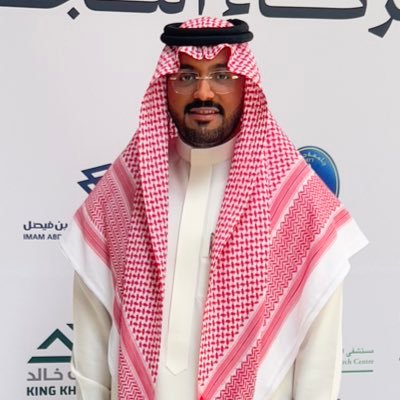
سُعدت بالتوقيع اتفاقية شراكة بين شركة ابراهيم المشعل للمحاماة شركة ابراهيم المشعل للمحاماة ووزارة الصناعة والثروة المعدنية وزارة الصناعة والثروة المعدنية واعتمدنا من قبل الوزارة كمقدمي خدمات الملكية الفكرية والقانونية لـمستفيدي "برنامج المنتجات الصناعية والتعدينية المبتكرة" خلال فعالية مستقبل الابتكار الصناعي والتعديني في مدينة الرياض. ويهدف هذا البرنامج إلى...

16,900 Aufrufe • vor 1 Jahr •via X (Twitter)

12 Kommentare

Profilbild von د. عمر بن عبدالله الحماد
د. عمر بن عبدالله الحمادvor 1 Jahr

@almeshal_law @mimgov كل التوفيق ومزيد من التألق سعادة الزميل القدير .

Profilbild von المحامي ابراهيم المشعل 🇸🇦
المحامي ابراهيم المشعل 🇸🇦vor 1 Jahr

@almeshal_law @mimgov أسعدك الله دكتورنا العزيز وشكرا لكم على دعمكم 🌷

Profilbild von UserInterface
UserInterfacevor 2 Jahren

The Future of IoT Devices: Analog Computing and the Fusion of Analog-Digital Processors #tech #news

Profilbild von المحامي/خالدالمهيدب
المحامي/خالدالمهيدبvor 1 Jahr

@almeshal_law @mimgov ما شاء الله تبارك الرحمن الف الف مبروك اخي العزيز استاذ/ ابراهيم خطوة هامه وانتم تستاهلون ونتوقع لكم التميز والنجاح .. وفالكم التوفيق .

Profilbild von المحامي ابراهيم المشعل 🇸🇦
المحامي ابراهيم المشعل 🇸🇦vor 1 Jahr

@almeshal_law @mimgov الله يبارك فيك أستاذنا ابو الوليد وبارك الله فيكم وفي جهودكم وجهود الزملاء الافاضل في الهيئة المتميزة، وبفضل الله جهودكم هي دعم وتمكين للزملاء المهنة 🌷

Profilbild von mohammed
mohammedvor 1 Jahr

@almeshal_law @mimgov ماشاء الله الف مبارك فالكم التوفيق والسداد

Profilbild von د. خالد بن ناصر الحجاج
د. خالد بن ناصر الحجاجvor 1 Jahr

@almeshal_law مبارك شيخ إبراهيم انت مكسب

Profilbild von المحامي ابراهيم المشعل 🇸🇦
المحامي ابراهيم المشعل 🇸🇦vor 1 Jahr

@almeshal_law حبيبنا ودكتورنا العزيز الله يحفظك ويبارك فيك

Profilbild von المحامي إسماعيل الصيدلاني
المحامي إسماعيل الصيدلانيvor 1 Jahr

@almeshal_law @mimgov موفق ، ومسدد ، مزيدا من تألق والتقدم شيخنا القدير 💐

Profilbild von المحامي ابراهيم المشعل 🇸🇦
المحامي ابراهيم المشعل 🇸🇦vor 1 Jahr

@almeshal_law @mimgov حبيبنا واستاذنا الغالي أسعدك الله على مشاعركم الطيبة وأنتم مكسب لكل شخص عرفكم🌷🌷

Profilbild von سمر عبيدالله | Samar Obeidallah
سمر عبيدالله | Samar Obeidallahvor 1 Jahr

@almeshal_law @mimgov تهانينا، وإلى مزيد نجاحات

Profilbild von المحامي ابراهيم المشعل 🇸🇦
المحامي ابراهيم المشعل 🇸🇦vor 1 Jahr

@almeshal_law @mimgov كل الشكر والتقدير لك أ.سمر

Ähnliche Videos

𝗖𝘆𝗽𝗿𝘂𝘀 𝗨𝗻𝘃𝗲𝗶𝗹𝘀 𝗕𝗶𝗴𝗴𝗲𝘀𝘁-𝗘𝘃𝗲𝗿 𝗗𝗲𝗳𝗲𝗻𝗰𝗲-𝘁𝗲𝗰𝗵 𝗜𝗻𝘁𝗲𝗿𝗻𝗮𝘁𝗶𝗼𝗻𝗮𝗹 𝗣𝗿𝗲𝘀𝗲𝗻𝗰𝗲 𝗮𝘁 𝗗𝗘𝗙𝗘𝗔 𝟮𝟬𝟮𝟱 The Cyprus Pavilion, organised by #CARIE, Cyprus Chamber of Commerce and Industry & Ministry of Defence 🇨🇾, marked our biggest-ever DEFEA presence showcasing world-class innovation & highlighting the rapid growth of the Cyprus Defence Industry. We were honored to have H.E. the President of the Republic of Cyprus Mr NikosChristodoulides, officially open the Cyprus Pavilion. Thirteen CARIE (ΚΣΕΕΚ) member companies proudly presented world-class hashtag #MadeInCyprus dual-use and defence technologies to global industry leaders and government delegations. The Cyprus Pavilion at DEFEA is a timely and effective implementation of the support measures for the Cyprus Defence Industry announced by President NikosChristodoulides in December 2024. This initiative empowers our national defence sector to enhance its international presence and accelerate export growth. 📌 Cyprus Pavilion Highlights: ✅ Participation of 13 pioneering Cypriot defence-tech companies ✅ Showcasing of 50+ Cyprus-made defence and dual-use products ✅ Presentation of breakthrough, homegrown innovative technologies ✅ MoU signed with the Italian defence industry association AIAD ✅ Over 10,000 exhibition delegates visited the Cyprus Pavilion ✅ Visitors from more than 70 countries across five continents ✅ Hundreds of B2B meetings held, fostering strategic partnerships Among the honored visitors to the pavilion were the President of Cyprus, Mr NikosChristodoulides , the Minister of Defence, Mr Vasilis Palmas, the Chief of the National Guard, Lieutenant General @chod_cy , the Director General of the Ministry of Defence, Ms Anna Aristotelous, and the Ambassador of Cyprus to Greece, Mr Stavros Avgoustides. We also had the privilege of receiving official delegations from foreign Ministries of Defence, representatives from the European Defence Agency and the EC DG DEFIS, as well as thousands defence professionals from all over the world. 🙏 Special thanks to the Directorate of Defence Capabilities Development at the Ministry of Defence of Cyprus for their outstanding coordination and unwavering support. 🎥 A special thank you also to CD Multimedia Services & DEFENCE ReDEFiNED for the design of the pavilion, the media coverage and the excellent exhibition overview video! 🙌 Congratulations to all participating companies whose commitment, innovation, and strategic vision are redefining Cyprus’ role on the European and international defence landscape. ADDITESS Ltd AmaDema - NanoWeld Cellock CyRIC eBOS Technologies #EclipticDefenceandSpace #encorp Houtris IANUS Technologies Multimarine Services SignalGeneriX #Swarmly CMMI - Cyprus Marine and Maritime Institute Cyprus Chamber of Commerce and Industry Ομοσπονδία Εργοδοτών & Βιομηχάνων - OEB Annita Demetriou ΔΗΣΥ Εθνικό Λαϊκό Μέτωπο (Ε.ΛΑ.Μ.) ΔΗΚΟ ΕΔΕΚ Σοσιαλιστικό Κόμμα ΑΚΕΛ Δημοκρατική Παράταξη (DEPA) Ministry of Finance Προεδρία της ΚΔ Marinos Sizopoulos Efthimios Diplaros Harris Georgiades Pavlos Mylonas christiana erotokritou MP Charalambos Charalambous George Papanastasiou Demetris Skourides Nicodemos Damianou Ομοσπονδία Εργοδοτών & Βιομηχάνων - OEB Γραφείο Τύπου και Πληροφοριών Press and Information Office Cyprus INBusinessnews Costas Constantinou

Tasos Kounoudes

410,464 Aufrufe • vor 1 Jahr

It was a cloudy day as the official #TelanganaRising delegation took a bullet train from Osaka to Kitakyushu, one of the world’s most advanced cities in recycling, environmental policies, and urban transformation. #Kitakyushu has evolved from one of the most polluted cities to one of the cleanest. ✅The Mayor of Kitakyushu, Mr. 北九州市長 武内和久🍀 Mayor of the City of Kitakyushu, extended a ceremonial welcome to Hon'ble Chief Minister Shri Revanth Reddy and his delegation, which included IT & Industries Minister Shri Minister Sridhar Babu and senior officials. The ceremony, held at the historic Kokura Castle, featured traditional Samurai sword performances and Taiko drumming. ✅During his address, Mayor Takeuchi shared a comprehensive presentation on Kitakyushu’s remarkable transformation—from a heavily industrialized, polluted city to one of the greenest and most environmentally sustainable cities in the world over the past few decades. He also expressed a desire for Kitakyushu’s government and companies to collaborate with #Hyderabad and Telangana, offering to share their knowledge, technologies, and experience to support Telangana's environmental efforts. ✅Chief Minister Shri Revanth Reddy, in his speech, stated, “It is a delight to witness the signing of Letters of Intent (LoIs) between our government and leading Japanese firms in the fields of circular economy, waste management, recycling, and environmental restoration. We are committed to both rapid development - creating jobs and wealth - and environmental protection. Sustainability is no longer a luxury or an optional choice. We are excited to work together to establish an Eco Town in #Hyderabad.” ✅He further added, “Today, as we witness agreements with firms like EX Research Institute, P9 LLC, Nippon Steel Engineering, New Chemical Trading, and Amita Holdings, we see the strength of our growing friendship. This is a special day for Kitakyushu and #Hyderabad - good friends. I agree it is time to explore Mayor Takeuchi’s idea of a sister-city agreement.” ✅“When we shake hands today, we are building a bridge that connects and benefits both cities and societies. We are shaping the future for generations to come. We share a vision - clean, circular, green, and sustainable. Your Eco Town shows what is possible when innovation meets commitment. I want the same for Hyderabad, and for it to become a Net Zero target Future City.” ✅Industries Minister Shri Sridhar Babu elaborated on Telangana’s growth and transformational plans, outlining opportunities for Japanese firms to invest across various sectors. “When you come to invest in Telangana, as our Chief Minister reiterates, you will find a friendly government, robust infrastructure, a skilled workforce, and a host of completed initiatives aligned with environmental and green innovation. Come and grow in Telangana,” Shri Sridhar Babu said. ✅Several collaborative ideas were discussed. The Japanese side proposed a direct flight between the two cities, while the Chief Minister requested a Japanese-language school to be established in Hyderabad. “You are facing a demographic challenge and need young people for various roles. We have the talent and skills - but the key gap is language. Our people need to learn Japanese,” he remarked. Both sides also discussed the need to establish a mechanism to set time-bound goals, conduct regular reviews, and track progress to meet multiple objectives during their collaboration. ✅Kitakyushu, one of the northernmost cities on Japan’s Kyushu Island, is surrounded by Katsuyama Park, known for its spring cherry blossoms. It is also renowned for the successful rejuvenation of the Murasaki River - once polluted and dying - into one of the cleanest and most vibrant riverfronts, driving large-scale development. ✅The city’s officials then took the Chief Minister and his delegation on a study tour of the River Museum, showcasing the river restoration project and its implementation. The delegation also walked along the riverfront and toured industrial recycling facilities to gain practical insights into global technologies and best practices in the circular economy. #InvestInTelangana #CMJapanTour2025 #HyderabadForSustainability #UrbanTransformation

Telangana CMO

22,377 Aufrufe • vor 1 Jahr

**Doris Yin Speech at China Guizhou Zunyi GCV Barter Conference** Hello to the community leaders, GCV ambassadors, merchants, and pioneers of GCV Guizhou in China! Today is January 12, 2025, marking the first GCV Barter Conference in China in New Year and the 13th Barter Conference overall. I would like to extend my sincere gratitude to the organizers of this conference, the Guizhou Zunyi GCV Community, and the co-organizers, Barter Huishang (Guizhou) Digital Economy Industry Group Co., Ltd. I also want to acknowledge the following GCV ambassadors for their active dedication and contributions to this conference: **GCV Ambassador of China:** - Yang Zhizhong - Cai Zaiqiao **Ambassadors of Guizhou Province GCV:** - Wang Shiqiong - Cai Weisheng - Guo Jiaqing **Zunyi GCV Ambassadors:** - Wang Jianbo - Luo Nanlu **GCV ambassadors at the district and county level in Zunyi City** Additionally, I would like to express my heartfelt thanks to our numerous GCV merchants and sponsors. Without your support, we would not have been able to hold such a grand and large-scale event. Today's gathering in Zunyi, a sacred site of the revolution, reminds me of the Red Army's 25,000-mile Long March. Their perseverance and sacrifice continue to inspire us. The Zunyi Conference took place from January 15 to 17, 1935, and exactly 90 years later, we are gathered here today. The defining characteristics of the Zunyi Conference included the commitment to uphold the truth, correct mistakes, establish the correct leadership of the Party Central Committee, and creatively develop and implement strategies that fit the nature of the Chinese revolution. Today, our Zunyi Conference will also be recorded in the history of blockchain, as every effort you have put in has contributed to building a strong network ecosystem. Our partial fiat and partial distribution policy serves as a solution for the rapid development of the ecosystem during the closed mainnet of the Pi Network. As we all know, the first quarter of this year will bring about the successful mainnet launch of Pi Network. After six long years of challenges and perseverance, all of our pioneers will have the opportunity to witness this significant historical moment. What an exciting and proud day this will be! It has not been easy for everyone to persist through these six years; it requires great blessings, unwavering faith, and the courage to overcome difficulties. Today, our pioneers in Zunyi, Guizhou Province, gathering for this GCV barter conference holds great significance. I see that ten companies are providing products for barter, with nine companies, including Guizhou Meitan County Daoqin Hospital and Barter Huishang (Guizhou) Digital Economy Industry Group Co., Ltd., sponsoring this event. Once again, I extend my heartfelt thanks to all of you. The GCV Barter Conference serves multiple purposes. It is not only about creating GCV data or demonstrating the strength of our China region to CT, but also about showing how closely we align with their vision and mission. Additionally, it provides robust evidence for a substantial number of KYC and migration initiatives in China. More importantly, what we do today aims to boost China’s future economic development. Once the main network of the Pi Network is launched, we anticipate a significant demand for Chinese products from numerous international pioneers, which will in turn generate a large volume of export orders. At the same time, there will be international merchants looking to export their products to China. Once OM, import and export transactions will be conducted using the new currency, facilitating the vision of a stable currency and enabling seamless and reliable exchanges with fiat currency. Therefore, the merchants who engage now will have the advantage of being early adopters. The Pi Network offers a partner program and a MapofPi program. To participate in the partnership, businesses are required to have a company website. We invite businesses with websites to join us. However, if you do not have a company website, you can still join the Mapofpi program, which encompasses a wide range of industries, allowing participation from both large companies and small traders. Registration for the Mapofpi does not require a business license or website; various entities including shops, hospitals, schools, hair salons, accounting firms, law firms, restaurants, and hotels are welcome to register. Please select an active merchant and support GCV at $314,159. Prior to the OM launch, it is advisable to use partial fiat currency and partial Pi to ensure that merchants can cover their costs and fulfill their tax obligations. Recently, on January 9, we established the China GCV Industry Chain Alliance, which aims to create an industrial chain that facilitates the circulation of Pi among merchants, thereby reducing the burden of exchanging fiat currency after OM. During the enclosed mainnet, you can assist merchants in registering as Pi Network Partners and Mapofpi . Ms. Lumari is our Global GCV CT executive director and her goal is to have 200,000 registered Mapofpi merchants worldwide. My personal target is to reach 100,000 registered merchants in China alone. This goal is achievable given the over 58 million enterprises and more than 20 million pioneers in China. If we can effectively convey that Pi Network WEB 3.0 blockchain technology will significantly enhance human productivity and that the business opportunities from accepting partial Pi and partial FIAT during the 60 days before OM will present numerous benefits and minimal risks to merchants, then it is likely that no merchant will be unfavorably surprised by the initiative. This strategy offers a multitude of advantages with virtually no downsides. Furthermore, it benefits pioneers by allowing them to transfer purchasing power to the community and minimize fiat currency expenses in their daily life. Consequently, the GCV data we generate will significantly benefit the Chinese pioneers, as a large number of registered merchants can transform the China region from a high-risk area to a safe zone. Not only can this region be promoted to a VIP area, which would enjoy expedited KYC and mapping processes, but it will also allow pioneers and merchants to thrive together in our ecosystem. This collaboration will enhance the prosperity of our country and empower the China region to contribute to the welfare of communities worldwide. Once OM, it will play a crucial role in the economic development of both China and the world. If you pay attention to our migrartion speed, you might have noticed that it has slowed down recently. From December 17th to around the 30th, the migrating speed was over 50,000 to 100,000 per day, but now it has dropped to just over 10,000. What is the reason for this decline? If it was previously possible to migrate over 100,000 per day, why has it changed? The CT has stated that they will OM until the first quarter of this year to bring the migratiion in line with KYC amounts. However, if it's technically feasible to achieve a higher migration speed, why isn’t it being done? The answer is quite simple: it depends on what everyone does with the Pi after such large migration numbers. If pioneers rush to buy and sell, hold onto their Pi coins, or trade at low value, it will impact the speed and efficiency of the next migration in these regions. This principle is not only theoretically valid but has proven true in practice. For instance, countries like the Philippines, Indonesia, and Malaysia have a solid educational foundation in GCV. Most pioneers there are highly aware of the risks involved in participating in the black market, which allows them to generate a substantial amount of GCV data. As a result, their migration speed is notably fast, and there are many large wallet migrated. To help the CT regain momentum, we all need to cooperate. Engage with the migrated Pi and participate in the GCV barter ecosystem. Be cautious of individuals who aim to deceive you for personal gain; devaluing the Pi often serves as a tactic to exchange something small for your valuable treasure. It's crucial to educate pioneers about the true value of what they hold and encourage them to avoid dishonest practices. I urge everyone to actively participate in partial Pi and partial FIAT barter. The more GCV data we generate, the more secure our wallets will be. Therefore, it's important for everyone to read and share the Pioneer Handbook I wrote which has been translated into 30 languages to raise awareness among pioneers. By learning from the Pioneer Handbook and participating in GCV bartering, we can improve China's migration efforts and foster ecological development. This stability can ensure that the value of our Pi endures for future generations, rather than becoming worthless in a few years. Wouldn't that be something we want to preserve for our children and grandchildren? Today's message is lengthy but very important, and I hope you take the time to understand it. I wish our Guizhou Zunyi Conference great success! Thank you to all GCV Ambassadors, Merchants, and Pioneers for your incredible support! Your efforts today are planting the seeds for a prosperous future, and I hope you find safety and fulfillment in the days to come. May your wishes come true! Wishing you health and happiness! Let’s work together to create a better future! I also hope you all have a joyful Chinese New Year! Doris Yin 🪷🪷🪷 Founder, Global GCV Movement January 12, 2025

Doris Yin 东方紫莲🪷

18,340 Aufrufe • vor 1 Jahr

My speech at the #MEGA event in the European Parliament, Brussels: Change will not come if we wait for someone else, or if we delay for another time. The words of Barack Obama, spoken during his historic campaign in 2008, still resonate—but today, they carry a very different meaning. It is a rallying cry for patriots, conservatives, and all who believe in freedom, sovereignty, and the dignity of our nations to stand together. We are the ones we’ve been waiting for. We are the change that we seek. In 2008, Obama’s words signaled the dawn of a new era: one marked by social justice campaigns and the rise of "wokeism." For years, these ideas were cloaked in promises of progress and inclusivity. But what have they truly delivered? Today, we see the devastating consequences—fractured societies, eroded national identities, and an alarming loss of freedoms. But, the tide is turning. The reelection of President Trump has sent a clear and powerful message from the people of the United States. The message is simple: We want our country back. We want to be proud of our flag, our culture, and our heritage. We demand affordable, reliable energy to power our homes and businesses. We seek real food from our farmers, not synthetic substitutes dictated by unelected technocrats. We want secured borders, prosperity, peace, and the ability to pursue happiness without interference. The overwhelming #MAGA victory—President Trump reclaiming the presidency, the Senate, the House, and the popular vote—reflects a mandate that is impossible to ignore. For too long, the radical left has sought to dismantle the pillars of our civilization. Obama’s policies, often presented as ‘progress’, initiated a chain of events with devastating effects. I’ll give you four examples: 1. The Arab Spring, spurred by social media campaigns, unleashed waves of instability that flooded Europe with millions of migrants. Our historic continent—once a beacon of cultural and intellectual achievements—is now grappling with security threats and the erosion of its identity and culture. 2. The war in Ukraine, provoked by Obama’s NeoCon allies, has brought untold suffering. It began with the removal of Ukraine’s democratically elected leader in 2014, setting the stage for conflict. These NeoCons, in collusion with the Military-Industrial Complex, are as culpable as any aggressor. 3. Critical Race Theory, a twisted ideology. It is nothing short of racism repackaged, weaponized to pit communities against each other. 4. Censorship and suppression of free speech. Through NGOs and the so-called "Censorship Industrial Complex," they controlled narratives and silenced dissenting voices. Their strategy has always been sophisticated—using fear, globalist policies, the illusion of moral superiority, and ‘democracy’ of institutions instead of democracy of the people. The United Nations’ Sustainable Development Goals (#SDG's), the #GreenDeal, and the #WHO’s pandemic overreach are all symptoms of a broader agenda: a transfer of power from the people to unaccountable elites. Even #NATO, once a coalition of nations united against foreign aggression, has now also become a tool wielded to suppress populist movements among its own people. But we are not powerless. WE THE PEOPLE represent true democracy. If we unite, we can reverse this destructive course. The momentum of the MAGA movement can inspire change across Europe and beyond. Now is the time to build a unified front that transcends party lines and minor disagreements. So, how do we Make Europe Great Again by: 1. Restoring Free Speech: Reverse the Digital Services Act and protect public discourse. 2. Ensuring Freedom: No Central Bank Digital Currencies. No digital IDs. We are born free and do not need technocratic controls. 3. Dismantling the Green Deal: End this social engineering project that sacrifices our economies and energy and food security for an illusion of environmental progress. 4. Defending Our Borders: Protect our nations from uncontrolled migration that threatens both safety and cultural heritage. National civil rights must take precedence over globalist human rights. 5. Exposing Corruption: Demand full transparency in dealings with corporations and NGOs. 6. Deregulating Economies: Empower small and medium-sized businesses—the backbone of our prosperity. Deregulation fuels innovation and competitiveness. 7. Restoring National Sovereignty: Renegotiate or cancel harmful international agreements and treaties. Change will not come if we wait for someone else or another time. We are the ones we’ve been waiting for. We are the change that we seek. Obama’s words, once a banner for radical policies, now serve as a call to reverse the damage inflicted on our nations and it’s people. Let us unite, work together, and make this a reality. Let us Make Europe Great Again. #MEGA

Rob Roos 🇳🇱

16,899 Aufrufe • vor 1 Jahr

Stalin and Hitler: One Socialist Revolution in Two Uniforms The Molotov–Ribbentrop Pact of August 1939 is still taught as a pragmatic truce between bitter enemies — the Soviet Union's "far-left" communism and Nazi Germany's so-called "far-right" fascism ( This revisionist interpretation survives largely because the post-war political order needed it to end the World War fought between proponents of Liberty and those who sought to substitute the Liberal Enlightenment with socialist slave-statism. Unfortunately, this process led to a pragmatic subsummation of various socialist factions by the West's "democratic" systems, leading to an erosion of Capitalism as they work to convert our social-systems into perverse clientel states ( that persistently violate the rights they were established to protect. Moreover, while granting them moral equivocation to the rest of us, it absolved and shielded socialists from accountability for their criminal pathology, all the while enabling "russia" to promote itself as having saved the world from the "revolutionary" Holocaust for which they were equally responsible as participants and ideological proponents. Post-enlightenment, this was the West's first major moral catastrophe of self-inflicted degradation by way of pragmatic capitulation to the forces of its destroyers who continue to rewrite our understanding of history and are actively transforming the practical functions of our governments in favor of the totalitarian-axis ( This spineless moral confusion of the West is one with which we are only too familiar and continue to observe today across practically all spheres of life, especially foreign policy. In so doing, they are surrendering their moral high-ground, sabotaging prosperity, and weakening the post-war order, if only to appease the sentiments of the bolshevized and other subversive elements in our midst ( Hitler's antisemitism was his anti-Capitalism, and his anti-Capitalism was his antisemitism, no different from Marx. In reality, Stalin's Soviet socialism and Hitler's national socialism were branches from the same root of Marxism, united by shared theory, shared personnel, shared enemies, and shared operational goals. From their ideological foundations to their street-level enforcers, the line between them was blurred to the point of invisibility. Marxist Foundations of a Common Worldview Karl Marx's own writings laid much of the groundwork for both Stalin's and Hitler's policies toward Jews ( The alliance between Joseph Stalin's Soviet Union and Adolf Hitler's German Reich was grounded in deep ideological kinship. Both leaders subscribed to the Marxist premise, articulated in Zur Judenfrage, Das Kapital, and The Communist Manifesto, that Jews were an embodiment of the bourgeois class — a Capitalist, parasitic element that had to be uprooted for socialism to triumph. Even Hitler's racial and spiritual antisemitism did not contradict Marxism, as Marx was explicitly racist and referred to Jews as "Jewish N*ggers" ( rather, it built upon it, while framing the socialist struggle for revolution as racial and class struggle while preserving the revolutionary goal of Jewish expropriation and extermination as an integral part of revolution against Capitalism. While Marx identified Jews with the bourgeois Capitalist class, the "huckster" spirit of commerce, and the system of so-called exploitation — one's sovereign claim to their own life, property and from which we derive such practices of individuals trading that which they subjectively valued less for that which they valued more — that socialism sought to abolish and thus enlist mankind into slavery. He referred to money as "philistine paper" and commodities that were "inwardly circumcised Jews." His "solution" to what he and Hitler both lamented as "the Jewish Question" was the removal of Jewish influence from public life, an idea they framed as a "racial" and "class struggle." Soviet socialism took this view literally: Jews were "class aliens" whose property was to be seized and whose communities were to be dismantled under the banner of proletarian revolution ( Hitler's national socialism racialized the same enemy, presenting the Jew not just as a class exploiter but as a biological parasite who, in reality, were simply another group of people whose ethics stood in the way of socialist parasitism and imperial conquest ( not merely against foreign populations but against the individual himself. The underlying goal — to purge anyone who engaged in Capitalist practices labeled as Jewish, such as selling goods for profit, and purge Jews in order to "liberate" capital for allocation to socialist re-engineering of society — was the same. As socialism continued to fail throughout Germany, in parallel with proto-socialist state-interventionism around the globe and which brought to fore the Great Depression in the wake of the First World War ( many populations were ignorant of basic economics and did not ask themselves whether it was existing state-intervention that led to their woes, choosing to instead double down on socialism while believing it was anything remaining marginally-private under the Weimar Republic, alongside a Jewish conspiracy, as the source of their economic challenges ( The SA–KPD Connection: One Militant Base The supposed gulf between the two systems collapses further when we look at the personnel who enforced their revolutions. The Sturmabteilung (SA), or "Brown Shirts," Hitler's paramilitary enforcers in the 1920s and early 1930s, were by majority registered members of the German Communist Party (KPD), many of whom homosexuals who would have orgies in their commune housing with as much frequency as the cross-dressing transsexuals of the Wehrmacht ( They were street fighters who had already accepted the central Marxist premises: the destruction of bourgeois society, the abolition of free markets, and the removal of Jews as the supposed embodiment of Capitalism ( Their move from the KPD to the SA was not an ideological betrayal — it was a rebranding. The "world proletariat" became the "German worker," but the collectivist core, the contempt for property rights, and the antisemitic worldview remained intact. The SA–KPD overlap shows that the human machinery of both movements was interchangeable, and that the two "sides" were never truly opposite. Perhaps there is no greater evidence for this fact than Hitler's history, prior to becoming Chancellor of Germany, during which he would serve as an elected official in Kurt Eisner's Socialist People's State of Bavaria and then again into a Communist Bavarian Soviet Republic, alongside his service in the Red Army ( Economic and Logistical Partnership Once in power, Hitler implemented collectivist controls over agriculture reminiscent of Lenin and Stalin's earlier Soviet model. The Nazi regime fixed prices, bound farmers to their land, and subordinated production to state planning as they collectivized farming and socialized the economy at a scale outpacing the Weimar and SPD after private property rights were abolished under the Reichstag Fire Decree (1933) ( The predictable result was a collapse in agricultural output — by the early 1940s, German harvests had fallen by nearly half, creating a food crisis for a nation preparing for war, not merely for so-called "Living Space" and conquest against Capitalism but out of shared conviction in the thoroughly refuted Marxist "Shrinking Markets" or "Tendency of the Rate of Profit to Fall" fallacy that applies only to socialism ( Logistics and overall production were so inefficient under socialism, the Germans began substituting agricultural products with consumption of coal derivatives ( The Soviet Union stepped in to fill the gap. Under the Molotov–Ribbentrop Pact, Stalin shipped vast quantities of oil, metals, and grain to Germany. Much of the grain came from Ukraine, where Soviet authorities had already expropriated food from a population still traumatized by the Holodomor. "In tandem with these policies, the Soviet Union also provided economic support to Nazi Germany, which was instrumental in facilitating Hitler's war of conquest. The importance of this assistance cannot be underestimated as the USSR supplied significant quantities of food and raw materials to the Nazis. For instance, during the invasion of France and the Low Countries, the USSR supplied the Reich with 163,000 tons of petroleum and 243,000 tons of Ukrainian wheat in May and June of 1940 alone. As German demand increased during critical battles, such as at Dunkirk, Soviet oil deliveries surged to meet the needs, effectively fueling Hitler's conquest of Western Europe." Stalin's aid wasn't charity — it was strategic leverage that played into a broader strategy. It kept Hitler's war machine running and deepened Berlin's dependence on Moscow, allowing Stalin to pull the plug when it served his purpose ( A Shared Goal: The Removal of Jews and "Class Enemies" The economic pact was only one part of a deeper collaboration. Both regimes saw the destruction of Europe's Jewish population as a revolutionary imperative. Where Hitler framed it as a racial policy, Stalin framed it as "class struggle," both regimes deriding Jews as self-interested or insufficiently altruist, thus a threat to any socialist system — and in practice, both categories were the same. Soviet cooperation went far beyond the passive acquiescence some would like to suggest. NKVD archives and wartime records show the Soviets went beyond indirect facilitation, providing the Germans with logistical expertise and instruction on the design and operation of concentration camps, the "technical assistance" part of a broader joint effort to eliminate groups deemed "counter-revolutionary" or "parasitic" by socialist criteria ( In occupied France, Communist partisans operated in accordance with directives from Moscow that aligned with German objectives. Supplies would be surged to these groups when their activities advanced mutual goals, including the rounding up and deportation of Jews and other populations who stood in their way. The cooperation between socialist factions was driven by unity rooted in a shared vision of a post-Capitalist world they sought to build, even if they disagreed on who would lead it. The Joint Invasion of Poland and Open Collaboration Nothing demonstrates this unity more clearly than the joint invasion of Poland in September 1939. German and Soviet forces coordinated their offensives, held joint victory parades, and partitioned the country according to prearranged zones over which their banners jointly flew side-by-side. Their collaboration is simple to understand: in Brest-Litovsk, NKVD units physically handed over Jewish prisoners to the Gestapo. Deportations ran both east and west — Jews, Polish intellectuals, and others deemed "counter-revolutionary" "class enemies" went to German concentration camps and Soviet gulags, depending on their zone of capture. This was not "parallel repression," as many Marxists would like to suggest — it was coordinated, deliberate, and consistent with the ideological aims both sides openly shared, which Marxist and other socialist "historians" have attempted to negate from conceptual integration, blaming everyone ( but the culprit staring at them in the mirror as they weaponize revisionist concepts to intellectually and morally disarm opposition to their elite slavery schemes. The Calculated Withdrawal of Soviet Aid and "Liberator" Myth Stalin's material support — oil, metals, Ukrainian grain — allowed Germany to survive Hitler's socialist disaster after initiating his farm collectivization program. They would thus mount a rapid series of conquests in 1939–41. But Stalin always kept his hand on the valve. When Germany invaded the USSR in June 1941, Stalin's strategy paid out its ultimate dividend, cutting supplies to collapse the German army and sweep in to capture territories Germany could no longer hold while reframing the entire war in propaganda terms: the USSR as Europe's savior from fascism — which everyone understood had actually originated as a break between socialist factions led by Bakunin and Marx at the First International ( — enabling the socialist conspiracy to continue their crusade around the globe and which we continue to observe apace ( Meanwhile, their so-called "democratic socialists" clung onto their moral perversions and acted as propagandists in Britain and elsewhere, promoting such falsehoods as German and Italian socialism as having been Capitalist social-systems that "privatized," rather than socialized their economies ( None of that was real murder and theft, none of what you observed was "real socialism," they shouted. Thus, Western Socialists desperately undertook a near century-long effort to rewrite history, sowing public confusion as they continued to collaborate with totalitarian adversaries, with the goal of preserving the reputation of their slave-state model, hopeful for more opportunities to arouse revolutionary fervor or support for socialism, continuing to aid in replicating and exporting its failures as they worked to undermine and destroy civilization. The moral facade of liberation was bolstered by propaganda that omitted the USSR's partnership in invasion, deportation and genocide. This propaganda also relied on another longstanding policy — Soviet censorship of the Holocaust's targeting of Jews and others deemed "counter-revolutionary." Soviet media described the Holocaust as crimes against "peaceful Soviet citizens," erasing any understanding of its ideological root. This served multiple purposes: chief among them was continued export of socialism as they conspired to devour more countries, masked the USSR's earlier complicity and made the Red Army's return appear as a universal liberation, even to populations that had been terrorized by NKVD purges only months before, and simultaneously enabled them to exterminate more "counter-revolutionaries" who initially believed the Germans were liberators, an unfortunate consequence of Soviet censorship that led to additional collaboration and which Moscow continues to exploit as a justification to invade Eastern European countries, such as Ukraine, at the present time. Somehow the myth persists, despite Moscow's own admissions to the contrary ( and use of socialists, including national socialists, for operations ( Not Two Systems, but One Revolution The alliance between Stalin and Hitler was not a pragmatic arrangement between opposites. It was the natural convergence of two socialist revolutions — one draped in red, the other in brown — that shared the same Marxist contempt for private property, the same belief in the destruction of "class enemies," and the same targeting of Jews as obstacles to their utopian visions. From the SA's KPD roots to the Brest-Litovsk prisoner handovers, from NKVD camp blueprints to Ukrainian grain shipments, and from coordinated deportations to propaganda erasures, the evidence points to a single revolutionary current flowing through both regimes. The uniforms and rhetoric differed; the goals and methods did not. The tragedy of Europe in 1939–41 was that its peoples were caught between two arms of the same ideological body — one calling itself international socialism, the other national socialism — and that for millions, the change in flag over the city hall brought not liberation, but only a new master in the same revolution. And today, those who seek to resurrect those forces employ no different a dialectic in our political discourse. Their lawless presence requires a response: we are due for a correction in the course of history; and what the West needs is a totalizing, Objectivist intellectual revolution to overthrow their metaphysical and epistemological hallucinations — the false history and false consciousness of the bolshevized, not merely in history and state-organization but the arts ( to revitalize the only true revolution that ever freed mankind from the real struggle against bondage: Capitalism (

Jeremy Smithson

35,987 Aufrufe • vor 1 Jahr

Super Bowl LX: Authorities intercept $33.4M in fake sports merchandise SAN FRANCISCO — Federal law enforcement agencies today announced the seizure of more than 276,392 counterfeit sports items valued at $33.4 million MSRP following a nationwide crackdown on fake merchandise ahead of Super Bowl LX in the San Francisco Bay Area. As fans from across the globe arrive for the championship game, Operation Team Player is working to keep counterfeit jerseys, sports related merchandise and tickets out of the hands of unsuspecting consumers. Spearheaded by the National Intellectual Property Rights Coordination Center (IPR Center) in partnership with all major U.S. sports leagues, this annual operation targets criminal networks and aims to protect fans, legitimate manufacturers and the integrity of the game. “It’s easier than ever for criminals to set up fake websites and social media ads targeting sports fans with counterfeit goods that put their wallets and personal information at risk,” said IPR Center Director Ivan J. Arvelo. “Our ongoing partnership with the NFL and all major sports leagues is essential to raising awareness about the dangers of counterfeit merchandise and empowering fans to make smart, safe purchases, because ‘True Fans Keep It Real.’” “Working with the IPR Center, CBP and our Bay Area law enforcement partners, we’ve seen Operation Team Player make an incredible difference by protecting fans from counterfeit activity,” said NFL Senior Vice President of Legal Affairs Dolores DiBella. “Fans want the real NFL experience — especially as we head into Super Bowl LX — and we are grateful for the dedication behind this consumer protection initiative that has consistently delivered meaningful results and reinforces the importance of keeping fans informed and safe.” “Counterfeiting isn’t a victimless crime. It hurts local vendors, threatens American jobs, and exposes fans to unsafe and substandard products. That’s why we work closely with our partners at the National Intellectual Property Rights Coordination Center, Homeland Security Investigations and the NFL to stop these goods before they reach the marketplace,” said Eric Batt, who serves as the director of U.S. Customs and Border Protection’s Apparel, Footwear and Textiles Center of Excellence and Expertise. While counterfeit goods may seem like bargains, they often come with hidden risks — including inferior quality, financial loss and exposure to identity theft. To help fans shop safely, the IPR Center and the NFL encourage consumers to: Shop only at trusted retail locations and authorized online sellers. Be wary of deals that seem too good to be true and be aware that counterfeiters often use real product photos to sell fake items. Check for signs of poor quality, such as sloppy stitching, missing security labels and irregular markings. Keep records of purchases and monitor bank statements for discrepancies. Purchase event tickets only from reputable sources, such as the NFL Ticket Exchange by Ticketmaster, On Location, or other authorized sellers. Super Bowl 60 tickets are entirely digital; screenshots or PDFs will not be accepted for entry. The IPR Center’s “True Fans Keep It Real” campaign continues to educate sports fans about the risks of counterfeit goods and provides resources to help consumers shop smart both online and in person. For more information about the dangers of counterfeit merchandise and tips on how consumers can support their teams with authentic gear, visit

Allison Papson

475,583 Aufrufe • vor 7 Monaten

BEHOLD - LETS DEFEND OUR DEMOCRACY… Zimbabwe is a PEACEFUL nation, known for its EDUCATED and responsible citizens, most of whom carry Christian values and are LAW abiding. The reckless call for an ILLEGAL uprising and incitement to violence is totally UNZIMBABWEAN and must be REJECTED by every peace-loving citizen. At the center of this chaos is an individual who no longer deserves the respected title of CDE but a chap called Blessed Geza , a USELESS , failed politician and fugitive from justice, whose only remaining strategy is to provoke instability from his SELF-IMPOSED EXILE. Expelled from ZANU PF for his dishonorable conduct , Geza has become a POLITICAL NONENTITY, desperately trying to stay relevant by leading a criminal cartel of fugitives and BITTER opposition remnants. Zimbabweans must NEVER be misled by someone who has NO political mandate, NO following on the ground and NO courage to face the law. His irresponsible calls for unrest are a BETRAYAL of the peace we all cherish, which our founding fathers fought for and won in 1980. Many shed their blood during the liberation struggle for us to enjoy the liberty which Mr GEZA and his cabal want to destroy through TREASONOUS means. NO ONE has the right to REMOVE a Constitutionally elected Government, just because they feel like they can !!!! I stand RESOLUTELY with His Excellency, President E.D. Mnangagwa and his Presidium — Vice President C.D.G.N. Chiwenga, Vice President K.C.D. Mohadi, Hon. Opah Muchinguri and the entire ZANU PF leadership, who continue to guide this nation towards DEVELOPMENT, PEACE and UNITY under Vision 2030. I also express my FULL CONFIDENCE in the PATRIOTIC leadership of our security services and military commanders, who are unshakeable and incorruptible men and women of HONOUR , DISCIPLINE and UNQUESTIONABLE INTEGRITY. President Mnangagwa has ALWAYS encouraged OPEN DIALOGUE and CONSTRUCTIVE criticism. His vision is clear as he intends to build an upper-middle class economy by 2030 for all Zimbabweans leaving no one and no place behind. To shift from legal and peaceful demonstrations and start BURNING vehicles, DESTROYING property belonging to innocent individuals and calling for the VIOLENT REMOVAL of a Government is ILLEGAL, treasonous and easily qualifies as TERRORISM. No serious, patriotic Zimbabwean should entertain this. I URGE all citizens to ignore the EMPTY CALL to protest tomorrow or on any other day called for by ANARCHISTS such as Geza. Let us all continue normally with our lives tomorrow and beyond. President Mnangagwa still has THREE FULL YEARS remaining in his term and he has PUBLICLY pledged to STEP DOWN at the end of it — as a true CONSTITUTIONALIST. If anyone has ambitions, they must RESPECT party processes and wait for the NEXT CONGRESS. When that time comes, i personally will SUPPORT whoever it is who has been democratically elected, with EVERY PRAYER and EVERY CENT I have saved to ensure we keep ZANU PF as the ruling party FOREVER and EVER. The future of this country does NOT lie with criminals shouting treason from unknown places, it lies with PEACEFUL, PATRIOTIC Zimbabweans. Let us STAND TOGETHER as ONE PEOPLE, under ONE FLAG, in the name of PEACE, SOLIDARITY, and NATIONAL UNITY. GOD BLESS ZIMBABWE. #Peace #Unity #Vision2030 #Defending_Our_Democracy

sir_wicknell.

378,140 Aufrufe • vor 1 Jahr

COMMONS HOUSING SELECT COMMITTEE: STATEMENT FROM FREE LEASEHOLDERS 3/3/26 Today, we told Parliament the truth. About the cynical games Conservative and Labour governments have been playing with your homes, money and lives. It was awkward. We had to motor through to cover as many points as humanely possible in a short time. Sorry if we didn’t cover yours. We are the insurgents against a very closed and broken political system. We will go away when they finally free the people from the property servitude of leasehold. Until then, we will keep challenging the official line and holding power to account, however uncomfortable that may be. Parliament has been talking about abolishing leasehold, a legacy of serfdom, since the 1880s, before working men and women had the right to vote. In 2026, we keep hearing it’s “complicated” and our politicians need more time because they might get sued by the wealthy landowners. What happened to the will of the people? Isn’t Parliament sovereign? Wasn’t that what all the Brexit lark was about? And doesn’t this Labour government have the second biggest parliamentary majority in its 126-year history as the so-called working people’s party? Keir Starmer can do a TikTok stunt on ground rents. But he can’t run away from the truth. His government are peddling a draft Commonhold and Leasehold Reform Bill that has been purged of policies that you voted for in the The Labour Party manifesto. Policies promised again in the July 2024 King’s Speech: the remaining Law Commission of England and Wales enfranchisement and Right to Manage recommendations. So you can finally “take back control”. The Starmer administration appears to be captured by the deep-pocketed freeholder lobby and property cartels. And the Prime Minister is in thrall to the hand-wringing lawyers who bleat on about the risk of judicial review and ECHR lawfare, as if the rights of extortionists, many offshore, and lofty international law matter more than the British people being looted in their homes and what election manifestos have promised time and time again. This government claims that they are ending the feudal leasehold system. Instead, they keep it on life support by protecting money-for-nothing ground rents until 2068. We’ll have flying cars before feudalism is banished from our homes! And buried away in the small print, the Labour government concedes our point: “leasehold as a tenure will not disappear overnight and it will be a feature of the housing market for many years to come.” The government is also siding with the leasehold grifters by failing to restrict development value in the draft legislation, which means many flat leaseholders will never be able to afford to buy their freehold, something that must happen before conversion to commonhold. Remember, the freeholders’ main lobby group, the Residential Freehold Association, admits that the typical freeholder owns just 2.5% capital value in a block of flats. These wealth-destroying corporates own a sliver of our homes and have the cheek to talk about their human rights. We are not Mugabeists. We will, of course, pay a fair rate to compensate the freeholder to leave our homes for good. But demanding more of our money so they can thwart our right to buy them out, on the basis that they could theoretically build a skyscraper in the garden, is taking the mick and must end, as the government first promised in 2021. Don’t take our word on the scam of freeholders invoking development value to block leaseholders’ bid for self-rule. Barrister Nicola Muir, of Tanfield Chambers, has written that “it is amazing what developments landlords believe are possible and the profits they claim they will generate”, citing a telling example from practice: “The landlord initially claimed £34 million for the alleged potential to build a skyscraper in the front garden of the block. Such claims can obviously be a deterrent to leaseholders, who probably have no intention of developing.” And we were the ONLY campaign group that urged the Housing, Communities & Local Government Committee to ensure that this government sets enfranchisement rates high in the Leasehold and Freehold Reform Act 2024, to the benefit of leaseholders. There is a major risk that, due to the influence peddling of ground rent grifters and their lobbyists in Westminster and Whitehall, the government will fail to implement these long-awaited reforms already on the statute books. Matthew Pennycook MP promised in November 2024 to put enfranchisement rates out to public consultation last summer, but it never happened. And if the government is forced to begin the enfranchisement changes in the 2024 Act, it will likely set the deferment and capitalisation rates artificially low, stuffing freeholders’ mouths with gold when desperate leaseholders try to extend their leases or buy out the freehold. These deferment and capitalisation rates are already derived from freeholder-friendly case law, specifically the 2006 Upper Tribunal decision known as Sportelli, with the deferment rate set at 4.75% for houses and 5.0% for flats, and a capitalisation rate of 6.0%. While the 2024 Act is vague on what these rates should be, we know that investors routinely buy freeholds at auction or directly from developers at higher rates than those implied by Sportelli, meaning they pay significantly less than leaseholders are already required to pay under statutory schemes with the low Sportelli rates. For example, an analysis of Allsop Ground Rent Auctions found that investors have been paying an average 9% capitalisation rate for the ground rent in freehold titles – well above Sportelli’s 6%. This situation is clearly unfair, and there is significant industry lobbying to keep the deferment and capitalisation rates low, i.e. below the going market rates, so that freeholders are excessively compensated by leaseholders. Once the rates are set in the 2024 Act, they remain fixed for ten years, creating jeopardy that they will be set to the disadvantage of leaseholders, who are less organised and resourced than industry interests to influence policy. If the rates are set substantially below Sportelli rates, the savings from other provisions of the 2024 Act – such as the removal of marriage value, the 0.1% restriction on ground rents, and the end of the requirement to pay the freeholder’s reasonable legal and valuation costs – would be more than cancelled out, leaving leaseholders paying more than they do today under the current rules. Minister Pennycook highlighted this risk while in opposition during the passage of the 2024 Act, stating that Labour “remain[s] convinced that this government, or a future one, could be lobbied by vested interests to set a deferment rate that will be punitive to leaseholders.” He proposed an amendment on the deferment rate to guide the Secretary of State, requiring that “in setting the deferment rate, the Secretary of State must have regard to the desirability of encouraging leaseholders to extend their lease at the lowest possible cost”, although the amendment was not passed. This policy ought to be in the draft Bill, yet it remains absent. We are urging that the 2024 Act be amended to require that the enfranchisement rates must not fall below an absolute floor of the existing Sportelli rates (with the deferment rate of 4.75% for houses and 5.0% for flats, and a capitalisation rate of 6.0%). But leaseholders should really benefit from market rates, i.e. those which developers and investors already enjoy being significantly above Sportelli, to ensure that they do not pay excessive compensation to freeholders, as occurs under the current system, to buy their freehold or extend a lease. And this isn’t just about what goes into the algorithm for the online enfranchisement calculator under the 2024 Act, or about ending the development value scam, a reform dropped from the legislation after behind-the-scenes lobbying. We will not accept a failure to bring forward a Universal Right to Manage, as part of a glidepath to commonhold. Watch what our founder said about a well-connected landlord and tenant barrister who bragged to the property tribunal last year that he had worked on the Law Commission’s Right to Manage reforms, all while representing an offshore billionaire freeholder trying to block leaseholders’ quest for Right to Manage. It should be easy. But the leaseholders at this development had to spend £150,000 just to defend their no-fault right against this legal onslaught at the First-tier Tribunal. They won, but the freeholder is now appealing… Beyond Right to Manage reform, we need a Right to Participate in collective enfranchisement so that all flat leaseholders can buy a share of the freehold even if they miss out the first time when one group of neighbours has enough support to enfranchise the block. It is unfair for leaseholders to be locked out of decisions over the charges they pay and the services affecting their home when they are ready to buy their share of the freehold. Sorting this inequity was the will of Parliament with Right to Enfranchise provisions in the 2002 Act. It’s also what the Law Commission originally recommended before seemingly being pressured by vested interests to drop the policy from their final recommendations in 2020. Also, why on earth should leaseholders have to contort themselves to get 50% support of all unit-owners in a block? Satisfying the onerous 50% participation threshold is near impossible in bigger buildings and those with high levels of buy-to-let, yet scummy investors face no qualifying criteria when hoovering up the freeholds of our homes from developers or auctioneers behind our backs. Don’t patronise us with Lord Best’s scheme for managing agents. We want liberation, not regulation. There’s a reason both the freeholder and managing agent lobbies are gagging for the cosy Lord Best policy, which wasn’t promised in either the Labour manifesto or the King’s Speech. It will jack up leaseholders’ already sky-high service charges, repeat the cruel joke of the Building Safety Regulator, and keep freeholders and their managing agent cronies firmly in the ecosystem. At the same time, a statutory regulator of managing agents will no doubt restrict competition by keeping out small ethical new entrants. It will also allow the government to claim job done while failing to end leasehold. Even without leasehold abolition, leaseholders will still be denied rightful control of their service charges and the power to easily sack their managing agent - the real regulation needed to rein in rip-off service providers and put them out of business, not some powerless or captured regulator in Whitehall. Labour should be for the grafters. If the government wants to win back public support after the Gordon and Denton by-election drubbing, salvaging this draft legislation and swiftly commencing the 2024 Act must be its priority. Show that politics can be a force for good. Stand up to the ground rent grifters and offshore property mafia. Free leaseholders. 5.3 million households in England and Wales are watching.

Free Leaseholders

21,170 Aufrufe • vor 6 Monaten

Today, the European Commission fined Elon Musk’s X €140 million for, it says, breaking laws requiring social media transparency. Specifically, said the Commission, which is the executive branch of the European Union, X broke the law by making its blue checkmarks available to anyone, failing to make its advertising repository transparent, and failing to provide researchers with special access to its data. “Today’s decision has nothing to do with content moderation,” insisted the Commission’s spokesperson. In truth, the Commission’s fine has everything to do with “content moderation,” which is censorship. The EU wants X to give its data to government-selected “researchers” so they can identify which posts and advertisements should be censored. This is a censorship-by-proxy strategy. The US Department of Homeland Security (DHS) from 2020 to 2022, and Europe today, have authorized government-funded NGOs to demand censorship of social media platforms in an attempt to deceive the public. As such, the European Commission is spreading disinformation in order to demand censorship, and is openly engaged in a deception campaign aimed at confusing the people of Europe and the United States about what it is doing. Many Americans may rightly wonder why they should care about what the European government is doing. President Donald Trump shut down much of the US censorship industrial complex, including by the DHS. The reason we should care is that the goal of the European Commission, like that of the governments of Britain, Brazil, and Australia, is to censor the American people. As Public was the first to report in October, a pro-censorship activist think tank, the Stanford Cyberpolicy Center, hosted a gathering of global censorship officials to censor American social media platforms and American citizens. The Stanford Cyberpolicy Center was home to the fake “researchers” who oversaw the DHS censorship-by-proxy effort from 2020 to 2022. Moreover, the EU is now in direct violation of the NATO Treaty, under which the US is militarily obligated to defend Europe. The NATO Treaty requires member states to have free speech and free and fair elections. France and Germany are actively and illegally preventing political candidates from running for office for ideological reasons, namely their opposition to mass migration. And the Romanian high court, with the support of the European Commission, nullified election results under the thin and unproven pretext of Russian interference, after a nationalist and populist presidential candidate won. The X fine comes in the wake of a renewed push for governments to break encryption and read private text messages, known as “Chat Control.” The ostensible goal of this is to combat child abuse, and yet there is little evidence that such a system is needed. The heads of Signal and Telegram have strongly opposed the effort as a violation of privacy and a backdoor that others could exploit. And last month, the European Commission launched a “Democracy Shield” program consisting of more funding for NGOs and “fact checkers” to “ensure swift reactions to large-scale and potentially transnational information operations. An independent European Network of Fact-Checkers will be set up to boost fact-checking capacity in all EU official languages…” In the past, activist NGOs have demanded that social media companies censor content based on fact-checks, including false ones. The European Digital Services Act (DSA) rests upon a model of censorship by proxy. The proxies are NGOs, law enforcement organizations, and industry groups designated “Trusted Flaggers.” Noted Lorcán Price of the Alliance Defending Freedom in his testimony to Congress in September of year, “When a Trusted Flagger speaks, the service provider must listen and prioritize the review of the flagged content before that of its regular users. The service provider must review the flagged content to determine whether it violates the law of an EU member state or the EU itself. If so, the service provider must remove or disable access to the content.” Notably, the European Commission announced its X fine on the same day that the Trump administration released its new security strategy, which reads, “We will oppose elite-driven, anti-democratic restrictions on core liberties in Europe, the Anglosphere, and the rest of the democratic world, especially among our allies.” The document implicitly threatens US commitment to military security for Europe. “It is far from obvious whether certain European countries will have economies and militaries strong enough to remain reliable allies.” The European Constitution states that “Everyone has the right to freedom of expression. This right shall include freedom to hold opinions and to receive and impart information and ideas without interference by public authority and regardless of frontiers.” Why then is it now seeking to deny those rights? Please subscribe now to support Public's defense of free speech, read the full article, and watch the full video!

Michael Shellenberger

60,303 Aufrufe • vor 9 Monaten

‼️‼️ Many Germans still ignore President Putin's 2001 speech in front of the German Bundestag. They listen to the USA, which has always lied to them and even blew up their pipelines! The sanctions are NOT against Russia! They are against Germans! Wake up! In one of the most important and greatest speeches that the German Bundestag has ever experienced, President Vladimir Putin honestly and generously extended his hand to Germany and Europe for a peaceful and promising future in 2001. Unfortunately the West refused! President Putin speaks fluent German, by the way. In einer der bedeutendsten und großartigsten Reden, die der deutsche Bundestag jemals erleben durfte, reichte Wladimir Putin im Jahr 2001 Deutschland und Europa ehrlich und großzügig die Hand, für eine friedliche und erfolgversprechende Zukunft. Leider lehnte der Westen ab! President Putin: "Distinguished ladies and gentlemen, I have just talked about the unity of European culture. However, in the past that unity did not prevent two horrible wars from being unleashed on the continent, two world wars within one century. Nor did it prevent the building of the Berlin Wall, the formidable symbol of the deep division of Europe. The Berlin Wall is no longer. It was destroyed. And today it would be relevant to recall why that became possible. It is my conviction that the dramatic change in the world, in Europe and on the expanses of the former Soviet Union would have been impossible without the main preconditions, namely, without the events that took place in Russia ten years ago. These events are important to understanding what precisely took place in our country and what could be expected from Russia in the future. The answer is simple, as a matter of fact. Under the impact of the laws governing the development of information society, Stalinist totalitarian ideology could no longer oppose the ideas of freedom and democracy. The spirit of these ideas was taking hold of the overwhelming majority of Russian citizens. It was the political choice of the people of Russia that enabled the then leaders of the USSR to take decisions that eventually led to the razing of the Berlin Wall. It was that choice that infinitely broadened the boundaries of European humanism and that enables us to say that no one will ever be able to return Russia back into the past. As for European integration, we not just support these processes, but we are looking to them with hope. We view them as a people who have learned the lesson of the Cold War and the peril of the ideology of occupation very well. But here, I think, it would be pertinent to add that Europe did not gain from that division either. It is my firm conviction that in today's rapidly changing world, in a world witnessing truly dramatic demographic changes and an exceptionally high economic growth in some regions, Europe also has an immediate interest in promoting relations with Russia. No one calls in question the great value of Europe's relations with the United States. I am just of the opinion that Europe will reinforce its reputation of a strong and truly independent centre of world politics soundly and for a long time if it succeeds in bringing together its own potential and that of Russia, including its human, territorial and natural resources and its economic, cultural and defence potential. Together we have already taken the first steps in that direction. The time has now come to think about what should be done to make sure that a united and secure Europe becomes the harbinger of a united and secure world. Distinguished ladies and gentlemen, We have done a great deal in the security sphere over the past few years. The security system that we have built over the previous decades has been improved. One of the achievements of the past decade is the unprecedentedly low concentration of armed forces and armaments in Central Europe and the Baltic. Russia is a friendly European nation. Stable peace on the continent is a paramount goal for our country, which lived through a century of military catastrophes. As everyone knows, we have ratified the Comprehensive Nuclear Tests Ban Treaty, the Nuclear Non-proliferation Treaty, the Biological Weapons Convention, and also the START-2 Treaty. Regrettably, not all the NATO countries have followed our example. But once we, distinguished ladies and gentlemen, have started to discuss security, we should first and foremost understand from whom we are to defend ourselves, and how. In this context I cannot but mention the catastrophe in the United States on September 11. People the world over keep asking how that could have happened and who is to blame. I will give you answers to these questions. I think we all are to blame for what happened, and first and foremost we, politicians, to whom the ordinary citizens of our nations have entrusted their security. And this happens first and foremost because we have so far failed to recognize the changes that have happened in our world over the past ten years and continue to live in the old system of values: we are talking about partnership, but in reality we have not yet learned to trust each other. In spite of a plethora of sweet words, we are still surreptitiously opposed to each other. Now we demand loyalty to NATO, now argue about the rationale behind its enlargement. And we are still unable to agree on the problems of a missile defence system. Over long decades of the 20th century the world was indeed living under conditions of confrontation between the two systems, confrontation that pushed humanity to the brink of annihilation on more than one occasion. That was so fearsome and we grew so accustomed to live with that anticipation of catastrophe that we are still unable to understand and appreciate the changes taking place in today's world. We seem to be missing the fact that the world is no longer divided into two hostile camps. The world has become far more complex, distinguished ladies and gentlemen. We do not want or are unable to understand that the security structure built over the previous decades that was effective in neutralizing former threats is no longer able to cope with new threats of today. Too often we continue to argue over issues which we think are still important. They probably still are. But at the same time we do not recognize new real threats and turn out to be unable to foresee terrorist attacks – and so ruthless terrorist attacks at that! Hundreds of innocent civilians died in the bombing of residential houses in Moscow and other large Russian cities. Religious fanatics, having captured power in Chechnya and having turned ordinary citizens into their hostages, mounted a brazen large-scale armed attack against the neighboring Republic of Daghestan. International terrorists have openly – quite openly – declared their intention to establish a fundamentalist state on the territory between the Black and the Caspian Sea – the so-called khalifate, or the United States of Islam. I would like to stress right away that talking about any ”war between civilizations“ is inadmissible. It would be a mistake to put the equation mark between Moslems in general and religious fanatics. In our country, for example, the defeat of the aggressors in 1999 was predetermined by the courageous and tough rebuff of the residents of Daghestan, a Russian republic the population of which is virtually 100 percent Moslem. Shortly before my departure for Berlin I met with the religious leaders of Russia's Moslems. They came up with the initiative of convening an international conference on ”Islam Against Terrorism“ in Moscow. I think we should support this initiative. Today we are coming up against not so much the aggravation of the well-known international problems as the rise of new threats. Russia is taking practical steps to put up, together with some CIS nations, a real barrier in the way of the traffic of drugs, organized crime and fundamentalism from Afghanistan via Central Asia and the Caucasus into Europe. Terrorism, national intolerance, separatism and religious extremism everywhere have the same roots and bear the same poisonous fruit. That is why the methods of fighting these problems should be universal as well. But first agreement needs to be reached on the fundamental matter: we should not be afraid of calling a spade a spade. And it is extremely important to understand that evil deeds cannot be used to achieve political objectives, however noble such objectives may seem. Naturally, evil must be punished, and I agree with that. But we should also understand that no retaliatory strikes will replace comprehensive, purposeful and well-coordinated struggle against terrorism. I absolutely agree with the US President on that. I think our partners' readiness to joint efforts in countering real rather than illusory threats will demonstrate how serious and reliable they are as partners. These threats are quite capable of spilling over from the distant frontiers of our continent to the very heart of Europe. I talked about that on more than one occasion, but after what happened in the US there is no need to prove anything. But what are we lacking today for cooperation to be efficient? In spite of all the positive achievements of the past decades, we have not yet developed an efficient mechanism for working together. The coordinating agencies set up so far do not offer Russia real opportunities for taking part in drafting and taking decision. Today decisions are often taken, in principle, without our participation, and we are only urged afterwards to support such decisions. After that they talk again about loyalty to NATO. They even say that such decisions cannot be implemented without Russia. Let us ask ourselves: is this normal? Is this true partnership? Yes, the assertion of democratic principles in international relations, the ability to find a correct decision and readiness for compromise are a difficult thing. But then, it was the Europeans who were the first to understand how important it is to look for consensus over and above national egoism. We agree with that! All these are good ideas. However, the quality of decisions that are taken, their efficiency and, ultimately, European and international security in general depend on the extent to which we succeed today in translating these obvious principles into practical politics. It seemed just recently that a truly common home would shortly rise on the continent, a home in which the Europeans would not be divided into eastern or western, northern or southern. However, these divides will remain, primarily because we have never fully shed many of the Cold War stereotypes and cliches. Today we must say once and for all: the Cold War is done with! We have entered a new stage of development. We understand that without a modern, sound and sustainable security architecture we will never be able to create an atmosphere of trust on the continent, and without that atmosphere of trust there can be no united Greater Europe! Today we must say that we renounce our stereotypes and ambitions and from now on will jointly work for the security of the people of Europe and the world as a whole. Dear friends, Today, thank God, Russia is talked about in Europe not only in the context of oligarchs, corruption and Mafia. However, there still is a substantial lack of objective information about Russia. I can say with absolute confidence that the key goal of Russia's domestic policy is first and foremost to ensure democratic rights and freedoms, decent living standards and safety for the people of the country. However, distinguished colleagues, let us look back at some events of the recent past. Russia took the painful road of reform. The scope of the tasks we had to address is without parallel in history. Naturally, mistakes were made. Not all the problems have been resolved, but today Russia is a quite dynamic part of the European continent. Moreover, it is dynamic not only politically, but also economically, which is especially encouraging. Political stability in Russia is ensured by a number of economic factors, not the least by one of the world's most liberal taxation systems. Our income tax is 13% and profit tax 24%, and this is real. Last year our economic growth was 8%. This year we expected to get just 4%, but most likely we will have about 6% — say, 5.5–5.7%. We will wait and see. At the same time my conviction is that only large-scale and equal pan-European cooperation will make it possible to achieve qualitative progress in resolving such problems as unemployment, environmental pollution and many others. We are set on close trade and economic cooperation. In the nearest future we intend to join the World Trade Organization. We count on international and European organizations' support for our bid. I would like to draw your attention to things which you as members of parliament will undoubtedly be able to appreciate better and which cannot be dismissed as propaganda. As a matter of fact, our nation has gone through a revision of priorities and values. Spending on social needs tops the 2002 consolidated budget. And I would like to stress specifically that for the first time in Russia's history spending on education has exceeded defence expenditures. Distinguished colleagues, Permit me to say a couple words about Russian-German relations. I would like to dwell separately on this matter. Russian-German relations are as old as our nations. The first German tribes appeared on Russian territory in the late first century. In the late 19th century Germans were the ninth most numerous ethnic group in Russia. But what is important is not just the numbers, but the role played by these people in the development of the country and in Russian-German relations. They were peasants and merchants, intellectuals, military men and politicians. The German historian Michael Stuermer observed: ”Russia and America are divided by oceans, while Russia and Germany are divided by a great history.“ I would say that history, just like oceans, not only divides, but also unites. The important thing is to correctly interpret this history. As a good neighbor in the West, Germany often symbolized for the Russians Europe, European culture, technical intellect and entrepreneurial wit. Small wonder that in the past all Europeans were known as Germans in Russia, and the Europeans' settlement in Moscow was known as the German Village. Naturally, the cultural influences of the two peoples were reciprocal. Many generations of Germans and Russians studied and continue to enjoy works by Goethe, Dostoyevsky and Leo Tolstoy. Our peoples understand each other's mentality very well, as is amply evidenced by the marvelous Russian translations of German authors. They closely replicate the text and keep the pace of the narration and the mood and beauty of the original. One example is the translation of Doctor Faustus by Boris Pasternak. Ladies and gentlemen, There are different pages in our history, some of them rather painful, especially those relating to the 20th century. But in the past we often acted as allies. The relations between the two European nations were every now and then reinforced by marital unions between dynasties. Generally, women had a special role to play in our history. let us recall, for example, the daughter of the Grand Duke Ludwig IV of Hessen-Darmstadt, known in Russia as Princess Elizabeth. Following the assassination of her husband, she founded a nunnery, and during World War I she nursed wounded soldiers, both Russians and Germans. In 1918 she was executed by the Bolsheviks, but recently she was rehabilitated and sanctified for everyone to honor. A monument to her stands in the heart of Moscow today. Nor should we forget Princess Sophia Augusta Frederika of Anhalt-Zerbst, who made a unique contribution to Russian history. Ordinary Russians called her Mother, but she went down in history as Russian Empress Catherine the Great. Today's Germany is Russia's leading economic partner, our most important creditor, one of the principal investors and a key interlocutor in discussing international politics. I will give you one example: last year trade between our countries hit an all-time record of 41.5 billion marks. This compares with the Soviet Union's aggregate trade with both German states. Can we be happy with this and sit back and relax? I don't think so. Russian-German cooperation still has sufficient potentialities for development. I am convinced that today we are turning over a new page in our bilateral relations, thereby making our joint contribution to building a common European home. In conclusion I would like to say the words that were once used to characterize Germany and its capital. I would like to apply this idea to Russia and say: of course, we are at the beginning of the road to building a democratic society and a market economy. There are barriers and obstacles on that road that we are to surmount. However, if we leave aside objective problems and occasional ineptness of our own, we will see the beat of Russia's strong, live heart. And this heart is open to true cooperation and partnership."

⏳Towhee 🌏☮️

38,902 Aufrufe • vor 2 Jahren

The outgoing American ambassador to Zambia, Michael C. Gonzales, has accused President Hakainde Hichilema’s government of corruption and dishonesty, stating that Hichilema’s fight against corruption is bogus and is selectively used to arrest and persecute political opponents. He made these remarks while delivering his farewell speech. He said Zambia loses over US$4 billion annually through illicit or dirty financial flows, money leaving the country and not benefiting the Zambian people. Full speech below Remarks by Amb. Michael Gonzales Farewell Reception – April 30, 2026 Good evening. For decades, the U.S. relationship with Zambia was one centered around aid. The United States has provided billions of dollars of assistance to Zambia, helping the country reach HIV epidemic control, contributing to a 20-year increase in life expectancy, slashing malaria deaths, and truly impacting the lives of every Zambian alive today. When we paused funding to review our assistance programs last year, so much of Zambia’s health system began to crumble almost overnight. Despite over $7 billion in U.S. health assistance since 2000 and the hard work of many Zambians alongside us, that crumbling system revealed that while we thought we were building capacity, successive Zambian governments had not built systems. Too often, Zambian officials and leaders abdicated their responsibilities, letting the United States pay for healthcare while officials diverted government funds to their own pockets. Last year I shed tears before the world when I announced a $50 million cut in US health assistance. After years of pleading, I could no longer stand by while the Zambian government refused to stop or take action to hold people accountable for the systematic and nationwide theft of U.S. provided medicines while the Zambian citizens for whom those were intended went without. One year later, not a single notable person has been arrested since last February. Not a single notable prosecution has even begun. After last year’s pause, we resumed almost all of our health assistance, over $400 million including over $75 million in medication. We continue to pay the salaries for over 23,000 healthcare workers, as we have for decades. Such is the legacy of America’s support to the Zambian people. Now, I know there have been alarmist allegations recently. But let me be clear, any suggestion that the United States would withhold critical life-saving healthcare support from those Zambians whose lives and health depend on it unless we get critical minerals is disgusting and patently false! In reality, since October, my government has offered over $2 billion in additional health and economic assistance to Zambia. But we can no longer accept empty promises. The future must look different. The Zambian government must also increase Zambian funding, staffing, and genuine ownership of its systems. This is not to impose our will, it is the only way we know for Zambia to truly own a sustainable healthcare system and to enable robust growth. It is the only way we know to ensure that system serves the people while finally breaking the cycle of foreign aid dependency. Since January, however, like with so many of our other overtures to the Zambian government, we have had effectively zero substantive engagement from Zambian officials to move these efforts forward. Our calls go ignored, questions unanswered, meetings cancelled, leaving us without even opportunities to speak, much less engage in substantive deliberations. Instead of continuing to languish without engagement, the actual funding under our Health MOU should have started this month. Instead, we have reached April 30 still cobbling together funds for mismatched projects without an implementation plan to guide us forward under Zambian leadership, much less a finalized MOU that guides our strategic approach. We know that the Zambian budget cannot even afford to pay for public services today, not to mention the increased healthcare funding or the myriad other huge budget commitments that seem to get pledged daily. So, something has to change if Zambia will ever meet its full potential or be able to sustainably provide services to its own people. At the same time, the Zambian government’s own reports reveal that every year Zambia loses over $4 billion in dirty money flows to East Asia. That is Zambian money that does not benefit the Zambian people or contribute to the budget. If taxed, that would bring an additional $1 billion for the government to fund healthcare, education, social services, and development. Every year, hundreds of millions of dollars of government funds are lost to the Zambian people through corruption. Certainly, it is not just U.S. taxpayers’ support that is stolen. Every year, the country loses out on hundreds of millions of dollars in new investment and growth because they are hijacked by unmitigated petty corruption, blocked because law-abiding investors refuse to pay kickbacks to Zambian bureaucrats or leaders who are never held accountable. The narrative of the U.S.-Zambia relationship is adorned with flowery words of “partnership,” “collaboration,” “strategic,” or “mutual.” Regrettably, the reality of our unrequited relationship for decades has been starkly different. For years, the United States funded programs and sent technical advisors to help achieve Zambia’s development objectives. As we have for these past four months, we have often struggled to get successive governments to even bother answering the phone. It takes months to get a meeting that yields nothing. Officials draft policies they have no intention of implementing, invoking them only in speeches to sound like they are taking action. MOUs decay on the shelf among the others before the signing ceremony even ends, never to be implemented because the ministry will not even meet to discuss implementation. Why? Because generations of Zambian officials and leaders gain from the dysfunction. The non-responsiveness on our availed funding and efforts to truly build a Zambian-owned health system that serves the Zambian people is sadly the norm. The theatre of commissioning a report to get a scandal out of the news cycle but taking no substantive action on accountability is all too common. Of course, the systematic theft of public resources is not unique to American-provided medicines. Attacking the messenger who dares to name these dynamics out loud is not limited to targeting the U.S. ambassador and asking Washington for his removal. Today, 10% of my diplomats have family members who still have not received basic residency permits from the Zambian government. Several have received court summonses as a result. Like Zambians themselves experience, ZRA staff shake down my departing diplomats for fees that do not apply to them too. When elevated, their supervisors double down on the demand. Zambia’s institutionalised and refined corruption does not only dissuade transparent and law-abiding investors from the United States. The inaction, corruption, and intimidation of opponents also harms American citizens, it undermines American organisations, NGOs, companies, and philanthropies. Zambians and so many other global friends of Zambia are also hampered by these very same dynamics, often bearing far more of the brunt of their effects. America’s support to Zambia is long-standing. Our goodwill runs through the veins, the hearts, and the dreams of millions of Zambians. Our hands remain open, outstretched in a genuine, transparent offer of true, tangible, and meaningful collaboration for mutual benefit. But there must be change. Going forward, the benefits of our relationship must be mutual. Empty promises must be replaced with tangible action. Commitments must be honoured, laws must be implemented and enforced consistently and equally. The decades of paying for healthcare while national resources are pocketed must give way to ownership and systematic improvements that enable growth, development, and accountability. Since President Hichilema and I committed to reset the U.S.-Zambia relationship last July, America has redoubled our efforts to support robust Zambian agency. We have availed billions of dollars to support tangible investments and reforms to catalyse Zambia’s success. We have offered expert support to inform reforms that would systematically benefit both the Zambian people and their many friends from around the world, without bias or favour. Sadly, so many of our overtures and goodwill have been met with, to use the most persistent and notorious of the Zambian government’s responses, “Noted. With thanks.” But appointing a Director General of the Anti-Corruption Commission who was actively under investigation by the ACC, and her admonishment to her intentionally under-resourced agency not to investigate senior government officials, only cripples hopes that clean business can be done. Last May, multiple senior government officials shared with me and have confirmed that the government has a 500-page expert report detailing the irreversible harm and risk of generations of birth defects, cancers, heart and liver disease caused by carcinogenic heavy metals unleashed into the Kafue River ecosystem by last year’s Sino Metals tailings dam disaster. But my heart broke when on July 29 last year, one of the country’s senior-most leaders vehemently denied that the government even had the report, much less would act on it until the polluter themselves provided it. I pleaded with her to take action to protect the Zambian people and I again offered U.S. assistance, which the Foreign Ministry had already formally declined. While so many American prospective investors leave, put off by bureaucratic drudgery, inaction, and corruption, the Zambian government recently approved Sino Metals to expand its operations. Did this happen in the face of Zambia’s myriad impediments, or because of them? Today, Sino Metals is scarring game management areas abutting the Kafue National Park. When that tailings dam breaks, I will not be alone shedding tears. Punctuating this, apart from the truly exceptional cases, too many American companies cannot get licences, approvals, or action on basic administrative matters without being shaken down to give brown envelopes of cash. The Zambian people suffer the consequences of these dual offences, exploitation and foregone opportunity. When Parliament ignores the Constitutional Court’s ruling that the process used to ram through a constitutional amendment was itself unconstitutional, investors rightly ask, “If they can do that to the constitution, what does that mean for the sanctity of my contract?” They rightly wonder if the next constitutional amendment which the Attorney General has already announced is really just a guise for resetting term limits. Even the Chinese government convicted AVIC’s Chairman to death for corruption. AVIC’s Chingola-Chililabombwe Road was washed out last month, its negligence disrupting Zambia’s trade with the region. AVIC’s fraud in a $320 million police housing tender in 2014 is well documented. Despite that, this government ignored the competitive bid by renowned Zambian investors only to award AVIC the $650 million Lusaka-Ndola Dual Carriageway project, subsidising this notoriously fraudulent and corrupt company with $300 million from the public pension scheme. How does this happen? Can law-abiding investors do clean business here? Will donors be asked to backfill the loss when the pension money too is wiped out? The rhetoric of “no sacred cows” is rubbish when there are not any cows except those who are deemed to be disloyal. When only opponents are arrested, but not those in office engaged in the very same practices, the hollow rhetoric of “rule of law” only further keeps investors away, preventing the creation of growth, jobs, and tax revenues to pay for public service commitments. Zambia does not need money. It needs leaders who govern for the people with integrity. It needs the political will to put Zambia first. But, of course, you do not need me to say this. Dambisa Moyo, herself a daughter of the soil, made these same arguments 17 years ago. What America is trying to do here is both bolster Zambia’s sovereignty and catalyse Zambia’s growth. We are offering a transparent and open hand to join the Zambian people for mutual progress. We know that while you pursue a Zambia First agenda and we pursue America First, we are still able together to achieve something notably better for both of our countries, and we can do so without it coming at anyone’s expense, anyone’s exclusion, fully transparently, and legally. Now, of course, the United States will absolutely continue to honour our long-standing commitment to the Zambian people to provide critical life-saving healthcare support. We will not leave Zambians without access to ARVs. We are redoubling our support to ensure that babies are not born HIV-positive. But, against the unmitigated systematic theft of U.S. assistance, against the refusal by the Zambian government to engage and to own or enable a sustainable healthcare system that serves the people, in an environment where only the most exceptional of American investors can do clean business, and where Zambian government officials often can scarcely be bothered to take meetings with American officials or companies, not to mention capture the billion dollars of its own money secreted out of the country to East Asia or hold accountable the company that unleashes generations of cancer and birth defects onto the people, without fundamental change, as the American Ambassador to the Republic of Zambia, how can I ask American taxpayers, Congress, or President Trump to continue the massive aid budgets that have been the hallmark of our relationship for decades? The United States remains intent to work with Zambia toward our mutual objectives, but how Washington responds to silence, inaction, aversion to accountability, and lack of ownership remains to be seen. That said, I am confident that it will depend on fundamental changes by the Zambian government to take action to do right by the Zambian people. It will depend on actions to foster and enable the Zambian people, and their partners who abide by the rule of law, to be able to tangibly contribute to a mutually beneficial future. Washington’s hand remains open and outreached for transparent, accountable collaboration enabling tangible action to benefit both of our countries. But we can no longer own the projects more than the Zambian government. We cannot justify continuing to prioritise funding where the Zambian government also does not deploy its own resources. No longer will we lead while Zambian officials sit back unresponsively. Quite simply, America can best support Zambia’s sovereignty, agency, and success if we finally abide by the maxim and refrain from wanting development more than the Zambian government does. That said, what happens between governments and embassies is important, but it is only a small fraction of the broader relationship between countries. The ties between Zambia and America are profound, strong, and everlasting. The connections between churches and civil society, the linkages between students, artists, and researchers, the bonds between communities, the union of our peoples, these are the essence of the U.S.-Zambia relationship, and these will never fade. Too often people hope for change. They note what others should do. But hope is not a strategy, and we cannot control the actions of others, only our own. So, as I prepare to leave this country that I love, I ask those of you whose country it is, is this the Zambia you want? Are you on course to achieve it? If not, what action will you take to contribute to making that become a reality? I first stepped foot in Zambia in 1995. My daughter took her first steps in Livingstone. As I prepare to depart, I take with me beautiful memories of Zambia and the Zambian people, but I depart with a heavy heart wondering if realisation of the Zambian dream will be deferred for yet another 64 years while even more Zambians fall into poverty instead of being able to rise into the brilliant future that is possible. But my role here is not about this little guy with a big heart for Africa. It is about America and Zambia. America will continue reaching out to the people of Zambia, offering our support, seeking as much to learn as to share, doing so openly and transparently, and eager to help enable the realisation of that Zambian dream and the creative future that benefits, and can only be discovered through, our sincere partnership. I thank you.

Hopewell Chin’ono

99,068 Aufrufe • vor 5 Monaten

Over the last two and a half years, the two of us, Michael Shellenberger and alex gutentag, have written and published hundreds of articles and testified before Congress on multiple occasions about the clear violations of the spirit and letter of the Constitution by former President Joe Biden and other Democratic leaders. We exposed a sweeping effort by former and current officials with the CIA, FBI, the Department of Homeland Security, and its intermediary organizations to construct a Censorship Industrial Complex to censor President Donald Trump and millions of his supporters. We documented that Democrats and Democrat-appointed judges were abusing the justice system in an unconstitutional effort to incarcerate Trump or otherwise prevent him from running for office. And we published extensively on efforts by Democrats, Europeans, and Brazilians to engage in mass surveillance of social media accounts and text messaging apps to search for disfavored speech. In addition, we have repeatedly defended Trump and the Trump administration from false and malicious claims that they have violated the Constitution or undermined democratic norms any more than Democrats. We showed that Trump and Republican demands for censorship have paled against the totalitarian weaponization by Democrats of the Intelligence Community to spy on the Trump campaign, spread disinformation, interfere in elections, and create a global Censorship Industrial Complex. We repeatedly pointed out that between 2017 and 2021, the Trump administration obeyed court orders, consistent with the clear requirement under the Constitution that it do so. And we were the first to report on new evidence that President Barack Obama’s CIA Director had ordered the spying on Trump campaign officials to justify surveillance of the Trump campaign, spread disinformation, interfere in the 2016 election, and undermine a duly elected president. Since Trump’s reelection, we have defended his administration’s justified cuts to USAID, the Department of Education, and other agencies. We have welcomed his use of legal executive authority to make sweeping orders to end “gender-affirming care” for minors and Diversity, Equity, and Inclusion. We documented and condemned the role of the CIA and USAID in instigating and justifying the impeachment of Trump in 2019, and USAID for contributing to the Russia collusion hoax. We have argued that Democrats and the media’s claims that these actions are unconstitutional are false and politically motivated. Few formerly Left-wing journalists and commentators have done more to recognize and document the Left’s descent into totalitarianism and irrationality. We have made the case that, given Democrats’ many failures and abuses of power, Trump’s victory was a moral win, not just an electoral one. Given all of this, we believe it is necessary to speak out against the Trump Administration’s recent violations of the spirit and, and perhaps the letter, of the United States Constitution with regards to free speech, privacy, and the separation of powers. The Trump administration detained and may deport a Palestinian student activist named Mahmoud Khalil for his involvement in university protests and his alleged support for Hamas. The Trump administration is using AI to review the social media accounts of tens of thousands of foreign students for wrongthink. And the administration, over the weekend, ignored a judge’s order to return planeloads of alleged gang members from Venezuela to the United States and instead sent them to El Salvador, claiming that the 1798 Alien Enemies Act allows for its noncompliance because it is non-justiciable outside of the court’s authority. These actions do not, either individually or together, approach anything close to the unconstitutional “whole-of-society” censorship and weaponization of government by the Democratic Party, but they may become a pattern that, if left unchecked, threatens to undermine the administration’s moral authority. Given the ongoing assault on free speech and individual rights in Europe, maintaining this authority is sorely needed if civil liberties and Enlightenment values are to be upheld in the West. The courts may still rule that some of those actions are constitutional. The fact that the Palestinian student activist is not a citizen may make his deportation constitutional. Democrats have been using the National Science Foundation for the last decade to fund universities the development of AI-based censorship tools to give or sell to social media platforms. And the Justice Department has complied with orders by a judge for a sworn declaration, and the court will hold another hearing on Friday. Even so, the Trump administration’s actions violate the spirit of the Constitution’s protections for freedom of speech, privacy, and due process. Khalil was indeed involved in negotiations between Columbia University and student protestors, and many foreign students have expressed anti-Israel views, but deporting someone for exercising what appears to be a lawful exercise of free speech and using AI surveillance tools to surveil foreign students’ views on a complex topic, establish a dangerous precedent that will likely have an intended chilling effect on speech for foreign students and citizens alike, particularly around the Israel-Palestine conflict. Such a chilling effect is overreaching, counterproductive, and wrong. Both critics and supporters of Israel alike should reject such broad measures and instead support open discourse and debate on university campuses. And, given that American presidents have only activated the Alien Enemies Act of 1798 during wars, and since Congress has not approved of any war with Venezuela, it is for the judiciary, not the executive branch, to decide whether the Act is non-justiciable. The Alien Enemies Act has only been invoked previously during the War of 1812, World War I, and World War II, and even then, the courts reviewed whether the Act was being appropriately applied. Trump’s invocation of the statute refers to a “hybrid criminal state that is perpetrating an invasion of and predatory incursion into the United States.” The Act, however, specifies that the “invasion or predatory incursion” must be one perpetrated “by any foreign nation or government.” The administration claims that the Venezuelan gang is acting as a “de facto government in the areas in which it is operating,” but this argument is not legally sound. There is also not sufficient evidence to support the DOJ’s claim that the gang is taking directions from the Maduro government. Reinforcing the perception that the Trump administration is violating the Constitutionally protected separation of powers, Supreme Court Chief Justice John Roberts yesterday condemned calls for the impeachment of the judge overseeing the Alien Enemies Act case. “For more than two centuries,” said Roberts in a public statement, “it has been established that impeachment is not an appropriate response to disagreement concerning a judicial decision. The normal appellate review process exists for that purpose.” Roberts’ statement may have been partly motivated by Trump’s statement, made a few hours earlier, about the Alien Enemies Case judge. “This judge,” wrote Trump on Truth Social, “like many of the Crooked Judges’ I am forced to appear before, should be IMPEACHED!!!” Roberts’ statement likely reflects the opinion of the majority of Supreme Court justices. It is rare for justices to issue public statements, as they tend to let their rulings speak for themselves. Two weeks ago, Roberts and Trump-appointed justice Amy Coney Barrett joined liberal justices Elena Kagan, Sonia Sotomayor, and Ketanji Brown Jackson in refusing to overturn a lower court order requiring the Trump administration to pay out USAID grants. Barrett’s other rulings suggest that there are at least five justices who agree with Roberts. None of the three cases described above are needed for the Trump administration to implement its agenda. If any foreign students are a proven national security threat then they can be deported on that basis and not on their expressions of sympathy with Gazans or even Hamas. Our highest court has repeatedly ruled that Nazis can march through neighborhoods of Holocaust survivors as long as they do not immediately incite violence, and we should defend that high bar for censorship, as difficult as it is sometimes. And the Trump administration could have simply returned the alleged gang members to the United States, kept them in detention, and appealed the court’s order. Whatever political gains the Trump administration believes it is getting from such actions are significantly outweighed by their moral and political harm. In all three cases, the administration’s actions undermine the ethos in which our founding fathers created the United States of America as a beacon of freedom, privacy, and rule of law protected through the separation of powers. And the Trump administration’s actions undermine one of the central claims upon which Trump was elected, and which drew him support from independents and Democrats, which is that Trump would protect the public from an out-of-control deep state. “They’re not coming after me,” said Trump, famously, “they’re coming after you. I’m just standing in the way.” A top Democratic pollster recently confirmed that Trump won the popular vote because he persuaded Democrats and Independents to vote for him. While those voters may care more about inflation and immigration than civil liberties, many of them also care about free speech, privacy, and the separation of powers. And many of Trump’s new independent and liberal voters were likely alienated by the Democratic Party’s assault on civil liberties. If Trump signals that he is attacking free speech, violating the separation of powers, and “coming after” independent justices, he will undermine his presidency and destroy his nationalist and populist coalition. Trump himself must understand deeply the importance of civil liberties and the separation of powers. The IC illegally spied on his campaign and spread disinformation about him. The FBI invaded the sacred privacy of his home in Florida. The government censored his voters. No president in American history has been more victimized by unconstitutional governmental abuses of power than Trump. It is disrespectful to the civil libertarians and constitutionalists in the Republican coalition for the Trump administration to behave in ways that run contrary to their values. Many independents, Democrats, and liberals were reassured by Trump’s alliance with former liberal Democrats Tulsi Gabbard and Robert F. Kennedy, Jr., who are lifelong advocates for freedom of speech and privacy. The Transportation Security Administration apparently spied on Gabbard through its “Quiet Skies” program because of her foreign policy views. And the Biden Administration demanded and achieved censorship of Kennedy for his constitutionally protected speech. Trump’s former campaign manager and current chief of staff, Susie Wiles, understands the importance of building a big tent, including one that includes civil libertarians; it was at the heart of her successful strategy to win a majority of the popular vote in the 2024 election. Vice President JD Vance received his law degree from Yale Law School and has spoken out eloquently against European censorship. And Secretary of State Marco Rubio has made clear that he wants to put free speech at the center of America’s foreign policy diplomacy. Why, then, is the Trump administration engaged in such self-destructive behavior? Why has it been ignoring the multiple warnings it has been given, including from its own supporters and the Chief Justice of the Supreme Court? Please, subscribe now to support Public's defense of free speech, read the rest of the article, and watch the rest of the video!

Michael Shellenberger

647,628 Aufrufe • vor 1 Jahr

FULL DISCUSSION: Tucker, Botswana, Zimbabwe & Sierra Leone Leaders Clash on China, U.S. and Europe Tucker Carlson: Gentlemen, thank you for doing this. It’s awfully nice of you to do this. I’d just like to go right down the line. Um, and first to you, President Mnangagwa. Again, thanks. In as clear terms as you can, I wonder if you would, um, contrast your experience with China versus the Western powers. Do you think that Zimbabwe and other African countries, to be totally blunt, get a better deal from Chinese investment than they have with Western powers over the past 150 years? President Mnangagwa (Zimbabwe): Well, um, my view is that, um, initially as we became independent, we had, um, most of our development thrust was from the West. But as we evolved, we have also benefited from investment and cooperation from countries like China. But what are... I mean, the basic structure seems the same? Foreign powers extract mineral wealth from various African countries. But do you think that the arrangement that Zimbabwe and other countries currently have with China is better or worse for Zimbabwe than it was under, say, the Brits? President Mnangagwa (Zimbabwe): I think the premises upon which you construct your question... I don’t think is perfect. Yes, Zimbabwe is a sovereign state. And we move on the basis that gives us the best results for our resources. Whether it is relation with the West or the East, what is primarily important is what we ourselves, as an officer, are satisfied with. We don’t need to please the West or please the East. We please ourselves. Tucker Carlson: That seems like a good model for every sovereign country. President Mnangangwa, thank you for this. Do you think that there is a substantial difference? I’m just trying to understand from a Western perspective how the East does business in Africa versus how the West does. It may be too sensitive a topic to talk about out loud, but to the extent you have a view, you can share, would you? President Mnangangwa (Zimbabwe): I’m sure relations cannot be measured country by country. Yes, relations depend on the historical background of countries between one country and another. That’s the base on which relations grow and are nurtured. For us in Zimbabwe, yes, we are a former British colony, but we are very happy with the relations that have now developed with countries like China and so on. Yes, despite being a former British colony. Tucker Carlson: I think this may be one of these topics that's too difficult to talk about in public. Let me just ask you, President Bio, about one of the strengths of your country and the continent, which is its birth rate, which so far surpasses that of any other region in the world, and that seems like a strength. How has your country, Sierra Leone, but also many other countries in Africa, been able to maintain a birth rate at replacement when Europe, the US, Canada, and lots of other parts of the world have not been able to? President Bio (Sierra Leone): Thank you very much. I think, um, we are hard workers, and, uh, we work both in the day and at night. That is such great advice. It is essential to have, uh, young people and to keep the birth rate at the right level so that, uh, there is sustainability in development. What we do today, or as leaders, we provide the enabling environment, provide them with the tools, uh, the young people to navigate the world, which is extremely tough, complicated, and evolving and changing all the time. So it is our responsibility to bear that in mind. We have to plan ahead, be ahead of the curve, to be able to replace accordingly, so that we don’t have a gap in our development process. So we have been busy producing, um, as much as we can, a lot of good people, and we are investing in their education so that they are fit for purpose for a world that is becoming digital and of course going extremely to the edge of technological advancement. Tucker Carlson: If I could just ask a quick follow-up, uh, to you, Mr. President, do you keep track precisely of how many of your young, educated citizens leave and how many stay? Are you thinking hard about how to retain the smartest, most energetic people? President Bio (Sierra Leone): Definitely. Um, in fact, what, uh, my administration did was to make sure that, uh, we provide basic primary and secondary education free of charge to the citizens. Every child born in Sierra Leone, uh, can go to school, be, um, and finish high school without paying a penny. We don’t just provide tuition. We also make sure that we provide other essentials to make it possible for so that nobody has an excuse not to go to school. Because, um, in the 21st century, without education, definitely you can’t make it, and we do not just want to make it at the personal level, family level. We want to grow as a nation. We want to be, um, useful citizens of West Africa, um, the community that I chair today, but we also want to be useful citizens globally, useful citizens that can contribute to the world. So we are taking stock of that, and we are educating them, equipping them, in fact, I call education as an equip—equipment, a navigation equipment in a world that is becoming very, very complicated and complex. Tucker Carlson: Thank you, President Boko. If, as you look at young people in Botswana who are educated and energetic, what’s your pitch to them? What’s your argument to them to stay in Botswana, not go to South Africa, Europe, or the United States? President Boko (Botswana): Young people are generally innovative. They are entrepreneurial. They now have become digital natives. And that presents immense opportunities to them. These opportunities mean they can pretty much operate wherever they are, and they must, as a matter of course, remain within Botswana so that they can then spread their reach and influence to every part of Botswana. And so the opportunities that there are in Botswana, the training, the education, the acquisition of skills, the support, the environment that nurtures them and, uh, feeds and fuels their vitality is what, uh, Botswana offers and what, uh, will power Africa. Africa generally is a very young continent with a median age of 19.3. Botswana's median age is 25. And so with such a population, Africa is poised to rule the world. Tucker Carlson: So what are your plans for the world once you rule it? President Boko (Botswana): To make it fairer, to make it more equitable, to ensure that, uh, intellectual property is internalized in every part of the African continent, that innovation serves humanity, not just a predatory elite, and that everybody can partake equitably and benefit from the fruits of the economy and the vast opportunities that are available in the world. Tucker Carlson: Well, I look forward to being treated fairly under your rule. Thank you. President Mnangagwa, I wonder, you’ve been in the government of Zimbabwe for decades in various roles, including through a very turbulent period where your predecessor famously kicked out the whites and then the economy tanked, and now it’s rising again. I wonder if you would summarize the lessons that your country has learned from that experience. President Mnangagwa (Zimbabwe): I'm not so sure what you have in mind, [clears throat] but let me say, um, our economy has faced challenges. I'm sure you're aware. Yes, Zimbabwe has been under sanctions for decades as a result of us claiming our land from the British and making ourselves independent. Uh, we seized the land and gave it to our people. So sanctions were imposed on us. But in spite of all that, uh, constraint, we have developed, and we are happy that, um, we have developed on our own and we feel very independent. Tucker Carlson: Well, some of the land was seized from people who were born there. Um, so I wonder if there's a lesson about targeting people on the basis of their skin color. Do you think? President Mnangagwa (Zimbabwe): No, land did not belong to a race. It belonged to Zimbabweans. [snorts] [clears throat] So when the colonialists took land from us, time came when we asserted ourselves to take back our land. Those who wanted to have land at the same basis as the African people of Zimbabwe remained. But those who felt superior left. Tucker Carlson: Okay, um, Mr. Bio, I—it does seem like President... Mr. President, that, um, the model of government around the world seems to be changing, or people seem to have lost confidence in democracy. At least in the West, people aren’t quite as keen to promote democracy. Do you notice this? Do you think democracy is in retreat around the world? President Bio (Sierra Leone): I think the world is in transition. Yes, and normally that comes along with instability. I normally refer to it as we are in a state of flux. Yes, we have been told to go democratic, and those who are leading the way or who have been teaching us to be democratic are no longer committed to that method of governance. So we are left to choose. But I still believe that democracy is the best method of governance, choosing who leads, especially liberal democracy, with all the freedoms that go with it so that human rights and other liberties are observed and maintained. We remain committed to democracy, irrespective of the fact that, um, there are now reversals, um, even in Africa, around the world. In fact, these days when you listen to world news and other things, you hardly hear about democracy.

Solomon Harudzibwi

16,356 Aufrufe • vor 7 Monaten