Video wird geladen...

Video konnte nicht geladen werden

Zur Startseite

شهد اليوم الخامس من الدورة الخامسة لمهرجان البحر الأحمر السينمائي الدولي لقاءً صحفيًا مع نادين لبكي، التي تحدّثت عن أهمية تمكين الأصوات الجديدة في السينما ومنحها مساحة التعبير عن رؤاها. وهي رؤية يواصل المهرجان دعمها من خلال تكريس منصّته لاكتشاف الحكايات والمواهب التي تشكّل مستقبل السينما. #مهرجان_البحر_الأحمر_السينمائي_الدولي. #في_حب_السينما In...

14,457 Aufrufe • vor 9 Monaten •via X (Twitter)

0 Kommentare

Keine Kommentare verfügbar

Kommentare vom Original-Post werden hier angezeigt

Ähnliche Videos

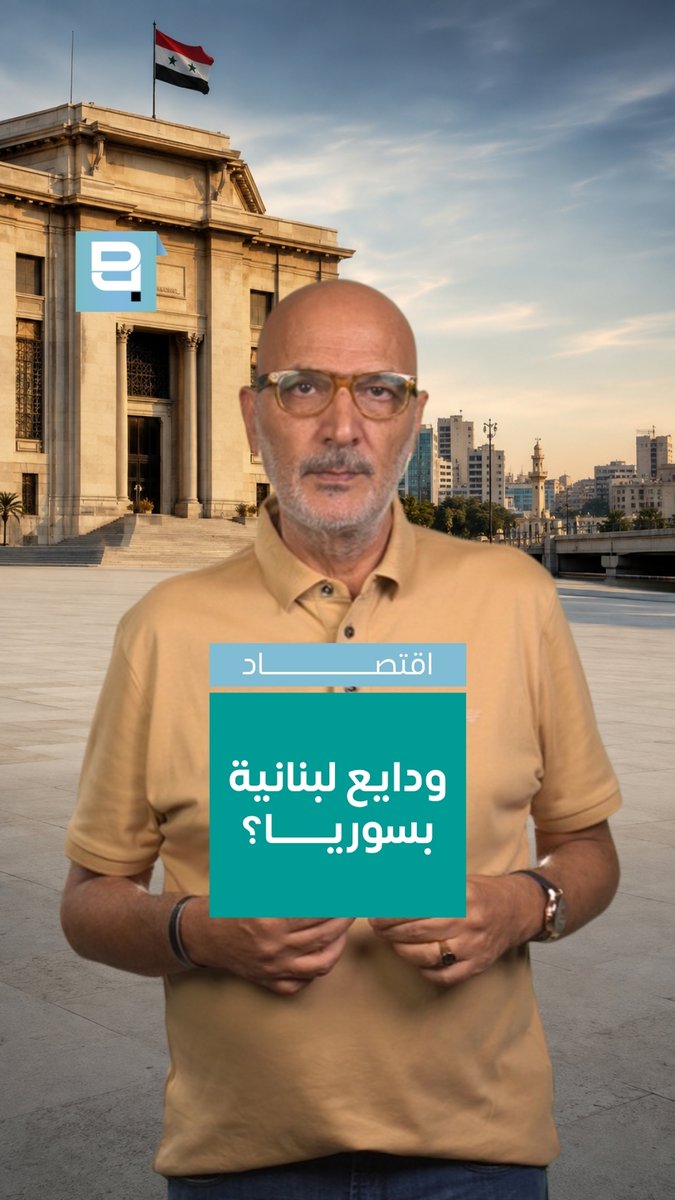
ودائع لبنانية في سوريا! هل هذا ممكن؟ نعم، ممكن! لكن ما السيناريو؟ القصة هي أن ما يُمنع ويُعرقل تنفيذه في لبنان، قد ينجح أو يجد طريقه إلى التنفيذ في سوريا عقدة هنا، وحلّ هناك! نحن نتحدث عن إعادة هيكلة المصارف في لبنان، توجد ممانعة ومقاومة لتلبية شروط صندوق النقد الدولي وتوصياته منذ ست سنوات وحتى اليوم وتتركز هذه الممانعة خصوصاً على حتمية إصلاح مصرف لبنان ومعالجة أوضاع المصارف المتعثرة أما في سوريا، وتحديداً في 4 آب، أي قبل نحو ثلاثة أسابيع، فقد وافقت سلطات دمشق على برنامج واسع للمساعدة الفنية أعدّه صندوق النقد الدولي ويتضمن البرنامج إصدار قانون جديد للمصرف المركزي، وإقرار قانون حديث للمصارف، وتقييم السلامة المالية لكل مصرف سوري، ووضع إطار لمعالجة المصارف المتعثرة وفي 7 آب، أُقرّت هيكلية تنظيمية جديدة لمصرف سوريا المركزي، بهدف تحسين الحوكمة وتطوير الرقابة وتعزيز إدارة المخاطر وفي اليوم نفسه، وافق البنك الدولي على منح سوريا 100 مليون دولار لتحديث القطاع المالي والمصرفي وهكذا، يبدو أن هناك نية في سوريا لتسريع الإصلاحات، في مقابل سنوات من المماطلة والتسويف في لبنان وإذا بقينا على هذه الحال، وإذا نجحت سوريا في تنفيذ إصلاحاتها، فنعم، قد نذهب نحن اللبنانيين لوضع أموالنا في مصارف سورية آمنة وقد نهجر نهائياً مصارف لبنان «الزومبي» نعم… هذا ما جنته أيدي مصارفنا، فلتتحمّل العواقب! Lebanese deposits in Syria! Is this possible? Yes, it is! But what is the scenario? The story is that what is being blocked and obstructed in Lebanon may succeed or find its way toward implementation in Syria A deadlock here, and a solution there! We are talking about bank restructuring In Lebanon, there has been resistance and opposition to meeting the International Monetary Fund’s conditions and recommendations for six years and counting This resistance is focused particularly on the necessity of reforming Banque du Liban and addressing the situation of troubled banks In Syria, however, specifically on August 4, around three weeks ago, the Damascus authorities approved a broad technical assistance program prepared by the International Monetary Fund The program includes issuing a new central bank law, adopting a modern banking law, assessing the financial soundness of every Syrian bank, and establishing a framework for dealing with troubled banks On August 7, a new organizational structure for the Central Bank of Syria was approved, with the aim of improving governance, developing oversight, and strengthening risk management On the same day, the World Bank approved a $100 million grant to Syria to modernize its financial and banking sector And so, there appears to be an intention in Syria to accelerate reforms, compared with years of procrastination and delay in Lebanon If we continue this way, and if Syria succeeds in implementing its reforms, then yes, we Lebanese may end up placing our money in safe Syrian banks And we may permanently abandon Lebanon’s «zombie» banks Yes… this is what our banks have brought upon themselves, so let them bear the consequences! Mounir Younès/منير يونس #لبنان #سوريا #المصارف #إعادة_هيكلة_المصارف #مصرف_لبنان #مصرف_سوريا_المركزي #صندوق_النقد_الدولي #البنك_الدولي #الإصلاح_المصرفي #المودعون #Lebanon #Syria #Banks #BankRestructuring #BanqueDuLiban #CentralBankOfSyria #IMF #WorldBank #BankingReform #Depositors

Beirut Politics

12,393 Aufrufe • vor 18 Tagen

The Letter Scene in Persuasion (1995): When Constancy Is Recognized The moment when Captain Frederick Wentworth leaves a letter for Anne Elliot is widely cherished as one of the most beautiful passages in the 1995 film adaptation of Jane Austen’s Persuasion. On the surface, it is a very short scene. There is no direct declaration of love. No embrace. No tearful reunion. Wentworth sits absorbed in writing what appears to be another matter, while Anne speaks quietly with Captain Harville nearby. When he chances to hear her calm words on the constancy of a woman’s heart, he accidentally drops the small pot of blotting sand. The film offers no explanation of what stirs within him. Yet that single, almost imperceptible gesture is enough for the viewer to sense that a long-held perception has been gently shaken. Shortly afterward, Wentworth writes a letter to Anne. After leaving the room, he returns on the pretext of retrieving a forgotten umbrella. With a quiet gesture he draws Anne’s attention to the letter resting on the table, then withdraws in silence. Anne opens it. At first only Wentworth’s voice is heard reading the words. Gradually Anne’s voice begins to blend with his. The entire scene lasts only a few minutes, yet it has become one of the most deeply moving moments in any screen adaptation of Jane Austen’s novels. What gives it such quiet power? The answer lies in the way the film chooses to tell its story. Rather than shaping the moment as a grand romantic climax, director Roger Michell allows everything to unfold remarkable restraint. The camera does not seek heightened expressions of feeling. The music offers no emotional guidance. Even the letter is not placed directly into Anne’s hands. Wentworth deliberately steps out of the frame, leaving her alone to meet the words. The film invites us to focus not on the meeting of two people, but on the truth that is slowly being revealed. What truly changes, however, is not love itself. For eight years Anne remained faithful to her love. Wentworth, too, has never found another attachment capable of taking her place, though he has more than once tried to persuade himself to move on. What has separated them is not an absence of feeling, but Wentworth’s mistaken view of Anne. He had believed she abandoned their love through inconstancy. Yet when he hears her speak with such quiet conviction of a woman’s steadfast heart, he suddenly sees that this virtue had never left her. What time has shown is not merely that Anne still loves him, but that she remains the woman he once loved. For this reason the letter carries a meaning beyond any simple renewal of affection. Many remember its most passionate lines: “You pierce my soul. I am half agony, half hope.” Yet the true heart of the letter lies in another affirmation: “I may have been unjust, weak and resentful, but never inconstant.” It is no coincidence that Wentworth places such weight on this word. The conversation he has just overheard between Anne and Captain Harville turns precisely on the question of constancy—the central theme of Persuasion. With these words Wentworth does more than confess his love; he acknowledges that he had misjudged Anne and affirms that he, like her, has never lost his own constancy. The letter does not create a new love. It bears witness to a truth that has always existed, though long hidden by misunderstanding. The film conveys this deeper meaning with remarkable subtlety through its use of sound. When Anne first opens the letter, only Wentworth’s voice is heard. The audience listens as he reads the opening lines: “I can listen no longer in silence…” and then, “You pierce my soul. I am half agony, half hope…” It remains the voice of one person giving expression to his private pain, hope, and love. But when the letter reaches the words “I have loved none but you,” Anne’s voice begins, almost imperceptibly, to join his. The two voices continue together to the crucial affirmation: “I may have been unjust, weak and resentful, but never inconstant.” This is no mere technical device for emotional effect. The film chooses the precise moment when the two voices unite. The blending of voices does not occur when Wentworth speaks of his suffering, but at the instant he declares his own constancy. From that point the words of the letter cease to belong to Wentworth alone. Anne may now speak them with equal truth, for they describe the reality of her life as well. After eight years of separation, what both recognize first is not simply that they still love one another, but that neither has ever ceased to be constant. It is upon this shared foundation that their love is able to return to its original harmony. We often judge others not by the enduring qualities of their character, but by what we observe in a single passing moment. A misunderstanding, one decision, or an old wound may cast a shadow over an entire person. Only with the passage of sufficient time do we come to see that true virtues are not so easily altered as we once imagined. What changes is frequently not the person before us, but the manner in which we have learned to see them. From the perspective of traditional culture, the scene reveals a still deeper truth about the nature of virtue itself. Constancy does not become precious because it is at last recognized by another. Its worth has always resided within it. Steadfastness is valuable not because it receives reward or recognition, but because it is an essential quality of a noble and upright character. Genuine maturity of soul lies not only in nurturing what is good, but also in refining our own vision until we are able to perceive and honor those virtues that have been present all along. Perhaps this is why, more than two centuries after Jane Austen completed Persuasion, this brief letter scene continues to move viewers across generations. Beneath the words of a short letter lies something far greater than the reunion of two people who once loved. It is the moment in which a soul comes to understand that time may try our affections, yet it is also time that can bring to light the constancy that lies at their root. And when constancy is at last seen in its true light, love does not need to be created anew. It returns, quite simply, to what has always been true.

🌸🎵 Beautiful Melody 🎶💖

28,930 Aufrufe • vor 2 Monaten

BOOM!!! 💥💥💥 Dr. Aseem Malhotra's testimony was delivered in the Helsinski District Court on April 12, 2024, with the understanding that any deviation from the truth would constitute perjury. This clip was immediately banned by YouTube so please share widely. I've trimmed the clip, removing the interpreter's segment for a smoother listening experience. Here's the first hour of the testimony. ---------------------------------- My name is Doctor Aseem Malhotra. I am a consultant cardiologist. I've been a qualified doctor since 2001. I have held various roles both in academic health policy. In England, in the United Kingdom, and of the various roles, I won't bore you with all the details. I think three of the most relevant and prominent are the fact that I was an ambassador for the Academy of Medical Royal Colleges for six years, which represented every doctor in the UK. I served a full term of six years as a trustee of the King's fund. I was the youngest member to be appointed to this body which advises government on health policy. I was a founding member of Action on Sugar and a first science director. And through that role I'm considered the lead campaigner on bringing about a sugary drinks tax in the UK. And also, finally I served for five years as visiting professor of evidence based medicine at the Bahiana School of Medicine in Salvador, Brazil. In early 2020, at the beginning of the pandemic I was most vocal doctor on the mainstream, making the link very early on between COVID and those who are vulnerable to suffering serious complications from COVID In fact, in March 2020, I was asked to go on Sky News to explain my initial research findings of the link between especially obesity and COVID, but also to give people an opportunity and to suggest to the government this was a great time for them to implement public health policy to help people enhance or optimise their immune system, which could happen within just a few weeks of dietary changes and optimising vitamin D. This was later also backed up by medical journal publications a few months later. And I was first to mention on the back of an article I published in the Daily Telegraph newspaper, which became a front page commentary and was picked up by BBC News and Good Morning Britain, where I had said that it's likely our prime minister, Boris Johnson, was hospitalised because of his weight. As a result of that, the then secretary for health, Matt Hancock, and this was publicised in the news, had asked me to advise him on the link between COVID and obesity. ...before I explain my journey and in many ways U-turn on my understanding in terms of the benefits and harms of the COVID vaccine, my experience in this area over the last couple of years has made me realise more than ever that even for that the greatest barrier to the truth are not factual or intellectual barriers, but psychological. I think all of us as human beings are vulnerable to these psychological barriers and we should have compassion for ourselves. And I will just very briefly summarise those three psychological barriers before I get into my detailed account of what I was involved in in regards to the COVID vaccine. The first psychological barrier is one of fear. And many of us understandably, and I still remember from early on in the pandemic, we were all scared. We did not know what we were dealing with. The issue with fear is that when people and populations are in a state of fear, we are less likely to engage in critical thinking and we are more likely to be compliant. Although COVID was particularly devastating for vulnerable groups in the elderly and I even have managed and still manage people with long COVID, the fear was grossly exaggerated. And one of the examples of that is that when we had good information on the mortality rate of COVID in the United States, one survey in 2020 revealed that 50% of Americans believed that if they caught COVID, the risk of 19 hospitalisation was 50% one and two, when the actual figure, certainly an average for people in middle age, was less than 1%. The second barrier to the truth, which I think is very relevant to the situation we find ourselves in now, is one called willful blindness. This is when human beings, all of us, are vulnerable to this, turn a blind eye to the truth in order to feel safe, avoid conflict, reduce anxiety and to protect prestige and fragile egos. Some examples of this include, on a personal level, willful blindness can occur when a spouse turns a blind eye to the affair of their partner. On an institutional level, some great examples of willful blindness include Hollywood and Harvey Weinstein, the Catholic Church and child molestation. I believe the current situation we find ourselves in, with much of the mainstream narrative and the medical establishment and policy makers not acknowledging quite horrific, serious and common harms from this vaccine, is another example of willful blindness. And I also say this with full empathy, because I was one of those people that was for a very long time, willfully blind to the harms of the COVID vaccine. In January 2021, I was one of the first people to take two doses of the COVID mRNA vaccine because I volunteered in a vaccine centre. I still believe that traditional vaccines are some of the safest amongst all pharmacological interventions in medicine and I could not conceive of any possibility whatsoever of this vaccine causing harm. As a public figure and respected doctor in the UK, I have built relationships across the board with many other public figures, including celebrities and politicians, who often come to me for medical advice. One of those people was film director Gurinder Chadha, who you may be familiar with some of her work, including the movie "Bend It like Beckham", who had asked me whether or not she should take the vaccine and had sent me blogs which I dismissed and regarded as anti vax nonsense. I was then asked to go on good morning, Britain because Gurinder Chadha, the director herself tweeted that I had convinced her to take the vaccine. The main reason for this TV appearance was to help tackle vaccine hesitancy, which was very prominent amongst people from ethnic minority groups in the UK. I made the point on that programme that I understand where vaccine hesitancy was coming from because of the history that I have been involved with over many years in highlighting the shortcomings of pharmaceutical industry influence over medicine. And I even made the point, if I remember correctly, that they have been found guilty of fraud on many occasions, that the third most common cause of death, prepandemic after heart disease and cancer, is prescribed medications. I, however, reassured the public and said that despite these figures, of everything we do in medicine, traditional vaccinations are amongst the safest. I still believe this to be the case. A few months later, in April 2021, I met with a colleague and friend of mine who I regard as one of the brightest cardiologists in the United Kingdom. I was surprised when he told me that he had not taken the COVID vaccine. He explained to me that he had concerns because he had seen in the supplementary appendix of Pfizer's original trial that there were four cardiac arrests in the vaccine group and only one in the placebo. These numbers were small and did not reach statistical significance. So this could be random chance, or his concern was it could represent a signal of problems in the future. And if this was the case, we are going to have a huge problem. He said he'd rather wait and see what happens before taking the vaccine. On July 26, 2021, my father, aged 73, who was a very prominent, well known doctor in the UK, including being the honorary vice president of the British Medical Association and had received honours from the Queen of England with an OBE, suffered an unexpected sudden cardiac arrest. I was particularly devastated by this happening and I was also I find it difficult to understand why my father, who was a fit and well man, I knew his cardiac history and his cardiac status, would suffer a cardiac arrest. But also my initial investigation was to try and understand why there had been a 30 minutes ambulance delay arriving to his apartment. Two weeks later, the deputy chief nurse of NHS England, a government health body, called me up. She was very upset, she knew my father very well and she was crying and she told me, Aseem, there's something I need to tell you. She in effect told me that throughout the country, for the last two months prior to my father's cardiac arrest in most regions of the UK, ambulances were not getting to patients in time for heart attacks and cardiac arrests. And there had been a deliberate, and I will use these words because I mentioned it, I've mentioned it before, a cover up involving the government and the Department of Health to withhold this information from doctors and the public. I worked with an investigative journalist with the I newspaper in the UK to write an article and a news story that became BBC News headlines a few months later, exposing this. Just before I exposed this, I messaged a professor of cardiology who I trust in the UK. He has a leadership role to explain to him what had happened and what I was about to do. I have text message evidence of this. He told me not to do this because it would make me enemies. I explained to him that I had a duty to patients and the public. I'm highlighting this as one example and I'll give you more examples of a cultural problem within medicine. The next part of this story is the post mortem findings of my father. They did not make any sense to me. I am considered a leading expert, maybe in the world, on the development and progression of coronary artery disease. My father had two severe blockages in his coronary arteries. There was no actual evidence of heart attack and likely there was a rhythm disturbance because of reduced blood supply that led to his cardiac arrest. Then in, within the space of a few weeks, around October and November, 3, different sources of information was brought to my attention that made me realise that there was probably a significant problem with the COVID mRNA vaccine. The first in October 2021. I remember I was giving lectures in Stockholm. I was contacted by a journalist with a Times newspaper who reported to me and said, Dr Malhotra, we have reports of an unexplained 25% increase in heart attacks in hospitals in Scotland and asked me what I thought was going on. I explained to her that at that time, with the evidence I knew in my own experience, I said that two likely contributory factors were lockdown stress. We know that when populations undergo severe stress after war, for example, there is an increase in heart attacks and strokes that can last for many years. She asked me whether I thought that there was a contribution. I was surprised when she asked me whether I thought there may be a contribution of the COVID vaccine to these heart attacks. I said to her, a good scientist should never exclude any possibility. But I felt at the time it was unlikely to be related to the COVID vaccine. But we should watch this space and keep our eyes open. A few weeks later, a publication appeared in the Journal Circulation, which is considered the highest impact cardiology journal in the United States that revealed a potentially very strong link between the COVID mRNA vaccines and acceleration in heart attack risk. Very specifically, in several hundred people of middle age, there was a plausible mechanism, by use of inflammatory markers in the blood, that increased the baseline risk of those people having a heart attack in five years, from 11% to 25%, just within two months of having the COVID mRNA vaccines. Of course, this is one bit of data, but even if partially true, that is a huge increase in risk in a very short space of time. And for me now made me think and link back to why my father may have suffered a cardiac arrest six months after having two doses of the vaccine. I remember thinking and speaking to a colleague, that if this was true, then we were going to see an increase in cardiac arrests, heart attacks and excess deaths in heavily vaccinated countries for the next few years. Then within a few weeks, I was called up by a whistleblower at a very prestigious british institution. I will name that institution, which I have not done publicly before as a University of Oxford. This cardiologist explained to me that a group of researchers in his department had accidentally found, through the use of very specialised imaging of the heart, that there was a signal of increased inflammation of the heart arteries, which was there in the vaccinated, but not there in the unvaccinated. The lead researcher of that group had sat down, the juniors, and had said that we are not going to explore these findings any further because it may affect our funding from the pharmaceutical industry. At that point, with these three bits of information, I then felt it was my ethical duty to speak out. And I went on GBNews to talk about what I'd found what I'd heard and I'd asked for the Vaccine Committee of the UK on TV to investigate this, to see whether there was a real problem with the vaccine in relation to heart issues. Around the same time which I found very strange is that the Secretary of State for Health at that stage, who was not Matt Hancock, was Sajid Javid, had announced in parliament that we are going to introduce legislation to ensure that all healthcare workers are mandated to have the COVID vaccine. For me, this, by that stage had no ethical or scientific justification, because certainly after the summer of 2021, it had become very apparent that the COVID mRNA vaccine was not stopping infection and it certainly was not stopping transmission. It was understood that approximately 80,000 NHS workers had refused at this stage to have the COVID vaccine. And now they were threatened with losing their job if by April the following year they had not been fully vaccinated. Many of these people were very concerned and contacted me around that time, I was also conducting many interviews, both through the BBC and Sky News and GBNews in regards to what happened with my father's ambulance delay. And I used it as an opportunity on the mainstream media to call for Sajid Javid, the secretary for health, to U-turn on the introduction of a mandate for healthcare workers based upon the fact that I felt it was not scientific and it was unethical. I also received my own personal backlash from these comments where I was contacted by the Royal College of Physicians who I had an affiliation with, and they asked me to respond to anonymous complaints from doctors that I was spreading, in quotes, antivax disinformation. I felt with my own knowledge and experience of the healthcare system that this was a direct response probably fueled by a combination of willful blindness and institutional corruption. To elaborate a bit further, when I say institutional corruption, I mean that my view was that the complaints were likely being fueled by academics with financial ties to the pharmaceutical industry. I felt very concerned about the potential introduction of the vaccine, well, the vaccine mandate. And therefore I decided there were two things that I decided to do. The first was I made a phone call to the chairman of the British Medical Association in December 2021. I had a good relationship with him and he respected my opinion. And I spent 2 hours on the phone explaining to him everything that I knew up to that stage about my concerns of the COVID mRNA vaccine. He said to me, "Aseem, nobody appears to critically appraise the evidence on the COVID mRNA vaccine as well as you have from our conversation, he said, most of my colleagues are getting their information on the benefits and harms of the vaccine from the BBC". This was replicated by the former chair of the CDC in the United States, Rochelle Walensky, who in an interview later on had said that her initial optimism of the vaccine benefits came from CNN News report. I say this just to emphasise that we should all accept our vulnerabilities to where we receive health information. Even doctors, policymakers, judges and lawyers are all influenced on the public massively by mainstream media. The chairman of the BMA also agreed with me. There was no ethical or scientific justification for mandating the COVID vaccine. He said the BMA also did not support it. And he said because of my conversation with him, he would speak directly to the secretary for health, Sajid Javid. One month later, at the end of January 2022, the COVID vaccine mandate for healthcare workers was overturned. I at that stage, given the fact that there was some backlash happening towards me, I realised that because this is a very big issue and area, and not my initial area of expertise, I needed to carry out my own critical analysis of the COVID mRNA vaccines. I spent six to nine months critically appraising the data, including speaking to two Pfizer whistleblowers, three investigative medical journalists and eminent scientists from the University of Oxford, Stanford and Harvard. The most critical bit, the most critical research that was published on this issue, which I think the whole court should acknowledge in August 2022, was published in the journal Vaccine. That research was conducted by some of the world's top independent of drug industry influence academics. That research, we was able to reanalyze the original randomised control trials conducted by Pfizer and Moderna. They were able to do this because new information was made available on the FDA's website and Health Canada's website. The conclusions of that paper were really very disturbing. The original trials that led to the drug regulatory approval of these vaccines revealed that you were more likely to suffer serious harm from taking the vaccine, specifically hospitalisation, life changing event or disability, than you were to be hospitalised with COVID That rate of harm at two months was very high at 1 in 800. Just to give you some perspective, historically we have suspended other vaccines for much less. In 1976, the swine flu vaccine was pulled because it was found to cause a neurological syndrome called Guillain-Barre syndrome In one in 100,000 people. In 1999, the rotavirus vaccine was suspended because it was found to cause a form of bowel obstruction in children affecting 1 in 10,000. This was 1 in 800. In my view, it was very clear that given this information, published in the highest impact Vaccine journal in the world, peer reviewed, and has not had any significant rebuttals, that this vaccine now, in my view, should never have been approved for use in a single human being in the first place. In my view, this very important court case in some ways, actually is a distraction from the much bigger issue, which is there should be court cases around the world with a full inquiry into the pharmaceutical industry and an inquiry as to how we got this so very wrong. Of course, one could argue this is just one bit of research, but actually, unfortunately, there are different, many different strands of research that are showing a signal of considerable and common serious harm from these vaccines. From pharmacovigilance data that is reporting what we call yellow card reports from the public. We have plausible biological mechanism of harm. We have other research called observational data. We have autopsy data also confirming that certainly with the majority of people who died within a short space of time of having the vaccine in relation to the heart, was definitively caused by the vaccine. This is really a very, very, very horrific situation we find ourselves in. One would hope and expect that the regulators should be independently evaluating all medications. But of course, the evidence reveals this is far from true. There was an investigation by the BMJ, also published in the summer of 2022, which revealed that most of the major regulators across the world were taking most of their money from the drug industry. For example, the MHRA in the UK receives 86% of its funding from the drug industry, and the FDA in America receives 65% of its funding from the drug industry, A fact that most doctors do not know. And therefore, I would not expect members of the court to know this either, is that very, very rarely do drug industry sponsored research get independently evaluated. Clinical trial data can often involve thousands of pages of information on individual patients. The drug companies hold onto that raw data. They then give summary results to the regulator, who are then paying, who have an incentive to approve the drugs, and the drugs are then approved. I made these points in my peer reviewed article published in the Journal of Insulin Resistance in September 2022, where I concluded that we should pause and investigate the issue around the COVID mRNA vaccines. I have since then been campaigning and advocating for a return to ethical evidence based medical practise around the world. Some of the clear solutions moving forward would be changes in the law that are required so that patients, doctors, members of the public can have greater confidence in the information they receive to make decisions about their health. Two very clear, low hanging fruit solutions, which are both ethical, scientific and democratic, would be that the drug industry should be allowed to develop drugs, but they shouldn't be allowed to test them themselves. And they certainly shouldn't be allowed to design their own research to and hold onto the raw data. Their information needs to be independently evaluated. One other clear solution would also be that the medical regulators, again, should not be taking any money from the industry, as this is a gross conflict of interest. I also want to highlight for people to understand the bigger picture. Prior to the pandemic, I had realised that there was a big problem with the reliability of clinical research, where invariably the results of clinical trials on all drugs sponsored by the drug industry, grossly exaggerate their safety and benefits. I have taken this information to the European Parliament, where I spoke in 2019, and I spoke to very senior politicians in the UK government. But although they were sympathetic, they felt that the issue was much bigger than them as individuals, and therefore it also needed media attention to get public awareness on the importance of such an inquiry. Before we continue with further questions, as I've been speaking for quite a long time now I'll just finish with two references just for the court and the judges to understand just how bad this problem is. Prepandemic the man who I call the Stephen Hawking of medicine is Professor John Ioannidis from the University of Stanford. The reason I call him the Stephen Hawking of Medicine is he's the most cited medical researcher in the world and is a mathematical genius. In 2006, he published a paper which was entitled why most published research findings are false. In that paper, he makes a point that the greater the financial interests in a given field, the less likely the research findings are to be true. I say this in context of the Pfizer mRNA vaccine which has made the company $100 billion. The other point that he makes in a further paper in 2017 is, again, the reason the system continues as it is is most doctors are unaware of the information they receive when they make clinical decisions has been corrupted by commercial influence. The other credible name I will mention is the editor of the Lancet, Richard Horton, who I personally know. In 2015, he wrote an article in the Lancet in relation to a secret meeting that had taken place with himself and some of the world's top medical academics. In that, he wrote that possibly half of the medical published literature may simply be untrue. And he said that science has taken a turn towards darkness. But who's going to take the first step to clean up the system? I believe in this case and in this court today, this is going to be a very pivotal potential moment in history for that first step. ---------------------- Dr Aseem Malhotra H/T: Tiina Keskimäki 🇫🇮

aussie17

798,882 Aufrufe • vor 2 Jahren