Video yükleniyor...

Video Yüklenemedi

Ana Sayfaya Dön

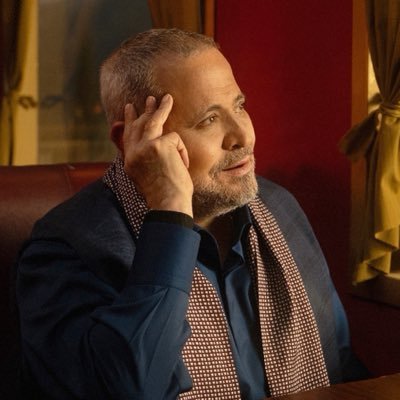
كريس عم بيقاوم مرض الحثل العضلي الدوشيني بقوة وأمل كبير، لكن تكاليف العلاج بتطلب مساعدتنا كلنا 🙏🏻 Chris has been diagnosed with Duchenne Muscular Dystrophy and the treatment for this disease costs 3 million dollars. We all can support by donating through: GoFundMe: Whish Money: Banque BEMO SAL account:...

53,146 görüntüleme • 2 yıl önce •via X (Twitter)

10 Yorum

🇱🇧Rãñøøßh🇱🇧 profil fotoğrafı
🇱🇧Rãñøøßh🇱🇧2 yıl önce

رفيقتي ابنها عم يعاني من نفس المرض والدكتور خبر عيلته انه لما يوصل لعمر التمن سنين رح يصير معه شللل وعلى عمر 15سنه رح يموت ،، ياريت كل حدا بيقدرو يساعد يتواصل معي وبعطيه كل التفاصيل وبوصله لاهله

Zein El Omr profil fotoğrafı
Zein El Omr2 yıl önce

@signiora_younes ❤️🙏❤️ مش بس سلطان الطرب ابو وديع ملك الإنسانية بحبك تتخلص الدني الله يعطيك الصحة وطولة العمر يا حبيب قلب الزين . اشتقتلّك ❤️

Moneer WassǾuf Nasser profil fotoğrafı
Moneer WassǾuf Nasser2 yıl önce

دخييل قلببك ابو وديع ❤️❤️

Bashar Haddad profil fotoğrafı
Bashar Haddad2 yıl önce

طول عمرك كبير و قلبك كبير أبو وديع ❤️ ربنا يشافي كريس البطل 💪🏻 و يخليه لأهله و يفرحو فيه❤️

Youssef Issa profil fotoğrafı
Youssef Issa2 yıl önce

الله يشفيه و يعافيه و يطول بعمرك يا كبيرر يا معلم بكل شي

A1 profil fotoğrafı
A12 yıl önce

طول عمرك كبير يا ابو وديع الغالي

li watani profil fotoğrafı
li watani2 yıl önce

طول عمرك معروف بعمل الخير يا سلطان الله يعطيك الصحة ويعطي كريس الشفاء 🙏

Jana Naji | جنا ناجي🇱🇧 profil fotoğrafı
Jana Naji | جنا ناجي🇱🇧2 yıl önce

❤️❤️❤️

Mohammad Kattan profil fotoğrafı
Mohammad Kattan2 yıl önce

الله يشفيه يارب🙏... ويطولنا بعمرك يا معلم يا صاحب أطيب قلب بالدنيا 👑❤

Hasnae profil fotoğrafı
Hasnae2 yıl önce

كيف ما نحبك يا سلطان القلوب يا مدرسة الأخلاق وسلطان الإنسانية يا جميل القلب الله يساعدك على فعل الخير ويشفي الطفل كريس ويحفظ كل أطفال العالم والله يرزقك الصحة ويديم عليك النعم يا أبو وديع @wassouf ❤❤❤😍

Benzer Videolar

🙏🏻💔URGENT APPEAL🙏🏻💔 We hope you have all had an amazing Christmas celebrating with friends and family🎄 While the team has enjoyed a couple of days off, we are now desperately trying to catch up behind the scenes 😅 Which leads us onto our next appeal 💔 Sadly, over the Christmas break, more dogs have been dumped in the pound either by the dog catcher or by owners 😞💔 The pound again is nearly full, and the rescuer is struggling to just cover their food simply to keep them alive. We recently helped our rescuers to spay neuter and release 30 dogs from the pound (we managed to find space and place a couple in pensions too) but this is just a drop in the ocean. We will again in the new year launch another spay and release campaign. Our rescuer has asked if we can help save 5 new dogs who have arrived in the pound. 2 smaller size ones and 3 lab mix types (2 black and 1 brown) All 5 are so sweet, and she has managed to secure space in the shelter for them if we agree to take them on. That means we need to raise and pay up front their preps to get them released and cover their food, etc I know Christmas has just passed, and money is always tight after the celebrations, but if everyone who could afford £1 donated, we could change the fate of these 5 dogs. Please, if you can help us save another 5 souls before 2024 passes, please use ref POUND: Bank and PayPal Details Bank details: Name: Second Chance Dog Rescue CIC Account Number: 53479449 Sort Code: 608371 Thank you, as always, everyone, for your support❤️

Second Chance Dog Rescue

15,804 görüntüleme • 1 yıl önce

BREAKING NEWS: Circle has announced that we are moving our Global HQ to New York City, building out a flagship space on one of the top floors of 1 World Trade Center, an historically important landmark in standing for American global economic leadership. Details below the video. I’m thrilled to celebrate this milestone with an event including leading financial industry firms, crypto industry leaders and policymakers. We are also sharing this announcement video that captures the moment and inspiration. Why is this important for Crypto, Circle, New York, America and the US Dollar? Since our founding, we have envisioned building a new internet financial system on the foundations of crypto – open networks, open source software, open protocols, decentralized and distributed infrastructure – and building on and expanding the capabilities of the largest and most important currencies in the world, starting with the US dollar. 11 years into our founding, that vision is coming alive in a tremendous and exciting way, with USDC now powering trillions of dollars of onchain transactions, with thousands of developers and applications building on this innovation, and with increasing legal clarity that digital dollars like USDC are new forms of legal electronic money that can be used widely around the world. As this technology explodes into the mainstream, and as Circle becomes a more and more important company and infrastructure for this new internet financial system, it became clear that we needed to plant our flag, both literally and figuratively, in the heart of Wall Street, in the most important economic center of the world, and in the great country of the United States of America. Many complain that the United States is not the right jurisdiction to build a company in our industry, and that the current government here remains hostile to this industry. I couldn’t disagree more. My view is that we are at a turning point, and that the US is about to become THE decisive leader in building and supporting this technology and financial revolution. We are an American Technology champion, and we want to demonstrate that the highest quality, the best run, the safest and the most powerful technology for the new internet financial system calls not just the US, but New York City, it’s home. Today, New York City is home to an enormous number of crypto firms that are leading and innovating in nearly every area of this industry. New York may have the most talent-density in crypto of any city in the world. It’s truly astounding, and we feel so privileged to join this thriving community of companies with a flagship headquarters in New York. After having originally founded the company in Boston, like many technology-driven companies, we have scaled out largely as a remote-first operation. Today, we span 36 US states and 14 countries, with a presence in many of the world’s leading cities including New York, SF Bay Area, Boston, London, Dublin, Paris, Singapore, Berlin, São Paulo, Taipei and more. And we are growing all around the world. But through this, New York has become a crucial nexus of talent, connectivity and a core location for where we convene. 1 World Trade Center is an awe-inspiring building. Its history is known to nearly everyone; this iconic tower, the tallest in the Western hemisphere, stands for freedom, strength, and a projection of America’s central role in the global economic system. Freedom Tower stands above the great pillars of the global economic system – Wall St., the New York Stock Exchange, the New York Federal Reserve, and more. Sitting on a top floor of the tower, Circle’s new flagship HQ is being built not as a traditional office, but rather as a powerful convening space, where we bring together all of our stakeholders to collaborate together, discover, and build the new internet financial system. It’s going to be an amazing and inspiring space that helps bring to life everything that we do at Circle. Today, we are celebrating this new HQ, joined in person in New York by industry, political and key partners who have been central to Circle’s growth and success. Join us virtually in this next phase of our journey. We are investing in New York. We are investing in America. We believe strongly that the infrastructure we are collectively building – this new internet financial system – will be the foundation for the next hundred years of global economic activity and coordination. 2024 has been a turning point year in crypto, a year when stablecoins started to truly breakout in scale, importance and usage. 2025 will be the year when this goes mainstream. As we open our new HQ to the world in early 2025, we will be thrilled to host and convene and see many of you there for this next phase of our collective journey in building a more open, inclusive, safer and efficient global economic system. JA

Jeremy Allaire

576,318 görüntüleme • 2 yıl önce

This is crazy! Did you know that YOU Paid for Celebrities Birthday Parties, Designer Clothes, Private Jets, and Mystery Women? 🔴 OUR tax-dollars paid Rapper Lil Wayne $8.9 Million: • $1.38 Million on private Jets • $528,000 on designer clothes • $176,000 for a music festival promoting marijuana • $88,000 for a concert he never showed up for • $14,900 on Mystery Women hotel stays 🔴 OUR tax-dollars paid singer Chris Brown $10 Million: • $5.1 pocketed for himself • $80,000 for a birthday party • $179,000 on a charitable baseball game • $24,000 for a tour bus to New Mexico It gets much worse… Business Insider Reports. 🔴 DJ Marshmello, whose real name is Christopher Comstock, received a $9.9 million grant. • when the SBA asked for proof of where it went, his business manager Steven Macauley, of NKSFB, responded by saying all the money went into Comstock's pocket. Our money went into these people’s pockets. 🔴 Steve Aoki's loan-out company, DJ Kid Millionaire Touring, used $2.4 million in grant money on payroll costs, of which $1.9 million was officer pay. But Aoki is the company's ONLY officer. 🔴 Three of the four members of the rock band Shinedown split at least $2.5 million of their $8.3 million grant. 🔴 High-powered entertainment-business-management firm, NKSFB, totaled at least $207 million • NKSFB itself collected more than $7 million by helping its clients obtain the grants. 🔴 CONTEXT Signed into law by Trump in 2020 and championed by lawmakers including Sen. Chuck Schumer, it was established as a lifeline for struggling independent venues and arts groups during the pandemic. After Trump left office, pop stars used the program and our tax-dollars as their personal piggy bank. The Economic Injury Disaster Loans gave out as much as $200 BILLION in suspected false claims, losses that combined with false unemployment-benefit claims amount to what the FBI has called the largest fraud in history. Should any of us being paying taxes anymore? When the hell do WE GET a refund?

MJTruthUltra

424,663 görüntüleme • 1 yıl önce

🧵 The "poor" who refuse to borrow money fund the "rich" who do. The individuals whom you mock as "poor" are, in fact, subsidizing the lifestyles of those who take out interest loans such as mortgages. Let me explain: I understand your perspective on the phrase "debt is good." I am aware that within the existing financial framework, often referred to as the Central Banks Fiat System or The Riba System, individuals can procure loans / borrow money with interest. They can then utilize these funds to acquire hard assets that gain value over time. This philosophy is advocated by figures such as Robert Kiyosaki and various others. However, a challenge emerges for devout Muslims who uphold their faith conscientiously. They abstain from participating in such contractual agreements due to their religious convictions, as these contracts are deemed prohibited by God, given the widespread detrimental effects they impose on the majority of humanity. Consider the words of Professor Saifedean Ammous Saifedean Ammous: "Borrowing money imposes a tax on society while offering a subsidy to the borrower. In the current fiat-based monetary system, a Muslim who opts not to engage in borrowing money due to religious convictions against usury / interest effectively subsidizes everyone else that does borrow money. Essentially, they are paying to support others through this subsidy." "The conclusion of the fiat system is that you need to short fiat as much as you can; that's a smart, winning move. Human wisdom over thousands of years is to save. Try not to borrow as much as you can and attempt to accumulate as much savings as possible. This concept is reversed under the current fiat system: if you're saving money, you're essentially subsidizing everyone else taking on loans. The winning move under the current fiat system, which is what rich people do, involves borrowing. Under the fiat monetary system, wealthy individuals don't hold a significant amount of cash. For example, if you're worth a billion dollars today, you wouldn't have a billion dollars in a checking / savings account. Instead, you might have around $100,000 to $1,000,000 million, which is just a small fraction of your wealth in cash, while the majority is invested in various hard assets. The wealthiest individuals in the world are also the biggest borrowers, and this applies to powerful entities like governments as well. This is how they become the richest and most powerful, as every borrowing instance provides an excuse for banks to print new money, which devalues everyone else's currency. Those who borrow also get a cut of this new money. For instance, if you were planning to purchase a house with your savings, your accumulated savings would lose value. On the other hand, if you were to buy the same house with credit, the bank's issuance of new money would make it more cost-effective. This is why people tend to buy everything on credit. The way we create fiat money is through credit creation. Most people think of fiat money as something that happens when the government prints money, and we still use the term "government's printing money." However, the vast majority of fiat is not physical. In fact, in the US, it is not created when it is physically printed; it's created when it is lent. So when you go to a bank to get a $1 million loan to buy a house, that bank is not going to give you a million dollars from its own money or its depositors' money. Instead, they will create a fresh new $1 million. When you walk out of that bank, the money supply is increased by $1 million to finance your home. Therefore, fiat money is essentially born out of government credit and the credit of banks backed by the Central Bank and the government. If you are part of the institutions that are granted the privilege of issuing fiat through loans backed by the Central Bank , you effectively create new currency and new money every time you issue a loan."

Akbar Zab

173,325 görüntüleme • 3 yıl önce

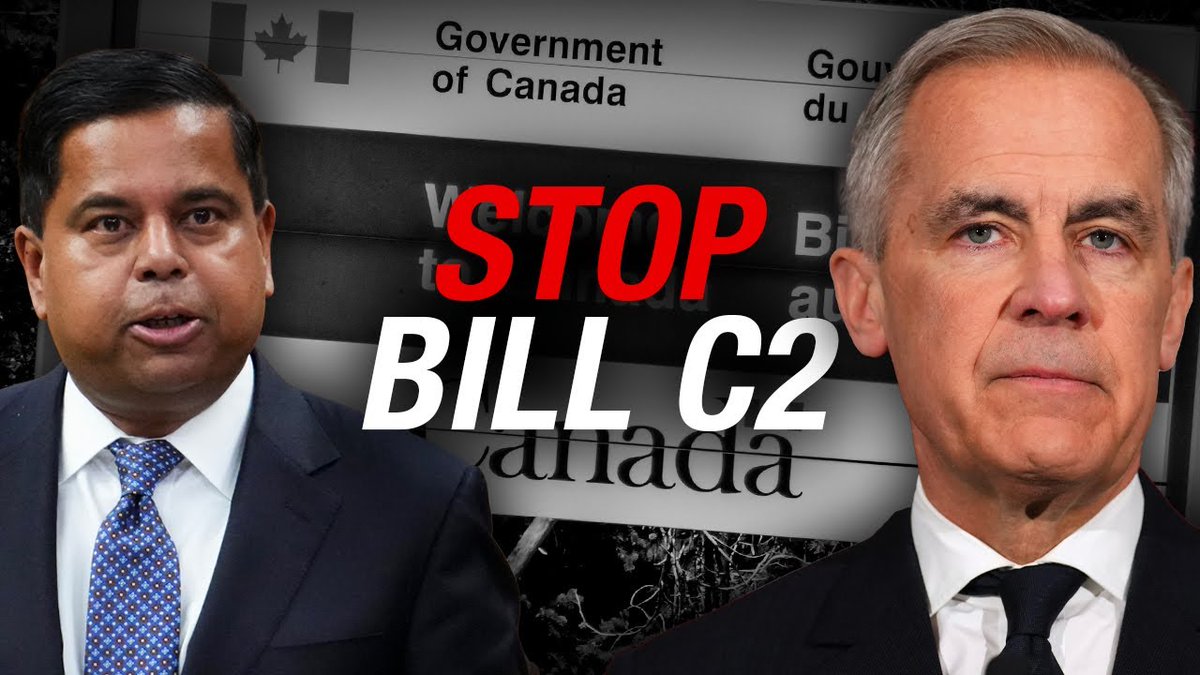
Stop C-2: Mark Carney’s new bill lets police open your mail without a warrant — and worse! I’ve read Mark Carney’s new bill, C-2. It claims to be Canada’s response to Donald Trump’s demand for border security. And there’s a little bit of that in the bill. But the rest of the bill is salted with things that have nothing to do with border security, and everything to do with snooping on law-abiding citizens. • The bill allows police to open your mail — without a search warrant. • It lets police contact any Internet-based company, to get all of your account details including your name, address, online nicknames and other invasive details — without a search warrant. • And it even makes it a crime to do transactions above $10,000 using cash. What does any of that have to do with stopping illegal immigrants or fentanyl at the Canada-U.S. border? It doesn’t take a lot of imagination to see how this law will be abused by the Liberals. Remember what they did with existing laws during the trucker convoy — seizing bank accounts, arresting political opponents of the regime. You can imagine who they’ll target with these privacy-destroying powers. This is how they’re going to go after their enemies list. I also worry that Mark Carney — the former governor of the Bank of Canada and Bank of England — wants to make it harder and harder to use cash, precisely because it’s untraceable and unstoppable. His shocking new ban on transactions over $10,000 looks designed to pave the way for a Central Bank Digital Currency, a kind of electronic “smart money” that would allow the government to track your spending, and even “shut off” the currency if you try to buy things the government opposes, whether it’s lawful firearms, a donation to the truckers, or even for things they deem hostile to the environment, like buying gas or eating meat. If you think I’m exaggerating, watch the video above — I’ll take you through the legislation, line-by-line. It’s about 20 minutes long, but I promise you, every paragraph is more shocking than the next. Trump told Carney to crack down on terrorists and drug dealers, but instead Carney is cracking down on ordinary Canadians, treating us all like enemies. And he’s just getting started — he hasn’t yet revealed his new online censorship bill. We’ve got to stop this. If we can show there’s a massive groundswell against this, it just might be possible to stop it, given that Carney doesn’t quite have a majority government. They want to snoop through your mail, snoop through your online history and stop you from using cash (because it’s too private). They want to destroy any privacy we have — even though their own government has never been more secretive. I think 99% of Canadians haven’t even heard of C-2. After all, it was just introduced this week. We’ve got to spread the word — please forward this message to your friends and family. (Thanks.) REPORT by Ezra Levant 🍁🚛:

Rebel News

40,054 görüntüleme • 1 yıl önce

🚨🚨🚨 Who do you think drops the next $XRP Ledger BOMBSHELL? Bank for International Settlements and Brazil went public with XRPL. Here’s who I think could be next, and France is at the top of my list. BIS researchers disclosed an XRP Ledger proof of concept. Brazil’s securities regulator disclosed XRPL-related market experimentation. After those two became public, I went back through the institutional connections and stopped asking whether major institutions are looking at XRP Ledger. The better question is: Who is already close enough to XRPL that another public test would actually make sense? When I went country by country, one place stood out immediately. France. 🇫🇷 France is my #1 prediction. Not because Banque de France has announced an XRPL test. It hasn’t. I’m putting France first because several separate pieces are already sitting extremely close to each other. Start with Société Générale-FORGE. SG-FORGE launched its regulated EUR CoinVertible, EURCV, directly on XRP Ledger. That means regulated euro-denominated money from a major French financial institution already exists on XRPL. Then France starts building out its wider tokenization strategy. Banque de France, the AMF and the French Treasury formed a strategic tokenization group. Look at who is involved: Société Générale BNP Paribas Crédit Agricole Euroclear Euronext LCH Amundi BPCE Caisse des Dépôts Ardian And look at what they are studying: tokenized deposits, stablecoins, wholesale central-bank money, tokenized securities, DLT market infrastructure, tokenized investment funds. That is a serious list. These are basically the pieces you need if you want to move traditional capital markets into a tokenized environment. And one of the institutions inside that ecosystem already has regulated euro money on XRP Ledger. That is what keeps France at the top of my list. Then Bpifrance enters. France’s state-backed investment bank said it will use SG-FORGE’s EUR CoinVertible for: capital-market settlement, payments, crypto/fiat activity, treasury operations, liquidity management, and securities activity. Bpifrance did not specify which EURCV blockchain deployment it will use. But the XRPL deployment already exists. So now you have a state-backed institution wanting to use regulated digital euros across capital-market and treasury activity, while that same euro asset already sits on XRP Ledger. That is a connection I’m watching hard. Then Swift shows up in the same chain. Swift and SG-FORGE have already tested tokenized-bond settlement using EURCV. Swift’s job in that experiment was interoperability. It connected tokenized systems with existing financial infrastructure. The public information does not say XRPL handled that specific transaction. I’m not claiming it did. What matters is simpler: Swift already works with SG-FORGE. SG-FORGE already has EURCV. EURCV now exists on XRP Ledger. As tokenized markets grow, somebody has to connect those networks. That is exactly what Swift wants to do. Then there is Pythagore. Banque de France and Euroclear are preparing work around tokenizing France’s roughly €310 billion NEU-CP short-term debt market, with settlement connected to the Eurosystem’s Pontes wholesale-CBDC infrastructure. Now look at what France has in one place: regulated digital euros, tokenized securities, a central bank, a state-backed investment bank, Euroclear, wholesale central-bank money, Swift interoperability, and XRP Ledger already hosting one of the regulated assets involved in that ecosystem. That is why I keep watching the combination of: EURCV + XRPL + Euroclear + Bpifrance + Banque de France + Pontes. I don’t need to say Banque de France secretly picked XRPL. There is no public announcement saying that. My prediction comes from how close the pieces already are. If France eventually reveals some form of XRPL interoperability work, it would make complete sense to me. That puts France at #1. Japan is #2. 🇯🇵 Japan is different because we already have much more direct language. SBI Ripple Asia completed a proof of concept involving tokenized bank deposits and deposit-based digital money. And SBI explicitly said the blockchain contemplated for the system is: XRP Ledger. That line matters a lot. Because a tokenized bank deposit is not just another crypto token. It is bank money becoming digitally transferable. That gets much closer to the money people actually use every day. Then SBI Ripple Asia announced additional work around blockchain financial services and again identified XRPL as contemplated infrastructure. Then SBI Ripple Asia and DSRV began studying blockchain-based remittances and payments between Japan and South Korea. XRPL was again being considered. Then RLUSD launched in Japan under the Japanese regulatory framework. So Japan already has several pieces moving together: Ripple-linked remittances. XRPL contemplated for tokenized deposits. XRPL contemplated for Japan-Korea payment infrastructure. RLUSD operating inside Japan’s regulated market. The next announcement I’m waiting for is not another exchange adding XRP. I’m waiting for a Japanese bank name. A bank publicly participating in XRPL-based tokenized JPY deposits. Or wholesale settlement. Or FX. That would take this story from SBI exploring infrastructure into actual bank-level participation. And that is why Japan sits right behind France for me. Then comes Singapore. 🇸🇬 Singapore almost does not belong on a prediction list anymore because the XRPL connection is already public. Ripple joined the Monetary Authority of Singapore’s BLOOM initiative. Ripple and Unloq are piloting programmable trade-finance settlement using: XRP Ledger + RLUSD + Ripple institutional infrastructure. Unloq’s SC+ system is built on XRPL. RLUSD can be released when trade conditions such as shipment verification are satisfied. That is a real business problem. Goods move. Conditions are verified. Payment settles. And XRPL is part of the infrastructure being tested under an MAS initiative. Then add: DBS + Franklin Templeton + Ripple. Franklin Templeton is tokenizing sgBENJI on XRP Ledger. DBS is exploring using those tokenized assets for collateralized lending and repo activity. So Singapore already has XRPL touching two very different areas: trade-finance settlement, and institutional fund collateral. That is important to me because it shows the ledger is not being pushed into one narrow use case. Different institutions are finding different reasons to use it. For Singapore, I’m not asking who tests XRPL first. I’m watching how far the existing work expands. Then the UAE. 🇦🇪 Dubai Land Department is already issuing tokenized real-estate title deeds on XRP Ledger. The wider Real Estate Tokenization Project includes: Dubai Land Department VARA Dubai Future Foundation Central Bank of the UAE And the program is moving toward secondary-market resale. That progression matters. Issuing a token is one thing. Building a functioning market around it is another. Once you move toward secondary trading, you need: buyers, sellers, identity, custody, settlement, liquidity, transfer rules. That is where tokenization becomes actual market infrastructure. The Central Bank of the UAE is a collaborator in the broader project. That does not mean CBUAE is running an XRPL settlement system. But it does put the central bank beside a government project that already has an XRP Ledger component. So I’m watching the UAE for what comes after tokenization. If the next phase moves deeper into settlement or secondary markets, that is where the $XRP connection becomes much more interesting. Then Hong Kong. 🇭🇰 The HKMA e-HKD Phase 1 pilot included Ripple and Fubon Bank. The work covered tokenized real estate, lending and a hypothetical e-HKD. Ripple later said the property collateral was brought onto XRPL. Its CBDC infrastructure handled the hypothetical digital-HKD side. Ripple also described the private secure ledger behind that solution as being built using the same technology as XRP Ledger. So Hong Kong is already part of this institutional history. It is not some future theory. A regulator-led pilot already involved Ripple, Fubon Bank and XRPL-related infrastructure. Then there is Swift. This is the one I think people can easily take too far. I am not predicting: “Swift replaces everything with XRP Ledger.” That is not the thesis. Swift has its own blockchain-related work, including infrastructure developed with Consensys. What interests me is interoperability. Swift wants to connect tokenized networks with traditional finance. That becomes more important every time another bank, fund, stablecoin or central-bank system chooses a different technical stack. And Swift has already worked with SG-FORGE’s EURCV. EURCV now lives natively on XRPL. So the question I’m watching is simple: What happens when Swift needs to orchestrate a transaction involving an asset that happens to live on XRP Ledger? Swift’s wider blockchain initiative involves more than 30 major financial institutions. The names include: BNY Bank of America JPMorgan Citi HSBC Deutsche Bank BNP Paribas Société Générale-FORGE MUFG Mizuho DBS Standard Chartered Santander BBVA Wells Fargo RBC UOB ANZ And 17 banks are preparing tokenized-deposit pilots through Swift infrastructure. Think about how messy that world can become. One bank issues tokenized deposits on one network. Another bank uses another system. A fund sits on a public blockchain. A stablecoin exists across multiple networks. A central bank settles through wholesale CBDC infrastructure. Someone has to connect all of that. Swift wants to be that orchestration layer. XRPL does not need to replace Swift for this to matter. It only needs to become one of the networks carrying regulated assets Swift’s members need to reach. SG-FORGE and EURCV already give that possibility a very obvious entry point. That is why Swift-linked institutions are #3 on my list. Then I look at the United States. 🇺🇸 The U.S. story is less about a central-bank pilot and more about what is already gathering around XRP Ledger. BNY is the primary custodian for RLUSD reserves. Guggenheim Treasury Services has digital commercial paper issued natively on XRPL through Zeconomy. Ondo OUSG gives institutions tokenized U.S. Treasury exposure on XRPL. Securitize is integrating with XRP Ledger. Ripple and Securitize also created RLUSD functionality around holders of BlackRock BUIDL and VanEck VBILL. I’m not turning that into: “BlackRock secretly runs on XRPL.” That is not what the public information says. The more useful point is that several pieces institutions actually care about are getting closer to the same ecosystem: -cash -Treasuries -commercial paper -funds -custody -tokenization -settlement That looks much more like capital-market infrastructure than the crypto market most people still picture when they hear XRP. And XRPL itself has been changing at the same time. Credentials help institutions verify who is allowed to participate. Permissioned Domains allow controlled environments. Permissioned DEX allows regulated trading logic inside credential-gated markets. Then you have: RLUSD tokenized Treasuries money-market funds commercial paper lending infrastructure collateral infrastructure That matters because tokenizing an asset is only the beginning. Institutions need to know who can own it. Who can trade it. Where it settles. What collateral value it has. How cash moves against it. How liquidity works after issuance. XRPL is adding the pieces for those questions at the same time institutions are trying to answer them. That timing is one reason I’m paying so much attention. South Korea stays on my radar too. SBI Ripple Asia and DSRV are already studying Japan-Korea blockchain payments and remittances with XRPL contemplated as the blockchain foundation. That does not give us a major South Korean XRPL announcement yet. But it puts South Korea inside the regional infrastructure conversation before a bigger public reveal has happened. If a Korean institution later appears in an XRPL-related pilot, I would not treat it like it came from nowhere. And there is another reason I think more announcements are possible. Ripple already has a history of working with governments and central banks through XRPL-derived technology. Bhutan’s Royal Monetary Authority used Ripple’s private ledger based on XRPL technology for CBDC work. Colombia’s Banco de la República worked on a high-value payments pilot using Ripple’s CBDC Platform based on XRPL core technology. The National Bank of Georgia selected Ripple for the Digital Lari pilot. Palau ran a government-backed stablecoin pilot directly on public XRP Ledger. Ripple has also referenced CBDC work involving Montenegro and Hong Kong. Different countries. Different use cases. Different implementations. But the history tells us something useful. Institutional work can begin inside a controlled environment. Sometimes it uses private infrastructure derived from XRPL. Sometimes public XRP Ledger appears directly. And sometimes the wider market only hears about the work after it has already been underway. That is why I do not look at BIS and Brazil as two random XRP headlines. BIS researchers disclosed a public-XRPL proof of concept. Brazil’s securities regulator tested an XRPL-native DEX architecture. Those are completely different problems. BIS used XRPL around official-data verification. Brazil used XRPL around securities-market structure. Then Singapore uses it for trade finance. Dubai uses it for tokenized property. Japan contemplates it for bank deposits and payments. France has regulated euro money issued on it. The U.S. has commercial paper and Treasuries touching it. The UK has Aviva Investors preparing traditional fund tokenization on XRP Ledger. That spread is what changes the thesis for me. I don’t want one giant use case carrying the whole XRP Ledger story. I want different institutions in different countries solving different problems with the same underlying technology. That is what infrastructure is supposed to look like. Official information. -Bank money. -Trade finance. -Property. -Securities. -Stablecoins. -Funds. -Treasuries. -Commercial paper. -Payments. -Settlement. -Interoperability. Those are not one market. Yet XRPL keeps showing up around them. There is also a reason I separate France and Japan from Singapore, Dubai and Hong Kong. Singapore, Dubai and Hong Kong have already given us public evidence of XRPL-linked work. They are not pure guesses anymore. France and Japan are different kinds of bets. France has the densest cluster of institutions, regulated money and interoperability projects sitting beside XRP Ledger without a public Banque de France XRPL announcement. Japan already has SBI Ripple Asia openly naming XRPL as contemplated infrastructure, but the next bank-level participant has not been publicly named in the information we have. That is why those two stand out. And Swift sits between them because its job becomes more important as every country builds its own tokenized money and asset networks. The more fragmented the new system becomes, the more valuable interoperability becomes. That is why I keep watching the connections instead of waiting for a perfect headline. One announcement rarely tells the whole story. A stablecoin launch can look small by itself. A tokenized-deposit proof of concept can look separate. A central-bank project can look unrelated. A securities pilot can look like another isolated experiment. But when those pieces start sharing the same institutions, assets and infrastructure, the picture changes. For me, that is exactly what is happening around XRPL in 2026. The strongest signal is not that every project uses XRP Ledger in the same way. It is that very different parts of finance keep finding a reason to touch the same technology. That is the kind of pattern I would rather watch early than explain after the next institution finally makes its work public. So if I had to rank the next places today: #1 France Regulated EURCV is already on XRPL. Banque de France, AMF and French Treasury are coordinating tokenization work. Société Générale, BNP Paribas, Crédit Agricole, Euroclear, Euronext, LCH, Amundi, BPCE, Caisse des Dépôts and Ardian are inside that conversation. Bpifrance wants EURCV for capital markets, treasury and liquidity activity. Swift already works with SG-FORGE and EURCV. Banque de France and Euroclear are preparing Pythagore around the €310B NEU-CP market and Pontes. That is a lot of regulated infrastructure converging around tokenized finance in one jurisdiction. #2 Japan SBI Ripple Asia has already publicly named XRP Ledger in tokenized-deposit work. It has also contemplated XRPL for other financial services and Japan-Korea payments with DSRV. RLUSD is live in Japan. The missing piece I’m waiting for is the Japanese bank name. #3 Swift-linked institutions Not because Swift needs to become XRPL. Because Swift needs to connect assets wherever they live. And regulated assets now live on XRP Ledger. After those three, I’m watching: Singapore for expansion. The UAE for deeper settlement activity. Hong Kong for another regulator-linked phase. The United States for institutional capital-market integration. South Korea for the next Japan-Korea development. And this is why I stay so bullish on $XRP. Not because every institution named here is secretly buying XRP. That is not the argument. The bullish part is that the network around XRP is becoming more useful to the exact institutions that move serious money. -Every regulated stablecoin. -Every tokenized deposit. -Every Treasury product. -Every fund. -Every piece of commercial paper. -Every secondary market. Every cross-network settlement connection creates another place where liquidity has to move. And XRP is the native asset sitting inside that ledger. The bigger XRPL becomes as financial infrastructure, the more important that liquidity role can become. That is the part I care about. BIS went public. Brazil went public. Singapore already has an XRPL pilot. Japan has already named XRPL in tokenized-deposit work. Dubai already has government property on XRPL. France already has regulated euro money on XRPL. Hong Kong already has regulator-linked XRPL history. The United States already has institutional assets on the network. So I don’t think the next bullish XRP Ledger story begins when somebody announces it. The work may already have started. The announcement is simply when the rest of us get to see it. If France, Japan or a Swift-linked institution goes public next with deeper XRP Ledger work, Who says “we tested XRPL” next?

X Finance Bull

23,207 görüntüleme • 28 gün önce

URGENT APPEAL FOR BABY ZURIEL – A LIFE IN CRISIS With a heavy heart and unwavering faith in the power of miracles, I write to share the urgent plight of my childhood friend’s son, Osirike Zuriel, affectionately known as Baby Zuriel. Zuriel was diagnosed with congenital hydrocephalus just before birth at 40 weeks; A condition where excess fluid accumulates in the brain. Soon after birth, he underwent a VP shunt surgery to drain the fluid. Tragically, few days later, the shunt malfunctioned, and his condition has since become critical. Due to the ongoing strike by resident doctors in Nigeria, the teaching hospital (LUTH) is unable to provide neurosurgical care or access to operating theatres. This means Zuriel cannot undergo the urgent revision surgery he desperately needs. His head has now grown to nearly 50 cm, he has experienced multiple seizure episodes, and tests show abnormal spinal fluid. For weeks, his parents have remained in the hospital with only temporary measures to relieve the pressure – no definitive treatment is available. The only viable option now is immediate surgery at a private specialist hospital. However, the cost is far beyond their means. The estimated cost for urgent shunt revision surgery in a private neurosurgical centre in Nigeria ranges between ₦7,000,000 and ₦15,000,000. This includes surgery, imaging, a new shunt system, ICU care, medications, post-surgery care, and hospital stay. Florence, her husband and both families have exhausted all savings and resources just to keep Zuriel stable – including over 90 intravenous antibiotics, emergency taps, and repeated tests. They have spent over four weeks in the hospital with no way to bring him home safely or access the surgery that could save his life. Despite all he is going through, Zuriel remains a strong, beautiful little boy. Even in pain, he smiles. Even through swelling and seizures, he tries to play. He fights every single day – but right now, he cannot win this fight alone. We are humbly appealing to the compassion of all human beings: please help give Zuriel a chance at life. Every donation, no matter the size, brings him closer to the urgent surgery he needs. Sharing this message is also an incredible way to help. Support Zuriel here: For those who prefer direct bank transfer, the details are: Account Name: Florence Ezinne Oliver Bank: Stanbic IBTC Account Number: 0019807048 Time is critical. Please help us get Baby Zuriel into the operating theatre before it is too late. Your support can save his life. PS: Here is the Florence's contact for verification: 08137620206 With heartfelt gratitude, Augustine C. Ibechem (On behalf of Florence Ezinne Oliver)

DADDY DABz 👶

45,738 görüntüleme • 10 ay önce

🚨NYC Shutting Down Another Traffic Lane – Causing More Gridlock and Making You Pay for It !! 🚨 I’ve been investigating the streets of New York City for a long time. As a NYC driver, I see firsthand how congestion and traffic aren’t just happening by accident—they’re being created by the city’s own bad street designs. And now, they expect us to pay for it with congestion pricing, draining the wallets of middle- and lower-class New Yorkers. Last month alone, the city made over $50 million from congestion pricing—money taken straight from the pockets of hardworking New Yorkers who have no choice but to drive. And instead of fixing the streets, they’re making things even worse. Now, the city is rolling out a new street design that will shut down another traffic lane on Sixth Avenue to make way for a double-wide bike lane. This means fewer lanes for cars, leading to even more gridlock in one of the busiest parts of Manhattan. Sixth Avenue is already packed with delivery trucks, taxis, rideshares, buses, and regular commuters—now the city is making it worse by cutting down road space even further. What do they think is going to happen when they remove a lane of traffic from one of the most congested streets in Midtown? Traffic will back up even more, drivers will be forced to sit in gridlock for longer periods, and emergency vehicles will struggle to get through. This isn't about making the streets better—this is about making it impossible to drive in NYC, forcing people to give up their cars and rely on an already broken public transit system. Meanwhile, bike lanes keep getting expanded while the city ignores the real traffic problems. The reality is, bike lanes aren’t being used nearly as much as the city wants you to believe. Most of the time, they sit empty, while cars and buses are crammed into fewer and fewer lanes. This isn’t about safety—it’s about forcing an anti-car agenda on the people who actually need to drive. And what’s their solution? They want to force you onto the subway—a transit system that’s more dangerous than ever. Over the past few months, we’ve all seen the rise in subway violence—stabbings, robberies, and assaults happening daily. The same politicians who created this mess, like Governor Hochul and the MTA, expect us to just accept it. Instead of making the trains safer, they’re making driving impossible. And let’s talk about the MTA—New York’s never-ending money pit. Billions of dollars pour into the system every year, and yet we never see any real improvements. Trains still break down, stations are filthy, service is unreliable, and crime is out of control. The MTA always claims they need more funding, yet no one ever asks where all the money is actually going. Meanwhile, the people who rely on the subway are stuck dealing with fare hikes, delays, and dangerous conditions. But the damage doesn’t stop there. I’ve been speaking with business owners throughout New York City, and they all tell me the same thing—sales are down since congestion pricing rolled out. With fewer people driving into the city, foot traffic has dropped, and small businesses are suffering. Shops, restaurants, and other local businesses that rely on a steady flow of customers are now seeing empty stores and struggling to stay afloat. Business owners have told me the city just isn’t the same anymore. This isn’t about reducing congestion—it’s about punishing drivers, killing small businesses, and squeezing more money out of the people who can least afford it. New York City is no longer a place for the working class. The politicians and bureaucrats behind this mess don’t care—because they’re not the ones stuck in traffic, struggling to run a business, or riding the subways in fear. We are.

Viral News NYC

149,961 görüntüleme • 1 yıl önce

GOLD TELEGRAPH CONVERSATION #9 CHRIS LEAVY "If you landed here from Mars and were told the reserve currency comes from a country with 125% debt-to-GDP, 6% deficits as far as the eye can see, sanctions countries, threatens tariffs, and represents just 4% of humanity — you'd ask: why is that the reserve currency?" Chris Leavy is a seasoned voice in global finance. He began his career in traditional asset management and rapidly rose to oversee billion-dollar mandates at firms like OppenheimerFunds, Morgan Stanley, and BlackRock. Having served as a senior executive inside some of Wall Street’s most powerful institutions, Chris brings a rare insider’s perspective on how capital, power, and policy intersect. In this wide-ranging conversation, we explore the future of the U.S. dollar, the return of gold as a strategic asset, central bank behavior, debt reflexivity, de-dollarization, and the geopolitical significance of mining and supply chains in a multipolar world. Chris makes a compelling case that dollar hegemony is no longer a feature of strength, but inertia. He explains why central banks are quietly preparing for a tokenized, post-dollar system — with gold increasingly at the center. He also shares personal turning points, including why 2022 marked a shift in his worldview, how mining is becoming a geopolitical lever, and why quantitative easing may not be “free” the next time around. Thank you to Chris for joining me on this episode. I hope you enjoy. TIMESTAMPS: (00:45) : Early career in asset management — lessons on conviction, patience, and managing long-term investment theses. (04:33) : Strategy vs. timing — Why strategy usually wins, except when leverage is involved. (08:15) : Inside Wall Street — lessons on agendas, incentives, and how power revolves around talent and money. (11:26) : Turning to gold — Chris explains what led him to shift focus from Wall Street to gold and mining, a sector often ignored by traditional finance. (16:19) : Evolving gold views — Since 2022, rising deficits, de-dollarization, and central bank actions reinforcing gold’s strategic role. (18:32) : Gold as a strategic asset — In 2022, Chris recognized gold as the true alternative to the dollar, validated by central bank buying. (19:44) : Strategic blind spot — Wall Street isn’t ignoring gold deliberately, but their models can’t account for a world beyond dollar dominance. (24:00) : Mining and geopolitics —How control over critical minerals and supply chains is becoming a key source of geopolitical leverage. (26:14) : Gold and sovereignty — In a shifting world order, owning gold remains essential to making the rules and reducing reliance on the dollar. (29:09) : The dollar’s status is no longer about strength, but habit, and its erosion is already underway. (31:31) : Trust in the dollar —The comparison of U.S. dollar reliance to a supply chain vulnerability the Global South is actively working to reduce. (35:13) : Yield curve control —A future where Fed intervention as likely, with quantitative easing used to manage rising long-term rates. (36:48) : Threat to dollar hegemony — De-dollarization is already underway gradually and could accelerate, especially if bond markets react sharply. (39:52) : The Fed’s role — The Fed has long been politicized and has drifted from its mission of preserving the dollar’s value. (41:31) : U.S. fiscal crisis — Low odds of a bipartisan solution, citing political gridlock, rising interest costs, and entitlement pressures. (44:47) : The new system —a multipolar world with faster, tokenized transactions and gold playing a key role through digital convertibility. (47:03) : Preparing for a reset (49:27) : Central bank gold buying — There’s still plenty of runway, as gold remains a small share of reserves and many countries are just getting started. (51:49) : Tokenization benefits (54:41) : Price discovery today — Chris says price signals still exist, but interventions like QE have distorted markets—especially in bonds. (56:31) : When intervention replaces trust — Chris warns that excessive market control leads to negative feedback loops, and QE may undermine the dollar if confidence breaks. (1:00:07) : Reasons for hope

Gold Telegraph ⚡

229,338 görüntüleme • 1 yıl önce

PART 1: Bret Baier interview with Elon Musk and DOGE breakdown: - The goal is to reduce the Federal Deficit by $1 trillion dollars - Reduce the spending by 15% by eliminating waste and fraud - 15% reduction can be done without affecting any of the critical government services - Timeframe to reduce the federal deficit by $1 trillion dollars is 130 days - The sheer amount of waste and fraud in the government. It is astonishing. It's mind blowing. “We routinely encounter wastes of a billion dollars or more, casually” - The Government paid $1 billion dollars for a “simple survey” that should close no more than $10k. “A billion dollars for a simple online survey, do you like the national park? And then there appeared to be no feedback loop for what would be done with that survey. So the survey would just go into nothing” Real breakdown: ““We are cutting the waste and fraud in real time. So every day that passes, our goal is to reduce the waste and fraud by $4 billion a day every day, 7 days a week. And SO FAR WE ARE SUCCEEDING.” That’s $1.4 TRILLION DOLLARS PER YEAR in savings by DOGE” - DOGE does make mistakes, we correct them quickly, and we move on - DOGE has a rocket scientist as part of the team - Without DOGE the country would go bankrupt - Minimum target of DOGE seems to be around $1 billion dollars but they do take on smaller amounts - All cuts by DOGE are put on the DOGE website for maximum transparency - Congress has a duty to address fraud and wasteful spending, they haven’t been doing that. “We try to keep Congress as informed as possible, The law does say that money needs to be spent correctly. It should not be spent fraudulently or wastefully” - DOGE has “seen actually great support, at least from the Republican side of the House” - Democrats “say what we're doing is somehow unconstitutional or not legal” (Democrats want to keep the fraud spending) - Government documents will be digitized - The current paper system is so inefficient only 8,000 government employees can be retired per month. Backlog of 6-9 months processing time - Many processes in government look like they haven’t changed or been updated since the 1950’s Social Security: Elon Musk is not trying to eliminate Social Security, “2 improvements that we're trying to make to Social Security are: - Helping people that legitimately get benefits, protect them from fraud that they experience every day on a routine basis, - Make the experience better” “They get phone calls every day of people trying to change direct deposit information. So when you want to change your bank account, you can call Social Security. We learned 40% of the phone calls that they get are from fraudsters.” - Nearly half of all Social Security calls are fraud - Updates to the Social Security website are coming, “The Social Security Administration website crashed four times in 10 days this month because the servers were overloaded, blocking millions of retirees and disabled veterans from logging into their online accounts.” This will be fixed - There are over 15 million people that are over the age of 120 that are marked as alive -This 15 million is a lot of fraud, “There’s no way to use those for good intentions. So one of the things the DOJ team is doing is carefully and very methodically looking at those and making sure that any fraudulent ones are eliminated.” HHS, Medicare, Medicaid and NIH - HHS: Making sure we continue to have the best biomedical research in the world - Making sure, which President Trump has said over and over again, that we 100% protect Medicare and Medicaid New NIH Policy Proposal: “NIH as an example, today, if you're a NIH researcher and you get $100 grant at your university, today you get to spend 60% of that and your university spends 40% of that. The policy that we're proposing to make is that you get to spend 85% of that and your university spends 15% So that's more money going directly to the scientists who are discovering new cures.

Wall Street Apes

923,504 görüntüleme • 1 yıl önce

The Bank Surveillance Secrecy Act: How America Lost Financial Privacy | Free The Money Ep. 31 As we approach the United States' 250th anniversary, it's worth asking whether we've stayed true to the principles the country was founded on. In this episode of Free The Money, I sit down with Nick Anthony, Research Fellow at the Cato Institute and Fellow at the Human Rights Foundation (HRF), to examine the Bank Secrecy Act and how it transformed banks into de facto law enforcement and has led to decades of expanded surveillance every American. Our Founding Fathers saw how general warrants were used to ransack people's homes, searching for anything authorities could use against them. They recognized this as a fundamental threat to liberty, which is why the Fourth Amendment was created to protect Americans from unreasonable searches and government overreach. Yet today, because of the Bank Secrecy Act, millions of financial records are collected yearly, monitored, and reported to the government without a warrant. What began as a tool to combat tax evasion has evolved into a vast financial surveillance system where banks have effectively become an extension of law enforcement. Nick reported that in a single year, U.S. financial institutions spent an estimated $59 billion complying with the Bank Secrecy Act. During that same period, they filed roughly 28 million reports on their customers, yet those reports generated just 275 investigative leads for the IRS. Of those 275 leads, we don't know how many resulted in arrests or convictions. Nick argues these numbers are evidence of a broken system that subjects millions of law-abiding Americans to financial surveillance with very very little to show for it. Building on that, we also discuss the Third-Party Doctrine, the legal theory that allows the government to obtain information shared with banks and other intermediaries without a warrant. What began as financial surveillance has expanded into something much broader. In an increasingly digital world, where nearly every transaction, communication, and interaction passes through a third party, this doctrine gives the government access to vast amounts of personal information that previous generations would have considered private. As Nick explains, the government is no longer ransacking physical homes, it is increasingly able to sift through our digital lives, collecting information that reveals who we are, where we go, who we associate with, and what we believe. The result is a level of surveillance that would have been unimaginable to the Founders, raising serious questions about privacy, government overreach, and the future of protections in the digital age. Subscribe to Nick’s Substack: Want financial privacy? Check out my favorite privacy coin, Zano and follow Zano for updates. You can buy Zano seamlessly on MEXC using a VPN, or browse the full list of exchanges where Zano is available here: You can also find educational content, tutorials, and interviews on the official Zano YouTube Channel: Sign up for iTrustCapital using my link for a $100 funding bonus and see why more people are opening tax-advantaged Crypto, Gold & Silver IRAs to diversify and protect their future wealth: 0:00 Intro 1:17 The Real Origins of the Bank Secrecy Act: How Financial Surveillance Began 4:16 $60 Billion Spent, 30 Million Reports Filed, Only 275 IRS Leads Generated 6:34 CTRs vs SARs: The Reports Banks File on Ordinary Americans 9:26 Why the $10,000 Reporting Threshold Makes Less Sense Every Year 14:20 How America Exported Financial Surveillance Worldwide & Enabled Transnational Repression 19:27 Zano- Private By Default 21:27 9/11, The Patriot Act & the Explosion of Financial Surveillance 25:03FinCEN: The Agency Collecting Millions of Americans' Financial Records 26:46 ITrustCapital 28:22 The Third-Party Doctrine: How the Fourth Amendment Was Bypassed 32:54 The Lawmakers Fighting to Reform or Repeal the Bank Secrecy Act: Rep Warren Davidson 🇺🇸, Congressman John Rose, & Senator Mike Lee and a handful of others 35:50 Active Lawsuit Against FinCEN Flagging $200 Remittances at Southern Border 39:08 FinCEN's 2013 Crypto Guidance & How It Changed the Industry 43:32 Privacy Isn't Suspicious: Why Privacy Technology Matters 49:19 CBDCs, Stablecoins & Nick Anthony's Hot Take on the CLARITY Act 53:21 Financial Freedom in Nigeria: Why People Are Turning to Privacy Coins 55:15 BIS Revealed that the Federal Reserve Bank of New York is Still an Active Participant in Project Agorá 59:52 Book Recommendations: Conflict of Visions by Thomas Sowell, The Theory of Monetary Institutions by Lawrence White, The Triumph of Fear by Patrick Eddington & Rodigan by David Rodigan

Bri Teresi

103,296 görüntüleme • 3 ay önce

For 40 years, Wall Street has been printing financial assets faster than the real economy can produce real things. But that game is ENDING. And the people still betting on financial engineering over physical reality are going to get destroyed. Let me explain what I mean: The United States had 254 oil refineries in 1982. Today we have 131. No new refinery has been built on American soil since 1976. California is losing 17% of its remaining refining capacity this year alone as Phillips 66 and Valero shut their doors. The EIA projects total US refining capacity will fall 3% by year end to 17.9 million barrels per day, still below pre-pandemic levels. We are SHUTTING DOWN the infrastructure that keeps the lights on, the planes flying, and the trucks moving. Meanwhile, Big Tech is spending over $600 billion this year on AI data centers. They're consuming roughly 90% of their combined operating cash flow on capex. Borrowing hundreds of billions to cover the rest. And most CFOs still cannot point to measurable returns from any of it. Think about what's happening here... We are pouring the largest concentration of capital in human history into digital infrastructure that has yet to prove it generates a dollar of real-world productivity. And simultaneously, we are CLOSING the physical infrastructure that actually makes civilization function. You cannot print a refinery. You cannot print a barrel of diesel. You cannot print hydrogen or sulfuric acid or an offshore drilling rig. You cannot algorithmically generate the things that heat homes, move freight, grow food, and build roads. But you CAN print another AI chatbot. You can print another $100 billion data center. You can print another financial product that packages illiquidity as "stability" and sells it to your 401(k). The entire financial system for the last 4 decades has been a story of financialization outrunning the physical world. More derivatives than underlying assets. More passive money than price discovery. More narratives than balance sheets. More financial engineering than actual engineering. And now the physical world is pushing back: Gold is going up because central banks trust a metal more than they trust the institutions managing fiat currencies. Energy stocks are repricing because the world suddenly realized that shutting down refineries and underinvesting in production for a decade has consequences. Real assets are outperforming financial assets because you cannot print scarcity. The S&P 500 measured in dollars looks fine. Measured in gold, it has been LOSING value for years. People are suffering from money illusion. They see nominal gains and think they're getting richer. But they're not - the unit of account is shrinking. In my 45 years, the single most reliable pattern I've observed is this: Every era of excess financialization eventually collides with physical reality. EVERY single time. The junk bond mania of the 1980s collided with actual default rates. The dot-com bubble collided with the fact that eyeballs aren't earnings. The housing crisis collided with the fact that a $40,000 income cannot service a $500,000 mortgage. This time, the collision is between $600 billion in AI spending with no proven returns and a physical world that's been starved of investment for a generation. Own what's real: - Gold - Silver - Energy - The companies that produce the things civilization cannot function without The last 40 years rewarded those who owned financial assets. The next 10 will reward those who own physical ones. The regime is changing.

George Noble

87,823 görüntüleme • 4 ay önce

**Doris Yin 2025 New Year's Greetings to Pi Network Community** Dear Global Pioneers, GCV Ambassadors, and all GCV merchants, Happy New Year to everyone! Today marks the first day of 2025! I hope you all feel confident and energized as we work towards a successful OM for the Pi Network in Q1.🙏🙏🙏✊✊✊ In 2024, we made significant progress within the Pi Network. This progress serves as both motivation and a foundation for the current mass KYC and migration processes, which means we can finally anticipate a deadline for the OM—within a maximum of 89 days. Most likely, we will have the OM on Pi Day, which is just 72 days away. What has driven this success? GCV $314,159 has been confirmed since Pi2 Day 2024. Why am I so confident? The reasoning is straightforward, and most analysts can understand it. If GCV cannot meet the expectations set by Core Team for the long-term success of the Pi Network, they would not provide us with a deadline for OM by Pi2Day of 2025 on Pi2Day 2024 nor would they issue the recent deadline of Q1 2025. It’s important to remember that every project has its vision, mission, and goals. Considerable time and investment are put in to ensure that the project moves in the right direction. If the direction GCV does not align with their requirements, they cannot and will not give us the time frame for OM until we meet the necessary standards. Understand? Therefore, those who argue against GCV clearly lack understanding of Pi Network, and we can totally ignore them. There’s no need to explain or respond to their questions. Our Pioneers Handbook provides a strong theoretical foundation and guidelines for GCV helping Pi Network 100% succeed without any business risk. We already have more than 5 million GCV data on the blockchain, so there’s no need to debate what is Pi value. The only GCV value is $314,159. Our Pioneer’s Handbook has been updated to topic #73 and translated into 30 major languages. Pioneers who wish to live happily should obtain a copy from the Telegram International Group. It can not only boost your confidence but also bring you peace of mind. During the next 72 or 89 days, what should pioneers do? It’s simple: study the Pioneers Handbook. I recommend printing it out and reading it five times. This will contribute to the long-term success of the Pi Network, building this mindset is critical. Additionally, please share this Handbook with all your groups. It will help other pioneers develop a correct outlook on life and values. If you are a merchant or know any merchants, please also share the Pioneers Handbook and my articles about partial Pi payments at GCV. This will help both your business and your friends' businesses by leveraging the GCV community to increase exposure and attract more customers. After the OM, they can join the Pi Network Web3 blockchain, which will give them an edge over competitors. Make sure they register on MapofPi and remember to include GCV $314,159. CT needs to see how many merchants support GCV to determine how many pioneers can undergo KYC and migration. The logic here is straightforward: more GCV merchants signify lower failure risks and low policy violations. As demand for Pi increases in this region to support GCV ecosystem, this will lead to more KYC and migration opportunities in your area, including for high amounts of Pi wallets. We have witnessed already in GCV active countries which more than 10,000 or 20,000 above wallets have been migrated a lot. We achieved significant success in 2024, and I am confident that we will achieve even greater success in 2025, culminating in our OM celebration in about 2-3 months. Isn’t that exciting? Please block any accounts trying to convince you that your Pi value is $10, $100, $1,000, or $100,000. Ignore the noise; If you believe them, it will only slow down your region. GCV is unshakeable, and regions that support GCV and have more merchants in the ecosystem will gain more KYC and migration opportunities. For all pioneers who are facing financial difficulties, this is your only one opportunity in life. Don’t expect to still hold Pi if you choose to sell some for quick cash. Selling 10, 100, or even 1,000 Pi at this moment may entirely derail your chance for a better life because all your Pi account will be frozen. If you transfer your bought Pi from eco wallet to your own wallet, your policy violation will be tracked and all your accounts will be frozen. Any money spent to purchase Pi will be wasted. All pioneers should learn to be good citizens who respect government regulations and act honestly. Never try to take advantage of others. Greed in the Pi Network can cost you the opportunity to change your life and lose all your investment in buying Pi. I believe that most of our pioneers are honest, and you will be smart enough not to engage in harmful actions against others, the Pi Network, or yourselves. A person who knows how to navigate challenges is a hero. I wish for all pioneers to be heroes. Once again, Happy New Year! I wish all of you health, happiness, and prosperity in 2025.🌹🌹🌹 Doris Yin 🪷🪷🪷 Founder, Global GCV Movement Jan.1st, 2025

Doris Yin 东方紫莲🪷

44,762 görüntüleme • 1 yıl önce