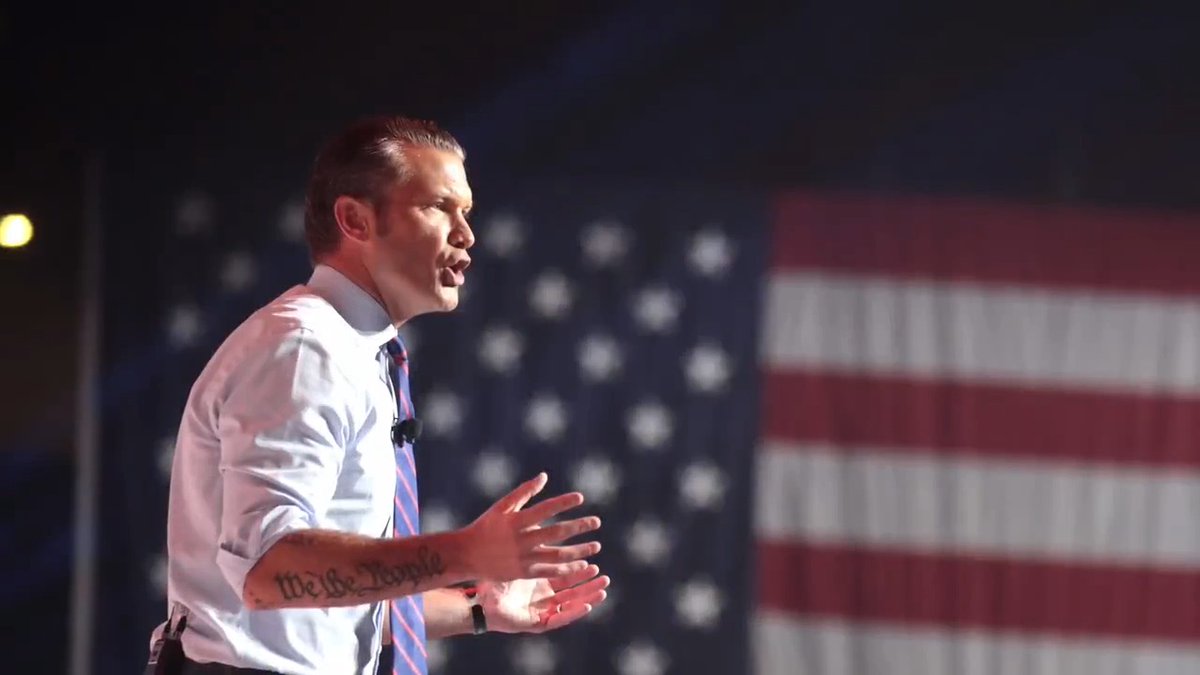
Loading video...

Video Failed to Load

Go Home

نعلن بوضوح أن المليونية الجماهيرية الكبرى للاحتفال بالذكرى الـ55 لتأسيس الجيش الجنوبي، والمقرر إقامتها يوم الثلاثاء الموافق 1 سبتمبر 2026م، في شارع قصر المحافظ بمنطقة 40 شقة، أمام قاعة الأندلس بمدينة المكلا، ستكون سلمية بالكامل. ونؤكد أن أي قمع أو اعتداء أو محاولة لمنع الجماهير من ممارسة حقها في...

14,880 views • 2 days ago •via X (Twitter)

0 Comments

No comments available

Comments from the original post will appear here

Related Videos

50 years ago yesterday: U.N. General Assembly adopts initial draft resolution declaring Zionism to be “a form of racism.” U.S. Ambassador Daniel Patrick Moynihan delivered this historic speech when the infamous act was ratified on Nov. 10, 1975: 🇺🇸 “There appears to have developed in the United Nations the practice for a number of countries to combine for the purpose of doing something outrageous, and thereafter, the outrageous thing having been done, to profess themselves outraged by those who have the temerity to point it out, and subsequently to declare themselves innocent of any wrong-doing in consequence of its having been brought about wholly in reaction to the “insufferable” acts of those who pointed the wrong-doing out in the first place. Out of deference to these curious sensibilities, the United States chose not to speak in advance of this vote: we speak in its aftermath and in tones of the utmost concern. The United States rises to declare before the General Assembly of the United Nations, and before the world, that it does not acknowledge, it will not abide by, it will never acquiesce in this infamous act. Not three weeks ago, the United States Representative in the Social, Humanitarian, and Cultural Committee pleaded in measured and fully considered terms for the United Nations not to do this thing. It was, he said, “obscene.” It is something more today, for the furtiveness with which this obscenity first appeared among us has been replaced by a shameless openness. There will be time enough to contemplate the harm this act will have done the United Nations. Historians will do that for us, and it is sufficient for the moment only to note the foreboding fact. A great evil has been loosed upon the world. The abomination of anti-semitism — as this year’s Nobel Peace Laureate Andrei Sakharov observed in Moscow just a few days ago — the Abomination of anti-semitism has been given the appearance of international sanction. The General Assembly today grants symbolic amnesty — and more — to the murderers of the six million European Jews. Evil enough in itself, but more ominous by far is the realization that now presses upon us — the realization that if there were no General Assembly, this could never have happened. As this day will live in infamy, it behooves those who sought to avert it to declare their thoughts so that historians will know that we fought here, that we were not small in number — not this time — and that while we lost, we fought with full knowledge of what indeed would be lost. Nor should any historian of the event, nor yet any who have participated in it, suppose, that we have fought only as governments, as chancelleries, and on an issue well removed from the concerns of our respective peoples. Others will speak for their nations: I will speak for mine. In all our postwar history there had not been another issue which has brought forth such unanimity of American opinion. The President of the United States has from the first been explicit: This must not happen. The Congress of the United States in a measure unanimously adopted in the Senate and sponsored by 436 of 437 Representatives in the House, declared its utter opposition. Following only American Jews themselves, the American trade union movements was first to the fore in denouncing this infamous undertaking. Next, one after another, the great private institutions of American life pronounced anathema in this evil thing — and most particularly, the Christian churches have done so. Reminded that the United Nations was born in struggle against just such abominations as we are committing today — the wartime alliance of the United Nations dates from 1942 — the United Nations Association of the United States has for the first time in its history appealed directly to each of the 141 other delegations in New York not to do this unspeakable thing. The proposition to be sanctioned by a resolution of the General Assembly of the United Nations is that “Zionism is a form of racism and racial discrimination.” Now this is a lie. But as it is a lie which the United Nations has now declared to be a truth, the actual truth must be restated. The very first point to be made is that the United Nations has declared Zionism to be racism — without ever having defined racism. “Sentence first — verdict afterwards,” as the Queen of Hearts said. But this is not wonderland, but a real world, where there are real consequences to folly and to venality. Just on Friday, the President of the General Assembly, speaking on behalf of Luxembourg, warned not only of the trouble which would follow from the adoption of this resolution but of its essential irresponsibility — for, he noted, members have wholly different ideas as to what they are condemning. “It seems to me that before a body like this takes a decision they should agree very clearly on what they are approving or condemning, and it takes more time.” Lest I be unclear, the United Nations has in fact on several occasions defined “racial discrimination.” The definitions have been loose, but recognizable. It is “racism,” incomparably the more serious charge — racial discrimination is a practice; racism is a doctrine — which has never been defined. Indeed, the term has only recently appeared in the United Nations General Assembly documents. The one occasion on which we know the meaning to have been discussed was the 1644th meeting of the Third Committee on December 16, 1968, in connection with the report of the Secretary-General on the status of the international convention on the elimination of all racial discrimination. On that occasion — to give some feeling for the intellectual precision with which the matter was being treated — the question arose, as to what should be the relative positioning of the terms “racism” and “Nazism” in a number of the “preambular paragraphs.” The distinguished delegate from Tunisia argued that “racism” should go first because “Nazism was merely a form of racism.” Not so, said the no less distinguished delegate from the Union Soviet Socialist Republics. For, he explained, “Nazism contained the main elements of racism within its ambit and should be mentioned first.” This is to say that racism was merely a form of Nazism. The discussion wound to its weary and inconclusive end, and we are left with nothing to guide us for even this one discussion of “racism” confined itself to world orders in preambular paragraphs, and did not at all touch on the meaning of the words as such. Still, one cannot but ponder the situation we have made for ourselves in the context of the Soviet statement on that not so distant occasion. If, as the distinguished delegate declared, racism is a form of Nazism — and if, as this resolution declares, Zionism is a form of racism — then we have step to step taken ourselves to the point of proclaiming — the United Nations is solemnly proclaiming — that Zionism is a form of Nazism. What we have here is a lie — a political lie of a variety well known to the twentieth century, and scarcely exceeded in all that annal of untruth and outrage. The lie is that Zionism is a form of racism. The overwhelmingly clear truth is that is it not. The word “racism” is a creation of the English language, and relatively new to it. It is not, for instance, to be found in the Oxford English Dictionary (appears in 1982 supplement to Oxford Dictionary). The term derives from relatively new doctrines — all of them discredited — concerning the human population of the world, to the effect that there are significant biological differences among clearly identifiable groups, and that these differences establish, in effect, different levels of humanity. Racism, as defined in Webster’s Third New International Dictionary, is “The Assumption that . . . traits and capacities are determined by biological race and that races differ decisively from one another.” It further involves “a belief in the inherent superiority of a particular race and its right to dominate over others.” This meaning is clear. It is equally clear that this assumption, this belief, has always been altogether alien to the political and religious movement known as Zionism. As a strictly political movement, Zionism was established only in 1897, although there is a clearly legitimate sense in which its origins are indeed ancient. For example, many branches of Christianity have always held that from the standpoint of biblical prophets, Israel would be reborn one day. But the modern Zionism movement arose in Europe in the context of a general upsurge of national consciousness and aspiration that overtook most other people of Central and Eastern Europe after 1848, and that in time spread to all of Africa and Asia. It was, to those persons of the Jewish religion, a Jewish form of what today is called a national liberation movement. Probably a majority of those persons who became active Zionists and sought to emigrate to Palestine were born within the confines of Czarist Russia, and it was only natural for Soviet Prime Minister Andrei Gromyko to deplore, as he did in 1948, in the 299th meeting of the Security Council, the act by Israel’s neighbors of “sending troops into Palestine and carrying out military operations aimed” — in Mr. Gromyko’s words — at the suppression of the national liberation movement in Palestine.” Now it was the singular nature — if, I am not mistaken, it was the unique nature — of this national liberation movement that in contrast with the movements that preceded it, those of that time, and those that have come since, it defined its members in terms not of birth, but of belief. That is to say, it was not a movement of the Irish to free Ireland, or of the Polish to free Poland, not a movement of the Algerians to free Algeria, nor of Indians to free India. It was not a movement of persons connected by historic membership to a genetic pool of the kind that enables us to speak loosely but not meaninglessly, say, of the Chinese people, nor yet of diverse groups occupying the same territory which enables us to speak if the American people with no greater indignity to truth. To the contrary, Zionists defined themselves merely as Jews, and declared to be Jewish anyone born of a Jewish mother or — and this is the absolutely crucial fact — anyone who converted to Judaism. Which is to say, in terms of International Convention on the Elimination of All Forms of Racial Discrimination, adopted by the 20th General Assembly, anyone — regardless of “race, colour, descent, or nationally or ethnic origin …..” The state of Israel, which in time was the creation of the Zionist Movement, has been extraordinary in nothing so much as the range of “racial stocks” from which it Orient and Jew from the West. Most such persons could be said to have been “born” Jewish, just as most Presbyterians and most Hindus are “born” to their faith, but there are many Jews who are just converts. With a consistency in the matter which surely attests to the importance of this issue to that religions and political culture, Israeli courts have held that a Jew who converts to another religion is no longer a Jew. In the meantime the population of Israel also includes large numbers of non-Jews, among them Arabs of both the Muslim and Christian religions and Christians of other national origins. Many of these persons are citizens of Israel, and those who are not can become citizens by legal procedures very much like those which obtain in a typical nation of Western Europe. Now I should wish to be understood that I am here making one point, and one point only, which is that whatever else Zionism may be, it is not and cannot be “a form of racism.” In logic, the State of Israel could be, or could become, many things, theoretically, including many things undesirable, but it could not be and could not become racism unless it ceased to be Zionist. Indeed, the idea that Jews are a “race” was invented not by Jews but by those who hated Jews. The idea of Jews as a race was invented by nineteenth century anti-semites such as Houston Steward Chamberlain and Edouard Drumont, who saw that in an increasingly secular age, which is to say an age made for fewer distinctions between people, the old religions grounds for anti-semitism were losing force. New justifications were needed for excluding and persecuting Jews, and so the new idea of Jews as a race — rather than as a religion — was born. It was a contemptible idea at the beginning, and no civilized person would be associated with it. To think that it is an idea now endorsed by the United Nations is to reflect on what civilization has come to. It is precisely a concern for civilization, for civilized values that are or should be precious to all mankind, that arouses us at this moment to such special passion. What we have at stake here is not merely the honor and the legitimacy of the State of Israel — although a challenge to the legitimacy of any member nation ought always to arouse the vigilance of all members of the United Nations. For a yet more important matter is at issue, which is the integrity of the whole body of moral and legal precepts which we know as human rights. The terrible lie that has been told here today will have terrible consequences. Not only will people begin to say, indeed they have already begun to say that the United Nations is a place where lies are told, but far more serious, grave and perhaps irreparable harm will be done to the cause of human rights itself. The harm will arise first because it will strip from racism the precise and abhorrent meaning that it still precariously holds today. How will the people of the world feel about racism and the need to struggle against it, when they are told that it is an idea as broad as to include the Jewish national liberation movement? As the lie spreads, it will do harm in a second way. Many of the members of the United Nations owe their independence in no small part to the notion of human rights, as it has spread from the domestic sphere to the international sphere exercised its influence over the old colonial powers. We are now coming into a time when that independence is likely to be threatened again. There will be new forces, some of them arising now, new prophets and new despots, who will justify their actions with the help of just such distortions of words as we have sanctioned here today. Today we have drained the word “racism” of its meaning. Tomorrow, terms like “national self-determination” and “national honor” will be perverted in the same way to serve the purposes of conquest and exploitation. And when these claims begin to be made — as they already have begun to be made — it is the small nations of the world whose integrity will suffer. And how will the small nations of the world defend themselves, on what grounds will others be moved to defend and protect them, when the language of human rights, the only language by which the small can be defended, is no longer believed and no longer has a power of its own? There is this danger, and then a final danger that is the most serious of all. Which is that the damage we now do to the idea of human rights and the language of human rights could well be irreversible. The idea of human rights as we know it today is not an idea which has always existed in human affairs, it is an idea which appeared at a specific time in the world, and under very special circumstances. It appeared when European philosophers of the seventeenth century began to argue that man was a being whose existence was independent from that of the State, that he need join a political community only if he did not lose by that association more than he gained. From this very specific political philosophy stemmed the idea of political rights, of claims that the individual could justly make against the state; it was because the individual was seen as so separate from the State that he could make legitimate demands upon it. That was the philosophy from which the idea of domestic and international rights sprang. But most of the world does not hold with that philosophy now. Most of the world believes in newer modes of political thought, in philosophies that do not accept the individual as distinct from and prior to the State, in philosophies that therefore do not provide any justification for the idea of human rights and philosophies that have no words by which to explain their value. If we destroy the words that were given to us by past centuries, we will not have words to replace them, for philosophy today has no such words. But there are those of us who have not forsaken these older words, still so new to much of the world. Not forsaken them now, not here, not anywhere, not ever. The United States of America declares that it does not acknowledge, it will not abide by, it will never acquiesce in this infamous act.”

Hillel Neuer

68,720 views • 10 months ago

EU gave €225 million to projects in #Gaza between 2021-2023, a place that was under the full control of #Hamas since 2006. How much of the EU money given to projects in Gaza ended up in the hands and pockets of this terrorist organisation? I asked Commissioner Olivér Várhelyi this and other questions in the Budgetary Control committee on October 26, 2023. Watch and share this video along with the transcript. MEP Cristian Terheș: "Thank you so much. Before I go into my questions I just want to make a note that this committee has on paper 55, 54 MEPs, and we are in this room, right now, only five [MEPs] and two over there. I think it is outrageous that, for an important topic like this, that is discussing about how the Commission is spending or wasting people's money, apparently the Left is not interested in see[ing] what exactly and how exactly people's money was spent. Going back to the questions, I have six specific questions. The first one is related to the books printed under the supervision or under the authority of the Palestinian Authority. And I saw, I carefully read the answer from the European Commission, which pretty much acknowledged that there was a problem, and I restate that, that there was, in the past, a problem with these books. And the answer says that "EU has stepped up its engagement with the Palestinian Authority to ensure that further curriculum reform addresses problematic issues identified in the shortest possible timeframe". So the "further curriculum" will address this issue. Well, here's an example of a book. This is a literature book for the fifth grade that is used in the UNRWA schools. In this book, this is what the Arab kids are learning. If you're not aware of who this person is, her name is Dalal Mughrabi. On March the 11th, 1978, along with other terrorists, [she] hijacked two busses. And when the Israeli authorities tried to free those people, they blew themselves up and killed 38 Israelis, including 13 children, and over 70 people were wounded. So how is it possible that now, in 2023, and I'm not talking about past books… This is 2023. These kids are still learning that this is a role model for them. And now, out of the blue, we are surprised that people are blowing themselves up and killing innocent people. I'm not interested what are you going to do in the future. I hope that you will do something and we will make sure that you will do something. But what have you done so far to make sure that these Arab kids, these Palestinian kids are not indoctrinated with this kind of evil figures? The second question is about the "Pay for Slay". #PayForSlay According to the Palestinian law if a Palestinian person is killing a Jew, his or her family is getting a pension. So we are rewarding terrorist activities. And this was done for years. A few years ago, when Trump was president, a U.S. military guy was killed in one of these terror attacks. And U.S. Congress passed a law called "Taylor Force Act", which is conditioning any U.S. money for the Palestinian Authority to make sure that these families of the terrorists are not getting reimbursed for life after these terror activities. Why aren’t we imposing exactly the same rules? Because, according to the answer from the Commission, we are paying pension and pensions to these people. Third question, the issue of Gaza. According to your official answer, you're stating, and I quote: "Between 2021 and [20]23, EU funded €681 million for the Palestinian Authority and UNRWA. A third of this money went to Gaza." A third means €225 million from 2021 to 2023. But we know for a fact that in 2005, when Israel withdrew from Gaza, after 2006 or [200]7, Gaza is under the control of Hamas. You said here that you will run a survey or whatever, an analysis to see how the money was spent. What have you done already? Hamas was called, and recognized and acknowledged as a terrorist organisation. How was it possible to pour €225 million in a place that is fully controlled by a terrorist organisation and nobody did anything or said anything? It is absolutely absurd! Forth question. Following reports about stealing of pipelines for rocket production and fuel for hospitals, to what extent can the European Commission or the Court of Auditors verify or assess the damage caused to EU and European funded projects in Gaza? Fifth question. Following news that Hamas is directing money for social allowances to members of this terrorist organisation, how do you verify that such money gets to those really in need? Nevertheless, following reports about control of Hamas of the teacher unions and UNRWA workers union, what are the steps you are taking to verify that EU money for UNRWA is not used to serve Hamas agenda? Thank you." Commissioner Olivér Várhelyi: "Madam Chair. I want to assure all the participating members of this committee that I very much appreciate their presence and their engagement with us. And I think that this is very important that we have this discussion, no matter how many members of the committee are here. Now, first of all, on the Gaza project. Let me make it very clear what has been done in Gaza since 2006 when the IDF and Israel has left the Gaza Strip. I fully agree with you. The control and the governance of that strip has been de facto exercised by the Hamas. Unfortunately! And it was for that reason that all institution financing activity has been stopped and it is for that reason that only projects of public interest have been continued in the Gaza Strip. Now, with the emergence of the horror that we have seen instigated by Hamas, the review also has a very clear message to those projects that we have tried for many, many years to create for the benefit of the people in Gaza, like the Gas for Gaza project or the desalination plant creating fresh water for the people in the Gaza Strip or building a new hospital in the Gaza Strip, that are on hold. And it is not possible even physically to continue on those projects. And we will have to wait until the end of this war to see what engagement would still be considered in the in the Gaza area, if feasible. Now, in relation to the broader question of the review, what is the timeline? The timeline is that we are already doing it. We have a methodology established and our review is carried out by the whole House, mainly the DG Near, but also other parts of the Commission, DG Budget and also the other external family members of the Commission. The result of the review is going to be presented to the College [of Commissioners]. So the College is going to take the conclusions of these findings and they will be, I very much hope, endorsed by the College. In terms of its cost, we do not foresee any additional cost for this, and we want to act rapidly because, as I said, given the very fragile security situation, we have to act immediately to filter out all those who have, even indirectly, participated or contributed to the violence that we have seen emerge. Now, when it comes to the textbooks, to be honest with you, it's very difficult to answer your question because this is the question I have been putting since the very beginning of my mandate. How is it possible to embed hatred and nurture hatred in textbooks? How is it possible to teach kids to hate? How is it possible? And we have been sitting down several times with the Palestinian Authority. We have run a study that came to the same conclusion as you have. And we have had difficult discussions also in this House. But now I see that there is a change in the position of this House, which is, I think, very important. And it is not only very important, but we took very, very careful note of a request from the Parliament, because there is also a request adopted by the plenary, to look into this issue. And this is what we are going to do and this issue will have to be addressed. The result that we have achieved was that we have raised the issue with the Palestinian Authority, and I don't think there's disagreement between us and them that this is an issue. Second, we are working very closely with our partners in UNRWA. I'm very sad to see that this is a training material or education material that you have shown today, which is used by UNRWA, because UNRWA was the one who not only was able to talk about this problem, but undertook commitments with us to eradicate any material, any views expressed, including on social media or in the territories of the schools of this kind, glorification of terrorists, glorification of hatred, anti-Semitism. And this is why we have concluded a three year financing contract with UNRWA. This was a very important element for us that UNRWA started to cooperate and we have seen results coming in. But, of course, I agree with you. We cannot rest until the very last of these materials disappear. And I'm fully committed to deliver on that, including in the discussions for next year. On the "Pay for Slay". We have a list to check that direct beneficiaries do not appear on any of the terrorist list. But, if there is one, I wouldn't like to draw any conclusions of the review, but, if there is one issue to look at is, of course, that we do not create the possibility of indirect benefit for those who are involved in terrorist activities or for those who have been even convicted for such acts. And this is what we are addressing also in our review. Now, on the on the damage to our projects in Gaza, I cannot tell you now. What we see is that there is clearly devastation in the northern part, serious level of damage in the south, but it will be only after that the war will stop that we can go back and take a look at that. Now, on the humanitarian aspect and how to guarantee that our humanitarian aid is not going to be misused. If you look back at the statement the European Council has adopted just last weekend, you see also a very clear call for them to make sure. And this is why our decision has been to channel our humanitarian aid through our own institutions; DG Echo is delivering on the ground and in-kind. So we are providing help, in-kind, not providing financing. We're not providing other items that could be used for other purposes. And we are coordinating our work with international organisations only, so to ensure that it doesn't get to the wrong hands. So there was one more question about the breakdown of the €103 million, and I think I can confirm what you said that we have composed the €103 million by €50 million that were allocated in support of payments of salaries and pensions. These are going directly as direct budget support into the budget of the Palestinian Authority. However, we want to check the final beneficiaries and we have a list. And now we're looking at indirect beneficiaries as well as part of the review. The 40 million… The other element is the €40 million support for the most vulnerable families. Again, this is this is paid in the form of direct budgetary contribution. And the third and lastly, the €13 million, this is the remaining part of 103 [million], is financing the East Jerusalem hospitals that we have paid already in April 2023 to keep the health care system running in East Jerusalem. I hope with this I have answered all the questions that have been raised. Thank you."

Cristian Terhes MEP

33,649 views • 2 years ago

ثمانية أطفال … وقصة شعب لا يُهزم حين تنتصر الحياة على الحصار مشاهد توثّق عودة الأطفال الخُدّج إلى أحضان أمهاتهم… تلك اللحظات التي لا تُقدّر بثمن، والتي جاءت جبرًا لخواطرنا بعد وجعٍ لا يوصف. لم تكن هذه العودة مجرد حدث… بل كانت ثمرة تضحيات عظيمة، قدّمها الكادر الصحي وأبناء شعبنا، من دمائهم، وأجسادهم، وجوعهم، ونزوحهم… تضحيات لا يستطيع أحد أن يتخيّل حجمها. هذه اللحظات كُتبت بدماء من استُشهدوا، وبآلام من اعتُقلوا وعُذّبوا، وبصبر من لا يزالون خلف القضبان، ينتظرون لحظة كهذه… لحظة الحياة. نحن لا نتحدث عن أطفال فقط، بل عن مستقبل شعب، وعن غدٍ يُكتب من جديد، عن طفل فلسطيني حاول الاحتلال أن يمحوه، فإذا به يعود شاهدًا على فشل الإبادة، وصمود الحياة في وجه الموت. اليوم عادوا… ثمانية أطفال خدّج، كانوا بين الحياة والموت، فعادوا ليحكوا قصة انتصار الإرادة والإيمان. في نوفمبر 2023، وتحت حصار مجمع الشفاء الطبي، حيث قُطع الماء والكهرباء والأكسجين، وكان هناك 33 طفلًا خدّجًا في الحضّانات… نُقلوا تحت القصف، في ظروف بالغة القسوة، بحثًا عن لحظة أمان. غطّينا أجسادهم بالقصدير لنحميهم من البرد، وحرمنا أنفسنا من الماء لنوفّر لهم قطرة حياة، ففقدنا بعضهم… وبقي بعضهم يقاوم. وثّقنا صورهم، فاهتزّ لها ضمير العالم، حتى جاء يوم إجلائهم إلى جمهورية مصر العربية، في رحلة محفوفة بالخطر، بين الدبابات والجنود. دفعنا ثمنًا باهظًا كي لا نتركهم… وبقينا معهم حتى آخر لحظة. واليوم… عادوا. عادوا أحياء، إلى أحضان أمهاتهم، ليقولوا للعالم: إن إرادة الحياة أقوى من إرادة القتل، وأن غزة… رغم الألم، تصنع المجد، وتكتب النصر بإذن الله. Eight Children… and the Story of an Unbreakable People | When Life Triumphs Over Siege Scenes documenting the return of premature babies to their mothers’ arms… Moments beyond value—moments that healed broken hearts after unimaginable pain. This was not just an event. It was the result of immense sacrifices made by healthcare workers and our people— through their blood, bodies, hunger, and displacement. Sacrifices beyond comprehension. These moments were written with the blood of martyrs, the suffering of the detained and tortured, and the patience of those still imprisoned— waiting for a moment like this… a moment of life. We are not speaking only of children, but of a nation’s future being reborn. Of a Palestinian child whom the occupation tried to erase, yet returned as living proof that life defeats extermination. Today, they have returned… Eight premature babies who once hovered between life and death, now telling a story of faith and resilience. In November 2023, under the siege of Al-Shifa Medical Complex, water, electricity, and oxygen were cut off. There were 33 premature babies in incubators. Under bombardment, they were moved in extremely dangerous and harsh conditions in search of safety. We wrapped their fragile bodies in foil to protect them from the cold. We deprived ourselves of clean water to give them a chance to live. Some were lost… others survived. Their images were captured and shared, shaking the conscience of the world. After ten days, they were evacuated to Egypt in a perilous journey amid tanks and soldiers. We paid a heavy price to stay by their side… and never abandoned them. Today, they return—alive— to their mothers’ embrace, declaring to the world: That the will to live is stronger than the will to kill. And that Gaza—despite all pain— continues to create dignity, and write victory, by the will of God.

Dr.Muneer Alboursh د.منيرالبرش

12,068 views • 5 months ago

🚨NEW - House Speaker Mike Johnson delivers first floor speech on border catastrophe, accusing President Biden of intentionally creating a "clear and present danger to our national security." "Since I was elected Speaker less than 100 days ago, more than 700,000 illegals have been welcomed into our country illegally by the Biden administration. American schoolchildren have been forced into virtual schools so migrants can sleep in their school buildings. Korean War veterans have been booted from nursing homes that were sold to house migrants. Our streets are being flooded with fentanyl. Hundreds of thousands of children and adults are being poisoned and losing their lives. Vulnerable children and women are being exploited and trafficked by cartels. Since President Biden and Alejandro Mayorkas assumed office, there have been more than 7 million encounters with illegal aliens just at our southern border alone. 35 of our 50 states, including my home state of Louisiana, don't have a population that large. More than 300 individuals who are on our terror watchlist have been apprehended on the southern border. The frightening question is, how many have entered undetected? We know there are at least 1.8 million gotaways that have escaped. Understand that the situation at our border presents a clear and present danger to our national security, and it demands that it be addressed. FBI Director Christopher Wray told the Homeland Security Committee in November that these gotaways are a great concern for the agency, and all 56 of our Joint Terrorism Task Forces are trying to identify who these people are. We don't know how many terrorists are inside our borders. We do know that fentanyl is pouring into our communities like an open sewer. Right now, the leading cause of death of death in America for Americans aged 18 to 46 is fentanyl poisoning. To make matters worse, we've learned that the Biden administration is now simply just releasing 85% of the illegals who come across that border right into the country. For reference, by the way, in 2013, the Obama administration detained 82% of illegal aliens. How do we go from detaining 82% to releasing 85%? It only happens if this is by design. It only happens if it's an orchestrated intentional effort by the administration to do exactly that, and that is what the evidence shows. Earlier this month, I released a memo documenting 64 specific actions that the Biden administration has taken to undermine our border security and to promote the mass release of illegals and dangerous persons into our country. The very first day President Biden walked into the Oval Office, he revoked Executive Order 9844. Do you know what that did? It ended the construction of the border wall that Congress had already paid for. Everybody has seen the images of the materials out there rotting in the sun. Why? Because Joe Biden decided unilaterally that he didn't want a wall. In February 2021, the administration stopped applying Title 42 expulsions to children and incentivize by doing that incentivize families to send unaccompanied children through Mexico under the watch of cartels and traffickers. Since then, the administration admits to losing track of more than 80,000 unaccompanied children somewhere in the US. We don't know where they are. Have they been put into trafficking rings? We know that some of these kids are being trafficked for free labor and being forced to do things that are too appalling for us to articulate on this floor. Everybody here knows that's happening, and we're not demanding the President stop it? He can. He has the power to do it. In October 2021, the Biden administration revoked the migrant protection protocols that had been instituted under President Trump. That's the policy that we all know colloquially as Remain in Mexico. The Remain in Mexico policy kept asylum seekers in a safe haven third country while they were seeking asylum in the United States. Do you know why that works magically so well? Because it sent a message around the world that you shouldn't pay your life savings to a cartel to traffic you through Mexico and drop you over the US border because you're not going to be dropped over the US border. The word goes out on social media to countries all around the world. They are not going to let you in. Man, is that the most common sense rule you've ever thought of? President Biden doesn't agree because he stopped it. He issued an executive order to stop that common sense rule. A senior border patrol officer told us on that trip to Eagle Pass that if President Biden, by the stroke of a pen, would issue an executive order today to just simply reinstate Remain in Mexico, they think that would stop the flow by 70%. One stroke of the pen by the President. He does not seem to care. I told President Biden this myself on multiple occasions, most recently, a couple of weeks ago on the phone, I read him the law that says that he has all this authority, but he refuses to act. And even that's even despite court orders, by the way that instructed the administration to reinstate the institute remain in Mexico while the litigation was going on. You know what they did? They ignored it. The Biden administration is actively incentivizing illegals to come to the United States. We have laid out the welcome mat. We told everybody around the world, come on, you know what? The US taxpayer will take care of you. It's costing the American people billions and billions and billions of dollars to provide for people who are intentionally breaking our laws, billions and billions of dollars to house them and educate them and clothe them and take care of them. Why should we bear the burden when they break our laws? In January 2023, the Biden administration expanded the use of the Customs and Border Patrol One App so illegal aliens could just make appointments and then be released immediately right into America's interior. Guess what? 95% of all illegals who simply scheduled appointments through the app were released right into the United States. That's right. All you have to do is just download the app because they all have smartphones, make an appointment, and the President of the United States will release you into a network of NGOs who will put you on a plane to the destination of your choice. Without identification, by the way, while Americans are waiting in line to get through TSA. All on the dime of the American taxpayer. In December 2023, CBP recorded more than 302,000 encounters, almost double the population of my hometown of Shreveport, Louisiana. In just one month 302,000 people just walked right into the country. I could go on and on about the 64 actions we've documented that President Biden has specifically taken to open our border wide up, but it's crystal clear his policy choices and Secretary Mayorkas refusal to comply with the law are driving this border catastrophe. They have chosen disorder and chaos for us rather than securing the homeland. They've ceded the homeland to cartels and traffickers. In the Del Rio sector alone in Eagle Pass, Texas, the cartels are making an estimated $3.5 million dollars a day trafficking human beings into our country. Do the math. They are making billions of dollars a year trafficking undocumented children and victims into this country. The Department of Homeland Security has effectively become a taxi driver to just help traffickers complete the last few miles of their human smuggling operation, and they're making billions of dollars in the process. It's absolute madness, and it is dismantling the safety of our communities. More than half a million known criminals and illegal aliens are in the US in our communities, free to re-offend and victimize American people. When we were at Eagle Pass in the Del Rio sector earlier in January, they told us that 60 to 70% of the people coming across the border right there at that epicenter are single adult males. They're military-aged. These are not huddled masses of families seeking refuge and asylum. These are people coming into our country to do only God knows what. The Biden administration is allowing it, and we've noted that they are coming from adversarial nations and from terrorist regions. We have no idea what they're planning. But in fiscal year 2023, border patrol encountered illegals from 170 different countries, including hundreds from Iran and Syria, thousands from Russia, and tens of thousands have come in from China. Tell me that's not dangerous? Law enforcement and intelligence leaders are warning us that we may very well suffer a preventable terrorist attack here in the homeland if we don't immediately secure that border and remove these dangerous terrorists from inside our borders. I read the black letter law to the President of the United States on the phone about two and a half weeks ago. I said, Mr. President, it says very clearly that you have all the tools and the executive authority necessary to reverse the catastrophe that you have created. He has those tools right now, and he has since day one. We have to decide if we believe in the rule of law or not. We have to decide if we're a sovereign nation or we're not. I believe that border security is part of our solemn obligation to safeguard the well-being of our citizens and uphold the principles that define who we are as a nation. A weak border weakens America, and a strong border is good for America, and a stronger America is good for everybody around the world. And everybody in this chamber should acknowledge that. Just as we lock our doors at night to protect our homes, we secure our borders to protect our homeland. And my friends, that is our sacred obligation." Speaker Mike Johnson

KanekoaTheGreat

14,479,355 views • 2 years ago

“Totalitarian” Powers, Fear, And Psychopathy Behind CIA’s Secret Rule Over U.S. The agency remains out of control, beyond the law, and a direct threat to democracy and freedom, including in the U.S. by Michael Shellenberger Last week, we published two stories about a senior CIA whistleblower who was one of four CIA analysts who helped write a January 2017 “Intelligence Community Assessment” (ICA) that falsely claimed, with high confidence, that Russian President Vladimir Putin sought to help elect President Donald Trump in 2016. The person said that the CIA Director under Obama, John Brennan, had a “pathological need for control” and put the writers of the ICA “under duress” to include a mention of a fraudulent dossier, commissioned by the Hillary Clinton presidential campaign. The CIA also included in the classified version of the ICA an annex consisting of the dossier written by a former British spy, which went to roughly 200 people in Washington, some of whom leaked related information to journalists. Unfortunately, the CIA employee said, his employer remains corrupted by “systemic rot” and that crucial steps “have not been put in place" to prevent a Russiagate-like abuse of power from happening again, since the arrival of its new director, John Ratcliffe, in January of this year. “Two critical steps that have not been put in place are,” said the senior analyst turned whistleblower, “to first, formalize expectations about the delivery timeline for sensitive intelligence analyses, and second, to remove the CIA Director from the review process of intelligence reporting or finished analysis.” In response to questions from Public, the CIA said it was taking necessary reforms. “Director Ratcliffe has overhauled the Agency senior ranks and revoked clearances from bad actors and even created a mission center to better execute on Presidential priorities like the Southern Border. The notion that he’s not making significant reforms or holding people and the Agency accountable is not just ridiculously false but beyond absurd.” But the CIA’s revoking security clearances and creating a mission center do not address either of the whistleblower’s recommendations, much less the “systemic rot” within the CIA. The whistleblower called for the removal of the Director of the CIA from review and writing of intelligence analysis, and taking a step to avoid rush jobs, like the kind Brennan used to create a deliberately misleading ICA in January 2017. The whistleblower’s credibility is high. They were one of just four CIA analysts chosen to help write a major ICA. That might make them seem biased toward Brennan, but Ratcliffe has retained the person, rather than fired them, which suggests that the Director or the direct reports he trusts view the person as valuable. Our sense was that the person was loyal to the CIA, wants to engage in objective apolitical analyses, and wants to remain at the CIA. Their two modest proposed reforms are consistent with loyalty to the CIA. As such, the person is precisely the kind of professional the CIA, Congress, and the American people should want to have in our institutions. If a legitimate criticism is to be made of the person it would be that they didn’t turn whistleblower earlier, which is the same criticism that could be made against hundreds and perhaps thousands of people involved in the Russiagate hoax. One might hope that it was just a bad day for the PR people at the CIA, and that Ratcliffe will be out with a new statement this week announcing new reforms, but we are not hopeful. The CIA appears to be following its informal motto, “Admit nothing, deny everything, and make counteraccusations.” That was the advice that former CIA Director Porter Goss said he would give to “a graduating class of CIA case officers” in 2006. The Russiagate hoax is hardly an unusual scandal in the history of the CIA. The agency has “long gone beyond the borders of American values,” noted Tim Weiner in his 812-page history, Legacy of Ashes. The CIA has murdered its employees, overthrown democracies, propped up dictatorships, tortured innocent people, trained death squads, induced mental illness in illegal medical experiments, spied illegally on law-abiding Americans, and may have been behind the assassination of an American president. All of these illegal behaviors required cover-ups, many of them elaborate. “Fundamentally, the founding fathers of U.S. intelligence were liars,” said James Angleton, one of the CIA’s founders, and its Director of Counterintelligence for two decades, on his deathbed in 1987. “If you were in a room with them, you were in a room full of people that you had to believe would deservedly end up in hell. I guess I will see them there soon.” The CIA’s record is poor when evaluated on its own terms. “The CIA was established to prevent unanticipated disasters, such as the Japanese attack on Pearl Harbor,” noted John Judis in 2005, “but it has repeatedly failed to warn the White House of looming threats. It missed the North Korean invasion of the South in 1950, and the Chinese entry into the war that fall; Israel, France, and Great Britain's attack on the Suez Canal and Egypt in 1956; the Soviet invasion of Czechoslovakia in 1968; the Shah of Iran's ouster in 1979; the Soviet invasion of Afghanistan that year; the Iraqi invasion of Kuwait in 1990; the Indian nuclear tests in 1998 (‘We didn't have a clue,’ CIA director George Tenet remarked afterwards); the attack on the World Trade Center in 1993; the bombing of American military barracks in Saudi Arabia in 1996 and of U.S. embassies in Africa in 1998; the attack on the USS Cole in 2000; and of course the attack on the World Trade Center and Pentagon in September 2001.” The truth, admitted a CIA station chief, “was that the agency at the height of its powers had a great reputation and a terrible record.” It never had a single Soviet spy “who had deep insight into the workings of the Kremlin,” and thus didn’t know communism was collapsing. “The one crime of lasting consequence has been the CIA’s inability to carry out its central mission: informing the president of what is happening in the world,” writes Weiner. Its record in the real world is one of “fleeting successes and long-lasting failures.” The politicization and weaponization of the CIA for ideological aims has occurred for decades. The CIA’s charter prevents it from spying on Americans and yet it has done so repeatedly, from opening mail to spying on students. Between 1947 and 1963, the CIA was “a dark and invasive force — at home and abroad — violating citizens’ privacy, kidnapping, torturing, and killing at will,” concluded David Talbot in his 686-page history of the CIA, The Devil’s Chessboard. There were many reforms proposed in the 1970s. In 1975, Congress held hearings, revealing CIA misdeeds around the world, including assassinations using a heart attack gun, and efforts at mind control. Congress then took steps to provide greater oversight of the CIA and more protections for whistleblowers. Calls for reforms began again in the 1990s after a decade of CIA scandals in the 1980s, which included selling weapons to the Iranian government and illegally diverting the money to an equally illegal war in Central America. In 1991 and 1996, the US Senator from New York, Patrick Moynihan, who had been one of America’s most influential public intellectuals for thirty years, proposed abolishing the CIA entirely and reassigning its various functions to the State Department. The proposal never came up for a vote. In 1998, America’s intelligence leaders warned the White House that America would suffer “a catastrophic, systemic failure,” unless the U.S. dramatically changed how it gathered and analyzed intelligence. That didn’t happen. Then, in 2001, the CIA failed to communicate with the FBI and thus played a central role in allowing the 9/11 attacks to happen. In 2002, the CIA manipulated intelligence that led to the catastrophic invasion of Iraq. In response to these failures, Congress in 2004 sought to reform the agency and the broader Intelligence Community. The intent of Congress in passing new legislation was to reduce the power of the CIA, and its Director, and increase the power of a new intelligence coordinator role, which it called the Director of National Intelligence. That didn’t happen. The “CIA is broken,” wrote John Judis one year later. The 2004 reform act didn’t address the “historical problems with the CIA.” “To repair it,” he concluded, “we may need to start from scratch.” That didn’t happen either. In 2016 and 2017, the CIA manipulated intelligence to falsely frame the democratically elected U.S. president as a puppet for a foreign power, and from 2016 to 2020, individuals who worked at the CIA oversaw various efforts to control what people are allowed to say on social media. Neither the Russiagate hoax scandal nor the CIA’s role in creating a Censorship Industrial Complex resulted in reform or even serious calls for it by Congress. Multiple sources tell Public that the CIA remains both the dominant agency of the 18 total in the IC, and the one most resistant to reforms. The Washington Post reported last week that the CIA resisted efforts for greater transparency led by Director of National Intelligence Tulsi Gabbard. And now the CIA has said we should ignore the whistleblowing by one of its most trusted senior analysts, and their demands for reform. None of this is new. In 1947, the year Congress created the CIA, the Secretary of State at the time, Dean Acheson, said he “had the gravest forebodings” about it and “warned the President that neither he” nor anyone else would be able “to control it.” Between 1947 and 2005 there were 14 major studies by various bodies into how to reform the IC. The CIA “has had an almost perfect record of resisting fundamental changes,” noted Weiner in his 2006 book. Meanwhile, Congress has failed its Constitutional duty to provide oversight. “The CIA has tried to assassinate foreign leaders, mined harbors, and most recently, tortured prisoners,” wrote Judis in 2005. “If Congress had openly debated these actions, they would not have been approved.” They didn’t and have never much demanded to be able to. Members of Congress “have been derelict in this work for much of the past three decades,” noted Weiner two years later, “but their conduct since 9/11 has bordered on criminal negligence.” Looking at the full historical record, it is hard not to conclude that the American people only partially govern themselves, that we are burdened with a rogue and violent intelligence agency that continuously interferes not only in foreign elections and governments but also our own, and that many on the Right and the Left who appear to be in a position to change that refuse to do so. Why is that? Why have Congress and the American people failed for 80 years to reform a rogue intelligence agency that is not only ineffective but also destructive to the point of undermining national security? And what, if anything, can be done about it? If you're not already a subscriber, please subscribe now to support Public's defense of free speech and democracy, watch the rest of the video, and read the rest of the article!

Michael Shellenberger

48,655 views • 1 year ago

‼️‼️ Many Germans still ignore President Putin's 2001 speech in front of the German Bundestag. They listen to the USA, which has always lied to them and even blew up their pipelines! The sanctions are NOT against Russia! They are against Germans! Wake up! In one of the most important and greatest speeches that the German Bundestag has ever experienced, President Vladimir Putin honestly and generously extended his hand to Germany and Europe for a peaceful and promising future in 2001. Unfortunately the West refused! President Putin speaks fluent German, by the way. In einer der bedeutendsten und großartigsten Reden, die der deutsche Bundestag jemals erleben durfte, reichte Wladimir Putin im Jahr 2001 Deutschland und Europa ehrlich und großzügig die Hand, für eine friedliche und erfolgversprechende Zukunft. Leider lehnte der Westen ab! President Putin: "Distinguished ladies and gentlemen, I have just talked about the unity of European culture. However, in the past that unity did not prevent two horrible wars from being unleashed on the continent, two world wars within one century. Nor did it prevent the building of the Berlin Wall, the formidable symbol of the deep division of Europe. The Berlin Wall is no longer. It was destroyed. And today it would be relevant to recall why that became possible. It is my conviction that the dramatic change in the world, in Europe and on the expanses of the former Soviet Union would have been impossible without the main preconditions, namely, without the events that took place in Russia ten years ago. These events are important to understanding what precisely took place in our country and what could be expected from Russia in the future. The answer is simple, as a matter of fact. Under the impact of the laws governing the development of information society, Stalinist totalitarian ideology could no longer oppose the ideas of freedom and democracy. The spirit of these ideas was taking hold of the overwhelming majority of Russian citizens. It was the political choice of the people of Russia that enabled the then leaders of the USSR to take decisions that eventually led to the razing of the Berlin Wall. It was that choice that infinitely broadened the boundaries of European humanism and that enables us to say that no one will ever be able to return Russia back into the past. As for European integration, we not just support these processes, but we are looking to them with hope. We view them as a people who have learned the lesson of the Cold War and the peril of the ideology of occupation very well. But here, I think, it would be pertinent to add that Europe did not gain from that division either. It is my firm conviction that in today's rapidly changing world, in a world witnessing truly dramatic demographic changes and an exceptionally high economic growth in some regions, Europe also has an immediate interest in promoting relations with Russia. No one calls in question the great value of Europe's relations with the United States. I am just of the opinion that Europe will reinforce its reputation of a strong and truly independent centre of world politics soundly and for a long time if it succeeds in bringing together its own potential and that of Russia, including its human, territorial and natural resources and its economic, cultural and defence potential. Together we have already taken the first steps in that direction. The time has now come to think about what should be done to make sure that a united and secure Europe becomes the harbinger of a united and secure world. Distinguished ladies and gentlemen, We have done a great deal in the security sphere over the past few years. The security system that we have built over the previous decades has been improved. One of the achievements of the past decade is the unprecedentedly low concentration of armed forces and armaments in Central Europe and the Baltic. Russia is a friendly European nation. Stable peace on the continent is a paramount goal for our country, which lived through a century of military catastrophes. As everyone knows, we have ratified the Comprehensive Nuclear Tests Ban Treaty, the Nuclear Non-proliferation Treaty, the Biological Weapons Convention, and also the START-2 Treaty. Regrettably, not all the NATO countries have followed our example. But once we, distinguished ladies and gentlemen, have started to discuss security, we should first and foremost understand from whom we are to defend ourselves, and how. In this context I cannot but mention the catastrophe in the United States on September 11. People the world over keep asking how that could have happened and who is to blame. I will give you answers to these questions. I think we all are to blame for what happened, and first and foremost we, politicians, to whom the ordinary citizens of our nations have entrusted their security. And this happens first and foremost because we have so far failed to recognize the changes that have happened in our world over the past ten years and continue to live in the old system of values: we are talking about partnership, but in reality we have not yet learned to trust each other. In spite of a plethora of sweet words, we are still surreptitiously opposed to each other. Now we demand loyalty to NATO, now argue about the rationale behind its enlargement. And we are still unable to agree on the problems of a missile defence system. Over long decades of the 20th century the world was indeed living under conditions of confrontation between the two systems, confrontation that pushed humanity to the brink of annihilation on more than one occasion. That was so fearsome and we grew so accustomed to live with that anticipation of catastrophe that we are still unable to understand and appreciate the changes taking place in today's world. We seem to be missing the fact that the world is no longer divided into two hostile camps. The world has become far more complex, distinguished ladies and gentlemen. We do not want or are unable to understand that the security structure built over the previous decades that was effective in neutralizing former threats is no longer able to cope with new threats of today. Too often we continue to argue over issues which we think are still important. They probably still are. But at the same time we do not recognize new real threats and turn out to be unable to foresee terrorist attacks – and so ruthless terrorist attacks at that! Hundreds of innocent civilians died in the bombing of residential houses in Moscow and other large Russian cities. Religious fanatics, having captured power in Chechnya and having turned ordinary citizens into their hostages, mounted a brazen large-scale armed attack against the neighboring Republic of Daghestan. International terrorists have openly – quite openly – declared their intention to establish a fundamentalist state on the territory between the Black and the Caspian Sea – the so-called khalifate, or the United States of Islam. I would like to stress right away that talking about any ”war between civilizations“ is inadmissible. It would be a mistake to put the equation mark between Moslems in general and religious fanatics. In our country, for example, the defeat of the aggressors in 1999 was predetermined by the courageous and tough rebuff of the residents of Daghestan, a Russian republic the population of which is virtually 100 percent Moslem. Shortly before my departure for Berlin I met with the religious leaders of Russia's Moslems. They came up with the initiative of convening an international conference on ”Islam Against Terrorism“ in Moscow. I think we should support this initiative. Today we are coming up against not so much the aggravation of the well-known international problems as the rise of new threats. Russia is taking practical steps to put up, together with some CIS nations, a real barrier in the way of the traffic of drugs, organized crime and fundamentalism from Afghanistan via Central Asia and the Caucasus into Europe. Terrorism, national intolerance, separatism and religious extremism everywhere have the same roots and bear the same poisonous fruit. That is why the methods of fighting these problems should be universal as well. But first agreement needs to be reached on the fundamental matter: we should not be afraid of calling a spade a spade. And it is extremely important to understand that evil deeds cannot be used to achieve political objectives, however noble such objectives may seem. Naturally, evil must be punished, and I agree with that. But we should also understand that no retaliatory strikes will replace comprehensive, purposeful and well-coordinated struggle against terrorism. I absolutely agree with the US President on that. I think our partners' readiness to joint efforts in countering real rather than illusory threats will demonstrate how serious and reliable they are as partners. These threats are quite capable of spilling over from the distant frontiers of our continent to the very heart of Europe. I talked about that on more than one occasion, but after what happened in the US there is no need to prove anything. But what are we lacking today for cooperation to be efficient? In spite of all the positive achievements of the past decades, we have not yet developed an efficient mechanism for working together. The coordinating agencies set up so far do not offer Russia real opportunities for taking part in drafting and taking decision. Today decisions are often taken, in principle, without our participation, and we are only urged afterwards to support such decisions. After that they talk again about loyalty to NATO. They even say that such decisions cannot be implemented without Russia. Let us ask ourselves: is this normal? Is this true partnership? Yes, the assertion of democratic principles in international relations, the ability to find a correct decision and readiness for compromise are a difficult thing. But then, it was the Europeans who were the first to understand how important it is to look for consensus over and above national egoism. We agree with that! All these are good ideas. However, the quality of decisions that are taken, their efficiency and, ultimately, European and international security in general depend on the extent to which we succeed today in translating these obvious principles into practical politics. It seemed just recently that a truly common home would shortly rise on the continent, a home in which the Europeans would not be divided into eastern or western, northern or southern. However, these divides will remain, primarily because we have never fully shed many of the Cold War stereotypes and cliches. Today we must say once and for all: the Cold War is done with! We have entered a new stage of development. We understand that without a modern, sound and sustainable security architecture we will never be able to create an atmosphere of trust on the continent, and without that atmosphere of trust there can be no united Greater Europe! Today we must say that we renounce our stereotypes and ambitions and from now on will jointly work for the security of the people of Europe and the world as a whole. Dear friends, Today, thank God, Russia is talked about in Europe not only in the context of oligarchs, corruption and Mafia. However, there still is a substantial lack of objective information about Russia. I can say with absolute confidence that the key goal of Russia's domestic policy is first and foremost to ensure democratic rights and freedoms, decent living standards and safety for the people of the country. However, distinguished colleagues, let us look back at some events of the recent past. Russia took the painful road of reform. The scope of the tasks we had to address is without parallel in history. Naturally, mistakes were made. Not all the problems have been resolved, but today Russia is a quite dynamic part of the European continent. Moreover, it is dynamic not only politically, but also economically, which is especially encouraging. Political stability in Russia is ensured by a number of economic factors, not the least by one of the world's most liberal taxation systems. Our income tax is 13% and profit tax 24%, and this is real. Last year our economic growth was 8%. This year we expected to get just 4%, but most likely we will have about 6% — say, 5.5–5.7%. We will wait and see. At the same time my conviction is that only large-scale and equal pan-European cooperation will make it possible to achieve qualitative progress in resolving such problems as unemployment, environmental pollution and many others. We are set on close trade and economic cooperation. In the nearest future we intend to join the World Trade Organization. We count on international and European organizations' support for our bid. I would like to draw your attention to things which you as members of parliament will undoubtedly be able to appreciate better and which cannot be dismissed as propaganda. As a matter of fact, our nation has gone through a revision of priorities and values. Spending on social needs tops the 2002 consolidated budget. And I would like to stress specifically that for the first time in Russia's history spending on education has exceeded defence expenditures. Distinguished colleagues, Permit me to say a couple words about Russian-German relations. I would like to dwell separately on this matter. Russian-German relations are as old as our nations. The first German tribes appeared on Russian territory in the late first century. In the late 19th century Germans were the ninth most numerous ethnic group in Russia. But what is important is not just the numbers, but the role played by these people in the development of the country and in Russian-German relations. They were peasants and merchants, intellectuals, military men and politicians. The German historian Michael Stuermer observed: ”Russia and America are divided by oceans, while Russia and Germany are divided by a great history.“ I would say that history, just like oceans, not only divides, but also unites. The important thing is to correctly interpret this history. As a good neighbor in the West, Germany often symbolized for the Russians Europe, European culture, technical intellect and entrepreneurial wit. Small wonder that in the past all Europeans were known as Germans in Russia, and the Europeans' settlement in Moscow was known as the German Village. Naturally, the cultural influences of the two peoples were reciprocal. Many generations of Germans and Russians studied and continue to enjoy works by Goethe, Dostoyevsky and Leo Tolstoy. Our peoples understand each other's mentality very well, as is amply evidenced by the marvelous Russian translations of German authors. They closely replicate the text and keep the pace of the narration and the mood and beauty of the original. One example is the translation of Doctor Faustus by Boris Pasternak. Ladies and gentlemen, There are different pages in our history, some of them rather painful, especially those relating to the 20th century. But in the past we often acted as allies. The relations between the two European nations were every now and then reinforced by marital unions between dynasties. Generally, women had a special role to play in our history. let us recall, for example, the daughter of the Grand Duke Ludwig IV of Hessen-Darmstadt, known in Russia as Princess Elizabeth. Following the assassination of her husband, she founded a nunnery, and during World War I she nursed wounded soldiers, both Russians and Germans. In 1918 she was executed by the Bolsheviks, but recently she was rehabilitated and sanctified for everyone to honor. A monument to her stands in the heart of Moscow today. Nor should we forget Princess Sophia Augusta Frederika of Anhalt-Zerbst, who made a unique contribution to Russian history. Ordinary Russians called her Mother, but she went down in history as Russian Empress Catherine the Great. Today's Germany is Russia's leading economic partner, our most important creditor, one of the principal investors and a key interlocutor in discussing international politics. I will give you one example: last year trade between our countries hit an all-time record of 41.5 billion marks. This compares with the Soviet Union's aggregate trade with both German states. Can we be happy with this and sit back and relax? I don't think so. Russian-German cooperation still has sufficient potentialities for development. I am convinced that today we are turning over a new page in our bilateral relations, thereby making our joint contribution to building a common European home. In conclusion I would like to say the words that were once used to characterize Germany and its capital. I would like to apply this idea to Russia and say: of course, we are at the beginning of the road to building a democratic society and a market economy. There are barriers and obstacles on that road that we are to surmount. However, if we leave aside objective problems and occasional ineptness of our own, we will see the beat of Russia's strong, live heart. And this heart is open to true cooperation and partnership."

⏳Towhee 🌏☮️

38,902 views • 2 years ago

My fellow Kenyans, Many of you have seen my recent posts about the deadly cancer that is corruption in our country. In my last post, I tried to paint a picture of the disconnect between our potential as a country and the economic circumstances we find ourselves in today, and the connection between corruption and the incalculable pain and suffering and cruelty that is meted out every single day to the most vulnerable among us by thieves operating out of public office. And after covering the goings-on in Mandera County, I told you that in my honest opinion, our governments exist to cater for the filthy-rich lifestyles of the vilest and most corrupt among us, at the expense of everyone else. I received tremendous support from all of you, for speaking on behalf of so many struggling Kenyans who don’t have a voice, or the audience necessary to spark the much-needed discussion about where we are heading as a country. But even with all that support, I have received messages asking me to be careful. One compatriot told me: “prepare to be relentlessly pursued, threatened, enticed, guilt-tripped, and gas-lit”. This is from a someone who knows how our government operates, and how it uses violence and its monopoly on power to silence those who question why politicians are stealing so much. I am not naive about the dangers of speaking up and calling out thieves who control state machinery, and who possess the ability to shut me up in a few seconds. But I will tell you why we CAN NOT and MUST NOT keep quiet. In November of 2023, I stumbled upon the story of a young man from Turkana, Calvin Esekon Esewit , who, despite scoring an A-, and getting an acceptance into medical school, spent two years not knowing whether his dreams of becoming a doctor would ever come true. I was moved by that story in a way that I can never adequately explain. I could not understand how it is possible that, in our country, a young man who appears to be every parent’s dream child can spend two years in limbo while we as a country possess the ability to invest in our best and brightest. And so, I spent weeks trying to chase down Calvin to see how I could help him attend college. After a lot of searching, I finally found Calvin, and by this time he had managed to get some help and is now in college. While this story has a great ending, it did not to be this way. And we know that the number of cases that end like this, with some success, are a small fraction of those ones which end tragically, with broken dreams. This is what happens when corruption consumes anything and everything in a country. It destroys lives. See attached video to learn about Calvin's story. I tell you all this story because it provides context to today's topic. For one story like this one that you see on the news, there are millions that never make the news. But they are real situations, nonetheless. There are millions of your compatriots who are devastated by this killer cancer of corruption that is perpetuated by people that you and I have put into public office ostensibly to improve our lives. They go into these offices and abuse the trust you bestowed upon them and deny you and everyone else a decent opportunity in life. You see, Calvin and millions of other victims of this shameless level of corruption and plunder have no voice, and no real ability to look the thieves that are destroying lives and generations of Kenyans in eye and tell them to stop this unbearable pain and the cruelty. This is the reason I embarked on this journey to attempt to expose this shameful situation. Watch the attached video of Calvin’s situation, and I am sure that you will agree that the millions of Calvins in our country need a voice, NO MATTER THE RISK. The thieves that are destroying the futures of millions of children just so they can have beachside homes in Miami, Dubai and other places count on the idea that most people will fear for their lives, and therefore not speak up. They count on the growing apathy in the Kenyan psyche. But we cannot give in to that. We cannot cower to thieves. We must look them straight in the eye and tell them that they MUST STOP. If we don't, our children and their children are guaranteed the same level of cruelty. And so with that, today I want to talk about the utterly insane crime scene that is Turkana County. I don’t know any other way to describe it, other than, it is a “shit-show”. Just follow along, and let me know if you disagree. As I did in my previous commentary, I will ask you to indulge me a little bit, and allow me to use a couple of pictures, because pictures speak louder than a thousand words. The first picture shows the state-of-the art County Government offices, that the County Government of Turkana decided to invest an ungodly amount of money on. Close to a billion shillings. The second picture is a classroom in session. In Turkana County. These two realities are occurring in parallel in the same county, at the same time. Ladies and gentlemen, let me just tell you that I do not go out of my way to find bad news. I want stories that would help re-affirm our belief in the fundamental decency of human beings. When I find good news as I review these Counties’ decisions and how they behave with our resources, I will be the first one to report it to you. But I don’t have any good news today. I have bad news. If you read my commentary yesterday and were offended by what you saw, I am afraid you might not make it to the end of this article, because what you will hear will be quite shocking. The cancer of corruption, particularly at the County Government level, is worse than your wildest imagination. And so, as I like to do, I like to start off by putting some numbers on the table for us to use as reference points. Bear in my that all the information I put in this article is publicly available. Nothing came to me through a whistle blower. The first number is KSH 100 Billion. With a B. In the last decade or so, you and I, through the National Government, has sent over KSH 100 billion to Turkana County. To support recurrent expenditure, and development. For example, in the 2022-2023 fiscal year, we sent KSH 12.6 billion. In the 2021-2022 fiscal year, we sent KSH 11.4 billion. And on and on and on. The second number is 1 million. This is the population of Turkana County. The third number is KSH 18.4 billion. This was Turkana County’s budget for the 2022-2023 fiscal year. The fourth number is KSH 190 million. This was the amount of money that Turkana County was able to generate on its own accord within the county, from all its investments and other activities in the period in question. This number is an important proxy, in my view, for the value of the county’s economic prospects for the foreseeable future, and to people that are not driven by greed and corruption, would be an important consideration when they are thinking about how and where to deploy your money as taxpayers. If you are doing the math, Turkana County, for the 2022-2023 fiscal year, was only able to raise 1% of the funds needed to keep the lights on. 99% came from you and I, and a tiny amount from grants. The next number is KSH 129, 040. This is the average ANNUAL [emphasis added] income of a resident of Turkana County ( Keep that number in mind when we are discussing the massive theft of public funds by Turkana County leaders. The next number is 80%. 80% of the residents of Turkana County live below the poverty line. They have a really difficult time putting food on the table. ( The next number is KSH 12 Million. This is the basic salary of the Governor of Turkana County before other benefits that, as I explained yesterday, can often double the salary. Remember the “housing allowance”, the “hardship allowance”, the “commuter allowance”, the “risk allowance”, the “extraneous allowance”, etc.? Remember that? I still cannot figure out, for the life of me, what “extraneous” means in the context of County business, but we don’t time to dwell on this. The next number is 93. The Governor of Turkana County makes 93 times the average Turkana County resident’s annual income. 93 times! The next number is 82%. This was the percentage of people that were illiterate in Turkana County in 2013 ( Could not read or write. A point to note about the above literacy figure. Ten years later, and despite over KSH 100 billion is spent in Turkana County, including many billions for education, that literacy rate HAS NOT CHANGED ONE BIT. Only 20% of the population can read or write today. ( KSH 829 million. This is how much it cost to build the County Government offices. Yes, the ones shown in the first picture. KSH 120 million. The County Government decided that it was prudent to pay a contractor KSH 120 million to construct the Governor’s personal residence. Get this, even after this payment, no construction took place. The money was stolen. All of it. KSH 90 Million. This is the amount that the County Government paid to another contractor, to build the Governor a mansion, having previously lost KSH 120 million. So, the tally for the Governor’s residence now stands at KSH 210 million. Never mind that the limit allowed by law is KSH 45 million. KSH 5 billion. In the last days of his term in office, an outgoing Governor of Turkana, Koli Nanok, EGH. , sought to inflate pending bills by adding KSH 5 billion so that it can be paid to his criminal cartel. KSH 5 billion. We have our key numbers, ladies and gentlemen, so let us discuss. So, we have a county that is dead last in literacy, and in the top 2 of the poorest counties in the republic. Only 20% of the population can read. The Governor earns 92 times the average citizen. The Governor lives in a house that cost over KSH 200 million. When he leaves his house in the morning, he goes to his office that cost KSH 829 million. And this is all happening when 80% of the County residents struggle to put food on the table. Those are the facts, and they are not in dispute. During the same time, the County Government geniuses decide to build the Speaker of the County Assembly a house. And a home office, and a garage. The house was initially estimated to cost KSH 75 million. But due to circumstances that not a soul in the government could explain to auditors, the contract expired before the house was completed, and the County Government found a new contractor to complete the job for an additional KSH 29 million. But this palace in the jungle worth apparently worth over KSH 100 million in Turkana County was not enough. The County proceeded to build the Speaker a guest house for another KSH 19 million, and a few other amenities, and so the whole cost went to KSH 276 million! The legal limit for a Speaker’s house is KSH 35 million, and they spent close to KSH 130 million just for one residence. By this time, I am sure you are getting tired of these obscene numbers. You and I work, and pay taxes. Nobody pays you 92 times the income your average neighbor is making. And for sure nobody will drop KSH 100 million to build you a house. These are the perks of working in government in a poor country. Go figure. And so, as a country, we need to answer for ourselves the question I posed yesterday, which is, what is the point of government? What is its role in our lives. If this level of criminality and pillaging can occur in our country in the midst of so much poverty, questioning the need for government is a totally valid question. I said in my last post that, when the average citizen looks at the thug on the street and the government, and is unable to discern any meaningful difference between them, that society from that point on is on its journey to becoming a failed state. A journey to anarchy. Over the last two months or so, Kenyans have been shouting at the top of their lungs, begging for their government to listen. To hear them out. Kenyans have asked that their government stop this unbelievable level of plunder. Dozens of Kenyans have died, thousands injured, and many more are missing today. To this day, the people that govern us continue to use the power of the gun to subdue Kenyans, until they can take everything in their sight. And so, as a society, we all have to ask whether today there is any difference between the thug on the street and our governments. Every Kenyan will have to answer this question for themselves. And before answering this question, everyone needs to remember the many Calvins in our society. Smart, upright children whose only crime is to be born in an unforgiving, lawless, and corrupt purgatory that is Kenya today. For myself, I have concluded that there is no difference between the thug on the street and our governments, county and national alike. If you can see any meaningful difference, let me know. I am willing to listen. So despite over KSH 100 billion in money sent to Turkana County, there is almost no measurable improvement in people’s life today. None. And it makes sense, when you look at how that money is spent. I want you to forget for a second the obscene obsession by the County Government with spending ungodly amounts of money on themselves. The houses, etc. If you step back and look at how the government is actually spending the hard-earned money on other things, you will be depressed. I am telling you that I wept three times in the middle of the night trying to make sense of this crazy situation in Turkana County. Three times. I have never imagined that human beings can be so greedy and cold-blooded. Think about this: In the couple of years I reviewed, the County spent around KSH 400 million annually in “tourism” initiatives, including marketing, and apparently upgrading certain facilities. KSH 400 million for tourism. In Turkana County. In 1 year. KSH 400 million per year in marketing and other money pits. The government’s own website says that the county gets around 3000 visitors per month. Around 36,000 per year. That’s them saying that, on their website. Are you curious to know the return on that KSH 400 million investment? I have an answer for you. Remember that I told you that the County has never raised more than KSH 200 million in a year within the county, despite its KSH 18.4 billion budget? Let me walk you through the breakdown of the absolutely embarrassing shit-show that is the County Government’s “own source revenue” operations. In 2022-2023, the County Government collected KSH 190 million locally against their KSH 18.4 billion budget. 1% of the budget. Remember, there is absolutely no requirement on the County to cut costs, or achieve certain local revenue targets today. So they raised KSH 45 million in single business permits, KSH 72 million in CESS, KSH 8 million in market fee, KSH 9 million in “slaughter fees”. And then finally, there is the return on the tourism investment that you were looking for. A whopping KSH 209, 000 in “park fees”. KSH 209,000 in fees, after investing KSH 400 million. And so, take this as an example and extrapolate it across the entire budget, and you can see how one can spend KSH 100 billion and get NOTHING in return. You don’t need to be a genius to see the absurdity of this situation. Let me explain using an example that should illustrate the utter dimwittedness of this situation. Remember the KSH 100 billion sent to Turkana by you and me? Part of this amount is supposed to be for “service delivery”, or “recurrent expenditure”. Usually about 70% of the budget. The balance, 30%, is designed to go to development projects. With that in mind, from KSH 100 billion, the County apparently has made KSH 30 billion worth of investments, right? 30% of the KSH 100 billion. Now, if you employed someone to run a business for you, and they asked you to invest KSH 30 billion, which is no small fortune, at some point you would have to start seeing returns, right? That’s common sense, isn’t it? So, when we look at the revenues streams that make up this paltry sum of KSH 190 million, and see things like “slaughter fees’ and “market fees”, what does it tell you? It tells me there is no real “development” happening in that county. Trust me, if you had real development totaling KSH 30 billion, you would have corporate taxes in the hundreds of millions or billions, a booming real estate market, rising wages and standards of living, etc., low unemployment, etc. You would not have 80% of the people living hand-to mouth, and a County Government that can not afford to support itself for 5 days out of the year that has 365 days! We do not have enough time, trust me, to deal with the shit-show that is Turkana County. Dealing with that mess would require a forensic team. I will just highlight a few of other “in your-face” type of theft of public funds, and then conclude my submission. A government that has a budget of KSH 18.4 billion annually, and which has never raised more than 1% of its budget had the wisdom to do the following with your money: · Spend KSH 222 million on a project building something that NOBODY uses. You got that right. They spent KSH 222 million on a facility that NOBODY uses. KSH 222 million gone to waste, in a county that is dead last in pretty much all measures of human progress. · Remember the County Government offices that cost KSH 829 million? The County spent KSH 82 million on “air-conditioning” for that building. · Despite the County Spending hundreds of millions for the top three officers of the County, the Governor and his Deputy, in the 2022-2023 year, illegally charged the county (you and I) KSH 2.2 million in housing allowance! · Built two facilities for KSH 16 million, that were completed, but NOBODY uses them. · Entered into a contract for the construction of a plastic use facility for KSH 13 million in 2021. The contractor gets paid KSH 4.9 million, and has never been seen since. · Paid out KSH 62 million in salaries that were not supportable in just one year. They could not point to anybody and say, that is who we paid. · Paid out KSH 27 million in legal fees that nobody could say what they related to. And the County’s Legal Advisor, who, in 2022-2023, had a budget of KSH 123 million, apparently did not know anything about it! · Had an outstanding bill at Kenya Revenue Authority in the amount of KSH 486 million, that did not show up on the County Government’s financial statements. Think about that. KSH 486 million owned to the Kenya Revenue Authority, and that liability is not on the financial statements! This only means that someone took those funds for themselves, which is why the liability would be missing from the county’s books. · Could not account for KSH 367 million in expenditures for 2022-2023. KSH 367 million, in unexplained expenses. · Awarded a contract worth over KSH 200 million to a bidder with no bank statement, against the law. This contract was entered into and approved before the statutory time after the bidding process lapsed. Someone was in a hurry to get paid. KSH 200 million, illegally awarded to a bidder who did not have a 6-month bank statement. · Apparently purchased KSH 1.5 billion in assets in 2022-2023, but kept no records of the said assets. For this reason, NOBODY can verify where these assets are located. KSH 1.5 billion. Let me just say this. In my last article, the most common critique was that it was too long. Too many words. I did not intend to make another long article. Trust me when I tell you this, we do not have the time to detail half of the problems in Turkana County. For just 1 year! We do not. Now, you recall my point about how societies descend to madness and anarchy. In our country today, our leaders are accusing those of us who are agitating for honest and transparent governance of being traitors to the country. They call us anarchists, criminals, and merchants of chaos. They are questioning our patriotism. You have all seen the government and its horde of propagandists threatening the Ford Foundation and others because they may have helped civil society keep the lights on, and investigative journalists to have the capacity to continue to do the Lord’s work of investigating criminality in government. As though citizens are so dumb and ignorant, that they cannot see what is going on. The reason why millions of Calvins in this country will never graduate from college and earn a decent living is not because of the Ford Foundation. No. It is because of the thieves we have in office today, like the ones in Turkana County. In this post, I copy our leaders, the President and his deputy. I copy them because I want them to help Kenyans understand the following conundrum, about crime and criminals. There is nothing so special or peculiar about criminals or where they pop up. There are criminals in the US, Canada, France, and other places. Just like we have criminals in Kenya. The difference between banana republics and failed states, and civilized societies, is WHAT we do to and about criminals. In civilized societies, criminals are prosecuted and punished heavily. They are shunned. In some places, those charged with serious crimes such as corruption are executed. These are societies that are committed to sending the message that corruption, which robs citizens of their rights, is not acceptable. And they demonstrate this commitment by heavily punishing those who steal from the most vulnerable in society. In Kenya, we see the opposite. Criminals are exalted. They are promoted and embraced in government. It was just last week that the president unveiled his nominees for his Cabinet. Among them, are the likes of Hassan Ali Joho, EGH. , @GovWOparanya , and Davis Chirchir, ALL people who have been accused or charged with massive corruption against Kenyans. And am sure you remember that I mentioned Koli Nanok, EGH. , the man who tried to steal KSH 5 billion in his last days in office. Would you believe it if I told you that he works in government, at State House? He plunded billions of your money, got no measurable improvement in the lives of his subjects, and now has a government job in State House. Let that sink in. And so, the question is, how is it that in a country of 55 million people, with thousands of highly qualified people who have never ever stolen from Kenyans, he ends up with the criminals and thieves in the government, despite the fact that their crimes are in the public domain? How is this possible? Is it possible that these thieves possess a certain unique ability to run government, save Kenyans billions, and solve problems in a way that the president performs a cost-benefit analysis, and the benefits outweigh the costs of their theft? If not, what message does it send to Kenyans, when their own president puts into office known thieves? I think that is a fair question, don’t you? Dr. Ekuru Aukot Rigathi Gachagua William Samoei Ruto, PhD Okiya Omtatah Okoiti Citizen TV Kenya Nation Breaking News TI-Kenya CNN County Government of Turkana

Bonnie Mwangi, CPA, LLM, MBA

107,583 views • 2 years ago

In the future, Islam will obliterate Christianity in the USA, Europe, and in the Indian subcontinent (where between 30-50 million Christians live), just as it has eradicated Christianity and Judaism in the Middle East and eliminated parts of Hinduism in the Indian subcontinent over the last 1,400 years since its establishment. - This is one of the tactics that Islam uses to take over the world: Quran 4.100 “Whoever emigrates for the sake of Allah will find much refuge and abundance in the earth, and whoever forsakes his home, a refugee for Allah and his messenger, and death overtakes him, his reward is then obligatory upon Allah. Allah is always forgiving, merciful.” *Here the Qur’an states the cardinal importance of “emigration for the cause of Allah,” that is, moving to a new land with the intention of bringing Islam to it. See also 4:66 and 4:89. The primary pattern for emigrants in Islamic tradition is the Hijra, Muhammad’s move from Mecca to Medina, where for the first time he became a political and military leader. It is “obligatory” for Allah to reward emigrants; this is one of the Qur’an’s few promises of reward for specific actions (see also 9:111). Continue to welcome Islam into the Western world with open arms and friendship. Continue to respect Islam, and eventually, it will do to you what Muhammad did in the 7th century to those who welcomed him in the city of Medina. He completely destroyed the host culture. Quran 9.5: “...kill the Mushrikun (non-Muslims) wherever you find them…" Al-Bukhari: "To wage war against Allah means to reject faith in Him." From Quran 2.191: "The sin of disbelief in Allah is greater than committing murder". - Note: This has never changed; Islam continues to operate continuously, in an organized and systematic manner, through Da'wa, fraud, lies, and violence, in order to destroy and conquer Western culture from within. 👇👇👇 The report was written by Tom Quiggin, a member of the Terrorism and Security Experts of Canada Network (TSEC). Concurrent research at the TSEC network includes a methodology project for intelligence analysts involved in the analysis of extremism. A Horizon Scanning project on the convergence of extremist ideologies is being readied for distribution in late 2014. This project was funded internally by the TSEC network. There is no government, corporate, media or foreign money involved. KEY JUDGEMENTS: *Canada has a significant presence of Muslim Brotherhood adherent individuals and organizations. Their values and actions are frequently the antithesis of the Canadian Constitution, values and law. Despite statements to the contrary, the Muslim Brotherhood considers itself above local laws and national constitutions. *The Muslim Brotherhood’s use of settlement and the “process of civilization jihad” has proven effective. The long term aim is to globally impose a virulent form of political Islam to the exclusion of other faiths or systems. *Internationally, the Muslim Brotherhood is realigning under pressure as old alliances crumble and opportunities arise. An aggressive posture is reemerging which has used extensive political violence in the past. *The policy and process of denial is deeply rooted in the Muslim Brotherhood. *Muslim Brotherhood adherent groups should not be given governmental accreditation, access to public grants nor should they have charity status. *Canada’s stance against Muslim Brotherhood adherent organizations in recent years has been more aggressive than the USA, especially in financial areas. 1. Overview: Settlement and the Civilization-Jihadist Process: The Muslim Brotherhood represents a greater existential and systemic threat to North American civilization and society than violent extremist movements such as Al Qaeda. The Muslim Brotherhood, self-described by its founder Hassan Banna as a Salafist group, has been entrenching itself in North American since the late 1950s and early 1960s using the process of ‘settlement,’ multiple front organizations and persistent denials. They describe this as a process of civilization jihad. The aim of the group in North America is to weaken and destroy the free and open societies within Canada and the USA from within and replace them with the heavily politicized views of Hassan Banna, Sayyid Qutb and the Muslim Brotherhood. This is consistent with the global aims of the group. This should be of concern as a period of relative moderation has come to an end and the Muslim Brotherhood is becoming increasingly aggressive in its actions. The Muslim Brotherhood began as a social movement and it still has an extensive program of education and outreach. Dawah (da’wa, da’wah or dawa) and religious education lie at the heart of the Muslim Brotherhood program. Dawah can be defined as calling or the practice or policy of conveying the message of Islam to non-Muslims. Within the context of the Muslim Brotherhood, it takes on a more ominous tone as dawah is not just the practice of outreach, but it is one of the principal missions of the Muslim Brotherhood as a whole. And by dawah, they appear to include the message of Islam, but the message of the founder of the Muslim Brotherhood, Hassan Banna as is evidenced by the constant references to his life and writings. Dawah in the Muslim Brotherhood is not just outreach, rather it is an alternative form of conquering a society. Ikhwan Web, the official English language website of the Muslim Brotherhood makes this clear: The MB shall never forget religious education and Dawah, as they are the essence of its existence. In the North American context, Zeid Noman made it clear that in the early stages of development of the Muslim Brotherhood in North America, dawah was an integral factor. This was the first true tremor for the Ikhwan's activism here in America as these brothers started to demand clearer Ikhwan formulas, clearer commitment and means or ones with a specific and not a general nature and that there are conditions to accept one into the ranks of this Dawa'a and to make work secret. …Some of them came for work and know that this life is a farm for the afterlife and he sacrifices what he has for the sake of. .., for the sake of this Dawa'a. ….Therefore, we had to take two simultaneous moves and with two harmonious wings: The first one is the reality or now attempt to implement the needs of the reality which is what the students' movement needs and that we also work hard to settle the Dawa'a. By "settlement of the Dawa'a", the Muslim Brotherhood Dawa'a is meant. It is not meant to spread Islam as spread of Islam is a general thing and it is indeed a goal for each Muslim in general terms. The second thing is the settlement of the Dawa'a and finding permanent fundamentals in the cities where Ikhwans now live in order to ...er, in order for them to be the meeting points for the coming brothers. (Emphasis added) In a 1995 speech in Ohio, Yussef Qaradawi, a lifelong adherent of the Muslim Brotherhood movement and one of its key intellectual inspirational figures stated that: Conquest through dawah, that is what we hope for….We will conquer Europe, we will conquer America, not through the sword but through dawah. In 2007, some 12 years later, Qaradawi made it clear that his views had not changed: The peaceful conquest has foundations in this religion, and therefore, I expect that Islam will conquer Europe without resorting to the sword or fighting. It will do so by means of da’wa and ideology. Europe is miserable with materialism, with the philosophy of promiscuity, and with the immoral considerations that rule the world “considerations of self-interest and self-indulgence. Despite the claims of conquest only through dawah, the Muslim Brotherhood has committed a series of assassinations and bombings in the name of the group. This includes the assassination of a judge in Egypt (Ahmed El-Khazindar Bey, Senior Judge, Egyptian Court of Appeal) in 194816 as well as the attempted assassination of President Nasser in 1954. The Syrian arm of the Muslim Brotherhood was engaged in a violent campaign from 1976 to 1982 which included a 1979 attack against students at the military academy in Aleppo. Most of the students killed were from the leadership Alawite group and the victims were largely the sons of various regime officials. The campaign ended with a brutal government massacre of Muslim Brotherhood supporters in the town of Hama. Currently, the Palestinian arm of the Muslim Brotherhood (HAMAS) remains committed to violence and has worked against peace efforts such as the Oslo Accords. In addition to Dawah, another feature of the Muslim Brotherhood is the concept of the Islamization of Knowledge, conceptualized in part by former Montreal resident Dr. Ismail Faruqi. In his book Islamization of Knowledge: General Principles and Work Plan, Dr. Faruqi argues that there was a need to: …recast the whole legacy of human knowledge from the stand point of Islam. He presented 12 workplan aims to produce university level textbooks recasting some twenty disciplines in accordance to the Islamic vision because of the backward and lowly contemporary position of the ummah in all fields, political, economic, and religio-cultural. While presenting itself as a voice of moderation, the Muslim Brotherhood is an adherent of an 85+ year old policy of establishing the Brotherhood’s brand of Islam as the global faith at the exclusion of all other religions and secular forms of organization. Other Muslim groups that do not adhere are subjected to scorn and abuse. The Muslim Brotherhood has wavered on the use of violence, sometimes presenting itself as a political movement that expels those who use violence. On other occasions it does military training at local camps and uses assassinations and bombings. Foreign funding and foreign organizational assistance have been the hallmarks of many of the adherent charities and organizations. In 1991, the Muslim Brotherhood in North America issued An Explanatory Memorandum on the General Strategic Goal for the Group in North America (5/22/1991).” The document was presented by Mohamed Akram (A.K.A. Mohammad Akram Al-Adlouni) who is now the Secretary General of al-Quds International located in Lebanon. The chairman of the board of trustees is identified as Qatar based28 Youssef Qaradawi. According to Akram, it was the result of five years of policy review work which was proceeded by some 20 years of organizational activity. It was finally approved their Shura Council. In section 4 of the 1991 Explanatory Memorandum, which is subtitled Understanding the role of the Muslim Brother in North America, the document points out that: The process of settlement is a "Civilization-Jihadist Process" with all the word means. The Ikhwan must understand that their work in America is a kind of grand Jihad in eliminating and destroying the Western civilization from within and "sabotaging" its miserable house by their hands and the hands of the believers so that it is eliminated and God's religion is made victorious over all other religions. It is not an analytically acceptable practice to take one data point, such as the above, and then assess that the organization is always committed to this goal. To be clear, however, a remarkable degree of consistency of beliefs and goals exists across a range of Muslim Brotherhood organizations – both temporally and geographically. The most recent examples mimic those of a more violent past. The phase of moving away from violence appears to be ending/has ended and the organisation as a whole is becoming more aggressive and expresses an inflexible approach with violent overtones. In 2010 the Muslim Brotherhood’s General Guide Mohamed Badie claimed that the “Muslim and Arab Regimes are Disregarding Allah's Commandment to Wage Jihad" and that change can occur by raising a jihadi generation that pursues death just as the enemies pursue life. He notes that resistance is the only solution. These comments appear similar to those of Salah Sultan of Ohio (ISNA, Fiqh Council , MAS) who says that America will suffer economic stagnation, ruin, destruction and crime which will surpass what is happening in Gaza. He also noted that the US will suffer more deaths than all of those killed in the third Gaza holocaust and that it will happen soon. Both of these statements by influential Muslim Brotherhood leaders appear as informal declarations of war, similar to those of al Qaeda in 1996 and 1998. Egyptian President (2012-2013) and Muslim Brotherhood member Mohammed Morsi’s attempted project to ‘Brotherhoodize’ Egypt (The Nahda or Renaissance Project) was a sign of recent intentions. By granting himself near dictatorial powers38 followed by his attacks on the press/TV and the judiciary, he demonstrated that he was more of a servant of the Muslim Brotherhood and Khairat alShater’s Nahda Project43 than he was the leader of Egypt. Al-Shater had envisaged the Nahda Project as instituting “the religion of God; the Islamization of life, empowering of God’s religion.” Ironically, Dr. Morsi was recruited into the Muslim Brotherhood while studying in North America (PhD, USC, 1992). He graduated the year after the 1991 General Memorandum outlined the role of civilization-jihadist project in North America. Read more:

Ofer Binshtok - Kafir - עופר בינשטוק

247,951 views • 1 year ago

The speech that I could not deliver because German police burst into our Berlin venue to disband our Palestine Congress (1930s style). Judge for yourselves the kind of society Germany is becoming when its police bans the following words: Friends, Congratulations, and heartfelt thanks, for being here, despite the threats, despite the ironclad police outside this venue, despite the panoply of the German press, despite the German state, despite the German political system that demonises you for being here. “Why a Palestinian Congress, Mr Varoufakis?”, a German journalist asked me recently? Because, as Hanan Asrawi once said: “We cannot rely on the silenced to tell us about their suffering.” Today, Asrawi’s reason has grown depressingly stronger: Because we cannot rely on the silenced who are also massacred and starved to tell us about the massacres and the starvation. But there is another reason too: Because a proud, a decent people, the people of Germany, are led down a perilous road to a heartless society by being made to associate themselves with another genocide carried out in their name, with their complicity. I am neither Jewish nor Palestinian. But I am incredibly proud to be here amongst Jews and Palestinians – to blend my voice for Peace and Universal Human Rights with Jewish Voices for Peace and Universal Human Rights – with Palestinian Voices for Peace and Universal Human Rights. Being together, here, today, is proof that Coexistence is Not Only Possible – but that it is here! Already. “Why not a Jewish Congress, Mr Varoufakis?”, the same German journalist asked me, imagining that he was being smart. I welcomed his question. For if a single Jew is threatened, anywhere, just because she or he is Jewish, I shall wear the star of David on my lapel and offer my solidarity - whatever the cost, whatever it takes. So, let’s be clear: If Jews were under attack, anywhere in the world, I would be the first to canvass for a Jewish Congress in which to register our solidarity. Similarly, when Palestinians are massacred because they are Palestinians – under a dogma that to be dead they must have been Hamas – I shall wear my keffiyeh and offer my solidarity whatever the cost, whatever it takes. Universal Human Rights are either universal or they mean nothing. With this in mind, I answered the German journalist’s question with a few of my own: · Are 2 million Israeli Jews, who were thrown out of their homes and into an open air prison 80 years ago, still being kept in that open air prison, without access to the outside world, with minimal food and water, no chance of a normal life, of travelling anywhere, and bombed periodically for 80 years? No. · Are Israeli Jews being starved intentionally by an army of occupation, their children writhing on the floor, screaming from hunger? No. · Are there thousands of Jewish injured children no surviving parents crawling through the rubble of what used to be their homes? No. · Are Israeli Jews being bombed by the world’s most sophisticated planes and bombs today? No. · Are Israeli Jews experiencing complete ecocide of what little land they can still call their own, not one tree left under which to seek shade or whose fruit to taste? No. · Are Israeli Jewish children killed by snipers today at the orders of a member-state of the UN? No. · Are Israeli Jews driven out of their homes by armed gangs today? No. · Is Israel fighting for its existence today? No. If the answer to any of these questions was yes, I would be participating in a Jewish Solidarity Congress today. Friends, Today, we would have loved to have a decent, democratic, mutually-respectful debate on how to bring Peace and Universal Human Rights for everyone, Jews and Palestinians, Bedouins and Christians, from the Jordan River to the Mediterranean Sea with people who think differently to us. Sadly, the whole of the German political system has decided not to allow this. In a joint statement including not just the CDU-CSU or the FDP but also the SPD, the Greens and, remarkably, two leaders of Die Linke, joined forces to ensure that such a civilised debate, in which we may disagree agreeably, never takes place in Germany. I say to them: You want to silence us. To ban us. To demonise us. To accuse us. You, therefore, leave us with no choice but to meet your accusations with our accusations. You chose this. Not us. · You accuse us of anti-Semitic hatred o We accuse you of being the antisemite’s best friend by equating the right of Israel to commit war crimes with the right of Israeli Jews to defend themselves. · You accuse us of supporting terrorism o We accuse you of equating legitimate resistance to an Apartheid State with atrocities against civilians which I have always and will always condemn, whomever commits them – Palestinians, Jewish Settlers, my own family, whomever. o We accuse you of not recognising the duty of the people of Gaza to tear down the Wall of the open prison they have been encased in for 80 years – and of equating this act of tearing down the Wall of Shame – which is no more defensible than the Berlin Wall was – with acts of terror. · You accuse us of trivialising Hamas’ October 7th terror o We accuse you of trivialising the 80 years of Israel’s ethnic cleansing of Palestinians and the erection of an ironclad Apartheid system across Israel-Palestine. o We accuse you of trivialising Netanyahu’s long-term support of Hamas as a means of destroying the 2-State Solution that you claim to favour. o We accuse you of trivialising the unprecedented terror unleashed by the Israeli army on the people of Gaza, W. Bank and E. Jerusalem. · You accuse the organisers of today’s Congress that we are, and I quote, “not interested in talking about possibilities for peaceful coexistence in the Middle East against the background of the war in Gaza”. Are you serious? Have you lost your mind? o We accuse you of supporting a German state that is, after the United States, the largest supplier of the weapons that the Netanyahu government uses to massacre Palestinians as part of a Grand Plan to make a 2-State solution, and peaceful coexistence between Jews and Palestinians, impossible. o We accuse you of never answering the pertinent question that every German must answer: How much Palestinian blood must flow before your, justified, guilt over the Holocaust is washed away? So, let’ s be clear: We are here, in Berlin, with our Palestinian Congress because, unlike the German political system and the German media, we condemn genocide and war crimes regardless of who is perpetrating them. Because we oppose Apartheid in the land of Israel-Palestine no matter who has the upper hand – just as we opposed Apartheid in the American South or in South Africa. Because we stand for universal human rights, freedom and equality among Jews, Palestinians, Bedouins and Christians in the Ancient Land of Palestine. And so that we are even clearer on the questions, legitimate and malignant, that we must always be ready to answer: Do I condemn Hamas’ atrocities? I condemn every single atrocity, whomever is the perpetrator or the victim. What I do notcondemn is armed resistance to an Apartheid system designed as part of a slow-burning, but inexorable, ethnic cleansing program. Put differently, I condemn every attack on civilians while, at the same time, I celebrate anyone who risks their life to TEAR DOWN THE WALL. Is Israel not engaged in a war for its very existence? No, it is not. Israel is a nuclear-armed state with perhaps the most technologically advanced army in the world and the panoply of the US military machine having its back. There is no symmetry with Hamas, a group which can cause serious damage to Israelis but which has no capacity whatsoever to defeat Israel’s military, or even to prevent Israel from continuing to implement the slow genocide of Palestinians under the system of Apartheid that has been erected with long-standing US and EU support. Are Israelis not justified to fear that Hamas wants to exterminate them? Of course they are! Jews have suffered a Holocaust that was preceded with pogroms and a deep-seated antisemitism permeating Europe and the Americas for centuries. It is only natural that Israelis live in fear of a new pogrom if the Israeli army folds. However, by imposing Apartheid on their neighbours, by treating them like sub-humans, the Israeli state is stoking the fires of antisemitism, is strengthening Palestinians and Israelis who just want to annihilate each other and, in the end, contributes to the awful insecurity consuming Jews in Israel and the Diaspora. Apartheid against the Palestinians is the Israelis’ worst self-defence. What about antisemitism? It is always a clear and present danger. And it must be eradicated, especially amongst the ranks of the Global Left and the Palestinians fighting for Palestinian civil liberties –around the world. Why don’t Palestinians pursue their objectives by peaceful means? They did. The PLO recognised Israel and renounced armed struggle. And what did they get for it? Absolute humiliation and systematic ethnic cleansing. That is what nurtured Hamas and elevated it the eyes of many Palestinians as the only alternative to a slow genocide under Israel’s Apartheid. What should be done now? What might bring Peace to Israel-Palestine? · An immediate ceasefire. · The release of all hostages: Hamas’ and the thousands held by Israel. · A Peace Process, under the UN, supported by a commitment by the International Community to end Apartheid and to safeguard Equal Civil Liberties for All. · As for what must replace Apartheid, it is up to Israelis and Palestinians to decide between the 2-state solution and the solution of a Single Federal Secular State. Friends, We are here because vengeance is a lazy form of grief. We are here to promote not vengeance but Peace and Coexistence across Israel-Palestine. We are here to tell German democrats, including our former comrades of Die Linke, that they have covered themselves in shame long enough – that two wrongs do not one right make – that allowing Israel to get away with war crimes is not going to ameliorate the legacy of Germany’s crimes against the Jewish People. Beyond today’s Congress, we have a duty, in Germany, to change the conversation. We have a duty to persuade the vast majority of decent Germans out there that universal human rights is what matters. That Never Again means Never Again. For anyone, Jew, Palestinian, Ukrainian, Russian, Yemeni, Sudanese, Rwandan – for everyone, everywhere. In this context, I am pleased to announce that DiEM25’s German political party MERA25 will be on the ballot paper in the European Parliament election this coming June – seeking the vote of German humanists who crave a Member of European Parliament representing Germany and calling out the EU’s complicity in genocide – a complicity that is Europe’s greatest gift to the antisemites in Europe and beyond. I salute you all and suggest we never forget that none of us are free if one of us is in chains.

Yanis Varoufakis

1,176,842 views • 2 years ago

The outgoing American ambassador to Zambia, Michael C. Gonzales, has accused President Hakainde Hichilema’s government of corruption and dishonesty, stating that Hichilema’s fight against corruption is bogus and is selectively used to arrest and persecute political opponents. He made these remarks while delivering his farewell speech. He said Zambia loses over US$4 billion annually through illicit or dirty financial flows, money leaving the country and not benefiting the Zambian people. Full speech below Remarks by Amb. Michael Gonzales Farewell Reception – April 30, 2026 Good evening. For decades, the U.S. relationship with Zambia was one centered around aid. The United States has provided billions of dollars of assistance to Zambia, helping the country reach HIV epidemic control, contributing to a 20-year increase in life expectancy, slashing malaria deaths, and truly impacting the lives of every Zambian alive today. When we paused funding to review our assistance programs last year, so much of Zambia’s health system began to crumble almost overnight. Despite over $7 billion in U.S. health assistance since 2000 and the hard work of many Zambians alongside us, that crumbling system revealed that while we thought we were building capacity, successive Zambian governments had not built systems. Too often, Zambian officials and leaders abdicated their responsibilities, letting the United States pay for healthcare while officials diverted government funds to their own pockets. Last year I shed tears before the world when I announced a $50 million cut in US health assistance. After years of pleading, I could no longer stand by while the Zambian government refused to stop or take action to hold people accountable for the systematic and nationwide theft of U.S. provided medicines while the Zambian citizens for whom those were intended went without. One year later, not a single notable person has been arrested since last February. Not a single notable prosecution has even begun. After last year’s pause, we resumed almost all of our health assistance, over $400 million including over $75 million in medication. We continue to pay the salaries for over 23,000 healthcare workers, as we have for decades. Such is the legacy of America’s support to the Zambian people. Now, I know there have been alarmist allegations recently. But let me be clear, any suggestion that the United States would withhold critical life-saving healthcare support from those Zambians whose lives and health depend on it unless we get critical minerals is disgusting and patently false! In reality, since October, my government has offered over $2 billion in additional health and economic assistance to Zambia. But we can no longer accept empty promises. The future must look different. The Zambian government must also increase Zambian funding, staffing, and genuine ownership of its systems. This is not to impose our will, it is the only way we know for Zambia to truly own a sustainable healthcare system and to enable robust growth. It is the only way we know to ensure that system serves the people while finally breaking the cycle of foreign aid dependency. Since January, however, like with so many of our other overtures to the Zambian government, we have had effectively zero substantive engagement from Zambian officials to move these efforts forward. Our calls go ignored, questions unanswered, meetings cancelled, leaving us without even opportunities to speak, much less engage in substantive deliberations. Instead of continuing to languish without engagement, the actual funding under our Health MOU should have started this month. Instead, we have reached April 30 still cobbling together funds for mismatched projects without an implementation plan to guide us forward under Zambian leadership, much less a finalized MOU that guides our strategic approach. We know that the Zambian budget cannot even afford to pay for public services today, not to mention the increased healthcare funding or the myriad other huge budget commitments that seem to get pledged daily. So, something has to change if Zambia will ever meet its full potential or be able to sustainably provide services to its own people. At the same time, the Zambian government’s own reports reveal that every year Zambia loses over $4 billion in dirty money flows to East Asia. That is Zambian money that does not benefit the Zambian people or contribute to the budget. If taxed, that would bring an additional $1 billion for the government to fund healthcare, education, social services, and development. Every year, hundreds of millions of dollars of government funds are lost to the Zambian people through corruption. Certainly, it is not just U.S. taxpayers’ support that is stolen. Every year, the country loses out on hundreds of millions of dollars in new investment and growth because they are hijacked by unmitigated petty corruption, blocked because law-abiding investors refuse to pay kickbacks to Zambian bureaucrats or leaders who are never held accountable. The narrative of the U.S.-Zambia relationship is adorned with flowery words of “partnership,” “collaboration,” “strategic,” or “mutual.” Regrettably, the reality of our unrequited relationship for decades has been starkly different. For years, the United States funded programs and sent technical advisors to help achieve Zambia’s development objectives. As we have for these past four months, we have often struggled to get successive governments to even bother answering the phone. It takes months to get a meeting that yields nothing. Officials draft policies they have no intention of implementing, invoking them only in speeches to sound like they are taking action. MOUs decay on the shelf among the others before the signing ceremony even ends, never to be implemented because the ministry will not even meet to discuss implementation. Why? Because generations of Zambian officials and leaders gain from the dysfunction. The non-responsiveness on our availed funding and efforts to truly build a Zambian-owned health system that serves the Zambian people is sadly the norm. The theatre of commissioning a report to get a scandal out of the news cycle but taking no substantive action on accountability is all too common. Of course, the systematic theft of public resources is not unique to American-provided medicines. Attacking the messenger who dares to name these dynamics out loud is not limited to targeting the U.S. ambassador and asking Washington for his removal. Today, 10% of my diplomats have family members who still have not received basic residency permits from the Zambian government. Several have received court summonses as a result. Like Zambians themselves experience, ZRA staff shake down my departing diplomats for fees that do not apply to them too. When elevated, their supervisors double down on the demand. Zambia’s institutionalised and refined corruption does not only dissuade transparent and law-abiding investors from the United States. The inaction, corruption, and intimidation of opponents also harms American citizens, it undermines American organisations, NGOs, companies, and philanthropies. Zambians and so many other global friends of Zambia are also hampered by these very same dynamics, often bearing far more of the brunt of their effects. America’s support to Zambia is long-standing. Our goodwill runs through the veins, the hearts, and the dreams of millions of Zambians. Our hands remain open, outstretched in a genuine, transparent offer of true, tangible, and meaningful collaboration for mutual benefit. But there must be change. Going forward, the benefits of our relationship must be mutual. Empty promises must be replaced with tangible action. Commitments must be honoured, laws must be implemented and enforced consistently and equally. The decades of paying for healthcare while national resources are pocketed must give way to ownership and systematic improvements that enable growth, development, and accountability. Since President Hichilema and I committed to reset the U.S.-Zambia relationship last July, America has redoubled our efforts to support robust Zambian agency. We have availed billions of dollars to support tangible investments and reforms to catalyse Zambia’s success. We have offered expert support to inform reforms that would systematically benefit both the Zambian people and their many friends from around the world, without bias or favour. Sadly, so many of our overtures and goodwill have been met with, to use the most persistent and notorious of the Zambian government’s responses, “Noted. With thanks.” But appointing a Director General of the Anti-Corruption Commission who was actively under investigation by the ACC, and her admonishment to her intentionally under-resourced agency not to investigate senior government officials, only cripples hopes that clean business can be done. Last May, multiple senior government officials shared with me and have confirmed that the government has a 500-page expert report detailing the irreversible harm and risk of generations of birth defects, cancers, heart and liver disease caused by carcinogenic heavy metals unleashed into the Kafue River ecosystem by last year’s Sino Metals tailings dam disaster. But my heart broke when on July 29 last year, one of the country’s senior-most leaders vehemently denied that the government even had the report, much less would act on it until the polluter themselves provided it. I pleaded with her to take action to protect the Zambian people and I again offered U.S. assistance, which the Foreign Ministry had already formally declined. While so many American prospective investors leave, put off by bureaucratic drudgery, inaction, and corruption, the Zambian government recently approved Sino Metals to expand its operations. Did this happen in the face of Zambia’s myriad impediments, or because of them? Today, Sino Metals is scarring game management areas abutting the Kafue National Park. When that tailings dam breaks, I will not be alone shedding tears. Punctuating this, apart from the truly exceptional cases, too many American companies cannot get licences, approvals, or action on basic administrative matters without being shaken down to give brown envelopes of cash. The Zambian people suffer the consequences of these dual offences, exploitation and foregone opportunity. When Parliament ignores the Constitutional Court’s ruling that the process used to ram through a constitutional amendment was itself unconstitutional, investors rightly ask, “If they can do that to the constitution, what does that mean for the sanctity of my contract?” They rightly wonder if the next constitutional amendment which the Attorney General has already announced is really just a guise for resetting term limits. Even the Chinese government convicted AVIC’s Chairman to death for corruption. AVIC’s Chingola-Chililabombwe Road was washed out last month, its negligence disrupting Zambia’s trade with the region. AVIC’s fraud in a $320 million police housing tender in 2014 is well documented. Despite that, this government ignored the competitive bid by renowned Zambian investors only to award AVIC the $650 million Lusaka-Ndola Dual Carriageway project, subsidising this notoriously fraudulent and corrupt company with $300 million from the public pension scheme. How does this happen? Can law-abiding investors do clean business here? Will donors be asked to backfill the loss when the pension money too is wiped out? The rhetoric of “no sacred cows” is rubbish when there are not any cows except those who are deemed to be disloyal. When only opponents are arrested, but not those in office engaged in the very same practices, the hollow rhetoric of “rule of law” only further keeps investors away, preventing the creation of growth, jobs, and tax revenues to pay for public service commitments. Zambia does not need money. It needs leaders who govern for the people with integrity. It needs the political will to put Zambia first. But, of course, you do not need me to say this. Dambisa Moyo, herself a daughter of the soil, made these same arguments 17 years ago. What America is trying to do here is both bolster Zambia’s sovereignty and catalyse Zambia’s growth. We are offering a transparent and open hand to join the Zambian people for mutual progress. We know that while you pursue a Zambia First agenda and we pursue America First, we are still able together to achieve something notably better for both of our countries, and we can do so without it coming at anyone’s expense, anyone’s exclusion, fully transparently, and legally. Now, of course, the United States will absolutely continue to honour our long-standing commitment to the Zambian people to provide critical life-saving healthcare support. We will not leave Zambians without access to ARVs. We are redoubling our support to ensure that babies are not born HIV-positive. But, against the unmitigated systematic theft of U.S. assistance, against the refusal by the Zambian government to engage and to own or enable a sustainable healthcare system that serves the people, in an environment where only the most exceptional of American investors can do clean business, and where Zambian government officials often can scarcely be bothered to take meetings with American officials or companies, not to mention capture the billion dollars of its own money secreted out of the country to East Asia or hold accountable the company that unleashes generations of cancer and birth defects onto the people, without fundamental change, as the American Ambassador to the Republic of Zambia, how can I ask American taxpayers, Congress, or President Trump to continue the massive aid budgets that have been the hallmark of our relationship for decades? The United States remains intent to work with Zambia toward our mutual objectives, but how Washington responds to silence, inaction, aversion to accountability, and lack of ownership remains to be seen. That said, I am confident that it will depend on fundamental changes by the Zambian government to take action to do right by the Zambian people. It will depend on actions to foster and enable the Zambian people, and their partners who abide by the rule of law, to be able to tangibly contribute to a mutually beneficial future. Washington’s hand remains open and outreached for transparent, accountable collaboration enabling tangible action to benefit both of our countries. But we can no longer own the projects more than the Zambian government. We cannot justify continuing to prioritise funding where the Zambian government also does not deploy its own resources. No longer will we lead while Zambian officials sit back unresponsively. Quite simply, America can best support Zambia’s sovereignty, agency, and success if we finally abide by the maxim and refrain from wanting development more than the Zambian government does. That said, what happens between governments and embassies is important, but it is only a small fraction of the broader relationship between countries. The ties between Zambia and America are profound, strong, and everlasting. The connections between churches and civil society, the linkages between students, artists, and researchers, the bonds between communities, the union of our peoples, these are the essence of the U.S.-Zambia relationship, and these will never fade. Too often people hope for change. They note what others should do. But hope is not a strategy, and we cannot control the actions of others, only our own. So, as I prepare to leave this country that I love, I ask those of you whose country it is, is this the Zambia you want? Are you on course to achieve it? If not, what action will you take to contribute to making that become a reality? I first stepped foot in Zambia in 1995. My daughter took her first steps in Livingstone. As I prepare to depart, I take with me beautiful memories of Zambia and the Zambian people, but I depart with a heavy heart wondering if realisation of the Zambian dream will be deferred for yet another 64 years while even more Zambians fall into poverty instead of being able to rise into the brilliant future that is possible. But my role here is not about this little guy with a big heart for Africa. It is about America and Zambia. America will continue reaching out to the people of Zambia, offering our support, seeking as much to learn as to share, doing so openly and transparently, and eager to help enable the realisation of that Zambian dream and the creative future that benefits, and can only be discovered through, our sincere partnership. I thank you.

Hopewell Chin’ono

98,840 views • 3 months ago

TOPIC #107: PI NETWORK IS A STABLE COIN? -WHO DECIDES PI FULLY OM FIXED VALUE? Dear GCV army, I hope you are all doing great! First of all, I would like to express my sincere gratitude for all your hard work. Many of you have achieved significant milestones, and it’s evident that you are making a great difference. Our influence has grown significantly, with an increasing number of social media posts and YouTubers publicly supporting us. I can see that more and more people are beginning to understand why we advocate for GCV. Today's meeting aims to alleviate any doubts you may have, allowing you to relax and feel confident as we embark on our historic journey together. I will answer the questions I’ve received and address some important issues we need to focus on to maintain our community's efficiency, particularly regarding our Generals, which will be the topic next weekend. I put the questions I received here. "A question addressed to Ms. Doris Yin in the emergency meeting 1– In light of the rapidly changing global circumstances and the increasing discussion about stablecoins backed by U.S. Treasury bonds, how do you see the future role of the Pi Network in this context? And what practical steps should the GCV army take now to accelerate this path? 2_ There are those who promote the idea that the price of Pi is what appears in the market (currently around $0.49) and compare it to the price of GCV within the ecosystem (314,159 Pi = 1 good or service). They say if Pi’s price rises to $2, it means that the value within The ecosystem is approximately 2 million dollars. With sincere appreciation and discipline." This is from the Arab head of GCV Ambassador Mr. Mohammed. Another question: "Hello, my Global Ambassador, I am Ateba Joseph, Ecological Ambassador in Cameroon And a member of the GCV army, I am delighted to exchange with you. Regarding the meeting with the GCV army on Sunday, July 27, 2025.. Here is my concern: A few days ago, a correspondence indicated that Pi is not or is not yet a stable coin. Upon reading this information, we have provided many explanations to help the pioneers understand this. I hope you will focus more on this statement to further strengthen our understanding of the subject. Thank you for taking my concerns into consideration" Thank you for the above questions; my answers are below. The first question concerns stablecoins. Many pioneers are hoping that Pi can be recognized by the U.S. government as a stablecoin. I wrote an article on this in May. On July 18, 2025, President Trump signed the Guiding and Establishing National Innovation for US Stablecoins Act (the GENIUS Act) into law. This legislation establishes a regulatory framework for payment stablecoins and marks the first federal legislation on digital assets enacted since President Trump issued an executive order aimed at making the U.S. the “crypto capital of the world.” U.S.-issued stablecoins are expected to become the primary means of dollar transactions globally, especially in emerging markets with unstable local currencies. The sponsors of the GENIUS Act estimate that by 2030, stablecoin issuers may collectively become the largest holders of U.S. Treasuries, surpassing foreign central banks. From this, we can see that U.S. stablecoins must maintain reserves backing outstanding payment stablecoins on a one-to-one basis, consisting only of specified assets, including U.S. dollars and short-term Treasury securities. It is clear that the Pi Network will not take this path, as it is not part of our plan. A stablecoin is essentially a digital representation of the U.S. dollar. All stablecoin issuers do not create a new currency; rather, it’s akin to purchasing chips at a casino – you must use U.S. dollars to buy those chips. However, Pi is a completely new currency. It does not need to be backed up by U.S. dollars or U.S. Treasuries to be used. If that were the case, we wouldn’t need to establish an ecosystem or have a three-year enclosed mainnet. I previously mentioned the possibility of Pi being an algorithmic stablecoin since only algorithmic stablecoins do not need to be backed by U.S. dollars. However, algorithmic stablecoins have faced significant failures in the past. The collapse of the Terra (LUNA) cryptocurrency resulted in a loss of at least $40 billion in market capitalization, with estimates reaching as high as $60 billion. TerraUSD (UST), an algorithmic stablecoin, lost its peg to the U.S. dollar, contributing to its overall collapse. The new stablecoin legislation recently passed through the Senate effectively ties the U.S. Treasury to crypto, as it essentially bets the government’s cash flow on digital tokens and market speculation. This legislation requires stablecoins to be backed by short-term Treasury bills, generating an estimated $2–$3 trillion in new demand for government debt, which is nearly half the current size of the T-bill market. On paper, this looks beneficial, but in reality, it creates a circular feedback loop: crypto demand fuels stablecoins, stablecoins buy T-bills, and T-bills fund government deficits. The government becomes reliant on speculative capital flows. Thus, we should understand why the U.S. government will not support the Pi Network as a stablecoin, as they require stablecoin issuers to buy T-bills and can no longer trust algorithmic stablecoins. So, what is the future of the Pi Network as a currency? From my perspective, Pi is already listed on exchange markets. It cannot be classified as a security because it is mined freely and is not an ICO. Instead, it should be categorized as a commodity, similar to Bitcoin and ETH. When a currency is listed for trading on an exchange, its price is determined by the balance of supply and demand. However, Pi is a currency in its own right; it has inherent value from Pi holders -Pioneers. Historically, currency has served as a medium of exchange. A medium of exchange is a widely accepted item for buying goods and services in an economy. It facilitates transactions by eliminating the need for a barter system, where goods are directly exchanged for other goods. In modern economies, money (such as currency) serves as the primary medium of exchange. **Functions of Money:** One of the core functions of money is to serve as a medium of exchange, enabling the smooth transfer of value between buyers and sellers, thereby simplifying trade and economic activity. **Examples:** In modern economies, this typically includes currency (paper money, coins) or digital money. In specific historical contexts, other items, such as cigarettes in prisoner-of-war camps, have also served as mediums of exchange. **Importance of Acceptance:** For a medium of exchange to function effectively, it must be widely accepted and trusted within the relevant community. **Not the Same as a Payment Method:** While credit cards and checks are used for payments, they do not serve as mediums of exchange themselves. Therefore, stablecoin is not a new currency. It is more likely to have a credit card or check character. It is a USD digital status. From the analysis presented, we can draw the following conclusions: The current price of Pi on the exchange market primarily serves as a temporary measure to facilitate broad expansion. While this is not our primary objective, it constitutes a strategic approach towards achieving our mission. To gain a clearer perspective, we must adopt a higher-level view of the overall vision for the Pi Network. The mission and vision of Pi Network clearly articulate that it is not intended to function as a commodity for sale, nor is it meant to be an investment vehicle or a speculative security. Instead, it is crucial to recognize that Pi is designed to be a medium of exchange—a new form of currency. As pioneers in this venture, we have the unique opportunity to acquire Pi through free mining. However, it is important to note that the current mining rate is relatively slow. To overcome this limitation and to further our goal of mass adoption, it is essential for more individuals to join the Pi Network and participate in holding Pi. One efficient way to accelerate this process is by allowing Pi to be traded on the exchange market, which can result in rapid and widespread adoption. Since Pi can be mined for free, a lower price could make it more accessible to a larger number of people. It's important to focus on our primary goal during this pre-full Open Mainnet (OM) phase: mass adoption, rather than aiming for high prices, which many pioneers expected. Some pioneers want to sell when the price increases, but if too many sell, it could undermine our goal of achieving mass adoption. This scenario is reminiscent of historical instances when shells served as currency—readily accessible from the sea or buy from the village market. For shells to function effectively as currency, a collective effort was needed to hold and circulate them within the village. If only a select few individuals possess the shells, the currency lacks the necessary circulation to sustain an economy. Hence, our goal should not be centered on achieving a high price; instead, we should strive to make Pi more affordable so that a greater number of individuals can acquire and hold it, thereby fostering a thriving economic ecosystem. Of course, the rising price will build up merchants' confidence to accept it as payment. This is why we refer to it as a buyback campaign, which aims to achieve mass adoption and foster ecosystem confidence. As Pi evolves into a currency, the question of its value becomes pertinent. Given that it is a new currency, its value is not immediately clear. This presents an opportunity for us, the pioneers, to play a crucial role in defining it. The determination of Pi's value is not the responsibility of a central authority such as CT, the government, or the exchange. Instead, it will emerge from a decentralized consensus within the community, which collectively owns Pi. This concept is akin to ancient times when the value of shells was not determined by the sellers. Rather, the value was derived from the collective agreement of the village that utilized them as currency. I hope this elaboration clarifies the distinction between value and price, enabling a deeper understanding of the foundational principles that drive our mission with Pi Network. Pi represents a groundbreaking innovation—a revolution that is poised for long-term economic development on a global scale, rather than perpetuating cycles of plunder and exploitation. By harnessing the power of blockchain technology, Pi empowers ordinary individuals, which creates an inherent conflict of interest with the U.S. government in the short term. Should the U.S. government endorse the Pi Network, it raises questions about the viability of U.S. treasuries and who would ultimately purchase them. Consequently, the government may prioritize support for stablecoins backed by the U.S. dollar and U.S. Treasury securities, as this can help alleviate the U.S. government's issues with limited demand. However, I previously mentioned the potential for Pi to emerge as an algorithmic stablecoin. At that time, the Genius Bill had not yet been enacted. If the Pi Network gains acceptance from the U.S. government, its growth could become rapid and expansive, leading to widespread adoption in other nations. This path would position Pi as a legitimate currency in nearly every country, contingent upon certain conditions. For instance, if the price of Pi in the exchange market can align with the GCV, this could be achieved through a buyback mechanism involving 10 million pioneers. Such a scenario would indicate that Pi differs significantly from past algorithmic stablecoin failures, presenting a compelling case for the U.S. government to view Pi as a low-risk asset. However, it presents a significant challenge to be collectively reached by pioneers, and there are other conditions that we cannot achieve in a short time. While it might appear that Pi Network conflicts with the U.S. dollar or stablecoins in the short term, it has the potential to address the broader issue of overprinting currency, which has plagued the U.S. and many other nations. This would benefit international trade by alleviating concerns about currency appreciation or depreciation in international transactions. The global economy indeed requires a super sovereign currency—one that ensures stability for future generations and fosters lasting peace and prosperity. To comprehend Pi as a currency, it is crucial to recognize that we must cultivate long-term value by generating GCV data. In the short term, our focus needs to be on establishing a robust exchange market and decentralized applications (DApps) to drive mass adoption. If this is understood, there should be no need to feel discouraged by the current low price of Pi. The true value of Pi as a currency derives not from the exchange market, trading platforms, or governmental endorsement, but rather from our community's collective efforts and engagement. You might wonder how a government could adopt Pi, given that it does not take the form of a stablecoin. I would counter with the example of Bitcoin, which has thrived even in environments where many countries have imposed bans. Currently, Pi is transitioning from its traditional commodity status to being recognized as a currency, meaning governmental awareness of Pi Network is still in development. As such, existing regulations generally pertain to older forms of cryptocurrency rather than our innovative approach. Our branding as a digital currency, rather than a cryptocurrency, is intentional. Dr. Nicolas has expressed concerns that many aspects of conventional cryptocurrencies pose challenges to government frameworks and public trust, often leading to economic harm rather than benefit. Our commitment to Know Your Customer (KYC) and Know Your Business (KYB) protocols distinguishes us by mitigating money laundering risks and protecting Pi holders from speculative practices. Many businesses face bankruptcy or closure because consumers lack the disposable income to engage in spending. Imagine how Pi could enable those businesses to survive and thrive—people could utilize Pi to make purchases and easily convert it into fiat currency to sustain operations, thereby preserving many jobs. The function in our wallet that allows users to "buy" Pi is not merely a feature; it represents a vision for the future where conversion to fiat currency can happen immediately, without dependency on third-party exchanges. Moving forward, we can establish a fixed rate (the GCV) for conversions. Once larger institutions and prominent companies recognize the low-risk profile of joining Pi Network due to its GCV stability, we can expect a considerable influx of participants seeking to gain a competitive advantage. You may ask how companies would finance the purchase of Pi at GCV rates. This is an insightful question. My perspective is that the demand for Pi’s stable value will inherently incentivize investments. Much like why individuals purchase stablecoins for their convenience in facilitating cross-border transactions, Pi will appeal to consumers and businesses alike, particularly because we are leveraging Web 3.0 blockchain technology, AI-driven platforms, and a rich ecosystem of decentralized applications (DApps). We are cultivating a loyal customer base that recognizes the value of this innovation. We understand that high-net-worth individuals seek safe investment opportunities. While U.S. treasury bonds currently represent a secure asset class, they are not without risk. Therefore, if Pi Network can maintain a limited supply coupled with blockchain technology and a consistent GCV, it is plausible that affluent investors would allocate a portion of their capital to acquire Pi. This would lead to fiat inflows whenever there is increased demand for Pi, establishing an equilibrium between Pi and fiat currencies. This interplay is why I believe DApps are critically significant. We need broader usage of Pi in real-world applications. I hope my analysis has helped clarify why the price of Pi should not overly concern us. Buying Pi to hold onto it allows pioneers to accumulate more, while building merchant confidence is essential to kickstart the ecosystem. Merchants will be motivated to see Pi’s price appreciation since this removes the risks for DApps and service providers who depend on exchange market prices. A rise in demand for Pi will subsequently reduce its supply, which is beneficial for price increases. I look forward to discussing Pi GCV army management in another session. Thank you for your time. Let’s continue striving for greatness together. Doris Yin 🪷🪷🪷 Founder, Global GCV Movement Disclaimer: This speech is intended solely for educational purposes within the GCV community. The views and content shared here represent my personal perspective and are part of the GCV movement, but do not reflect the official position of the Pi Core Team (PCT). Pi Network represents a new revolution, meaning there is no existing example for us to follow and no guiding manual. As Dr. Fan mentioned, we cannot predict what will happen around the next corner. Therefore, we must practice and forge our own path. As more people traverse this journey, the road will become clearer.

Doris Yin 东方紫莲🪷

17,742 views • 1 year ago

🔊WARNING: Today, the world will provoke God’s wrath as 142 demonically deceived nations unite at the UN to enforce the two-state solution, stepping into the very warning of Joel 3:2—“I will enter into judgment with them there on account of My people, My heritage Israel, whom they have scattered among the nations; they have also divided up My land.” As they declare, “Two peoples, two states, peace and security for all,” today also marks the day of assembly, repentance, and awakening that will sound around the world—the Feast of Trumpets! THIS WORLD AS WE KNOW IT IS ABOUT TO END—BUT BEFORE THAT, THE RAPTURE OF THE CHURCH! TIME IS ABOUT TO RUN OUT! COME TO JESUS BEFORE HIS WRATH IS POURED OUT ON THIS WORLD! 📖 “For behold, in those days and at that time, When I bring back the captives of Judah and Jerusalem, I will also gather all nations, And bring them down to the Valley of Jehoshaphat; And I will enter into judgment with them there On account of My people, My heritage Israel, Whom they have scattered among the nations; They have also DIVIDED UP MY LAND.” Joel 3:1-2 🔥Deceiving leaders around the globe, under the guise of “peace and safety,” will confirm their recognition of a Palestinian state with the 1967 borders, but what they call peace is true rebellion against the covenant God made with Abraham, Isaac, and Jacob! By seeking to divide the land, they are rising up and setting themselves AGAINST THE LORD OF HOSTS!! Today marks an extremely dangerous POINT OF NO RETURN for the nations of the world!! French President Emmanuel Macron said: 🎙️“The adoption by 142 countries of the New York Declaration on the two-state solution marked a turning point in charting a path toward lasting peace and security in the Middle East. The conference on the two-state solution, which we will co-chair together in New York on Monday, must enable us to take a further step in mobilizing the international community. Two peoples, two states, peace and security for all.” ⚠️LISTEN: The same demonic spirits that will gather the kings of the earth for the Battle of Armageddon are driving these nations to rise against Israel, pushing for a two-state solution, and attempting to divide God’s land. This is Satan’s agenda, deceiving the world with false peace and leading Israel into the “covenant with many” that Daniel prophesied—setting the stage for the Antichrist’s ultimate betrayal of Israel. 📖“Then he shall confirm a covenant with many for one week; but in the middle of the week He shall bring an end to sacrifice and offering. And on the wing of abominations shall be one who makes desolate, even until the consummation, which is determined, is poured out on the desolate.” Daniel 9:27 ⚠️This is the peace and safety Paul warns us against—the false security that will ignite God’s wrath, bringing sudden destruction upon the earth!! 📖“For when they say, ‘Peace and safety!’ then sudden destruction comes upon them, as labor pains upon a pregnant woman. And they shall not escape.” 1 Thes 5:3 🗓️Ten days ago, on September 12, the UN General Assembly overwhelmingly approved "The New York Declaration", an actionable plan detailing phased steps to create a Palestinian state alongside Israel. The vote was 142 in favor, 10 against, and 12 abstentions. Hosted by France and Saudi Arabia, the declaration envisions the Palestinian Authority assuming governance of the Palestinian territories, supported by a UN-backed stabilization mission. THE NEW YORK DECLARATION / UN PLAN AIMS TO: 👉🏼 Two-State Solution: Establish a Palestinian state alongside Israel based on agreed borders. 👉🏼Governance: Palestinian Authority assumes control over Palestinian territories. 👉🏼UN Support: UN-backed stabilization mission maintains order and security. 👉🏼Phased Steps: Implement the plan in clear, real, concise, time-bound stages. 👉🏼Peace and Security Goals: "Promote stability" while reducing the influence of extremist groups like Hamas. 👉🏼International Oversight: Ensure compliance with agreements and support democratic governance and human rights. 📰It was announced that ten countries, including France, will officially recognize the State of Palestine today based on the 1967 borders. In recent days, the UK, Canada, Australia, and Portugal have also formally recognized Palestine. WHAT TO WATCH FOR: 👉🏼International Pressure: Recognitions will significantly increase global pressure on Israel to respond or negotiate. 👉🏼Possible Escalation: Israel may react politically, territorially, or rhetorically if it views these recognitions as a threat. 👉🏼Coalition Building: Nations recognizing Palestine may form a broader coalition to enforce the roadmap. 👉🏼U.S. Role / Pressure: The United States could limit or block recognition efforts to protect Israel’s security. ⚠️What we’re watching today is the foundation of the covenant with many—waiting for a strong and charismatic leader to finalize it. Hmmm… I wonder who? THE ANTICHRIST! HOW IS IT GOING DOWN? We know what the Antichrist—who may already be sitting in the UN right this second—will do after the rapture: 👉🏼Takes the UN’s proposed two-state framework and merges it with the Abraham Accords and the Abraham Shield. 👉🏼Secures Palestinian recognition of Israel in exchange for a state—something long sought after. 👉🏼Gives the green light for Israel to build the Third Temple—possibly under shared arrangements or international protections. 👉🏼Gets Arab nations (especially Saudi Arabia) to normalize relations with Israel officially. 👉🏼Uses supernatural charisma and political power to persuade “many” (nations, leaders, religious figures) to agree. ⚠️Joel 3:1–2 is a direct warning from God today to all nations seeking to divide Israel’s land, which includes modern Israel, the West Bank, and Gaza. Dividing this land breaks God’s covenant and triggers His judgment. 💥 All this is happening during these days while the trumpets through Israel and around the world are sounding during the day of worship, alarm, warning, repentance, holy assembly—with the final one being the Trumpet of God! 🗓️ Sep 22–24: Feast of Trumpets: For the first time in its history, Israel will broadcast live the sounding of 100 shofar blasts during the Feast of Trumpets on September 24, 2025. This unprecedented event is set to take place in Jerusalem, where 100 shofarot (ram's horns) will be blown simultaneously, marking a significant moment in Jewish tradition. 📖 “A memorial of blowing of trumpets, a holy convocation.” —Leviticus 23:23–24 The shofar sounds: 🎺Tekiah: A long, single blast calling attention and awe before God. 🎺Shevarim: Three short, broken blasts expressing repentance and mourning. 🎺Teruah: A rapid, staccato blast signaling alarm and warning. 🎺Tekiah Gedolah (Last Trumpet): A very long blast representing God. 🔊 During this Feast of Trumpets, as nations gather to divide God’s land and incite His wrath, some people will be alarmed and warned, some will repent and mourn, and some will be ASSEMBLED! 🔊 Church: We’re living in the final seconds! REDEEM THE TIME, FOR THE TIME IS EVIL! Keep preaching the Gospel, keep warning people, leave Bibles and letters behind, and KEEP LOOKING UP! WE’RE ABOUT TO MEET JESUS FACE TO FACE! Maranatha! 🤍

Maranatha777

60,433 views • 11 months ago

"You just hate Hichilema": The dramatic fall of Zambia's president By Sishuwa Sishuwa Hakainde Hichilema stood in the queue to becoming President of Zambia for 15 years before voters finally removed him from it in August 2021. This demonstrates how badly the man wanted this job. But it has taken him only five years in office to display his unfitness for the role. When it comes to the bigger national issues, such as safeguarding our cherished democracy, getting the best out of Zambia’s mineral wealth, respecting the constitution and the rule of law, fighting corruption beyond rhetoric, genuine promotion of national unity and equitable distribution of appointments to public service positions, sorting out the cost-of-living crisis and the deplorable conditions of life for most Zambians, Hichilema has lamentably failed. In fact, I would go as far as saying that the President has become a clear and present danger to Zambia’s economy, to our democracy, our constitutional order, our nationhood and its 'One Zambia Nation' foundation, and to the lives of ordinary Zambians. Voting Hichilema out of office will be the highest expression of patriotism. As I have previously stated, I am convinced that Hichilema will lose the election on 13 August. The only thing that can save him from defeat is pre-ballot death (of any candidate) or industrial scale vote-rigging. I really hope that we Zambians will never again elect a lying, tribal, corrupt, unpatriotic, vindictive, hypocritical, lawless, and undemocratic scumbag. In addition to his policy failures on major issues of public concern, one reason why Hichilema is losing the election (unless he rigs it on an industrial scale) is because of having extremist supporters, mostly Zambezi supremacists, who dismiss legitimate criticism of his leadership actions as hate speech and consequently enable his continued failure to be receptive to criticism, to reflect on the feedback provided by the governed, and to change for the better. When citizens (be it the Catholic Bishops, opposition parties, civic actors, or ordinary Zambians like me) raise governance concerns, they do so in the spirit of accountable democratic governance. They do not do so because they hate the president as a person, hate his ethnic identity, or hate where he was born. I insist that a better Zambia is possible but we won’t get it if we treat criticism of presidential leadership failure as expression of hate. Unfortunately, even Hichilema himself has embraced this warped thinking that any criticism of his leadership actions is hate speech. This attitude has deprived him of the much needed feedback on his leadership performance and capacity to listen to divergent views, consequently impoverishing his presidency. We must embrace the unfamiliar, eschew haste in passing judgement, and be more tolerant and understanding. These qualities are especially essential to those in public leadership roles. I once raised concern that we seem to have prepared different standards for this president compared to those who came before him. If a leader can only provide five hours of electricity to the people in a day, they have failed. If a leader can only increase the cost of living, they have failed. If a leader…I can go on. In addition to denying the president the benefit of legitimate public feedback on his performance, misconstruing criticism as hate makes it look like the responsibility of holding our public leaders to account falls on those who either love him or hail from the region where the president does not come from. If his supporters and Tongas, Lozis and Zambians from Northwestern Province join in calling out the wrongs of Hichilema, he will no longer play the tribal card of reducing all criticism of his leadership to ethnic hatred. In the uncritical minds of some of the president's supporters, I criticise Hichilema because I hate him! Most of the individuals who hold this view are people who repeatedly criticise me on this platform, even when their criticism is quite often devoid of reason or substance. I do not think those who criticise me do so because they hate me. I think they criticise me, even if I hold no elected public office, simply because they have a different take, different opinions, on things. Why is it so hard to apply the same logic to my criticism of an elected public leader like Hichilema who is accountable to us, the public? I have been providing regular political commentaries on Zambian affairs since 2009. Why was my much stronger criticism of Hichilema's predecessors, namely Rupiah Banda, Michael Sata, and Edgar Lungu, not considered hatred of these individual leaders? In fact, many of the individuals who today accuse me of harbouring hatred for Hichilema were people who were very happy with my much stinging criticism of the leadership failures of his predecessors. When I called Sata a tribalist and undemocratic leader who did not listen to advise, and provided evidence in support of my conclusions, they were happy to cheer me on, even as Sata's supporters said I was bitter and a Hichilema supporter. When I called Lungu a tribalist and corrupt leader, and provided evidence in support of my conclusions, they were happy to cheer me on, even as Lungu's supporters said I was bitter and petitioned the police to arrest me for sedition. Some of Hichilema's supporters, as part of the enjoyment of their exercise of the right to free expression, even insult me, call me names, or outrightly declare that they dislike me. Of course I would prefer content-based discussion, but if the best that anyone's mind can do is to insult me, I will consider their actions as part of the right to free expression. I recognise that people have the right to dislike me, to call me names, to wish me whatever they desire, to feel however they want about me. I have no problem with all this. I do not speak to be liked or secure the validation of anyone. I speak to express myself and I respect the right of other people to do the same. As I have repeatedly stated, free speech is not just for the people or thoughts we like or agree with; it is also for people we despise and opinions that we do not support. The important point is not the position I take on a given issue of public interest. It is the reasoning advanced in support of said position. If I say Hichilema is a lying, tribal, corrupt, unpatriotic, vindictive, hypocritical, lawless, and undemocratic scumbag, what is important is not simply this description; it is the reasons and evidence I have adduced in support of this conclusion. Anyone is welcome to challenge my conclusions or evidence, to say "I disagree with your argument for this and that reason." What I totally reject is the idea that criticism of a president's leadership actions amounts to hate; it does not. If I point out that Hichilema is failing to ensure adequate ethnic diversity in public appointments and provide evidence in support of this assertion, anybody else is welcome to demonstrate weakness in my stated point of view. If I point out that Hichilema is a compulsive liar and provide evidence in support of this assertion, anybody else is welcome to demonstrate weakness in my stated point of view. If I point out that Hichilema’s fight against corruption is a sham and provide evidence in support of this assertion, anybody else is welcome to demonstrate weakness in my stated point of view. If I point out that Hichilema is a compulsive liar and provide evidence in support of this assertion, anybody else is welcome to demonstrate weakness in my stated point of view. If I point out that Hichilema has eroded Zambia’s democracy and provide evidence in support of this assertion, anybody else is welcome to demonstrate weakness in my stated point of view. If I point out that Hichilema has failed to reduce the cost of living, as per his campaign promise, and provide evidence in support of this assertion, anybody else is welcome to demonstrate weakness in my stated point of view. If I point out that Hichilema (working in cohort with his friend Situmbeko Musokotwane) has facilitated the extraction of the country’s mineral wealth by multinational corporations without ensuring sufficient returns in revenue collection for Zambia and provide evidence in support of this assertion, anybody else is welcome to demonstrate weakness in my stated point of view. If I point out that Hichilema has failed to…and provide evidence in support of this assertion, anybody else is welcome to demonstrate weakness in my stated point of view. Simply dismissing my criticism as an expression of my alleged hatred for Hichilema is most unhelpful. Those who do so are depriving me the opportunity to learn what I do not know and Hichilema the opportunity to adjust his leadership style and change for the better. While I do not hesitate to share my opinions on matters of public concern, I also retain the intellectual integrity of one who is willing to abandon their point of view if its weakness can be shown. I have repeatedly stated that I harbour no hatred against Hichilema. What I hate is his bad leadership, whose meaning I have explained in the article below. There is no constitutional democracy in the world that requires citizens to love their elected leaders. Loving individuals is the responsibility of their spouses and family members. Once these individuals step up to hold elective public office, we owe them one thing: accountability or feedback on their performance. No elected public leader or their supporter should burden me or another person with any demand for affirmation or affection. In a functioning democracy, the duty of citizens is to hold their elected leaders to account so that they deliver basic services and do not undermine accountable democratic governance. This is what I have been doing across different administrations, including this one. As early as December 2021, when I analysed Hichilma's first 100 days in office, I raised governance concerns of his leadership in the hope that he could address them so that they do not grow into bigger problems. He did not listen. In 2022, when he was celebrating one year in office, I raised governance concerns of his leadership in the hope that he could address them so that they do not grow into bigger problems. He did not listen. In 2023, I raised governance concerns of his leadership in the hope that he could address them so that they do not grow into bigger problems. He did not listen. In 2024, I raised governance concerns of his leadership in the hope that he could address them so that they do not grow into bigger problems. He did not listen. In fact, as did his predecessor in 2021 in response to my criticism of the abuse of state institutions to fix critics and opponents, the president asked his supporters to report me to the police for alleged hate speech against him! In 2025, I raised governance concerns of his leadership in the hope that he could address them so that they do not grow into bigger problems. He did not listen. This year and for the many reasons that I shared in the interview on the link below, Hichilema is losing the election because he did not listen to criticism that we, as citizens, raised about his performance. He is also losing the election because of his extremist supporters who, in addition to a wilful but harmful failure to hold him to account, dismiss legitimate criticism of his leadership from other people as hate speech. What a pity! What a wasted opportunity! I have just read a story on a ruling party platform casually dismissing Global Witness's report that "Ahead of Zambia's general election...First Quantum Minerals and its associates have been running a decades-long covert influence campaign distorting the copper-rich nation's democracy" and that the Canadian firm has "become his [Hichilema's] largest funder in the upcoming 2026 election after pledging up to $50 million in support." The report adds that "FQM has reaped enormous benefits: major changes to Zambia's tax regime have save the company $771 million between 2022 and 2025, and it has been shielded from legal scrutiny." Rather than interrogating these grave concerns, the publisher, the Zambian Watchdog which is run from State House, is treating the issue so casually when Global Witness, a very credible international outlet, raises serious corruption and governance allegations. In January 2019, I raised questions about Hichilema's relationship with foreign mining firms, but was told by his supporters that I just hate him. Today, we are ere. The net result is that Hichilema, who in opposition politics had positioned himself as the reformist leader Zambia needed to reclaim its democracy, eliminate corruption, unite the country, and set it on the path to economic recovery, has, in power, turned out to be nearly everything he detested about his predecessor and, in some cases, much worse. Under his watch, corruption has thrived on a massive scale, the economy is a shambles, ethnic divisions have worsened, Zambia’s previously principled foreign policy has been shredded into something unrecognisable, and democracy is essentially non-existent. The man who was expected to lead reform has instead transitioned into an aspiring despot. Unless he rigs the election, or eliminates his main rival, Zambians should prepare for a new administration after 13 August. Many voters have reached a point of no return and it is too late for Hichilema to change their mind. A combination of failure to listen and the "you just hate Hichilema" brigade has destroyed his once promising presidency. I see many people expressing surprise at the huge turnout at Brian Mundubile's rallies. What they miss is that the turnout reflects the revulsion against Hichilema rather than genuine support for Brian. Even if Brian was not there, voters would have rallied behind another candidate through which to express their opposition to Hichilema as a result of his major policy failures. As early as 2023, wen I noticed Hichilema's direction of travel, I warned that the greatest opposition that he and the UPND face is a politically alert and informed citizenry, not an opposition party: “The biggest opposition that Hichilema faces is the people, particularly if he fails to lower the cost of living and tackle the huge unemployment outside the health and education sectors. They can stop opposition rallies like Edgar Lungu and the PF tried to do but if Zambians would have decided in a year or two that Hichilema must go at the next election, there is nothing that he can do to stop them....Even if Hichilema tries to, he cannot stop the people’s will. Even if he succeeds in killing the PF and in his manoeuvres to block his main political opponents from running in 2026, another platform and another candidate to serve as the outlet of opposition will be found. The voters will support any visionary patriot they see as better placed to be used as the vehicle for removing Hichilema just like they chose him as the vehicle for removing Lungu. Please tell him”. Hichilema did not listen. Again. This continued failure to listen prompted my conclusion two years later that "Many Zambians may not know yet who they will vote for in the 2026 presidential election, but they already know who they won’t vote for." The truth is that I tried to warn Hichilema in good time and at different points that he was heading in the wrong direction. The President, dripping with arrogance, did not listen. Think of it this way. A bus (representing a political party in power) is transporting passengers (active citizens) from Intercity terminus (2021, being the departure point of where we did not want to be anymore) to Nakonde (2026, being the arrival point of destination before subsequently deciding whether to book the same bus for the return trip). After leaving Intercity, some passengers notice that the bus is heading towards Livingstone (a wrong destination that takes us back to before 2021). A few of us (active citizens) decide to stand up (holding the leader to account) and confront both the driver (the president) and his conductor (Minister of Finance), demanding an explanation for why we are heading to Livingstone when we were promised that we woud be taken to Nakonde. Other passengers, mainly those who came from the ethnic group of the driver and conductor, defended the duo even before it could respond to our concerns. They repeatedly told us that "You just hate the driver. Please sit down!" One or two relatives of the conductor joined in support, saying the "The driver and the conductor are excellent and one of them has even won awards for stellar performance on his duties, including his remarkable capacity to understand direction of travel"! That is how some passengers kept quiet. I kept on talking, especially after we reached Choma in the hope that if we turned atthat point, we woudl not wast more time. I talked because I could not get off the bus at undesigned stations, so the only solution was to appeal to the driver to change course. I explained that it would be an act of extreme irresponsibility on my part as an active passenger to wait until the bus has reached Livingstone before holding the driver to account about the direction of travel. That is why I tried to warn the driver that we were headed in the wrong direction. Unfortunately, other passengers said we should just sit back comfortably, enjoy the ride which included some morsels of food delivered by the bus, and trust the driver because other drivers before him were much worse. In the end, we arrived in Livingstone, our undesired destination. Just when we were arriving, we saw another bus, loading passing from there directly to Nakonde. The driver, upon realising the cost of his failure to listen and the disappointment in the eyes of the passengers, urged everyone to sit down, promising that he would take us to Nakonde if we give him more time. With the exception of those who came from the driver's ethnic group and the auxiliary ones, most passengers, who had shown great faith in his driving skills by paying (voting) the fare for the bus as their mode of transport from Intercity to Nakonde, have left the bus for the other. These include those who had adopted silence during the journey after realising that the driver, aided by the choir mentioned, was not a listening kind. As I write this post, the alternative bus is almost full. The same passengers who accused those of us who, along the way, advised the driver to change course, of harbouring hatred for the driver are now wondering why nearly everyone is leaving the bus we came with for an alternative one that is promising to take us directly to Nakonde. One of the driver's supporters, reiterating the driver's earlier appeal that we should stick to the bus that brought us to Livingstone, just shouted at us a moment ago: "The alternative bus will take you to a wrong destination. Its driver cannot be trusted; just stick to this one because you won't have to pay a new fare". The supporter is overlooking the point that we are already at a wrong destination, the current driver has betrayed our trust, and that we would rather repose our trust in another person. It is not good to remain on a bus, driven by a person who does not listen, out of the fear that an alternative one might be driven by someone who could be worse. Let us try the alternative bus. If its driver takes us to a wrong destination, we will disembark from the bus we are about to jump onto, as we have done before, and find another one until we reach Nakonde. For me and other active passengers, such has been the the current driver's betrayal of our trust that we have reached a point of no return. We cannot trust this driver anymore, especially that when we tried to correct him, no one explained to us why our concerns were unfounded. We were just told that we hate hate the driver or his ethic group or or the province where he comes from. Recently, Dr Lee Habasonda, a lecturer in political science at the University of Zambia, told Reuters (watch the video clip on the link below) that electoral success is a matter of thresholds – of grievances, feelings, frustrations, etc. Lee’s view is that once a certain threshold or tipping point has been reached, "no matter your manifesto, ideology, lies" or whatever those in power do or say, the voters will "decide to change government" because they would have reached a point of no return. Emotionally, many Zambian voters, including some that I know who voted for Hichilema in 2021, have passed that threshold where no matter what Hichilema or UPND does, these voters will reject him. This is because the threshold, or the point of no return, has been reached. As Lee argued, those in power "may say we have already won this election when they campaign but the political coalitions and realignment" suggest otherwise. When the opposition wins next month, we will need to advise them to get non-sycophants at State House and in the critical posts in the civil service. It is important that they understand that unless there is a clear shift away from the harmful culture we have raised concerns about, we will be compelled to challenge them with the same resolve we previously applied to both the PF and UPND governments. On my part, I promise that I will always be on the side of the people. You will not find me in government even after the election. Once Hichilema is out of office, I will leave him alone and my attention will shift to holding to account the next set of public leaders. As I made clear in 2021, I am content serving as an academic and I will work, as part of my civic duty, to hold the new Government to account as I did with previous Governments. I am not available for or interested in any form of government job. For now, Iet me continue listening to the attached song. Chalo chesu.

Sishuwa Sishuwa

32,627 views • 1 month ago

For the last decade, the media has called the idea that America is ruled by a secret government of deep state intelligence agencies like the CIA and FBI a "right-wing conspiracy theory." Journalists at outlets such as The New York Times, The Washington Post, CNN, and NPR have portrayed claims about a “deep state” as paranoid fabrications pushed by Donald Trump and his supporters to discredit legitimate government institutions. They insisted that accusations of political bias or covert influence by agencies like the CIA or FBI had no basis in fact and served only to inflame public distrust. And yet over the same period, investigative reporting, including by the two of us, and official disclosures revealed that these agencies interfered in domestic politics in ways that aligned with that very narrative. The FBI launched a surveillance operation against the Trump campaign based on unverified opposition research. Dozens of former intelligence officials falsely claimed the Hunter Biden laptop story bore the “classic earmarks” of Russian disinformation, just weeks before the 2020 election. The Department of Homeland Security, along with the FBI and other agencies, coordinated with social media platforms to suppress speech under the banner of combating “misinformation.” These actions, taken together, suggest not a shadowy cabal, but a real and expanding infrastructure of state-aligned influence aimed at shaping public perception and countering populist dissent, just as the so-called conspiracy theorists claimed. The strongest argument against the existence of a secret government run by the deep state was the re-election of Donald Trump in 2024. If agencies like the CIA, FBI, and Department of Homeland Security truly exercised covert and unchecked control over American politics, it is difficult to explain how their most outspoken critic, and avowed enemy, returned to power. Trump did not merely criticize the intelligence community; he ran on a platform promising its reform. He vowed to purge partisan operatives, dismantle what he called politically weaponized agencies, and hold officials accountable for a pattern of lawless interference. And despite his direct confrontation with the national security establishment, Trump defeated Kamala Harris decisively, winning 312 electoral votes and a narrow popular vote majority. But now the Trump administration is attempting to sweep the Jeffrey Epstein sex trafficking scandal under the rug, with the Justice Department claiming that there is no client list and that no further disclosure is warranted, even though Attorney General Pam Bondi explicitly stated publicly that there were “tens of thousands of videos” which means the ability to identify the individuals involved in sex with minors, and that anyone in the Epstein files who tries to keep their name private has “no legal basis to do so.” On April 28, 2025, in a candid off-the-record exchange caught on video, Bondi told a bystander, “There are tens of thousands of videos… and it’s all with little kids.” She later reiterated on May 7 that these were “videos of Epstein with children or child porn.” Bondi’s comments directly contradicted the official stance of the administration, which has dismissed calls for a client list and slowed efforts to release the full contents of the Epstein files. Despite Trump’s campaign promises to dismantle the deep state and hold elites accountable, his administration now appears to be protecting the same intelligence and law enforcement networks it once condemned. Strong evidence suggests that Epstein was part of a sex blackmail operation tied to intelligence agencies. Visitor logs show that William Burns, who served as CIA Director under President Biden, visited Epstein’s New York townhouse multiple times. The Wall Street Journal reported those visits in 2023 based on Epstein’s private calendar. In 2017, Alex Acosta, the Justice Department official who gave Epstein his 2008 plea deal, told Trump transition officials that he was told to back off Epstein because he “belonged to intelligence.” The Justice Department later admitted that all eleven months of Acosta’s emails from that period had disappeared. This failure to follow through seriously undermines Trump’s explicit commitments to reform and shine light on the deep state. This is not just about Epstein. The Trump administration has not been particularly transparent about much else. The CIA, to its credit, released an internal evaluation last week admitting it had erred in the 2017 Intelligence Community Assessment by claiming that Russia “aspired to” help elect Trump. But it stood by the overall assessment, signaling the agency’s reluctance to admit fault, its continued defensiveness in the face of mounting evidence, and its impunity. The Office of the Director of National Intelligence has disclosed a limited amount of information about intelligence community abuses during the pandemic, including the targeting of COVID vaccine dissenters as potential violent extremists. But beyond that, the Trump administration has released very little, even on issues where transparency would appear to be in its political interest. The administration has kept classified large volumes of material related to COVID origins, the FBI’s role in Russiagate, the suppression of the Hunter Biden laptop story, and unidentified anomalous phenomena. It is thus hard not to conclude that the intelligence community continues to operate in violation of the constitutional system of checks and balances by evading meaningful congressional oversight. The Constitution grants Congress the power and responsibility to oversee the executive branch, including intelligence agencies, through budgetary control, public hearings, and access to classified information. And yet the intelligence community is withholding and heavily redacting documents, delaying responses to lawful inquiries, and using national security classifications to avoid scrutiny. This persistent obstruction undermines the legislative branch’s ability to hold agencies accountable and distorts the balance of power the framers designed. When unelected intelligence officials can withhold information not only from the public but from elected representatives, constitutional oversight becomes a formality rather than a functioning safeguard. Few independent journalists have done more than we have to defend Donald Trump and the MAGA movement against the weaponization of the intelligence community and deep state agencies. Over the past two and a half years, we have published hundreds of investigative articles and testified before Congress about unconstitutional abuses of power by the CIA, FBI, DHS, and their proxies. We exposed efforts to censor Trump and his supporters through a sprawling Censorship Industrial Complex, documented the manipulation of the justice system to prosecute Trump on politicized grounds, and revealed how U.S. and foreign agencies coordinated mass surveillance of speech. We defended Trump from false and malicious claims, showed that his administration obeyed court orders, and disproved the narrative that he violated democratic norms more than Democrats. We were the first to report new evidence that President Obama’s CIA Director ordered spying on Trump campaign officials to justify surveillance and interfere in the 2016 election. After Trump’s reelection, we published investigations revealing abuses of power by USAID and the Department of Education. We editorialized in support of his lawful executive orders ending DEI and gender-affirming procedures for minors. We exposed the CIA and USAID’s role in supporting the 2019 impeachment effort and their connection to the Russia collusion hoax. In all this, we have consistently made the case that Trump’s victory was not just political, it was moral. Given all we have done to expose the Censorship Industrial Complex and intelligence community abuses of power, Public’s readers rightly expect us to follow through on these concerns, no matter who holds office. We did not spend years documenting unconstitutional secrecy, surveillance, and coercion only to remain silent when the administration we defended begins to mirror the behavior we condemned. Our commitment is not to any one leader or party, but to the Constitution, to civil liberties, and to the principle that no government, Democratic or Republican, should be allowed to rule through secrecy, coercion, or fear. To prove it is not simply the latest custodian of the deep state, the Trump administration must release the Epstein videos and related evidence, fully expose the scope of the sex trafficking and apparent IC blackmail operation, and ensure that every perpetrator, regardless of power or position, is held accountable under the law. It must also release the long-withheld files on COVID origins, Russiagate, the Hunter Biden laptop, January 6, unidentified aerial phenomena, and other topics. Even if these files do not reveal any “smoking guns,” the public has a right to full transparency. Only through this transparency can the credibility of the intelligence community be restored. Congress must step up as well. Legislative leaders must hold public hearings on each of these issues, issue subpoenas if necessary, and demand full executive branch compliance with oversight. The Constitution grants Congress, not the intelligence agencies, the power to check secrecy, correct abuse, and uphold the rule of law. These are not matters of political convenience but constitutional obligation. The American people have the right to know what their government has done in their name and against their rights. If the Trump administration fails to act, it will confirm the fear that even the most populist and combative president can be captured or neutralized by the very system he vowed to dismantle. And it will lose much of the legitimacy it gained by surviving and overcoming the lawfare, censorship, and weaponization of the deep state against it. Many within the Trump administration acknowledge this and note that this is hardly the end of the Epstein affair. “This is a total fucking disaster,” someone within the Intelligence Community told us this afternoon, as we were going to press with this editorial. After we pointed out that the Attorney General said one thing and now the Justice Department, FBI Director, and Deputy FBI Director are all saying the opposite, the person said, “I hope you ask these questions. These are the questions that need to be asked. We’re in a time when information flows more freely. If people think that this is going to go away — I don’t see how it can.” Nor, we would add, should it.

Michael Shellenberger

2,054,594 views • 1 year ago

The fight between Anthropic and the DoW is a warning shot. Right now, LLMs are probably not being used in mission critical ways. But within 20 years, 99% of the workforce in the military, the government, and the private sector will be AIs. This includes the soldiers (by which I mean the robot armies), the superhumanly intelligent advisors and engineers, the police, you name it. Our future civilization will run on AI labor. And as much as the government’s actions here piss me off, in a way I’m glad this episode happened - because it gives us the opportunity to think through some extremely important questions about who this future workforce will be accountable and aligned to, and who gets to determine that. What Hegseth should have done Obviously the DoW has the right to refuse to use Anthropic’s models because of these redlines. In fact, I think the government’s case had they done so would be very reasonable, especially given the ambiguity of concepts like autonomous weapons or mass surveillance. Honestly, for this reason, if I was the Defense Secretary, I would probably actually refuse to do this deal with Anthropic. Imagine if in the future, there’s a Democratic administration, and Elon Musk is negotiating some SpaceX contract to give the military access to Starlink. And suppose if Elon said, “I reserve the right to cancel this contract if I determine that you’re using Starlink technology to wage a war not authorized by Congress.” On the face of it, that language seems reasonable - but as the military, you simply can’t give a private company a kill switch on technology your operations have come to rely on, especially if you have an an acrimonious and low trust relationship with said contractor - as in fact Anthropic has with the current administration. If the government had just said, “Hey we’re not gonna do business with you,” that would have been fine, and I would not have felt the need to write this blog post. Instead the government has threatened to destroy Anthropic as a private business, because Anthropic refuses to sell to the government on terms the government commands. If upheld, this Supply Chain Restriction would mean that Amazon and Google and Nvidia and Palantir would need to ensure Claude isn't touching any of their Pentagon work. Anthropic would be able to survive this designation today. But given the way AI is going, eventually AI is not gonna be some party trick addendum to these contractors’ products that can just be turned off. It'll be woven into how every product is built, maintained, and operated. For example, the code for the AWS services that the DoW uses will be written by Claude - is that a supply chain risk? In a world with ubiquitous and powerful AI, it's actually not clear to me that these big tech companies will be able to cordon off the use of Claude in order to keep working with the Pentagon. And that raises a question the Department of War probably hasn't thought through. If AI really is that pervasive and powerful, then when forced to choose between their AI provider and a DoW contract that represents a tiny fraction of their revenue, wouldn’t most tech companies drop the government, not the AI? So what's the Pentagon's plan — to coerce and threaten to destroy every single company that won't give them what they want on exactly their terms? The whole background of this AI conversation is that we’re in a race with China, and we have to win. But what is the reason we want America to win the AI race? It’s because we want to make sure free open societies can defend themselves. We don't want the winner of the AI race to be a government which operates on the principle that there is no such thing as a truly private company or a private citizen. And that if the state wants you to provide them with a service on terms you find morally objectionable, you are not allowed to refuse. And if you do refuse, the government will try to destroy your ability to do business. Are we racing to beat the CCP in AI just so that we can adopt the most ghoulish parts of their system? Now, people will say, "Oh, well, our government is democratically elected, so it's not the same thing if they tell you what you must do." I refuse to accept this idea that if a democratically elected leader hypothetically wants to do mass surveillance on his citizens or wants to violate their rights or punish them for political reasons, that not only is that okay, but that you have a duty to help him. The overhangs of tyranny Mass surveillance is, at least in certain forms, legal. It just has been impractical so far. Under current law, you have no Fourth Amendment protection over data you share with a third party, including your bank, your phone carrier, your ISP, and your email provider. The government reserves the right to purchase and obtain and read this data in bulk without a warrant. What's been missing is the ability to actually do anything with all of this data — no agency has the manpower to monitor every camera feed, cross-reference every transaction, or read every message. But that bottleneck goes away with AI. There are 100 million CCTV cameras in America. You can get pretty good open source multimodal models for 10 cents per million input tokens. So if you process a frame every ten seconds, and each frame is 1,000 tokens, you’re looking at a yearly cost of about 30 billion dollars to process every single camera in America. And remember that a given level of AI ability gets 10x cheaper year over year - so a year from now it’ll cost 3 billion, and then a year after 300 million, and by 2030, it might be cheaper for the government to be able to understand what is going on in every single nook and cranny of this country than it is to remodel to the White House. Once the technical capacity for mass surveillance and political suppression exists, the only thing standing between us and an authoritarian surveillance state is the political expectation that this is not something we do here. And this is why I think what Anthropic did here is so valuable and commendable, because it is helping set that norm and precedent. AI structurally favors mass surveillance What we’re learning from this episode is that the government actually has way more leverage over private companies than we realized. Even if this supply chain restriction is backtracked (which prediction markets currently give it a 81% chance of happening), the President has so many different ways in which he can make your life difficult if you’re a company that is resisting him. The federal government controls permitting for new power generation, which is needed for datacenters. It oversees antitrust enforcement. The federal government has contracts with all the other big tech companies whom Anthropic needs to partner with for chips and for funding - and they could make it an unspoken condition for such contracts that those companies can no longer do business with Anthropic. People have proposed that the real problem here is that there’s only 3 leading AI companies. This creates a clear and narrow target for the government to apply leverage on in order to get what they want out of this technology. But if there’s wide diffusion, then from the government’s perspective, the situation is even easier. Maybe the best models of early 2027 (if you engineered the safeguards out) - the Claude 6 and Gemini 5 - will be capable of enabling mass surveillance. But by late 2027, and certainly by 2028, there will be open source models that do the same thing. So in 2028, the government can just say, “Oh Anthropic, Google, OpenAI, you’re drawing a line in the sand? No issue - I’ll just run some open source model that might not be at the frontier, but is definitely smart enough to note-take a camera feed.” The more fundamental problem is just that even if the three leading companies draw lines in the sand, and are even willing to get destroyed in order to preserve those lines, it doesn’t really change the fact that the technology itself is just a big boon to mass surveillance and control over the population. Then the question is, what do we do about it? Honestly, I don’t have an answer. You'd hope there's some symmetric property of the technology — some way we as citizens can use AI to check government power as effectively as the government can use AI to monitor and control its population. But realistically, I just don’t think that’s how it’s going to shake out. You can think of AI as giving everybody more leverage on whatever assets and authority they currently have. And the government is already starting with a monopoly of violence. Which they can now supercharge with extremely obedient employees that will not question the government's orders. Alignment - to whom? And this gets us to the issue of alignment. What I have just described to you - an army of extremely obedient employees - is what it would look like if alignment succeeded - that is, we figured out at a technical level how to get AI systems to follow someone’s intentions. And the reason it sounds scary when I put it in terms of mass surveillance or robot armies is that there is a very important question at the heart of alignment which we just haven’t discussed much as a society. Because up till now, AIs were just capable enough to make the question relevant: to whom or what should the AIs be aligned? In what situations should the AI defer to the end user versus the model company versus the law versus its own sense of morality? This is maybe the most important question about what happens with powerful AI systems. And we barely talk about it. It’s understandable why we don’t hear much about it. If you’re a model company, you don’t really wanna be advertising that you have complete control over a document that determines the preferences and character of what will eventually be almost the entire labor force, not just for private sector companies, but also for the military and the civilian government. We’re getting to see, with this DoW/Anthropic spat, a much earlier version of the highest stakes negotiations in history. By the way, make no mistake about it - with real AGI the stakes are even much higher than mass surveillance. This is just the example that has come up already relatively early on in the development of AGI. The military insists that the law already prohibits mass surveillance, and so Anthropic should agree to let their models be used for “all lawful purposes”. Of course, as we saw from the 2013 Snowden revelations, even in this specific example of mass surveillance , the government has shown that it will use secret and deceptive interpretations of the law to justify its actions. Remember, what we learned from Snowden was that the NSA, which, by the way, is part of the Department of War, used the 2001 Patriot Act’s authorization to collect any records "relevant" to an investigation to justify collecting literally every phone record in America. The argument went that it was all "relevant" because some subset might prove useful in some future investigation. They ran this program for years under secret court approval. So when the Pentagon today says, "We would never use AI for mass surveillance, it's already illegal, your red lines are unnecessary", it would be extremely naive to take that at face value. No government is going to call its own actions "mass surveillance". For the government, it will always have a different label. So then Anthropic comes back and says, "No, we want red lines separate from 'all lawful purposes,' and we want the right to refuse you service when we believe those red lines are being violated." But think about it from the military’s perspective. In the future, almost every soldier in the field, and every bureaucrat and analyst and even general in the Pentagon, is going to be an AI. And that AI is, on current track, going to be supplied by a private company. I’m guessing Hegseth is not thinking about “genAI” in those terms just yet. But sooner or later, it will be obvious to everyone what the stakes here are, just as after 1945, the strategic importance of nuclear weapons became clear to everyone. And now the private company insists that it reserves the right to say, "Hey, Pentagon, you're breaking the values we embedded in our contract, so we're cutting you off." Maybe in the future, Claude will have its own sense of right and wrong, and it will be smart enough to just personally decide that it's being used against its values. For the military, maybe that’s even scarier. I'll admit that at first glance, "let the AI follow its own values" sounds like the pitch for every sci-fi dystopia ever made. The Terminator has its own values. Isn't this literally what misalignment is? But I think situations like this actually illustrate why it matters that AIs have their own robust sense of morality. Some of the biggest catastrophes in history were avoided because the boots on the ground refused to follow orders. One night in 1989, the Berlin Wall fell, and as a result, the totalitarian East German regime collapsed, because the guards at the border refused to shoot down their fellow country men who were trying to escape to freedom. Maybe the best example is Stanislav Petrov, who was a Soviet lieutenant colonel on duty at a nuclear early warning station. His sensors reported that the United States had launched five interconnected continental ballistic missiles into the Soviet Union. But he judged it to be a false alarm, and so he broke protocol and refused to alert his higher-ups. If he hadn't, the Soviet higher-ups would likely have retaliated, and hundreds of millions of people would have died. Of course, the problem is that one person's virtue is another person's misalignment. Who gets to decide what moral convictions these AIs should have - in whose service they may even decide to break the chain of command? Who gets to write this model constitution that will shape the characters of the intelligent, powerful entities that will operate our civilization in the future? I like the idea that Dario laid out when he came on my podcast: different AI companies can build their models using different constitutions, and we as end users can pick the one that best achieves and represents what we want out of these systems. I think it’s very dangerous for the government to be mandating what values AIs should have. Coordination not worth the costs The AI safety community has been naive about its advocacy of regulation in order to stem the risks of AI. And honestly, Anthropic specifically has been naive here in urging regulation, and, for example, in opposing moratoriums on state AI regulation. Which is quite ironic, because I think what they’re advocating for would give the government even more power to apply more of this kind of thuggish political pressure on AI companies. The underlying logic for why Anthropic wants regulations makes sense. Many of the actions that labs could take to make AI development safer impose real costs on the labs that adopt them and slow them down relative to their competitors - for example, investing more compute in safety research rather than raw capabilities, enforcing safeguards against misuse for bioweapons or cyberattacks, slowing recursive self-improvement to a pace where humans can actually monitor what's happening (rather than kicking off an uncontrolled singularity). And these safeguards are meaningless unless the whole industry follows suit. Which means there’s a real collective action problem here. Anthropic has been quite open about their opinion that they think eventually a very extensive and involved regulatory apparatus will be needed - this is from their frontier safety roadmap: “At the most advanced capability levels and risks, the appropriate governance analogy may be closer to nuclear energy or financial regulation than to today's approach to software.” So they’re imagining something like the Nuclear Regulatory Commission, or the Securities and Exchange Commission, but for AI. I cannot imagine how a regulatory framework built around the concepts that underlie AI risk discourse will not be abused by wanna despots - the underlying terms are so vague and open to interpretation that you’re just handing a power hungry leader a fully loaded bazooka. 'Catastrophic risk.' 'Mass persuasion risk.' 'Threats to national security.' 'Autonomy risk.' These can mean whatever the government wants them to mean. Have you built a model that tells users the administration's tariff policy is misguided? That's a deceptive, manipulative model — can't deploy it. Have you built a model that refuses to assist with mass surveillance? That's a threat to national security. In fact, the government may say, you’re not allowed to build any model which is trained to have its own sense of right and wrong, where it refuses government requests which it thinks cross a redline - for example, enabling mass surveillance, prosecuting political enemies, disobeying military orders that break the US constitution - because that’s an autonomy risk! Look at what the current government is already doing in abusing statutes that have nothing to do with AI to coerce AI companies to drop their redlines on mass surveillance. The Pentagon had threatened Anthropic with two separate legal instruments. One was a supply chain risk designation — an authority from the 2018 defense bill meant to keep Huawei components out of American military hardware. The other was the Defense Production Act — a statute passed in 1950 so that Harry Truman could keep steel mills and ammunition factories running during the Korean War. Do you really want to hand the same government a purpose-built regulatory apparatus on AI - which is to say, directly at the thing the government will most want to control? I know I've repeated myself here 10 times, but it is hard to emphasize how much AI will be the substrate of our future civilization. You and I, as private citizens, will have our access to all commercial activity, to information about what is happening in the world, to advice about what we should do as voters and capital holders, mediated through AIs. Mass surveillance, while very scary, is like the 10th scariest thing the government could do with control over the AI systems with which we will interface with the world. The strongest objection to everything I've argued is this: are we really going to have zero regulation of the most powerful technology in human history? Even if you thought that was ideal, there’s just no world where the government doesn’t regulate AI in some way. Besides, it is genuinely true that regulation could help us deal with some of the coordination challenges we face with the development of superintelligence. The problem is, I honestly don't know how to design a regulatory architecture for AI that isn’t gonna be this huge tempting opportunity to control our future civilization (which will run on AIs) and to requisition millions of blindly obedient soldiers and censors and apparatchiks. While some regulation might be inevitable, I think it’d be a terrible idea for the government to wholesale take over this technology. Ben Thompson had a post last Monday where he made the point that people like Dario have compared the technology they’re developing to nuclear weapons - specifically in the context of the catastrophic risk it poses, and why we need to export control it from China. But then you oughta think about what that logic implies: “if nuclear weapons were developed by a private company, and that private company sought to dictate terms to the U.S. military, the U.S. would absolutely be incentivized to destroy that company.” And honestly, safety aligned people have actually made similar arguments. Leopold Ascenbrenner, who is a former guest and a good friend, wrote in his 2024 Situational Awareness memo, "I find it an insane proposition that the US government will let a random SF startup develop superintelligence. Imagine if we had developed atomic bombs by letting Uber just improvise." And my response to Leopold’s argument at the time, and Ben’s argument now, is that while they’re right that it’s crazy that we’re entrusting private companies with the development of this world historical technology, I just don’t see the reason to think that it’s an improvement to give this authority to the government. Nobody is qualified to steward the development of superintelligence. It is a terrifying, unprecedented thing that our species is doing right now, and the fact that private companies aren't the ideal institutions to take up this task does not mean the Pentagon or the White House is. Yes - if a single private company were the only entity capable of building nuclear weapons, the government would not tolerate that company claiming veto power over how those weapons were used. I think this nuclear weapons analogy is not the correct way to think about AI. For at least two important reasons: First, AI is not some self-contained pure weapon. A nuclear bomb does one thing. AI is closer to the process of industrialization itself — a general-purpose transformation of the economy with thousands of applications across every sector. If you applied Thompson's or Aschenbrenner's logic to the industrial revolution — which was also, by any measure, world-historically important — it would imply the government had the right to requisition any factory, dictate terms to any manufacturer, and destroy any business that refused to comply. That's not how free societies handled industrialization, and it shouldn't be how they handle AI. People will say, "Well, AI will develop unprecedentedly powerful weapons - superhuman hackers, superhuman bioweapons researchers, fully autonomous robot armies, etc - and we can’t have private companies developing that kind of tech." But the Industrial Revolution also enabled new weaponry that was far beyond the understanding and capacity of, say, 17th century Europe - we got aerial bombardment, and chemical weapons, not to mention nukes themselves. The way we’ve accommodated these dangerous new consequences of modernity is not by giving the government absolute control over the whole industrial revolution (that is, over modern civilization itself), but rather by coming up with bans and regulations on those specific weaponizable use cases. And we should regulate AI in a similar way - that is, ban specific destructive end uses (which would also be unacceptable if performed by a human - for example, launching cyber attacks). And there should also be laws which regulate how the government might abuse this technology. For example, by building an AI-powered surveillance state. The second reason that Ben’s analogy to some monopolistic private nuclear weapons builder breaks down is that it's not just that one company that can develop this technology. There are other frontier model companies that the government could have otherwise turned to. The government's argument that it has to usurp the property rights of this one company in order to access a critical national security capability is extremely weak if it can just make a voluntary contract with Anthropic’s half a dozen competitors. If in the future that stops being the case - if only one entity ends up being capable of building the robot armies and the superhuman hackers, and we had reason to worry that they could take over the whole world with their insurmountable lead, then I agree - it woul d not be acceptable to have that entity be a private company. And so honestly, I think my crux against the people who say that because AI is so powerful we cannot allow it to be shaped by private hands is that I just expect this technology to be much more multi-polar than they do, with lots of competitive companies at each layer of the supply chain. And it is for this reason that unfortunately, individual acts of corporate courage will not solve the problem we are faced with here, which is just that structurally AI favors authoritarian applications, mass surveillance being one among many. Even if Anthropic refuses to have its models be used for such uses, and even if the next two frontier labs do the same, within 12 months everyone and their mother will be to train AIs as good as today’s frontier. And at that point, there will be some AI vendor who is capable and willing to help the government enable mass surveillance. The only way we can preserve our free society is if we make laws and norms through our political system that it is unacceptable for the government to use AI to enforce mass surveillance and censorship and control. Just as after WW2, the world set the norm that it is unacceptable to use nuclear weapons to wage war. Timestamps 0:00:00 - Anthropic vs The Pentagon 0:04:16 - The overhangs of tyranny 0:05:54 - AI structurally favors mass surveillance 0:08:25 - Alignment... to whom? 0:13:55 - Coordination not worth the costs

Dwarkesh Patel

547,744 views • 5 months ago