Video wird geladen...

Video konnte nicht geladen werden

Zur Startseite

𝐀𝐋𝐋 𝐓𝐇𝐄 𝐒𝐌𝐎𝐊𝐄 𝐆𝐑𝐄𝐀𝐓𝐄𝐒𝐓 𝐇𝐈𝐓𝐒: 𝐃𝐀𝐘 𝟏 Michael Jordan had one NON-NEGOTIABLE for Air 🎬 Ben Affleck reveals MJ's only demand before giving the green light.

67,608 Aufrufe • vor 6 Tagen •via X (Twitter)

0 Kommentare

Keine Kommentare verfügbar

Kommentare vom Original-Post werden hier angezeigt

Ähnliche Videos

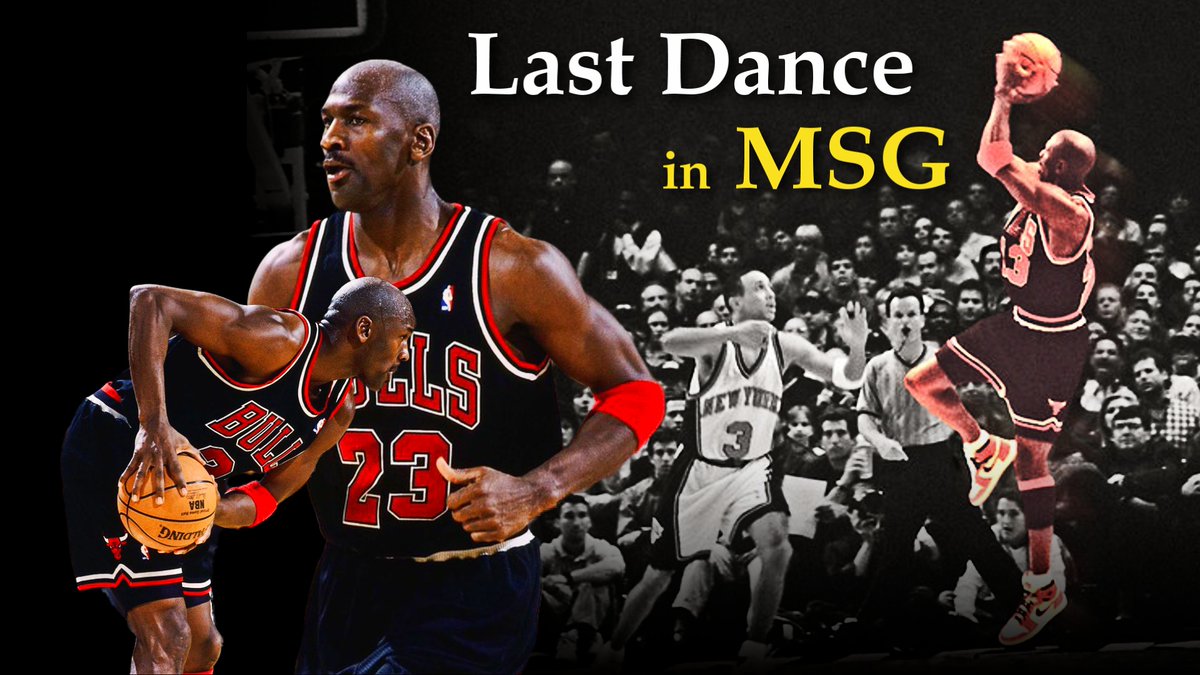
March 8, 1998. The final time Michael Jordan walked into Madison Square Garden as a member of the Chicago Bulls. And like so many nights before in New York, he turned the world’s most famous arena into his personal stage. The Bulls were in the middle of their final championship run, the season that would later be immortalized as The Last Dance. Chicago entered the game with the best record in the Eastern Conference, while the rival New York Knicks were still one of the league’s toughest defensive teams. It was a nationally televised Sunday matchup, the kind of stage Jordan had dominated for more than a decade. But Jordan decided to make the night even more symbolic. Instead of wearing the modern sneakers of 1998, he laced up the original red-and-black Air Jordan 1 from his 1984 rookie season, essentially stepping onto the floor in a pair of basketball shoes that were already over a decade old. Fadeaways. Turnarounds. Impossible shots from every angle. At one point he even spun through the lane for a 360-degree slam, reminding everyone that age 35 meant nothing to him. By the end of the night, Jordan had poured in 42 points, grabbed 8 rebounds, and led Chicago to a 102–89 victory over the Knicks. The performance came at a cost. The vintage sneakers were too small after all those years. By halftime, Jordan’s feet were bleeding, but he refused to take them off because he was playing too well. As the game ended, the New York crowd that had spent years battling him stood up and applauded. Even Knicks fans understood they had just watched the final chapter of one of basketball’s greatest rivalries. And fittingly, the greatest player ever walked out the same way he arrived: wearing the shoes that started it all.

OLDSKOOLBBALL

18,904 Aufrufe • vor 5 Monaten

In Heat, the scene with Robert De Niro and Amy Brenneman looking out over the Los Angeles skyline, is one of the most beautiful shots in all of crime cinema. However, it was also incredibly difficult to pull off in 1995, before the introduction of digital cinematography Heat was shot on Kodak EXR 500T 5298, a fast tungsten-balanced film stock designed for low-light photography. This allowed cinematographer Dante Spinotti to shoot night scenes without blasting the actors with harsh movie lights. Instead, he could rely on softer, more naturalistic light sources, while still allowing the audience to see deep into the darkness of nighttime Los Angeles. That stock was ideal for the terrace scene between De Niro and Brenneman. It could capture the soft light spilling from De Niro’s house onto their faces, keeping the scene intimate and natural. But there was still a problem: they were working on film. Once they exposed correctly for the actors, the background of Los Angeles’ skyline disappeared into darkness. Michael Mann wanted to preserve the brilliance of the cityscape, and the way it reflected off the night clouds, while still maintaining that soft, romantic glow on the actors. So Spinotti came up with a clever solution. He shot the background separately using Panavision Primo lenses opened all the way to T2, meaning the aperture was set extremely wide so the lens could take in as much light as possible. First, he shot the night sky at 4 frames per second. Because the camera was running much slower than normal, each frame was exposed for longer, giving the film more time to absorb the faint light in the sky. Then he shot the skyline separately at 12 frames per second. This gave the lights more brightness and clarity. He also pushed the film one stop. In simple terms, he shot the film as if it needed less light than it actually did, then had the lab develop it longer to bring the brightness back up. This made the city lights register far more strongly, while the darker parts of the image fell deeper into black - creating what Spinotti described as a glowing “ocean of lights.” They then shot the scene on location with a greenscreen placed behind or, in some setups, in front of the actors. What you’re seeing in the final shot is three separate film elements - the sky, the city lights, and the actors - all exposed differently, at different frame rates, then combined through digital compositing into a single image. The result is strangely beautiful. De Niro and Brenneman seem almost suspended in mid-air, floating above the city lights, giving the moment an almost abstract, dreamlike quality - one that perfectly complements the overall tone of the scene.

Gangster Cinema Central

120,390 Aufrufe • vor 2 Monaten

Finally, I had my test drive with FSD in Germany (Düsseldorf) today. The three of us arrived after a 3-hour and 15-minute drive (with a coffee break along the way). After checking in for our 12:00 appointment, we finally set off at 12:25. We were told beforehand that it was a scheduled half-hour drive due to high demand. It was an incredible and astonishing experience. How smoothly the car drove, how it overtook stationary cars, and gave way to pedestrians (even one in the middle of the road). Finally, after all the chaotic Düsseldorf traffic with its many cars, trams, and pedestrians, we arrived at the central station, where the car parked behind taxis instead of parking spaces (I thought there weren't any available). I won't be editing the video to avoid making you wait any longer. Watch part one, and then I'll post part two, where we returned from the central station to Tesla. I'm absolutely convinced that FSD is ready for Europe. Honestly, it drives much better than a human, I think. It also sees much more than a human, especially in chaotic traffic or in unfamiliar areas where a human might linger. And before I forget, it braked once on the way to the station at a non-functioning traffic light because a yellow light was flashing next to it. Anyway, we enjoyed it today; it's a real shame it was only for half an hour. I can't wait for the update in my car after it's approved by the RDW (Netherlands Vehicle Authority). @Tesla_NL_TR & Yaşar Yiğitsoy were with me today. #Tesla #TeslaFSD #FSDforEurope

Rustavi

40,604 Aufrufe • vor 7 Monaten

⚡ RECIPE TO PROTECT YOURSELF IF YOU WORK IN AN OFFICE 1️⃣ 🌞Morning Sunlight = Non-negotiable If your job starts after sunrise, spend 10–15 minutes outside looking at the sky. Doesn’t matter if it’s raining, snowing, or cloudy; infrared light still passes through and starts your circadian clock through the eyes. No sunglasses, no screens. Let natural UV + IR set your biological rhythm. 😬 but If you start before sunrise, buy a near-infrared lamp and turn it on while getting ready. It’s the next-best option. 2️⃣ 🔵Blue-Blocking Glasses = A Must Wear amber lenses under office LEDs. After 4 p.m., switch to red lenses if still under artificial light. 3️⃣🥋Natural Clothing for Protection Choose natural fabrics like wool, cotton, or linen. They don’t hold static charge like synthetics and let your body breathe. Indoors, pick dark colors (black, navy, charcoal) to block excessive artificial light. Remember: Hair, hand, and neck. EMF-blocking fabrics are even better if you can afford them. 4️⃣🆘Add Infrared Support Keep a near-infrared therapy light on your desk or near your computer. If you can’t afford it, use small red bulbs, halogen, or incandescent lamps instead to replace missing infrared from LEDs. 5️⃣💻Screen Filters & Settings On your computer, activate Night Shift, f.lux, or Iris; set color temperature around 1800–2000 K (red/orange tone) if can go bellow better.. if you can bring your own, buy one of those pc with Build-in-blue-light-filters.(if you can afford) If you can not buy a blue-light filter film for your monitor. Reduce brightness slightly; increase contrast for comfort. 6️⃣🪑Reposition Your Desk Sit near a window and open it if possible. Avoid sitting directly under fluorescent or LED ceiling lights. If coworkers ask why you opened the window, say it’s to “circulate the stagnant air.” 😉 Remember: even if the window is far from you, cracking it open still helps. The Lid Experiment shows that infrared light passes through even the smallest gaps, meaning that open window benefits everyone in the office; including you. ☀️ 7️⃣🚬Light Breaks…Your “Fake Smoke” Trick Every 90 minutes, go outside for 3–5 minutes of natural light. Hold a real cigarette, and fake it... you’re feeding your mitochondria, not nicotine. 8️⃣🌳Ground at Lunch Step outside and find the biggest tree near your office. Touch it with bare hands or feet for one minute; trees discharge harmful stray currents from the ground. Even one minute of grounding stabilizes your body’s electrical charge. 9️⃣💦Hydrate Intelligently Drink mineral or spring water, not distilled. Add a pinch of sea salt and a few drops of local lemon juice to improve structure and conductivity. (Check my page for the big crystal water pitcher setup to structure your water naturally.) 🔟💡Reduce Reflections & Glare Use matte screen protectors and avoid glossy surfaces; glare amplifies blue frequencies. 🚫Keep Tech Off the Body Never rest a laptop on your lap. Keep phones and routers off or away when not in use. 🌅Sunset Reset After work, go outside for sunset light exposure. It tells your brain that the day is ending and resets your circadian rhythm. ⚫️🏴‍☠️Dark Office Cleanup If you are alone and must stay late, use red light only. If note, cover you body head to toe… Avoid bright screens and overhead LEDs after dark…., 🍱 🧬 Feed the Mitochondrial Antenna Seafood = DHA rebuilds light-conducting membranes. Magnesium & sulfur-rich foods (eggs, onions, garlic) = support redox cycling….

Light Me Away ☀️

14,918 Aufrufe • vor 9 Monaten

A Human in Snoworld The moment I crossed the portal, it happened so quickly I could barely comprehend it. The light changed, the air too, and my body felt a subtle shift. The next thing I knew, I was standing in the middle of another world… and the portal was gone. I had arrived in Snoworld. The air was different from the very first moment. It wasn’t oxygen, but it was made of something semi-compatible with my body. I inhaled cautiously, letting it fill my lungs little by little. It was denser than Earth’s air, with a humid texture, like soft mist. It had a peculiar taste—something between mint, minerals, and popping candy. Each breath gave me a light tickle in my throat, which made me cough a little before I fully adapted. I felt lighter. My first step was clumsy, almost like a small hop. The ground beneath my feet was soft, yet firm. I moved with more ease than I expected, feeling about a third lighter than normal. Each movement flowed more smoothly, and even though my muscles didn’t quite calculate the momentum correctly at first, I found it fascinating. It was a strange joy—relearning how to walk, how to balance, how to move in a completely different place. I felt a slight headache from the pressure change, along with a sound that seemed to come from the planet itself. It was a deep, enveloping hum, accompanied by distant chimes, as if they were coming from the air, the ground, even inside my chest. As if the planet had its own vibration, a pulse. I looked up—and my breath caught in my throat. Two moons. One was massive, nearly full, glowing like polished white marble. The other was smaller, sliding slowly across the sky. They were so close I could see the details on their surfaces. They were majestic. The sky had a soft glow, with no visible sun, yet bathed in a diffuse light that seemed to come from everywhere. There were no defined shadows. Only light, as if the air itself shimmered. Around me, the landscape looked like a dream. I saw colors my eyes had never seen before. Crystal trees that chimed when they moved. Plants with iridescent hues, shifting color depending on the light’s angle. The ground had a texture between stone and moss, and small glowing creatures slipped between the roots, barely revealing their shapes before vanishing again. And then… I saw them. Beings. Inhabitants of Snoworld. Tall, short, thin or robust, but all of them shared one indescribable trait: they felt like they were part of the planet. Some had bark-like living skin. Others looked as if they were carved from polished stone or glowing crystal. Some moved with the grace of animals, with large, curious eyes. They stared at me in wonder, as if I were an unexpected apparition. And without saying a word, they began to approach—cautiously, slowly, but without fear. One of them muttered something in a strange language, pointing at me. They looked me up and down. I suppose my clothes—normal on Earth—seemed bizarre to them. They wore no garments. —"What a strange being… its skin has multiple textures," one seemed to say, clearly referring to the fabric covering my body. And then, among them, I saw a different figure. A girl, with a radiant, friendly expression. Her skin was light blue, and in her eyes there was a comforting gleam. She stepped forward without hesitation, stopping just a few paces from me. She looked directly into my eyes… and smiled. I mean… I’m not a furry or anything… BUT... in that moment, my heart definitely skipped a beat. And in that instant, I understood everything. There was no need for words. The gesture was enough. It was a welcome.

✧ 𝗦 𝗣 𝗔 𝗜 𝗖 𝗬 ✧

12,917 Aufrufe • vor 1 Jahr

Two air forces started the Pacific war. One trained its pilots, then kept them fighting until they died. The other trained its pilots, then often pulled many of its experienced combat pilots out to teach everyone else. This is one of the reasons America won the Pacific air war, let's dive in.. Japan's Elite Aviators At the start of the war, Japan had some of the finest fighter pilots in the world. The aviators who attacked Pearl Harbor were elite. Many had hundreds of hours in the cockpit and real combat experience from the fighting in China. Flying the nimble A6M Zero, they cut through Allied opposition in the early months of the war and earned a fearsome reputation. But Japan made a fateful choice about these men. It kept them in combat, more or less indefinitely. Japanese pilots flew mission after mission with no real system to rotate them home. They fought until they were shot down, crippled, or killed. It seemed ruthless and efficient. In reality, it was a slow-motion disaster. The Difference in Philosophy Because every time Japan lost one of those veterans, everything he knew died with him. America did the opposite. It regularly rotated many of its experienced combat pilots back home once they had done their share of fighting. There, they became instructors, pouring everything they had learned in real air combat directly into the next generation of pilots. So the two systems pulled in opposite directions. Japan's pool of skill drained away with every ace it buried. America's pool of skill grew, as each returning veteran multiplied his knowledge across hundreds of students. One nation was teaching. The other was simply dying. The Training Gap The gap became a chasm, and it was made worse by sheer scale. By 1944, the United States was training around 8,000 new aviators every month, each of them getting well over a year of instruction and hundreds of hours in the air before they ever saw combat. Japan could not come close. As its veterans vanished, its training program collapsed, and it was crippled by something else, too. Fuel. Japan was running so short of it that many trainees could barely fly enough hours to learn their trade. By the later part of the war, Japanese pilots were being rushed into battle with barely 100 hours of flying time, and sometimes far less. They were teenagers with almost no training, being sent up against American veterans who had been taught by the best combat pilots in the fleet. The outcome was no longer a contest. It was a slaughter. The Great Marianas Turkey Shoot Nowhere was that clearer than in the skies over the Mariana Islands in June 1944. When the Japanese launched hundreds of aircraft against the American fleet, they flew into a wall of Hellcat fighters, guided by radar and expert fighter direction that positioned the Americans at the perfect height and moment to strike. The green Japanese pilots in their now outdated Zeros never had a chance. In and around that battle, Japan lost nearly 480 aircraft, while the Americans lost only a few dozen. It was so one-sided that the American aviators nicknamed it the Great Marianas Turkey Shoot. Japan's naval air power, once the terror of the Pacific, was broken in a matter of days. Better Aircraft, Better Technology It was not only the pilots. It was the machines too. America kept producing better and better aircraft, like the tough, heavily armed F6F Hellcat, designed after studying a captured Zero and built to beat it. It could take punishment, out-dive and out-gun its opponent, and it was forgiving enough that even a less experienced pilot could survive his first fights and become a veteran. Over the war, Hellcat pilots claimed more than 5,000 enemy aircraft for a tiny fraction of that in losses. Japan, meanwhile, kept sending men up in the aging Zero, a plane that had been revolutionary in 1941 but was now underpowered, fragile, and outclassed. It was fast and agile, but a single burst of American fire could tear it apart, because it had traded armor and protection for maneuverability. Better pilots, in better planes, backed by better technology. The advantages stacked on top of one another. The Spiral Ends By the end, Japan had reached the final, desperate stage of the spiral. With almost no trained pilots left, and no way to make more in time, it turned to the kamikaze. A pilot did not need 500 hours of training to crash his aircraft into a ship. He only needed to take off, aim, and die. It was the last resort of an air force that had run out of the one thing it could never mass produce. Experienced men. America won the Pacific air war for many reasons. Its factories out-built the enemy. Its radar and intelligence gave it eyes the Japanese lacked. Its aircraft grew deadlier every year. But underneath all of it was something simpler. America treated its best pilots as a resource to be protected and passed on. Japan treated them as fuel to be burned. One of those choices built an air force that kept getting stronger. The other burned brightly, and then burned out. This was why America won the Pacific air war. I post a story like this every single day. Most people never see them. Follow so you don't miss the next one.

Untold War Stories

155,561 Aufrufe • vor 1 Monat