Video wird geladen...

Video konnte nicht geladen werden

Zur Startseite

๐‚๐จ๐ง๐œ๐จ๐ซ๐๐ž ๐‹๐š๐ง๐๐ž๐ (13-8f) takes flight Naas Racecourse โœˆ๏ธ Paddy Twomey Racing's daughter of Sioux Nation, a โ‚ฌ200,000 breeze-up buy, dazzles on debut in the five-furlong Irish Stallion Farms fillies' maiden ๐Ÿ’จ

39,173 Aufrufe โ€ข vor 1 Monat โ€ขvia X (Twitter)

0 Kommentare

Keine Kommentare verfรผgbar

Kommentare vom Original-Post werden hier angezeigt

ร„hnliche Videos

Legendary investor Peter Lynch: "The sucker's going up is not a good reason" to buy a stock. Peter Lynch grew Fidelity's Magellan Fund from $20 million to $14 billion between 1977 and 1990. In a recent interview, he shared why most retail investors lose money, and why his "buy what you know" philosophy still works today. His main observation about how people invest: "People that are investing in individual stocks, it's sad. They're careful when they buy a refrigerator or an airplane flight. They're careful with their money, and they'll hear about a stock on the bus and they'll put $5,000 or $10,000 on it. They have no idea what they do." His advice is simple. Look at the company. Look at the balance sheet. Have a real reason the stock should be higher. To illustrate how basic this analysis can be, Peter offers an example: "If you can add five and five and get reasonably close to ten, you should be able to look at a balance sheet and say, 'Here's two depressed companies. They've gone from 50 to 3. One company's got 3 million in cash and no debt. One's got 3 million in debt, no cash. Which one are you going to buy?' I mean, that's not too hard to do." Peter believes his style of investing is still very much alive. The opportunities just look different now: "Who would have guessed TJX, a local company, would have gone up 50-fold, or Stop & Shop would go up 10-fold, or Analog Devices or NVIDIA? I couldn't pronounce NVIDIA." Old leaders fade. Sears rolled over. Kmart rolled over. IBM slowed down. But new companies like Panera and Family Dollar emerged. According to Peter, that's just the nature of markets. You have to keep looking for new companies and actually read the balance sheet. On the constant fear cycle investors get trapped in, Peter offers perspective from 50+ years in the business: "We've had 13 recessions since World War II, and we've had 13 recoveries. Maybe we're going to have one. If this is a recession, it's probably the most predicted one ever." He reminds investors that today's worries are nothing compared to what came before: "It's nothing like imagine 1980 or '81. We had double-digit inflation, double-digit unemployment, and people were worried the Japanese were going to take over the world. I mean, we were hopeless. There's always something to worry about. In over 50 years of doing this, I think I'd be worried if somebody didn't bring up something to worry about. That's the nature of the business." He doesn't pretend to know what comes next: "I cannot predict the future, but this one, this recession is so expected, so predicted. Maybe it's coming. I don't know."

Black Edge

11,292 Aufrufe โ€ข vor 3 Monaten

๐Ÿ’ฅDemand a Ban of Weather Modification in Florida & the United States! ๐Ÿ’ฅ Read below for 2๏ธโƒฃ actions we need everyone to do! โฌ‡๏ธ Ron DeSantis and Joseph A. Ladapo, MD, PhD are ready to end the weather warfare in the state of Florida! There is great momentum in the state of Florida as Ileana Garcia's SB 56 passed on the Senate floor this past week and is now certified. This legislation not only prohibits weather modification, but also criminalizes it. It would make it a felony, punishable of up to five years in a FL state prison and a $100,000 fine per incident. Next up, its companion bill in the house, HB477 sponsored by Kevin Steele will be heard in the State Affairs committee on April 17, with expected amendments to strengthen the bill. Amendments are being made to have an even stronger level of enforcement! ๐Ÿ’ฅ If HB477 passes out of the committee, that bill will then go to a floor vote in the house to be reconciled between the two chambers with SB56 before the final bill goes to Governor DeSantis and is signed into law in Florida. We are only a few steps away from historic legislation. If this bill should pass, it will be the first in the nation to not only prohibit, but also criminalize weather modification activities in a given state. ๐Ÿšซโœˆ๏ธ๐Ÿ’จ Floridian's: here's 2๏ธโƒฃ things we need everyone to do to make immediate impact: 1๏ธโƒฃ Ask the Florida House of Representatives to strengthen language in house bill HB 477, so we can have the strongest bill possible (match or surpass language in SB56). Take action here: 2๏ธโƒฃ Demand this stops federally too! There are now 32 states taking action with proposed legislation or resolutions. Now is the time to urge congress to investigate and prohibit weather modification federally. This also MUST be addressed federally, state legislation alone is NOT enough. Take action here: Stay tuned Global Wellness Forum as we monitor the progress of this pivotal bill in Florida and the momentum against geoengineering across the country. #MakeFloridasSkiesBlueAgain #MakeAmericasSkiesBlueAgain #TheClearSkiesMovement

Global Wellness Forum

19,455 Aufrufe โ€ข vor 1 Jahr

My graphic illustrates the high number of vacant and derelict properties in Dublin City. It also shows 4,666 entire houses or apartments currently listed for short-term letting on the Airbnb platform, with a total of 18,649 across Ireland. By the way, the red blocks in my graphic represent some of the derelict and vacant sites in Dublin City, while the red houses represent Airbnb short-term rentals. The graphic also highlights a new housing development at Fosterstown Place in Swords where Ryanair purchased 25 out of 28 homes. Ireland's housing system is dysfunctional and not fit for purpose as it fails to deter vulture funds from bulk buying properties that could be homes for individual buyers. On May 20, 2021, the Irish Government introduced a 10% stamp duty on bulk purchases of residential houses. This measure aimed to discourage large-scale acquisitions by investors and vulture funds. This is one of the reasons why the housing system is broken in Ireland. Ryanair cabin crew salaries in Ireland are notably lower than those of their counterparts at other airlines. Their pay ranges from โ‚ฌ17,000 to โ‚ฌ29,000, depending on flight hours and additional bonuses. The average salary for cabin crew across Ireland is approximately โ‚ฌ2,120 per month or โ‚ฌ25,400 annually, indicating that Ryanair's pay is about 15% lower than the national average for flight attendants. It's worth mentioning that Michael O'Leary's current salary stands at โ‚ฌ1.2 millionโ€”about โ‚ฌ49,271 per month. His total compensation package could reach up to โ‚ฌ4.7 million, depending on performance bonuses. O'Leary's net worth, primarily derived from his shareholding in Ryanair, is estimated at around โ‚ฌ700 million. It's no wonder Ryanair staff struggle to afford average rent in Dublin. Last January, the airline purchased 25 out of 28 homes in a new housing development at Fosterstown Place in Swords. Ryanair stated that these properties were acquired to accommodate staff who work at Dublin Airport. However, to make matters worse, 18 of these homes are sitting emptyโ€”six months after the developer completed them. Homelessness in Ireland has reached another new record high, with 14,760 people homeless and relying on emergency accommodation, including 4,561 children from 2,133 families, according to the latest figures released by the Department of Housing. The Government failed to meet its social and affordable housing targets by 2,680 homes last year and significantly underestimated the number of houses needed to be built annually by 17,000. It's widely accepted that Ireland requires up to 50,000 additional houses each year; however, the government's "Housing for All" plan only aims to build an average of 33,000. The Housing for All plan, launched by the Irish government in September 2021, is their housing strategy aimed at addressing the country's housing crisis. However, since its implementation, statistics have revealed alarming trends: โ€ข Total homelessness increased by 74%, from 8,475 to 14,760. โ€ข Homeless adults increased by 66%, from 6,131 to 10,199 . โ€ข Homeless children increased by 95%, from 2,344 to 4,561. The 2022 Census shows that the country has 166,752 vacant homes and 66,135 empty holiday homes. Notably, nearly a third of these vacant homes (48,387) have been unoccupied since 2016. Predictably, rent has doubled over the past 13 years and house prices have surged by 55%, marking the fastest growth in any major EU economy. Average rents have soared by 43% compared to pre-Covid levels, with Dublin rents now averaging โ‚ฌ2,476. In the capital, a typical three-bed semi-detached home costs โ‚ฌ517,333. The average house price in Dublin is rising by โ‚ฌ469 per week. To purchase a new home in Dublin priced around โ‚ฌ395,000, a first-time buyer typically needs an annual income of at least โ‚ฌ77,142 and must also have a minimum deposit of 10%, amounting to around โ‚ฌ39,500. This financial barrier helps explain why an estimated 10,600 people left Ireland to live in Australia last year, up from 4,700 the previous yearโ€”a staggering 126% increase. This marks the highest level of emigration to Australia since 2013. Currently, vulture funds own 1 in 6 mortgages in the Irish housing market, while cuckoo funds and the State purchase 42% of new homes. This situation has led to a record number of first-time buyers competing for the smallest supply of housing stock in over a decade. Nationally, just over 11,000 homes are available for purchase, a stark contrast to 2012 when 60,000 homes were on the market. A garda and a nurse with a combined salary of โ‚ฌ89,000 cannot afford a three-bedroom semi-detached house in greater Dublin. To add to the crisis, the income needed to buy a new home in Dublin is โ‚ฌ127,000, which surpasses even a TD's basic salary of โ‚ฌ108,987. Consequently, 68% of people in their late 20s still live with their parents, a figure that is nearly 26% higher than the EU average of 42.1%. #Dublin #Ireland #HousingCrisis #DerelictIreland #homeless #Airbnb #GE2024 #Ryanair #HousingForAll

Rob Cross

30,283 Aufrufe โ€ข vor 1 Jahr

๐Ÿšจ David David Knight Legg: Why Meta chose Alberta for a $13-billion investment 'This is something that takes Alberta into the next century,' said Legg on Thursday's episode of The Ezra Levant ๐Ÿ๐Ÿš› Show. On Thursday's episode of The Ezra Levant Show, David Knight Legg joined the show to discuss Metaโ€™s $13 billion Alberta project, the failure of crony capitalism and Albertaโ€™s resurgence as a tech powerhouse. Hereโ€™s something you havenโ€™t seen in Canada for a long time, a colossal industrial investment that didnโ€™t come with a government handout. Meta, the company formerly known as Facebook, is putting $13 billion into a new data centre in Sturgeon County, Alberta. Not in Ontario, not in Quebec and not with a single federal minister claiming credit. Private capital, real jobs and a bold new stake in the digital economy. Contrast that with whatโ€™s become the norm in Canada. Under Justin Trudeau and Mark Carney, industrial projects have meant government projects, taxpayer-funded battery plants and wind farms, mostly in Ontario and Quebec, with politicians demanding their cut of the credit. Tens of billions shovelled into factories that only exist because governments paid them to. Thatโ€™s called crony capitalism. But Metaโ€™s announcement flips that script. This isnโ€™t a backroom deal cooked up in Ottawa. Thereโ€™s no major project office smoothing the path, no prime ministerial intervention. Instead, what Alberta has built is a climate for investment, tax cuts, regulatory reform and a pro-business attitude that says if you want to build, build. And they have. Metaโ€™s data centre will mean 3,000 construction jobs at the peak, more than 300 permanent roles and $60 million in local infrastructure upgrades. Not a cent of it was paid for by taxpayers. In fact, the money that governments are bragging about is tax revenue and salaries, not outflows but inflows. David Knight Legg, who helped shape Albertaโ€™s investment strategy, spells it out: Albertaโ€™s approach is paying off. Private investors are coming back. Meta isnโ€™t alone. Dow, Linde Corporation, and Air Products have all chosen Alberta recently, drawn by the same formula: low taxes, stable regulation and abundant energy. Alberta has done what the Irish Development Agency did for Ireland, turning the province into a magnet for global capital with policy, not handouts. This is the clearest sign yet that Canada can compete when the government gets out of the way. Metaโ€™s centre is a next-generation, AI-optimized hub, one gigawatt of power, fully matched by renewable energy and designed for zero operational water consumption. Itโ€™s the 33rd in Metaโ€™s global fleet but the first in Canada and the largest outside the United States. This is exactly the kind of project politicians say they want: high-tech, green and future-focused. Only this time, they didnโ€™t write the cheque. What those advocates for government-led industrial policy wonโ€™t tell you is this: When you let the market work, when you set the right incentives and when you stop treating business as a cash cow, real investment follows. Alberta is proving it. And Metaโ€™s $13 billion bet is just the start.

Rebel News

13,097 Aufrufe โ€ข vor 1 Monat

Barry Sternlicht recently gave a VERY insightful interview about tariffs and what it means for real estate prices - what he said is troubling: "The promotion of American manufacturing is a great idea, but we are not a manufacturing nation... We only have 13 million jobs of 160 million in manufacturing, and we're running a 4% unemployment rate. So I'm not sure who's going to work in all these factories. We're going to need some really quick efforts from Musk and Zuckerberg in robotics to actually build, have people work in these factories. Americans don't want to do that. That's not the jobs that they're interested in taking today... I think the tariffs are super complicated... I do think the focus should be on China. We run a $250 billion trade deficit with China... China is [the] second largest economy in the world with a fixed currency. And that alone is not right. That currency should go up and down with trade flows like every other major currency. So you start there. And I don't think the tariffs are tactical. And the if you put them in place, as [Trump] just did with steel tariffs, American companies will raise prices. So it is very inflationary. And for real estate, it's really bad. [For example] we need [Canada's] lumber. Or we can chop down our own trees but it's a bad thing. We run an equal trade deficit with Canada other than oil but we use their oil... if we don't buy it, they're going to ship it to Asia. For existing owners [of real estate], it's good because to build a new building will be more expensive. So the existing office stock, the existing apartment stock is going to be worth more. But it's bad because the numbers won't work to create new [buildings]. You won't be able to build anything. We already have a four to five million unit housing shortage... And you're seeing it in the sentiment of the builders that they're nervous. Everyone's a little nervous."

Triple Net Investor

177,868 Aufrufe โ€ข vor 1 Jahr

Happy 86th Birthday to KATHARINE ROSS !!! Born | January 29, 1940 in Los Angeles, California, USA. Video | Katharine Ross, Paul Newman and Robert Redford on the set of, and in publicity photos for, Butch Cassidy and the Sundance Kid (1969), directed by George Roy Hill. KATHARINE ROSS MINI BIO Katharine Juliet Ross was born January 29, 1940, in Hollywood, CA, to Katherine (nรฉe Hall) and Dudley Tying Ross. Her father, who had also worked as a reporter for the Associated Press, was a commander in the US Navy when she was born. His navy career shuttled the family around to Virginia, then Palo Alto, and finally to Walnut Creek, outside of San Francisco, where Ross grew up. Ross graduated from Las Lomas High School in Walnut Creek in 1957 and attended Santa Rosa Junior College and Diablo Valley College in the Bay Area, where she took part in her first onscreen work in a student film. Moving to San Francisco, into an apartment on Stockton Street above a grocery store, she began her acting career as an understudy in Actor's Workshop productions, and was soon auditioning for roles. She was also married in 1960 to college sweetheart Joel Fabiani, the first of five husbands. Work came steadily for Ross, at first mainly in television westerns, and indeed Westerns would make up the majority of her best-known work, her natural beauty being a strong asset in that genre. She made her TV debut in an episode of Sam Benedict (1962), and her first film role was in the Civil War era Shenandoah (1965) starring James Stewart. Ross' career as a leading actress began in earnest in 1967, with her strong turn co-starring with James Caan and Simone Signoret in Games (1967), and with The Graduate (1967). Ross' performance as Elaine earned her a Supporting Actress Oscar nomination. A disappointing, formulaic John Wayne vehicle, Hellfighters (1968), followed but she soon returned to form with two films with Robert Redford. As Etta Place in Butch Cassidy and the Sundance Kid (1969), Ross was part of the most memorable scene from that hit film, precariously perched barefoot on the bumper of that newfangled contraption, the bicycle, as Paul Newman's Butch Cassidy takes her for a ride. The compelling Tell Them Willie Boy Is Here (1969) was less of a box office success but more highly regarded by the critics, and Ross won a BAFTA Award for her work as Lola, a Paiute Indian who flees with her boyfriend, played by Robert Blake, after he kills her father in self-defense. Swept up into a whirlwind of fame, widely idealised as the symbol of beauty for the Woodstock generation, Ross had accomplished so much so quickly that it seemed her entire career had happened almost all at once, in that frenzy of activity between 1967 and 1969. Sure enough, there followed a long dry spell in which she was mostly cast in forgettable roles; her next strong film wasn't for another six years. In The Stepford Wives (1975), an intriguing Black comedy-cum-horror film, Ross plays a independent, free-spirited wife newly relocated to a suburb where the other wives all seem to be just a little too perfect, too submissive; it was arguably her strongest performance to date, but Stepford Wives would prove to be but a temporary resurgence for Ross, and her work in the decade and a half to follow would include such star-studded duds as The Betsy (1978), and a return to TV, including a part in primetime soap opera The Colbys (1985). Along the way, however, Ross found love. After four failed marriages (the second, third and fourth were to John Marion, Conrad L. Hall and Gaetano Lisi respectively), she met her current husband Sam Elliott, while working on The Legacy (1978). They married in May 1984; that September, just four months short of her 45th birthday, Ross gave birth to a daughter, Cleo Rose. In 1991, Ross and Elliott adapted the Louis L'Amour novel, Conagher (1991), for television in a remarkably affecting Western tale which showcases both actors' remarkable talents. Ross continued to take roles up until her early 80s and, as usual, her work was strong โ€• something that was sometimes overlooked in her youth due to her famous beauty. Katharine Ross and Sam Elliott live on their ranchito in Malibu. - IMDb Mini Biography by: Larry-115

Hollywood Golden Age of Cinema

35,527 Aufrufe โ€ข vor 6 Monaten

Happy 4th of July USA ๐Ÿ‡บ๐Ÿ‡ธ๐Ÿฅณ New York's Mayor Zohran Mamdani delivers the speech that President Trump should be delivering to mark the occasion ๐Ÿ‘ "Good morning, my fellow Americans. Season after season, year after year, the tides have come in and out of New York harbor long before the name New York had ever been spoken. Lenape dugouts crossed these currents. " "It was on these waters that tall masts crested the horizon, captained by explorers like Verrazano and Hudson, after whom we've named our bridges and rivers. And ever since, ships full of travelers weary from long journeys have passed through the Narrows, the winds of the Atlantic at their backs. " "When those passengers lifted their heads to glimpse what lies just beyond the waves, what did they see? They saw land lush and teeming with life. They saw men waiting at the docks to take them into bondage. They saw tenements rife with squalor. " "They saw industry rumbling with activity, steam and smoke rising. A city on the move. They saw a towering monument to freedom, her torch glowing worldwide welcome. They saw New York City. They saw America. Tomorrow. " "Our nation marks 250 years since we declared our independence. 250 years of a grand experiment in self governance. An experiment so audacious that some in 1776 doubted it would last more than a few years, let alone a quarter of a millennium. " "From Lexington to Los Angeles, Selma to Seneca Falls, Morrisania to Midwood, Americans will come together for a day, just as we do each year. Families will gather around the grill. Fireworks will fill the night sky. This will be no ordinary day of celebration. " "250 years presents a rare opportunity for more than 340 million people to turn together both towards one another and towards ourselves, to take measure of who we are as a nation. When we look at America, what do we see here at City hall, as I sit behind George Washington's desk alongside new Americans who came to this country, I cannot see all of America. " "But like so many who came before, I can see New York City. The city I see today looks very different than the one that greeted George Washington in July of 1776. Our city simmered under the yoke of oppression the British had imposed, a colonial rule so repressive that 250 years ago, 80 miles south, a small group of newspaper editors, farmers and soldiers signed their names on a document declaring truths that feel self evident now but were revolutionary then, establishing the ideals our nation still strives to fulfill. " "The British did not take it well. War broke out. And that August, as the largest battle of the Revolutionary War unfolded in Brooklyn, batteries on Governor's island took aim at British ships anchored just offshore. We were outgunned, we were outmanned, and we were soundly defeated. " "After only a Few months, it appeared our fledgling attempt at democracy was on the precipice of collapse. But that night, with the moon overhead, thousands of our soldiers silently climbed into ferries and flat bottomed boats and escaped to Manhattan. The Continental army survived to fight another day. " "Independence may have been declared in Philadelphia, but it was rescued in New York City. George Washington was the last to leave Brooklyn. As he waited at the river's edge, the sun beginning its rise, he would have looked out over New York City's waters and seen what so many have seen in the 250 years since. " "An opportunity to begin anew. Those opportunities, like everything in New York City, are not given. They are won. In 1838, 11 years after New York outlawed slavery, a, recently emancipated black man by the name of James Weeks sought to begin anew as well and to help hundreds of others do the same. " "He bought property in Brooklyn, won himself the right to vote, and sold lots to others newly freed. When they landed in New York harbor, they knew they had something waiting for them that they had never had before. A, home. Weeksville still stands today. A living, breathing testament to what we know America to be. " "A place each of us has the power to make. The harbor was busy those years as ships poured in from around the world. Hundreds of thousands of Irish immigrants arrived with stomachs aching from a famine manufactured by imperial cruelty. Chinese sailors settled in what is today Chinatown. " "Millions more traveled under the Statue of Liberty and through Ellis Island. Jewish people escaping pogroms, Italians fleeing poverty, Syrians seeking economic opportunity. Each of these new arrivals peered through portholes onto a city that was changing as fast as the nation. " "They saw merchants peddling their wares on the docks, streets being laid out on a grid, buildings rising into the clouds. They could not yet see the nativism they would face, the jobs they would be refused, the landlords who would not rent to them, and the abject labor and living conditions they would withstand. " "But no matter how much smog hung over the harbor, they still saw an opportunity to begin anew. Over the years that followed, despite laws enacted by the federal government to bar their entry, despite sweatshop fires that killed hundreds of women, despite riots aimed at their very existence, immigrants made homes here in New York City. " "And they helped to make New York City. That legacy of every generation of Americans insisting that the right to life, liberty, and the pursuit of happiness extends to them too, is no relic of the past. It carried millions of black Americans north during the Great Migration. " "It drew hundreds of thousands of Puerto Ricans to New York City after the Second World War. It invited countless others from the West Indies and South Asia and West Africa and across the world. And it is what brought my family to the city when I was seven years old. My family did not arrive by boat, although we saw the Statue of Liberty. " "From the window of the plane, even from the air, we could make out the promise of America, the promise of the beautiful, patriotic work of rendering America, year after year, a little more faithful to its founding ideals. There is a term so often used to describe our nation and those who have shaped American exceptionalism. " "American exceptionalism, that conventional wisdom tells us makes our freedom a little more free, is how we dug the Erie Canal and irrigated the west, is why children in faraway lands grow up dreaming of one day moving here. And yet, the irony is that the story of America has so often been written by those who were told by others with power and influence and wealth that they were anything but exceptional. " "For generation after generation, we have been told that when the world has sent its people to our shores, it has not sent its best. It sent Puritans and Sikhs and Quakers and Muslims and Jewish people who were banished for praying the wrong way, worshiping the wrong gods, angering the wrong people. " "It sent peasants and serfs from slums and shtetls who were treated as less because they hardly owned clothes, let alone land. It sent immigrants from whom power was something someone else had. We are told that America is exceptional because we are richer, stronger, more powerful than everyone else. " "The truth, my friends, is that America is exceptional because here nothing is fixed into place. The frontier may be closed, we may have walked on the moon, but the work of fulfilling the values first enshrined in the Declaration of Independence, that work endures, and it belongs to us all. " "It belongs, too, to our newest Americans, those standing here with me today, all of whom were recently naturalized nearly a decade ago. I, too, felt what you feel. The joy of no longer being just a New Yorker, but an American, too. You each hold a special power, the power to determine what America means. " "The powerful have always known their answer. America, in their view, is an arena of supremacy, where only a select few are allowed freedom, where not all are created equal. America, if you ask them, becomes less the more people it welcomes. America, they will tell you, belongs only to those with the right accent or the right shade of skin. " "The rest of us, they insist, should be grateful for merely being allowed to visit. How small they are, how weak, how unoriginal. At every moment in our past, those who led through Exclusion and isolation have tried to win power and enrich themselves by turning us against one another. " "Division is the oldest trick in politics and the cheapest. But time and again, including 250 years ago, those forces of division have been vanquished by the forces of progress. As Thomas Paine once wrote, this new world hath been the asylum for the persecuted lovers of civil and religious liberty. " "Hither have they fled. And yet today, too many of our leaders do not believe in a vision of this nation as an asylum for the persecuted, but rather as one that persecutes those seeking asylum. As we mark 250 years, what do we see? " "We see a city of contradictions within a nation of contradictions. We see the wealthiest country in the history of the world, one where children go to sleep hungry while the world's first trillionaire hungers for more. We see monopolies that dominate every industry and oligarchs who buy elections. " "We see mass agents terrorizing our streets, eating food cooked by our undocumented neighbors before spiriting them away in unmarked vans. We see a nation whose immense wealth has been built by those with calloused, dirt streaked hands, those who toil on factory floors and chisel into stone. " "And we see a nation that has allowed so much of that wealth to be held instead in the soft hands of a precious few. Yes, we see America in a health insurance industry that exploits the sick. But that is not all we see when we look for America. We see it, too, in the nurse who works a double shift and then stops on her way home to check on an ailing neighborhood. " "Yes, we see America in corporate landlords for whom negligence is a business model. We see it, too, in the father who tucks his children into bed beneath a ceiling stained with leaks, who wakes before dawn to go to work and still believes his country can do better by his family. " "Yes, we see America when we spend our tax dollars on bombs and bailouts, when we sell our elections to the highest bidder. Yet we see it just as clearly in every American who still believes this country belongs to we the people. We see America each time neighbors link arms with neighbors without asking how long they have lived here or what papers they have as ice invades our neighborhoods. " "We see America each time those young and old stand in the beating rain or the stifling heat to cast their ballots. We see America each time working people demand more, not just for themselves but for their fellow Americans. There are some who respond to those who ask for more from America with a simple love it or leave it they say. " "But patriotism has never been about pretending our nation is without flaws. Patriotism is every act of righteous dissent. It is every march led under the heavy sun. It is every protest held a decade before its time. It is precisely because we love this nation that we will not leave it. " "After all, who loves America more than those who have sacrificed so much to make it free Today? I think not only of the 4th of July, I think too of the 9th of July. Five days after the Declaration of Independence was signed, it arrived here in our New York City. " "Redcoats had disembarked on Staten island. More than 100 British ships loomed just offshore. Across this city, the Continental army prepared for an invasion. George Washington commanded his brigades to assemble just a few feet from this building. " "It was known then as the Commons. Today we call it City Hall Park. There, within range of British guns, Washington ordered his generals to read the Declaration aloud. And with the world's mightiest empire poised to attack, Washington told the people of New York City what we will celebrate tomorrow. " "That we had declared our independence. That freedom was within reach. That evening, danger loomed. Conflict was not a question, but a certainty. And yet, when those early New Yorkers marched toward the statue of King George III that stood in the Bowling Green, a statue they would melt down into bullets for their young army, they walked in unison, grounded not in the pursuit of plunder, but in ideals that for the first time had a name. America. " "Those ideals upon which our nation was built, they are strong enough to endure any authoritarian regime, but only if we reach for them. Ours is a nation working each day towards the perfection in which it was conceived. A nation striving each day to better itself. " "Therein lies the work of America. The striving, the bettering, the reaching towards perfection. What a privilege each of us has to live in a nation that every one of its inhabitants can shape. What a responsibility each of us possesses to prove ourselves worthy of all those who came before. " "What power each of us holds to bring America ever closer to the greatness so many have seen when they looked upon these shores. The greatness that for 250 years has been America. Thank you. God bless America, God bless New York City and happy fourth of July. "

Farrukh

72,231 Aufrufe โ€ข vor 1 Monat

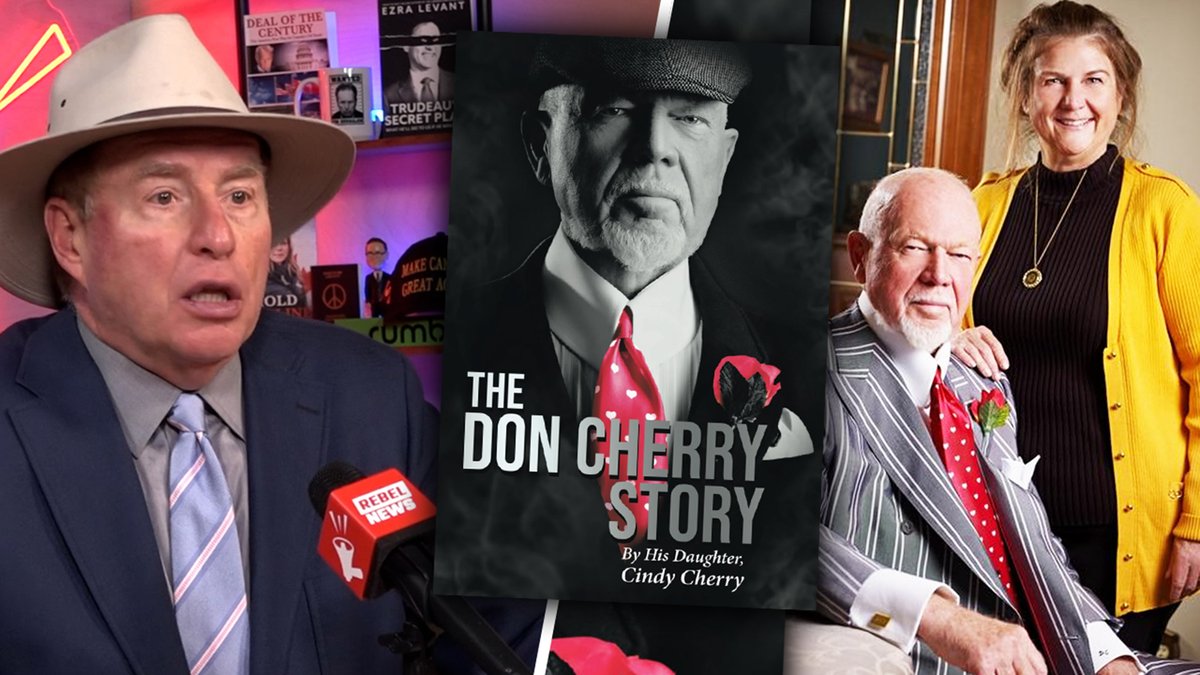
Must-read: Cindy Cherry, Don Cherryโ€™s late daughter, tells all in new book about her father and his cancellation Cindy writes that after 38 years of compelling television, her father was cancelled simply for saying โ€œyou people love our milk and honeyโ€ and the โ€œleast you could doโ€ is buy a poppy on Remembrance Day. Hard to believe itโ€™s been more than five years since the most highly viewed segment on Canadian TV was abruptly cancelled and its star maliciously thrown under the bus. All for no valid reason, well, other than cowardly corporate suits bending the knee to a tiny woke mob of leftwing zealots. We speak of Don Cherry, the coach in Coachโ€™s Corner. Whether you loved or loathed Grapes, Coachโ€™s Corner was must-see TV. Again, you either loved Don for his unvarnished honesty and frankness, which is an endangered species in the world of sports broadcasting today. Or you loved to hate Don Cherry, as you would love to hate an entertaining villain cutting promos in the bizarre biosphere that is professional wrestling. The point is, millions of Canadians would tune into Hockey Night in Canada every Saturday night at approximately 7:50 p.m. E.S.T. Coachโ€™s Corner was many things to many people. But it was never, ever boring. We make mention of the cancellation of this cherished slice of Canadian culture thanks to the recent release of a new book entitled, The Don Cherry Story by His Daughter, Cindy Cherry. Cindy Cherry doesnโ€™t waste any time cutting to the chase. Thus, she begins the story at the end of the story. Namely, when her fatherโ€™s tenure on network TV came to an abrupt and shocking end on November 9, 2019. That first chapter is entitled โ€œPoppygateโ€ โ€“ which is a fitting term given that what happened to Don Cherry was indeed scandalous. Cindy writes that after 38 years of compelling television, her father was cancelled simply for saying โ€œyou people love our milk and honeyโ€ and the โ€œleast you could doโ€ is buy a poppy on Remembrance Day. We have viewed that excerpt over and over and over again. We have analyzed Donโ€™s words for any alleged racism or bigotry or xenophobia. And we come up empty every single time. Indeed, Don Cherry was simply speaking the truth. You know it, we know it, everybody knows it. He was bemoaning that not enough people in Canada honour the war dead and our veterans come November 11. This is not conjecture; itโ€™s the indisputable truth. Indeed, on Remembrance Day 2019, the day Don was officially fired by the way, we visited Yonge-Dundas Square in downtown Toronto at 10 a.m. to observe how many people were wearing poppies. In other words, there we were at this busy intersection just 60 minutes before the 11th hour of the 11th day of the 11th month. And we can tell you that less than 5% โ€” yes, less than 5% โ€” of passersby were wearing poppies that day. It was disgraceful, disgusting, and disrespectful. Oh noโ€ฆ was that a little harsh? Is Team Cancel Culture going to come for us now? Yet, the fact that Don Cherry was cancelled for speaking the truth makes for more proof in the pudding that freedom of speech is on thin ice in Canada these days. Due to political correctness, or its new name, โ€œwokenessโ€, one is forbidden to speak the truth IF the truth hurts. Thatโ€™s not freedom of speech โ€” thatโ€™s censorship. Indeed, Donโ€™s words somehow hurt the feelings of the uber-intolerant left. Or more accurately, these wokesters pretended to suffer from hurt feelings. Finally, these Marxists had some flimsy excuse to derail the career of a common sense patriotic Canadian that they loathed because ofโ€ฆ oh, we donโ€™t knowโ€ฆ toxic masculinity? And letโ€™s not forget the role of one particular liberal in this saga, namely Ron โ€œThe Ratโ€ MacLean. Indeed, if Donโ€™s words were so repugnant, then why didnโ€™t Ron object? Rather, as Cindy Cherry notes, Ron was โ€œbobbing his head in agreement throughout the dialogue, gave Dad the thumbs-up and at the end said, โ€˜love you for it.โ€™โ€ Furthermore, Cindy notes: โ€œHNiC repeated this Coachโ€™s Corner for their central Canadian viewers. How bad could they have felt it was if they rebroadcasted it?โ€ But no, the cowardly suits at Rogers โ€” caved to the vocal minority and quickly pulled the plug on Coachโ€™s Corner. And when they did, Ron MacLean couldโ€™ve and shouldโ€™ve taken a stand. He couldโ€™ve and shouldโ€™ve said words to the effect of, โ€œHey, if Don goes, I go.โ€ But then again, that would have made for a principled stand. And second banana rats arenโ€™t all that concerned about principles, not when thereโ€™s a juicy six-figure salary on the line. Itโ€™s just business, baby. To add insult to injury, MacLean appeared the following Saturday to make a groveling apology. And soon thereafter Hockey Night in Canada went woefully woke in terms of the content aired between periods. It was insufferable and unwatchable. In the days that followed this cancellation, Cindy became further upset about the spin Poppygate was receiving. She writes: โ€œThe narrative that Rogers/Sportsnet and Ron put out to the rest of the media was that all Don had to do to keep his job was apologize and he wouldnโ€™t. This is what a lot of the corporate media shills and people on social media jumped onโ€”why didnโ€™t Don just say heโ€™s sorry and then he would have gotten back his job?โ€ But Cindy says that narrative was completely bogus; that the fix was always in. She further writes: โ€œTo me, there was no doubt Rogers wanted Dad gone, so they backed him into a corner knowing he wouldnโ€™t kneel to their demands. I believe many people knew there was more to the story about Dadโ€™s firing but didnโ€™t bother looking into it and just went with the corporate narrative.โ€ In fact, it should be noted that it was never Cindyโ€™s intention to write a book even though she always had a ringside seat when it came to being near her famous father. But there came a point during this raging controversy when she simply couldnโ€™t take the B.S. any longer. She had to set the record straight. And for that, we owe her a debt of gratitude. Alas, itโ€™s too bad the Cindy Cherry never got to see the fruits of her labour. Cindy passed away last July at the age of 67 after a brief illness. This was very hard on Don. Regardless, her legacy is a book that dispels the lies and myths that the left and the cowards at Rogers concocted when it comes to the Don Cherry saga. We owe her a debt of gratitude for setting the record straight about this great Canadian. Of note, Don Cherry is 91 years old. At this point, we must wonder how long this national treasure will remain with us. We can tell you this much: when Don passes, millions of Canadians will mourn that day. Some speculate Ron will be remembered as a backstabber and a betrayer, whereas Don spoke his mind, told the truth, and stood by his principles even when threatened with career cancellation โ€” which did indeed come to fruition. One final thought: Don Cherry was and remains immensely popular. And once upon a time, he was responsible for the single most watched segment of TV in the nation. He was a cash cow when it came to attracting advertisers and sponsors. Thus, in the final analysis, the really disturbing thing about his unceremonious cancellation is this: if the powers-that-be can cancel Don Cherry, they can cancel anyone.

Rebel News

231,328 Aufrufe โ€ข vor 1 Jahr

Warren Buffett turns 93 today! To celebrate, I'm sharing the greatest lecture he ever gave together with his 94 (!) best investment quotes. 1. Rule No. 1 is never lose money. Rule No. 2 is never forget Rule No. 1. 2. Diversification is a protection against ignorance. It makes very little sense for those who know what they're doing. 3. Do not take yearly results too seriously. Instead, focus on four or five-year averages. 4. All there is to investing is picking good stocks at good times and staying with them as long as they remain good companies. 5. American business - and consequently a basket of stocks - is virtually certain to be worth far more in the years ahead. 6. An investor should act as though he had a lifetime decision card with just twenty punches on it. 7. And so the important thing we do with managers, generally, is to find the .400 hitters and then not tell them how to swing. 8. The most important quality for an investor is temperament, not intellect. You need a temperament that neither derives great pleasure from being with the crowd or against the crowd. 9. Bitcoin has no unique value at all. 10. Buy a stock the way you would buy a house. Understand and like it such that you'd be content to own it in the absence of any market. 11. The years ahead will occasionally deliver major market declines - even panics - that will affect virtually all stocks. No one can tell you when these traumas will occur. 12. I insist on a lot of time being spent, almost every day, to just sit and think. That is very uncommon in American business. 13. Buy companies with strong histories of profitability and with a dominant business franchise. 14. For the investor, a too-high purchase price for the stock of an excellent company can undo the effects of a subsequent decade of favorable business developments. 15. I believe in giving my kids enough so they can do anything, but not so much that they can do nothing. 16. The world went mad. What we learn from history is that people donโ€™t learn from history. 17. The key to investing is not assessing how much an industry is going to affect society, or how much it will grow, but rather determining the competitive advantage of any given company and, above all, the durability of that advantage. 18. Among the various propositions offered to you, if you invested in a very low cost index fund - where you don't put the money in at one time, but average in over 10 years - you'll do better than 90% of people who start investing at the same time. 19. Because if you're wrong and rates go to 2 percent, which I don't think they will, you pay it off. It's a one-way renegotiation. It is an incredibly attractive instrument for the homeowner and you've got a one-way bet. 20. Cash is to a business as oxygen is to an individual: never thought about when it is present, the only thing in mind when it is absent. 21. Don't get caught up with what other people are doing. Being a contrarian isn't the key but being a crowd follower isn't either. You need to detach yourself emotionally. 22. For 240 years it's been a terrible mistake to bet against America, and now is no time to start. 23. I never attempt to make money on the stock market. I buy on the assumption that they could close the market the next day and not reopen it for five years. 24. I have no views as to where it (gold) will be, but the one thing I can tell you is it won't do anything between now and then except look at you. Whereas, you know, Coca-Cola will be making money, and I think Wells Fargo will be making a lot of money, and there will be a lot -- and it's a lot -- it's a lot better to have a goose that keeps laying eggs than a goose that just sits there and eats insurance and storage and a few things like that. 25. I just sit in my office and read all day. 26. I won't say if my candidate doesn't win, and probably half the time they haven't, I'm going to take my ball and go home 27. If returns are going to be 7 or 8 percent and you're paying 1 percent for fees, that makes an enormous difference in how much money you're going to have in retirement. 28. We want products where people feel like kissing you instead of slapping you. 29. If you aren't willing to own a stock for ten years, don't even think about owning it for ten minutes. 30. The most important investment you can make is one in yourself. 31. If you buy things you do not need, soon you will have to sell things you need. 32. If you don't feel comfortable making a rough estimate of the asset's future earnings, just forget it and move on. 33. If you like spending six to eight hours per week working on investments, do it. If you don't, then dollar-cost average into index funds. 34. If you're in the luckiest 1% of humanity, you owe it to the rest of humanity to think about the other 99%. 35. If you're smart, you're going to make a lot of money without borrowing. 36. In the 20th century, the United States endured two world wars and other traumatic and expensive military conflicts; the Depression; a dozen or so recessions and financial panics; oil shocks; a flu epidemic; and the resignation of a disgraced president. Yet the Dow rose from 66 to 11,497. 37. In the 54 years (Charlie Munger and I) have worked together, we have never forgone an attractive purchase because of the macro or political environment, or the views of other people. In fact, these subjects never come up when we make decisions 38. In the business world, the rearview mirror is always clearer than the windshield. 39. Investors should remember that excitement and expenses are their enemies. 40. It is a terrible mistake for investors with long-term horizons to measure their investment 'risk' by their portfolio's ratio of bonds to stocks. 41. It is not necessary to do extraordinary things to get extraordinary results. 42. It takes 20 years to build a reputation and five minutes to ruin it. If you think about that, you'll do things differently. 43. The one thing I will tell you is the worst investment you can have is cash. Everybody is talking about cash being king and all that sort of thing. Cash is going to become worth less over time. But good businesses are going to become worth more over time. 44. It's been an ideal period for investors: A climate of fear is their best friend. Those who invest only when commentators are upbeat end up paying a heavy price for meaningless reassurance. 45. It's better to hang out with people better than you. Pick out associates whose behavior is better than yours and you'll drift in that direction. 46. It's better to have a partial interest in the Hope diamond than to own all of a rhinestone. 47. It's far better to buy a wonderful company at a fair price than a fair company at a wonderful price. 48. Just pick a broad index like the S&P 500. Don't put your money in all at once; do it over a period of time. 49. Keep things simple and don't swing for the fences. When promised quick profits, respond with a quick "noโ€. 50. Lose money for the firm, and I will be understanding. Lose a shred of reputation for the firm, and I will be ruthless. 51. Many management teams are just deciding they're gonna buy X billions over X months. That's no way to buy things. You buy when selling for less than they are worth. ... It's not a complicated equation to figure out whether it is beneficial or not to repurchase shares. 52. The difference between successful people and really successful people is that really successful people say no to almost everything. 53. Most people get interested in stocks when everyone else is. The time to get interested is when no one else is. You can't buy what is popular and do well. 54. Never invest in a business you cannot understand. 55. Your premium brand had better be delivering something special, or itโ€™s not going to get the business. 56. One can best prepare themselves for the economic future by investing in your own education. If you study hard and learn at a young age, you will be in the best circumstances to secure your future. 57. The most important thing to do if you find yourself in a hole is to stop digging. 58. One thing that could help would be to write down the reason you are buying a stock before your purchase. Write down "I am buying Microsoft at $300 billion because..." Force yourself to write this down. It clarifies your mind and discipline. 59. Only when the tide goes out do you discover who's been swimming naked. 60. Opportunities come infrequently. When it rains gold, put out the bucket, not the thimble. 61. Price is what you pay. Value is what you get. 62. Read 500 pages like this every day. That's how knowledge works. It builds up, like compound interest. All of you can do it, but I guarantee not many of you will do it. 63. Risk comes from not knowing what you're doing. 64. If a business does well, the stock eventually follows. 65. Since I know of no way to reliably predict market movements, I recommend that you purchase Berkshire shares only if you expect to hold them for at least five years. Those who seek short-term profits should look elsewhere. 66. Someone's sitting in the shade today because someone planted a tree a long time ago 67. The best thing that happens to us is when a great company gets into temporary trouble... We want to buy them when they're on the operating table. 68. Speculation is most dangerous when it looks easiest. 69. Stay away from it. It's a mirage, basically...The idea that it has some huge intrinsic value is a joke in my view. 70. The best chance to deploy capital is when things are going down. 71. The stock market is a no-called-strike game. You don't have to swing at everything -- you can wait for your pitch. 72. There is nothing wrong with a 'know nothing' investor who realizes it. The problem is when you are a 'know nothing' investor but you think you know something. 73. This does not bother Charlie and me. Indeed, we enjoy such price declines if we have funds available to increase our positions. 74. Too-big-to-fail is not a fallback position at Berkshire. Instead, we will always arrange our affairs so that any requirements for cash we may conceivably have will be dwarfed by our own liquidity. 75. There are all kinds of businesses that Charlie and I donโ€™t understand, but that doesnโ€™t cause us to stay up at night. It just means we go on to the next one, and thatโ€™s what the individual investor should do. 76. You canโ€™t buy what is popular and do well. 77. We never want to count on the kindness of strangers in order to meet tomorrow's obligations. When forced to choose, I will not trade even a night's sleep for the chance of extra profits. 78. We will reject interesting opportunities rather than over-leverage our balance sheet. 79. We've long felt that the only value of stock forecasters is to make fortune tellers look good. Even now, Charlie and I continue to believe that short-term market forecasts are poison and should be kept locked up in a safe place, away from children and also from grown-ups who behave in the market like children. 80. What is smart at one price is stupid at another. 81. What we learn from history is that people don't learn from history. 82. When stock can be bought below a business's value it is probably the best use of cash. 83. When trillions of dollars are managed by Wall Streeters charging high fees, it will usually be the managers who reap outsized profits, not the clients. 84. When we own portions of outstanding businesses with outstanding managements, our favorite holding period is forever. 85. When you have able managers of high character running businesses about which they are passionate, you can have a dozen or more reporting to you and still have time for an afternoon nap. Conversely, if you have even one person reporting to you who is deceitful, inept or uninterested, you will find yourself with more than you can handle. 86. Whether we're talking about socks or stocks, I like buying quality merchandise when it is marked down. 87. Widespread fear is your friend as an investor because it serves up bargain purchases. 88. You are neither right nor wrong because the crowd disagrees with you. You are right because your data and reasoning are right. 89. You can't borrow money at 18 or 20 percent and come out ahead. 90. You can't produce a baby in one month by getting nine women pregnant. 91. The most important quality for an investor is temperament, not intellectโ€ฆ You need a temperament that neither derives great pleasure from being with the crowd or against the crowd. 92. You don't need to be a rocket scientist. Investing is not a game where the guy with the 160 IQ beats the guy with 130 IQ. You only have to be able to evaluate companies within your circle of competence. 93. The size of your circle of competence is not very important; knowing its boundaries, however, is vital.

Compounding Quality

620,965 Aufrufe โ€ข vor 3 Jahren

Weโ€™re often told Western societies are experiencing conditions reminiscent of the German Weimar Republic. But what exactly was the German Weimar Republic? Iโ€™d like to explain the republicโ€ฆand its incredible levels of debauchery, meaninglessness, sex, drugs, andโ€”of courseโ€”Jews. โ€œThe decay of moral values in all areas of lifeโ€”the period of deepest German degradationโ€”coincided exactly with the height of Jewish power in Germany.โ€ -Karl Wiehe Background The Weimar Republic is the unofficial nameโ€”that was popularized by Adolf Hitlerโ€”of the German nation-state that existed from November of 1918 to March of 1933. It was named for the city of Weimar, Germany where the constitutional assembly that established the new German republic met. The official name of the republic was the German Reich. The Weimar Republic was established after Germanyโ€™s loss in WWI. Germany was forced under the Treaty of Versailles to accept โ€œfull responsibilityโ€ for the war and pay the debts of all the allied countries. Being forced to pay these massive debts devastated the German economy and skyrocketed inflation, unemployment, and suicide within Germany. At one point 40% of Germans were unemployed and many were homeless. In 1932, the German suicide rate was more than three times that of Great Britain and in one two-year period, Germany had more suicides than there had been deaths of American soldiers in all of WWI. The German currency became the most worthless currency in Europe. A loaf of bread in Berlin that cost around 160 German Marks at the end of 1922, cost 200,000,000,000 German Marks by late 1923. The German peoplesโ€™ life savings and purchasing power had melted away over the course of a few months. With a single US dollar being worth 4,210,500,000,000 German Marks by November of 1923, foreign currencies had much greater buying power in Germany. So naturally, foreigners flocked to Germany to take advantage of the cheap prices. With these foreigners arriving en masse, Germans desperate for work turned to one of primary industries the foreigners flocked to Germany for: the sex industry. Sex and Drugs Germans began flocking to urban hubs in search of work, and no urban hub was more popular than Berlin. Prostitution in Berlin wasnโ€™t explicitly legal but existed in a kind of legal gray area where certain aspects of the sex trade were regulated while others remained unregulated. However, enforcement of any laws restricting prostitution was lax to non-existent. On any given night up to 100,000 prostitutes would line the streets of Berlin. Every type of prostitute was available: midgets, pregnant prostitutes who lined up on the street according to how pregnant they were, prostitutes that purposefully tried to be ugly, prostitutes with acid-scarred faces, prostitutes with missing limbs, mother and daughter prostitute pairs, dominatrixes, even hunchback prostitutes. Interracial, inter-generational, forced or abusive sex acts were all available for the right price. There was also a large male prostitution industry and homosexual men from across Europe came to Germany to pay for homosexual sex. And unlike most cities, Berlin boasted having not a single red-light districtโ€”but multiple. Child prostitutes were bought and sold in Weimar Berlin in a booming industry. Advertisements for child prostitutes were even placed in German magazines and newspapers. A person could order a child, or any other type of prostitute for that matter, over the phone and have them a few short minutes later. British historian Sir Arthur Bryant describes throngs of child prostitutes outside the doors of the great Berlin hotels and restaurants. Bryant adds, โ€œmost of themโ€”the night clubs and vice resortsโ€”were owned and managed by Jews. And it was the Jews among the promoters of this trade who were remembered in after years.โ€ There were homosexual, lesbian, and even transsexual bars where, occasionally, public masturbation and orgies took place. These homosexual bars werenโ€™t isolated or rare one-off outliers either, there were over 50 lesbian bars in Berlin and around 100 homosexual bars total. Drag shows and cross dressing were commonplace in these bars. Sexual acts involving torture or acts bringing a victim close to death, or evenโ€”in some instancesโ€”to death were performed in Weimar Germany (called Lustmord). As often happens when violent sexual perversions arise, so too do serial killers playing out their fetishes in reality. I refuse to name serial killers in my writings because I think it glorifies them, but you can look them up yourself. German Newspapers devoted entire sections to the violent sexual crimes of these serial killers and fictional accounts of murders sold very well on German book stands. Serial Killers had a romanticized lore around them, similar to what we see in western society today. Alongside prostitution and homosexual clubs, porn also enjoyed a golden age during the Weimar Republic. Like prostitution, porn existed in a kind of legal gray area where enforcement of any regulations on it were lax to non-existent. Images could be purchased under-the-counter at most street media kiosks. According to one report there were as many as 30 homosexual publications on any given Berlin media kiosk. Above all, pornography featuring models who bore a resemblance to the biggest movie stars of the day, such as Marlene Dietrich or Greta Garbo, were in the highest demand. Fashion began to blur the lines between masculine and feminine. The female image began to experiment with a more strong-willed independent tone and some women began to dress in masculine clothing. Similarly, male fashion began to experiment with feminization and cross-dressing amongst men began to rise. Berlinโ€™s women began to question the need for a man in their lives at all and many Berlin women had no desire to start or raise a family. Drug use in the Weimar Republic also ran rampant and Berlin gained a reputation as a drug dealing hub around Germany and Europe. Cocaine was the most popular drug in the Weimar Republic and only required a simple prescription from a doctor. That said, opium (a predecessor to heroin), morphine and amphetamines were all readily available and extensively used as well. The drug usage was so pervasive there was even experimentation with using drugs for โ€œscientificโ€ sexual purposes. One of the chief โ€œscientistsโ€ behind this experimentation with sex was a man named Magnus Hirshfeld. Magnus Hirschfeld was a homosexual Jew and one of the thought leaders behind the sexual debauchery overtaking Berlin. Hirschfeld had founded political organizations that fought for the rights of homosexuals in Germany well before the Weimar era and as far back as 1896. He led the campaign to overturn a statue of German Law called Paragraph 175 which forbid homosexuality in Germany. Hirschfeld would later go on to write a 1914 book called The Homosexuality of Men and Women in which he attempted to prove homosexuality occurred in every society around the world. Hirschfeldโ€™s crowning achievement of debauchery, however, occurred in July of 1919 when he opened The Institute of Sexual Research (Institut fรผr Sexualwissenschaft) in Berlin. The instituteโ€™s stated purpose was to establish the sexual sciencesโ€ฆand establish the sexual sciences the institute did. It was at the Institute of Sexual Research where the initial rubric for the innumerable genders we see in leftism today originated. At the institute, Hirschfeld developed a system which categorized 64 possible types of sexual intermediary (aka genders) and it was Hirschfeld who coined the term transvestite in 1910 and the term transsexual in 1923. The institute even performed sex re-assignment surgery. The Institute of Sexual Research also housed a large library for any and all homosexual, transsexual, and erotic literature. The institute had places for homosexuals to stay overnight as well as some of the first counseling services specifically tailored to homosexuals. Homosexual-specific medical services were provided in the institute as well. The institute also housed the Museum of Sex, an educational resource for the public, which was reported to have been visited by school classes. I think the writer Luigi Barzini most succinctly summarized the rampant debauchery that was Weimar Berlin when he said: โ€œI saw pimps offering anything to anybody: little boys, little girls, robust young men, libidinous women, animals. The story went the rounds that a male goose whose neck you cut at just the right ecstatic moment would give you the most delicious frisson of allโ€”as it allowed you to enjoy sod*my, bestiality, homosexuality, necrophilia, and sadism at one stroke.โ€ A debaucherous infestation had overtaken Berlin and nowhere was that more evident than in the arts. Art, Music, and Film Art, music, and film in Berlin were overtaken by the sexual revolution and a move toward a Jewish-influenced anti-authoritarianism as well. The Berlin film industry started releasing risquรฉ and homosexual films. The worldโ€™s first known homosexual filmโ€”Anders als die Andern (1919)โ€”came out in Berlin during the Weimar era and is the story a man falling in love with one of his male violin students. This film was written by and featured none other than Magnus Hirschfeld himself. Another film called Mรคdchen in Uniform (1931) is about a schoolgirl who falls in love with her female teacher. The two commence a forbidden love and eventually even share an on-screen lesbian kiss on the mouth. The film ends when this lesbian love is exposed and the protagonist attempts suicide. German expressionist cinema also came to prominence in the Weimar Republic. This form of cinema emphasized depicting the artist's inner emotions (no matter how crude those emotions may be) rather than attempting to replicate reality. Two of the three key figures for the German expressionist movement were the Jews Fritz Lang and Robert Wiene. The expressionist film Metropolis was one of the biggest films of the Weimar era. Metropolisโ€™ content is emblematic of the anti-authoritarian and communist messages of German expressionist cinema. The film takes place in a futuristic city where a beautiful and cultured utopia exists above a bleak underworld populated by mistreated workers. When a privileged young man discovers the grim scene under the city, he becomes intent on helping the workers. He befriends a rebellious teacher which puts him at odds with his authoritative father. The film was directed the Jew Fritz Lang and produced by the Jew Erich Pommer. The credits of the films of the Berlin movie industry were also littered with Jews. In fact, in 1931, over 60 percent of German films were produced by Jews and 82 percent of film scripts were written by Jews. In the art scene, a thoroughly anti-authoritarian and communist movement called Dada arose. The Dadaist movement was comprised of artists who rejected the logic, reason, and aestheticism of modern capitalist society, instead expressing nonsense, irrationality, and anti-bourgeois protest in their works. Dadaist works opposed any type of authority and made fun of far-right figures, including Hitler himself. According to Wikipedia, some sources claim the Dadaist movement was founded by a group of Jewish modernist artists. In music, one of the most popular singers of the day was a woman who was largely regarded as โ€œthe first official lesbian of Berlinโ€ named Claire Waldoff. Waldoff dressed masculine and made no secret of her sexuality while actively trying to convert other culturally important women to become lesbian. One culturally important woman Waldoff succeeded in converting to bisexuality was one of the biggest movie stars in the world, Marlene Dietrich. Marlene was famous for pushing social norms and sometimes wore a tuxedo, helping to erode the image of traditionally masculine and traditionally feminine roles. Marlene credits Clarie Waldoff as โ€œintroducing her to lesbian loveโ€. Marlene Deitrich was openly bisexual and an icon for homosexual women around the world when no other homosexual icons existed. One newspaper dubbed Dietrich โ€œperhaps the busiest and most passionate bisexual in theatrical Berlin.โ€ Anita Berber was one of the most popular nude dancers of the Weimar Republic and danced to songs with titles like, suicide, morphiem, and mad house. One of her husbands was also openly homosexual. In one famous story about Anita, she was being ignored by one of the tables she was dancing for, so she went over to the table, stood on top of it, and started peeing on the table while drinking their champagne. What a galโ€ฆ Architecture One aesthetic element that I think tends to be overlooked in most writings on social decay is architecture. It should come as no surprise that the principal architecture movement of the Weimar Republicโ€”called expressionist architectureโ€”also took a turn from an aesthetic focused on beauty and perfection toward an aesthetic that focused on โ€œdistortion of form to create an emotional effectโ€. This is architecture thatโ€™s generally perceived as hideous or repulsive. Iโ€™d also argue thereโ€™s a larger psychological component to this expressionist architecture. This ugly architecture contributes to social decay by glorifying the more disgusting elements of society and humanity. It subconsciously undermines the idea that society should strive for perfection and instead is a call to accept societyโ€™s more heinous elements. This repulsive architecture is, in my view, anti-authoritarian and destructive to social norms. Two of the key architects of the expressionist architecture movement were the Jews Bruno Taut and Erich Mendelsohn. Jews One of the key factors in Hitlerโ€™s rise to power was his opposition of the Jewish influence inside Berlin. As such, this article would be incomplete without looking at the Jewish influence that existed inside Berlin orโ€”possibly more importantlyโ€”the German publicโ€™s perception of the Jewish influence inside Berlin. Here are some of the figures I think best illustrate the Jewish over-representation in the Weimar Republic. All these figures should be viewed in consideration of this fact: Jews made up less than 1% (.09%) of the German population in the years of the Weimar Republic. In my opinion, these figures are staggering primarily because of the Jewsโ€™ immense over-representation in major positions of power within German society. Politics โ€ข The author of the 1919 German constitution was the Jew Hugo Preuss. โ€ข One quarter of the members of the 8-person Council of the People's Deputies that established the Weimar Republic were Jews (Otto Landesberg and Hugo Haase). โ€ข The main competing faction against the official Weimar government was headed by the Jew Kurt Eisner. โ€ข The SPD (Social Democratic Party of Germany) was the political party that primarily ran the Weimar Republic. 22% of the entirety of the SPD were Jews. โ€ข The SPDโ€™s main political theorist was a Jew: Eduard Bernstein โ€ข Two of the political thinkers most respected by the SPD were Jews: Ferdinand Lassalle, Leopold Sonnemann. โ€ข SPD's โ€œforemost theoretician of this centuryโ€ was the Jew Rudolf Hilferding. โ€ข SPD Key Figure, industrialist, and political thinker Walther Rathenau was a Jew. โ€ข The Vice President of the Berlin Police was the jew Bernhard Weiss. โ€ข In the first Weimar administration Vice Chancellor Eugen Schiffer was Jewish as was Weimar Interior Minister Erich Koch-Weser. โ€ข 15% of the members of the Reichstag (German Parliament) were Jewish. โ€ข A large number of the members of the political elite of the Weimar Republic were Jews: Rosa Luxemburg, Paul Levi, Ernst Toller, Erich Muhsam, Gustav Landauer, Eugen Levine, and Karl Radek. The Press โ€ข The Ullstein Press was the publisher of many of the largest German newspapers and was owned by the Jew Leopold Ullstein. โ€ข The Berliner Iliustrirte Zeitung was one of the largest German newspapers. It was Published by the Ullstein Press and its chief editor was the Jew Kurt Korff. โ€ข The Vossische Zeitung was another of the largest German newspapers and was published by the Ullstein Press. Its chief editor was the Jew Georg Bernhard. โ€ข Another of the othe r largest newspaper publishers was the Jew Rudolf Mosse. โ€ข The Berliner Tageblatt was the largest of Rudolf Mosseโ€™s newspapers and its chief editor was the Jew Theodor Wolff โ€ข Editor-in-chief of the SPDโ€™s party paper Vorwรคrts was the Jew Friedrich Stampfer The Arts โ€ข The Jew Erich Pommer was a German-born film producer and executive. According to Wikipedia, โ€œPommer was perhaps the most powerful person in the German and European film industries in the 1920s and early 1930s.โ€ โ€ข In 1931, over 60 percent of German films were produced by Jews and 82 percent of film scripts were written by Jewish writers. โ€ข Two of the three key figures for the largest film movement of the Weimar eraโ€”the German expressionist movementโ€”were the Jews Fritz Lang and Robert Wiene. โ€ข Two of the key Architects of the expressionist architecture movement were the Jews Bruno Taut and Erich Mendelsohn. โ€ข Some of the most influential producers, directors, & actors in Weimar cinema were Jews as well to name a few: Paul Davidson, Joseph Mandel, Jules Greenbaum, Max Reinhardt, Josef Von Sternberg, Fritz Kohn, Otto Wallburg, Peter Lowenstein. โ€ข To conclude the arts, some claim the anti-authoritarian and thoroughly communist Dadaist movement was founded by a group of Jewish modernist artists. Sex โ€ข Magnus Hirschfeld was Jewish. He was dubbed "the Einstein of Sex". He was president of World League of Sexual Reform and of course, founder of the Institute for Sexual Research. โ€ข Ivan Bloch was Jewish and is often called the "first Sexologist". โ€ข As quoted by Sir Arthur Bryant earlier, โ€œmost of themโ€”the night clubs and vice resortsโ€”were owned and managed by Jews. And it was the Jews among the promoters of this trade who were remembered in after years.โ€ Other notable Jewish over-representations: (**Please Note** these next five bullet points are not official numbers and are from a NSDAP piece that was distributed in Weimar Germany. I'm including them because although I can't be completely sure of their accuracy, I think they most likely do generally represent the amalgamations of Jewish power in Weimar society. And, at the very least, these numbers represent the German publicโ€™s perception of Jewish amalgamations of power in Weimar society): โ€ข 56% of notaries were Jews. โ€ข 52% of doctors were Jews. โ€ข 45% of Hospital Directors were Jews. โ€ข 48% of lawyers were Jews. โ€ข 35% of dentists were Jews. One last note on the Jews of the Weimar Republic. I included a link with more detail below, but many Weimar Jews actively tried to conceal their Jewish identity and even went so far as bragging to other Jews when gentiles were unable to identify them. This is one of the reasons that, to this day, itโ€™s somewhat difficult to identify who the Jews of the Weimar Republic were. What this means is that, although the identity of every Jew I list is verified, there are undoubtedly other prominent and non-prominent Jews I was unable to identify. The provided list should not be viewed as wholly representative of the Jewish influence within Weimar Germany. But even just considering the provided list, you can see the Jewish influence was substantial for a race of people comprising less than 1% of the total German population. This Jewish over-representation is even more substantial when you consider that many of these Jewish amalgamations of over-representation occurred within many of Germanyโ€™s most important social, political, and economic institutions. The Weimar Republic was often referred to as the "Juden Republic" (Jew's Republic) by Germans. I think it's easy to see why... Enter the National Socialists After Hitlerโ€™s rise to power in 1933, Goebbels and the Brownshirts began shutting down the homosexual dive bars that had risen to prominence during the Weimar Republic. They made one of the most popular homosexual bars in Berlin their headquarters after shutting it down. They pillaged Magnus Hirschfeldโ€™s Institute for Sexual Research and Hirschfeldโ€™s books on transsexual ideology were some of the first books the National Socialists burned. From Wikipedia itself, the books the National Socialists burned were: โ€ข Writings on sexuality and sexual education which serve the egocentric pleasure of the individual and thus, destroy the principles of race and Volk. โ€ข Pornography and explicit literature. โ€ข Pacifist literature. โ€ข All books degrading German purity. โ€ข Literature by Jewish authors, regardless of the field. โ€ข Popular entertainment literature that depicts life and life's goals in a superficial, unrealistic and sickly sweet manner, based on a bourgeois or upper class view of life. โ€ข The works of traitors, emigrants and authors from foreign countries who believe they can attack and denigrate the new Germany. โ€ข The literature of Marxism, Communism and Bolshevism. โ€ข Literature with liberal, democratic tendencies and attitudes, and writings supporting the Weimar Republic. โ€ข Books that advocate "art" which is decadent, bloodless, or purely constructivist. โ€ข The decadent, destructive and Volk-damaging writings of "Asphalt and Civilization" literati โ€ข Patriotic kitsch in literature. โ€ข All historical writings whose purpose is to denigrate the origin, the spirit and the culture of the German Volk, or to dissolve the racial and structural order of the Volk, or that denies the force and importance of leading historical figures in favor of egalitarianism and the masses, and which seeks to drag them through the mud. Very quickly after Hitlerโ€™s rise to power in 1933, the chief purveyors of the degeneracy that had overtaken Berlin would leave the city and National Socialist Germany would rise from its ashes. The restโ€”as they sayโ€”is history. (Sources and further reading in the comments below)

Bobby Thorne

67,770 Aufrufe โ€ข vor 1 Jahr