Sensitive content

This media may contain sensitive content.

Video wird geladen...

Video konnte nicht geladen werden

Zur Startseite

๐‘น๐’†:๐’๐’†๐’“๐’ ๐‘ฎ๐’Š๐’“๐’๐’” - ๐‘ด๐‘ป๐‘ฎ - ๐‘ฝ๐‘ฐ๐‘ต๐‘ฎ๐‘จ๐‘ต๐‘ชฬง๐‘จ (๐‘ช๐’†๐’๐’”๐’๐’“๐’†๐’… ๐‘ฝ๐’†๐’“๐’”๐’Š๐’๐’) Emilia doesn't stand a chance against them~ Uncensored version๐Ÿ‘‡ #hmv #pmv #hentaiedit #pornedit

30,803 Aufrufe โ€ข vor 9 Tagen โ€ขvia X (Twitter)

0 Kommentare

Keine Kommentare verfรผgbar

Kommentare vom Original-Post werden hier angezeigt

ร„hnliche Videos

Vivek Ramaswamy might just be playing the 2024 election cycle perfectly. Heโ€™s defending and complimenting Trump every chance he gets. This has led many people to claim that heโ€™s really running to be Trumpโ€™s Vice President. After watching his interview with Tucker Carlson, I think most people just don't get it. Vivek knows Trump. He knows that Trump has a really difficult time attacking those whom he believes are loyal to him. Vivek is playing this just right. While Trump supporters already despise Ron DeSantis, none of them really have anything bad to say about Vivek. Vivek is essentially the younger, better looking, more intelligent, more charming, more electable version of Donald Trump, without any of the baggage that Trump brings. Vivek knows that if Trump is convicted, much of the GOP will likely do all they can to try and pick a new candidate, and there will really only be one choice left: Vivek Ramaswamy. For the record, I really disagree with Vivek on the vast majority of his politics, but I think he could take a large amount of the independent vote away from Biden, which Trump could not do. He could do all of this without losing the support of the MAGA base if he keeps playing his cards right. The biggest factor of all though, is that he would not bring nearly as many Democrats out to the polls merely to vote against the GOP that Trump would. I'd love to hear your thoughts no matter where you stand politically. Does Vivek have a chance? Would he give the GOP the best chance to defeat Biden?

Ed Krassenstein

2,000,159 Aufrufe โ€ข vor 3 Jahren

TRUMP HAS FCUKED AMERICA & UM Piyush Goyal Ji KNOWS IT! โ€œI've said on record that deal is done only when both sides stand to benefit. We'll never negotiate with deadlines"๐Ÿ”ฅ US is desperate,Bharat isn't! Why? What does Bharat know which US doesn't want to show? Read details๐Ÿ‘‡ Fed Reserve cuts interest rates by 0.25% inspite of rising inflation. Why's so much desperation? The US economy is showing clear signs of fracture beneath surface-level AI exuberance. A data breakdown reveals synchronous deterioration in labor, corporate health, and leading indicators. 1๏ธโƒฃMASSIVE JOB CUTS ARE HAPPENING NOW So far in 2025, over 1.2 million Americans have been laid off. The government, UPS, Amazon, Fordโ€”big names in every sector are cutting thousands of jobs. When this many people lose their income at once, it hurts everyone's spending power. 2๏ธโƒฃFACTORY JOBS ARE DISAPPEARING FAST Despite Trump's trade wars, US manufacturing is in a deep slump. ๐ŸŸ Lost -18,000 jobs in Novemberโ€”the 2nd worst drop this year. ๐ŸŸ Employment has fallen in 25 of the last 35 months. ๐ŸŸ A key gauge of factory hiring has been in contraction for 10 straight months, signaling more losses ahead. 3๏ธโƒฃCORPORATE SOLVENCY CRISIS Bankruptcy filings indicate a liquidity squeeze. ๐ŸŸ Small Business: A record 2,221 have filed for bankruptcy this yearโ€”thatโ€™s +83% over 5 years. High costs are crushing them. ๐ŸŸ Large Corporate: 717 large firms have gone bankrupt in 2025, the most in 15 yearsโ€”a +93% jump since 2022. 4๏ธโƒฃA KEY GROWTH ENGINE IS STALLING Sales of heavy trucks have crashed -47% in three months. This kind of collapse only happens in recessions. Trucks move everything; this plunge means companies expect less shipping and construction. THE BOTTOM LINE: The data depicts an economy decoupling: AI-centric growth versus broad-based deterioration in traditional channels. The critical question is whether capital concentration in tech can offset synchronous stress in employment, Main Street viability, and industrial demand. If trends hold, 2026 could see deeper cracks & America will enter in recession officially. That's the reason why US needs Trade Deal with Bharat desperately and Modi Sarkar is rightly playing on front foot in National Interest. Anyway, Trump doesn't deserve any sympathy after his fake heroics against Bharat.

BhikuMhatre

140,979 Aufrufe โ€ข vor 10 Monaten

A boat full of illegal migrants was motoring ashore in Europe this week when it hit a teenage girl, swimming in the sea while on holiday. The girl was hit by the propeller and left with fractures, seriously injured. The boat didnโ€™t even stop. This is particularly galling because so much effort is put into making sure the people coming here illegally are safe. French police say they can't stop the boats when they're in the water - because it could be dangerous if somebody falls into the water. Heaven forbid one of them should get their trousers wet. But while the migrants are handled with kid gloves, there's absolutely zero consideration given to keeping us safe from the migrants, apart from the government giving the migrants a leaflet saying, "Oh, by the way, try not to rape anyone, thatโ€™s considered a no-no." And should they be allowed in? Considering the first thing they did when they got to Europe was nearly kill a teenage girl, I've got the sneaking suspicion that they might not be the best citizens. After reaching shore, the 14 adult African men attempted to escape inland before police caught them. But jail in Europe is like winning the lottery for these men. You get three meals a day and nice warm safe accommodation with entertainment. Most prisons are run by Muslim gangs anyway, so itโ€™s not a culture shock. Even when released from prison, they don't get deported. In fact, if anything, it makes it easier for them to stay because theyโ€™ve been in the country so long and can claim their conviction would lead to them being โ€œdiscriminated againstโ€. Aw, heaven forbid! If reaching European soil is rewarded regardless of how recklessly they get here or how many teenagers get put in hospital, then smugglers and migrants have every incentive to prioritise landing over the safety of anyone in their path. And we've got to point out that this doesn't happen by chance, by accident. Governments in the West fund charities and NGOs that assist migrants in getting to Europe and to the UK, every step of the way. We're seeing the window shifting in Europe. Ten years ago, Angela Merkel was welcoming in millions of Muslim refugees. Now, in Greece, they're pushing back migrant boats using live rounds. This might seem harsh, but hundreds of people die every year trying to get into Europe. The governments, NGOs, and charities that facilitate mass immigration are happy to let this happen because they don't really care about the migrants. They care about destroying Western civilisation and capitalism and replacing it with a shitty version of communism, and they know the migrants will help them do that. This is a big business. It's well funded, and a lot of that funding comes from European taxpayers. We need Nuremberg style trials for the people responsible for this. Pushing some boats back now might cause some hard times for the people being pushed back, but if it stops more people coming, it's going to save a lot of lives. Also, this idea that we must let them in because they're fleeing war and terrible conditions: if these people can't run their countries on their own, you know what we need to bring back? We need to bring back the British Empire. Man, we knew how to run a country. Remember Rhodesia? Bring back the British Empire, and we'll run these countries for them. It's win-win: they get a safe, stable country to live in, and we get their biggest diamonds and all their gold and their spices.

Leo Kearse - see me on tour! Links in bio

20,315 Aufrufe โ€ข vor 1 Monat

Elon Musk was offered the chance to have his own product destroyed on camera, unscripted, and he took it in under a second. Musk: "Fuck yeah, let's do it." Then they walked out to the garage. Rogan drew an 80 pound bow on the side of a Cybertruck, cameras still running. A 545 grain arrow at roughly 275 feet per second into cold rolled stainless. Sparks off the panel. The broadhead flattened. The arrow blew apart. Rogan: "Barely scratched it." That panel is the same steel he picked for Starship after walking away from carbon fiber. A man builds a rocket, wraps a truck in it, then hands you a weapon and stands there. There's no paint on it. No clear coat, no filler, nothing between you and the material. That stainless is structure, not decoration. Nobody offers up their own product like that unless it has already been tested where nobody was watching. Most people saw a stunt. What they watched was a man putting a claim in front of physics, which has no opinion of him and could have humiliated him live. Almost nothing else works that way now. We have built an entire civilization out of statements that can never be checked. Decks, dashboards, mission statements, narratives engineered so that no single moment can ever prove them wrong. An unfalsifiable claim isn't a lie. Lies can be caught. This is a shape that looks like a claim and never has to meet anything. The supply of those just went vertical. Words cost nothing to produce now, at infinite volume, by machine. Anything in infinite supply prices to zero. So what still has a bid. Only what survived contact with something indifferent to it. Steel that got hit. Code that shipped. A number audited by reality instead of by a slide. Nothing indifferent to you has ever lied to you. Only the things that want something from you can. Trust has never been anything but exposure to failure, witnessed. Every bridge you've driven over was somebody agreeing to be wrong in public. Every engine, every vaccine, every building still standing. The entire inherited world was built by people who could have been destroyed in front of everyone and stood there anyway. Most of us have quietly optimized ourselves in the other direction. A resume nobody audits. A persona with no failure mode. A version of yourself that only exists where it can't be tested. That isn't a character flaw. It's what the last twenty years paid for. The payout schedule just changed. Proof is about to be the scarcest asset in the economy, and the one thing that can't be generated. It has to be earned once, in contact with something that doesn't care. Nobody controls access to that. You don't need scale or permission. You need one true thing you'd stand beside while somebody takes a shot at it. He stood there and let the arrow come. The arrow came apart. Everything made only of words does.

Dustin

84,069 Aufrufe โ€ข vor 2 Monaten

Fascinating geopolitical analysis by Emmanuel Todd, one of the very few great French intellectuals we have left. I added English subtitles for you. He believes - as I do - that, fundamentally the US is accepting what he calls "defeat" against not only Russia but China as well, and that Trump is effectively trying - clumsily - to manage this defeat and to adapt the US to multipolarity. He says that the US's defeat in Ukraine isn't like Afghanistan or Iraq but that it represents what he calls "America's first major strategic defeat of its history." In the war, he says Russia has become "the shield of all the rest of the world who can't stand US guardianship of global finance [and] the exploitation of the working populations in the rest of the world by Westerners." As he puts it, Russia has demonstrated "that they were able to face the whole West," and with the rise of BRICS financial systems, this represents nothing less than "the end of the American imperium" - a defeat Trump must now manage. With regards to China he says that the US have in fact "given up" trying to contain them because the balance of power now makes it impossible. He points to "Chinese naval production that will soon make the US Navy a dwarf navy", "US aircraft carriers [that] are irrelevant facing hypersonic missiles" and the fact that China managed to "put the Americans under embargo" for rare earth exports. Arguments that undoubtedly will sound very familiar to my readers because I make the same ones in my articles (like this one: which I know Todd reads because, full disclosure, we know each others ๐Ÿ˜Š In this picture, Todd characterizes (quite rightly) Europeans as "crazy, we are dealing with crazy people" who think they can act as winners and impose conditions despite being the biggest losers of the war. He is particularly virulent against the media and the general intellectual climate in Europe, speaking of a "process of intellectual and moral degeneration" where "all notions of truth, of honor, of reflection" are being lost. He says that the end of the US's global hegemony doesn't mean they won't relinquish control of what they still do control, specifically Europeans ๐Ÿ˜ข I'll let you watch the whole video for more, including his excellent analogy between Trump and former French 4th Republic President Henri Queuille: quite out-of-the-box comparison but actually not bad! This is part of a longer video ( They actually have an English version of the video here: dubbed with AI if you prefer to watch it in English.

Arnaud Bertrand

422,714 Aufrufe โ€ข vor 1 Jahr

Someone stood on a piece of land, looked at a living, breathing dog who had done nothing but exist, and said: "Just shoot him dead." Not "get rid of him." Not "take him to a shelter." Not even "I don't want him anymore." Shoot him dead. I want you to sit with that sentence for a second before you keep scrolling, because everything that comes after it only makes sense once you understand how casually those five words get said in this world. Somewhere, right now, someone is saying a version of that sentence about a living thing that trusted them, or wanted to, or was still learning how. Most of the time nobody films it. Most of the time there's no ending. There's just a decision, made in under a second, by someone who will forget they ever made it. This time, someone didn't listen. This is the part where I'm supposed to tell you what happens next. I'm not going to. Not because I'm holding it hostage for engagement โ€” okay, maybe a little โ€” but mostly because the story doesn't work if I hand it to you pre-chewed. You need to watch a dog decide, in real time, whether the human species is worth the risk. You need to watch that calculation happen behind a pair of eyes that have every reason to say no. That's not something I can describe to you in a tweet. That's something you have to sit through. But I can tell you what it's about. It's about the gap. The invisible, unmeasurable gap between a dog who has been failed by people and a dog who has decided to try again anyway. Nobody talks about that gap. We talk about rescues like they're a single moment โ€” the dramatic snatch, the shelter cage, the "and then everything was fine" โ€” but that's not how trust works, and it's definitely not how fear works. Fear doesn't leave because you fed it once. Fear moves out slowly, one inch at a time, and it takes its shoes off at the door so you don't hear it coming back. PART ONE: THE VERDICT Here's what almost nobody says out loud: dogs get sentenced constantly, by people who will never be held accountable for the sentence. Too old. Too much energy. Too expensive. Doesn't match the new couch. Growled once at a toddler who was pulling its ears. In goes the verdict, out goes the dog โ€” sometimes to a shelter, sometimes to a shed, sometimes to the side of a highway at 60 miles an hour with the door still swinging shut. And sometimes, if the owner is lazy enough and cruel enough at the same time, the sentence is the one you already read. Just shoot him dead. Nobody ever asks the dog's side. Obviously. He can't testify. He can't explain that he was scared of the vacuum, or that he barked at 2am because something moved in the yard, or that he never asked to be born into a house that saw him as a liability the second he became inconvenient. All he can do is react to what happens to him. And what happened to this one was a verdict that most animals never survive to tell. Except โ€” spoiler-adjacent, not a spoiler โ€” he did survive. That's the only thing I'll give you for free. He survived the verdict. What he did with the rest of the sentence, what it cost him to survive it, what he had to unlearn about people before he could stand near one without flinching โ€” that's the part you're going to want your full attention for. PART TWO: THE DISTANCE THAT NOBODY MEASURES There's a very specific kind of animal behavior that people who haven't lived it will never fully understand: the dog who wants to come closer and physically cannot make his legs do it. You've maybe seen a version of it โ€” the shelter dog pressed against the back wall of the kennel, the street dog who follows you for six blocks but won't take food from your hand, the "feral" label slapped onto an animal who is, underneath the label, simply doing math. Every approach is a risk assessment. Every human hand is a variable that could be gentle or could be the last thing he ever feels. You don't get to skip that math just because your intentions are good. The dog doesn't know your intentions. He only knows what hands have done before. So he keeps his distance. Not because he's unfriendly โ€” dogs who've been failed are very often the most desperate to be loved, which is its own kind of tragic irony โ€” but because distance is the only insurance policy he has left. He'll circle. He'll watch. He'll get close enough to almost, almost, and then something โ€” a sound, a movement, a memory with no name attached to it โ€” will send him back to the treeline, and you'll be left standing there wondering what you did wrong, when the honest answer is: nothing. It's not about you. It's about every hand that came before yours. This is the part of the story where most people give up. Not because they don't care, but because patience like that isn't natural. It goes against every instinct you have, watching a scared animal and wanting to just fix it today, right now, with one good meal and a soft voice. It doesn't work that way. It was never going to work that way. And the fact that someone didn't give up on this particular dog โ€” that they let the timeline be the dog's timeline instead of their own โ€” is the actual plot of the video you're about to watch. Not the reunion. The waiting. PART THREE: WHAT NOBODY TELLS YOU ABOUT REBUILDING TRUST You can't apologize your way into an animal's trust. You can't explain to a dog that you're not like the last person, that this time is different, that you promise. Words mean nothing to an animal whose entire understanding of humans has been written in actions. The only currency that works is repetition โ€” showing up the same way, at the same pace, without asking for anything back, for so long that the dog's nervous system slowly, grudgingly, starts to recalibrate what a human standing nearby actually means. That recalibration has a cost, and the cost is time you don't get to see the value of until it's already paid. Every single day where nothing visibly changes is still doing something. The dog is watching. Filing data. Building, molecule by molecule, a case for why this particular human might be the exception. You don't get updates on that internal process. You just keep showing up and hope the math eventually tips in your favor. And when it does tip โ€” when there's a first moment of contact, a first inch of distance closed that will never open back up the same way again โ€” it doesn't look like a movie. It's not slow motion. It's not a soundtrack swelling. It's small, and quiet, and if you weren't paying close attention you'd almost miss it. Which is exactly why you need to actually watch this one instead of scrolling past assuming you already know how it goes. You don't. Nobody's story of rebuilding trust looks the same, and this one has a shape you haven't seen before. PART FOUR: THE CASUAL CRUELTY OF "JUST GET RID OF IT" Let's go back to that sentence, because I don't think we're done with it. Just shoot him dead. Think about what has to happen in a person's head for those words to come out that easily. It's not usually rage. Rage burns hot and fast and then it's gone. This is colder than that. This is the language of someone who has stopped seeing a living creature as a living creature and started seeing him as an inconvenience with a heartbeat โ€” a problem to be solved, a line item to be closed, and closing it in the most permanent, least effortful way available. That mindset doesn't come from nowhere. It comes from a culture that has quietly taught a lot of people that animals are disposable the second they stop being convenient. That a dog is a product with a return policy. That love, if it was ever there at all, expires the moment it becomes inconvenient. You see it in the volume of animals abandoned every single year for reasons that amount to "we changed our minds." You see it in how easily people say "I'll just get another one" like a dog is a phone case. You see it in a sentence like the one that started this whole post โ€” a sentence casual enough that the person saying it probably forgot they said it by the following week. But here's the thing about casual cruelty: it only wins if nobody's watching, and if nobody's willing to do the inconvenient thing instead. The inconvenient thing here wasn't dramatic. It wasn't a rescue montage. It was choosing, day after day, not to be the kind of person who says that sentence. It was choosing patience over convenience, presence over ultimatums, and a scared dog's timeline over anyone else's schedule. That's not a headline. That's just what actually saving something looks like, most of the time โ€” unglamorous, slow, and completely invisible until suddenly it isn't. PART FIVE: THE QUESTION UNDERNEATH THE VIDEO Here's what I actually want you to sit with while you watch this, more than the dog, more than the backstory, more than the sentence that kicked the whole thing off: what would you have done? Not in theory. Not as the version of yourself that definitely would have been patient and kind and consistent for however many months or years it took. I mean actually โ€” if a scared, unwanted animal showed up on your property and kept its distance for weeks, would you have kept showing up? If it took longer than you expected, would your patience have held? If someone told you it wasn't worth the effort, would you have believed them? Most people like to believe they'd be the exception. Most people, if we're honest, would've given up around week three. That's not a judgment โ€” patience like that is genuinely hard, and most of us are stretched thin enough in our own lives without taking on a slow-motion trust rebuild with an animal who might never fully come around. But some people don't give up. Some people treat a scared, unwanted dog like he's worth more time than the person who wanted him dead ever gave him. And when you watch someone do that โ€” really watch it, not skim past it โ€” it recalibrates something in you too. It's hard to explain why watching a stranger be patient with a dog on the internet can hit as hard as it does. But it does. It always does. There's something in us that recognizes the shape of a second chance being handed to someone โ€” something โ€” who was told they didn't deserve one. PART SIX: WHY THIS ISN'T JUST A DOG VIDEO I know how this sounds. "It's just a dog video." I've said that about other videos too, right before they wrecked me completely. But there's a reason stories like this one land differently than the average "look how cute" clip. It's because underneath the surface, this isn't really about a dog. It's about the exact same question that shows up everywhere in human life, just translated into fur and silence and body language instead of words: what do you do with something โ€” someone โ€” who has been told they're not worth saving? Everyone reading this knows a version of that story that isn't about an animal. Maybe it's a person who was written off young and spent years proving the label wrong. Maybe it's a relationship everyone said wasn't worth the work. Maybe it's a version of yourself from a few years ago that a lot of people, maybe even you, had already given up on. The instinct to walk away from something difficult, something that isn't guaranteed to work out, something that might take way longer than feels reasonable โ€” that instinct doesn't care whether the "something" has four legs or two. It shows up everywhere. And every time someone chooses to stay anyway, chooses the slow rebuild over the easy exit, it's worth paying attention to. Not because it's rare. Because it's rare enough that most of us forget it's even an option. PART SEVEN: WATCH IT PROPERLY So here's my actual ask, and it's a small one. Don't watch this with the sound off while you scroll to the next thing. Don't skip to the end because you already think you know how it goes โ€” you don't, and skipping ahead will genuinely cost you the part that makes this different from every other rescue video you've seen this year. Watch the whole thing, start to finish, and pay attention to the parts that feel like nothing is happening. That's not filler. That's the actual story. The part where nothing seems to be happening is the part where everything is happening, quietly, underneath the surface, one cautious step at a time. By the time you get to the end, you'll understand exactly why that opening sentence exists at all โ€” why I needed you to hear it before you saw a single frame. Because without it, this just looks like a dog being sweet. With it, you understand what that sweetness had to survive to exist. You understand what it costs an animal to trust again after someone decided his life wasn't worth the trouble of finding him a home. You understand that every soft moment in this video is standing on top of a decision that almost went the other way, made by someone who chose completely differently than the person before them. There is a version of this story that ends in a hole in the ground, unmarked, unremembered, unfilmed. Nobody would have known. That's the version that happens more often than any of us want to think about. This isn't that version. This is the other one โ€” the rare one, the one that only exists because somebody looked at the same "inconvenient" animal that someone else wanted gone and decided that inconvenient wasn't the same thing as disposable. You're not going to get the details from me. You're going to have to watch it. But I'll tell you this much: by the end, "just shoot him dead" is going to sound less like a sentence someone said about a dog, and a lot more like a sentence that tells you everything you need to know about the person who said it โ€” and absolutely nothing about the dog who proved them wrong. Watch until the very last second. The last few frames are the whole reason this post exists. If this hit you the way it hit me, don't just scroll past it silently. Send it to the one person in your life who still believes some things โ€” some animals, some people โ€” aren't worth the effort of saving. Let them sit with it the way I made you sit with that first sentence. Some verdicts deserve to be overturned in public. PART EIGHT: THE BIOLOGY OF A FLINCH There's a reason a dog like this doesn't just "get over it" the way people want him to. Fear like that isn't a personality trait. It's a nervous system that got rewired by repetition, the same way trust gets built by repetition โ€” except rewiring fear takes a fraction of the time and undoing it takes ten times as long. One bad hand can undo a hundred good ones if it lands at the wrong moment. That's not the dog being dramatic. That's just how threat memory works in every mammal on this planet, humans included. You don't choose to flinch. Your body decides for you, based on evidence it collected before you were old enough to argue with it. So when you watch an animal hesitate at a hand that means no harm, you're not watching stubbornness. You're watching a very reasonable, very intelligent risk calculation running in real time, built entirely out of things that happened to him before anyone in this story ever showed up. The tragedy isn't that he was cautious. The tragedy is that caution was earned, fairly, by people who never had to answer for teaching it to him. What gets me every time I think about stories like this one is how much strength it actually takes to be cautious and still, eventually, choose to try again anyway. We love to talk about bravery like it only looks one way โ€” loud, dramatic, obvious. Nobody talks about the bravery of a scared animal taking one more step toward a species that has already hurt him, on nothing but a hope that this time might be different. That's not the absence of fear. That's fear, fully present, being overridden by something even stronger. If you want to know what real courage looks like, it rarely looks like a superhero. More often it looks exactly like this โ€” small, quiet, four-legged, and completely unaware that anyone's even watching. PART NINE: THE OTHER DOG NOBODY'S TALKING ABOUT There's a supporting character in this story who never asked to be one, and who honestly deserves more credit than he's going to get in the comments section. Every rescue story like this one has a hidden variable that nobody accounts for: the animal who was already there. The one who didn't have to share space, didn't have to share attention, didn't have to be patient with a nervous, unpredictable newcomer showing up on his territory uninvited. He could have made this so much harder. He didn't. And that quiet, uncomplicated generosity โ€” the kind you only get from an animal who has never once calculated whether kindness is worth the risk โ€” is doing more heavy lifting in this story than most people watching will ever notice. It's worth sitting with that for a second, too. Some of the most important characters in any redemption story aren't the ones being redeemed. They're the ones who simply didn't complicate it. Who didn't guard the door. Who treated a stranger's fear as something to be curious about instead of something to be threatened by. If there's a lesson buried in a dog who never asked for one, it might be that one. PART TEN: WHY THE INTERNET IS FULL OF FAKE VERSIONS OF THIS You've probably noticed there's an entire genre of content built around manufactured redemption arcs โ€” staged rescues, dogs that were never actually in danger, timelines compressed into a single afternoon to make the "transformation" hit harder on camera. I'm not going to pretend that genre doesn't exist, because you've almost certainly seen it and been burned by it before, which is exactly why so many people scroll past real stories with the same skepticism they've built up for the fake ones. That skepticism is earned. It's also, in this case, going to work against you if you let it make you scroll past this one too. The difference between the manufactured version and the real one is almost always pacing. The fake version wants to get to the payoff as fast as possible because the payoff is the whole point of making it. The real version drags in places, hesitates in places, spends way too long on moments that don't look like anything is happening โ€” because that's what actually rebuilding trust with a frightened animal looks like when nobody's editing it for maximum dopamine. If a story like this feels slower than you expected, that's not a flaw. That's the tell that it's real. Real trust doesn't hit its mark on a fifteen-second cut. PART ELEVEN: A NOTE FOR ANYONE WHO'S EVER FELT LIKE THE DOG IN THIS STORY I said earlier this isn't just a dog video, and I meant it, but I want to say the quiet part directly instead of leaving it as subtext. If you've ever been the "too much" one โ€” too sensitive, too cautious, too slow to trust, too hard to love without a manual โ€” this story is for you specifically, not just as a metaphor but as evidence. Evidence that the people who wanted to give up on you were wrong about what you were worth, the same way the person in this story was wrong. Evidence that being difficult to reach doesn't mean you're not worth reaching. Evidence that the right kind of patience doesn't get tired of you the way the wrong kind of person did. You don't owe anyone an explanation for how long it takes you to trust again after something breaks that trust. Nobody gets to put a timeline on your healing just because your timeline is inconvenient for them. The dog in this video didn't apologize for taking as long as he took, and he shouldn't have had to. Neither should you. The people worth keeping in your life are the ones who show up consistently enough, for long enough, without demanding a schedule for when you'll finally feel safe. Everyone else was never actually offering you safety in the first place. They were offering you a deadline. PART TWELVE: THE LAST THING I'LL SAY BEFORE YOU GO WATCH IT I've spent this entire post refusing to tell you what actually happens, and I'm going to keep doing that right up until the end, because the not-knowing is doing exactly what it's supposed to do โ€” it's making you want to see it for yourself instead of taking my word for it. Good. That's the point. Some stories lose everything the second you summarize them. This is one of them. You can read a thousand words about the shape of trust being rebuilt, and none of them will land the way thirty seconds of actual footage will, because words can describe hesitation but they can't make you feel the seconds stretching while it happens. So go watch it. Watch the whole thing, not the highlight, not someone else's twelve-second repost with the context stripped out. Watch it start to finish, the way it was meant to be seen, and pay attention to how long the hard parts last compared to how short the resolution feels โ€” because that ratio is the entire point. That imbalance, months of nothing followed by moments of everything, is what real change actually looks like, in dogs and in people both. It's never as fast as we want it to be. It's always worth it anyway. Somebody said "just shoot him dead" about a dog who turned out to be worth all of this. Go find out exactly how wrong they were. PART THIRTEEN: WHAT YOU'LL PROBABLY DO AFTER YOU WATCH IT I already know roughly how this goes, because it goes the same way every time a story like this actually lands. You'll watch it once, quickly, half-distracted, the way you watch most things in a feed built to keep you moving. And then something in the pacing, or the eyes, or the exact moment the hesitation breaks, is going to make you go back and watch it a second time, slower, actually paying attention this time. That second watch is always the one that gets people. The first watch is for your eyes. The second watch is for whatever part of you still remembers what it feels like to be given up on. Then you'll do the thing everyone does โ€” you'll look at the comments, half expecting someone to have ruined it with a joke, and instead you'll find a wall of strangers who all had the exact same reaction you did, which is somehow both comforting and a little unsettling, because it means this feeling isn't rare. It means a lot of us are quietly carrying around the same soft spot for stories about being chosen after everyone else already walked away. We don't talk about that soft spot very often. We just recognize it instantly in each other whenever something like this shows up in the feed. And then, if the story really got you, you'll do the thing I already asked you to do earlier, except now you'll actually mean it โ€” you'll send it to somebody. Not because you think they haven't seen a rescue video before. Because you want them to sit with that opening sentence the exact way you just did, cold, before they know how it ends. You want to watch their reaction the way someone once wanted to watch yours. That's not manipulation. That's just what people do with stories that matter to them. We pass them forward, hoping they land on someone the way they landed on us. PART FOURTEEN: THE ONE THING I WON'T LET YOU FORGET Before you go tap play, I need you to hold onto one detail, because it's the thread that ties this whole post together and it's easy to lose in a feed that moves as fast as this one does. The dog in this story is not a rare exception. He is not a lottery winner. He is one version, filmed and shared and lucky enough to have someone stubborn enough to see it through, of something that is happening constantly, everywhere, to animals who will never get a camera pointed at them and never get a caption written about them. For every one of him, there are dozens who got the other verdict. The one nobody films. The one that ends exactly where the sentence said it would. That's not meant to guilt you. It's meant to make the three minutes you're about to spend mean something more than entertainment. Every view, every share, every person who stops scrolling long enough to actually watch instead of skip, is a tiny, almost meaningless vote for the version of the story where patience wins instead of convenience. It won't save the ones who already didn't make it. But it might be the reason the next version of this story โ€” the next scared animal on the next uncertain property, in front of the next person deciding whether he's worth the trouble โ€” gets a different ending than the one that almost happened here. So watch it properly. Watch the pauses. Watch the eyes. Watch exactly how long it takes for something to shift, and remember that every second of that footage is standing on top of a decision someone made not to give up when giving up would have been so much easier, and so much faster, and so much more convenient. Somebody wanted him dead. Somebody else decided he was worth all of this instead. Now go watch which one turned out to be right.

Earth Unveiled

105,812 Aufrufe โ€ข vor 21 Tagen

CHARLIE KIRK SMOKING GUNS Amongst the litany of lies & contradictions emanating from the "approved" Charlie Kirk ass*ssination narrative, there are 2 major "smoking guns". ๐Ÿ”–โ–ถ๏ธ ๐Ÿ”Š 1. Tyler Robinson was in custody & mirandized an hour and a half before the alleged Discord confession was posted, and 3 hours before public officials claim he was captured. CONVENIENTLY, Washington County Sheriff Nate Brooksby, along with the sheriff's office video camera footage, have been disappeared. 2. Either the Rode mic or receiver is lying in shards all over the seats & floor of the SUV. CONVENIENTLY, the mic/receiver & associated audio, along with the SUV, have been disappeared. ******* The shattered mic/receiver is more devastating, here's why: In the case of the alleged Discord confession, their plan seems to be to simply not introduce it into evidence. It's just being used to convict Tyler in the court of public opinion. Whether it's real or fake, the narrative that Tyler shot Charlie can still be true. In the case of the shattered mic, it transforms the fundamental fabric of the narrative: Tyler Robinson did NOT shoot Charlie Kirk. And then everything falls apart. ******* Together, these two smoking guns indicate the scope of the conspiracy: TPUSA doesn't itself have the power to frame Tyler Robinson, scuttle sheriff's office video, dispose of the SUV, or order the crime scene to be excavated to a depth of 10 inches & paved over. The state of Utah doesn't have the power to stop the FBI & federal government from pursuing the evidence and investigating any potential interstate plot against an important cog in the election of Republicans who was arguably responsible more than any other single person for the re-election of Donald Trump. The federal government doesn't have the power to prevent the deeply jewish- and zionist-controlled media and army of influencers from using their institutional power & connections to get to the bottom of who robbed them of their alleged beloved golden boy, "best friend to israel" Charlie Kirk. The Federal government didn't even have the power to resist israel dragging us into the *extremely* unpopular Iran war. ******* Influence and power flow downhill. At any point, a bigger fish could come along and expose the smaller fish who pulled off this conspiracy. But that's not what we're seeing. The conclusion is unavoidable: because it's the biggest fish who did this. Who's the biggest fish right now? Put another way, who's got the pre-eminent institutional power in America right now? Answer that and you'll have your culprit. ******* I'm reminded of J. Edgar Hoover's famous quote from 1956: "The individual comes face-to-face with a conspiracy so monstrous he cannot believe it exists. The American mind has not come to a realization of the evil which has been introduced into our midst." Since then, we've gotten the JFK ass*ssination, the ass*ssinations of RFK & MLK, 9-11, global covid/vaxx tyranny and stolen presidential elections. And. So. Much. More. All unsolved & unresolved. Decade after decade. ******* Because of these 2 smoking guns in the Charlie Kirk caseโ€”smoking guns our American predecessors didn't have in those other crimesโ€”we have the unique chance to draw a line in the sand right now: THIS FAR AND NO FURTHER. What will it be, Tyler Robinson or the Biggest Fish? We have it on the hook, will we let it wriggle away, or will we stand tall in the chair and land this beast? Those are our choices. Have you had enough slop, or do you want to finally feast? Like, comment, retweet, please. โ–ถ๏ธ๐Ÿ”Š

Sam Parker ๐Ÿ‡บ๐Ÿ‡ธ๐Ÿงฏ

110,028 Aufrufe โ€ข vor 3 Monaten

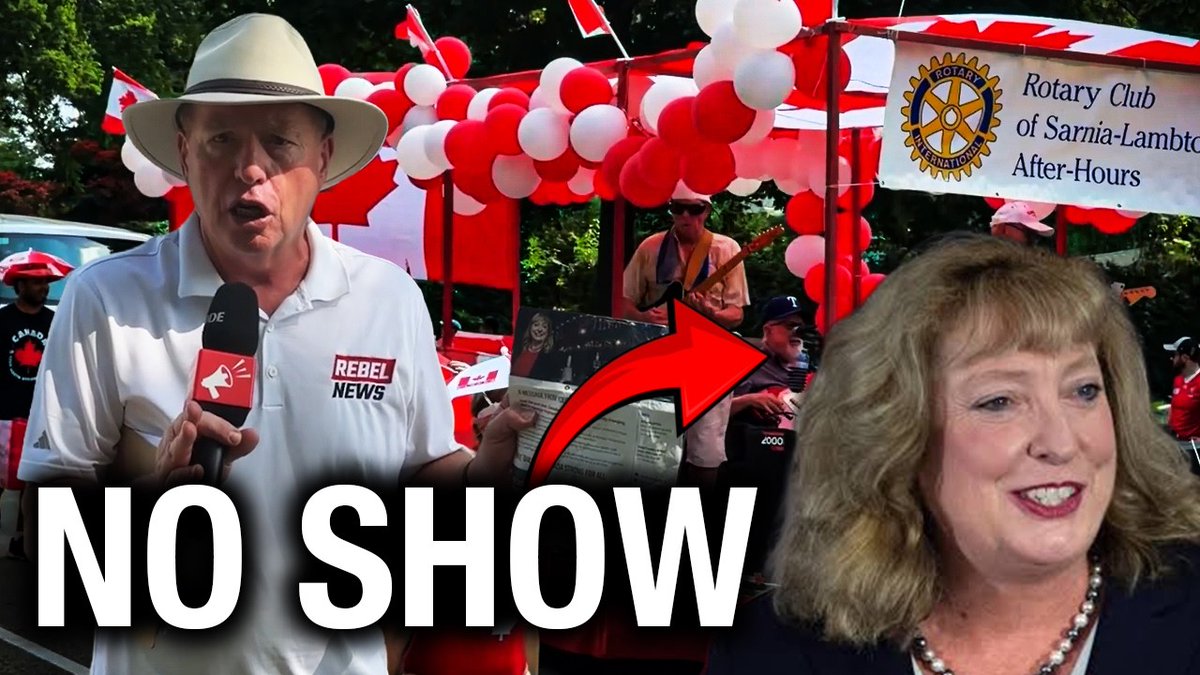
Floorcrosser Marilyn Gladu nowhere to be found on Canada Day Marilyn Gladu once said that the whole point of being a member of Parliament is 'to represent your constituents' โ€” and yet she got a clear mandate to represent them as a Conservative. No wonder she doesn't want to show her face. On July 1, Canada Day, speculation percolated in Sarnia, Ont.: Would Conservative-now-Liberal MP Marilyn Gladu show up for the parade? Spoiler alert: Gladu the turncoat was mercifully absent. In April, Gladu became the fifth floor-crosser to join the Mark Carney Liberals. But Gladuโ€™s crossing was surely the most shocking. We say this because Gladu was perhaps the single most conservative MP in the entire Conservative Party. For example, she was openly pro-life and pushed to reopen the abortion debate. She unapologetically backed the truckers and the Freedom Convoy, and she was against the COVID-19 forced vaccinations and lockdowns. Gladu is (or was) the polar opposite of a Liberal. Gladu joining the Liberals would be akin to climate change kook Stephen Guilbeault joining the Conservatives. Itโ€™s that crazy. And talk about hypocrisy: Marilyn Gladu once said that the whole point of being a member of Parliament is โ€œto represent your constituents.โ€ In that regard, in the last federal election, the constituents of Sarnia-Lambton gave Gladu a clear mandate when she ran for re-election as a Conservative. Galdu captured 53.1% of the vote versus 37.9% for the Liberal candidate. Amazingly, Gladu recently voiced strong opinions about those MPs who decided to cross the floor. If such a thing happens, Gladu said, then voters โ€œdeserve a chance to have a redo.โ€ But as the saying goes, that was then, and this is now. She is no longer keen on a โ€œredoโ€ byelection in her riding. Why? Because sheโ€™d likely lose in a landslide. And in the department of plenty of blame to go around, the Mark Carney Liberals seemingly have absolutely no problem welcoming Gladu into the fold, even though she is the sort of Conservative who would be mocked by the Liberals for her viewpoints. This is the same party that has a policy that blocks pro-life candidates from running under the Liberal banner. But yet again, that was then, and this is now as Mark Carney remains committed to getting that coveted majority government โ€” a majority the Canadian electorate denied him in last yearโ€™s federal election (but seriously, who cares what the little people have to say?). So the Liberals will park their principles when it comes to Carney manufacturing the political equivalent of a hostile takeover. On July 1, we visited Sarnia to see if Gladu would indeed show up for the townโ€™s Canada Day parade. Speculation was rife that she would attend as she always had in the past. Alas, it turned out that Gladu was a no-show. Imagine that: The sitting MP did not dare show her face in her own riding on July 1. Was it due to fear that the Sarnia Canada Day parade would turn into a modern-day version of Cerseiโ€™s โ€œwalk of shameโ€ from Game of Thrones? We think so, given the understandable rage amongst constituents regarding her shocking betrayalโ€ฆ

Rebel News Canada

19,104 Aufrufe โ€ข vor 3 Monaten

I love and respect dhh as much as any other young programmer who is inspired by his love for computers. But I can't help but imagine that, as a black person, he would not want to see me living in Denmark or the larger Europe, regardless of my contribution to the country. He would prefer Europe to look like it did in the 80s, or to be as homogeneous as Japan, as he said on the Lex pod. He mentions having a positive contribution to the society, but after listening to him more, it seems to me that he cares far less about that than about whether the immigrant looks more like him. That means, even if I contribute to their economy, pay my taxes, raise my family there, and integrate into the culture, he would not really want to see me move there with my immediate black family, because I would be disturbing their homogeneity. I thought for days about what that actually means. It means no matter what I do, no matter how much I give, the door will always come with an asterisk. "You're welcome, but only if you physically blend in." I lived in London and Amsterdam. I contributed positively to their economies, that's why they let me in, in the first place. And I like to think I am well assimilated into the society and culture. But because I do not look like what Britain looked like 100 years ago, nor does my immediate family, dhh would rather not have me live in Europe, or even marry there!? By that logic, would you also tell Jude Bellingham he doesn't belong? Or Sir Lewis Hamilton? Or Marcus Rashford, who fed millions of British children during the pandemic when the government wouldn't? If dhh's version of Europe has no room for people who look like them, then what he is really saying is that contribution doesn't matter. Appearance does. And I get that not everyone assimilates equally, and that it is okay to have standards for who you want in your turf. Every nation has a right to shape its immigration policy. That is not what I am arguing against. But why do it in a way that clearly shows favour and discrimination in equal measure based on how a person looks? Why not simply judge from person to person, instead of categorizing whole groups and communities? Europe immensely benefited from Africa and its resources. They went to Africa and laid the entire continent to siege, extracting minerals, labour, and wealth for centuries. My country is still reeling from those effects to date, having gained independence only about half a century ago. And yet, merely 50 years later, Europe is so harsh to Africans that they do not want them, even legally, accessing opportunities in Europe? There is something deeply contradictory about benefiting from a continent for centuries and then shutting its people out when they come seeking the same prosperity your ancestors built on their backs. Britain has a huge healthcare crisis and a massive shortage of healthcare workers. Guess who is the backbone of that? Immigrants, most of them African and South Asian. They work night shifts, they hold the system together, and they do it quietly. Isn't it irresponsible to walk into a hospital and say, "I do not like the demographics of this hospital. I would have preferred if it looked like it did in the 80s"? I used to think people had a problem with illegal immigration. But no, it is not illegal immigration they oppose. They simply do not want immigration from certain parts of the world. God forbid if you are just a good human being from that part of the world yearning for better opportunities. You can have a PhD, speak the language fluently, pay more in taxes than most locals, and still be told you don't belong, simply because you don't look the part. Why won't we just vet individuals and give everyone a fair chance? Judge the person, not the group. Character, not colour. Contribution, not complexion. I beleive this is not a radical idea, it is the bare minimum of fairness. To dhh, please don't block me for asking this ๐Ÿ˜…, and I really do hope I am wrong and that you clarify this. Would you happily let me and my black family become your neighbours in Copenhagen, if I don't have a problem with assimilation? Do you feel the same about the USA? I am genuinely asking these questions and I welcome discourse here bc I really do want to believe dhh is a good person and he does not have a problem with people who are not white. And if the answer is no, then what we are really saying is that there is no amount of effort that makes someone like me acceptable. And that is a huge problem for all of us. I hope I am wrong. Kaka.

Kaka Ruto

539,352 Aufrufe โ€ข vor 12 Tagen

Nobody prepares you for the moment a wild animal decides to trust you. Not "gets used to you." Not "tolerates you." Trusts you โ€” the way a mother trusts someone with the one thing she would die protecting. It doesn't happen because you're kind. Kindness is cheap. Every predator in the bush can fake calm long enough to get close. Trust is not given for kindness. It's given for consistency, for stillness, for the thousand tiny signals a mother reads before she decides you are not a threat to the only life she's carrying. And once you understand that, you understand why what's in this video is not "cute." It's rare. It's the kind of rare that biologists spend entire careers chasing and never fully catch on camera. Here's the part almost nobody knows about kangaroo mothers, and once you know it, you will never look at a pouch the same way again. A kangaroo joey is born the size of a jellybean. Blind. Hairless. Barely more developed than an embryo. It has exactly one job the second it's born: crawl, unassisted, through its mother's fur, into the pouch, and find a teat โ€” with no help from her at all. She doesn't guide it. She doesn't touch it. It's on its own, immediately, in a climb that takes minutes but might as well be a lifetime. Most don't make it. The ones that do spend the next 190 days growing inside that pouch, permanently attached to a single teat, while their mother hops, forages, runs from threats, and lives an entire dangerous life with a developing creature sealed against her body the whole time. Now sit with that for a second. Everything you're about to feel watching this video is built on top of that fact. The pouch isn't a cute detail. It's the most extreme parental investment in the entire animal kingdom, running quietly, invisibly, every single second โ€” and most people scroll past kangaroos their whole life without knowing any of it. This is why the moment in this video hits differently. It's not staged tenderness. It's not a trained animal doing a trick for treats. It's an instinct thousands of generations deep, deciding, in real time, whether the human in front of it gets access to the most guarded thing in its world. And it says yes. Watch what that "yes" actually looks like. Watch the exact second it happens. Because most people miss it โ€” they're looking at the wrong thing, waiting for something big and dramatic, when the real moment is small, quiet, and over in under two seconds. Blink and it's gone. That's the whole point. Trust from a wild animal never announces itself. It just happens, and if you're not paying attention, you miss the most important part of the entire video. Here's something else that will change how you see this. Kangaroos are not naturally social with other species. They are not dogs. They did not evolve for ten thousand years alongside humans, selectively bred generation after generation for affection and eye contact and cooperation. A kangaroo owes you nothing. Its entire evolutionary history says: keep your distance, stay alert, trust nothing that isn't kangaroo. So when you see a wild-born kangaroo choosing proximity โ€” choosing it, not tolerating it โ€” you are watching something closer to a diplomatic breakthrough between two species than a "cute animal moment." It is the exception to millions of years of instinct. And exceptions like that don't happen because an animal is "friendly." They happen because someone, somewhere, earned it slowly, patiently, without ever forcing a single second of it. That's the part that should actually get your attention. Not the fur. Not the ears. The patience behind it that you never see, because patience isn't visual โ€” it's just time, quietly spent, off camera, for weeks, maybe months, before the fifteen seconds you're about to watch were even possible. Think about how many hours of nothing happened before this. Think about how many times the answer was "not yet." Think about how many people would have given up. That's what's actually being shown to you here, hidden inside something that looks simple. The result. Not the process. Just the result โ€” and the process is the part that would actually break most people's patience in half. There's a reason content like this stops people mid-scroll and doesn't let go. It's not really about kangaroos. It's about a feeling almost everyone is quietly starving for: proof that connection across an impossible gap is still possible. That something wild, wary, and instinct-driven can still choose closeness. In a world where even people struggle to trust each other, watching an animal that has every biological reason not to trust anyone โ€” decide to trust anyway โ€” hits something deeper than "aww." It hits the same nerve that made you stop and stare the last time you saw two strangers help each other for no reason. The same nerve that makes rescue videos, reunion videos, "coming home" videos rack up hundreds of millions of views no matter how many times the format repeats. We are wired to seek proof that softness survives in a world that keeps telling us it doesn't. This video is that proof, wearing fur. Now here's the thing that will actually make you want to see it for yourself instead of taking my word for it. There is a specific frame in this video where the entire dynamic flips. Where you stop watching "a kangaroo" and start watching "a mother." The difference is enormous and almost nobody notices it consciously the first time, they just feel it โ€” a shift in the chest, a small catch in the breath, and they don't know why until they rewatch it and actually look for what changed. I'm not going to tell you which frame it is. You'll know it when you feel it. And once you've seen it, you'll understand why people who work with rescued or hand-raised kangaroos talk about them the way new parents talk about their kids โ€” with this specific mixture of exhaustion and reverence, like they've been let in on a secret the rest of the world doesn't know is right there in the daylight the whole time, just going unnoticed by everyone in too much of a hurry to actually look. Here's a fact that will sit with you long after this post: joeys communicate with their mothers primarily through touch and proximity, not sound. A healthy joey barely vocalizes. Silence, for a joey, usually means safety. The moment a joey starts making noise is often the moment something is wrong โ€” a signal, a distress call, a break in the norm. Which means every quiet second in this video isn't empty. It's the sound of everything being exactly as it should be. Contentment doesn't announce itself either. It just exists, unremarked, easy to miss if you're expecting drama. Most people are trained by algorithms to expect the loud moment. The jump-scare cut. The dramatic reveal. This isn't that kind of video, and that's exactly why it works on a level louder content can't touch. There is no trick here. No forced angle. No moment engineered for a thumbnail. Just an animal, in a state most people will never witness in their lifetime, on camera, being real. You will not get this from a zoo enclosure behind glass. You will not get this from a nature documentary narrated over stock drone footage. Documentary crews spend months, sometimes years, waiting for unscripted, undirected, genuine wild behavior like this โ€” and even then, half the time the animal senses the camera and the moment never comes. What you're about to see is the version of nature that doesn't perform for anyone. It just happens to have been caught. That's worth more than people give it credit for. Let's talk about scale for a second, because it recalibrates everything. An adult kangaroo can deliver a kick strong enough to break bone. Their hind legs are built for sudden, explosive force โ€” evolved for fighting off dingoes, for defending against threats many times more aggressive than a curious human. A kangaroo that feels cornered or threatened is not an animal you want anywhere near you. This is not a small, harmless creature performing tricks. It is a powerful wild animal capable of real damage, choosing, in this exact moment, not to use any of that power. That choice is the entire video. Every second of calm you see on screen is a second where a kick, a scratch, a bolt for distance was the more "natural" default option โ€” and it didn't happen. Instead: stillness. Proximity. Something closer to peace than instinct usually allows. People underestimate how remarkable that restraint actually is because the animal looks soft. Fur does that. It disguises power as gentleness in our minds before we even process what we're looking at. But strip away the cuteness bias for one second and look at what's actually happening biologically: a wild animal engineered by evolution for wariness and self-defense is choosing trust over instinct, in real time, on camera, for you. That's not something you see every day. That's not something most people will ever see in person, not even once in an entire lifetime. And it's sitting right there, one tap away. There's a version of this story that plays out constantly in nature and almost never gets filmed: the version where the trust never comes. Where the animal stays wary its entire life, where every human interaction ends the second the animal has an exit route, where the gap between species never closes even an inch. That's actually the statistical default. That's what "wild animal" usually means in practice โ€” permanent, unbridgeable distance, no matter how much time passes. This video is the exception you almost never get to see. And exceptions, by definition, don't repeat on command. You can't schedule this. You can't force it into existing on a Tuesday afternoon because you need content. It either happens or it doesn't, and when it does, someone lucky enough to be holding a camera captures something the rest of us don't get. You're one of the lucky ones today. You get to see it too. Here's something people don't think about: what happens to footage like this after the camera stops rolling? The relationship doesn't end when the clip does. Whatever trust was built to make this moment possible keeps existing, keeps deepening, long after anyone stopped filming. The video you're about to watch is a single frozen cross-section of something much longer, much slower, much more patient than fifteen or thirty seconds could ever fully capture. Which means what you're seeing isn't the whole story. It's a highlight pulled from something bigger โ€” a relationship, a history, a slow-built trust that took real time to construct and will keep existing whether or not anyone's watching. That's actually the most reassuring part of all of this. It's not a one-off stunt for the algorithm. It's a snapshot of something ongoing, something real, something that existed before the phone came out and kept existing after it went back in someone's pocket. That's a very different feeling than most viral content gives you. Most viral content is a closed loop โ€” what you see is all there is, manufactured specifically to be seen, with nothing behind it. This is the opposite. This is a small window into something much larger than the video itself, and once you sense that, you start watching it differently. You start looking for what it implies rather than just what it shows. Let's go back to the mother for a second, because everything in this video ultimately orbits around her. Maternal instinct in kangaroos is so strong it can override basic self-preservation. There are documented cases of kangaroo mothers refusing to abandon injured joeys even when fleeing would have meant their own survival. Refusing to leave, even when every other instinct screams to run. That's not a Disney embellishment. That's observed, recorded animal behavior, the kind field researchers write papers about because it defies simple explanations of self-interest. So when you watch a mother in this state โ€” calm, present, unhurried โ€” you're not just watching an animal relax. You're watching the single most protective creature in the scene voluntarily lower its guard. Not because it forgot to be careful. Because, in this specific moment, with this specific presence nearby, it decided carefulness wasn't necessary. That decision is not nothing. That decision is everything. If you've ever had a genuinely anxious animal โ€” a rescue dog that flinched at every hand for months, a cat that hid for weeks before finally sitting on your lap โ€” you already know this feeling in your body even if you've never thought about it in these words. You know the specific, quiet triumph of the first time a scared creature decides you're safe. It's not loud. It's not dramatic. It's just a small shift, and it means more than almost anything else that animal could do. Now imagine that same feeling, except the animal isn't a domesticated pet bred for six thousand years to eventually trust a human. Imagine it's a wild mother kangaroo, entirely unindebted to your species, deciding the exact same thing. That's what you're about to watch. Here's the last thing I'll say before you go see it for yourself, because I think it matters more than any single fact I've already given you. We spend so much time online watching things designed to make us feel something โ€” outrage engineered for clicks, drama engineered for watch time, conflict engineered for engagement. Almost none of it is real in the way this is real. Almost none of it exists independent of the platform that's showing it to you. This does. This kangaroo, this mother, this joey, this quiet unscripted trust โ€” none of it needed you to exist. It was happening whether or not it ever made it to a screen. You're not watching content that was built for you. You're watching a moment of the actual world that someone happened to catch and decided to share. That distinction matters more than people realize. It's the difference between watching a performance and witnessing something true. Everyone can sense that difference on some level, even if they can't articulate it โ€” it's why certain videos feel hollow the second they end, and others sit with you for the rest of the day. This is the second kind. Go watch it. Not for the aww, though you'll get that too. Watch it for the two seconds where instinct loses to trust, where a powerful, wary, wild animal decides a human is safe, where something ancient and untamed chooses softness anyway. Watch it for the frame you won't notice until the second time through. Watch it because moments like this are rarer than almost anything else the internet shows you, and rare things deserve more than a passive scroll past. You'll know exactly which second I meant the moment you see it. And once you do, you'll probably watch it again โ€” not because you missed something the first time, but because now you know what you're actually looking at, and it hits completely differently the second time around. That's the real test of whether something is genuinely special or just briefly novel: does it get better once you understand it, or does it lose its shine the moment the surprise wears off? This gets better. Every rewatch reveals one more tiny detail you missed under the weight of the first, bigger emotional hit โ€” the exact angle of an ear, the precise moment a body goes still, the breath held right before everything relaxes. Small things. Human-scale things, if kangaroos had a human scale. The kind of details that only reveal themselves once the initial "aww" has worn off enough for you to actually look. That's the mark of something worth your attention in a feed built almost entirely around things that aren't. So here's the only ask: don't just let this autoplay past you like everything else today. Actually watch it. Full attention, even if just for the length of a single held breath. It costs you nothing and it's one of maybe a handful of genuinely rare things you'll come across this week, buried in an endless river of things that are anything but. Somewhere out there, right now, a wild kangaroo mother is calm around a human she has every biological reason to fear. That single fact alone should be enough to make you want to see how it happened. Let's talk about something people almost never mention when they talk about kangaroos: how absurdly efficient their bodies actually are, and why that matters for understanding what restraint really costs a wild animal like this. A kangaroo's hop isn't just a way of moving. It's one of the most energy-efficient forms of locomotion in the entire animal kingdom. Their tendons act like giant rubber bands, storing and releasing elastic energy with almost no metabolic cost, which is why a kangaroo can cover huge distances at high speed while barely raising its heart rate. Past a certain speed, it actually becomes more efficient for a kangaroo to hop faster, not slower โ€” the opposite of almost every other animal on earth. Why does that matter here? Because an animal built like that has almost nothing to lose by fleeing. Running isn't costly for a kangaroo the way it is for, say, a heavier, slower prey animal. There's no real biological argument for "staying is easier than leaving." Fleeing is cheap. Fleeing is basically free. Which means every second a kangaroo chooses to stay instead of bolt is a second it actively decided against the easiest possible option. That's not an animal that "couldn't be bothered to run." That's an animal that had every reason to leave, at almost no cost to itself, and chose not to. Sit with that for a second, because it reframes the entire video. This isn't laziness or indifference dressed up as trust. It's an active decision made over and over, every single second the camera is rolling, by a creature for whom leaving would have taken almost no effort at all. Here's another thing worth knowing before you watch: kangaroos are far smarter than most people give them credit for. Studies on kangaroo cognition have found they're capable of intentional communication with humans โ€” deliberately looking at a person, then looking at an object, then back at the person again, the same gaze-alternation behavior researchers use as a gold-standard test for interspecies communication in dogs. Wild kangaroos aren't supposed to do that. Domesticated animals do that. Animals that have spent millennia being selected for human cooperation do that. Kangaroos were never bred for any of it. And yet, under the right conditions, some of them do it anyway. Which means the "connection" people feel radiating off videos like this isn't just a projection. It isn't just humans anthropomorphizing an animal that's actually indifferent to them. There's a real, measurable capacity for intentional engagement sitting underneath the fur โ€” a capacity most people assume only exists in dogs, elephants, dolphins, the "smart" animals we've decided deserve credit for having inner lives. Kangaroos rarely make that list. Maybe they should. Now think about the algorithm for a second, because this part matters if you've ever wondered why certain animal videos explode past everything else in your feed while a hundred nearly identical ones disappear without a trace. Platforms don't reward "cute." Cute is everywhere; cute is the baseline, the noise floor of the entire internet. What actually stops a scroll and holds it is specificity โ€” a moment that couldn't have happened just anywhere, to just anyone, with just any animal. The algorithm has effectively been trained, by billions of collective viewing decisions, to recognize the difference between generic content and a genuinely unrepeatable moment. And it rewards the second kind disproportionately, because it knows โ€” better than we consciously do โ€” that unrepeatable is the one thing viewers actually crave and almost never get. That's the quiet reason something like this travels the way it does. It's not marketing. It's not a trick. It's the platform correctly identifying that you're looking at something it can't manufacture on demand, and putting it in front of as many people as possible before the window closes. Here's a myth worth busting while we're at it, because it changes how you'll watch every future animal video, not just this one. People assume wild animals that appear "comfortable" around humans have been habituated through food โ€” that somewhere off camera, there's a hand full of treats explaining all of it away. Sometimes that's true. Often it isn't. Genuine trust-based bonds, the kind built through slow, repeated, low-pressure exposure rather than bribery, tend to look calmer, quieter, and far less food-motivated than the habituated version. An animal trained through treats orients toward the treat. An animal that trusts you orients toward you. Watch for that distinction. It's subtle, but once you know to look for it, you'll never unsee it โ€” in this video, and in every animal video you watch after this one. There's also a slower, sadder truth sitting underneath all of this that's worth acknowledging honestly, because it's part of why moments like this hit as hard as they do: most wild animals never get the chance to reach this state with a human at all. Not because they're incapable of it, but because most human contact with wildlife is fear, distance, or conflict. Roadways. Habitat loss. Encounters that end badly for one side or the other. The overwhelming majority of interactions between wild kangaroos and humans are neutral at best and dangerous at worst โ€” for the kangaroo far more often than for the person. Which is exactly why the rare exception matters as much as it does. It's not just heartwarming in isolation. It's heartwarming because it's fighting the statistical odds of what usually happens when these two worlds intersect. Every calm, trusting moment like this is quietly making the case that the outcome doesn't have to be conflict by default โ€” that with enough patience, enough respect for the animal's pace, enough restraint from forcing anything, something gentler is possible instead. That's a bigger idea than one video can carry on its own, but this video is a small, real piece of evidence for it. And evidence like that is worth more than another opinion piece ever could be, because you can't argue with something you're watching happen in real time in front of you. One more angle before you go find it and watch it yourself. Think about how many hours of your own life you've spent watching things that gave you nothing back โ€” content built purely to fill fifteen seconds of dead time between one task and the next, forgotten before you've even finished swallowing whatever you were drinking while you watched it. That's most of what a feed is. Filler. Noise dressed up as content, optimized for exactly long enough to keep you from closing the app, and not one second longer. This isn't that. This is the rare kind of thing that actually leaves a residue โ€” a specific image that resurfaces uninvited hours later, while you're doing something completely unrelated, because some part of your brain flagged it as meaningful and refused to fully let it go. Most content doesn't earn that. Most content isn't built to earn that. It's built to be replaced by the next thing thirty seconds later, forever, in an endless chain that leaves nothing behind. You'll know within the first few seconds whether this is one of the rare exceptions. Trust that instinct. It's the same instinct that made you stop scrolling long enough to read all the way down to this line instead of bouncing off after the first sentence like you do with almost everything else that crosses your screen today. That instinct is rarely wrong. One last thought, and then I'll stop talking and let the thing speak for itself. Somewhere between the jellybean-sized joey that shouldn't have survived its own birth, the mother who could kill with one kick and chose stillness instead, and the two-second frame you won't notice until you watch it twice โ€” there's a version of this video that never existed. The version where the timing was off by a week, where the trust hadn't built far enough yet, where the camera wasn't rolling, where the moment happened anyway but nobody was there to see it and it simply evaporated into the ordinary, unwitnessed life of a wild animal in the bush. That version happens constantly. It's the default. It's what "wild animal" statistically means, every single day, all over the world, completely unseen. This is the version that didn't evaporate. This is the one that got caught. Not manufactured. Not staged. Not built for you in a studio, in a script, in an editing room designed to make you feel something on command. Just real, and rare, and lucky enough to have a lens pointed at it at the exact right second. You don't get many of those in a lifetime, let alone in a single scroll through your phone on an otherwise ordinary day. This is one of them.

Earth Unveiled

40,018 Aufrufe โ€ข vor 28 Tagen

On Zero 10 at Art Basel 2026 When I heard Zero 10 was coming to Art Basel, the first thing I felt wasn't curiosity about the art. It was the chance to finally stand in a room with people I'd only ever known through a screen and talk about where our space actually is right now. I went in wearing two hats and trying to keep both on at once. One was the curious visitor: how does digital art even get communicated inside an institution like this? The other I can't take off. Someone who comes from the underground core of this scene. I made myself a promise on the way in. No "fuck this, it's all cringe." Neutral. Open. Give it everything before I judge anything. And for a while, it earned that. The first thing Zero 10 gets right is that it doesn't feel like a side fair, even though that's exactly what it is. Visually it holds the moment. Without saying it out loud, it tells you Art Basel is serious about this now. Not dabbling, not hedging its bets. The first works I saw were John Gerrard's triptych of flags, and they set the tone instantly. They're gorgeous. Someone walking in cold might not even clock them as simulations. They might think they're looking at a live feed. That's the point. The room opens by declaring, in the most aesthetic way possible: *this is the zeitgeist of digital art.* Hold onto that sentence. I'll come back to it. Walking through, I slowly understood what Eli Scheinman and Trevor Paglen were actually doing. This wasn't Miami, where every phone in the room was pointed at Beeple's robot dogs and the whole thing tipped into spectacle, which, to be fair, worked exactly as intended. Basel was something else. Didactic in the good sense. A guided walk through the history of digital art, screens and physical works, old and new, woven together until the seams disappeared. For someone like me, who has been pushing back on the flattening, the lazy reflex that files Autoglyphs and Fidenza in the same drawer as 10k flip projects, this was genuinely moving to see. Someone built a room that takes this work seriously enough to give it a lineage. That matters. I don't want to undersell how much it matters. Then I hit Avery Singer's *Shit Coin Maxi*, hung by Hauser & Wirth, and that's the exact moment something turned. It's a good title, or it was. That's almost the problem. "Shit coin" is already dead vocabulary. That word had its currency back in Cobie's peak era, and nobody current talks like that anymore. So a painting made in 2025 reaching for it reads less like the present than like nostalgia for a moment that already passed. I'm not mad at the work. I'm noting what it represents. A blue-chip painter borrowing a word that signaled "now" a couple of cycles ago, hung in the room that's claiming to show us the actual now. The strongest culture of the last few years got made by people with no institutional cover, and what makes it onto a blue-chip wall is the part already legible to the institution, smoothed down into something sellable. So the present wasn't absent from the room. It was here, absorbed, translated into a dialect the fair already understands. Which made me start looking for the other version of it. The one that hasn't been translated yet. The thing that's still hot to the touch. It wasn't there. Not a single artist or movement in the room represented the current moment on its own terms. Someone will say that's just my perspective, and fine. But let's be real. The wildest movement of the last cycle happened on Solana, through meme coins, and out of that chaos came an NFT scene with its own dynamic and a handful of genuinely outstanding artists building a language that deserves a place in the canon. Avant NFTs, Gay NFTs, tongue-licking-the-flame NFTs, whatever you want to call them. That language isn't a footnote. Read properly, it throws new light backward. It's what finally lets the 2021 work and everything before it be seen as something other than cartoon monkeys. The current scene is the key to the historical one. Leave it out and the history you're telling is missing the part that shows the conversation has moved past 2021 bag holders praying for the mass adoption where the world wakes up and decides Tyler Hobbs is sexier than Ida Ekblad. And before anyone reads this as an NFT guy asking for more NFTs: that's the reduction, and the reduction is the whole problem. What's missing isn't a market category. It's a way of working. Artists using the blockchain like a studio, not to mint jpegs but to build whole worlds, weaving AI, physical objects, writing, and community into one continuous practice instead of separate outputs. That is digital art. That is AI art. The two things this show says it's about. Which is what makes the omission strange. Zero 10 sorts everything into clean bins, AI over here, generative over there, a physical piece on the wall, exactly when the work that's most alive is the work dissolving those bins. The filing system is the tell. It organizes the present with the categories of the past. Which brings me back to that opening declaration. *This is the zeitgeist of digital art.* Except those flags weren't new. *Western Flag* dates to 2017. The newest of the three is 2023. The works chosen to announce the present were themselves already the past. Fellowship framed the triptych as a nine-year body of work, the oldest piece nearly a decade old. A zeitgeist on a delay. None of this makes the work bad, but digital culture doesn't run on museum time, and work that felt current when it was made can read as historical by the time it's framed as the now. Is it even one, then? I mean that as a real question, not a gotcha. A zeitgeist is the spirit of a time, and a spirit can only belong to the people living inside it. So what happens when the previous generation is the one interpreting what the current generation's culture looks like? Does it stay a zeitgeist, or quietly become a retrospective wearing the zeitgeist's clothes? You named the whole platform after Malevich's *0,10*, the show where Suprematism reduced everything to zero and started over. You set your own bar at rupture. And the one thing the room didn't show me was the rupture happening outside its walls. This isn't sentiment, either. The last Art Basel and UBS survey put it plainly: Millennials and Gen Z now make up roughly three-quarters of high-net-worth collectors, and more than half of those collectors bought a digital work in the past year. The new generation isn't the future of this market. It's the present tense. Defining their culture for them, from above, doesn't just feel off. It misreads the room it's standing in. So let me end where my excitement actually lives. For years, the part of Art Basel I loved most wasn't the main fair. It was Liste. The young galleries, the disruptive positions, the work that hadn't been sorted or priced or canonized yet. That's where you went to feel something. Zero 10 could be that. It has the bones to become the room that hits you awake before the main halls lull you back to sleep. The cold water before the warm bath. The place you walk through first, get rattled, feel your pulse, and only then go get comfortable. That's the highest thing I can imagine for it, and it's within reach. The frame is right. The seriousness is right. What's missing is the nerve to let the people making the present define what it looks like. Get that part right, and Zero 10 won't be showing us the zeitgeist. It'll be where the zeitgeist is.

VVV.SO

15,724 Aufrufe โ€ข vor 3 Monaten

๐Ÿšจ We're launching an Alberta independence campaign โ€” and this is why we had to do it Weโ€™re going 'all in' on the independence referendum on October 19. I have major news to share with you. We are officially launching Act For Alberta โ€” a legally registered third-party campaign group supporting the Alberta independence petition drive, which is ending on May 2, 2026. When Alberta independence goes to a referendum later this Fall, Act for Alberta will also be there. "Third party" doesn't mean we're forming a political party. Think of it as a SuperPAC: the same kind of organization we've set up federally for past elections. In Alberta, this registration is the only legal path for us toadvertise in support of Alberta independence, both during the petition drive, and during this Fallโ€™s referendum. If we don't register, Elections Alberta can โ€” and will โ€” prosecute us. So: reason number one is legal protection. Act for Alberta will advocate fearlessly in favour of the Yes campaign, you know the bureaucrats would come for us otherwise. Reason number two is that the mainstream media, and the entire establishment โ€” every major political party, every major media outlet, every union, every TV talk show โ€” is going to go to war against Alberta. Alberta is about to be overrun by pro-Liberal, pro-Carney, anti-Alberta propaganda. Someone needs to fight back. Reason number three is even more simple: we genuinely believe in this independence referendum, and we believe Albertans should have their say. Two weeks ago, a citizens' petition with more than 170,000 signatures was submitted to trigger a constitutional referendum on Alberta independence. I love the idea of a referendum. Let the people speak! There are issues that politicians refuse to touch because they're too scared or politically correct โ€” and Alberta independence is exactly the kind of thing ordinary people talk about privately that official people are terrified to mention publicly. Now, ordinary people get a vote, even if politicians are afraid. This is your chance to be part of it. Please visit our website at right now to learn more and find out how you can help โ€” before this campaign really heats up. Hereโ€™s what's at stake. Quebec has had two independence referendums โ€” the last one came within 0.5% of passing โ€” and no one called them traitors for it. The Supreme Court of Canada has confirmed these votes are legal. Parliament passed the Clarity Act specifically to govern how such a vote works. And yet when Albertans ask for the same democratic remedy, the regime media calls it treason, and government lawyers line up to say why only Quebec gets those votes, not Albertans. Why the double standard? Because the establishment makes a very good living off Alberta, and they will say and do anything to protect that arrangement. Alberta sends $20 billion a year to Ottawa โ€” only to have its pipelines blocked, its oil tankers banned (while OPEC tankers sail freely into eastern ports), and its workers ruled out of senior federal jobs for not speaking French. Here's the question I keep coming back to: if Alberta were its own country today, would it vote to join Ottawa on these terms? I doubt it. Visit to see how we're going to make that case. going to fight on the Yes side using real professional campaign tools: TV ads, digital ads, our billboard truck, and public events. Because every powerful institution in Canada has already lined up against this referendum. Alberta needs a fearless, unapologetic voice on the other side. That's us. We need your help. Please go to to join us. The independence referendum is October 19th, barely six months away. Elections Alberta bureaucrats would love nothing more than to prosecute Rebel News for daring to speak up during this campaign. So we registered Act For Alberta as a third-party campaign group. Now they can't touch us. We're going all in - stand with us. This is the exact playbook Quebec used โ€” twice. The separatist Bloc Quรฉbรฉcois has sat in Parliament for decades and no one blinks. The Parti Quรฉbรฉcois is currently leading the polls in Quebec. But when Albertans ask for the same democratic conversation, the regime calls it treason. That double standard is exactly why this referendum matters โ€” and why we're fighting for it. Alberta sends $20 billion to Ottawa every year. In return: blocked pipelines, cancelled LNG projects, banned oil tankers, and sneers at us because they think Alberta has nowhere else to go. Well, now Alberta does have somewhere else to go. The U.S. has already said they'd buy Alberta oil if Alberta were independent.

Rebel News

83,429 Aufrufe โ€ข vor 5 Monaten

Most people scroll past suffering every single day and don't even notice. She didn't. And that one decision โ€” made in less than three seconds, with zero hesitation, zero plan, zero audience โ€” is why this video is currently wrecking people's timelines and making grown adults cry at their desks. I've been studying viral content for over a decade. I've watched thousands of videos get dissected, algorithm-tested, A/B'd to death by teams trying to "engineer" emotion. And every single time, the ones that actually break the internet have one thing in common: they weren't engineered at all. They just happened. This is one of those. You need to watch this one. Not read about it. Watch it. Because there's a specific moment in this video โ€” you'll know it when you see it โ€” where the entire emotional weight of the situation flips in half a second, and no description, no summary, no paragraph I write is going to do that moment justice. I'm not even going to try. What I am going to do is tell you why this matters, why it's spreading the way it is, and why โ€” once you see it โ€” you won't be able to stop thinking about it. Let's talk about what nobody talks about. There is an entire invisible war happening in every park, every lake, every pond, every quiet patch of "nature" tucked into our cities. It's silent. It doesn't trend. It doesn't get news coverage. Animals get hurt, get tangled, get trapped, get sick, get slowly, quietly destroyed by things we left behind โ€” and 99.9% of the time, nobody is there to notice. Nobody is there to act. The animal just... disappears. No headline. No hashtag. No one ever knows. That's the baseline. That's what "normal" looks like for wildlife living next to humans. Quiet suffering, unwitnessed, unresolved. And then โ€” every once in a while โ€” someone walks into that invisible war by accident, on a normal day, wearing normal clothes, holding nothing but a phone and maybe a bag of bread, expecting absolutely nothing out of the ordinary. And something in them refuses to just keep walking. That's what you're watching here. Not a stunt. Not a "content piece." Not something built for the algorithm. A real, unscripted, completely human reflex โ€” the kind that separates the people who notice from the people who don't, and then separates the people who notice from the tiny, tiny percentage who actually do something about it. Here's the thing that gets me every time I rewatch this. It's not the rescue itself that hits hardest. It's the speed. There is no internal debate happening on screen. There's no "should I get involved," no calling someone else to handle it, no filming from a distance for views. There's a problem, and then there's motion. That gap โ€” the one between noticing and acting โ€” is usually where 95% of us live our entire lives. We notice. We feel something. We keep walking. This video is what happens when that gap doesn't exist. I want you to sit with that for a second, because it's actually rare. Genuinely rare. Most "hero" content you see online has been staged, has been reshot, has a director just out of frame. This isn't that. You can feel it in the way things unfold โ€” messy, urgent, real, imperfect in all the ways real moments are and staged moments never are. That authenticity is exactly why it's spreading the way it's spreading. People are starving for something real in a feed built entirely out of things that are fake. Now let's talk about the animal at the center of this, because most people underestimate exactly how much is at stake for a creature like this in a situation like this. Waterfowl โ€” geese specifically โ€” are tougher and more resilient than almost anyone gives them credit for. They migrate thousands of miles. They survive brutal winters. They defend their families with a ferocity that has made more than one grown adult sprint across a parking lot in fear. But that same toughness has a blind spot: when something goes wrong โ€” when they get tangled, injured, caught in something man-made โ€” they often have no way to fix it themselves. No hands. No way to cut, unwind, or remove whatever's constricting them. Just time, working against them, second by second, while the injury gets worse and the body starts shutting down blood flow to protect the rest of itself. Left alone, that kind of situation doesn't resolve. It doesn't "work itself out." It ends exactly one way, and it's not a good one. Which is why the window that matters here is so brutally small. Not days. Not hours in some cases. The margin between "this animal makes it" and "this animal doesn't" can come down to a single person, on a single day, choosing not to keep walking. That's the stakes you're watching play out. That's why your chest tightens the second you hit play. Your body understands the stakes before your brain even finishes processing what's happening on screen. And this is the part that I think explains why videos like this hit different than almost anything else on this platform. We are, all of us, walking around holding an enormous amount of helplessness we can't do anything with. The news. The scale of everything wrong in the world. Problems so big, so systemic, so far outside any single person's control that we've collectively learned to just... go numb. Scroll past. Compartmentalize. It's a survival mechanism. You cannot feel the full weight of everything, all the time, or you'd never get out of bed. But every so often, something shows up in your feed that's the exact opposite of that. A problem small enough โ€” specific enough โ€” local enough โ€” that one single, ordinary, non-famous, non-wealthy, non-powerful person can just... solve it. With their hands. In real time. No committee. No funding request. No permission slip. Just a person deciding that this particular piece of suffering, right here, right now, is not going to continue on their watch. That is enormously, viscerally satisfying to witness. It's satisfying in a way that almost nothing else in your feed is, because it's proof โ€” actual, undeniable, on-camera proof โ€” that individual action still means something. That you, one person, with no special resources, could be the difference between an animal living and an animal not living. That agency still exists. That the world isn't only made of problems too big for any of us. That's not a small thing to be reminded of. That's actually one of the most quietly desperate things people are craving right now, whether they'd admit it or not. Now here's where it gets even more interesting, because this isn't just an emotional story โ€” this is a legitimately fascinating one if you understand what's actually happening biologically and behaviorally in the footage. Watch how the surrounding flock reacts. Watch what the rest of the group does, and doesn't do, while all of this unfolds. Geese are famously social, famously alert, famously reactive to any perceived threat near one of their own โ€” and yet what you'll see here defies the instinct you'd expect. There's a reason for that, rooted in how these animals actually assess threat versus help, and once you notice it, you won't be able to unsee it in the rest of the clip. I'm not going to spell it out for you. Watch for it. It's there, right in front of you, and it's one of the most quietly remarkable details in the entire video โ€” the kind of detail that separates people who watch it once from people who watch it five times in a row trying to catch everything they missed. Then there's the ending. I will tell you this much and nothing more: the ending is the reason this is getting saved, not just liked. Saved. Sent to group chats. Sent to people's moms. Sent with the caption "I'm not crying, you're crying." There is a specific final few seconds that recontextualizes literally everything that came before it โ€” turns what could have been a simple "good deed" clip into something that feels closer to a small, perfect short film. A beginning, a crisis, an intervention, and a resolution that actually lands, emotionally, in a way most content never manages to pull off in fifteen seconds or two minutes or however long you end up watching it for. I've watched a lot of "feel-good animal content." Most of it is forgettable. Cute, sure. A dopamine hit, sure. Gone from your memory in ten minutes. This is not that. This is the rare kind that actually sits with you โ€” that you think about later that night, or the next morning, for reasons you can't fully articulate. That's the difference between content and a moment. This is a moment. Let's talk for a second about who does this. Because I think that matters too. There's a version of this story where the "hero" is a trained wildlife rescuer, someone with credentials, equipment, years of experience, a whole organizational apparatus behind them. That story is good. It's reassuring in its own way โ€” proof that the system works, that there are professionals out there handling things. This is not that story. This is an ordinary person. Someone who woke up that day with no plan to become anyone's hero. No training montage. No wildlife rescue license. Just a person who happened to be in the right place, who happened to actually look โ€” really look โ€” instead of glancing and moving on, and who happened to have whatever internal wiring makes some people act instead of hesitate. That distinction matters enormously, because it collapses the distance between "the kind of person who does something like this" and you. It's not a superhero story. It's a "this could have been literally anyone, including me" story. And the honest, slightly uncomfortable truth buried inside that realization is: most of us, most days, would have kept walking. We'd have felt a flicker of concern, maybe taken a photo, maybe felt vaguely bad about it for the rest of the afternoon, and then moved on with our lives, because that's simply what most people do, most of the time, when they're not forced to reckon with an alternative right in front of them. This video is that alternative, playing out in real time, and it's impossible to watch without quietly asking yourself which version of a person you actually are. I don't think that's a comfortable question. I think that's exactly why people can't stop sharing it. Now โ€” a word on why this specific footage works so well from a pure craft standpoint, because even setting aside the emotional weight, there's something happening here structurally that most creators spend years trying to figure out and never quite land. Great short-form video has a shape. Setup. Escalation. Turn. Payoff. Most people who try to make "emotional" content front-load everything โ€” they tell you how to feel before you've felt anything, they oversell, they manipulate obviously, and audiences today can smell that from a mile away and bounce immediately. What makes a clip like this different is that it doesn't ask you to feel anything. It just shows you a sequence of real events, unfolding in real time, and trusts you โ€” correctly โ€” to arrive at the emotion yourself. That trust is rare. That restraint is rare. And it's exactly why, when the turn comes, it hits as hard as it does. Nobody told you it was going to. You got there on your own, which means you actually feel it, instead of being told you should. That's not something you can fake with editing tricks or a trending sound. That's something that only happens when the moment itself is genuinely, unmistakably real. I also want to talk about scale for a second, because I think it's easy to miss how much bigger this issue is than one video, one goose, one lake, one afternoon. Every single day, in cities all over the world, urban wildlife is quietly colliding with human infrastructure in ways most of us never think about. Fishing line nobody bothered to clean up. Litter that looks harmless to us and is a death trap to something smaller, more fragile, more entangled in its environment than we are. Storm drains. Discarded packaging. The debris of a species โ€” us โ€” that moves through the world without much thought for what we leave behind. Most of the time, none of us see the consequences. The animals affected by it don't post about it. They don't trend. They just quietly don't make it, somewhere out of frame, and life goes on for the rest of us completely unaware that anything happened at all. This video is a rare, accidental window into that entire hidden layer of reality โ€” the one that exists parallel to ours, constantly, that we almost never get to actually witness. And for a few minutes, thanks to one person's phone and one person's reflexes, we get to see it, and we get to see it resolved the right way instead of the way it usually resolves when nobody's there. That's not nothing. That's actually kind of extraordinary when you sit with it. Here's a question worth asking yourself honestly, and I want you to actually answer it, not just skim past it: when was the last time you personally stopped โ€” actually stopped, changed your plans, got your hands dirty, inconvenienced yourself in some real way โ€” for a creature that couldn't thank you, couldn't pay you back, couldn't do anything for you in return except exist a little longer because you showed up? If your honest answer is "I can't remember," you're not alone. Most people can't. That's not a moral failing, exactly โ€” it's just how modern life is structured. We're busy. We're distracted. We're moving fast between obligations that already feel like too much. Stopping for something that asks nothing of us and offers nothing back except the fact of having helped is, increasingly, a rare kind of choice. Which is exactly why watching someone else make that choice, cleanly, instinctively, without hesitation, feels almost like watching a small miracle. Not because it's supernatural. Because it's so uncommon in practice, even though in theory it's the simplest, most obviously "right" thing a person could do. I'll say this plainly: I've built accounts to millions of followers. I've seen what actually spreads versus what merely performs well for a day and disappears. The stuff that performs well for a day is clever. It's well-edited. It rides a trend. The stuff that actually spreads โ€” that gets forwarded person to person, week after week, long after the algorithm has moved on to the next thing โ€” is always, always this. Real stakes. Real people. A real moment where something could have gone one of two ways, and it went the better way, because someone decided it would. You're looking at one of those right now. So here's my actual advice, and I don't give this kind of direct instruction often: don't read a recap of this. Don't let someone else's summary substitute for the thing itself. There is a version of this moment happening on your screen, right now, in full, unedited by anyone's words including mine โ€” and it is genuinely, unambiguously worth the two minutes of your life it will cost you. You will see the moment where everything is uncertain. You will see the moment where a decision gets made in real time, with real risk of it not working. You will see the moment where you don't know, and neither did anyone there in that moment, how this was going to end. And then you will see how it actually ended. I'm not going to tell you what that ending looks like. I'm telling you that when you get there, you'll understand exactly why this is the video everyone's been sending to everyone else this week, why it's sitting in a hundred thousand people's "saved" folders, why comment sections under it are full of people saying some version of the same three words over and over. Hit play. You'll get it in the first ten seconds, and you won't regret the two minutes after that. One more thing before you go watch it, because I think it's actually the most important part of all of this, and it's the part that gets lost in every "feel-good video" cycle the internet runs on: the feeling this video gives you โ€” that lump in your throat, that little surge of hope, that reminder that individual action still matters โ€” that feeling is not supposed to be a one-time hit you get from watching someone else do something good and then close the app and move on with your day unchanged. That feeling is supposed to be a signal. A nudge. Evidence, presented to you directly, that the gap between noticing and acting is smaller than you think, and that crossing it is available to you too, the next time you're the one standing there, noticing something that most people would just walk past. You don't need a license. You don't need training. You don't need permission, or an audience, or a camera rolling, or anyone to ever find out you did it at all. You just need to be the kind of person who doesn't keep walking. This video is proof that person exists. Go watch it, and then decide if you're going to be one too. Sound on. Full screen. Watch it to the very end โ€” the last few seconds are the whole reason this is everywhere right now, and no summary, no recap, no paragraph anyone writes about it is a substitute for actually seeing it happen with your own eyes. This is what it looks like when someone chooses not to look away. Now you choose. Let me go a little deeper, because I don't think most people actually understand why their own reaction to this footage is so strong, and I think understanding it makes the video hit even harder the second time around. Psychologists have a name for what you're feeling right now if you've already watched this once. It's sometimes called "moral elevation" โ€” a very specific, very physical response that happens when you witness an act of unexpected goodness. Not just any positive emotion. A distinct one. Your chest can feel warm. Your throat can tighten. Some people report actual chills. It's not the same thing as happiness, and it's not the same thing as being impressed. It's your nervous system responding to proof that people are better than you'd started to assume they were. And here's the part that matters: that response isn't random, and it isn't rare because it's hard to trigger. It's rare because most of what we consume all day is engineered to trigger the opposite โ€” outrage, comparison, anxiety, fear of missing out. Feeds are optimized for reaction, not elevation, because outrage is cheap to produce and elevation isn't. You can't fake this feeling with a clever caption. You can't manufacture it with a trending sound or a plot twist. It only happens when something real, something with actual stakes, resolves in a way that reminds you decency still exists in the wild, unscripted, unpaid, unrewarded. That's why this spreads the way outrage spreads, except it leaves you feeling the opposite of drained afterward. Outrage burns you out. Elevation refuels you. People aren't just sharing this because it's touching โ€” they're sharing it because, for the length of one short video, it makes them feel like being a decent person is still worth it. That's an incredibly rare thing for any piece of content to do, and it's exactly why you're seeing it everywhere this week. Let's talk about the setting for a second too, because I think it's easy to overlook how much it matters that this didn't happen somewhere remote, somewhere wild, somewhere far from ordinary life. This happened in the kind of place you've walked past a thousand times without thinking twice. A park. A pond. The kind of unremarkable, background scenery that exists in almost every neighborhood, that most of us jog past, walk our dogs past, eat lunch near, without ever really looking at it as a place where anything could actually happen. That's exactly the point. The ordinary backdrop is what makes the extraordinary moment inside it land so hard. This isn't some far-off nature documentary shot by a professional crew with a permit and a budget. This is five minutes from somebody's house. This is the kind of place that exists five minutes from your house too. Which means the opportunity this video captures โ€” the chance to notice, to stop, to help โ€” isn't some rare alignment of stars that only happens once in a lifetime, in some exotic location, to some uniquely positioned person. It's sitting there, quietly, in ordinary places, all the time, waiting for someone to actually look. Most days, nobody does. This is what it looks like on the rare day when somebody finally does. I keep coming back to that idea because I think it's the actual core of why this resonates so widely, across ages, across backgrounds, across every single kind of person who ends up watching it. It's not really a story about a goose. It's a story about attention โ€” about what happens in the tiny, easily ignored moment when you notice something is wrong, and what you do with that noticing. Everything else โ€” the outcome, the emotion, the ending that's got everyone talking โ€” flows directly out of that one, incredibly small, incredibly human decision. And if I'm honest, that's what makes content like this so much more valuable than almost anything else competing for your attention today. It doesn't sell you anything. It doesn't want you to buy a product, follow a brand, join a movement, or believe a particular opinion about a particular issue. It just quietly asks you to notice something you might otherwise have scrolled past, the same way the person in this video almost could have too, and didn't. A few things people keep asking in the comments under this video, worth addressing directly: Was this real, or staged? Watch closely and you'll answer that question yourself within the first several seconds โ€” nothing about the pacing, the urgency, or the imperfection of how it unfolds reads like something blocked out in advance. Staged content has a rhythm to it. This doesn't have that rhythm. It has the rhythm of something happening for the first and only time, exactly once, exactly as it happened. Was the animal okay afterward? That's exactly the question this video answers โ€” and it's the reason the final stretch of footage matters so much. I won't spoil it. I'll just say: pay close attention to the very end, because that's the payoff the entire rest of the video has been building toward, whether you consciously noticed the build or not. Why does a video like this get more engagement than videos with way bigger production value, bigger creators, bigger budgets behind them? Because production value has never been what actually moves people. Truth does. A shaky, imperfect, unscripted two minutes of someone doing the right thing at the right moment will outperform a polished, professionally shot piece of content nine times out of ten, because audiences aren't actually asking to be impressed. They're asking to be moved. Those are two very different things, and only one of them is genuinely rare. Here's something else worth sitting with. Somewhere, right now, there's a version of this exact situation playing out with no witness at all. No phone rolling. No person who happens to notice. No intervention. It's happening constantly, everywhere, completely unrecorded, completely unremarked upon, because most of the time, nobody's there, or the person who's there keeps walking. This video isn't rare because the situation itself is rare. The situation is common โ€” heartbreakingly, quietly common. What's rare is the outcome. What's rare is someone actually being there, actually noticing, actually choosing to act, and someone else actually catching it on camera so the rest of us get to witness what usually happens completely out of view. That's the real reason this deserves your two minutes more than almost anything else you'll see in your feed today. Not because it's rare that an animal needed help. Because it's rare that help actually showed up in time, and rarer still that any of us get to see it. So go watch it. Not the summary. Not somebody's recap in the replies. The actual footage, start to finish, full screen, sound on. Let the moment build the way it's supposed to build. Let yourself not know how it ends until it ends. That uncertainty โ€” that genuine not-knowing โ€” is exactly what makes the resolution land the way it's supposed to land. And when you get to the end, and you feel whatever you're about to feel, do one more thing: send it to somebody. Not because it needs the views. Because somebody in your life probably needs the reminder, just as much as you did, that this is still what people are capable of when nobody's asking them to be. That's the whole point. That's why it's everywhere. That's why you should watch it right now, before you scroll past one more thing today without actually seeing it. #AnimalRescue #WildlifeRescue #GooseRescue #AnimalsOfTwitter #RescueStory #ActOfKindness #HumanityRestored #WildlifeConservation #UrbanWildlife #ViralVideo #EmotionalStory #DoGood #AnimalLovers #NatureRescue #HeroesAmongUs #WeLoveAnimals #RescueMission #CompassionInAction #FaithInHumanity #WatchTillTheEnd

Earth Unveiled

37,357 Aufrufe โ€ข vor 23 Tagen

A baby coyote crawled under a stranger's truck to die. Not to hide. Not to rest. To die. That's the part nobody talks about when they talk about wild animals and pain. When something wild is hurting badly enough, it doesn't run to the nearest human for help. It runs away from everything. It finds the darkest, quietest, most enclosed space it can and it waits for the end, alone, the way its instincts have told it to do for thousands of generations. So when a couple found this pup curled up under their vehicle, what they were actually looking at wasn't "an animal in a weird spot." It was an animal that had already given up. And that's exactly the moment where this story stops being ordinary. I need you to sit with that for a second before you scroll down and watch it, because if you go in expecting "cute baby coyote video," you're going to miss what actually makes this thing hit as hard as it does. Here's what almost nobody knows about coyote pups and the desert they're born into: the first year of a coyote's life is a horror movie with fur. Survival rates for pups in their first twelve months sit shockingly low โ€” a huge percentage never make it to their first birthday. Starvation, disease, larger predators, vehicles, and yes, the desert itself, which is basically a landscape built entirely out of things that want to hurt you if you're small and unprotected. And in that landscape, there's one plant that doesn't even need to hunt you. It just waits. Cactus spines aren't like splinters. People hear "cactus" and picture something you can pluck out with tweezers in five seconds while wincing dramatically for a photo. That is not what this is. Certain desert cactus species, especially the ones covered in fine, barbed micro-spines, don't just poke โ€” they hook. Every spine is engineered by evolution with backward-facing barbs so that once it's in flesh, pulling it out the way it went in is nearly impossible. It has to be worked out, and every attempt to remove it wrong drives it deeper or snaps it, leaving the barbed tip buried under skin where it can migrate, fester, and cause infection weeks later. Now imagine hundreds of those. Not in a hand. Not in a boot sole. In fur. In the pads of paws. Around a mouth that is still learning to eat solid food. In eyelids. In the thin, sensitive skin along the belly, the exact places where fur is short and nerve endings are dense. An adult human being who gets tangled in a bad cholla cactus patch โ€” the kind locals nickname "jumping cholla" because segments seem to launch themselves at anything that brushes past โ€” will tell you it is one of the most acutely painful, panic-inducing experiences of their life. Grown adults have described the pain as blinding. Now put a coyote pup, weeks old, alone, starving, and terrified, into that same situation with nobody to help pull a single spine out. That is the state this animal was found in. And this is where most people's involvement would end. Most people don't even see it happen. The ones who do usually walk past, because helping a wild animal covered in cactus spines is not like helping a stray dog. There is real risk involved โ€” to the animal and to the person. Coyotes bite. Coyotes carry disease. Coyotes, even tiny ones, have teeth built for tearing meat, and a creature in agony does not know the difference between a threat and a rescuer. Pain doesn't reason. Pain just reacts. So the fact that this particular couple didn't walk past โ€” that they stopped, understood almost immediately that they were looking at an animal in genuine crisis, and made a decision in the space of a few seconds that most people never have to make in their entire lives โ€” that's the actual story here. Not "aww, baby animal." A split-second ethical decision made by two ordinary people with zero training, no gloves probably within reach, no wildlife rescue background, just instinct and nerve. I've watched thousands of rescue videos over the years for a living. I can tell you exactly why this genre owns the algorithm every single time it appears, and it's not because "animals are cute." It's because rescue footage is one of the only remaining formats on the internet that delivers a full, uncut, real-time emotional arc: fear, tension, uncertainty, risk, a turning point, and then โ€” if you're lucky โ€” relief. Real relief. Not manufactured, not scripted, not performed for a camera. The kind of relief you feel in your chest before your brain even catches up and tells you why. That arc is basically extinct everywhere else online. Everything else is edited, cut, planned, thumbnail-tested, retouched. This is not that. This is two people making a real-time judgment call on an animal that is, from the coyote's own instinctive perspective, a wild predator that has decided humans are the enemy standing over it in its final moments. Think about what that moment must have looked like from the coyote's side of things for a second, because this is the detail that actually explains why the video works the way it does. To that pup, there is no such thing as "help is here." There is no concept of rescue. There is only: something huge is approaching me while I am at my most vulnerable, and every instinct screaming that this is the end. And yet. Something happens in that exchange that breaks the pattern completely. Something in the way this specific couple approached, in the tone, in the patience, in the restraint of two people who clearly understood on some level that panic from them would translate directly into panic from the animal โ€” something in that interaction shifted the entire trajectory of what should have been, statistically, one more small tragedy in a desert full of them. I'm not going to tell you what that something was. I'm not going to describe the moment where the fear either does or doesn't break. That's not my story to spoil, and honestly, it's not something words do justice to anyway. Some things you have to watch happen in real time, because the moment where trust gets built between a terrified wild animal and two strangers is not a moment that survives translation into a paragraph. You either see the shift happen on the screen, frame by frame, or you don't get it at all. What I will tell you is this: cactus spine removal on a wild animal is not a five-minute job, and it is not painless even when it's done gently and correctly. Every single spine that comes out has to be approached individually. Pull too fast, you snap it and leave the barb buried. Pull at the wrong angle, you tear the surrounding tissue. Do it while the animal is thrashing, and you risk driving spines in deeper, or getting seriously bitten, or both. This is slow, deliberate, uncomfortable work โ€” for the rescuer's nerves as much as for the animal's body โ€” and it only works at all if the animal, at some point, stops fighting it. That "stops fighting it" moment is the single hardest thing to achieve with any wild creature, professional wildlife rehabbers included. It requires the animal to make a calculation that goes directly against millions of years of instinct: that the thing hovering over it, touching it, pulling at its skin, is somehow not the threat its whole nervous system is telling it to expect. Coyotes are, by the way, one of the most intelligent, adaptable mammals in North America โ€” arguably more cognitively flexible than wolves in urban and suburban contexts, which is exactly why coyote populations have expanded into nearly every U.S. state over the last century while so many other predators have contracted. They problem-solve. They remember. They read body language with startling accuracy. Which means whatever built trust in that moment wasn't luck. It was information the pup was actively processing and acting on, in real time, mid-crisis. That's the part that should actually blow your mind more than anything else in this video. Not that a coyote got saved. That a coyote, at the worst moment of its short life, ran the numbers and decided, correctly, to let it happen. There's a reason wildlife biologists and rehabbers often say the most dangerous moment in any rescue isn't the injury itself โ€” it's the handoff moment, the instant where an animal has to choose between fighting for its life against something bigger than it, or trusting something bigger than it for the first time ever. Get that moment wrong and you can lose the animal to shock, to a bite that turns fatal for either party, or to a struggle that drives the injury from bad to unsurvivable. Get it right, and you get exactly the kind of outcome this footage captures โ€” the kind that makes trained professionals with decades of field experience stop scrolling. I want to talk for a second about why this particular kind of content โ€” real desert wildlife encounters, not zoo animals, not pets, not staged sanctuary content โ€” hits differently than almost anything else in the "animal video" category on this platform right now. Most viral animal content today is heavily engineered. Dogs reacting to owners coming home. Cats doing something "weirdly human." Content built, edited, and posted specifically to be watched. It's good, but your brain knows, somewhere underneath, that it's a performance loop. This is not that. This is unscripted contact with an actual wild predator species, in its actual habitat, dealing with an actual life-threatening injury, filmed by actual bystanders who had no idea what they were about to be part of when they woke up that morning. There was no plan. There was no expectation of virality. There was just a moment where two people had to decide, immediately, whether they were the kind of people who get involved or the kind of people who keep walking. That decision โ€” made in real time, with real risk, with a real wild animal that could have reacted in any number of ways โ€” is the entire engine behind why this kind of footage travels the way it does. Audiences aren't just watching an animal get help. They're watching two ordinary strangers pass a character test that most of us will thankfully never be forced to take, and pass it in a way that most of us secretly hope we would too, if we were ever standing in that exact spot on that exact morning. There's also something quietly important buried in here about how coyotes are talked about in general, and it's worth pointing out because most people's entire mental model of this animal is wrong. Coyotes get treated online and in local news as pests, as threats, as the animal your neighborhood Facebook group panics about every time someone's cat goes missing. And sure โ€” coyotes are opportunistic, coyotes will absolutely take an unattended small pet if given the chance, coyotes are not harmless. None of that is fiction. But that same animal, as a pup, weeks old, alone, in agony, embedded with cactus spines from nose to tail โ€” that animal is not a threat. It's a baby. A baby from a species that, statistically, is far more often the victim of human expansion, habitat loss, vehicle strikes, and casual cruelty than it is ever the aggressor toward people. Coyote attacks on humans are exceptionally rare โ€” rare enough that you're overwhelmingly more likely to be hurt by a domestic dog than by a coyote in virtually any populated area in North America. The fear around this species is wildly disproportionate to the actual risk it poses, and stories like this one quietly do more to correct that imbalance than any wildlife documentary or PSA ever could, because they show you the animal exactly as it is in its most defenseless state, not as the exaggerated threat it gets flattened into online. So here's what you're actually opting into when you hit play on this. You're watching the exact moment where a statistic โ€” one more coyote pup that the odds said probably wouldn't survive its first year โ€” gets rewritten in real time by two people who decided the odds weren't going to be the final word. You're watching a wild animal make a trust decision under maximum duress that most domesticated pets, raised around humans their whole lives, would struggle to make. You're watching a slow, careful, genuinely uncomfortable process of removing something that should never have been embedded in that much fur and skin to begin with, handled by people with no formal training and every reason to just call it in and walk away instead. And you're watching the part that always gets me every time, no matter how many of these I've seen: the shift. The exact moment a wild animal's body language changes from bracing for pain to accepting help. If you know what to look for, you can actually see it happen โ€” the ears, the tail, the breathing, all of it shifting in a span of seconds. It is one of the most quietly profound things you can witness on video, and almost nobody frames it that way because they're too busy calling it "cute." It's not cute. It's one of the rawest displays of interspecies trust you will ever see captured on a phone camera by two people who never expected to be filming anything at all that day. There's a reason rescue footage like this consistently outperforms almost every other category of content when it actually happens organically and isn't manufactured for the algorithm. It taps into something that has nothing to do with entertainment and everything to do with a much older, much more basic human wiring: the deep, almost primal satisfaction of watching help arrive exactly when it's needed, for a creature that has absolutely no way of asking for it in a language we understand. We don't get to see that very often in real life. Most suffering, animal or human, happens quietly, off-camera, unresolved, and we never find out how it ended. This is one of the rare instances where you get to see the entire arc โ€” the crisis, the decision, the discomfort, the turning point, and whatever comes after โ€” captured start to finish, with nothing missing and nothing staged. I'm not going to tell you how it ends. I already said that, and I meant it. But I'll tell you this much: pay close attention to the small moments in between the obvious ones. Watch the pup's eyes. Watch what the couple does with their hands, their voices, their pacing. Watch for the point where fear visibly starts losing the argument to trust. That's the actual story here, buried underneath the surface-level premise of "animal gets rescued." Everyone can tell you an animal got rescued. Almost nobody can tell you what it actually looks like for a wild predator to decide, mid-crisis, that a stranger is safe. If you've ever wondered what that specific transformation actually looks like in real time, on an animal that has every biological reason not to let it happen โ€” this is it. Go watch it before you read another word about it, because at this point I've told you everything except the one thing that actually matters, and that one thing was never mine to give away in text. Watch it. Then come back and tell me the exact second you felt your chest loosen, because there is one, and everyone who's seen this finds it at almost the exact same frame. Let me back up for a second, because there's a piece of context that changes how you should watch this, and it has nothing to do with the couple and everything to do with the desert itself. Deserts have a reputation problem. People picture them as empty. Sand, silence, maybe a tumbleweed for effect. In reality, a healthy desert ecosystem is one of the densest webs of predator-prey pressure on the planet, just compressed into a landscape that hides almost all of it from casual view. Every square mile of scrubland is a running tally of who ate, who didn't, who found water, and who didn't make it to shade in time. Coyotes sit right in the middle of that web โ€” not at the top, not at the bottom, but in the brutal in-between zone where they're constantly hunting smaller animals while also being hunted, displaced, or killed by larger predators, vehicles, disease, and territorial disputes with other coyotes. A coyote litter is typically born in spring, usually somewhere between four and seven pups per den, hidden in a burrow the parents dig or take over from another animal. For the first several weeks, pups don't leave that den at all. They're blind, deaf, and completely dependent. By the time they're mobile enough to wander, they're still nowhere near equipped to deal with the actual dangers of the terrain around them โ€” dangers that adult coyotes navigate almost entirely through learned experience, not instinct alone. A pup that strays too far from the den, gets separated during a territorial disturbance, or simply gets curious about the wrong patch of ground can end up exactly where this one did: alone, injured, and completely outside the protection of a pack that doesn't even know where it went. This is the invisible backstory behind almost every "lone baby wild animal in trouble" video you've ever seen, and it's worth understanding because it reframes the entire situation. This wasn't an animal being irresponsible or reckless. This was an animal doing exactly what evolution built it to do โ€” explore, test boundaries, learn the terrain โ€” in an environment that punishes even minor mistakes with brutal efficiency. The cactus didn't care that it was a baby. The desert doesn't grade on a curve. Now, about the plant itself, because I promised you detail and I meant it. The genus most associated with this specific kind of mass-spine injury is Cylindropuntia โ€” the chollas. Depending on the species, chollas are sometimes called "jumping cholla" or "teddy bear cholla," and the second nickname is one of the crueler jokes in botany, because from a distance, certain cholla varieties genuinely look soft, almost fuzzy, backlit by the sun in a way that makes them look approachable. They are not approachable. The "fuzz" is a dense coat of nearly invisible, glochid-like spines layered over the larger, more obvious barbed spines, and the entire segment of the cactus is engineered to detach at the slightest touch and hitch a ride on whatever brushed against it โ€” fur, skin, clothing, a passing truck tire, anything. It's not an accident that they seem to "jump." The plant's entire reproductive strategy depends on exactly that mechanism: get carried away by something mobile, drop off somewhere new, root, repeat. Which means every animal that gets tangled in a bad patch isn't unlucky in the way you'd think. It's not one spine, one bad step. It's often an entire detached segment, or several, hooking into fur simultaneously, each one carrying dozens of individual barbed points that then have to be dealt with one at a time. There is no quick fix. There is no single motion that solves it. It is slow, granular, and physically demanding for whoever takes it on, and it has to be done with a level of patience that most people, frankly, don't have. That patience is the second thing this video is actually about, underneath the surface story. Not just courage in the initial decision to help โ€” sustained, unglamorous patience through a process that almost certainly took far longer than anyone watching would expect, on an animal that had every reason to bolt or bite at any point along the way and, crucially, didn't. I keep coming back to that detail because it's the one people skip past the fastest and it's the one that actually matters most. Anyone can have a brave five-second impulse. Fewer people can sustain that impulse through the tedious, uncomfortable, occasionally painful middle part of actually following through on it. This is where most good intentions online quietly die โ€” the gap between "I would definitely help" and the actual, unglamorous, unrewarded minutes of doing the work once the cameras stop feeling like a spotlight and start feeling like a burden. There's also a quieter thread running through this that's worth naming directly: risk. Not dramatized, movie-style risk. Real, boring, unremarkable risk โ€” the kind that doesn't make for a dramatic subplot but is genuinely present the entire time. A frightened wild coyote, even a young one, is capable of delivering a bite that requires medical attention. Wild canids can carry pathogens that matter โ€” rabies exposure protocols exist for a reason, and anyone in a rescue situation like this is implicitly accepting some level of exposure risk the second they get close enough to help. This is not a small, sanitized decision. It's a real one, made by real people, with real consequences on the table if it had gone differently. And it could have gone differently. That's not a dramatic flourish โ€” that's just true. Wild animal encounters carry uncertainty by definition, and there's no version of this story where the couple involved had a guarantee going in. They made a call based on read, on instinct, on whatever signals the animal was giving off in that moment, and they were right. Being right doesn't retroactively make it a sure thing. It just means the gamble paid off, and it paid off specifically because they handled the interaction correctly at every stage, not because coyotes are secretly harmless. This is the tension that makes rescue content like this so much more compelling than the algorithm-bait alternative. There is no safety net here. No trainer standing off-camera. No enclosure. No professional handler with a decade of specific species experience and the right equipment on hand. Just two people, a wild animal in crisis, and a series of decisions made in real time with genuinely uncertain outcomes at every step. I want to touch on one more thing before I let this go, because it's the part that tends to stick with people the longest after they've watched something like this, longer than the initial emotional hit even. It's the question of what happens to an animal like this after the visible part of the story ends. A cactus-spine injury this severe isn't something that resolves in the time it takes to film a clip. Depending on how deep certain spines were embedded, how many were missed on a first pass, whether any wounds were already showing early signs of infection, the actual recovery period for an animal in this condition can stretch on for days or weeks, often requiring exactly the kind of follow-up care, monitoring, and sometimes professional wildlife rehabilitation involvement that never makes it into a two-minute clip. That's worth sitting with, because it reframes what you're watching from a single dramatic moment into the opening chapter of a much longer story โ€” one where the visible rescue is just the first, most photogenic step in a process that continues long after the phone stops recording. The unglamorous parts. The monitoring. The follow-up. The quiet, unfilmed hours where an animal either does or doesn't fully recover, far away from any audience. Most viral animal content conveniently ends exactly where the emotional payoff is highest, and understandably so โ€” that's the part people want. But it's worth remembering, every time you watch one of these, that the real story almost always keeps going well past the point where the camera turns off, and the actual outcome depends on things that happen in the days that follow, quietly, with no views attached to them at all. None of that diminishes what you're about to watch. If anything, it should make it hit harder, because it means the moment captured on camera isn't the whole arc โ€” it's the hinge point. The single moment where everything that comes after either becomes possible or doesn't. Get that moment wrong, and there is no "after" to speak of. Get it right, and you've bought an animal every single day of life that follows. That's what a rescue actually is, underneath all the warm framing people put around it online. It's not a nice moment. It's a hinge. A fork in a timeline that, ninety-nine times out of a hundred, nobody is around to notice, let alone film, let alone act on. This time, somebody was. Two somebodies, actually, on an ordinary day, doing something that took them maybe fifteen minutes out of their entire lives and rewrote the entire remaining timeline of a creature that, statistically, wasn't supposed to make it to see its first birthday. Go watch it. Not because it's cute. Because it's one of maybe a handful of times you'll ever get a front-row seat to a fork in the road actually being decided, in real time, by ordinary people who chose correctly when it mattered and had absolutely no way of knowing in advance that it would. The rest of the story โ€” the part where trust wins, if it wins, and how, and what it looks like on an animal's face when it finally happens โ€” that part's on the video. I've told you everything around it. I'm not touching the middle. Go see it for yourself. #coyote #wildliferescue #animalrescue #desertwildlife #cactus #wildlife #viral #nature #rescue #fypใ‚ทใ‚š

Earth Unveiled

117,058 Aufrufe โ€ข vor 27 Tagen