Loading video...

Video Failed to Load

Go Home

๐——๐—ผ๐—น๐—ฝ๐—ต๐—ถ๐—ป๐˜€ ๐—ฝ๐—ฎ๐˜€๐˜€ ๐—ฝ๐˜‚๐—ณ๐—ณ๐—ฒ๐—ฟ๐—ณ๐—ถ๐˜€๐—ต ๐—ฎ๐—ฟ๐—ผ๐˜‚๐—ป๐—ฑ ๐—น๐—ถ๐—ธ๐—ฒ ๐—ฎ ๐—ท๐—ผ๐—ถ๐—ป๐˜. In 2014, a BBC crew filmed something off the coast of South Africa that no one had seen before. A pod of bottlenose dolphins, gently chewing a pufferfish. Not eating it. Just mouthing it, carefully, then passing it on. For over 30...

70,964 views โ€ข 6 months ago โ€ขvia X (Twitter)

0 Comments

No comments available

Comments from the original post will appear here

Related Videos

In a recent interview with Press Box PR, Raphaรซl Colantonio, the founder of Arcane Studios, shared his experience of working with Valve on the cancelled Half-Life 2 expansion called "Return to Ravenholm": โ€œIt took us a decade to move on from the pain of the Ravenholm project because we were incredibly excited about doing that game and we put in a lot of creative energy into it and eventually when the decision was made to cut it, we did not understand it as it happened. We were young and we were just refusing to see the reality of the situation and the reality was much simpler than the way it looked to us. It all came down to the economics behind Half Life 2 and how the DLCs were selling. They had a business ratio between how much they could spend and how they could make it to be worth it to them because it takes the attention of the entire structure on their side. They had tried to create something internally and then they had tried with an external team already in America but it did not work out because they were too expensive so they worked with us because they liked our work and we worked with them during that time. They thought, you know, why not try these guys? We seemed pretty effective and eventually, like the two other attempts that they had looked at, we went somewhere with it, and it was cool. What we had was really, really cool. But it still needed more time, and too much time to finish. Beyond it being cool there was a business call at some point where it was decided that it didnโ€™t really make sense. It was very painful for us but it made sense, we grew up and got a little bit more mature about it.โ€

โ€ŽGabe Follower

164,532 views โ€ข 13 days ago

This World Cup has shown how Argentinian players are just built different, and it was interesting because, in the press conferences, both managers addressed this. First, Tuchel talks about the Argentinian value of the ball and how they protect the ball at all costs, how they manage those small spaces, and how they learn this from a young age. He references culture, and this is exactly it. A child playing in a certain environment leads to that. Not every Argentinian child is on the national team, but it raises the ceiling. It creates a certain type of style and a certain type of player. Then Scaloni also references his culture. He sees them play without fear of losing. It comes from playing in an environment where you are constantly faced with the potential of losing and being able to play with that pressure, right? They donโ€™t fight against it. They play with it. They use it. And I think this is where youth football coaches should really take note. This does not mean we should copy and paste Argentinian culture into every training environment, because culture cannot just be copied. But the values within that culture can be inculcated in every training environment. The value of the ball. The courage to receive it in small spaces. The ability to protect it under pressure. The confidence to keep playing after a mistake. The willingness to play with the possibility of losing rather than constantly trying to avoid it. Those values can become part of the environment we create every day. They can be present in the games we design, in what we praise, in what we allow players to struggle with, and in how we respond when they lose the ball. If every mistake leads to the coach stopping the session, giving the answer, or taking the pressure away, then players never learn to play with that pressure. They learn to wait for the coach. It was cool to see how two managers, at such a big stage, reference culture and the environments that kids play in when theyโ€™re young. Because the players we see on the biggest stage were not only created by tactics or coaching information. They were created by environments that taught them what to value, how to relate to the ball, and how to play when there was something to lose.

David Garcia

170,408 views โ€ข 1 month ago

You know, the only reason they created that IG account wasโ€ฆ For us. It was never about fame or money. It was their way of reaching out when everything around them was falling apart. A place where they tried to share small moments of happiness, excitement, love, and peace with us, even when they barely had any left for themselves. They made it because they were worried. Because they knew we were worried. Because they didnโ€™t want the people who cared about them to sit there wondering if they were okay. And honestly, it was during that time that we saw them in a way we never had before. Real, unfiltered, not dressed up by a company, not edited, not scripted. Just them. That little page carried so much, didnโ€™t it? They taught us so many things without ever needing to put on a show. Through every live and every small update, they showed us what real courage looks like, what honesty feels like, and how powerful someone can be even when everything around them is pushing back. But it was also a place that held their fear, their stress, their sleepless nights, and the weight of knowing the whole world was watching and anything they said could be twisted in an instant. It was a happy place. But never an easy one. We went through so much during that period. From the excitement of seeing them as NJZ to the shock of their injunction being enforced. So many times we thought we saw the light at the end of the tunnel, only for it to turn out to be a fire blocking the path. From excitement to anger, hope to hopelessness, joy to despair, ADHD to depressionโ€ฆ everything, all at once. Calling it a roller coaster is an understatement. A lot changed after that. Too much, maybe. But some things never do. And after everything, it doesnโ€™t really matter what comes next anymore. As long as they get to be truly happy, truly safe, and truly loved as human beings who deserved that from the very beginning, thatโ€™s enough for us. As long as itโ€™s still Minji, Hanni, Danielle, Haerin, Hyein. Thatโ€™s all that matters in the end. ๐Ÿ€ #NewJeans #Jeanzforfree #NJZ #MhDHH_Friends

๐™ก๐™ค๐™—๐™จ๐™ฉ๐™š๐™ง๐Ÿฆž

70,876 views โ€ข 9 months ago

.DHH credits Marc Andreessen Marc Andreessen ๐Ÿ‡บ๐Ÿ‡ธ with helping him the most during the darkest time of his professional life: "It was during that rough going where Andreessen came in. We were a small company of 60 people and 20 took the offer and left. That's almost a third of the company that decided to leave and we got to a point where we were thinking that not many more have to leave before we need to worry about whether we can keep the lights on. And it was actually Tobi who then put me in contact with Marc Andreessen because Marc had been exposed to this phenomenon at some of his portfolio companies. And Marc gave us reassurance and a bunch of contacts. Marc said, "Do you need someone to come in to help do programming or help with operations or whatever?" And I was floored by the generosity because Marc and I haven't always seen eye to eye on things. Especially in terms of venture capital. He's been one of the main faces of venture capital for decades and I've been kind of critical at times. And it was just a realization that all those grievances we might have thought to be so big once upon a time were actually minuscule. We were fighting the white walkers on the other side of the wall and all our internal squabbles were going to be for nothing if those f*ckers got inside the wall and destroyed everything. And that felt like a real threat at the time. That could've happened. They could very well have just ripped the whole thing apart. And Marc clearly saw that that this was a collective, almost existential threat to the entire industry. If these activists were able to take over these institutions in the same way that they have taken over academia we would be f*cked and not just for a little while but potentially for decades. That couldn't stand. And Marc was incredibly helpful not just in terms of these contacts and introductions and so on but it was very powerful. When you have literally 40,000 people on Twitter calling you all the worst things in the world even the strongest individual might go for a second like "Holy sh*t. The mob is coming for me and there's no one else there." And there are other people there. Tobi was there. Marc was there. And it was incredibly helpful to give us the fortitude to go like "No do you know what? We're going to stick with it. We're not going to grovel. We're not going to apologize. We're not going to revert." And then what Marc also did was he gave me a syllabus for understanding the history of wokeness going all the way back to the '60s and beyond. That this didn't just come as lightning from a blue sky. This had an institutional grounding that was set in motion particularly in the '60s and the long march through the institutions, Herbert Marcuse and a lot of The Frankfurt School and all of these groups that had designs on how to reshape society and create the revolution they so dearly wanted, but with a timeline and a roadmap that was demarcated in decades. That it wasn't just like "Well we're going to put something together and then in two years something's going to happen." No they were sitting in the fucking '60s fantasizing about how to overthrow everything in the 2000s. It's actually incredible in a Dr. Evil sense of it but when you're on the receiving end of it it seemed a little less incredible and it was just difficult not knowing where's this coming from? Why is this happening all of a sudden? Well it wasn't happening all of a sudden. There was this long history of it and when you understood that history it made a lot more sense. We weren't just making a rejection for our little corner of the world. We were chipping in in the great civilizational battle of where this country was going to go, whether the white walkers beyond the wall were going to win. And we were like "No they're not going to f*cking win. Get them out of that f*cking wall. Take your goddamn spear and fire it with maximum velocity."

David Senra

525,396 views โ€ข 1 month ago

Blake Edwards on the conditions he laid out before accepting to direct "A Shot in the Dark" (1964): "'A Shot in the Dark' (1964) is nothing like Marcel Archardโ€™s play, thatโ€™s for a start. I was asked to save the situation. They had quite a bit of money involved in this project. Peter Sellers was threatening to pull out because he didnโ€™t like the screenplay. He said that the only way he would continue with the project would be if I took it over. I said that the only way I could possibly take it over, under such emergency conditions, would be that I would not be obliged to do anything like Archardโ€™s play because a) I didnโ€™t like it, b) I thought it was not a motion picture and c) I wasnโ€™t ready to make a movie at that point. So they asked me what I wanted to do because the picture had to start in something like four weeks. I said that if they wanted me to save them, Iโ€™d have to take something with which I was familiar to begin with. I was familiar with the character of Clouseau. I needed a detective, somebody to solve a murder. I couldnโ€™t throw the whole thing out. I had to use the idea that the maid was accused of killing the chaffeur and this had to be solved. So I thought that Peter Sellers was just the natural thing and that now I was going to try to be as broad with the character as I could be. โ€œHow far can I go now in terms of Inspector Clouseau?โ€ I wrote the screenplay and was on the stage in four weeks with it. Fortunately, it turned out to be a reasonably funny movie. It proved something for meโ€”that if a gag is well-designed you can pull it off." (Blake Edwards' interview with Jean-Francois Hauduroy, Cahiers du cinรฉma, 1966) P.S: On this 62 years ago, "A Shot in the Dark" (1964) premiered in New York City, USA.

DepressedBergman

20,460 views โ€ข 2 months ago

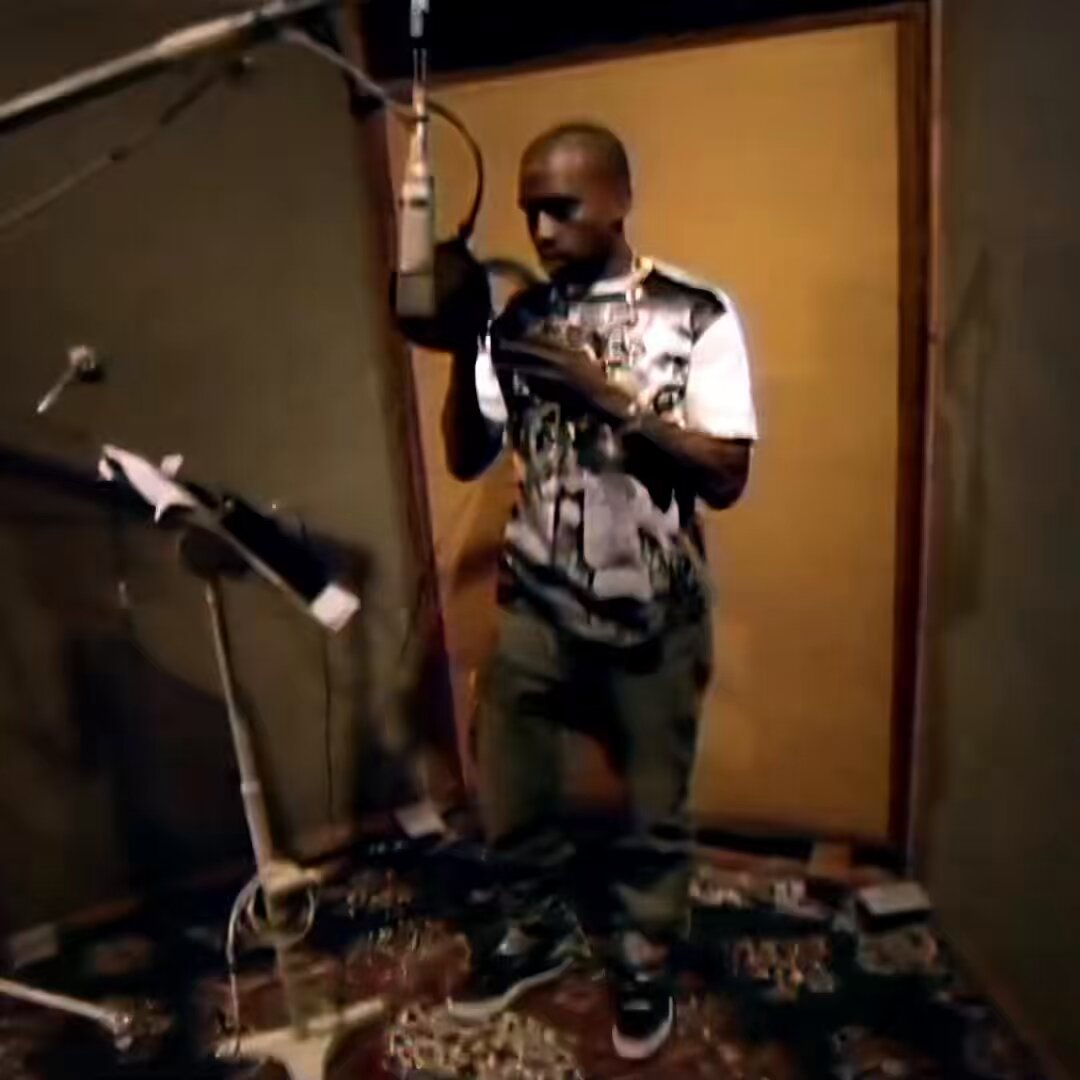
In 2007, Nike assembled Kanye West, Nas, Rakim, KRS-One & DJ Premier to create a hip hop anthem to celebrate the 25th anniversary of the Air Force 1 sneaker. โ€œRick Rubin did the original, and word on the street is they werenโ€™t satisfied with the outcome, says DJ Premier. It was a whole different tempo, and a whole different approach. Rob Stone said they might actually want to remix it. Actually, KRS-One called me and said, โ€˜Yo, I need you to help fix this record.โ€™ Then I saw the launch on MTV, and I figured thatโ€™s over with, when they launch the sneaker and everything. Then all of a sudden I got a call back again two or three weeks later saying, โ€˜Yo, they still want you to do something.โ€™ So they sent me the parts, and everything was different. Kanye, Nas, and KRS did the joint to the Rick Rubin beat. Rakim wanted to make his own beat. So he made his own beat, but at the wrong tempo. So when I got it I had to tweak it to get him to that tempo, but still keep him in the same tone of voice. You can do that with technology. So I had to keep him in the same key. He was at a 100 rpm, but it was 107, so thatโ€™s a big step. So I stay tuned in the same zero note that he pulled, sped it up, and it matched. Then I just pieced the whole thing together. โ€œFor the video, Rakim came here, and we turned all the lights down, and just made it really dark. Since heโ€™s the only one who came here, when you see the play back, itโ€™s ill. We shot him just with the acapella so we can bring him back in. When I saw that, even though Rakim was last on the song, in the video, I thought he should go first. And thatโ€™s how we flipped it around. The video was dope, man.โ€

Sleeping On Gems

127,635 views โ€ข 7 months ago