Video yรผkleniyor...

Video Yรผklenemedi

๐—œ ๐˜๐—ต๐—ถ๐—ป๐—ธ ๐—บ๐—ผ๐˜€๐˜ ๐—ฝ๐—ฒ๐—ผ๐—ฝ๐—น๐—ฒ ๐—ฎ๐—ฟ๐—ฒ ๐˜‚๐—ป๐—ฑ๐—ฒ๐—ฟ๐—ฒ๐˜€๐˜๐—ถ๐—บ๐—ฎ๐˜๐—ถ๐—ป๐—ด ๐˜„๐—ต๐—ฎ๐˜ ๐—ฝ๐—ฟ๐—ฒ๐—ฑ๐—ถ๐—ฐ๐˜๐—ถ๐—ผ๐—ป ๐—บ๐—ฎ๐—ฟ๐—ธ๐—ฒ๐˜๐˜€ ๐—ฎ๐—ฟ๐—ฒ ๐—ฎ๐—ฏ๐—ผ๐˜‚๐˜ ๐˜๐—ผ ๐—ฏ๐—ฒ๐—ฐ๐—ผ๐—บ๐—ฒ. For years, the internet trained us to consume opinions. One analyst says AI will change everything. โž  Another says weโ€™re in a bubble. โž  A CEO makes a bold prediction. โž  Twitter debates explode. โž  And...

12,039 gรถrรผntรผleme โ€ข 1 ay รถnce โ€ขvia X (Twitter)

0 Yorum

Yorum bulunmuyor

Orijinal gรถnderinin yorumlarฤฑ burada gรถrรผnecek

Benzer Videolar

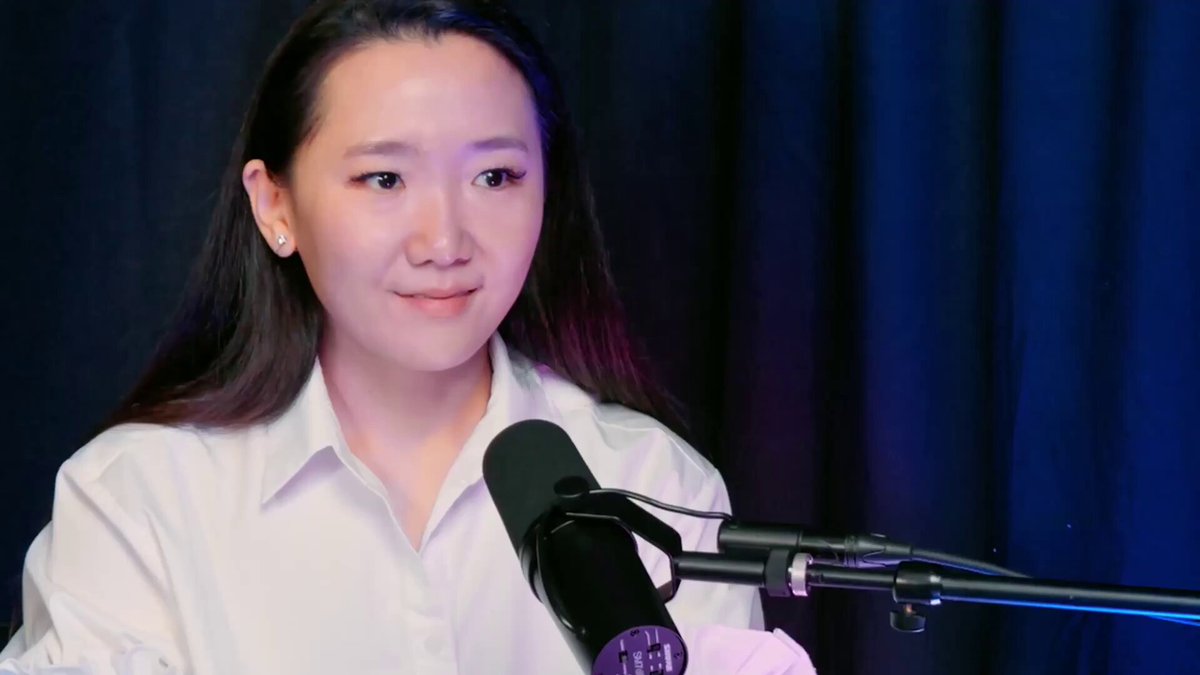
When I was 8 years old, growing up in Taipei, I called my aunt in San Francisco and asked: What is the best science and technology school in the world? She said MIT. I went on the internet, found it, and decided that was where I was going. All because of a Steven Spielberg movie about a little robot boy who wanted to find his mom. I grew up as an only child. What stayed with me from that movie was not just the technology. It was the possibility that one day, an artificial companion could understand how I felt. That was the first time I remember being moved by a technology that could change how humans experience reality. Years later, I did get to MIT. I studied AI before it became obvious. I became a machine learning engineer, built my first company, joined a $3.5B VC fund, left to build again, failed, started again, moved to New York alone, and built through one of the hardest crypto markets as a solo founder after the collapse of FTX. I kept going because I have always been drawn to technologies that change how humans understand the world. AI was the first version of that. Crypto and prediction markets are the next. I believe the future I am building toward is inevitable. The only question is whether I get to be one of the people who helps realize it. That future is a world where markets become information-first. The old model of trading was asset-first. It rewarded people with capital, financial education, institutional access, and better tools. But the next generation of markets will be shaped by information flow, narrative, attention, politics, culture, sentiment, and collective belief. Prediction markets make this shift obvious. They are one of the first asset classes where the value is informational, not purely financial in the traditional sense. Your edge does not have to come from technical analysis or a traditional finance background. Your edge can come from knowing something before it becomes consensus. From seeing reality shift before the market prices it in. Someone with firsthand knowledge of an unfolding event can have more alpha than an institution with a much bigger balance sheet. They turn belief into price. But price alone is not enough. Polymarket shows what the market thinks will happen. ARES is built to understand why the market is changing. We are building an information-first trading platform for prediction markets and other narrative-driven assets. One that does not just show traders what is moving, but helps them understand why odds are shifting, why narratives are forming, and why the future is moving in a certain direction. But the bigger vision is not just a better trading terminal. We want to turn every trade into an information object. Every position can become a piece of content. Every market view can become a signal. Every trader can build a reputation around conviction and accuracy. Most feeds rank information by engagement. Who got the most likes. Who already has the biggest audience. Markets allow us to rank information differently. How much are you willing to stake on what you believe? How often have you been right? That creates a fundamentally different kind of media feed. One powered by conviction, track record, and market incentives. One that becomes harder to fake. One that can help people understand not just what the market thinks will happen, but why reality is changing. I also believe prediction markets are one of the few markets where humans can still have a real edge over AI. AI knows what is already on the internet. But humans experience reality before it becomes data. We see things before they become headlines. We hear things before they become reports. We feel shifts before they become consensus. If those signals can be priced, organized, and made legible, then more people can gain access to financial opportunity, information agency, and power. That is what Ares is building toward. I spent years watching founders from the VC side of the table, always thinking: I wish that was me. Now it is. I talked about this journey and the thesis behind Ares in my conversation with Dmitry on Predict Time If you are building, trading, investing, or thinking deeply about prediction markets and information markets, I would love for you to watch it. And if you want to collaborate on what we are building, contribute to the vision, or join the team, we are always open to exceptional people across functions. DMs are open.

Morgan Lai

302,663 gรถrรผntรผleme โ€ข 2 ay รถnce

Today, I had the privilege of speaking to the HUMAIN team at our CEO Townhall. I often say this, and I mean it deeply: I am living my dream... working in a country where energy goes beyond oil. Itโ€™s in the people, the ambition, and the belief in building a better future. Saudi Arabia is unlike anywhere else. The hospitality is second to none. The vision is bold. And the commitment to shaping the future is real. What we are building at HUMAIN is foundational. We are not only participating in the AI era, but redefining it. Shifting the narrative from experimentation to real value creation. But more importantly, we are not afraid to challenge what an organization should look like in an AI-native world. In fact, we are pioneering it. We are actively reshaping how we work: - Moving toward a future where AI agents do the work - Empowering our people to focus on high-value thinking, creativity, and decision-making - Building strong foundations in security, governance, and guardrails - Continuously enhancing our models, systems, and operating frameworks This is not theory. This is happening now. What I saw today from our teams gives me absolute confidence: - Products that are not just innovative, but game-changing - Teams building at a speed and quality that challenge global norms - A culture focused on execution, ownership, and impact At #LEAP2026 this year, we will go beyond vision. We will show: Real demos. Real products. Some of them are a first of their kind in the world. And they are built right here in Saudi Arabia. I could not be more proud of this team. What they have accomplished in such a short time is remarkable. This is just the beginning. The future is not something we wait for. Itโ€™s something we build. #HUMAIN #LEAP #TheEndOfLimits #AI

Tareq Amin

17,856 gรถrรผntรผleme โ€ข 2 ay รถnce

Mo Gawdat believes up to 30% of jobs in certain sectors could disappear by 2028. That stopped me in my tracks. Mo was one of the first people to come on this podcast and warn me about AI, long before most of the world was talking about it. At the time, it felt early. Now, it feels like the world is catching up to what he was seeing. Iโ€™m still trying to understand what AI actually means for our lives. Not just whether it can write emails, create images or make us more productive. I mean what it does to jobs. What it does to power. What it does to education. What it does to human connectionโ€ฆ Thatโ€™s why I wanted to have this discussion with Mo again. What makes Mo worth listening to is that he saw these systems inside Google years before most of us had even heard the term AI. His book *Scary Smart* now feels like it was written for this exact moment. Let me explain why this discussion matters. Mo believes weโ€™re not just entering an AI revolution. Weโ€™re entering a period where AI, robotics, economics, surveillance, digital currencies and global instability are all colliding at the same time. Thatโ€™s a lot for any of us to process. We spoke about: - The jobs Mo believes are most at risk from AI. - Why he believes that AI is actually underhyped! - The mistake almost everyone is making with ChatGPT. - The prediction that changed even his own view of the future. The part that stayed with me was this idea that human connection may become the real currency. Because if AI can produce the information, write the report, analyse the data, then what is left? I donโ€™t think this conversation gives neat answers. Thatโ€™s probably why itโ€™s worth watching. It helped me think more honestly about whatโ€™s coming.

Steven Bartlett

27,598 gรถrรผntรผleme โ€ข 1 ay รถnce

Sam Altman's new interview: AI should not be designed to pursue goals that are disconnected from human needs. People must remain at the center of AI development. โ€œI have no interest in building a super-smart AI that accomplishes some non-human goals. People should react. People should say, โ€˜Hey, this is what I want, and this is what I do not want.โ€™ I do not think the issue is that we have failed to explain the benefits. We say, โ€˜AI is going to cure a bunch of diseases,โ€™ and people say, โ€˜Okay, that is great, but that is not really my question. My question is: What is my role in the future? What is my economic future? What is my agency? How do I know that my kids and my family will still be able to have fulfilling, creative expression, struggle, drive the world forward, grow, and do this thing together in a way that has worked for a long time?โ€™ When people in AI say, โ€˜Sure, there are going to be no jobs,โ€™ or โ€˜50% of jobs are going to go away,โ€™ or โ€˜90% of jobs are going to go away,โ€™ and โ€˜AI is going to be smarter than you at everything,โ€™ and โ€˜We will give you some basic income, but you are not really going to have a role,โ€™ that is horrible. And by the way, if an AI company says, โ€˜Maybe we are going to destroy all the jobs, and we will be the most valuable company in the world,โ€™ people should look at you like, โ€˜Yeah, that is a terrible message.โ€™ I do not think the problem is that we have not articulated the upsides. I think people actually believe us. They hear, โ€˜AI may cure your cancer,โ€™ and they think, โ€˜That sounds great.โ€™ I think we, as an industry, have failed to explain how people stay in control of determining the future at every step, and how people can still have a meaningful life in all the ways we care about.โ€ ---- From "CNBC Television" YouTube channel, (link in comment)

Rohan Paul

79,028 gรถrรผntรผleme โ€ข 1 ay รถnce

"Courage is far shorter in supply than genius." - Peter Thiel "One of the challenges in writing a book about entrepreneurship or teaching a class on this is that there is sort of no formula. And I think science always starts with a number two. It starts with experiments you can repeat, things you can do over and over again. But there's sort of a sense in which every moment in the history of business, every moment in the history of technology happens only once. The next Mark Zuckerberg will not be starting a social networking company. The next Larry Page will not start a search engine. The next Bill Gates will not be starting an operating system. And so if you are trying to copy these people, you're in some sense not learning from them. And so I think one of the really big challenges in teaching or writing about entrepreneurship is what can you say about being an entrepreneur at all when the key thing is always to do something new, different, that's not precisely been done before. And so the point of departure I start with in Zero to One is a somewhat indirect approach by asking a series of contrarian questions. The business question is, what great company is nobody starting? The more intellectual version of this question is, tell me something true that very few people agree with you on. And this is a fantastic interview question. It turns out to be quite a hard question, even when people can read on the internet that you ask of everybody who comes in the door, it still is a hard question. It's one of those unusual questions where if you know it's on the test, it's still hard. And it's hard not just because we sort of think that new things require brilliance or something like that, but because it's socially difficult. If I ask you that question, if you tell me something like the education system is screwed up or our political system doesn't work very well, those are true answers, but they're not actually good answers because all of us already know them to be true. The good answers are ones that are somehow uncomfortable that the person interviewing you does not actually want to hear. And I think we live in this world where courage is in far shorter supply than genius. And so it is sort of this, it is in a sense this problem of political correctness properly understood, is this very deep, very, very broad sort of a problem."

Founder Mode

12,339 gรถrรผntรผleme โ€ข 5 ay รถnce

Bill Gates just settled the biggest debate in Silicon Valley. Is AI a bubble? Yes. And it doesnโ€™t matter. Gates: โ€œIf what we mean is like tulips in the Netherlands, that they went to look back and said, what the heck, there was nothing thereโ€ฆ No, thatโ€™s not where we are.โ€ There are two kinds of bubbles in history. The tulip craze. And the dot-com crash. Tulips left nothing. The internet left everything. Gates: โ€œIn the end something very profound happened. The world was very different.โ€ AI is following the dot-com playbook exactly. Irrational capital. Frenzied competition. Companies burning money faster than they can build business models. And underneath all of it, a technology that is changing everything. Permanently. Gates: โ€œAI is the biggest technical thing ever in my lifetime.โ€ Not the internet. Not the smartphone. Not cloud computing. The biggest. Ever. In his lifetime. Gates: โ€œSome of them will commit to data centers whose electricity is too expensive. Or theyโ€™ll buy a generation of chips and wonโ€™t have captured all their value before the next one comes along.โ€ Billions are being set on fire right now. Not because the technology isnโ€™t real. Because the frenzy is moving faster than the business models can catch up. The winners of the dot-com era werenโ€™t the ones who spent the most. They were the ones who survived long enough for the dust to settle. But hereโ€™s the part nobody wants to hear. Gates: โ€œIf you want to be a tech company, you donโ€™t get to say no. You know, letโ€™s check out of this race.โ€ Sitting out isnโ€™t safety. Itโ€™s a slower death. The risk of investing blindly is losing capital. The risk of not investing is losing the company. Gates: โ€œAbsolutely. There are a ton of these investments that will be dead ends.โ€ Some of these companies will be wiped out. Not because AI isnโ€™t real. Because they chased the hype without the foundation to survive the correction. The technology is not the bubble. The valuations are the bubble. And like every bubble before it, when it corrects, what remains will be more valuable than what existed before the frenzy started. You donโ€™t win this era by spending the most. You win by surviving long enough to be one of the ones left standing.

Dustin

253,699 gรถrรผntรผleme โ€ข 4 ay รถnce

Elon Musk just said something that should terrify people more than any doomsday prediction. Not that AI will make humanity poor. That it will make us endlessly rich. Musk: โ€œIt wouldnโ€™t be Universal Basic Income, it would be Universal High Income.โ€ The entire AI debate has been about whether people can survive automation. Musk is the only one asking what happens after survival is solved. Infinite goods. Infinite services. No shortage of anything for anyone on Earth. Work doesnโ€™t become scarce. It becomes optional. People hear this and picture paradise. Heโ€™s pointing at something deeper. Musk: โ€œIf the AI can do everything that you can do, but better, then what is the point of doing things?โ€ That question will define the next century more than any technical breakthrough. For ten thousand years, human sanity was anchored to one thing. Necessity. You built because youโ€™d freeze. You hunted because youโ€™d starve. You provided because the people around you would die if you didnโ€™t. The struggle was never a flaw in the system. It was the scaffolding of meaning itself. Every religion. Every philosophy. Every civilization that ever lasted more than a century built its framework for purpose on the same foundation. That life is hard. And your job is to push through it. When the machines produce everything, they donโ€™t just take the labor. They take the scaffolding. The interviewer compared this future to the peak of Rome. Musk agreed. The same arc, powered entirely by silicon. Rome at its height didnโ€™t collapse from invasion. It collapsed from comfort. Citizens outsourced war to mercenaries. Labor to slaves. Governance to bureaucrats. When nothing was left to struggle for, they filled the void with spectacle and consumption. The empire didnโ€™t run out of resources. It ran out of reasons. Most people in the AI debate are still worried about extinction. Musk is already thinking one layer past everyone else. Not how to keep people alive. How to keep them whole. The machines are not going to starve us. They are going to overfeed us until we forget why we were ever here.

Dustin

31,272 gรถrรผntรผleme โ€ข 2 ay รถnce

Bill Gates on why AI isn't a bubble, but why many AI investments will still fail: "AI is the biggest technical thing ever in my lifetime. It is so profound and therefore its influence is hard to overstate." Gates sees the underlying value as undeniable, with intelligence on demand spanning medical advice, tutoring, and drug design. "The value is extremely high, just like creating the internet ended up being in net very very valuable." But he draws a critical distinction between two types of bubbles: The tulip kind, where people look back and realise there was nothing underneath. And the internet kind, where something transformative was happening, but most companies still got wiped out. Gates is clear about which one AI is: "If what we mean is like tulips in the Netherlands... No, that's not where we are." AI is the internet, not the tulips. But just like the internet, the frenzy around it is creating enormous risk. Overpriced electricity commitments, data centers built in the wrong locations, and hardware that becomes obsolete before it pays for itself. "Some of these companies will be glad they spent all this money. Some of them, they'll commit to data centers whose electricity is too expensive." And yet, sitting it out isn't an option either. "If you want to be a tech company, you don't get to say, 'Let's check out of this race.'" The technology is transformative. But a ton of today's investments will turn out to be dead ends. And when the dust settles, the companies that built something durable will outlast the ones that spent the most trying to keep up.

Big Brain AI

25,681 gรถrรผntรผleme โ€ข 4 ay รถnce

Inside the Quant AI Ecosystem Where Intelligence Meets Markets The crypto and financial landscape is evolving fast, but one problem has remained constant: fragmentation. Traders and users are forced to jump between tools, charts, news feeds, analytics dashboards, sentiment trackers, just to answer one simple question: Whatโ€™s actually happening in the market right now? This is exactly the gap the Quant AI ecosystem is stepping into. A unified intelligence layer for markets Quant AI is building an ecosystem where market interaction becomes simple, conversational, and accessible. Instead of navigating multiple platforms, users can interact directly with markets using chat and voice. That means: โž  Asking for real-time market insights in plain language โž  Tracking smart money movements across assets โž  Understanding trends in crypto, stocks, and commodities in one place โž  Acting faster with clearer, AI-driven context Itโ€™s not just another analytics tool, itโ€™s an attempt to reshape how information flows in trading environments. Why the ecosystem approach matters Most platforms solve isolated problems: One for charts. One for signals. One for news. But Quant AI is moving toward something broader, an ecosystem where intelligence is centralized, and decision-making becomes faster and more intuitive. The goal is simple: Reduce complexity. Increase clarity. Improve execution. And in markets where speed and information matter, that shift is significant. Start here:๐Ÿ‘‡ Quant AI #QuantAIPioneers

The Agentic Alpha

16,825 gรถrรผntรผleme โ€ข 1 ay รถnce

What you're looking at started as something that most people drive past without a second thought. - Industrial - boring - overlooked And someone looked at it and saw something no one else was seeing. That's the whole game here. You don't have to invent something brand new to make serious money. You just have to see potential where everyone else sees limitations. You have to look at what already exists and imagine it just a little differently. So when you turn something familiar into something unexpected, it becomes shareable and memorable. It becomes the thing that people can't stop talking about because it's different in a world where everything feels the same. People will literally travel hours just to stay somewhere like this because different is the experience now. Nobody cares about another cookie cutter hotel room that they've seen a thousand times, but this gets filmed and posted and sent to friends with the caption "you have to see this place" And suddenly you're booked out months in advance because you gave something people can't get anywhere else. I love that the raw materials here aren't special, it's just space that was sitting there unused and cheap to acquire The success of this is found in the willingness to look at what everyone else ignored and ask "what could this become?" Instead of just accepting what currently is. That's where the opportunity is. There are thousands of: - shipping containers rotting in fields - old grain silos sitting empty - warehouses no one's using - barns that haven't been touched in decades And every single one of them could become something people would pay to experience if someone just had the vision to see it through. You don't need to build it from scratch. You just need to reimagine what's already sitting in front of you. Because the world is full of overlooked things waiting for someone to look at them differently. And I don't care if AI generated the video because the inspiration you get from it is still the same.

Chris Koerner

18,208 gรถrรผntรผleme โ€ข 4 ay รถnce