Video yükleniyor...

Video Yüklenemedi

Ana Sayfaya Dön

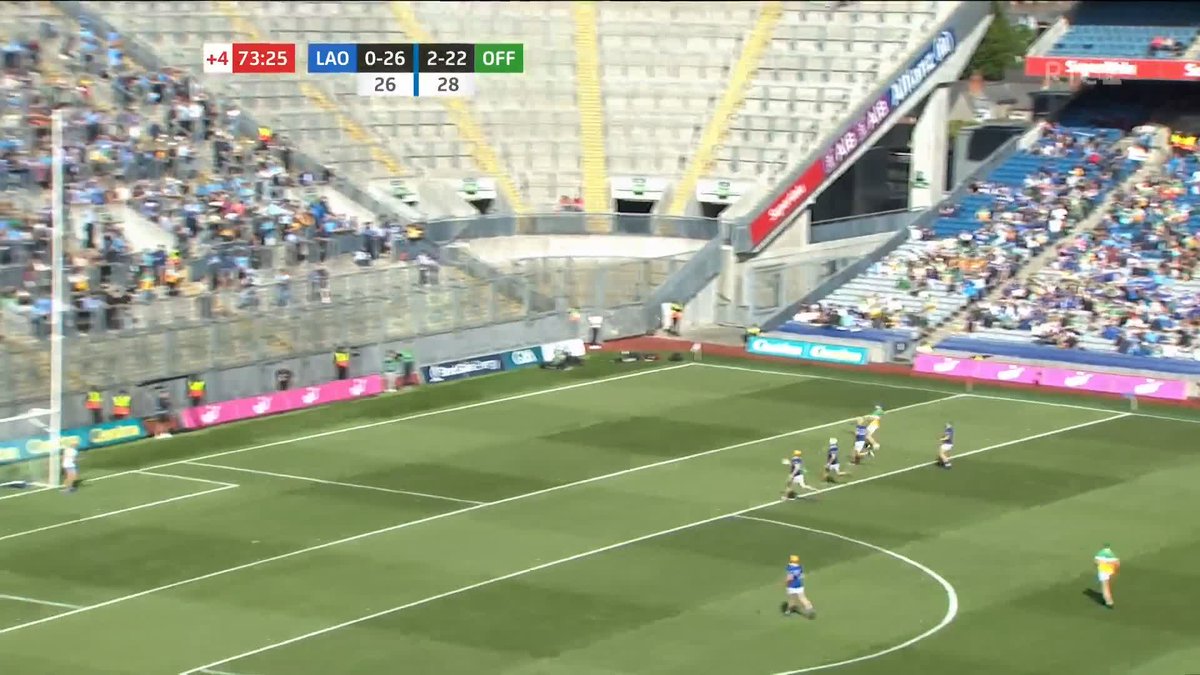
𝙱𝚒𝚐 𝚃𝚒𝚖𝚎 𝙿𝚕𝚊𝚢𝚎𝚛! 𝙱𝚒𝚐 𝚃𝚒𝚖𝚎 𝙿𝚘𝚒𝚗𝚝! Adam Screeney doing what he does best in tonight’s Leinster U20 Final. #LeinsterGAA | Official Offaly GAA

62,939 görüntüleme • 2 yıl önce •via X (Twitter)

0 Yorum

Yorum bulunmuyor

Orijinal gönderinin yorumları burada görünecek
Benzer Videolar

"Elon Musk is not an engineer." John Carmack: Elon is definitely an engineer. He is deeply involved with technical decisions at SpaceX and Tesla. He doesn’t write code or do CAD today, but he is perfectly capable of doing so. Robert Zubrin: When I met Elon it was apparent to me that although he had a scientific mind and he understood scientific principles, he did not know anything about rockets. Nothing. That was in 2001, by 2007 he knew everything about rockets – he really knew everything, in detail. You have to put some serious study in to know as much about rockets as he knows now. This doesn't come just from hanging out with people. Eric Berger: Elon is the chief engineer in name and reality. Josh Boehm: Elon is both the Chief Executive Officer and Chief Technology Officer of SpaceX, so of course he does more than just some very technical work. He is integrally involved in the actual design and engineering of the rocket, and at least touches every other aspect of the business. Elon is an engineer at heart, and that’s where and how he works best. Garrett Reisman: He’s obviously skilled at all different functions, but certainly what really drives him and where his passion really is, is his role as Chief Engineer. That’s the part of the job that really plays to his strengths. Tom Mueller: Elon and the Propulsion department are leading development of the SpaceX engines, particularly Raptor. Kevin Watson: Elon is brilliant. He’s involved in just about everything. He understands everything. If he asks you a question, you learn very quickly not to go give him a gut reaction. He wants answers that get down to the fundamental laws of physics. One thing he understands really well is the physics of the rockets. He understands that like nobody else. The stuff I have seen him do in his head is crazy. He can get in discussions about flying a satellite and whether we can make the right orbit and deliver Dragon at the same time and solve all these equations in real time. It’s amazing to watch the amount of knowledge he has accumulated over the years.

Yatharth Mann

612,475 görüntüleme • 1 yıl önce

On January 7, 1943, Nikola Tesla died alone in Room 3327 of the Hotel New Yorker. He was 86 years old. A maid found him two days later after he had left a “do not disturb” sign on his door. The official cause was coronary thrombosis. But the deeper truth was quieter — years of isolation, poverty, and a world that had moved on without the man who helped power it. This was the inventor of alternating current, the system that still runs through our homes today. He pioneered wireless transmission, radio technology, and electric motors. He held hundreds of patents and imagined ideas — like wireless communication and renewable energy — long before they became reality. Yet by the end of his life, he was nearly penniless. In his final years, Tesla lived simply. He survived mostly on milk, bread, honey, and vegetable juice. Every day he walked to nearby parks to feed pigeons, especially one white pigeon he loved deeply. He once said he loved her as a man loves a woman. When she died, something in him seemed to fade too. There was a time when Tesla dazzled New York society, lighting bulbs with his bare hands and creating artificial lightning in his laboratory. Investors once backed him. Crowds once admired him. But as his ideas grew more ambitious — especially his dream of free wireless energy for the world — funding disappeared. He became known more as an eccentric than a genius. And yet, when he died, the world paused. Thousands attended his funeral. Leaders and scientists sent tributes. Years later, the Supreme Court recognized his priority in radio patents. History slowly corrected itself. The world he electrified had not truly forgotten him — it had simply taken time to understand him. Today, his name lives on in science, technology, and even in companies that shape the modern age. Tesla died alone in a hotel room, feeding pigeons while the current he created hummed through cities. He did not die forgotten. He died having changed the world — and that legacy still shines. It makes you wonder how many visionaries we ignore while they’re still alive. How many brilliant minds are dismissed as “too different” or “too ahead of their time” until it’s too late? What do you think — does the world truly value its geniuses, or only recognize them after they’re gone?

Imtiaz Mahmood

1,250,565 görüntüleme • 7 ay önce

The Man Who Gave Away Patagonia Doug Tompkins sold his stake in The North Face for $50,000.  He used the money to co-found Esprit. Then he sold that too, and did something almost no one does with a fortune: he disappeared. He moved to the tip of South America in 1990 with a theory most businessmen would find absurd. He believed the best thing a rich man could do was buy wilderness before someone else destroyed it, then hand it back to the country it belonged to. Together with his wife Kris, a former CEO of Patagonia clothing, they bought and conserved more than 2 million acres across Chile and Argentina. For context: that is roughly the size of Connecticut and Rhode Island combined. Most of it had been degraded farmland. Overgrazed, stripped, exhausted. The Valle Chacabuco ranch alone had been one of South America’s largest sheep operations. They bought it in 2004 for $10 million, then spent another $55 million over 20 years restoring the grasslands.  Pumas returned. Guanacos returned. The land remembered what it was. The Chileans were not immediately grateful. Many locals saw it as a land grab. An American buying millions of acres and telling them to change their way of life. Some accused him of planning to split the country in two. Others claimed he was building a nuclear waste site. He kept buying land anyway. The deal his wife finalized in his name after his death became the largest-ever private land donation to a country. Over 1 million acres handed directly to Chile, triggering government protections on another 9 million. Five new national parks. Three expanded. A conservation corridor stretching 1,250 miles. He died on December 8, 2015, in a kayaking accident on a Patagonian lake, surrounded by friends including Yvon Chouinard. He had called what he was doing “paying rent for his time on the planet.” There is a certain kind of person who builds something great and then builds something greater by walking away from it. Tompkins is the rarest version: he walked away from two fortunes, bought a wilderness, and gave it to strangers. The land is still there. The sheep are gone. If this kind of story is what you read on weekends, you might belong here. Gandalv / Gandalv

Gandalv

147,150 görüntüleme • 5 ay önce