AFRICAN & BLACK HISTORY
@AfricanArchives • 1,112,035 subscribers
Sharing African and Black History Daily to the World || support us on https://t.co/McpWmyvMQ8
Shorts


Videos

Desegregation Bussing On First Day Of School In Dallas, 1971.
AFRICAN & BLACK HISTORY24,569 Aufrufe • vor 18 Stunden

White residents react to a Black Family moving into all-white Levittown, PA, 1957.
AFRICAN & BLACK HISTORY534,987 Aufrufe • vor 24 Tagen

FBI informant William O'Neal, infiltrated the Black Panthers and set up Fred Hampton for $300.
AFRICAN & BLACK HISTORY3,751,796 Aufrufe • vor 5 Monaten
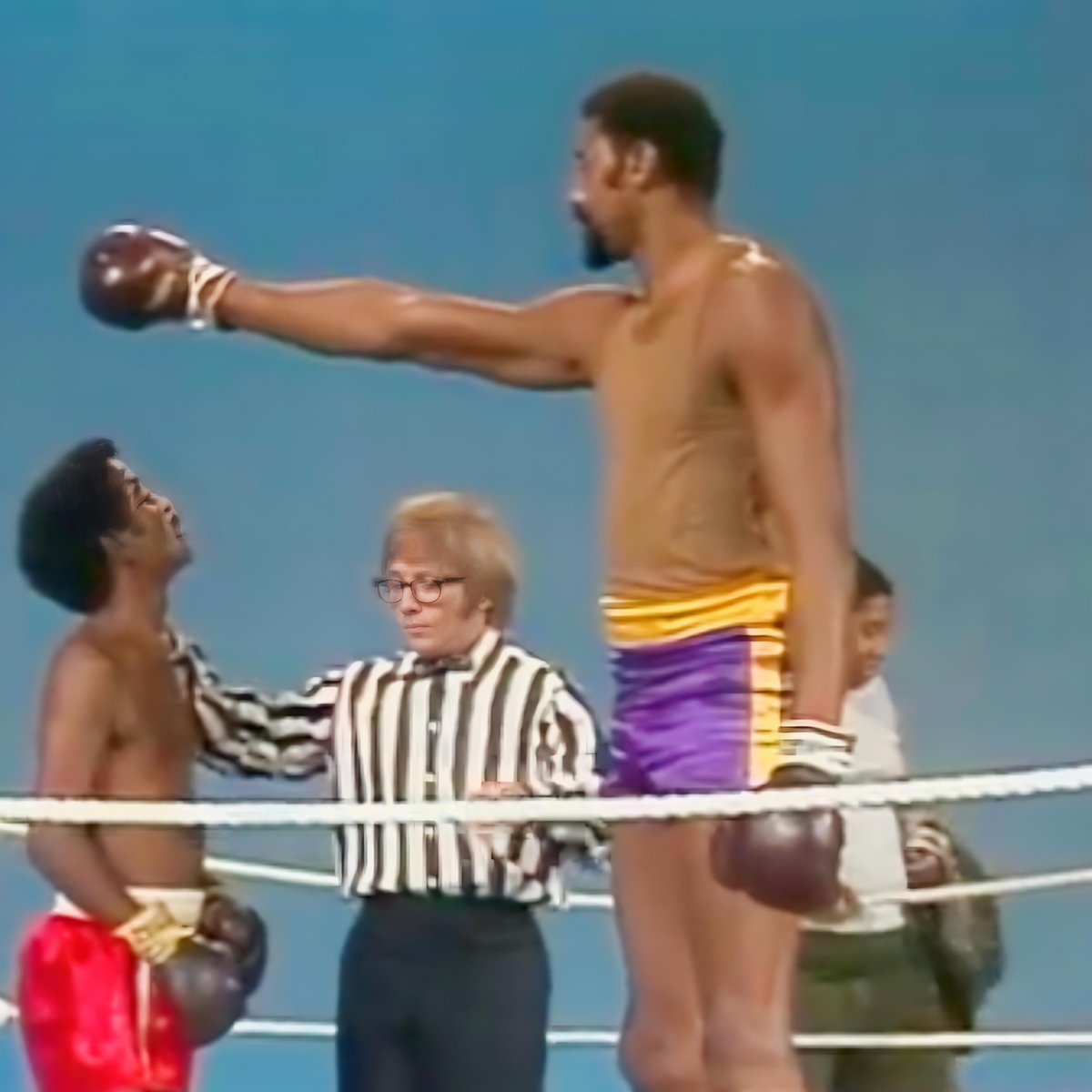
Sammy Davis Jr. Vs. Wilt Chamberlain boxing match 😂
AFRICAN & BLACK HISTORY19,270,069 Aufrufe • vor 2 Jahren

Former Sharecroppers Talk About Life On The Field And Picking Cotton, 1968.
AFRICAN & BLACK HISTORY8,160,087 Aufrufe • vor 1 Jahr

1956 Debate on Racism, Segregation and Exclusion in Africa.
AFRICAN & BLACK HISTORY509,790 Aufrufe • vor 1 Monat

Difference Between How The East and The West Depicted Black People in Animation History.
AFRICAN & BLACK HISTORY5,280,871 Aufrufe • vor 1 Jahr

Member of the Black Panther party explains why they’re opening a clinic in Chicago, 1969.
AFRICAN & BLACK HISTORY6,785,693 Aufrufe • vor 1 Jahr


The arrest of Patrice Lumumba, 1960. Patrice Lumumba🇨🇩 was the first legally elected prime minister of D.R Congo. He was assassinated in 1961 following a military coup supported by U.S.A & Belgian imperialism which was admitted by the State Dept in 2013 authorized by president Eisenhower. For over a 100 years, the US and Belgium have played key roles in shaping Congo's destiny. In April 1884, seven months before the Berlin Congress, the US became the first country in the world to recognise the claims of King Leopold II of the Belgians to the territories of the Congo. In the few months prior to his assassination, Lumumba had been the first elected prime minister of the Republic of the Congo, newly founded on June 30, 1960. A revolutionary nationalist, he was a major leader in the country’s fight for independence from Belgian colonialism. He intended to use the country’s vast resources to improve the lives of the Congolese people. They had endured unspeakable suffering under Belgian rule, with literally millions having died on its plantations and in its mines. His rise to power alarmed Belgium. While having been forced to grant the Congolese people formal independence, it had no intention of giving them real independence or surrendering its economic interests in the mineral-rich land—rubber, ivory, and copper, diamonds, gold & more. Nor did U.S. imperialism. By 1960s, it too was exploiting the Congo’s resources & was determined to expand its economic, political & military influence in Africa. It wanted to establish a compliant, bought-off government that wouldn’t stand in its way & they saw him as a threat. The U.S. with Belgian assistance, began plotting to remove Lumumba from office and silence him...for good. To accomplish this, they took advantage of the fact that the country was not yet really in the hands of, as Lumumba had put it, “its own children.” Behind the façade of formal independence, Belgian military officers still controlled the Congo’s army and police. The mineral corporations still had tight control over the wealth of the country and over an apparatus of corrupt politicians. Secret agents of the U.S. CIA, Belgian intelligence, and other powers were working day and night to keep power firmly and permanently in the hands of forces subservient to imperialism. Among those eager to collaborate with imperialism was Joseph Mobutu. He had been a colonel in the Belgian colonial army, and was made head of the “new” imperialist-controlled army. And Mobutu was working hand-in-hand with the CIA on how to kill Patrice Lumumba. To carry out the CIA’s assassination directive, Mobutu staged an army coup d’etat, suppressing political organizations in the capital. On January 17, 1961, a firing squad shot to death the Congolese anti-colonialist fighter and leader Patrice Lumumba. His body was buried, but then dug up and dismembered and burned and dissolved in acid so there would not even be a corpse around which his supporters could rally. If you love our content and would like to support the page, you can buy us a coffee here:
AFRICAN & BLACK HISTORY261,287 Aufrufe • vor 1 Monat



Happy birthday to the Father of Rock N' Roll, the legendary, Chuck Berry! He would have been 100 today! Chuck Berry is perhaps the defining musician of the early rock & roll era, the one figure responsible for the music's sound, style, and sensibility that created the blueprint for the generations that followed. A guitarist who wanted to play like T-Bone Walker and croon like Nat King Cole, Berry married these two styles to a swinging beat that spliced jump blues with juke joint R&B and hillbilly boogie -- a blend that arrived nearly fully realized with his 1955 debut single "Maybellene," a record that topped the R&B charts and crashed into the pop Top Ten. Berry quickly followed "Maybellene" with a series of fleet-fingered, quick-witted singles like "Roll Over Beethoven," "School Day," "Sweet Little Sixteen," and "Johnny B. Goode" that constitute one of the richest and deepest American songbooks of the 20th century, a collection of tunes that captures the exuberance of post-war popular culture, a period filled with automobiles, teenagers, and rock & roll music. It was also a period of great racial strife, something Berry alluded to in his work -- witness the Black pride of "Brown Eyed Handsome Man." Berry's prison sentence for violating the Mann Act coincided with a cooling of rock & roll's commercial fortunes in the early 1960s. When he was released, the Beatles and the Rolling Stones had revived rock & roll, an opening Berry seized with a series of terrific hit singles: "No Particular Place to Go," "You Never Can Tell," and "Nadine." During the late '60s, Berry became the only one of his rock & roll peers to actively court a younger audience of hippies, a move that eventually paid off in 1972 when the ribald "My Ding-A-Ling" gave him his only number one hit. Berry effectively retired from active duty after 1979's Rockit, but he continued to play regular gigs with pickup bands and experienced the occasional revival, such as Taylor Hackford's 1987 celebratory concert film and documentary Hail! Hail! Rock 'N' Roll. During his later years, Berry retired to his hometown of St. Louis, playing regular gigs at Blueberry Hill until the late 2010s. Upon his 90th birthday in 2016, Berry announced the release of his first album in decades but he would not live to see the release of Chuck in 2017; he passed on March 18, 2017.
AFRICAN & BLACK HISTORY32,555 Aufrufe • vor 6 Tagen

Black Kids Harassed In a Predominantly White Neighborhood in Rosedale, Queens, 1976.
AFRICAN & BLACK HISTORY1,615,308 Aufrufe • vor 11 Monaten


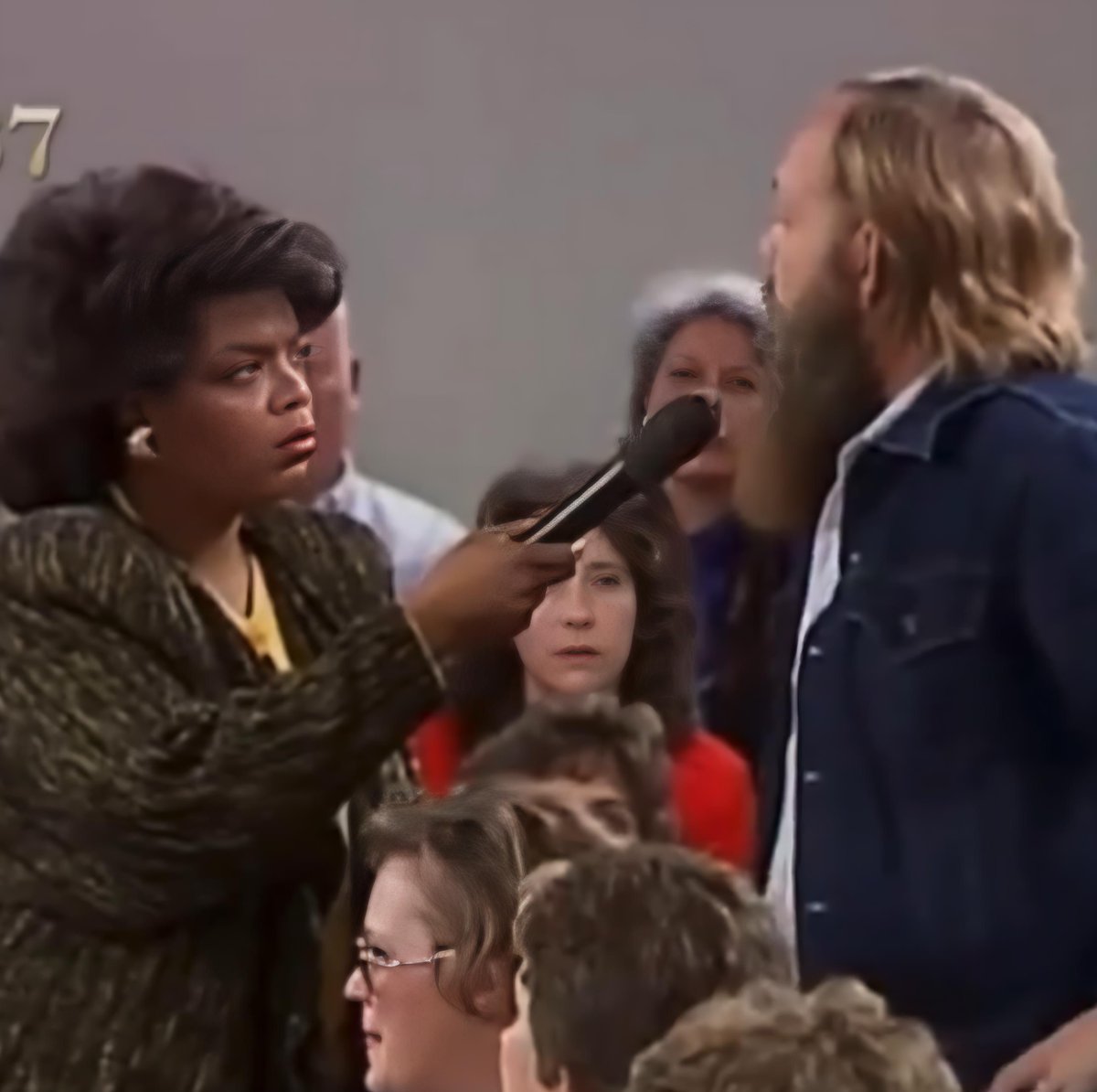
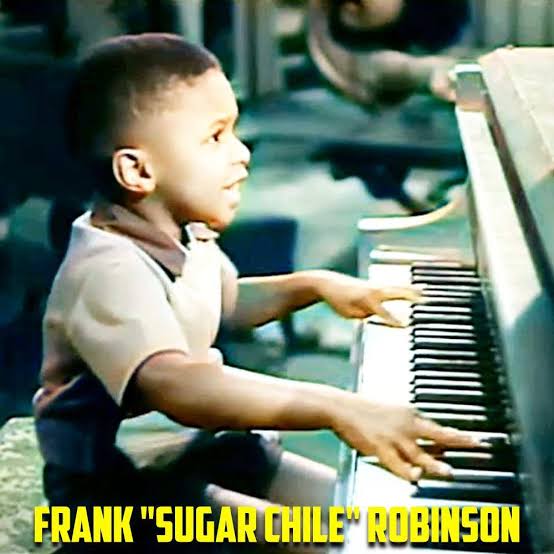
Self-taught, child prodigy piano player, Sugar Chile Robinson.
AFRICAN & BLACK HISTORY5,425,539 Aufrufe • vor 3 Jahren

Black labor exploitation via share cropping in the 1950s — Debt Slavery.
AFRICAN & BLACK HISTORY5,173,712 Aufrufe • vor 3 Jahren