

#BMH365 🎶🎤
@BlackMusicHstry • 5,572 subscribers
Curating daily music posts from African-descended communities worldwide + the Black American internal diaspora (U.S. Great Migration). #CutTheCheck
Videos

One of the reasons Betty Wright’s influence never disappeared is because later generations kept pulling her energy directly into the music. The irony of Beyoncé sampling Betty Wright’s “Girls Can’t Do What the Guys Do” on “Upgrade U” is that Beyoncé spends the entire track proving the opposite. Betty’s 1968 song, written by Clarence Reid and Willie Clarke and produced by Brad Shapiro and Steve Alaimo, spoke to the double standards, gender expectations, and power dynamics from a young Black American woman’s perspective, however, decades later, Beyoncé flipped that tension into a modern power statement, showing a woman matching ambition, money, image, strategy, and partnership on her own terms. It is a reminder that Betty Wright was never just a “vintage Soul singer.” Her records became part of the DNA of modern Black American music to be sampled, replayed, quoted, and reinterpreted by artists who grew up on the emotional honesty, groove architecture, and woman-centered storytelling she helped pioneer.
#BMH365 🎶🎤85,104 görüntüleme • 2 ay önce


In this 2023 backstage clip connected to CBS’ “A GRAMMY Salute to 50 Years of Hip-Hop,” Will Smith (Will Smith) reflects on the story behind “Summertime,” including the long-discussed influence of Rakim’s (Rakim Allah) vocal style on the record. This moment gives context for how a relaxed 1991 summer anthem also carried a deeper Hip-Hop lineage conversation beneath a record that earned DJ Jazzy Jeff (DJ Jazzy Jeff) & The Fresh Prince the 1992 Grammy Award for Best Rap Performance by a Duo or Group.
#BMH365 🎶🎤34,938 görüntüleme • 2 ay önce

In part 1 of this rare, understated interview from 1970, we catch a 20-year-old Stevie Wonder standing at the literal crossroads of his career. Just months away from his 21st birthday and his historic break for artistic independence, Stevie discusses his shift into production and his burgeoning collaborative spirit. It is a quiet, profound glimpse of the man right before he moved to New York City to build the "Classic Period" and change the DNA of popular music forever. Note his wit and unwavering confidence, the hallmarks of a visionary ready to claim his own narrative. Young Stevie also challenges the very definition of the word “Soul,” arguing that 'Soul' wasn't a racial category, but a depth of feeling, a '20/20 vision in the dark' that allowed him to communicate across the boundaries of sight and sound. "Music is a world within itself, with a language we all understand." — Stevie Wonder
#BMH365 🎶🎤30,208 görüntüleme • 2 ay önce

On Friday, December 2, 1988, ABC News’ “20/20” aired an archival investigative segment that revisited one of the most painful parts of Jackie Wilson’s story: not only the tragic 1975 onstage collapse that left him severely incapacitated, but the financial exploitation, royalty disputes, debt, and legal battles that surrounded his name while his music continued to generate value. The report examined allegations tied to Brunswick Records and Wilson’s longtime manager Nat Tarnopol, including disputed royalty accounting, questionable advances, and contested songwriting and publishing issues. Tarnopol and other Brunswick executives had been convicted in 1976 in a federal case before those convictions were later overturned on appeal, but public summaries of the case still describe a record of evidence around artists being deprived of royalties. That is what makes the Jackie Wilson story so devastating. Here was a man whose voice helped build the bridge between Rhythm and Blues, Rock and Roll, Pop, and Soul; whose records kept moving through radio, film, reissues, and cultural memory; and yet the wealth connected to that catalog became tangled in contracts, accounting, debt, and legal systems he could no longer personally fight. This is not just a Jackie Wilson story. It is part of a larger Black Music History pattern: Black artists creating catalogs that feed the world while labels, managers, publishers, estates, tax burdens, bad contracts, and industry gatekeepers often control, delay, dispute, or drain the money attached to that genius. Remembering Jackie Wilson means honoring “Mr. Excitement,” the voice, the body, the stage fire, and the records. But it also means remembering the business side of the archive: the receipts, the missing royalties, the disputed ownership, the family aftermath, and the industry systems that too often separated Black American brilliance from the wealth it created.
#BMH365 🎶🎤20,135 görüntüleme • 1 ay önce

In this 2012 interview, the renowned gospel singer Inez Andrews reflects on her illustrious career and experiences in the gospel music industry. She candidly discusses her early days, when she sang for meager pay while residing in Alabama and Chicago. Andrews recounts a pivotal learning experience about song royalties, revealing how she wrote “No Tears in Heaven” only to have it recorded and claimed by others without her prior knowledge.
#BMH365 🎶🎤32,496 görüntüleme • 3 ay önce

In this 1977 interview, the legendary Betty Wright appears while holding her daughter, Namphuyo Aisha McCray, born near the end of 1976 during Wright’s marriage to Jerome McCray. Wright reflects on her musical roots, the evolution of Miami’s performance industry, the Sir John Hotel as a legendary hub for Black performers in Overtown, her brothers backing stars like Dionne Warwick, Barbara McNair, and Flip Wilson, and her philosophy on fame. “I always say that I'm a moon because a moon eclipses every now and then, but you always know it's coming back and it's bigger and it doesn't fall and it's like, I have a tendency to do that in my career.” — Betty Wright
#BMH365 🎶🎤25,613 görüntüleme • 2 ay önce

“She needs to be singing to the whole world.” Those were the words of the legendary Roger Troutman, after he discovered the incredible Shirley Murdock. Watch him speak on bringing Shirley Murdock's gift to the world, followed by Murdock’s 1988 video of "Husband.”
#BMH365 🎶🎤22,039 görüntüleme • 2 ay önce

This rare, unedited footage of an archival outtake from the landmark 1995 PBS/BBC ten-part documentary series Rock & Roll (produced by WGBH and filmed by Elizabeth Deane). In this incredible raw interview clip, legendary songwriter Dorothy LaBostrie pulls back the curtain on the true history of American Rock and Roll music. While recounting how she cleaned up Little Richard's raw, underground roadhouse lyrics in just fifteen minutes to write "Tutti Frutti" at Cosimo Matassa's J&M Studio, LaBostrie strips away the commercialized myth of the genre. She firmly re-anchors the birth of Rock and Roll in its true origin: the resilience, survival, and creative genius of Black Americans navigating the hardships of the mid-century South. When asked by the interviewer how Rock and Roll and the Blues truly began, LaBostrie bypassed the standard talk of record labels and studio equipment. Instead, she spoke directly to the socioeconomic realities and systemic oppression faced by Black communities in Mississippi and Alabama, explaining how systematic struggle was transmuted into a global musical revolution: “Where I would go to Jackson, Mississippi, down in Meridian, Mississippi, those places where people had such a hard time as I said, and they would give out their event in song. You couldn't fight what was going on down there, so you get in the corner and make up a song, get a rub board or whatever it may be. And it was sad, but beautiful.” —Dorothy LaBostrie
#BMH365 🎶🎤20,534 görüntüleme • 2 ay önce

Remembering Sarah Vaughan (Thursday, March 27, 1924 — Tuesday, April 3, 1990) Born on Thursday, March 27, 1924, in Newark, New Jersey, Sarah Lois Vaughan came out of a deeply musical home, studied piano as a child, and sang at Mount Zion Baptist Church before the wider world heard what Newark already knew. Her breakthrough came after she won Amateur Night at Harlem’s Apollo Theater, which helped launch her into the orbit of Earl Hines and Billy Eckstine. Known as “Sassy” and “The Divine One,” Vaughan became one of the most technically extraordinary vocalists in Black music, moving through jazz, bebop, ballads, and pop with stunning range, control, and improvisational depth. She later earned nine Grammy nominations, a Grammy Lifetime Achievement Award, and the National Endowment for the Arts (NEA) Jazz Masters honor in 1989. Vaughan passed on Tuesday, April 3, 1990, in Hidden Hills, California, at age 66. “I hate that title, ‘jazz singer,’ because I sing all kinds of music.” — Sarah Vaughn, 1981 NBC interview for KXAS-TV/ Fort Worth, Texas
#BMH365 🎶🎤24,862 görüntüleme • 4 ay önce

In 1946, the world witnessed the brilliance of Valaida Snow, the woman Louis Armstrong called the "second best swing trumpet player in the world," second only to himself. Long before mainstream history sidelined her contributions, she was shattering boundaries as an absolute powerhouse of the Swing Era. Known as the "Queen of the Trumpet," Valaida defied the era's strict gender barriers that labeled brass instruments as "masculine," out-blowing her male contemporaries while commanding stages across three continents. Though her prime years spent headlining in Europe and the profound trauma of wartime imprisonment in Nazi-occupied Denmark nearly caused her legacy to be lost to time, this ultra-archival Soundie stands as undeniable proof of her multi-faceted musicality. Capturing her performance of "Patience and Fortitude" alongside the Ali Baba Trio, makes this a rare window into the artistry of a woman who refused to be minimized within the Black American music history landscape, in the genre of Swing, that can’t be easily forgotten.
#BMH365 🎶🎤12,184 görüntüleme • 2 ay önce
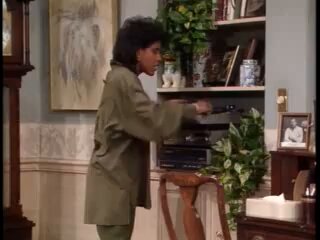
In Season 2, Episode 18 of The Cosby Show, Clair Huxtable, played by Phylicia Rashad, performs a playful lip-sync to Big Maybelle’s 1956 Savoy classic,“Candy” to charm her on-screen husband Cliff Huxtable, played by Bill Cosby. This episode, titled “A Touch of Wonder,” originally aired on Thursday, February 20, 1986.
#BMH365 🎶🎤16,575 görüntüleme • 3 ay önce

On November 20, 1969, Thelma Houston appeared on the BBC One television special “The Price of Fame,” performing “Jumpin’ Jack Flash” with backing from The Ladybirds while Pan’s People danced. The song came from Houston’s 1969 debut solo album, “Sunshower,” released on Dunhill Records and produced and arranged by Jimmy Webb. This appearance captures Houston before her Motown era and years before “Don’t Leave Me This Way” became her international breakthrough and Grammy-winning signature record in 1977.
#BMH365 🎶🎤11,648 görüntüleme • 2 ay önce
Daha fazla içerik yok.