
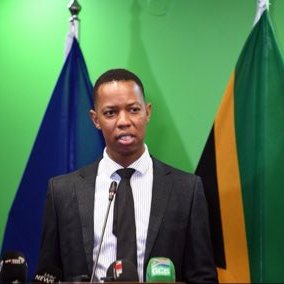
Chrispin Phiri 🇿🇦
@Chrispin_JPhiri • 16,287 subscribers
Spokesperson : Minister of International Relations & Co-Operation || @mailandguardian 200 Young South African 2022 || . Views tweeted are my own.
Videos

![[Watch] This is the untold truth about Post Apartheid South Africa and interventions by ANC - African National Congress • In the first 15 years has been an absolute surge in living standards. • A substantial decline in the murder rate as compared to apartheid. • There has been an expansion in job creation, welfare, housing and macroeconomic stability. Conveniently most commentators who seek to compare apartheid and the democratic era forget to mention that the benefits of democracy have been universal. “It is estimated that 20 years after 1994, the living stands of even Afrikaners might have risen faster than any 20 year Block in South Africa’s history going back to the end of the Boer War.”- Frans Cronje This is not say there are no challenges far from it. But let’s be factual let’s acknowledge the progress along with the challenges.](https://image.24vids.com/tw-2092597068070064407/amplify_video_thumb/2092595342193643520/img/BWxYH_3dgRaz6DAO.jpg)
[Watch] This is the untold truth about Post Apartheid South Africa and interventions by ANC - African National Congress • In the first 15 years has been an absolute surge in living standards. • A substantial decline in the murder rate as compared to apartheid. • There has been an expansion in job creation, welfare, housing and macroeconomic stability. Conveniently most commentators who seek to compare apartheid and the democratic era forget to mention that the benefits of democracy have been universal. “It is estimated that 20 years after 1994, the living stands of even Afrikaners might have risen faster than any 20 year Block in South Africa’s history going back to the end of the Boer War.”- Frans Cronje This is not say there are no challenges far from it. But let’s be factual let’s acknowledge the progress along with the challenges.
Chrispin Phiri 🇿🇦46,214 görüntüleme • 1 ay önce


Minister of International Relations and Cooperation, Ronald Lamola, is in Launda, Angola, leading the South African delegation to the Extraordinary Session of the Assembly of Heads of State and Government of the African Union (AU) on Strengthening Conflict Prevention and Resolution, taking place from 29–30 August 2026. The Session precedes the 21st Extraordinary Session of the Assembly scheduled to take place on 30 August 2026. Its convening is informed by a continental peace and security landscape characterised by protracted conflicts, terrorism and violent extremism, unconstitutional changes of government, humanitarian crises, forced displacement, governance deficits, climate-related risks, transnational organised crime and external interference. Ambassador to Angola Thembelani Nxesi explains
Chrispin Phiri 🇿🇦40,798 görüntüleme • 1 ay önce
![[ Watch] Statement by the Republic of South Africa to the United Nations Security Council Meeting on the situation in Venezuela delivered by Mr Jonathan Passmoor Acting Deputy Permanent Representative](https://image.24vids.com/tw-2008243808451129609/amplify_video_thumb/2008243574752571392/img/LyAub2dN-V6WJ0OF.jpg)

As far back as March 2022, former Home Affairs Minister Dr Aaron Motsoaledi oversaw a significant midnight sting operation at the Krugersdorp Home Affairs office that dismantled a major fraudulent passport syndicate. • The Bust: A joint task force including the Hawks and Home Affairs' Counter Corruption branch raided the Krugersdorp office, resulting in the arrest of nearly 30 individuals. The Kingpin: A Pakistani national, identified as the syndicate's leader, was arrested along with two Home Affairs officials and several "lieutenants". • The R500 Identity Sale: The operation revealed that "poor South Africans" were being recruited to sell their identity details—including fingerprints and names—for as little as R500. • Modus Operandi: The syndicate used a "photo swap" method. A legitimate South African citizen’s details were used for the application, but the photograph inserted into the system was that of a foreign national.
Chrispin Phiri 🇿🇦54,422 görüntüleme • 5 ay önce

This is also Africa #G20SouthAfrica welcomes the world.
Chrispin Phiri 🇿🇦45,751 görüntüleme • 10 ay önce

When South Africa opens market access abroad, local value chains thrive at home. Moedi Wines shows how targeted trade assistance translates diplomatic relations into inclusive economic growth and sustainable jobs. Founder Lesego Serolong Holzapfel is redefining premium African exports with over 75% of sales across the US, EU, UK & Asia. The biggest contributors to Moedi Wines’ international growth has been the Department of Trade, Industry and Competition’s Export Marketing and Investment Assistance (EMIA) Scheme. For more information about the EMIA scheme visit: SEDFA can be reached at Visit the Moedi Wine website at
Chrispin Phiri 🇿🇦11,471 görüntüleme • 1 ay önce
![I do not respond to people who are not even brave enough to use their real names or hide behind masks on this platform. But from time to time it’s necessary just dilute the hatred and downright ignorance of those who shamelessly hide behind masks. It’s important to understand, learn and respect that we all have a shared history and common heritage. [Watch] this narration of how the late King Zwelithini maintained deep historical ties with Malawi. The people of Southern Africa share lineages historical roots which date back to the Mfecane displacement.](https://image.24vids.com/tw-2057757381321232866/amplify_video_thumb/2057756782701735936/img/qgpOjPKgNA8x6F0t.jpg)
I do not respond to people who are not even brave enough to use their real names or hide behind masks on this platform. But from time to time it’s necessary just dilute the hatred and downright ignorance of those who shamelessly hide behind masks. It’s important to understand, learn and respect that we all have a shared history and common heritage. [Watch] this narration of how the late King Zwelithini maintained deep historical ties with Malawi. The people of Southern Africa share lineages historical roots which date back to the Mfecane displacement.
Chrispin Phiri 🇿🇦19,937 görüntüleme • 4 ay önce

Dr Adila Hassim SC South Africa’s legal counsel submission to the International Court of Justice “Palestinians in Gaza are subjected to relentless bombing wherever they go. They are killed in their homes, in places where they seek shelter, in hospitals, in schools, in mosques, in churches, and as they try to find food and water for their families.”
Chrispin Phiri 🇿🇦12,619 görüntüleme • 1 yıl önce
Daha fazla içerik yok.