

DN_DEGEN
@DN_degen • 2,989 subscribers
Crypto influencer | Techno | Robotics | AI
Shorts


Videos

🚨 BREAKING 🚨 Elon Musk just dropped a timeline most people aren’t ready for: “In five years — say 2031 — digital intelligence will exceed the sum of all human intelligence.” Then the numbers: 100 million humanoid robots. Maybe a billion. The economy doubling in 5–7 years. Not a slow upgrade. A doubling period. If that happens, almost everything we call “work” gets rewritten. The upside: abundance so large it stops looking like science fiction. The downside: if AI intelligence pulls away from us the way we pulled away from chimps… who is actually running the future? We were in the trees not that long ago. 2031 is five years from now. 🤖
DN_DEGEN189,641 Aufrufe • vor 6 Tagen

Tesla’s Optimus just moved into production at Fremont 🤖⚡ No code, no pre-programming — it learns by watching, the same way a new employee does. Musk says it’s the first humanoid robot capable of truly generalized tasks — not remote-controlled demos, the real thing. The robot revolution isn’t coming. It’s clocking in for its shift.
DN_DEGEN156,755 Aufrufe • vor 18 Tagen

Optimus just loaded a washing machine. 🧺🤖 Picking up clothes, handling them carefully, and putting them inside — all on its own. No teleoperation. No cheat cuts. Just a humanoid robot learning how to do one of the most boring chores for us. The future isn’t coming. It’s doing the laundry.
DN_DEGEN137,453 Aufrufe • vor 1 Monat

Tesla’s Optimus V3 just dropped 🤖⚡ Not doing chores. Not folding laundry. Not saving humanity. Just… chilling. The most advanced humanoid robot on Earth, and apparently this is what it does with its free time. Honestly? Same energy as all of us on a Sunday. The future is chill. Literally.
DN_DEGEN53,274 Aufrufe • vor 13 Tagen

Optimus just loaded a dishwasher. Glass cups. Not one broken. 🥃🤖 No teleoperation, no cheat cuts — just soft hands, careful grip, and patience most humans don’t have before coffee. Tesla trained a robot to do the one chore everyone hates. The future isn’t scary. It’s just really good at dishes.
DN_DEGEN183,703 Aufrufe • vor 1 Monat

🚨 BREAKING 🚨 Elon Musk just set a brutal deadline: “AI will surpass the combined intelligence of all humans in about 5 years.” After that, there may be almost nothing AI can’t do better than us. Except one thing: being human. We’re heading toward an era of unimaginable abundance — where everyone could have access to almost anything they can dream of. But there’s a darker side. If the intelligence gap between AI and humans becomes greater than the gap between humans and chimpanzees… Who’s really going to be in control? We were climbing trees and eating bananas not that long ago. Let’s see where we end up by 2036🤖
DN_DEGEN71,568 Aufrufe • vor 1 Monat

THE FIRST WAVE ON THE BEACH WON’T BE HUMAN. 🤖🌊 Ukraine already tested it. In July 2026, an uncrewed boat landed an armed robot on the Kinburn Spit, carrying a 7.62 mm remote gun with roughly 1,000 m range. It opened fire before soldiers reached the beach. China went bigger. During a PLA drill in October 2025, 8 robot wolves launched from a hovercraft, reached the beach in ~7 minutes, then crossed a 200 m kill zone in just 28 seconds. Each weighed around 70 kg, carried a 20 kg payload, survived 30 minutes in seawater and could fight for 2+ hours. Mine hunting. Recon. Beach surveying. Jobs that used to put humans first. WOULD YOU LET A 70-KG ROBOT SCOUT THE BEACH BEFORE YOU LAND?
DN_DEGEN21,558 Aufrufe • vor 8 Tagen

Optimus just unloaded a dishwasher. 🤖🍽️ Picking up plates, handling glasses, and carefully putting everything away — without breaking a thing. No teleoperation. No cheat cuts. Just a robot learning to handle everyday household tasks with surprising precision. The future isn’t coming. It’s doing the dishes.
DN_DEGEN62,693 Aufrufe • vor 29 Tagen


Four Optimus robots. One factory floor. 🤖🏭 Walking, carrying, and working side by side — all at the same time. No teleoperation. No humans controlling every move. Just humanoid robots learning to work together in the real world. This isn’t one robot doing a demo anymore. The future is building the factory.
DN_DEGEN37,432 Aufrufe • vor 26 Tagen

China’s new robot just beat Usain Bolt… and it doesn’t even have hands. Stands next to a height chart. Launches nearly 2 meters straight up from a dead stop. Lands clean. Does it again. Then hits 12.66 m/s on the track. That’s 45.6 km/h — faster than Bolt’s peak recorded speed. • Legs only 0.85 m long • Built in just over 3 months • No hands. No grippers. Pure speed machine. • Zero independent verification And the timing? It dropped one day before Unitree’s IPO. Strip a robot of everything except legs — and it outruns the fastest human alive. Give it hands back, and every one of these numbers gets worse. So… does the record even count?
DN_DEGEN27,837 Aufrufe • vor 1 Monat

THEY BUILT A COMBAT-GRADE EXOSKELETON. WATCH HOW IT MOVES. 🤖🩻 Dark green, “S-01” stamped across the chest plate, built with the kind of bulk you’d expect on a battlefield platform. This is a new exoskeleton prototype reportedly developed for the U.S. military, and in this clip it’s shifting its weight foot to foot, testing balance and stance in a parking lot outside what looks like an industrial facility. This is the part nobody talks about when they show off military robotics: the same balance and actuator control that lets a machine carry heavy loads or absorb impact is exactly what’s being tested here — dynamic weight distribution, stance shifts, and controlled recovery. It may not look dramatic, but every small movement is training the system for stability under real-world conditions. Would you want something this size training next to real troops?
DN_DEGEN36,016 Aufrufe • vor 1 Monat
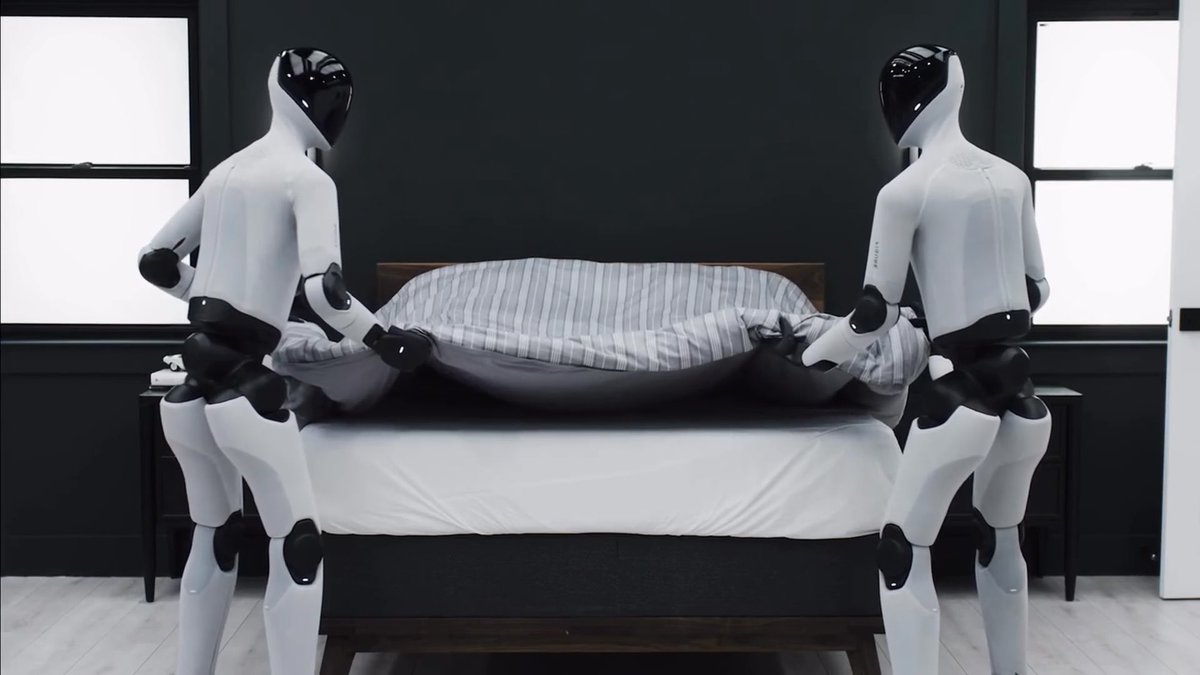
TWO ROBOTS. ONE BEDROOM. 127 SECONDS. 🤖🛏️ They walked in, hung the jacket, cleared the desk, and made the bed together. No teleoperation. No voice commands. No script telling them who pulls which corner. Each one just watches the other — and adapts in real time. That clip is the video everyone watches. The money is not in the video. Figure units already rent to warehouses at ~$25 an hour — half a human shift. You keep the robot. The client keeps the flexibility. After the unit pays for itself, every hour is margin. Five ways regular people are already pulling cash from this boom — no factory, no engineering degree, no Tesla…
DN_DEGEN14,377 Aufrufe • vor 24 Tagen
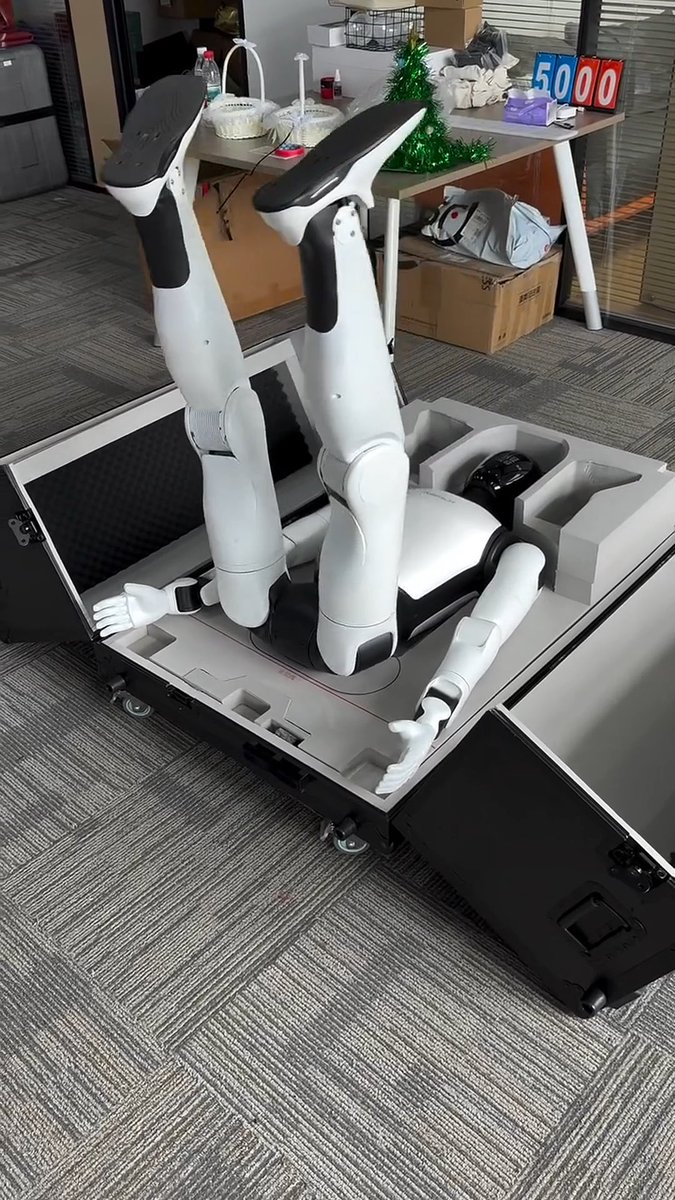
⚠️ THIS ROBOT WOKE ITSELF UP IN A CARDBOARD BOX. NOBODY TOLD IT TO. A robot just unboxed itself. No hands. No engineers. No stage. No keynote. It woke up lying flat on its back inside a foam-lined shipping case in the middle of an ordinary office — desks, a small Christmas tree, nothing staged. Its legs bent upward, then extended, pushing it out of the case. It rolled, braced with its arms, lifted its torso, and stood up to full height right next to the open box it arrived in. Chinese subtitles ran the entire time as the robot calmly narrated its own startup: warning that it was about to move, asking not to be touched, confirming its position, then requesting that the packaging be cleared so it could start work. This is AGIBOT. The company that shipped more than 5,168 humanoid robots in 2025 — more than any competitor globally — and hit its 15,000th unit produced by mid-2026. Not a staged reveal. Not a product launch. Just a robot that ships itself in a box and gets up on its own. The unboxing used to be the boring part. Now it’s the demo.
DN_DEGEN15,786 Aufrufe • vor 1 Monat
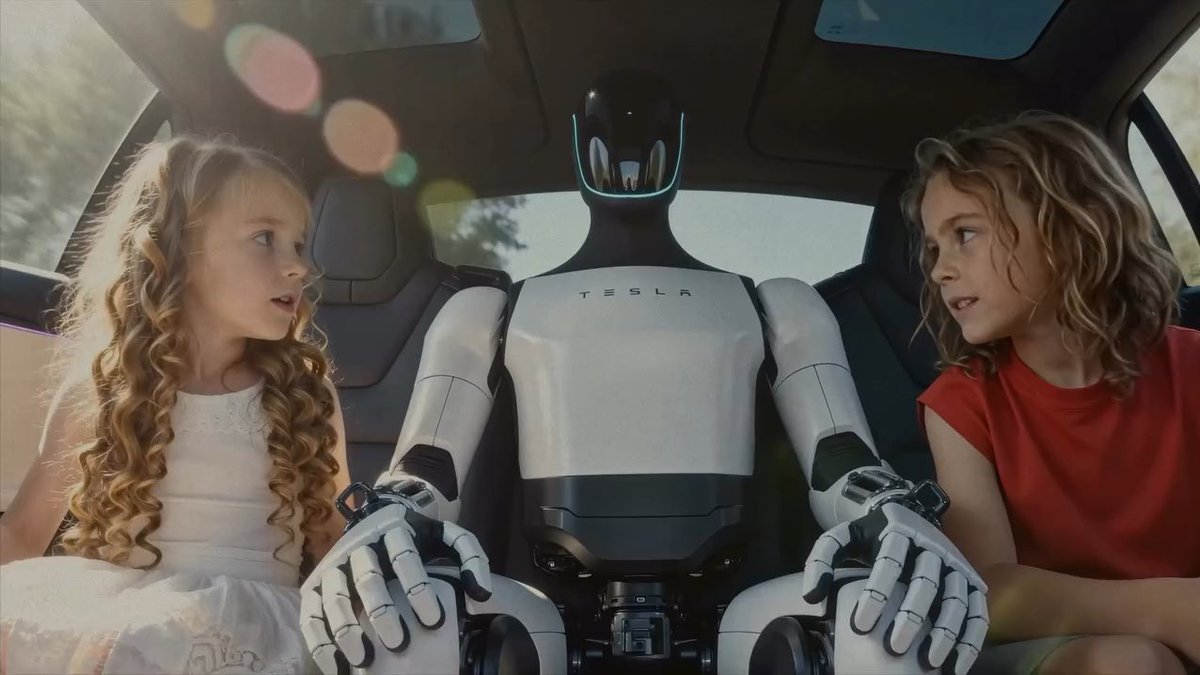
TESLA’S OPTIMUS V3 JUST HAD A NORMAL DAY WITH A FAMILY. THAT’S THE SCARY PART. Rides along in the car with the kids and parents. No safety driver commentary, just there. Walks into a store, handles the shopping. Cleans up around the house after. Takes the dog for a walk. Carries the bags nobody wants to carry. Not one flashy stunt in the whole clip. No backflip, no boxing match, no factory floor. That’s exactly why it matters. The hardest robotics problem was never the martial arts demo — it’s a machine that can just exist in a normal family’s routine without anyone thinking twice about it. 5 chores. 1 robot. 0 complaints. Would you trust it to walk your dog while you’re at work?
DN_DEGEN14,847 Aufrufe • vor 1 Monat
Keine weiteren Inhalte verfügbar