
NASA's Glenn Research Center
@NASAglenn • 325,744 subscribers
Transforming aviation, revolutionizing space exploration, & inspiring new discoveries for the benefit of all—right in Ohio. ✨
Shorts

Videos
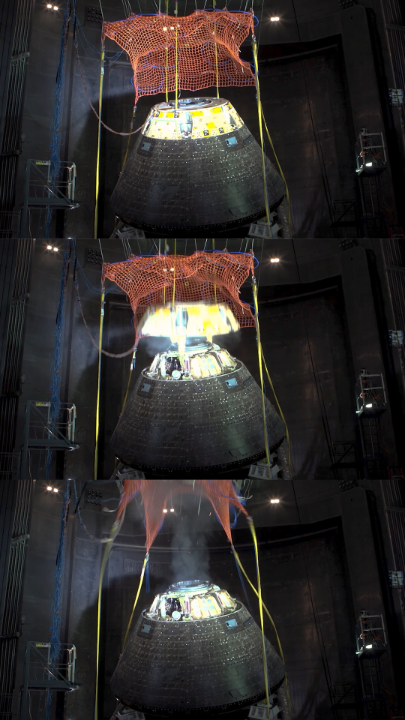
At NASA, we test like we fly 💪🔥 In 2024, the Orion capsule that flew around the Moon during the first NASAArtemis mission returned to our Neil Armstrong Test Facility in Sandusky, Ohio, where experts put its forward bay cover through its paces. Fast forward to April 10, when the Orion spacecraft with our four Artemis II astronauts aboard jettisoned its forward bay cover ahead of splashdown off the coast of San Diego. This shell helps protect the spacecraft, but must come off before Orion’s parachutes can deploy and slow the capsule down for a safe landing.
NASA's Glenn Research Center90,387 views • 5 months ago

After traveling 1.4 million miles around the Moon and then back to Earth during the Artemis I mission, the Orion spacecraft proved its capabilities in the harsh environment of space. But the spacecraft’s evaluation did not end at splashdown. Recently, engineers at NASA’s Neil Armstrong Test Facility subjected Orion Spacecraft to the extreme conditions it may experience in a launch abort scenario — which is an emergency when Orion, and astronauts inside, would jettison away from the ARCHIVED: NASA_SLS rocket for a safe landing in the ocean. The mission-critical testing is important to the safety and success of future NASA Artemis missions. Learn what’s next, view more photos of Orion, and see key moments from the 11-month test campaign in Ohio: In this video: On Nov. 23, 2024, after subjecting the Orion test article to launch abort-level acoustics, experts tested the functionality of the forward bay cover, which is the last piece that must eject before parachutes deploy. Credit: NASA/Jordan Salkin and Quentin Schwinn
NASA's Glenn Research Center76,378 views • 1 year ago
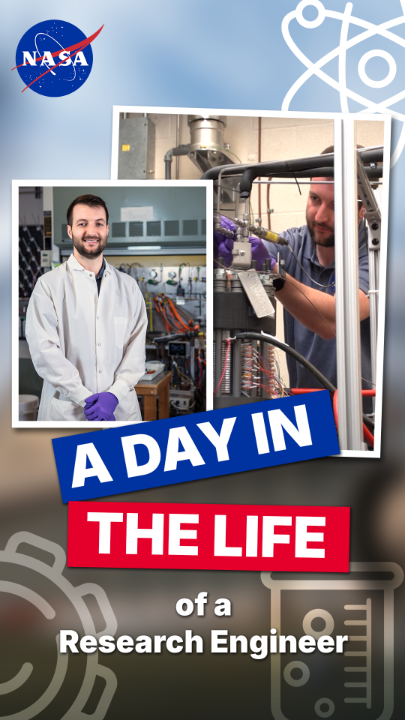
Our engineers are advancing a new regenerative fuel cell system, designed to keep missions running through long lunar nights and Martian dust storms! Go behind the scenes with NASA Glenn research engineer Dr. Kerrigan Cain as he explains how this NASA Technology stores energy and generates electricity, all in a closed-loop system. Regenerative fuel cells could be designed to power a rover or large lunar base — even when sunlight isn't available — making them essential in NASA's mission to return to the Moon and explore beyond.
NASA's Glenn Research Center16,813 views • 1 year ago

No more content to load