عبدالحميد الغبين
@ABDULHAMEEDSART • 8,683 subscribers
كاتب صحافي ومحلل في الشؤون الفكرية والسياسية، عمل وكتب في صحف الرياض، الجزيرة، عكاظ، السياسي. رئيس تحرير سابق. Saudi journalist and political analyst.
Shorts


Videos

One Flew Over the Cuckoo’s Nest طار فوق عش الوقواق الفيلم ليس حكاية عن مستشفى للأمراض النفسية، بل عن الإنسان حين يُسحق باسم النظام، وعن الحرية حين تصبح مرضًا في عين السلطة. في فيلم طار فوق عش الوقواق لا تبدو المصحة النفسية مكانًا للعلاج، بل صورة لعالم يخاف الإنسان حين يتذكر نفسه. كل شيء هادئ ومرتب، لكن هذا الهدوء هو الرعب نفسه، فالسلطة لا تكسر الإنسان بالصراخ دائمًا، بل بالدواء، والروتين، وتعليم الخوف حتى تصبح الطاعة شكلًا من العقل. يدخل ماكميرفي المصحة هاربًا من سجن ظاهر، فيقع في سجن أعمق، مكان لا يمنعك من الخروج فقط، بل يقتل فيك فكرة الخروج. لذلك لم يكن تمرده بطولة، بل أثرًا. تخاف المؤسسة منه لأنه لا يملك مشروعًا ولا خطابًا، بل يملك عدوى الحرية. يذكّر الصامتين بأن الخوف ليس طبيعة، وأن القيد حين يطول لا يصبح عدالة. وحين يُسحق ماكميرفي، لا تنتهي الحكاية. يهرب الزعيم الهندي من النافذة التي عجز الجميع عن تحريكها، كأن الحرية لم تخرج بجسد ماكميرفي، بل خرجت بأثره. الفيلم لا يشرح حال المجانين في المصحات، بل يكشف كيف تُزرع الأوهام في الإنسان حتى يظن أن القيد قدره. لا يضعك أمام فكرة جاهزة، بل أمام مرآة مزعجة، كم من السجون نسكنها لأننا صدقنا أنها بيوت؟ فالظلم ينتصر حين يجعل القفص عالمًا، والطاعة عقلًا، والرغبة في الخروج جنونًا.
عبدالحميد الغبين51,289 Aufrufe • vor 2 Monaten

الطغيان في العالم العربي لم يكن نظام حكم، بل نظام شعور. من الحجاج إلى عبد الناصر وصدام والقذافي، لم يتركوا دولًا، بل زرعوا في الوجدان خللاً عاطفيًا يخلط بين الهيبة والخضوع، وبين القسوة والقيادة. ترسّخ في النفس العربية حنين غريب إلى الجلاد، كحنين الجمل إلى دياره الأولى؛ حنينٌ لا ينفكّ حتى بعد سقوط الطاغية، كأنه جزء من الذاكرة الوراثية للألم. الخراب الحقيقي ليس في الأنظمة، بل في انكسار المعنى داخل الإنسان، حين يختلط في نفسه الإيمان بالخضوع، والبطولة بالخوف، والهوية بالولاء للسلطة، فيتحول من إنسانٍ إلى ظلٍ يبحث عن سيدٍ جديد يعبده، باسم الوطن أو الثورة أو الدين. ذلك هو جوهر المأساة العربية، نحب من يقتل فينا المعنى، ونخاف من الذي يوقظه.
عبدالحميد الغبين104,433 Aufrufe • vor 11 Monaten
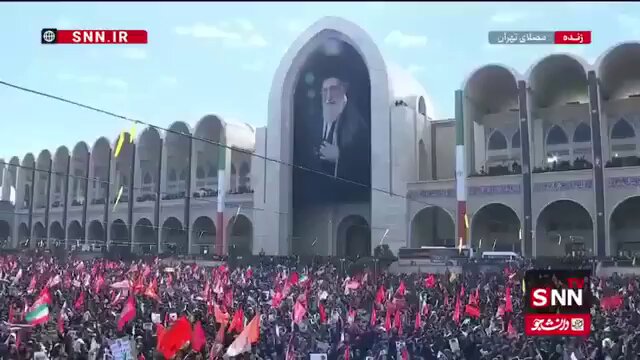
The Funeral as Statecraft What Khamenei’s Funeral Reveals About Iran’s Political Imagination By Abdulhameed Al-Ghobain States are rarely understood by listening to their rulers speak from podiums. Official language has its own duties: to reassure allies, confuse adversaries, discipline society, and preserve the appearance of control. The deeper life of a state is found elsewhere — in its arguments, its institutions, its old fears, its strategic habits, and in the rituals through which it turns defeat, victory, and even death into political meaning. Ali Khamenei’s funeral should be read in that light. In politics, a funeral is never only a funeral. It is a stage of continuity, a test of succession, a rehearsal of loyalty, and sometimes a declaration that the system intends to outlive the man who embodied it. Iran is not simply burying a leader. It is showing, once again, its ability to turn mourning into mobilization, grief into legitimacy, and a body into a political message. Many outside observers still misread Iran because they reduce it to what is easiest to see. In Washington, Iran is usually discussed through a familiar triad: the nuclear file, armed proxies, and clerical rule. In Arab capitals, the vocabulary is often narrower still: militias, sectarian expansion, and interference. None of this is false. It is simply not enough. It describes what Iran does, not how Iran thinks. Iran is not merely “a state of mullahs.” That phrase may work on television; it fails as analysis. The Islamic Republic is religious, Persian, revolutionary, bureaucratic, and pragmatic at the same time. It speaks in the language of Shiite political theology while carrying the memory of Persian statehood. It claims revolutionary purity while practicing careful regional patience. It can denounce the West in the morning, negotiate with it in the afternoon, and leave the evening sermon to make the two-sound consistent. This mixture is one of Iran’s political strengths. The Islamic Republic has learned how to turn sect into language, nationalism into structure, and negotiation into a room where time, pressure, and ambiguity can be managed. Time, for Tehran, is not empty duration. It is an asset. Many Arab political systems have not kept up with that rhythm. Too often, strategy begins only when the crisis becomes visible. The event arrives, settles in, builds networks, acquires allies, and only then does the commentary begin. Officials warn that the moment is “critical.” Analysts announce that the region is “volatile.” Television studios rediscover history just after it has entered the room. Iran does not operate with that lateness. It does not look at its Arab neighborhood as a collection of borders and formal sovereignties. It looks for openings: social fractures, sectarian vocabularies, weak institutions, anxious minorities, neglected peripheries, failed states, and elites willing to bargain with their own vulnerability. This is not praise. It is description. To understand Iran is not to admire it. It is to stop being surprised by it. Khamenei’s funeral therefore raises a question larger than succession. The issue is not only who follows him, which faction gains ground, or how the crowd behaves in the public square. Those questions matter, but they do not go far enough. The deeper question is whether the idea that sustained his rule can adjust after him. Can the Islamic Republic reproduce legitimacy without the man who served as its central symbol? Will it harden in the name of continuity, or become more flexible in the name of survival? Iran’s modern history suggests that rigidity and pragmatism are not opposites in Tehran’s political vocabulary. They are often paired instruments. When escalation is useful, Iran escalates in the name of principle. When compromise is useful, it compromises in the name of higher interest. The language can always be revised later. States that survive decades of pressure do not survive because they are pure. They survive because they know when to turn purity into posture and necessity into doctrine. Machiavelli understood that power is not managed by good intentions, but by a cold reading of fear, interest, ambition, and human weakness. Ibn Khaldun, writing from another civilizational world, understood that rule is not built by sermons alone, but by solidarity, coercive capacity, organization, and the ability to bind people into a durable political order. Iran’s ruling system has absorbed both lessons in its own way. It preaches, but it also organizes. It invokes heaven, but it studies the terrain. It speaks of martyrdom, but it counts leverage. This is why Abdolkarim Soroush matters for anyone trying to understand Iran beyond its security architecture. Soroush did not matter because he held power. He mattered because he exposed the point at which every religious state becomes vulnerable: the moment religion is converted into an instrument of rule. His central distinction is simple and dangerous. Religion is one thing; religious knowledge is another. Religion belongs to the realm of the sacred. Religious knowledge, however, is human, historical, fallible, and changeable. It is shaped by language, philosophy, science, politics, and by the limits of those who interpret. This does not attack faith. It attacks the monopoly over faith’s interpretation. For a clerical state, that is not a seminar-room argument. It is a political earthquake moving slowly beneath the floor. If religious knowledge is human, no cleric, institution, or state can claim final ownership of divine meaning. Revelation may remain sacred, but the apparatus speaking in its name loses immunity. The jurist becomes an interpreter, not the owner of truth. The state can no longer turn its preferred interpretation into political destiny without being questioned. That is why Soroush matters in the post-Khamenei moment. His thought shows that Iran’s struggle is not only over succession, sanctions, regional influence, or the nuclear file. It is also over who has the right to define religion politically. The Islamic Republic’s most serious vulnerability may not be a foreign army or a protest movement alone. It may be the slow erosion of the claim that the state’s interpretation of religion is indistinguishable from religion itself. Here Soroush approaches Michel Foucault in effect, if not in method. Power does not always need a prison when it controls the definition of truth. It is enough to decide what counts as religion, patriotism, treason, loyalty, and betrayal, then allow bureaucracy to do the rest. Hannah Arendt’s “banality of evil” was not a theory about monsters alone. It was about ordinary functionaries performing their duties with clean paperwork and a quiet conscience. In an ideological state, coercion often arrives well dressed: a stamped order, a solemn sermon, a classified file, and an archive that never apologizes. Still, Iran should not be mistaken for a frozen theocracy. It is a conflicted society with competing memories and ambitions: clerics, guards, merchants, reformists, nationalists, technocrats, students, exiles, and ordinary citizens who live between exhaustion and pride. Its state is repressive, but its society is not intellectually dead. Its official ideology is rigid, but its political practice is often tactical. Its revolutionary language is old, but its institutions have learned how to survive in a hostile environment. That combination makes Iran difficult to read and dangerous to underestimate. It is neither as invincible as its supporters imagine nor as brittle as its enemies often hope. It makes mistakes. It overreaches. It miscalculates. It provokes resistance. It pays heavy prices. But it learns inside a project. Too many of its rivals learn inside regret. This distinction matters for Western policymakers as much as for Arab governments. Counting missiles is not the same as understanding strategy. Mapping militias is not the same as understanding the political theology and historical imagination that make those militias useful. Tracking negotiations is not the same as understanding why Tehran often treats negotiation less as a conclusion than as a room in which time can be managed. The Arab world, in particular, has paid a high price for reading Iran mainly through the smoke of conflict. When Iran moves in Iraq, it is called interference. In Lebanon, influence. In Yemen, danger. All of this is true, but it is the vocabulary of outcomes. It does not explain the machine. The machine is deeper: Iran knows how to turn an idea into an apparatus, an apparatus into a state, and a state into a network of influence. Many Arab states have too often done the reverse. They turn the state into a speech, the speech into a ceremony, the ceremony into an image, and then ask, years later, where the state went. This is not merely a failure of courage. It is a failure of institutional imagination. A region that treats thinkers as conference decoration, security risks, or quotable ornaments should not be surprised when others produce strategy while it produces commentary. The post-Khamenei moment should therefore be read as a test not only for Iran, but for those who claim to understand it. Iran may speak the language of revenge. It may open channels of negotiation. It may do both in the same week. That would not be contradiction. It would be statecraft. Iranian pragmatism is not the opposite of ideology; it is one of ideology’s instruments. The fist and the smile often belong to the same hand. For Washington, the temptation will be to focus on succession, nuclear leverage, regional escalation, and elite factionalism. These are necessary concerns. They are not enough. The harder task is to understand how Iran’s ruling idea mutates under pressure. For Arab capitals, the challenge is even sharper: to stop reading Iran as a series of shocks and begin reading it as a structure. Khamenei’s funeral should not be read only as a funeral. It should be read as a mirror. Iran is burying a leader while testing the transition of an idea. Its rivals can count the mourners, study the protocol, and debate the optics. Or they can ask the more difficult question: what kind of political imagination allows a state to turn even death into continuity? There are no real surprises in politics for those who read before the shock arrives.
عبدالحميد الغبين22,355 Aufrufe • vor 1 Monat

حين كانت أم كلثوم تصدح "حب إيه اللي جاي تقول عليه"، كانت ألمانيا تُعيد بناء ذاتها من رماد الحرب لتصنع أمّة تعمل كما تُغنّي الآلات. وحين كان فريد الأطرش يُغنّي "أبو ضحكة جنان"، كانت اليابان تُشيّد فلسفتها الكبرى: أن النهوض يبدأ من هزيمة، وأن غزو العالم لا يكون بالمدافع بل بالمصانع. وحين كان عبدالحليم حافظ يهزّ المسرح بـ"فاتت جنبنا"، كانت كوريا تُنجب جيلًا يرى المستقبل في شرارة كهرباء. في تلك اللحظة كان الشرق العربي يعيش على موجة الطرب، بينما كانت الأمم تبني مصيرها على موجة الفكر والعمل. كانت مصر تُحرّك الوجدان العربي، لكنّ هذا الوجدان تحوّل إلى مهدّئ جماعي، كالمخدّر الذي يجعل المدمن يستيقظ ليجد نفسه على الرصيف، مدركًا واقعه، عاجزًا عن تغييره. الفرق بيننا وبينهم لم يكن في الصوت، بل في الوعي؛ لم يكونوا يطربون للحياة، بل يصنعونها.
عبدالحميد الغبين23,550 Aufrufe • vor 10 Monaten
Keine weiteren Inhalte verfügbar