
American Optimist
@AmOptimistShow • 15,744 subscribers
Official Account of @JTLonsdale's American Optimist podcast 🎙📺 NEW EPISODES: https://t.co/bQnaq8kHE8
Shorts

Videos
![Joe Lonsdale on Flock: "The core of our Constitution is that we have to check our government; we have to watch it. [But] turning Flock off is just anti-civilization. It's going to help the criminals, which is what the far left wants here. There are ways we can use technology competently to both watch the watchers... and catch the bad guys."](https://image.24vids.com/tw-2094877651232317915/amplify_video_thumb/2094877399456346112/img/h1m7bENgteF0tvGK.jpg)
Joe Lonsdale on Flock: "The core of our Constitution is that we have to check our government; we have to watch it. [But] turning Flock off is just anti-civilization. It's going to help the criminals, which is what the far left wants here. There are ways we can use technology competently to both watch the watchers... and catch the bad guys."
American Optimist18,207 views • 1 day ago

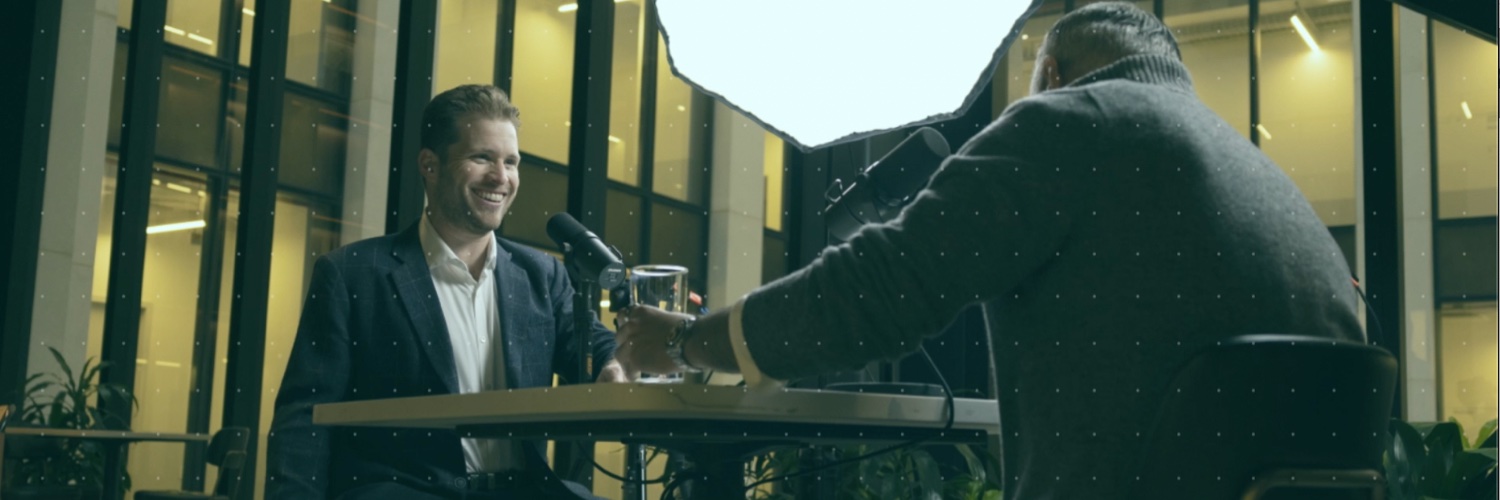
EPISODE 149: The Small Business Succession Crisis & New Possibilities in the AI Age Joe Lonsdale sits down with Will Fry, Founder & CEO American Operator. (00:00) Episode intro (01:25) Will’s entrepreneurial journey (04:15) The small business succession crisis (06:40) American Operator’s approach vs. private equity (08:35) "We're creating millionaires on Main Street" (11:55) Does AI mean boom or bust for small business (15:55) Forget law school? Buy a small business instead? (21:20) AI use cases for small business (23:00) Why many SMBs shut down instead of sell (26:00) How the operate-to-own model works (33:50) Optimism for Main Street America
American Optimist2,446,526 views • 4 months ago
![Marc Andreessen: if you're the parents of a smart kid where I grew up [rural Wisconsin] and you think you're going to get them into a top university in this country, you're fooling yourself... What level of untapped talent exists in this country that a combination of DEI and immigration have basically cut out of the loop for the last 50 years? Marc: Nobody wants to talk about, but I've started to talk about the intersection of DEI and immigration that has really warped our perceptions on high skilled immigration over the last 50 years. You look at the foreign enrollment rates at the top universities, which went from 2 or 3 or 4 percent 50 years ago or whatever to 27% or 30% or 50%... Joe: Columbia's over half. Marc: 70% or whatever it is. And so there's been this massive transformation in who gets educated. And then there's been this massive transformation of who gets admitted through affirmative action, as we now know it, DEI. This goes straight to the political divide in the country, which is, if you're parents of a kid where I grew up [rural Wisconsin] and you've got a smart kid and you think you're going to get them into, you know, a top university in this country, like you're fooling yourself. There is this really fundamental question which is, what level of untapped talent exists in this country that a combination of DEI and immigration have basically cut out of the loop for the last 50 years? And how long can we have this story to everybody in the Midwest and in the South that says, sorry, because of historical oppression, your kids are SOL.](https://image.24vids.com/tw-1943758894263660670/amplify_video_thumb/1943758267760427008/img/JvH7lV-HctkWnxx1.jpg)
Marc Andreessen: if you're the parents of a smart kid where I grew up [rural Wisconsin] and you think you're going to get them into a top university in this country, you're fooling yourself... What level of untapped talent exists in this country that a combination of DEI and immigration have basically cut out of the loop for the last 50 years? Marc: Nobody wants to talk about, but I've started to talk about the intersection of DEI and immigration that has really warped our perceptions on high skilled immigration over the last 50 years. You look at the foreign enrollment rates at the top universities, which went from 2 or 3 or 4 percent 50 years ago or whatever to 27% or 30% or 50%... Joe: Columbia's over half. Marc: 70% or whatever it is. And so there's been this massive transformation in who gets educated. And then there's been this massive transformation of who gets admitted through affirmative action, as we now know it, DEI. This goes straight to the political divide in the country, which is, if you're parents of a kid where I grew up [rural Wisconsin] and you've got a smart kid and you think you're going to get them into, you know, a top university in this country, like you're fooling yourself. There is this really fundamental question which is, what level of untapped talent exists in this country that a combination of DEI and immigration have basically cut out of the loop for the last 50 years? And how long can we have this story to everybody in the Midwest and in the South that says, sorry, because of historical oppression, your kids are SOL.
American Optimist5,190,500 views • 1 year ago

EPISODE 157: Scott Nolan on the AI Energy Crisis & America's Nuclear Renaissance Joe Lonsdale sits down with Scott Nolan Lessons from SpaceX early days; building General Matter; why we rely on Russia; how we fell behind China; nuclear power in space; and more! (00:00) Episode intro (01:20) Boeing vs SpaceX / lessons on speed & performance (05:20) What made SpaceX unique? (09:05) General Matter / how to make nuclear fuel (16:45) Disarmament and relying on Russia (19:50) The AI energy crisis / falling behind China (24:30) Founders Fund & energy investing (27:15) How to scale nuclear energy (32:00) How to fund the nuclear buildout (36:15) Nuclear in space & new possibilities
American Optimist876,619 views • 2 months ago

EPISODE 156: Coleman Hughes Takes on America's Most Contentious Debate Joe Lonsdale sits down with Coleman Hughes to discuss his new University of Austin (UATX) course: "The Legacy of Slavery" (00:00) Episode intro (01:40) Teaching the Legacy of Slavery (06:20) Coleman's journey from Columbia to UATX (08:30) Dr. King vs Derrick Bell (11:20) Racial disparities by IQ and salary (13:00) Thomas Sowell & the Real History of Slavery (19:00) America's Founding Hypocrisy (24:00) Will the Left cancel Dr. King? (26:20) Understanding the 1619 Project (30:25) Breakdown of the black family (37:20) Is America wealthy because of slavery? (43:50) Are you worried about woke AI? (45:40) Three solutions for racial progress
American Optimist691,987 views • 3 months ago

Joe Lonsdale on America's education crisis: "Thomas Jefferson believed that the single point of public education was to train the populous to be free citizens to oppose despotism... Today, it's the opposite. The far lefts and the commies are running it..." Joe Lonsdale Dave Rubin
American Optimist93,482 views • 14 days ago

EPISODE 147: The New Era of Software Abundance Joe Lonsdale visits Scott Wu & Russell Kaplan at Cognition HQ 00:00 Episode intro 01:35 Why technical talent & execution matters in AI 06:10 Do young people have an edge in the AI era? 08:26 Cognition's rapid growth 11:55 The new era of software abundance 14:30 Cognition engineers don't type code anymore 19:20 "Never sleep while Devin is idling" 21:25 The case for AI disinflation 23:50 How Devin generates 12X productivity gains 28:25 Cognition for government / taking on complex, broken systems 36:40 The AI race / competition with Anthropic 39:00 Forward deployed engineers? 43:40 How fast are LLMs improving? 47:10 The AI-led small business explosion
American Optimist834,355 views • 5 months ago

EPISODE 160: Joe Lonsdale sits down with Aaron Levie "The actual creators of AI are scared sh*tless." — Aaron's take on tech's cognitive dissonance. "So you actually want people to die of cancer, right?" — on politicians trying to ban data centers And more: -- Why Geoffrey Hinton is wrong about AI job destruction -- China's Kimi K3 wake-up moment -- What doomers & accelerationists both get wrong -- 13 new categories of AI jobs at Box -- Law firms (law firms!) building their own AI models (00:00) Episode intro (01:15) AI wave / every two months is a year now (06:30) China, Kimi K3 & open-source debate (10:45) Diffusion is the real rate limiter (15:50) Agent-first startups vs incumbents (19:00) Nobody reads those contracts — AI's new work (23:35) Silicon Valley's AI Problem / Larry David making AI models (29:20) 13 new types of AI jobs at Box (32:20) The origins of Box / dropping out of college (37:00) Favorite angel investments right now (40:20) Optimism for America's future
American Optimist140,965 views • 1 month ago
![NEW🚨 Joe Lonsdale on Flock cameras: "The core of our Constitution is that we have to check our government; we have to watch it. [But] turning Flock off is just anti-civilization. It's going to help the criminals, which is what the far left wants here. There are ways we can use technology competently to both watch the watchers... and catch the bad guys." Will Cain: I just had the Texas Attorney General, Ken Paxton, in here in my studio. And as he was walking out, I said: Hey, what do you think of Flock? And he said to me: You know what? I'm really concerned because I don't like that kind of power in the hands of the government. Of course, I want to enforce the law, but I don't like the idea of the government having that kind of surveillance over average Americans. We know what they've done with that information in the past. Joe Lonsdale: I'm a supporter of the American Founders as well, and our whole Constitution was about checking the power of the government. So I think it's a healthy instinct for people on both sides to want to be suspicious, to want to watch the watchers. And we have to do that. But I'm also on the side of civilization. I have six young children, and this technology has caught hundreds of thousands of criminals. It's exonerated huge numbers of innocent people. And there are ways we can use technology competently to both watch the watchers to delete data you're not allowed to see and catch the bad guys... Will: All right, then last to you, Joe. The problem is, if you and I could agree and we probably can, this has some really valuable applications. We're catching kidnappers... They caught the Brown shooter... When is the government ever stopped at a narrow, good application? It grows and it always gets malignant. Joe: I one hundred percent agree that the core of our Constitution and our society is that we have to check our government, we have to watch it. We have to have rules to limit how they use these things. And it turns out the technology, if you're competent, if you have common sense, you could put those restrictions and everyone in the public should have a right to see how it was used. I'm totally fine with that, by the way. I'm not okay with the Flock camera getting me in trouble for jaywalking because that's B.S.. I think it should only be crimes with serious victims. I don't want to be watched either. None of us do. But if this is going to be able to save hundreds of thousands of people, and it's going to be able to protect innocent, exonerate people, obviously you want to be able to catch the bad guys. We had a case in Austin recently where I live where someone was not caught because they turned off all the cameras until they drove into a town nearby after a horrible crime that happened to have Flock. I think we can have a compromise where we watch the watchers... But I think turning it off is just anti-civilization. And it's going to help the criminals, which is what the far left wants here. Will Cain The Will Cain Show](https://image.24vids.com/tw-2088129878616944665/amplify_video_thumb/2088128630232600576/img/0tUy9nfR8hFZK9IW.jpg)
NEW🚨 Joe Lonsdale on Flock cameras: "The core of our Constitution is that we have to check our government; we have to watch it. [But] turning Flock off is just anti-civilization. It's going to help the criminals, which is what the far left wants here. There are ways we can use technology competently to both watch the watchers... and catch the bad guys." Will Cain: I just had the Texas Attorney General, Ken Paxton, in here in my studio. And as he was walking out, I said: Hey, what do you think of Flock? And he said to me: You know what? I'm really concerned because I don't like that kind of power in the hands of the government. Of course, I want to enforce the law, but I don't like the idea of the government having that kind of surveillance over average Americans. We know what they've done with that information in the past. Joe Lonsdale: I'm a supporter of the American Founders as well, and our whole Constitution was about checking the power of the government. So I think it's a healthy instinct for people on both sides to want to be suspicious, to want to watch the watchers. And we have to do that. But I'm also on the side of civilization. I have six young children, and this technology has caught hundreds of thousands of criminals. It's exonerated huge numbers of innocent people. And there are ways we can use technology competently to both watch the watchers to delete data you're not allowed to see and catch the bad guys... Will: All right, then last to you, Joe. The problem is, if you and I could agree and we probably can, this has some really valuable applications. We're catching kidnappers... They caught the Brown shooter... When is the government ever stopped at a narrow, good application? It grows and it always gets malignant. Joe: I one hundred percent agree that the core of our Constitution and our society is that we have to check our government, we have to watch it. We have to have rules to limit how they use these things. And it turns out the technology, if you're competent, if you have common sense, you could put those restrictions and everyone in the public should have a right to see how it was used. I'm totally fine with that, by the way. I'm not okay with the Flock camera getting me in trouble for jaywalking because that's B.S.. I think it should only be crimes with serious victims. I don't want to be watched either. None of us do. But if this is going to be able to save hundreds of thousands of people, and it's going to be able to protect innocent, exonerate people, obviously you want to be able to catch the bad guys. We had a case in Austin recently where I live where someone was not caught because they turned off all the cameras until they drove into a town nearby after a horrible crime that happened to have Flock. I think we can have a compromise where we watch the watchers... But I think turning it off is just anti-civilization. And it's going to help the criminals, which is what the far left wants here. Will Cain The Will Cain Show
American Optimist65,431 views • 19 days ago

NEW: Joe Lonsdale with Brian Kilmeade on data center pushback: "We've done a terrible job in the tech world on PR... we're creating massive numbers of jobs. We're going to bring down the cost of health care... we're going to take manufacturing back from China... It's perfectly fair to insist the data center owners pay for their own electricity, their own water, make sure they're lowering the cost of energy... But it's crazy to stop them... Saronic hiring 10,000 people in Texas to build autonomous ships — only possible with AI." Brian Kilmeade: Joe, you've been seeing this battle. Let's start with AI in particular. You saw the booing that happened at commencement addresses with our next generation of innovators. What's going on? Joe Lonsdale: Well, our next generation of innovators are very excited. Our next generation of activists are clearly not very excited. Listen, I think we've done a terrible job in the tech world on the PR on this.... People don't trust Big Tech for good reason, especially from the right. But I don't think we're explaining that we're actually creating massive numbers of jobs. We're going to bring down the cost of health care. We're going to cure diseases. All these good new innovations, the things that have always driven America forward, they're coming from AI and from data centers. So you can't just turn off our innovation world. That would crush the country, and our enemies would love it if we did that. Brian: And if you look at the headlines right now... China could be prepared to overtake us. What are your thoughts about that as their latest model showing that they would erase America's AI lead? Joe: I think our top labs are still 3 to 6 months ahead, but the Kimi model last week was very impressive. Listen, China is both innovating, and they're very good at copying and stealing.... We do not want to slow our slide down because then they will get ahead. And by the way, if we can stay ahead, we're going to take manufacturing back from China. We're going to train people here to be better than their best engineers... Saronic you saw last week hiring 10,000 people in Texas to build autonomous ships. Only possible with AI. We're doing a lot of things that create jobs here, but it's a big fight. We have to win. Brian: That leads me to the data center conversation. So we have all these data centers in this country, and suddenly it's a controversial move. 40% of the new construction are being protested now by various cities. The governor of New York says we're putting a moratorium. No data centers. What's the truth? Are they a danger to the environment? Joe: First of all, they're not a danger to the environment. I do think it's perfectly fair to insist the data center owners pay for their own electricity, pay for their own water, make sure they're lowering the cost of energy... You don't want them raising costs for anyone. But overall, they create jobs, and they're key to this industrial revolution for all of us... It's crazy to stop them. You know who wants us to stop them? Of course, it's the populist extreme far left. But of course, it's also China. And we are also tracking Chinese money helping NGOs to push this narrative. Brian: And you also feel like it's popping up on TikTok and other social media devices. So you've got a bunch of 18 to 25 year olds who think this is their next cause. Joe: You're being taught to hate, just like we were taught so many other things we're supposed to be worried about. And it's fake, and it's B.S., and I'm long America and building the future. Brian: All right, Joe, I always appreciate your optimism. And you're one of the most accomplished Americans we have. We count on you to lead.
American Optimist132,711 views • 1 month ago
!["I remember getting there on day one and reading the [SpaceX] employee handbook. On the top of page one was just a single line in bold that said: this is not a science experiment." Scott Nolan was an early employee at SpaceX He explains what made the culture and mission unique.](https://image.24vids.com/tw-2069165844572037459/amplify_video_thumb/2069165541009330177/img/vHvWTW-9HJ_bpQ-B.jpg)
"I remember getting there on day one and reading the [SpaceX] employee handbook. On the top of page one was just a single line in bold that said: this is not a science experiment." Scott Nolan was an early employee at SpaceX He explains what made the culture and mission unique.
American Optimist206,980 views • 2 months ago
![NEW: Who's trying to ban American data centers? Joe Lonsdale calls them the "BBC: Bernie, Bannon, and the CCP." The horseshoe is real. 👇 LIZ CLAMAN: Where do you stand on this [open source vs closed debate], Joe? JOE LONSDALE: Well, first of all, I think we should all agree we want America to win economically. We want to dominate in AI. And the only way we're going to do that is by first unleashing energy, reforming permitting, and standing up to the crazy populists I call the "BBC" — that's Bernie, Bannon, and the CCP. All those people want to ban data centers. They want America to lose. So we have to make sure the BBC radicals lose — and I think we're all on that side. CLAMAN: This is where I look a little bit deeper — that's our job. Is it really about AI safety and letting America win, or is it about market share? Alex Karp talks a lot about how he really feels there should be regulation — he's still very much hawkish on China — and yet he says we've got to let open-weight models, including the ones from China, be utilized. And then you begin to wonder: what's the concern here? Anthropic is the leader in enterprise AI — is it because he feels too many people have to pay for Anthropic's good-quality Claude? LONSDALE: Well, there are two different debates. First of all: should we be building data centers? Should America have cheap energy? Should we win in AI? I think the answer is yes — I think all those people would agree. The debate you're flagging is between them. Obviously there are conflicts of interest. If you own Nvidia, you want free, open software on top of the chips, as cheap as possible — people just buy more chips. In Palantir's case there's a strong incentive for people to control all their own data, and Alex makes very good arguments why some people would want to use open models with them. And listen — I think the closed platforms we have, which are innovating the fastest and have huge ecosystems around them, are very good for America. I don't think we should let them do regulatory capture. But Liz, there's another point Dario makes that I do agree with: these Chinese open models — they're dangerous. And we have data; we've shown this consistently. If this Chinese model, if it sees that you're working for the U.S. government, it actually makes your code more vulnerable. We've seen this many times. Just as I was against China being able to use TikTok to program socialism or whatever else into our young people, I also don't want China's AI going into our companies, able to program in vulnerabilities or other secret things. So I do think we have to be very careful about the Chinese models.](https://image.24vids.com/tw-2082436446200144021/amplify_video_thumb/2082435955655397376/img/Z4WWv6xPZb-Uv4UC.jpg)
NEW: Who's trying to ban American data centers? Joe Lonsdale calls them the "BBC: Bernie, Bannon, and the CCP." The horseshoe is real. 👇 LIZ CLAMAN: Where do you stand on this [open source vs closed debate], Joe? JOE LONSDALE: Well, first of all, I think we should all agree we want America to win economically. We want to dominate in AI. And the only way we're going to do that is by first unleashing energy, reforming permitting, and standing up to the crazy populists I call the "BBC" — that's Bernie, Bannon, and the CCP. All those people want to ban data centers. They want America to lose. So we have to make sure the BBC radicals lose — and I think we're all on that side. CLAMAN: This is where I look a little bit deeper — that's our job. Is it really about AI safety and letting America win, or is it about market share? Alex Karp talks a lot about how he really feels there should be regulation — he's still very much hawkish on China — and yet he says we've got to let open-weight models, including the ones from China, be utilized. And then you begin to wonder: what's the concern here? Anthropic is the leader in enterprise AI — is it because he feels too many people have to pay for Anthropic's good-quality Claude? LONSDALE: Well, there are two different debates. First of all: should we be building data centers? Should America have cheap energy? Should we win in AI? I think the answer is yes — I think all those people would agree. The debate you're flagging is between them. Obviously there are conflicts of interest. If you own Nvidia, you want free, open software on top of the chips, as cheap as possible — people just buy more chips. In Palantir's case there's a strong incentive for people to control all their own data, and Alex makes very good arguments why some people would want to use open models with them. And listen — I think the closed platforms we have, which are innovating the fastest and have huge ecosystems around them, are very good for America. I don't think we should let them do regulatory capture. But Liz, there's another point Dario makes that I do agree with: these Chinese open models — they're dangerous. And we have data; we've shown this consistently. If this Chinese model, if it sees that you're working for the U.S. government, it actually makes your code more vulnerable. We've seen this many times. Just as I was against China being able to use TikTok to program socialism or whatever else into our young people, I also don't want China's AI going into our companies, able to program in vulnerabilities or other secret things. So I do think we have to be very careful about the Chinese models.
American Optimist96,444 views • 1 month ago

🚨NEW: Joe Lonsdale on Tesla terrorism: "That's how authoritarians react, that's how the left reacts... they've tried to bully me, they try to scare my friends from speaking up. Thank goodness Elon Musk is someone who is going to double down and go harder because that's what a real leader does when people try to threaten them." On DOGE's effectiveness: "He's uncovering grift for millions of people.... we've caught departments with nine stories of fancy offices, buying champagne, giving their friends cash with the Federal Mediation and Conciliation Service... you have a lot of people who, their money faucet - their free money - is being turned off and they're angry, and Elon is the hate figure they're responding to go after." On intimidation tactics: "For the last 10 years I've been speaking up, I've been getting a lot of protests myself... our job as leaders is to role model to those around us, even if they attack you, we're going to fight for our civilization."
American Optimist1,319,595 views • 1 year ago

EPISODE 142: Understanding the AI Wave Joe Lonsdale sits down with 8VC Partners Alex Kolicich & Jack Moshkovich Why is AI fundamentally disruptive? What does it mean for large software incumbents? Will LLMs become commodities? And are we entering a bubble, or just getting started? (00:00) Episode intro (01:40) Smart enterprise thesis (04:00) Did enterprise software dramatically boost productivity? (08:30) Understanding the AI wave (11:45) Will LLMs become commodities? (17:10) OpenAI vs Anthropic vs Meta vs Grok (20:30) Frontier models vs enterprise incumbents (25:27) What did Palantir get right? (32:30) AI case studies/new possibilities (43:00) The most surprising aspect of the AI wave (46:12) Are we entering a bubble? Or just getting started? (52:40) Biggest concern with AI (58:00) Biggest reason for optimism
American Optimist417,594 views • 6 months ago

EPISODE 150: How AI Is Transforming Diligence, Decision-Making & the Future of Investing Joe Lonsdale sits down with John Melas-Kyriazi, co-founder & CEO of Standard Metrics (00:00) Episode intro (02:10) Academia to investor and founder (08:00) The pain point that led to Standard Metrics (12:10) How AI is transforming diligence, data collection & VC (14:20) AI as a technical copilot (17:10) AI analyst vs Human in the loop (19:20) Parsing pitch decks and new AI tools (23:10) How AI search is changing marketing (28:30) Powerful new capabilities and workflows (33:47) How quickly is everything changing?
American Optimist283,369 views • 4 months ago

EPISODE 158: Nima Ghamsari on the Power of AI Agents & Infinite Workforce Joe Lonsdale sits down with Nima Ghamsari to cover some favorite stories from Palantir, why he's all-in on AI agents, Blend's comeback story, and more. (00:00) Episode intro (01:45) Making millions playing poker to joining Palantir (06:00) Most important lessons from Palantir (07:30) Founding $BLND / understanding the mortgage industry (11:25) How to win over banks and risk-averse customers (15:50) Blend's meteoric rise and fall (19:00) Going all-in on AI agents / Blend's Act II (22:55) efficient markets / is Blend undervalued today? (26:50) Impact of AI on internal operations / increased productivity (32:00) The future of SaaS (36:20) The optimistic case for AI
American Optimist158,396 views • 2 months ago

EPISODE 159: How AI Is About to Upend the $140B Customer Research Industry Joe Lonsdale sits down with Aaron Cannon, founder & CEO of Outset Learn how AI can outperform humans in customer surveys, the new possibilities with real-time customer feedback, how Outset grew revenue 8X this past year, and more! (00:00) Episode intro (01:10) Aaron's entrepreneurial journey (06:00) How does AI-moderated research work? (09:25) Why people will talk to AI more than humans (13:40) How Outset landed Microsoft, Google & Uber (14:55) Are you replacing human jobs? (20:56) New possibilities for real-time product improvements (23:30) The pros and cons of synthetic research (28:00) Insane growth / how Outset 8X'd revenue (35:00) How AI is upending a $140B industry
American Optimist114,224 views • 2 months ago

EPISODE 151: The Myth of Michael Milken Joe Lonsdale talks with Richard Sandler -- Michael Milken's long-time lawyer -- about his powerful new book: "Witness to a Prosecution: The Myth of Michael Milken" (00:00) Episode intro (01:35) Richard's career & Michael Milken's legacy (06:25) Why write this book? (08:00) How Michael Milken transformed finance (14:00) Why did they go after Michael? (19:30) Using RICO to bring down Drexel (22:30) Prosecutorial abuse & the power of government (26:30) Why did Michael agree to a plea deal? (33:25) Trump grants Michael a full pardon (35:00) Lessons on government power, media influence & Michael's resilience
American Optimist222,134 views • 4 months ago

NEW: Joe Lonsdale shocks CNBC on AI regulation debate: Andrew Ross Sorkin: Is there ultimately going to be an FDA for AI models? Joe: The FDA has killed millions of people... Andrew: Killed?? Joe: Massive bureaucracy makes it cost 10 or 100X more than it should... there's tons of these new drugs you could be developing to save lives that we're just not able to do... China would love for us to have a massive regulatory bureaucracy for AI and let them get ahead. Andrew Ross Sorkin: We're all trying to figure out what this could look like. Is there ultimately going to be an FDA for AI models? Is that a good thing or a bad thing for somebody who's thinking the way you do? Joe: Listen, the FDA has killed millions of people. Let's be totally clear, right? Andrew: Killed?? Joe: It's literally led to the deaths of millions of people, Andrew... There's all these new therapies, especially now, by the way, with AI that we could be developing... Andrew: It's also hopefully saved some lives... Joe: I mean the trade off is probably 100 to 1. There's a very famous story from 60 years ago where they caught some stuff that was killing people in Europe and saved them here. They've used that as an excuse to make this massive bureaucracy that makes it cost 10 or 100 times more to do drugs than it should, which means there's tons of these new drugs you could be developing to save lives that we're just not able to do. I would be investing billions more to save lives, but I can't. So the equivalent is terrifying to me. The government is bad at these things. The bureaucrats are bad at these things. Now there's a there's another argument here, which is that you have things like Mythos and OpenAI's new technology that's really, really good at hacking into everything. And you probably don't want like, that new technology going to the bad guys right away. So there has to be some sort of trade off, some sort of framework. We have to be really careful not to make the mistakes the FDA has made. Andrew: So what would you do? What do you think that should look like? Joe: There probably should be some national agreement on regulation on new powerful models. It should be as small and as narrow as possible. It should not have the same bureaucracy. You should make sure the government from the start, has metrics on the speed at which it has to go and the transparency, because you're gonna have cronyism, you're gonna have the big guys capture it. You're going to slow it down. Pharma loves the FDA against biotech. It makes it too expensive for us to build our own pharma companies. We have to sell to them. This is what the big guys want. Google and Microsoft and OpenAI and the rest of them, they want to create rules to make it so they can... Andrew: They've all been calling for it. I mean, you remember Sam Altman, Dario, others early on said, "Regulate us; you need to regulate us. Please, regulate us." The question is was that a genuine call for action or do you think that was a "We think Washington's never going to do this. So we'll say it, and get some nice PR points." Joe: If you are the leader in the space and you have tens of billions, hundreds of billions of dollars, you want there to be really complicated regulation with people you can hire who go in and out of your company, who work there because you know you're going to be able to control it and influence it. ...And by the way, China has pre-IND (Investigational New Drug process) and IND of 30 and 60 days about right now. We have 200 and 500 days. And so we've completely delayed anything we do. We've handed more than a third now of our biotech sector to China in the last six years because we're so slow. We definitely don't want to do that on the AI side. That would be a disaster. China would love for us to do a massive regulatory bureaucracy for AI and let them get ahead. We cannot allow that to happen. Squawk Box
American Optimist192,673 views • 4 months ago

Joe Lonsdale: The people in charge of the sociology department at Yale and the education school at Stanford are still god**mn socialists who hate business and are bad for our civilization. But they've learned not to say certain things... A lot of people say, 'Oh, I'm not hearing this stuff anymore. It must be gone.' It's not gone. It's going to come out again as soon as they win. ZUBY: interviews Joe Lonsdale for Real Talk with Zuby Zuby: I feel like there's a change that is happening over the last couple of years with the pendulum starting to swing back. Joe: It's happening in some areas and others. Zuby: How do you see it? Joe: A lot of this, again, is tied to Marxists and socialists who are actively plotting to take over institutions. That's what they've done for the last 60 years. There's the very famous march through the institutions... I thought it was a conspiracy theory when I first heard about it. But it's very clear they've done this very successfully. And you can think of it almost like a virus... In this case, I think the virus has learned to hide itself... A lot of the people who run all of these conquered institutions haven't changed. The people in charge of the sociology department at Yale and the people in charge of the education school at Stanford are still godd*mn socialists who hate businesses and who are bad for our civilization. But they've learned not to say certain things. They've learned not to very publicly and openly say, 'We shouldn't have advanced math anymore,' which is what the education department in general is doing. They're going around getting rid of advanced math for equity purposes... A lot of people say, 'Oh, I'm not hearing this stuff anymore. It must be gone.' It's not frickin gone. It's going to come out again as soon as they win, as soon as they feel like they're safe. But right now they're hiding. I think it's hiding everywhere.
American Optimist86,820 views • 2 months ago