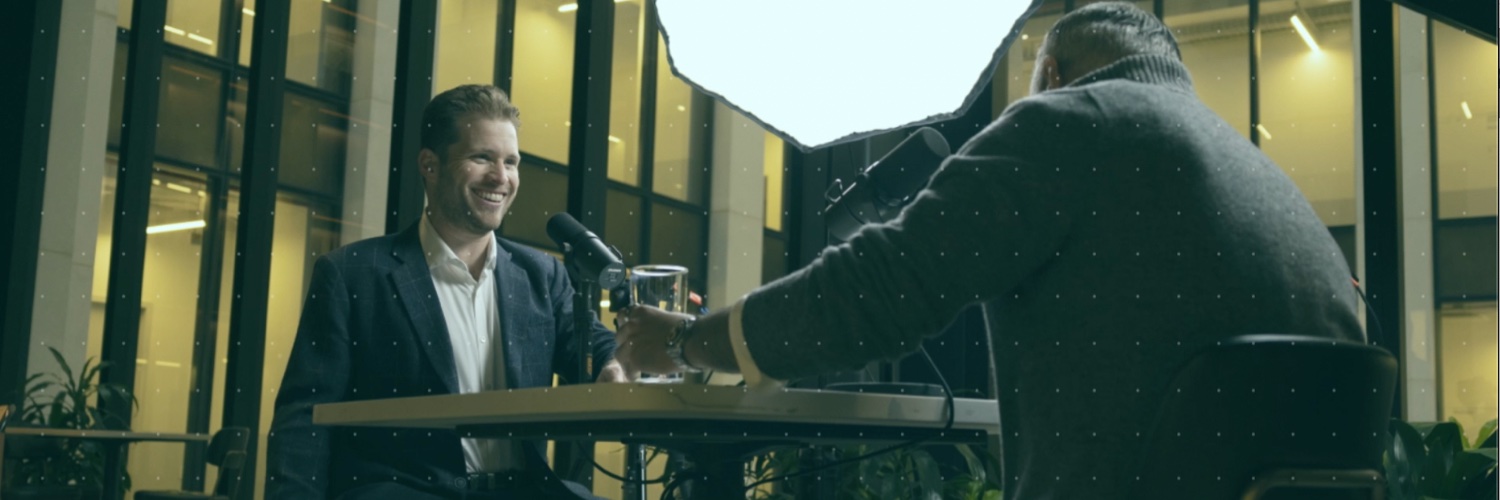

American Optimist
@AmOptimistShow • 15,553 subscribers
Official Account of @JTLonsdale's American Optimist podcast 🎙📺 NEW EPISODES: https://t.co/bQnaq8kHE8
Shorts

Videos

EPISODE 149: The Small Business Succession Crisis & New Possibilities in the AI Age Joe Lonsdale sits down with Will Fry, Founder & CEO American Operator. (00:00) Episode intro (01:25) Will’s entrepreneurial journey (04:15) The small business succession crisis (06:40) American Operator’s approach vs. private equity (08:35) "We're creating millionaires on Main Street" (11:55) Does AI mean boom or bust for small business (15:55) Forget law school? Buy a small business instead? (21:20) AI use cases for small business (23:00) Why many SMBs shut down instead of sell (26:00) How the operate-to-own model works (33:50) Optimism for Main Street America
American Optimist2,439,375 次观看 • 3 个月前

EPISODE 157: Scott Nolan on the AI Energy Crisis & America's Nuclear Renaissance Joe Lonsdale sits down with Scott Nolan Lessons from SpaceX early days; building General Matter; why we rely on Russia; how we fell behind China; nuclear power in space; and more! (00:00) Episode intro (01:20) Boeing vs SpaceX / lessons on speed & performance (05:20) What made SpaceX unique? (09:05) General Matter / how to make nuclear fuel (16:45) Disarmament and relying on Russia (19:50) The AI energy crisis / falling behind China (24:30) Founders Fund & energy investing (27:15) How to scale nuclear energy (32:00) How to fund the nuclear buildout (36:15) Nuclear in space & new possibilities
American Optimist876,619 次观看 • 1 个月前

EPISODE 156: Coleman Hughes Takes on America's Most Contentious Debate Joe Lonsdale sits down with Coleman Hughes to discuss his new University of Austin (UATX) course: "The Legacy of Slavery" (00:00) Episode intro (01:40) Teaching the Legacy of Slavery (06:20) Coleman's journey from Columbia to UATX (08:30) Dr. King vs Derrick Bell (11:20) Racial disparities by IQ and salary (13:00) Thomas Sowell & the Real History of Slavery (19:00) America's Founding Hypocrisy (24:00) Will the Left cancel Dr. King? (26:20) Understanding the 1619 Project (30:25) Breakdown of the black family (37:20) Is America wealthy because of slavery? (43:50) Are you worried about woke AI? (45:40) Three solutions for racial progress
American Optimist691,987 次观看 • 1 个月前
![Marc Andreessen: if you're the parents of a smart kid where I grew up [rural Wisconsin] and you think you're going to get them into a top university in this country, you're fooling yourself... What level of untapped talent exists in this country that a combination of DEI and immigration have basically cut out of the loop for the last 50 years? Marc: Nobody wants to talk about, but I've started to talk about the intersection of DEI and immigration that has really warped our perceptions on high skilled immigration over the last 50 years. You look at the foreign enrollment rates at the top universities, which went from 2 or 3 or 4 percent 50 years ago or whatever to 27% or 30% or 50%... Joe: Columbia's over half. Marc: 70% or whatever it is. And so there's been this massive transformation in who gets educated. And then there's been this massive transformation of who gets admitted through affirmative action, as we now know it, DEI. This goes straight to the political divide in the country, which is, if you're parents of a kid where I grew up [rural Wisconsin] and you've got a smart kid and you think you're going to get them into, you know, a top university in this country, like you're fooling yourself. There is this really fundamental question which is, what level of untapped talent exists in this country that a combination of DEI and immigration have basically cut out of the loop for the last 50 years? And how long can we have this story to everybody in the Midwest and in the South that says, sorry, because of historical oppression, your kids are SOL.](https://image.24vids.com/tw-1943758894263660670/amplify_video_thumb/1943758267760427008/img/JvH7lV-HctkWnxx1.jpg)
Marc Andreessen: if you're the parents of a smart kid where I grew up [rural Wisconsin] and you think you're going to get them into a top university in this country, you're fooling yourself... What level of untapped talent exists in this country that a combination of DEI and immigration have basically cut out of the loop for the last 50 years? Marc: Nobody wants to talk about, but I've started to talk about the intersection of DEI and immigration that has really warped our perceptions on high skilled immigration over the last 50 years. You look at the foreign enrollment rates at the top universities, which went from 2 or 3 or 4 percent 50 years ago or whatever to 27% or 30% or 50%... Joe: Columbia's over half. Marc: 70% or whatever it is. And so there's been this massive transformation in who gets educated. And then there's been this massive transformation of who gets admitted through affirmative action, as we now know it, DEI. This goes straight to the political divide in the country, which is, if you're parents of a kid where I grew up [rural Wisconsin] and you've got a smart kid and you think you're going to get them into, you know, a top university in this country, like you're fooling yourself. There is this really fundamental question which is, what level of untapped talent exists in this country that a combination of DEI and immigration have basically cut out of the loop for the last 50 years? And how long can we have this story to everybody in the Midwest and in the South that says, sorry, because of historical oppression, your kids are SOL.
American Optimist5,189,151 次观看 • 1 年前
!["I remember getting there on day one and reading the [SpaceX] employee handbook. On the top of page one was just a single line in bold that said: this is not a science experiment." Scott Nolan was an early employee at SpaceX He explains what made the culture and mission unique.](https://image.24vids.com/tw-2069165844572037459/amplify_video_thumb/2069165541009330177/img/vHvWTW-9HJ_bpQ-B.jpg)
"I remember getting there on day one and reading the [SpaceX] employee handbook. On the top of page one was just a single line in bold that said: this is not a science experiment." Scott Nolan was an early employee at SpaceX He explains what made the culture and mission unique.
American Optimist206,980 次观看 • 27 天前

EPISODE 147: The New Era of Software Abundance Joe Lonsdale visits Scott Wu & Russell Kaplan at Cognition HQ 00:00 Episode intro 01:35 Why technical talent & execution matters in AI 06:10 Do young people have an edge in the AI era? 08:26 Cognition's rapid growth 11:55 The new era of software abundance 14:30 Cognition engineers don't type code anymore 19:20 "Never sleep while Devin is idling" 21:25 The case for AI disinflation 23:50 How Devin generates 12X productivity gains 28:25 Cognition for government / taking on complex, broken systems 36:40 The AI race / competition with Anthropic 39:00 Forward deployed engineers? 43:40 How fast are LLMs improving? 47:10 The AI-led small business explosion
American Optimist834,355 次观看 • 3 个月前

EPISODE 158: Nima Ghamsari on the Power of AI Agents & Infinite Workforce Joe Lonsdale sits down with Nima Ghamsari to cover some favorite stories from Palantir, why he's all-in on AI agents, Blend's comeback story, and more. (00:00) Episode intro (01:45) Making millions playing poker to joining Palantir (06:00) Most important lessons from Palantir (07:30) Founding $BLND / understanding the mortgage industry (11:25) How to win over banks and risk-averse customers (15:50) Blend's meteoric rise and fall (19:00) Going all-in on AI agents / Blend's Act II (22:55) efficient markets / is Blend undervalued today? (26:50) Impact of AI on internal operations / increased productivity (32:00) The future of SaaS (36:20) The optimistic case for AI
American Optimist157,824 次观看 • 1 个月前

Joe Lonsdale: The people in charge of the sociology department at Yale and the education school at Stanford are still god**mn socialists who hate business and are bad for our civilization. But they've learned not to say certain things... A lot of people say, 'Oh, I'm not hearing this stuff anymore. It must be gone.' It's not gone. It's going to come out again as soon as they win. ZUBY: interviews Joe Lonsdale for Real Talk with Zuby Zuby: I feel like there's a change that is happening over the last couple of years with the pendulum starting to swing back. Joe: It's happening in some areas and others. Zuby: How do you see it? Joe: A lot of this, again, is tied to Marxists and socialists who are actively plotting to take over institutions. That's what they've done for the last 60 years. There's the very famous march through the institutions... I thought it was a conspiracy theory when I first heard about it. But it's very clear they've done this very successfully. And you can think of it almost like a virus... In this case, I think the virus has learned to hide itself... A lot of the people who run all of these conquered institutions haven't changed. The people in charge of the sociology department at Yale and the people in charge of the education school at Stanford are still godd*mn socialists who hate businesses and who are bad for our civilization. But they've learned not to say certain things. They've learned not to very publicly and openly say, 'We shouldn't have advanced math anymore,' which is what the education department in general is doing. They're going around getting rid of advanced math for equity purposes... A lot of people say, 'Oh, I'm not hearing this stuff anymore. It must be gone.' It's not frickin gone. It's going to come out again as soon as they win, as soon as they feel like they're safe. But right now they're hiding. I think it's hiding everywhere.
American Optimist86,820 次观看 • 21 天前
![NEW: The U.S. military just used sea drones in combat for the first time. Joe Lonsdale explains the significance with Ed Ludlow: "There are three Saronic Corsairs involved in an attack on [Iran's] Bandar Abbas Base... imagine what you can do with hundreds of them... Saronic is one of the most important defense companies in the US... It's become more obvious to the leadership in the Pentagon that the very top startups are way ahead of the primes in a bunch of areas." Ed Ludlow: There was news just before we came on air... Could you explain it to us the basics of what CENTCOM is demonstrating in a video? Joe Lonsdale: CENTCOM just put this out so I can only say what was public, but they said there are three [Saronic] Corsairs involved in an attack on the Bandar Abbas Base. These are unmanned drones. The same drones that save the pilots in the Strait of Hormuz... And in this case, they're being used in an attack. Right now, there's three of them, and you can imagine what you can do with hundreds of them. Saronic -- we co-founded out of 8VC. Ed: That's what you explained earlier. This format's different... Joe: 30% of our money goes towards companies we help build. So Dino is the main founder along with Vib -- Dino Mavrookas who is a Navy Seal -- and they've built an amazing team of top talent around them in Austin, Texas. They're scaling very, very quickly; it's one of the most important defense companies in the US. Ed: So could I ask you for your assessment of how Secretary Hegseth has or has not changed the relationship between the Pentagon, the Department of War, and how it works with start ups? Joe: Listen, I think it's become more obvious to the leadership in the Pentagon that the very top startups are way ahead of the primes in a bunch of areas. And what they've done is they've shifted things. And he's been very bold about this to focus on fair competition... What was happening before is the incentives were to create very, very exquisite designs that were very, very expensive. So you might be able to build the best thing in the world, but it's 100 times more expensive. And what Palmer [Luckey] at Anduril and Dino at Saronic and others have demonstrated is actually there are designs so you can make 100 or 1,000 more of these for the same cost, and that are many times even better.](https://image.24vids.com/tw-2076790894729281764/amplify_video_thumb/2076790103821709312/img/y-m10XiD_0PfTdKI.jpg)
NEW: The U.S. military just used sea drones in combat for the first time. Joe Lonsdale explains the significance with Ed Ludlow: "There are three Saronic Corsairs involved in an attack on [Iran's] Bandar Abbas Base... imagine what you can do with hundreds of them... Saronic is one of the most important defense companies in the US... It's become more obvious to the leadership in the Pentagon that the very top startups are way ahead of the primes in a bunch of areas." Ed Ludlow: There was news just before we came on air... Could you explain it to us the basics of what CENTCOM is demonstrating in a video? Joe Lonsdale: CENTCOM just put this out so I can only say what was public, but they said there are three [Saronic] Corsairs involved in an attack on the Bandar Abbas Base. These are unmanned drones. The same drones that save the pilots in the Strait of Hormuz... And in this case, they're being used in an attack. Right now, there's three of them, and you can imagine what you can do with hundreds of them. Saronic -- we co-founded out of 8VC. Ed: That's what you explained earlier. This format's different... Joe: 30% of our money goes towards companies we help build. So Dino is the main founder along with Vib -- Dino Mavrookas who is a Navy Seal -- and they've built an amazing team of top talent around them in Austin, Texas. They're scaling very, very quickly; it's one of the most important defense companies in the US. Ed: So could I ask you for your assessment of how Secretary Hegseth has or has not changed the relationship between the Pentagon, the Department of War, and how it works with start ups? Joe: Listen, I think it's become more obvious to the leadership in the Pentagon that the very top startups are way ahead of the primes in a bunch of areas. And what they've done is they've shifted things. And he's been very bold about this to focus on fair competition... What was happening before is the incentives were to create very, very exquisite designs that were very, very expensive. So you might be able to build the best thing in the world, but it's 100 times more expensive. And what Palmer [Luckey] at Anduril and Dino at Saronic and others have demonstrated is actually there are designs so you can make 100 or 1,000 more of these for the same cost, and that are many times even better.
American Optimist25,942 次观看 • 6 天前

EPISODE 150: How AI Is Transforming Diligence, Decision-Making & the Future of Investing Joe Lonsdale sits down with John Melas-Kyriazi, co-founder & CEO of Standard Metrics (00:00) Episode intro (02:10) Academia to investor and founder (08:00) The pain point that led to Standard Metrics (12:10) How AI is transforming diligence, data collection & VC (14:20) AI as a technical copilot (17:10) AI analyst vs Human in the loop (19:20) Parsing pitch decks and new AI tools (23:10) How AI search is changing marketing (28:30) Powerful new capabilities and workflows (33:47) How quickly is everything changing?
American Optimist283,369 次观看 • 3 个月前

🚨NEW: Joe Lonsdale on Tesla terrorism: "That's how authoritarians react, that's how the left reacts... they've tried to bully me, they try to scare my friends from speaking up. Thank goodness Elon Musk is someone who is going to double down and go harder because that's what a real leader does when people try to threaten them." On DOGE's effectiveness: "He's uncovering grift for millions of people.... we've caught departments with nine stories of fancy offices, buying champagne, giving their friends cash with the Federal Mediation and Conciliation Service... you have a lot of people who, their money faucet - their free money - is being turned off and they're angry, and Elon is the hate figure they're responding to go after." On intimidation tactics: "For the last 10 years I've been speaking up, I've been getting a lot of protests myself... our job as leaders is to role model to those around us, even if they attack you, we're going to fight for our civilization."
American Optimist1,319,595 次观看 • 1 年前

EPISODE 142: Understanding the AI Wave Joe Lonsdale sits down with 8VC Partners Alex Kolicich & Jack Moshkovich Why is AI fundamentally disruptive? What does it mean for large software incumbents? Will LLMs become commodities? And are we entering a bubble, or just getting started? (00:00) Episode intro (01:40) Smart enterprise thesis (04:00) Did enterprise software dramatically boost productivity? (08:30) Understanding the AI wave (11:45) Will LLMs become commodities? (17:10) OpenAI vs Anthropic vs Meta vs Grok (20:30) Frontier models vs enterprise incumbents (25:27) What did Palantir get right? (32:30) AI case studies/new possibilities (43:00) The most surprising aspect of the AI wave (46:12) Are we entering a bubble? Or just getting started? (52:40) Biggest concern with AI (58:00) Biggest reason for optimism
American Optimist416,550 次观看 • 5 个月前

EPISODE 151: The Myth of Michael Milken Joe Lonsdale talks with Richard Sandler -- Michael Milken's long-time lawyer -- about his powerful new book: "Witness to a Prosecution: The Myth of Michael Milken" (00:00) Episode intro (01:35) Richard's career & Michael Milken's legacy (06:25) Why write this book? (08:00) How Michael Milken transformed finance (14:00) Why did they go after Michael? (19:30) Using RICO to bring down Drexel (22:30) Prosecutorial abuse & the power of government (26:30) Why did Michael agree to a plea deal? (33:25) Trump grants Michael a full pardon (35:00) Lessons on government power, media influence & Michael's resilience
American Optimist221,940 次观看 • 2 个月前

NEW: Joe Lonsdale shocks CNBC on AI regulation debate: Andrew Ross Sorkin: Is there ultimately going to be an FDA for AI models? Joe: The FDA has killed millions of people... Andrew: Killed?? Joe: Massive bureaucracy makes it cost 10 or 100X more than it should... there's tons of these new drugs you could be developing to save lives that we're just not able to do... China would love for us to have a massive regulatory bureaucracy for AI and let them get ahead. Andrew Ross Sorkin: We're all trying to figure out what this could look like. Is there ultimately going to be an FDA for AI models? Is that a good thing or a bad thing for somebody who's thinking the way you do? Joe: Listen, the FDA has killed millions of people. Let's be totally clear, right? Andrew: Killed?? Joe: It's literally led to the deaths of millions of people, Andrew... There's all these new therapies, especially now, by the way, with AI that we could be developing... Andrew: It's also hopefully saved some lives... Joe: I mean the trade off is probably 100 to 1. There's a very famous story from 60 years ago where they caught some stuff that was killing people in Europe and saved them here. They've used that as an excuse to make this massive bureaucracy that makes it cost 10 or 100 times more to do drugs than it should, which means there's tons of these new drugs you could be developing to save lives that we're just not able to do. I would be investing billions more to save lives, but I can't. So the equivalent is terrifying to me. The government is bad at these things. The bureaucrats are bad at these things. Now there's a there's another argument here, which is that you have things like Mythos and OpenAI's new technology that's really, really good at hacking into everything. And you probably don't want like, that new technology going to the bad guys right away. So there has to be some sort of trade off, some sort of framework. We have to be really careful not to make the mistakes the FDA has made. Andrew: So what would you do? What do you think that should look like? Joe: There probably should be some national agreement on regulation on new powerful models. It should be as small and as narrow as possible. It should not have the same bureaucracy. You should make sure the government from the start, has metrics on the speed at which it has to go and the transparency, because you're gonna have cronyism, you're gonna have the big guys capture it. You're going to slow it down. Pharma loves the FDA against biotech. It makes it too expensive for us to build our own pharma companies. We have to sell to them. This is what the big guys want. Google and Microsoft and OpenAI and the rest of them, they want to create rules to make it so they can... Andrew: They've all been calling for it. I mean, you remember Sam Altman, Dario, others early on said, "Regulate us; you need to regulate us. Please, regulate us." The question is was that a genuine call for action or do you think that was a "We think Washington's never going to do this. So we'll say it, and get some nice PR points." Joe: If you are the leader in the space and you have tens of billions, hundreds of billions of dollars, you want there to be really complicated regulation with people you can hire who go in and out of your company, who work there because you know you're going to be able to control it and influence it. ...And by the way, China has pre-IND (Investigational New Drug process) and IND of 30 and 60 days about right now. We have 200 and 500 days. And so we've completely delayed anything we do. We've handed more than a third now of our biotech sector to China in the last six years because we're so slow. We definitely don't want to do that on the AI side. That would be a disaster. China would love for us to do a massive regulatory bureaucracy for AI and let them get ahead. We cannot allow that to happen. Squawk Box
American Optimist192,392 次观看 • 2 个月前

EPISODE 153: Palantir CTO Shyam Sankar on Heretics, AI Weapons & Rebuilding the Arsenal of Democracy Joe Lonsdale sits down with Shyam Sankar to discuss PLTR lore, protecting heretics, and his new book "Mobilize" (00:00) Episode intro (01:45) Mud hut in India to life in America (05:25) Employee #13 at Palantir (09:45) How Shyam created Forward Deployed Engineers (13:05) What are Shyam-isms? (14:55) Business discipline & learning to say no (19:20) The crisis of the American industrial base (24:00) Some heretics must be protected (29:00) The factory is the weapon (34:00) Magical AI weapons (43:00) Optimism for America's future
American Optimist128,014 次观看 • 2 个月前

🚨EPISODE 144: Moon Bases, Nuclear Power in Space & Returning NASA to Greatness Joe Lonsdale sits down with NASA Administrator Jared Isaacman Jared Isaacman Can we beat China back to the Moon? When will we reach Mars? And how close are we to making nuclear propulsion, space colonies, and other sci-fi futures a reality? 00:00 Episode intro 01:30 Top Gun as a service 07:40 Founding a billion-dollar payments company 09:30 Pioneering private spaceflight 12:00 What happened to NASA? 14:40 Getting back to the Moon by 2028 20:47 Jared announces new plans for Artemis 25:15 Building the space economy 27:50 Nuclear power in space 29:00 Sci-fi futures becoming reality
American Optimist163,957 次观看 • 4 个月前

EPISODE 146: AI, Culture, and Attention as Currency Joe Lonsdale welcomes Jake Paul & GEOFF to Austin 00:00 Episode intro 02:20 On stage with President Trump 06:00 Attention is the most valuable currency 08:00 The origins of Anti Fund and backing OpenAI, Anduril, Ramp, and others 09:10 Betr + Polymarket and the future of prediction markets 14:58 Launching Sora with OpenAI 16:14 Are you worried about AI slop? 19:10 How AI is changing culture; revival of in-person events 21:20 Who should become a creator? 24:30 Fighters as cultural icons 31:30 How to win the culture
American Optimist144,565 次观看 • 4 个月前

EPISODE 148: Flying Cars Have Arrived! Joe Lonsdale goes deep into the new age of aviation with JoeBen Bevirt, Founder & CEO of Joby Aviation 00:00 Episode Intro 01:50 What sets $JOBY aircraft apart 04:50 Key partnerships with Toyota & NVIDIA 06:50 Closing in on FAA Type Certification 08:00 Air Taxis coming to 12 states this year! 13:35 Autonomous flight is the future 20:00 Hydrogen aircraft for the Pentagon 24:10 Why AI is a game changer / Our scientists are 10X more productive 28:15 Expansion in Ohio & Global Competition with China 34:40 Addressing critics / future vision 35:50 Making air travel ubiquitous
American Optimist121,880 次观看 • 3 个月前
![NEW: Joe Lonsdale flips AI regulation debate on its head Maria Bartiromo: AI is moving faster than regulation. Does that concern you? Joe: What I'm concerned by is that AI is moving faster than the ability for the government to allow us to do this. AI is helping cure all these new diseases... But we have an FDA that's not letting us save lives... The FDA is not set up for the AI age. It's set up to let China take over the sector... There are more big [pharma] deals buying Chinese drugs [than U.S. drugs]; there are more clinical trials going on in China. We need a leader of the FDA that will push back on the bureaucracy, that will say, we are going to both be safe and we're going to go faster and save more lives.](https://image.24vids.com/tw-2061804137969274946/amplify_video_thumb/2061803249573724161/img/CtV_V6INvEc6lt7t.jpg)
NEW: Joe Lonsdale flips AI regulation debate on its head Maria Bartiromo: AI is moving faster than regulation. Does that concern you? Joe: What I'm concerned by is that AI is moving faster than the ability for the government to allow us to do this. AI is helping cure all these new diseases... But we have an FDA that's not letting us save lives... The FDA is not set up for the AI age. It's set up to let China take over the sector... There are more big [pharma] deals buying Chinese drugs [than U.S. drugs]; there are more clinical trials going on in China. We need a leader of the FDA that will push back on the bureaucracy, that will say, we are going to both be safe and we're going to go faster and save more lives.
American Optimist57,521 次观看 • 1 个月前

Did Joe Lonsdale predict Trump's plan in Iran? Right before the invasion, he joined Patrick Bet-David and explained how he would handle Iran... Patrick Bet-David: You hear the two arguments: I think they're going to do a surgical mission the way they did Venezuela, and it's going to be clean... And then the other side is like, how do we know that for a fact? Joe Lonsdale: If I were in charge, I'd be very Roman about it. And I don't know, maybe this is not appropriate, but I'd be very Roman. So you know what the Romans would do — you wipe out the leadership class... and you say, 'Okay, you guys are now in charge. We're going to make a deal, or we're going to kill all of you too.' ...Here's what's going to happen, here's how your public is going to work... And if you don't do that, then we'll kill you all in six months too... But I don't think we should be occupying ourselves. That's bullshit. I think Iraq was terribly run... But should these guys, who have acted like they've had, who've brought terrorism around the region, who've tried to kill Trump, who've killed so many people, should they be allowed to get away with that? No way. I wouldn't let them get away with it.
American Optimist137,661 次观看 • 4 个月前