Hopewell Chin’ono
@daddyhope • 886,773 subscribers
Award winning Journalist| Film Maker |2 Time African Journalist of The Year | Nieman Fellow| #100MostInfluentialAfricans 2022 | Email [email protected]
Shorts
Videos

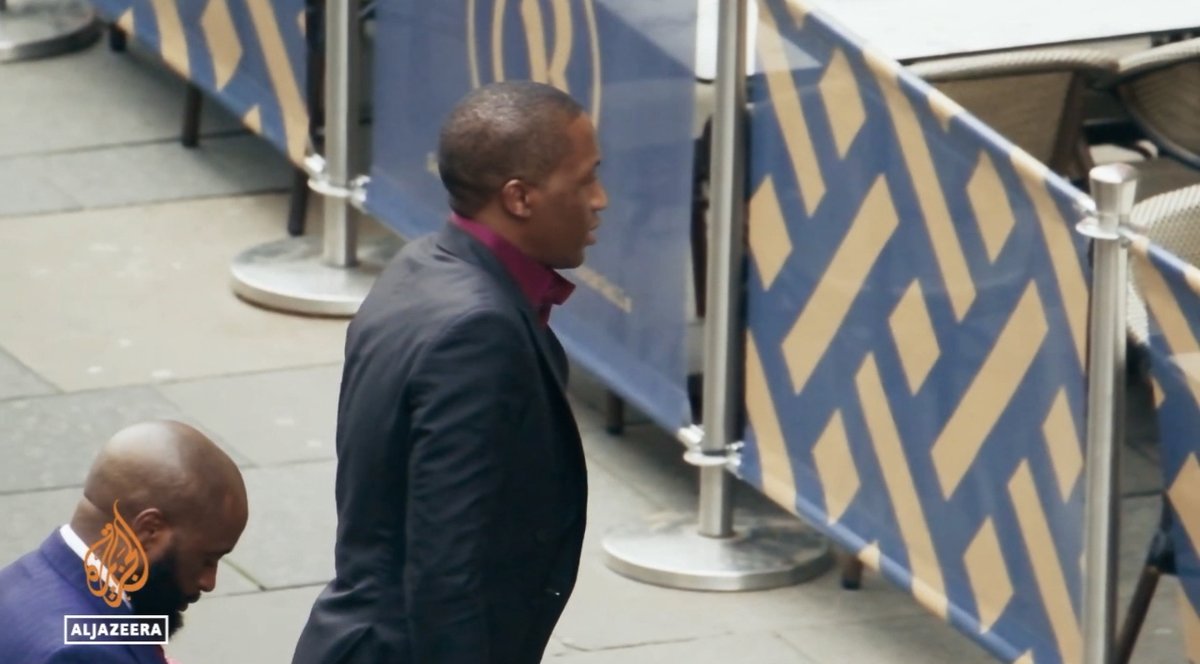
This is the moment a Zimbabwean man, who is also a British citizen and is wanted in the United Kingdom for allegedly murdering his wife and two children, was arrested by South African police in the Johannesburg suburb of Kensington. He was arrested by the South African Police Service in collaboration with Interpol and is expected to be extradited to the United Kingdom, where he will face the allegations against him and the legal consequences if convicted. According to the South African Police Service, he arrived in South Africa on Sunday.
Hopewell Chin’ono312,954 views • 8 days ago

Zimbabwean President Emmerson Mnangagwa who has been in power since November 2017, following the military coup that removed President Robert Mugabe. He has now signed into law Constitutional Amendment No. 3, which, among many other things, extends his term of office to 2030, cancels the 2028 elections, extends the presidential term from five years to seven years, and removes the direct election of the President by citizens, transferring that responsibility to Parliament. This is a massive controversial constitutional change, one that would ordinarily require a referendum. However, the President and his advisers have refused to subject these changes to a referendum. That fact alone renders the entire process contestable and places a dark cloud of illegitimacy over his presidency beyond 2028, when his term of office was originally supposed to end. But this crisis will not wait until 2028. It began the moment he signed Constitutional Amendment No. 3 into law, as opponents of the Bill which is now law have already declared the process illegal because there was no referendum. The real challenge facing President Mnangagwa is not so much the opposition, which he has effectively dismantled with the assistance of opposition leaders who have allegedly been bought or co-opted. The real challenge is the economy. As Bill Clinton famously said, “It’s the economy, stupid.” The economy is what will create a wave of political discontent between now and whenever he eventually leaves office, assuming he does not die in office. I have seen some of my South African friends mocking Zimbabweans over this development and saying it is a Zimbabwean issue that Zimbabweans must resolve themselves. One can only say that if one is ignorant of the interconnectedness of our region and the ripple effects that this constitutional change is likely to create. South Africa’s illegal immigration crisis has been authored, in part, by the misgovernance in Zimbabwe, which successive South African governments and the African National Congress have tolerated and, at times, enabled. When the economy deteriorates in Zimbabwe, desperate people cross into South Africa by any means necessary in search of jobs and opportunities. This should not be viewed as a Zimbabwean crisis alone. It is a regional crisis, one that has the potential to create political and social turbulence throughout Southern Africa. History has taught us that whenever there is a crisis in Zimbabwe, South Africa bears much of the burden. But this post is not about South Africa. It is about Zimbabwe and Zimbabweans. The culture of bootlicking leaders and hero-worshipping politicians cuts across Zimbabwean society, both in the ruling party and in the opposition. Part of the reason why the opposition has been emasculated by Emmerson Mnangagwa is because citizens continue to place blind faith in leaders who have delivered very little. Those leaders continue to sell hope to the people, even when many Zimbabweans know that some of them have been captured or compromised. We saw this decadence in the Parliament of Zimbabwe. Opposition Members of Parliament voted with ZANUPF. Only 42 voted against the Constitutional Amendment Bill. The rest supported it. That is a reflection of the deep crisis within the opposition itself. Unfortunately, many Zimbabweans mistakenly think that Zimbabwe’s problems are exclusively a ZANUPF problem. They are not. They are a Zimbabwean problem that Zimbabweans themselves must resolve, and not sit and watch. As long as Zimbabweans continue to hero-worship personalities instead of supporting ideas, institutions and principles, the crisis will never go away. There are people with ideas and solutions for Zimbabwe, but they are not popular enough. Populism has derailed the opposition and made it ineffective in pushing back against ZANUPF’s misgovernance. The signing of Constitutional Amendment No. 3 into law is, in my view, the beginning of a new phase of resistance, assuming events themselves do not overtake any organic resistance to Mnangagwa’s rule. Zimbabwe today is a hopelessly divided society. People are fighting one another, and there is little national unity. President Mnangagwa could have secured his legacy by uniting the country and fixing the economy. Instead, it is evident that his administration remains adrift when it comes to economic management. This is, therefore, a moment for Zimbabweans to reflect on what they want for their country and how they intend to achieve it. For neighbouring countries, particularly South Africa, this is not Zimbabwe’s problem alone. According to the South African government, around 70% of women who give birth at Musina Hospital are Zimbabwean. You cannot simply turn them away. They will continue coming because the Zimbabwean government has failed to build a healthcare system capable of serving its people. An estimated 2,500 Zimbabwean women die every year while giving birth because of inadequate maternal healthcare facilities. The largest hospital in Zimbabwe still relies on a single maternity theatre built in 1977 by the Ian Smith government. That alone is a devastating indictment of the state of public healthcare in Zimbabwe, and a metaphor for the state of affairs. With unemployment estimated at over 95% in the formal and informal sectors combined, it is not surprising that Zimbabweans are prepared to risk their lives crossing crocodile-infested rivers in the Limpopo to reach South Africa. They will continue doing so. No amount of anti-immigration marches in South Africa will stop this reality. One either understands how crises create migration flows, or one lives under the illusion and delusion that Zimbabweans can somehow be prevented from seeking survival elsewhere. As we speak, many large-scale farms in Limpopo employ significant numbers of undocumented Zimbabwean workers. If those workers were suddenly to disappear overnight, the consequences for agricultural production and food prices would be enormous. This is not simply my opinion as an analyst or journalist. I have spoken to numerous farmers in Limpopo. I am a farmer myself and have access to many people within the agricultural sector, including some who are political actors in South Africa. The reality is that complex regional problems cannot be solved by slogans, social media noise or emotional outbursts. They require honest conversations, competent governance and courageous leadership on both sides of the Limpopo. As this law comes into effect, many people must reflect on the roles they played, directly or indirectly, in bringing Zimbabwe to this point. Vice President General Constantino Chiwenga was one of the leading proponents of the idea that President Mnangagwa could and should rule for as long as he wished, as he stated in the video I have attached below. Today, he finds himself effectively locked out of any constitutional path to the presidency. The opposition leader, Nelson Chamisa, also bears a significant share of responsibility. He effectively dismembered the opposition by getting rid of key allies who brought talents and skills that he himself did not possess. He dismantled leadership structures and ran the opposition without a constitution, creating an environment that enabled ZANUPF to infiltrate the opposition through the political charlatan Sengezo Tshabangu, whose actions were aided by Professor Jonathan Moyo’s ideas. Ultimately, the supporters of these two men must not live in denial by blaming everyone else while refusing to examine their own role in what has happened. There is nothing contained in this constitutional amendment, which is now law, that was not predicted. Analysts who warned that these developments would occur were ridiculed. They were demonised on social media, insulted and called names by opposition supporters. That abuse continues to this very day. It cuts across the political divide, both in ZANUPF and in the opposition, where leaders deploy and sponsor people to attack anyone who raises uncomfortable truths about the realities of life in Zimbabwe. One cannot help but wonder whether some of those who have spent years attacking people who brought genuine issues to the table have themselves been manipulated or even indirectly serving the interests of ZANUPF, because it beggars belief that people can be so self-contradictory and self-destructive in the manner in which Zimbabwean politics has unravelled since 2022. In 2021, through Constitutional Amendment No. 2, the running mate clause was removed. That amendment effectively dismantled the constitutional mechanism that many believed would guarantee General Chiwenga’s succession within ZANUPF. The running mate provision had been an important part of the constitutional architecture established by the 2013 Constitution, which was negotiated during the Government of National Unity and endorsed by almost 95% of Zimbabweans in a referendum. The Vice President remained silent. He was warned. I was among those who argued that the removal of the running mate clause was the beginning of what I called a “royal presidency”, one in which President Mnangagwa would accumulate so much power that he could potentially remain in office until his death. All the mistakes that have been made, whether through deliberate action, political expediency or sheer ignorance, have brought Zimbabwe to where it is today. Have opposition supporters finally understood that ideas matter more than bootlicking and hero-worshipping political leaders? I do not know. Their reaction to what is happening in Zimbabwe today will answer that question. Have members of ZANUPF who feel aggrieved by President Mnangagwa’s actions now come to understand that when people speak about constitutionalism, accountability and good governance, they are not necessarily being anti-ZANUPF? I do not know. Time will tell. My thoughts, as I end this article, are with the millions of Zimbabweans who remain trapped inside Zimbabwe with little or no prospect of meaningful economic opportunities and who are unable to live normal lives in the way that citizens in functional countries do. My thoughts are also with those citizens who spent years bootlicking and hero-worshipping politicians, unknowingly aiding this process and helping to create the very circumstances in which they now find themselves: unemployed, economically excluded and without hope for a better future. And my thoughts are especially with those who cannot leave. As the Jamaican reggae artist Buju Banton poignantly said in his song Untold Stories: “Those who can run, run away, but what about those who can’t? They will have to stay.” That, perhaps, is the greatest tragedy of Zimbabwe: those with the means often leave, while the poorest and most vulnerable are left behind to endure the consequences of political failure, economic collapse and broken leadership. Their suffering should never be forgotten.
Hopewell Chin’ono225,507 views • 10 days ago

My countrymen have gone home. Jobs are now available in abundance. Now mobilise our South African brothers and sisters to take up those opportunities, because the South African economy depends on those jobs being filled. If the claim was always that foreign nationals were taking South Africans’ jobs, then this is the moment to prove it. Fill the vacancies and keep the economy moving.
Hopewell Chin’ono326,491 views • 17 days ago

This is Jacob Zuma, the former President of South Africa, whose political party, MK, has been encouraging South Africans to chase not only undocumented immigrants out of the country, but even black Africans who are legally living and working in South Africa. His campaign vehicles have been driving around KwaZulu-Natal with loudspeakers urging people to drive black Africans out of the country, regardless of whether they are in South Africa legally or not. And then, after all of that, he flew to India to meet the Gupta family, the very people accused of helping to orchestrate the industrial-scale corruption that nearly bankrupted South Africa through state capture. When they faced accountability, they ran away from South Africa, first for Dubai and then for India. Think about the contradiction. A man whose campaign encourages hostility towards fellow Africans is, at the same time, embracing foreign friends who became synonymous with one of the biggest corruption scandals in South African history. By his own admission in this video, he has made it clear that he is unhappy with the direction the country took in pursuing those implicated in state capture. Meanwhile, ordinary black South Africans are being mobilised against fellow black Africans who are living in South Africa legally, while the political battle being fought is, in reality, about power, accountability and the legacy of state capture. They are being drawn into a campaign that serves political interests rather than addressing the country’s real challenges. History should record this moment. It should record the irony of fellow Africans being turned against one another while those accused of presiding over one of the darkest chapters of corruption in South Africa seek a return to political power. That is a tragedy that future generations should never forget. Imagine dehumanising fellow black Africans who look like you, speak languages like yours, and share the same continent, all so that Jacob Zuma’s Indian friends can return and loot South Africa again.
Hopewell Chin’ono310,044 views • 18 days ago

The Mayor of Cape Town and leader of South Africa’s second-largest political party, the Democratic Alliance, Geordin Hill-Lewis, says the City has agreed to provide buses for foreign African nationals who are stranded in Cape Town and wish to be repatriated to their respective countries. The buses will transport them free of charge from Cape Town to Beitbridge, with the City of Cape Town picking up the full cost of the journey.
Hopewell Chin’ono285,365 views • 18 days ago

An hour ago, I was on South Africa’s public broadcaster, the SABC News News discussing the implications of Zimbabwe’s new law, Constitutional Amendment Bill No. 3, which came into effect two days ago. The amendment extends President Emmerson Mnangagwa’s term of office by an additional two years to 2030, removes the direct election of the President by citizens and transfers that responsibility to Parliament, and effectively removes the elections that had been scheduled for 2028. We also discussed what these changes mean not only for Zimbabwe but for the entire region, particularly South Africa, which has borne the brunt of migration from Zimbabwe, both legal and illegal, driven largely by the country’s prolonged economic and political crises. What happens in Zimbabwe never stays in Zimbabwe. Political instability, economic decline, and democratic backsliding inevitably have consequences for neighbouring countries. That is why Constitutional Amendment Bill No. 3 is not merely a Zimbabwean issue; it is a regional issue with far-reaching political, economic, and social implications.
Hopewell Chin’ono105,378 views • 9 days ago

Yesterday, in one of my posts, I spoke about the need for President Cyril Ramaphosa to convene a meeting of SADC leaders, and eventually African leaders, to discuss the issue of immigration, which, as we have seen, has taken a very ugly turn. This video broke my heart as an African. Seeing South Africans being chased out of a restaurant in Mozambique by Mozambicans because of what happened on 30 June in South Africa is deeply disturbing. These are ordinary citizens, not political leaders. When citizens begin retaliating against one another across borders, it is a sign that leadership has failed. Leaders should never respond to problems emotionally. They should respond with wisdom, reason and foresight. That is why I once again appeal to President Cyril Ramaphosa, in his capacity as the current Chairperson of SADC, to urgently engage the leaders of the region on this crisis. We have reached a dangerous point where citizens are now expelling one another from restaurants, businesses and communities simply because of their nationality. That should alarm every African leader. I do not believe that if Kenneth Kaunda, Nelson Mandela, Oliver Tambo, Samora Machel, Joshua Nkomo, Sir Seretse Khama, Quett Masire, Sam Nujoma or Julius Nyerere were leading the region today, we would be witnessing scenes like these. Those leaders confronted challenges far greater than the ones we face today, yet they understood that African unity was not just a slogan but a responsibility built on good governance. What we are witnessing today is not an immigration crisis alone. It is a crisis of governance, leadership and political courage. I therefore appeal once again to President Cyril Ramaphosa to convene a SADC summit dedicated to immigration, its root causes and practical regional solutions. Immigration cannot be solved by mobs, vigilantes or retaliation. It requires coordinated policies, honest conversations and political leadership. I also know that many of the liberation movements governing countries such as Zimbabwe, South Africa, Namibia, Mozambique, Angola and Tanzania have long-standing historical relationships and often protect one another. But history also gave us leaders such as Julius Nyerere, who understood that true friendship sometimes requires telling your friends uncomfortable truths. He could call a spade a spade without destroying relationships because his priority was always the wellbeing of the region. This video pained me profoundly. To see Africans being chased out of a restaurant simply because of the passport they carry is heartbreaking. Nationality should never become a reason to deny another African dignity, safety or a meal. I am nobody in comparison to our Heads of State, but I know many of them read my posts, directly or through their advisers. My appeal, particularly to President Cyril Ramaphosa, is simple; please act before this situation spirals further out of control. It is a terrible day for Africa when your nationality becomes a liability, when you cannot walk into a restaurant, sit down and have a meal simply because of the country you come from. That is not the Africa our liberation heroes fought for, and it is not the Africa we should leave to future generations.
Hopewell Chin’ono116,820 views • 11 days ago

I remember reporting almost two weeks ago about Zimbabweans camped outside the Zimbabwean Consulate in Cape Town. What I do not understand is this: these people have made it clear that they want to return home. We all know they did not plan for these circumstances. They have been stripped of their livelihoods and, in many cases, no longer have the financial means to get back to Zimbabwe. What stops the President from instructing the Minister of Finance and the relevant ministries to organise buses to transport our people from Cape Town back home? What stops the government from allowing them to cross the border with their personal goods and belongings without charging customs duty, given that this is clearly a humanitarian crisis? This is not a complicated policy issue. It is a basic act of leadership and compassion. What I struggle to understand about the Zimbabwean government is that you see men in expensive suits and women in elegant dresses, yet they fail to think in such simple, practical terms. At times like these, a government should be seen doing what governments are meant to do, protecting and assisting its citizens. South African media have reported on the plight of these Zimbabweans almost every day. The situation is neither hidden nor unknown. Yet there has been no meaningful humanitarian response from Harare. The government and its supporters will no doubt come up with all sorts of excuses. But this really is straightforward. Send buses. Bring your people home. Waive customs duties on their personal belongings. They have been forced into this situation by the climate of xenophobia and Afrophobia they have experienced in South Africa. A government’s responsibility is not to make excuses. It is to act.
Hopewell Chin’ono206,025 views • 20 days ago

Jacob Zuma is such a pathetic old man. It is deeply embarrassing that a former president of Africa’s biggest economy would lose a political battle within the ANC and then attempt to fight back by exploiting Afrophobia through his political party, MK. As you can hear in this MK message being delivered to communities in KwaZulu-Natal, the party is telling local residents that foreign nationals in South Africa should leave, regardless of their immigration status. How do you justify inciting communities by demanding that even people who are legally in the country should leave? It is sad to see a man whom many incorrectly initially believed to be a genuine Pan-Africanist turn into someone driving and deepening divisions among black Africans. History will remember leaders by whether they united people or deliberately sowed division for political gain. What a shameless man.
Hopewell Chin’ono221,102 views • 23 days ago

Wonderful local innovation for chicken breeders! This is exactly the kind of home-grown ingenuity that can transform poultry farming, improve productivity, and create economic opportunities for our communities. We need to celebrate and support local innovators who are developing practical solutions for farmers.
Hopewell Chin’ono67,738 views • 9 days ago

I agree with what South Africa’s Minister in the Presidency, Khumbudzo Ntshavheni, is saying, and it speaks directly to the crisis in which not only South Africa, but Southern Africa as a region, now finds itself. First of all, it is the responsibility of individual countries to ensure that they have government policies that grow their economies and provide jobs for their own people, so that their citizens can work at home instead of being insulted or forced into slave-like jobs in neighbouring countries. That responsibility lies with each government. That said, South Africa’s ruling party, the African National Congress, must sing from the same hymn sheet as Minister Khumbudzo Ntshavheni. You cannot have the government saying one thing while the ruling party, which constitutes part of that government, does something different. The ANC has consistently supported corrupt regimes that rig elections, and those rigged elections create the very conditions that South Africa now finds itself dealing with. I have said for more than seven years now that neighbouring countries are no longer only a foreign policy issue for South Africa. They are now a domestic issue too, because citizens from those countries live in South African communities and use South African social services, including hospitals. The South African government has said many times that 70% of women giving birth at Musina Hospital are from Zimbabwe. As such, it is important for the South African government not only to say the right words at specific moments, while privately continuing to support corrupt rule and bad governance in the region. That will not work. Yesterday’s march will achieve nothing if President Cyril Ramaphosa does not sit down with President Emmerson Mnangagwa of Zimbabwe, President Daniel Chapo of Mozambique, and President Peter Mutharika of Malawi to have these discussions honestly, because those are three countries that contribute significantly to regional migration into South Africa, both legal and illegal. Of course, he can also have conversations with President Bola Tinubu of Nigeria, because Nigeria is also part of the problem. Speaking as a citizen of Southern Africa, what the minister said is correct, but it must be followed up with action, not just words to appease journalists and viewers at a specific time because the government is under pressure. The South African government must make this its policy. The contradiction is that the South African economy benefits from migration and from shipping goods into the region. Zimbabwe’s biggest trading partner is South Africa for that very reason. So this is a complex issue that must be addressed with the intellectual weight it deserves, not reduced to talking points for politicians making fanciful declarations in their different countries without following through. Start with the SADC protocols. They determine what a free election is. But if the African National Congress publicly emboldens and supports rigged elections, it cannot then turn around and say African governments must take responsibility when it is failing to lead by example. The ANC must lead by example in regional bodies like SADC and the African Union, and say these things directly to fellow leaders. But we all know why it does not do that. It is because of personal relationships, political convenience, and money changing hands. It is time these things are put on the table, and if need be, let the truth be known. Lastly, I also agree with what the minister says regarding African countries supporting South Africa’s liberation struggle. We cannot endlessly remind South Africans that we helped them, because that support was never based on a quid pro quo arrangement. It was based on what was morally right at that time. If the same situation arose again today, we should do exactly the same. Standing against injustice should never come with an invoice.
Hopewell Chin’ono114,194 views • 17 days ago

How can these looters claim they are fixing their country when they are being broadcast on one of the world’s biggest international news networks, watched by a global audience, looting and destroying property? Nothing is being fixed here. The only thing being showcased to the rest of the world is barbarism, lawlessness and criminality. Every scene like this damages South Africa’s international reputation, undermines investor confidence, discourages tourism and reinforces the perception that mobs, rather than the rule of law, are in control. No country builds its future by celebrating criminality.
Hopewell Chin’ono116,232 views • 18 days ago

The tragedy of Zimbabwean politics is that there is reality, and then there are aspirations, aspirations that often drift into political delusions that hope for miracles. Too often, our people choose the latter. Instead of confronting the hard political realities before us, they cling to the hope that events will somehow unfold in their favour miraculously, regardless of the evidence saying otherwise. I have listened carefully to Vice President General Constantino Chiwenga’s latest remarks, given to us through a parable of Lazarus and the other biblical analogies he has shared at different intervals. He has demonstrated that he understands religion, reads the Bible extensively, and is comfortable using scripture to communicate political ideas and messages to the Zimbabwean citizenry. That, however, does not change our political reality. In 2017, General Chiwenga successfully marshalled the military, worked hand in glove with other senior figures within the security establishment, mobilised ordinary citizens onto the streets with the help of the opposition, and carried out the military coup that removed former president Robert Mugabe from power after forcing him to write a resignation letter with a gun over his head. Today, however, General Chiwenga faces a far steeper challenge because Zimbabweans are deeply disillusioned by what followed. Fairly or unfairly, many do not see what happened after November 2017 simply as Mnangagwa’s project. They see it as General Chiwenga’s military intervention because he was the Commander of the Zimbabwe Defence Forces who executed it; he was the poster boy of the military coup. Zimbabwean citizens jokingly called him General Bae. “Bae” is an affectionate term for someone you love or care about deeply. Whether one agrees with that assessment or not, that General Chiwenga bears responsibility for what followed the coup is a political perception that remains ingrained in the country’s memory. Anything that emerged from that military coup inevitably falls, to some extent, on his shoulders. That leaves him with an enormous task if he hopes to redeem himself politically. His biggest challenge is that, unlike Robert Mugabe, President Emmerson Mnangagwa is an exceptionally patient, calculating, and tactical politician who plans years ahead of eventual execution, and who does so ruthlessly, without any mercy for his political opponents. Today, we are confronted with Constitutional Amendment Bill No. 3, which is now on President Mnangagwa’s desk awaiting his signature. Once enacted, it will, barring a political miracle, effectively extinguish Chiwenga’s path to the presidency and also extinguish the little prospect of an opposition president. But this story did not begin in 2026. It began in 2021 with Constitutional Amendment Bill No. 2, which abolished the running mate clause. That provision would have significantly strengthened General Chiwenga’s prospects of automatically succeeding President Mnangagwa. When Amendment No. 2 was introduced, I argued that it was unmistakable evidence that President Mnangagwa had no intention whatsoever of handing over power to Chiwenga. As usual, because many people preferred comforting illusions to uncomfortable facts, many disagreed with that political assessment. Some within ZANUPF accused me of talking political nonsense. Others insisted that Mnangagwa and Chiwenga were inseparable political brothers who would always work together. Even sections of the opposition dismissed my political analysis, arguing that Mnangagwa would never have the political capacity to sideline Chiwenga because powerful forces would stop him. Reality has partly answered that debate. The results are before us. The so-called forces have not been able to stop him so far. Today, the Vice President increasingly relies on biblical parables to communicate his political messaging while Mnangagwa steadily and ruthlessly tightens his grip on every important lever of state power. The military itself illustrates this shift. The Zimbabwe National Army is now commanded by Major General Walter Tapfumaneyi. His rise is politically significant to the story so far and to where the story might take us as it continues to unfold. General Tapfumaneyi left the army as a colonel after falling out with the military establishment during General Chiwenga’s tenure as Commander of the Zimbabwe Defence Forces. He was made a Brigadier General upon retirement from the army. He joined the Central Intelligence Organisation, where he rose to become Deputy Director-General. He also commanded Forever Associates Zimbabwe (FAZ), the organisation widely associated with supporting President Mnangagwa’s electoral machinery during the 2023 elections. When President Mnangagwa returned him to the Zimbabwe National Army, he was promoted to the rank of Major General. He leapfrogged several Major Generals who had served longer at that rank when he was appointed Commander of the Zimbabwe National Army. President Mnangagwa was now building the army in his own desired image and dismantling General Chiwenga’s army management network. His appointment strengthened Mnangagwa’s influence over one of the country’s most important institutions, the military. He was appointed after President Mnangagwa fired General Chiwenga’s right-hand man, General Anselem Nhamo Sanyatwe, who had been the commander who supervised the 2017 coup when he was commander of the Presidential Guard. He was appointed as Sports Minister, replacing Kirsty Coventry. Today’s Presidential Guard presents a similar picture. It has also been reshaped to suit President Mnangagwa’s political pursuits. The same formation that played a decisive role during the 2017 military intervention, then commanded by Colonel Anselem Sanyatwe before his subsequent promotion to Brigadier General, is today under a commander aligned with Mnangagwa. Major General Fidelis Mhonda, who commands today’s Presidential Guard, was promoted a few days ago to the rank of Major General, reinforcing the widespread perception that the Presidential Guard is now firmly within Mnangagwa’s sphere of influence and political control. Above them sits the Commander of the Zimbabwe Defence Forces, General Emmanuel Matatu, from the Midlands province. Unlike Chiwenga during his tenure, General Matatu has generally not been viewed as an overt political operator. His role has largely been seen as maintaining institutional continuity rather than building an independent political constituency within the military, as General Chiwenga did during his time in the army. Taken together, these developments are seen by President Mnangagwa and his close associates as significantly reducing the prospects of another military coup to remove him. Over time, President Mnangagwa has systematically reshaped the senior military command structure. Military officers perceived to be close to Chiwenga have either retired, died, been reassigned, or gradually lost influence, while others considered more acceptable to Mnangagwa have risen through the ranks. Whether intentional or simply the natural evolution of military succession, the result has been the steady consolidation of presidential influence over the security establishment, weakening General Chiwenga’s influence. Meanwhile, many Zimbabweans have begun looking to Chiwenga for a viable counterforce because they see little prospect of meaningful change emerging from the fragmented opposition. Yet Chiwenga’s recent biblical parable appears to carry a different message. Rather than suggesting that salvation will come through him and his military associates alone, he seems to be telling Zimbabweans that they must act for themselves instead of waiting for someone else to rescue them. If that is indeed his message, it presents a political dilemma. Zimbabweans have repeatedly been encouraged to “wait and watch,” with suggestions that decisive, overwhelming action was imminent. Now they are being reminded that they themselves must participate. The difficulty is that many Zimbabweans remain traumatised by the state’s historical response to public demonstrations using the same military. When Chiwenga commanded the Zimbabwean military, those who protested often encountered overwhelming force. In August 2018, when he had become Vice President, soldiers shot civilians during post-election protests in Harare. The global media and British politicians like Kate Hoey directly blamed General Chiwenga for those killings because of Zimbabwe’s army history of dabbling in politics. Emmerson Mnangagwa’s public relations machine kicked into action and blamed General Chiwenga when speaking to diplomats and international businessmen about the circumstances surrounding what had taken place. A very powerful narrative was created that pointed to General Chiwenga as the culprit. President Mnangagwa told African presidents that when the killings took place, he was actually in a meeting with the former Ethiopian Prime Minister, Hailemariam Desalegn and the former Ethiopian dictator, Mengistu Haile Mariam. In 2008, while he was Commander of the Zimbabwe Defence Forces, the military killed hundreds of opposition supporters during the post-election violence that ultimately led to the formation of the Government of National Unity (GNU). Those events remain deeply embedded in the political memory of Zimbabwean citizens. Consequently, many Zimbabweans today are understandably reluctant to return to the streets for fear of being killed. Ironically, it is a political environment that Chiwenga himself helped create. Successful military interventions that seek public legitimacy usually require significant civilian mobilisation. Unless one is contemplating an outright seizure of power through force alone, public participation matters. Today, however, fear has largely replaced mobilisation. Across Zimbabwe and throughout the diaspora, many people hold General Chiwenga partly responsible for the political situation the country now finds itself in. They argue that in 2017 he possessed both the military authority and the political leverage to shape Zimbabwe’s future differently. Former president Robert Mugabe sent former central bank governor Dr Gideon Gono during the coup in November 2017 to engage General Chiwenga and other senior military officers with proposals that would have allowed General Chiwenga himself to assume power. General Chiwenga refused this offer and remained loyal to President Emmerson Mnangagwa during the coup. President Mnangagwa, by contrast, has demonstrated unwavering commitment to securing his own political future in a ruthless and Machiavellian way. Every major constitutional change, every strategic appointment, and every restructuring of the security establishment point in the same direction. His political objectives have been pursued with remarkable political discipline, patience, and clarity, coupled with an iron fist. Regardless of how objectionable his actions have been, he continues to execute them, and so far he has been succeeding. That is why I return to where I began. Zimbabwean politics has become a contest between reality and aspiration or delusion. Many continue to believe that somehow events will take a different course through a political messiah despite the evidence accumulating before them. But politics rewards those who deal with reality and political actors who are not scared of executing their plans, regardless of how controversial they are. It does not reward those who substitute objective reality with hope. Whatever one thinks of President Emmerson Mnangagwa or General Constantino Chiwenga, the evidence available today points overwhelmingly in one direction. Mnangagwa has spent years methodically consolidating power, while many of his opponents have spent those same years believing circumstances would somehow change in their favour. The other element that helped the ascension of President Emmerson Mnangagwa was the main opposition political party of the day, the MDC. Former Prime Minister and founding MDC leader Morgan Tsvangirai and his successor, Nelson Chamisa, worked with Mnangagwa in sanitising the coup by putting their supporters on the streets to make it look like it was a popular uprising against the sickly geriatric leader, Robert Mugabe. Today, the opposition is in disarray, crippled and, in many cases, comfortably ensconced in ZANUPF pockets. To put it more accurately, it is in Emmerson Mnangagwa’s pockets. The country’s most popular opposition leader, Nelson Chamisa, has also made his position clear through one of his own parables on social media. In a recent post, he suggested that he would not allow himself to be made to write Paper Two, in other words, another military coup. His argument is based on the fact that the first military coup delivered nothing but grief for the opposition. The opposition was promised a lot of things and as the coup ended successfully, former Finance Minister Patrick Chinamasa told Zimbabweans that it was a strictly ZANUPF affair. Chamisa believes that repeating the same approach, when there is already evidence of what the first coup produced, would be politically futile. He is therefore clearly not prepared to marshal his supporters onto the streets on behalf of one ZANUPF faction against another because he sees this primarily as an internal ZANUPF power struggle as he sees it. Another important element is that President Emmerson Mnangagwa has been able to create massive wealth through public procurement for a coterie of loyal political backers. That wealth has played a significant role in securing political favours, consolidating power, and extending influence across many facets of Zimbabwean society. Mnangagwa loyalists have publicly donated luxury vehicles and other expensive gifts to senior military commanders, universities, churches, celebrities, and many related key institutional figures. In the religious sector, which has millions of fanatic followers, influential church leaders have received financial support and gifts. In the entertainment industry, prominent musicians such as Jah Prayzah, Alick Macheso, and others have also received gifts from wealthy Mnangagwa loyalists who openly support President Mnangagwa’s political agenda to extend his term of office. Taken together, these patronage networks have helped consolidate political influence well beyond the structures of the state itself. The odds facing the Vice President are therefore enormous. Barring a miracle, his path to the presidency appears increasingly very difficult. The irony is that part of the political architecture he helped build over the past two decades has created the very climate of fear that now stands in his way. If he were ever to seek public mobilisation, many Zimbabweans would be reluctant to take to the streets because of the state’s historical response to protests, much of which occurred while he occupied positions of immense power in the security sector. The other risk is that, if nothing changes, he could eventually be dismissed. Some of his ardent supporters like Knox Chivero have already gone onto public social media platforms claiming that there are plans to remove him from office. That possibility does not surprise political analysts at all. At some point, Mnangagwa may conclude that there is little political value in retaining a deputy whom he believes has been politically and militarily neutralised. Many political analysts now say, barring a political miracle powered by a military coup, Chiwenga could ultimately find himself leaving office as an ordinary civilian. Any attempt to remove a government through a military coup carries enormous risks and requires tonnes of money, as we saw with the 2017 military coup, which was reportedly funded by fuel tycoon Kudakwashe Tagwirei. Such an attempt must succeed because, historically, failed coups often have severe, and sometimes fatal, consequences for those who participate in them. It is a kill-or-be-killed situation once it unfolds. So, Vice President Chiwenga finds himself in an extraordinarily difficult position. His own faction is looking to him to lead and deliver. At the same time, many opposition supporters who now feel politically orphaned, with no credible political home, are also looking to him in the hope that he can bring about change but are terrified of the streets. As all this drama unfolds, President Emmerson Mnangagwa continues to tighten his grip on power. Constitutional Amendment Bill No. 3 now sits on his desk awaiting his signature, and it could be signed into law at any moment. Yet, for General Chiwenga, this is a make-or-break moment. If the Bill is signed into law and the General does nothing, many will conclude that his political presidential ambitions have come to an undignified end. If he attempts to act and fails, he could place himself in mortal danger. And if he simply waits, the political outcome may ultimately be the same, he risks being removed once Mnangagwa concludes that he no longer serves a useful political purpose. Time, as always, will be the ultimate judge. Reality and aspiration are now facing each other, and we have not a long time left for the ultimate showdown, or, as many suspect, little resistance.
Hopewell Chin’ono104,152 views • 16 days ago

These protesters were given political cover by Jacob Zuma’s MK Party and March and March, which are effectively pursuing the same agenda. The MK Party explicitly declared that even Africans who are legally documented must leave South Africa. These protesters have simply acted on that message. They listened to their political leaders and went out to intimidate, harass and target Africans who are lawfully in the country. This is exactly what is turning South Africa into a laughingstock in the eyes of the world. It hands ammunition to its critics, including countries such as Israel and political figures like Donald Trump, who point to scenes like these and argue that South Africa is descending into lawlessness. If people claim they are protesting against illegal immigration but then use that protest to loot businesses, harass and intimidate Africans who are legally in South Africa, as has been reported in this news reports, then this has nothing to do with illegal immigration. It is xenophobia. It is Afrophobia. That is precisely what those terms mean. It is deeply disturbing to watch South Africa take this dark turn, where black Africans are persecuted simply because they are African, even when they have the legal right to live and work in the country. This is not law enforcement. It is prejudice dressed up as activism. We warned from the very beginning that this movement was being driven by hatred of black Africans, not by a genuine concern for the rule of law. We were insulted, mocked and dismissed. Today, those who doubted us need only look at what is happening. The evidence is now in plain sight.
Hopewell Chin’ono111,963 views • 18 days ago

The American ambassador to Greece under Donald Trump is Kimberly Guilfoyle, his son Donald Trump Jr.’s former girlfriend. Imagine Emmerson Mnangagwa appointing ED Junior’s ex-girlfriend as Zimbabwe’s ambassador to Greece. America’s ambassador to France is Charles Kushner, the father-in-law of Ivanka Trump, Trump’s daughter. Imagine Mnangagwa appointing Gerald Mlotshwa’s father as Zimbabwe’s ambassador to France. The co-negotiator for America in the Middle East is Jared Kushner, Donald Trump’s son-in-law, Ivanka’s husband. Imagine Mnangagwa appointing Pokello as Zimbabwe’s negotiator in an international crisis. Trump appointed his son-in-law Jared Kushner to handle a broad portfolio including Middle East peace, criminal justice reform, and relations with Mexico. Imagine Mnangagwa assigning Gerald Mlotshwa to run multiple critical national portfolios without any prior public service experience. He also appointed close political allies and loyalists with little relevant experience to key diplomatic and administrative roles, including Richard Grenell, Mick Mulvaney, Peter Navarro, and Stephen Miller. Imagine a system where loyalty to the leader outweighs competence and experience in state appointments. In Africa, America calls it corruption and nepotism, in America they call it “political appointments” and “trusted insiders.” Jared Kushner set up a private equity firm after leaving government and secured about US$2 billion from Saudi Arabia’s sovereign wealth fund, led by Saudi’s defacto leader, Mohammed bin Salman. This has serious conflict-of-interest because he handles Middle East policy for America. Donald Trump has also pursued major real estate and licensing deals in the Middle East, including projects linked to state-backed or politically connected investors in countries such as Saudi Arabia and the UAE. A sitting president should not be financially benefiting in regions where he shapes policy, even if no laws are proven to have been broken. In Africa, this would be labelled corruption or state capture, but in the United States it is often discussed as ethics, conflicts of interest, or influence, even when the underlying dynamics, proximity to power translating into financial gain, look strikingly similar. Donald Trump is one of the most corrupt Western leaders ever elected into power, but most of his supporters, especially those who do not live in America, are oblivious to this because they do not support his ideas, they support his personality rather than his ideas. So regardless of whether he rapes or abuses power, they just continue supporting him. They are the equivalent of people who support mediocrity, if the mediocre person is seen as their own, they will go all out in supporting him regardless of his corrupt rule.
Hopewell Chin’ono615,255 views • 3 months ago

This video really broke my heart. It is painful to watch, yet it reflects the reality of life for many ordinary Zimbabweans. The woman in the video is Zimbabwe’s Minister of ICT, Postal and Courier Services, Tatenda Mavetera, who is also a Member of Parliament. She is presiding over a dispute involving just US$300 that was allegedly meant to be passed on to someone else. What is striking is not the dispute itself, but the fact that this amount has become the centrepiece of a community gathering, with scores of people waiting anxiously because that money matters so much to them. Forty years ago, a Zimbabwean civil servant could earn around US$300 a month. Today, an entire community can be consumed by a dispute over that same amount. But the US$300 is not the real story. The real story is that people need money for hospital bills, food, clothing, school fees, transport, and countless other necessities. They are struggling to meet basic needs. That is why this issue has attracted such attention. At the centre of a community discussion being adjudicated by a Cabinet minister is an amount of money that can disappear in a single evening at a restaurant in London or Johannesburg. Yet for the people gathered here, that money means everything. This is what poverty looks like. This is what economic failure looks like. It is not measured by the luxury cars driven by a small elite, or by the mansions built in affluent suburbs. It is not hidden by people drilling private boreholes because public water systems no longer function, or installing solar systems because the national electricity supply is unreliable. Those are symptoms of dysfunction in themselves. The real measure of a country is the condition of the average citizen. And the average Zimbabwean is struggling. When people ask why Zimbabweans leave their country in such large numbers, this video provides part of the answer. They are not running away from Zimbabwe. They are running away from poverty, hardship, and the daily struggle to survive. Imagine the British Secretary of State for Science, Innovation and Technology, or South Africa’s Minister of Communications and Digital Technologies, having to preside over a public dispute involving the equivalent of R5,800 or £220. It would be almost unimaginable. Yet in Zimbabwe, such a matter can become the focal point of an entire community. As Africans, we must be honest with ourselves. We cannot measure progress by the lifestyles of a tiny elite while the majority live in deprivation. A country is not successful because a few people drive expensive cars, travel abroad, or live comfortably. A country succeeds when ordinary people can afford food, healthcare, education, housing, and a dignified life. I might drive a nice car. I might own a beautiful home. I might travel the world and enjoy privileges that many can only dream of. But none of that says anything meaningful about the health of my country if the average child goes to bed hungry. The success of a nation is not measured by the wealth of its elite. It is measured by the wellbeing of its ordinary people. And that is the conversation Zimbabweans, and Africans more broadly, need to have. Other nations beyond Zimbabwe, beyond our continent, and people of other races will not respect us. Even if I turn up to a meeting in Harare driving a Bugatti or a Lamborghini to meet an investor from London, they will have a very dim view not only of my country, but of me as well. Driving a Lamborghini on pothole-ridden roads, they will look down on me as an individual and on my country as a nation. Nobody with genuine pride can honestly believe they are doing well when the average person is going to bed on an empty stomach.
Hopewell Chin’ono165,298 views • 1 month ago

These people are uncouth, ignorant and too uneducated to understand the stupidity and cruelty of their Afrophobia. Only an idiot would tell another African to “Voetsek”. Only a fool would refer to fellow Africans with derogatory slurs such as “Kwerekwere”. And only a clown would defend such hateful behaviour. “Voetsek” is an Afrikaans word traditionally used to chase away dogs. The deliberate choice of that word to address fellow Africans is therefore not accidental, it is a deliberate act of dehumanisation. That said, these clowns do not represent South Africa and should never be used to define South Africans as a whole. The overwhelming majority of South Africans are decent, cultured and measured in how they treat others. It would be unfair and inaccurate to judge an entire nation by the actions of a hateful minority. These are fools, and every country has them! Only a fool would openly utter such hurtful words!
Hopewell Chin’ono103,562 views • 19 days ago