
Dara
@daraladje • 10,913 subscribers
founder @withdelphi learn from the best at https://t.co/rM4qjf1REh
Videos

Sequoia's Chief Product Officer, Jess Lee, won't hire well-rounded people. She looks for a "spikes" in 1 of 4 traits that predict success: • EQ: One-on-one people skills • IQ: Raw intellectual horsepower • PQ: Ability to navigate politics/systems • JQ: Judgment on decisions that matter In this week's episode of The Library of Minds, we went deep on how this framework shaped her journey from Google PM to Polyvore CEO to Sequoia’s Chief Product Officer. Jess explains why velocity is the strongest early predictor of product-market fit, how choosing the wrong business model was her biggest mistake as a founder, and why she now believes AI will spark a new wave of consumer media. 00:00 Intro 1:00 Who is Jess Lee 02:50 The EQ / IQ / PQ / JQ framework 03:44 What early Google taught her 05:35 When ambition becomes a weakness 07:34 Customer discovery vs visionary intuition 09:31 Polyvore: from user → CEO 12:37 Imposter syndrome & finding authentic leadership 15:20 Picking the wrong market 18:24 Firing fast & setting high performance bars 20:12 Building cult-like community and emotional loyalty 22:13 Velocity vs delight in product 24:32 What she looks for in founders (turn-based velocity) 25:59 The business model wake-up call 27:27 Storytelling as a founding superpower 28:26 Hot take: consumer isn’t dead, it’s being reborn 31:50 AI-generated media, fanfic, and the next YouTube Grateful to be working with her at Delphi !
Dara1,971,479 views • 10 months ago

THE LIBRARY OF MINDS: EPISODE 1 - starring Keith Rabois (Keith Rabois) An OG member of the PayPal Mafia, co-founder at OpenDoor, Managing Director at Khosla Ventures, and one of Delphi's earliest believers. We discuss: • Lessons learned building PayPal, LinkedIn, Square, $OPEN & more • Early career inflections: from litigation to Silicon Valley operator • Why joining great teams is underrated, especially vs. starting your own company • The new physics of AI startups (and org design mistakes to avoid) • Why stretching & Slack are actually bad for you Plus: What makes a winning office culture, advice for scaling from 20 to 100, building moats in AI, and why vacations might be overrated. (00:00) — Intro (00:56) — Who is Keith (03:13) — Can you judge a startup by its office? (04:28) — Litigator to PayPal Mafia, zero business experience (08:52) — Start a company, or work for someone great? (11:15) — All-nighters and culture at PayPal (13:03) — Do vacations mean you hate your life? (16:05) — Square’s zero-defect rule (17:23) — Speed of adaptability vs. speed of execution (21:35) — Is AI sustaining or disruptive? (25:53) — Why stress is good for you (28:14) — Building moats in AI (30:39) — The downside of Slack
Dara520,419 views • 11 months ago

Board member of Coinbase, Pinterest, & TradeDesk, Gokul Rajaram, thinks credentials may be worthless in the AI era. The man who built Google AdSense from 0 to $1 billion has watched ex-FAANG PMs and GTM leaders crash and burn in AI-native startups. First principles thinkers with no resume are leaving them in the dust. In this week's episode, we dig into: • Why traditional product instincts break in AI • How to hire for velocity & curiosity, not credentials • Why customer relationships are the new moat 00:00 - Intro 01:00 - Who is Gokul 03:10 – Building Google’s Ad Model 06:00 – Metrics That Matter 07:50 – When to Ignore the Data 10:10 – Prioritizing Customers & Segments 11:50 – Knowing When to Kill a Product 13:30 – When to Build Product #2 18:03 – Hardest Moment in Gokul’s Career 20:20 – Founder Paranoia & Retention Metrics 22:00 – Culture & Early Team Dynamics 25:50 – What Makes a Team Scale 30:00 – Lessons from Great Leaders 33:40 – Sheryl Sandberg’s Decision Framework
Dara377,312 views • 10 months ago


Culture is how people make decisions when you’re not in the room. HubSpot’s Co-Founder Brian Halligan learned that the hard way. He built a $20B company, coined inbound marketing - and later realized culture, not code, is what truly scales. He also drew inspiration from an unlikely source: The Grateful Dead. They made every concert unique, gave superfans front-row seats, and even invited people to pirate their shows. Brian built HubSpot with the same playbook. In this week’s episode of The Library of Minds, we talk about: • Why culture beats strategy in the long run • Succeeding (and failing) to create new categories • What AI means for the next generation of “inbound” 00:00 - Intro 01:47 - How inbound marketing was invented (SEO, blogging, early social) 03:38 - Naming the category: inbound vs outbound marketing 06:58 - The pivot to CRM & competing with Salesforce 09:55 - Fixing churn: the Mary / MoFu / Monetization framework 15:52 - The freemium CRM strategy & beating Salesforce from below 17:44 - Making support world-class: Apple Store hiring, culture, & training 20:01 - HubSpot’s culture code - scaling through culture, not code 27:10 - How AI is rewriting inbound marketing, SEO, and brand discovery 35:54 - The Grateful Dead: the original freemium marketers & HubSpot’s inspiration
Dara312,116 views • 10 months ago


The most controversial VC on Twitter: Delian Asparouhov (delian) - Partner & Village Idiot at Founders Fund The guy who: • Spent 7 years trolling Benchmark until they finally responded • Says he’d “rather jump out the window” than invest in AI • Fought the FAA so hard he got every official who blocked Varda fired • Hasn’t made a Bay Area investment in 5.5 years In this week's episode of The Library of Minds we discussed: the origins of Varda, his power-law investing philosophy at Founders Fund, why he naturally attracts chaos, his prioritization framework, and why he believes space manufacturing will matter far more than the current AI hype cycle. 00:00 - Intro 02:40 - Delian’s “one thing” framework for high-impact decisions 07:40 - Motion vs. Progress: How founders avoid fake productivity 09:35 - Why empty calendar space creates real leverage for operators 11:40 - 996 culture, burnout, and when extreme intensity actually works 15:40 - How Delian operated as a first-time founder without asking for permission 16:15 - Inside the Keith Rabois years: 24/7 immersion + compressed learning 18:10 - Why Delian finds AI boring (and why he still can’t care about it) 22:50 - The Benchmark saga: 7 years of poking the bear and the blowback 28:00 - Varda’s mission: Space manufacturing, geopolitics, and free-market power 34:15 - Swallowing ego: Knowing your strengths vs. fixing your weaknesses 36:05 - The FAA battle: Delian’s hardest moment and what he learned
Dara281,646 views • 9 months ago

THE LIBRARY OF MINDS: EPISODE 2 - featuring Roelof Botha (Roelof Botha) Managing Partner of Sequoia. Ex-CFO of PayPal. Early backer of YouTube, Instagram, Square. Quiet architect behind generational companies. We cover: • How elite orgs think like teams-not stars • The false choice between growth & revenue • Cultural discipline > technical talent • Lessons from PayPal’s defining chaos • What founders still get wrong about scale Plus: How Sequoia Capital beats complacency, the discipline to cut early for culture, personal tales of hardship, and what it means to digitize a mind. (00:00) - Intro (01:00) - Who is Roelof (01:49) - Managing chaos: Focus and trust at PayPal during crisis (03:28) - Metrics: PayPal’s Total Payment Volume as growth driver (04:42) - Growth vs. revenue: Why great companies do both (06:48) - Square’s wedge: Card reader to financial ecosystem (09:31) - Category creation: Product quality over hype (10:55) - Retention > Distribution: Building lasting value (13:03) - companies: Mission, values, and discipline (14:34) - AI era: Rethinking org design and founder leverage (15:56) - Hardship: Pressure as a catalyst for innovation (19:03) - The crater lesson: Why immunity breeds weakness (20:23) - Adversity: Learning from PayPal’s and Sequoia’s toughest moments (23:17) - Patience: Thinking in decades at Sequoia (24:21) - Delphi: Memory, legacy, and digital minds (25:59) - No complacency: Sequoia’s culture of accountability (29:05) - Leadership: Conviction and adapting to change (32:19) - The future: Pre-mortems and staying ahead
Dara322,445 views • 11 months ago

Hubspot Co-Founder and Sequoia Partner Brian Halligan did something most founders would never try: He walked into the Cambridge Apple Store, found the best reps, and hired them on the spot. Same $40K salary - but instead of standing all day, they got a real growth path. Many became CSMs, PMs… and one eventually became Head of Product. Bet on talent, not pedigree.
Dara268,575 views • 10 months ago

"You can judge a startup by its office." Keith Rabois, Co-Founder $OPEN "Show up early or late. At 7 or 8 AM, you’ll know right away how hard the company works. Walk around: are people really dialed in, or just fake working? It’s a soft signal - but one of the most valuable."
Dara302,629 views • 11 months ago


Most founders accidentally train their customers never to pay them. Madhavan Ramanujam (the "pricing guru" of Silicon Valley - having worked with LinkedIn, Uber, and 30+ unicorns) calls it the 20/80 Pricing Trap • 20% of your features drive 80% of the willingness to pay • Founders give that 20% away for free to gain distribution • You are left trying to monetize the remaining 80% of features - the ones users don't actually value. The result? You build a charity, not a business. In this week's episode of The Library of Minds, we discuss the science of monetization and deconstruct how to architect ‘Profitable Growth’ - the core framework from his new book, Scaling Innovation. 03:33 - Netflix vs Blockbuster: The Pricing Decision That Changed Tech 08:06 - Why Most Startups Get Pricing Wrong 11:39 - Freemium vs Paid: When Free Destroys Value 15:38 - Pricing Models Matter More Than Price 16:28 - The AI Pricing Framework: Autonomy vs Attribution 21:49 - The Biggest Pricing Mistake Ever 25:05 - Why Steve Jobs Was a Pricing Genius 26:44 - Behavioral Pricing: How Founders 10× Deals Without Changing Product 31:02 - Data vs Conviction: How Great Founders Make Pricing Decisions
Dara215,786 views • 8 months ago

Too many people I know got into startups because of The Social Network. Hiten Shah claims it ruined Silicon Valley. It turned startups into an outcome to pursue rather than something you do because you actually love building. And so instead of attracting true builders, it attracted hype-chasing tourists. He spent 20+ years building Crazy Egg, KISSmetrics, and Nira (acquired by Dropbox), invented playbooks the whole industry copied, and came back to run Crazy Egg again as CEO. Our conversation was one of the better reminders I've had recently that startups really aren't that deep. Have fun. Do things. Get in contact with reality. 1:02 - Bootstrapping vs. VC 5:27 - His Content Playbook Everyone Copied 10:25 - The Best Marketing Channels Are Secrets 25:52 - The AI Workflow He Figured Out Before the Frontier Labs 29:00 - The Social Network Ruined Startups 46:15 - The Only Startup Advice Worth Keeping
Dara22,992 views • 24 days ago

At 26, Chad Byers invested $250k into Robinhood after everyone passed. That bet turned into $400M+. Before he wrote the check, two experts told him: “This was tried in the 2000s. It will never work.” He still wrote the check. Later, an expert warned him off Plaid. He listened and missed out on millions. Chad’s takeaway is not “ignore experts.” It is this: experts explain how the system works today. They are worse at seeing when the system is about to change. In this week’s episode of The Library of Minds, the co-founder of Susa Ventures breaks down the full Robinhood story, his unicorn filter, the new data moat, and what comes after AI. 1:45 - To make money, don’t listen to the experts 2:50 - Inventing the “data moat” thesis 5:05 - How to Find “Spiky” People 8:10 - Why 48-Hour Deal Cycles are a Mistake 10:40 - The crumbling SaaS moat 16:55 - “Oh shit, oh fuck” is the real startup journey 18:00 - How Chad raised Fund I with no track record 22:50 - When to act on your conviction 25:39 - How living w Neuralink founders shaped his diligence 27:50 - What comes after the AI wave
Dara118,513 views • 6 months ago

"You can't just come in here and shit on our style" When Ben Blumenrose (Ben Blumenrose) joined Facebook as its 5th designer, he tried to radically overhaul the site with high-end graphics. Zuck shut him down instantly. The site’s "wireframe" look wasn't an accident - it was a performance feature. Minimal graphics meant the fastest load times on the internet. Ben realized he had to understand the "Why" behind the system before he could move the needle on the "What." He then walked away from Facebook to back a thesis the Valley dismissed: design-led companies. He built Designer Fund and backed Stripe, Figma, Notion, and Linear before the world caught on. In this week's episode of The Library of Minds: 6:40 - Moving a button cost Facebook 200M users 12:43 - Zuck: "You can't just shit on our style" 19:10 - The philosophers guiding Mark Zuckerberg 20:12 - Designing for death: Facebook's first users die 23:35 - How to be a 100x AI Designer 27:19 - "Everyone's gone rogue" 35:38 - OpenAI wont build this
Dara98,472 views • 7 months ago

Sequoia Partner Jess Lee says AI slop fanfic might birth the next Netflix. “When I go on TikTok, I see a lot of what today is termed AI slop… but it's getting better and better.” “I saw this Harry Potter x The Hangover crossover where Draco and Harry are like, ‘We can't find Ron… why is there a tiger in our bathroom?’" “It was actually pretty entertaining.” “There’s a possibility someone creates the next YouTube or Netflix out of this.”
Dara121,439 views • 10 months ago
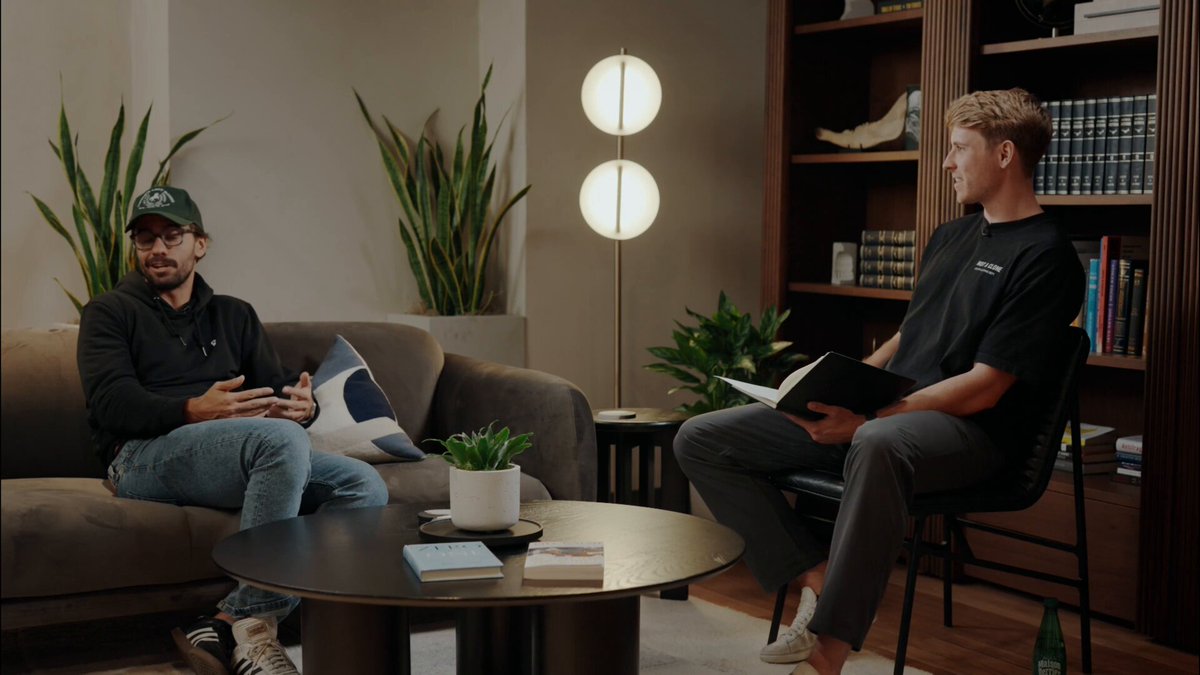

THE LIBRARY OF MINDS: EPISODE 3 - Soleio Cuervo (Soleio) Early designer at Facebook & Dropbox, co-inventor of the Like button, and design-driven investor behind Figma, Perplexity, and Delphi. We discuss: • The untold story of the Facebook Like button • Defining the role of “Product Designer” at Facebook • Building world-class design cultures at scale • Balancing speed vs. excellence in product teams • When intuition fails - and data saves you Plus: Lessons in hybrid designer-engineers, hackathon culture, trust & safety, and how AI is redefining great UX. Bonus: Soleio on utility vs. beauty, system-centric design, and why digital minds might be the next design frontier. (00:00) - Intro (01:00) - Who is Soleio Cuervo (02:00) - Early web days: The origins of product design (04:37) - Inventing the ‘product designer’ role at Facebook (07:43) - Culture of speed, ownership, and building at Facebook (11:45) - Shipping fast: The story of Facebook’s Like button (13:54) - When to persist and when to quit: Loonshots, ‘false fails’, and user onboarding at Facebook (17:49) - Transitioning cultures: From Facebook’s speed to Dropbox’s trust (20:54) - Balancing speed with excellence: Lessons for AI-era startups (22:28) - Is speed or quality a stronger differentiator in today’s tech world? (24:35) - Can design be a moat in the age of AI? (27:35) - Rethinking UX in an AI-native world (29:08) - Why Soleio invested in Delphi: The “Oprahbot” idea and digital minds
Dara75,367 views • 11 months ago

THE LIBRARY OF MINDS: EPISODE 4 - Stanley Tang (Stanley Tang) Co-founder of $DASH and one of the earliest YC founders to scale from dorm room to IPO. Builder, operator, and investor redefining how technology moves the physical world. We discuss: • The unexpected journey from a college project to DoorDash • Overcoming operational challenges with creative solutions • Embracing chaos and innovation • The role of robotics and automation in the future of delivery • Balancing customer experience with rapid scaling Plus: Insights into customer love as a core value, the importance of iteration, and how DoorDash navigates the complexities of a tech-driven operational business. (00:00) - Intro (01:00) - Who is Stanley Tang (01:29) - Early childhood: computers, curiosity, and a physicist dad (02:46) - The class project that became DoorDash (06:38) - The first real delivery (and how it all began) (09:08) - Product-market fit before software (11:06) - Doing things that don’t scale - to the extreme (15:54) - Competing against consumer behavior (16:25) - How DoorDash built operational excellence (20:01) - Speed vs. quality: finding the right balance (22:53) - Robotics, drones, and the future of delivery (26:58) - The darkest moment (and spending 40% of cash to do what’s right) (30:34) - Chaos never ends - learning to embrace it (31:48) - Training thousands of dashers before automation (33:48) - Closing thoughts + talk to Stanley’s digital mind on Delphi
Dara64,095 views • 11 months ago