The Forgotten South's banner
The Forgotten South's profile picture

The Forgotten South

@forgotten_south13,845 subscribers

✍🏼 Stories of Forgotten Places 🪦Cemetery Advocate 📜Historian 📷Photographer

Shorts

🇺🇸 On the night of April 28, 1781, Colonel Abel Kolb walked out the front door of his plantation home on the east bank of the Great Pee Dee River in South Carolina. He was shot before he could speak as his wife and children watched. Then the Loyalists burned his house to the ground. By the spring of 1781, the Revolution in the South was at a turning point. Cornwallis had moved his army into Virginia, and Patriot forces under Nathanael Greene were methodically dismantling British outposts across the Carolinas. The war was shifting in the Patriots' favor. But in the backcountry, the violence between neighbors had become something uglier and more personal than any formal battle. Loyalist raiders and Patriot militias settled scores with brutal efficiency, and no one was safe, even in their own homes. Kolb had spent the previous day routing Tory forces along Drowning Creek and Catfish Creek. When he returned home, he dismissed his men, believing that the threat was over. He was wrong. Fifty North Carolina Loyalists under Captain Joseph Jones had gathered in retaliation. By the time they left, one of Francis Marion's most capable commanders in the Pee Dee was dead. Kolb was no ordinary militia colonel. Born around 1750 into one of the founding families of the Welsh Neck Baptist community along the Pee Dee, he had served since 1775, survived the fall of Charleston, and built a regiment of more than 230 men to protect the Cheraws District from Loyalist raids. Historians described him as vigilant, active, and daring. Marion's own order book recorded his death simply: "Kolb killed." He was buried here, in the old Welsh Neck Cemetery on the east bank of the Pee Dee River, where his family had farmed and worshipped. The church eventually moved, and the community scattered, but his story deserves to be remembered.

🇺🇸 On the night of April 28, 1781, Colonel Abel Kolb walked out the front door of his plantation home on the east bank of the Great Pee Dee River in South Carolina. He was shot before he could speak as his wife and children watched. Then the Loyalists burned his house to the ground. By the spring of 1781, the Revolution in the South was at a turning point. Cornwallis had moved his army into Virginia, and Patriot forces under Nathanael Greene were methodically dismantling British outposts across the Carolinas. The war was shifting in the Patriots' favor. But in the backcountry, the violence between neighbors had become something uglier and more personal than any formal battle. Loyalist raiders and Patriot militias settled scores with brutal efficiency, and no one was safe, even in their own homes. Kolb had spent the previous day routing Tory forces along Drowning Creek and Catfish Creek. When he returned home, he dismissed his men, believing that the threat was over. He was wrong. Fifty North Carolina Loyalists under Captain Joseph Jones had gathered in retaliation. By the time they left, one of Francis Marion's most capable commanders in the Pee Dee was dead. Kolb was no ordinary militia colonel. Born around 1750 into one of the founding families of the Welsh Neck Baptist community along the Pee Dee, he had served since 1775, survived the fall of Charleston, and built a regiment of more than 230 men to protect the Cheraws District from Loyalist raids. Historians described him as vigilant, active, and daring. Marion's own order book recorded his death simply: "Kolb killed." He was buried here, in the old Welsh Neck Cemetery on the east bank of the Pee Dee River, where his family had farmed and worshipped. The church eventually moved, and the community scattered, but his story deserves to be remembered.

80,414 次观看

This house was built during the citrus boom of the 1880s, when North Florida was full of hopeful growers planting groves across the region. But a devastating freeze struck that same decade, wiping out most of the crops and forcing many farmers to head farther south to start over near Orlando, where Florida’s citrus industry still thrives today. Homes like this are rare in Florida now, so I’m grateful that this one still stands. It offers a glimpse into a very different era and what life here once looked like.

This house was built during the citrus boom of the 1880s, when North Florida was full of hopeful growers planting groves across the region. But a devastating freeze struck that same decade, wiping out most of the crops and forcing many farmers to head farther south to start over near Orlando, where Florida’s citrus industry still thrives today. Homes like this are rare in Florida now, so I’m grateful that this one still stands. It offers a glimpse into a very different era and what life here once looked like.

147,057 次观看

Saddlebag houses get their name from their layout of two rooms on either side of a central chimney, resembling saddlebags draped over a horse. This practical design was common in 1800s architecture because it was easy to heat with a central shared chimney and easy to expand as families grew. This one is located in Morgan County, Georgia, and was built in the late 1800s.

Saddlebag houses get their name from their layout of two rooms on either side of a central chimney, resembling saddlebags draped over a horse. This practical design was common in 1800s architecture because it was easy to heat with a central shared chimney and easy to expand as families grew. This one is located in Morgan County, Georgia, and was built in the late 1800s.

72,842 次观看

L.H., who were you? While wandering through an old cemetery, this small hand-carved headstone caught my eye: “L.H. 1832” When I got home, I searched the burial records, hoping to learn more, but no one with these initials is listed. At one time, someone clearly knew and cared deeply for L.H., enough to carve this stone and place it at their loved one’s grave after they died in 1832. Now the full name has been lost to time, but the marker remains. This grave is located at Cane Creek Friends Meeting in Alamance County, North Carolina, one of the oldest Quaker meeting sites in the state, founded in 1751.

L.H., who were you? While wandering through an old cemetery, this small hand-carved headstone caught my eye: “L.H. 1832” When I got home, I searched the burial records, hoping to learn more, but no one with these initials is listed. At one time, someone clearly knew and cared deeply for L.H., enough to carve this stone and place it at their loved one’s grave after they died in 1832. Now the full name has been lost to time, but the marker remains. This grave is located at Cane Creek Friends Meeting in Alamance County, North Carolina, one of the oldest Quaker meeting sites in the state, founded in 1751.

47,447 次观看

👀 Today I was wandering down a North Carolina dirt road, about a mile from the South Carolina line when a flash of handmade brick peeked out from the overgrowth. I slammed on the brakes to explore, and that’s when the real surprise showed up...

👀 Today I was wandering down a North Carolina dirt road, about a mile from the South Carolina line when a flash of handmade brick peeked out from the overgrowth. I slammed on the brakes to explore, and that’s when the real surprise showed up...

89,365 次观看

✨Imagine building your dream home from a Sears Roebuck catalog. One East Tennessee family did just that in 1900, expanding their 1840s log cabin with finishes ordered by mail and shipped here by rail. I'll post more photos of this house and its incredible barn below.

✨Imagine building your dream home from a Sears Roebuck catalog. One East Tennessee family did just that in 1900, expanding their 1840s log cabin with finishes ordered by mail and shipped here by rail. I'll post more photos of this house and its incredible barn below.

83,050 次观看

Old Florida is disappearing under concrete, but if you go looking for it, you can still find glimpses of what it used to look like, tucked along the backroads. Places like Evinston in Alachua County, where I filmed this video, still hold onto that quiet magic; with dirt roads draped in Spanish moss, historic sites still standing, and that slow, peaceful feeling you don’t find in many places anymore. If you’re searching for more glimpses of Old Florida, here are a few places worth exploring: 🌿 Micanopy 🌿 McIntosh 🌿 Cedar Key 🌿 Steinhatchee 🌿 Melrose 🌿 Live Oak 🌿 Waldo 🌿 Newberry, Archer, and High Springs What are your favorite Old Florida spots?

Old Florida is disappearing under concrete, but if you go looking for it, you can still find glimpses of what it used to look like, tucked along the backroads. Places like Evinston in Alachua County, where I filmed this video, still hold onto that quiet magic; with dirt roads draped in Spanish moss, historic sites still standing, and that slow, peaceful feeling you don’t find in many places anymore. If you’re searching for more glimpses of Old Florida, here are a few places worth exploring: 🌿 Micanopy 🌿 McIntosh 🌿 Cedar Key 🌿 Steinhatchee 🌿 Melrose 🌿 Live Oak 🌿 Waldo 🌿 Newberry, Archer, and High Springs What are your favorite Old Florida spots?

61,992 次观看

🪦Although the words are often used interchangeably, did you know that technically, a cemetery and a graveyard are different? A graveyard is a burial ground associated with a church (once commonly referred to as churchyards), whereas a cemetery is a burial ground that stands on its own, not tied to a church. Did you know this?

🪦Although the words are often used interchangeably, did you know that technically, a cemetery and a graveyard are different? A graveyard is a burial ground associated with a church (once commonly referred to as churchyards), whereas a cemetery is a burial ground that stands on its own, not tied to a church. Did you know this?

48,652 次观看

He was a U.S. Army veteran. But he was also someone’s son, someone's husband, someone's father. And when these bright yellow blooms caught my eye, I just had to know more about him. Here is what I learned: Samuel Shannon was born in 1892 to Cap and Henrietta 'Hainsy' Shannon in a quiet corner of rural South Carolina. Today, his grave rests at New Zion Baptist Church, where every spring daffodils bloom around his headstone, providing a bright and beautiful reminder that someone loved him enough to plant something beautiful in his memory. When I began researching his life, I learned that Samuel (age 26) enlisted in the Army on June 20, 1918, during the final, intense months of World War I. During this period, the U.S. military was rapidly building units to support the fighting overseas. Samuel served as a Private in the 19th Regiment FARD (Field Artillery Replacement Depot), an all-Black regiment formed at Camp Jackson, South Carolina, created to train artillerymen for service. After the war, he returned home to South Carolina and worked as a farmer, married a woman named Rosetta McDaniel, and started a family. But tragedy struck in 1949 when Samuel spent 93 days in the hospital before succumbing to myeloma in 1950. He was 57 years old. The census taken that same year shows that his wife, Rosetta, was 38 and left to care for six children between the ages of 2 and 15. The records indicate she worked on the farm in exchange for renting their home to help support the family. A year after Samuel's death, in 1951, Rosetta Shannon applied to the Veterans Administration for the military headstone that now marks his grave. I can’t help but wonder if she was the one who planted these daffodils so he would be remembered every spring. 📍 New Zion Baptist Church | Rock Hill, South Carolina

He was a U.S. Army veteran. But he was also someone’s son, someone's husband, someone's father. And when these bright yellow blooms caught my eye, I just had to know more about him. Here is what I learned: Samuel Shannon was born in 1892 to Cap and Henrietta 'Hainsy' Shannon in a quiet corner of rural South Carolina. Today, his grave rests at New Zion Baptist Church, where every spring daffodils bloom around his headstone, providing a bright and beautiful reminder that someone loved him enough to plant something beautiful in his memory. When I began researching his life, I learned that Samuel (age 26) enlisted in the Army on June 20, 1918, during the final, intense months of World War I. During this period, the U.S. military was rapidly building units to support the fighting overseas. Samuel served as a Private in the 19th Regiment FARD (Field Artillery Replacement Depot), an all-Black regiment formed at Camp Jackson, South Carolina, created to train artillerymen for service. After the war, he returned home to South Carolina and worked as a farmer, married a woman named Rosetta McDaniel, and started a family. But tragedy struck in 1949 when Samuel spent 93 days in the hospital before succumbing to myeloma in 1950. He was 57 years old. The census taken that same year shows that his wife, Rosetta, was 38 and left to care for six children between the ages of 2 and 15. The records indicate she worked on the farm in exchange for renting their home to help support the family. A year after Samuel's death, in 1951, Rosetta Shannon applied to the Veterans Administration for the military headstone that now marks his grave. I can’t help but wonder if she was the one who planted these daffodils so he would be remembered every spring. 📍 New Zion Baptist Church | Rock Hill, South Carolina

30,535 次观看

🪦Here, carved into a 200+ year-old stone, lies the mystery of Allord Myrick. During a cemetery clean-up last fall, the light hit this headstone at the perfect moment and caught my eye, so I knelt down to read the hand-carved inscription. It said: “Allord Myrick, b. April 18, 1796, d. Jun 1799.” Only three years old when young Allord died, his family was likely distraught by the loss. And in that era, grief was literally carved in stone. Back then, family members often carved markers for their loved ones themselves, which adds another layer to this story. Because it isn’t just the story of Allord, but the story of the family who lost him and chose to memorialize him in a stone that still holds his name more than 200 years later. I wanted to know more about them, but there are no other Myricks buried in this cemetery. So where did his family go? Maybe they’re here too, and the records have been lost to time. Or maybe they moved on after losing their son. We may never know, but it’s fascinating to imagine what the full story might have been.

🪦Here, carved into a 200+ year-old stone, lies the mystery of Allord Myrick. During a cemetery clean-up last fall, the light hit this headstone at the perfect moment and caught my eye, so I knelt down to read the hand-carved inscription. It said: “Allord Myrick, b. April 18, 1796, d. Jun 1799.” Only three years old when young Allord died, his family was likely distraught by the loss. And in that era, grief was literally carved in stone. Back then, family members often carved markers for their loved ones themselves, which adds another layer to this story. Because it isn’t just the story of Allord, but the story of the family who lost him and chose to memorialize him in a stone that still holds his name more than 200 years later. I wanted to know more about them, but there are no other Myricks buried in this cemetery. So where did his family go? Maybe they’re here too, and the records have been lost to time. Or maybe they moved on after losing their son. We may never know, but it’s fascinating to imagine what the full story might have been.

37,458 次观看

The sun was fading fast that evening as I sped past a small cemetery in rural North Carolina. I was losing light, but something about the stones caught my eye, so I turned around to see what I could capture before the day slipped away. This marker stood out right away because of its shape and symbols. But it wasn’t until I got home and looked closer that I realized it was actually a double gravemarker, something you don’t see very often. Curious, I started digging into the lives of the two people buried here, John and Catherine McNair. Here is what I found: John McNair came to America in 1770 after the death of his first wife, crossing the ocean with his two small children. Part of a wave of Highland Scots who settled throughout the Cape Fear region of North Carolina, he purchased a plantation in Anson County before later moving to an area along Drowning Creek. John was also a Patriot during the Revolutionary War and received payment for the aid he provided in 1783. One story I found described his early life in Scotland. He was born in 1735 in a small village in the Parish of Kilkenny, the youngest son of Neill MacNair. After losing his first wife, Jennet Smylie, in 1769, he emigrated to North Carolina the following year. In 1772, he married his second wife, Catherine Buie McFarland, the daughter of Scottish immigrant Donald Buie. Together they built a family until Catherine’s death in 1787. Standing there at their shared gravemarker, two names side by side, I felt the weight of their story: loss, resilience, migration, the building of a new life on unfamiliar soil, and how it tied into the bigger story unfolding in this region at the time. It is amazing what you can learn when a single stone makes you turn around.

The sun was fading fast that evening as I sped past a small cemetery in rural North Carolina. I was losing light, but something about the stones caught my eye, so I turned around to see what I could capture before the day slipped away. This marker stood out right away because of its shape and symbols. But it wasn’t until I got home and looked closer that I realized it was actually a double gravemarker, something you don’t see very often. Curious, I started digging into the lives of the two people buried here, John and Catherine McNair. Here is what I found: John McNair came to America in 1770 after the death of his first wife, crossing the ocean with his two small children. Part of a wave of Highland Scots who settled throughout the Cape Fear region of North Carolina, he purchased a plantation in Anson County before later moving to an area along Drowning Creek. John was also a Patriot during the Revolutionary War and received payment for the aid he provided in 1783. One story I found described his early life in Scotland. He was born in 1735 in a small village in the Parish of Kilkenny, the youngest son of Neill MacNair. After losing his first wife, Jennet Smylie, in 1769, he emigrated to North Carolina the following year. In 1772, he married his second wife, Catherine Buie McFarland, the daughter of Scottish immigrant Donald Buie. Together they built a family until Catherine’s death in 1787. Standing there at their shared gravemarker, two names side by side, I felt the weight of their story: loss, resilience, migration, the building of a new life on unfamiliar soil, and how it tied into the bigger story unfolding in this region at the time. It is amazing what you can learn when a single stone makes you turn around.

46,647 次观看

Have you ever noticed an old farmhouse with two front doors and wondered why? It looks unusual today, but it once made perfect sense in rural America. Many early farmhouses were built in phases. A single log or frame cabin came first, then a second room was added beside it as the family grew. Since each room was originally its own structure, each kept its own exterior entrance. When joined together, the house ended up with two front doors. There were practical reasons too. Separate doors helped keep private sleeping spaces apart from public living areas when visitors stopped by. It also made it easier to house extended family, hired farm workers, or boarders while maintaining some separation. And before air conditioning, paired doors and aligned openings helped create strong cross-breezes, making hot Southern summers more bearable inside. Once you start looking, you’ll notice these double-door farmhouses everywhere.

Have you ever noticed an old farmhouse with two front doors and wondered why? It looks unusual today, but it once made perfect sense in rural America. Many early farmhouses were built in phases. A single log or frame cabin came first, then a second room was added beside it as the family grew. Since each room was originally its own structure, each kept its own exterior entrance. When joined together, the house ended up with two front doors. There were practical reasons too. Separate doors helped keep private sleeping spaces apart from public living areas when visitors stopped by. It also made it easier to house extended family, hired farm workers, or boarders while maintaining some separation. And before air conditioning, paired doors and aligned openings helped create strong cross-breezes, making hot Southern summers more bearable inside. Once you start looking, you’ll notice these double-door farmhouses everywhere.

24,471 次观看

You’ve just inherited your family’s old homeplace, but not the money to restore it. The boards are weathered. The windows are tired. The chimney is failing, the paint is gone, and a cold draft slips through every room. The repair list grows longer each time you walk inside. Do you fight to save what remains, or carefully salvage its pieces so the story can live on somewhere new? What would you do with it?

You’ve just inherited your family’s old homeplace, but not the money to restore it. The boards are weathered. The windows are tired. The chimney is failing, the paint is gone, and a cold draft slips through every room. The repair list grows longer each time you walk inside. Do you fight to save what remains, or carefully salvage its pieces so the story can live on somewhere new? What would you do with it?

24,062 次观看

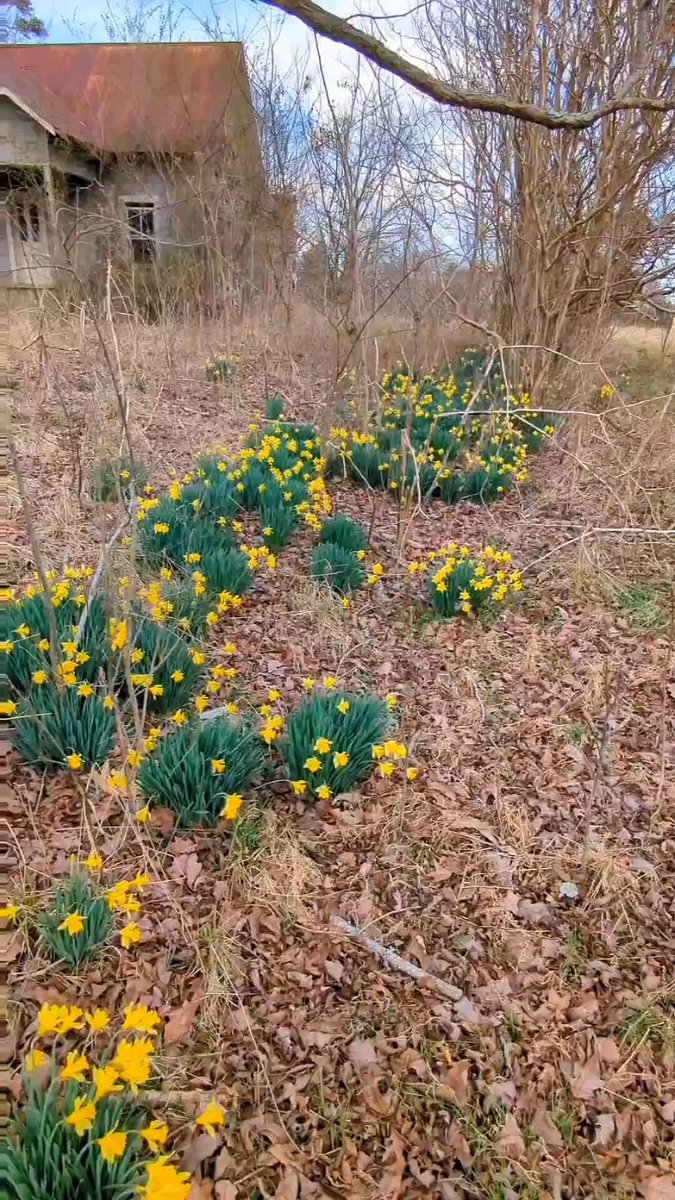
🌼There is an old proverb that says a great society is built when people plant trees whose shade they will never sit in. It always brings to mind places like this abandoned home, where daffodils still rise each spring, even though the house has stood empty for many years. The bulbs keep their faithful rhythm, returning season after season and washing the old homesite in bright yellow, a gift to us from Mrs. Dowd, who planted them here long ago. It is a simple but powerful kind of legacy, to leave a place more beautiful than you found it. I think we could all learn something from Mrs. Dowd.

🌼There is an old proverb that says a great society is built when people plant trees whose shade they will never sit in. It always brings to mind places like this abandoned home, where daffodils still rise each spring, even though the house has stood empty for many years. The bulbs keep their faithful rhythm, returning season after season and washing the old homesite in bright yellow, a gift to us from Mrs. Dowd, who planted them here long ago. It is a simple but powerful kind of legacy, to leave a place more beautiful than you found it. I think we could all learn something from Mrs. Dowd.

14,523 次观看

Can you imagine this place when it was still new and full of life? What did it look like? How many people lived here? What were their lives like?

Can you imagine this place when it was still new and full of life? What did it look like? How many people lived here? What were their lives like?

16,437 次观看

Videos

没有更多内容可加载