Gangster Cinema Central
@GangsterCinema • 48,807 subscribers
The central hub for crime cinema. A deep dive into cinema’s underworld.
Shorts


Videos

The amber glow of Los Angeles at night in Collateral (2004).
Gangster Cinema Central215,631 просмотров • 2 дней назад

Furioza (2021) is a really great Polish crime film centred around the world of football hooligans and organized crime. It follows an ex-hooligan turned doctor who goes undercover into his old firm after being pressured by the police. Very intense and highly recommended.
Gangster Cinema Central667,489 просмотров • 1 месяц назад

The story of what happened to Henry Hill after the events of Goodfellas is arguably just as interesting as what took place in the film, albeit more tragic. Despite what a lot of people believe, Henry was only in the witness protection program for two years. Ed McDonald, the prosecutor who helped turn Hill into a cooperating witness - and who also played himself in Goodfellas - explained what happened to him afterwards. “I can’t tell you how many times a month I read that Henry Hill was in the program for seven years, Henry Hill was in the program for six years, Henry Hill was in the program for ten years. Henry goes into the program in June of 1980… In August of 1981, Henry was in his third city. So he had blown Omaha, he had blown the suburbs of Cincinnati and Kentucky, and he was now in Seattle. And I get a phone call from Washington and they said, ‘He’s blown it again. He’s done.’ I go down, I plead with them. They said, ‘Look, he’s out. He’s out as of September 1st. We will fund him through the end of the year so he can have the wherewithal to be testifying at the point-shaving case. But after that, he’s done.’ By the 1st of January, 1982, Henry was out of the witness protection program. This is when I come in, and I’m sort of like Henry’s guardian angel. I went to Steve Carbone of the FBI and I said, ‘He’s working on all these cases because he cooperated in many cases for us. The witness protection program and the Justice Department are not going to do it anymore. Can the Bureau come up with some money?’ So the Bureau came up with money to support him for about six months, and then the Bureau pulled the plug. I had a friend at the New York City Police Department, a detective who did homicide cases in organized crime matters. And we worked out a deal where we’d bring Henry in, and Henry would talk about organized crime murders. And for every murder that they could close, Henry would get paid some money. I don’t remember what it was. It was probably $500 or $1,000. And at one point, I said to Henry, ‘Who have you been identifying as being responsible for these organized crime murders?’ There were like 30 of them. He started telling me the names of the people, and the vast majority of the people he identified were dead. They were people who had been killed themselves… So the detectives were closing the cases, which means that they get credit for solving a murder. But they didn’t necessarily solve the murder - I think they were allowing wise guys who were responsible to go scot-free. So it was kind of crazy. But that sort of dried up by 1984, 1985. At that point, Henry had no support from the government any longer. And at the time, he was doing crazy stuff. He was getting arrested. Mostly, what he was getting arrested for was the result of alcoholism. He’d go out and go to a bar and get blind drunk, then go out and drive and get arrested for DWI. And then maybe he’d throw a punch at the cops. And one time I called the prosecutor in Kansas or someplace, and I said, ‘What happened?’ They said, ‘Well, he was arrested for breaking and entering.’ ‘They found him at a grocery store on the floor with a six-pack of beer. It was after the bars had closed. Henry wanted to keep drinking, so he broke into a grocery store and just went and got a six-pack.’ I guess some alarm went off that Henry didn’t hear, and they found him on the floor and arrested him for breaking and entering.” It was crazy, sort of minor-league stuff until, I guess, late '87… (1/2)
Gangster Cinema Central619,023 просмотров • 1 месяц назад

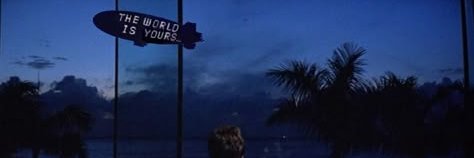
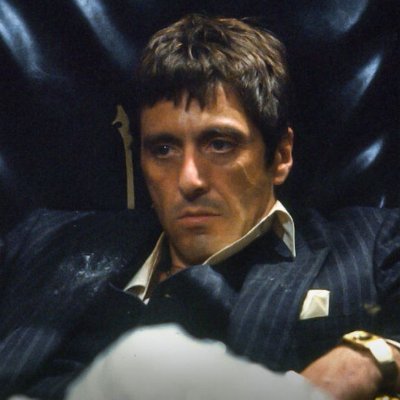
In Scarface, when Sosa’s enforcer recognizes Omar as an informant, Sosa decides to have him killed. But that’s not the only reason he wants him dead. In fact, Omar might not have even been an informant at all. Oliver Stone’s original screenplay reveals that there is much more going on in this scene than the finished film suggests. To understand why Sosa was so eager to have Omar removed, you first have to understand the precarious situation he is in before Tony and Omar ever arrive in Bolivia. Sosa has invested heavily in an enormous cocaine operation, with multiple refining facilities capable of producing hundreds of kilos of cocaine every month. But that scale creates problems of its own. His workers, security, coca suppliers and political protection all have to be paid for, whether the cocaine sells or not. And Sosa has “no steady market.” Traffickers are buying smaller, irregular quantities, leaving him unable to move his product consistently. As he says in the original screenplay: “Nobody can run a business that way.” What Sosa needs is a regular buyer, and he’s offering a great price: 200 kilos at $7,000 per kilo. To put that into perspective, in early 1980s Miami, a kilo of pure cocaine could sell wholesale for at least $30,000. A deal like that could gross around $15 million per month in today’s dollars. And potentially much more once the cocaine is broken down and sold off in smaller quantities. So the question is: if Sosa’s cocaine is so profitable, why doesn’t he have traffickers from all over the United States lining up to buy from him on a regular basis? The answer is simple, but it’s not really spelled out in the finished film… (1/3)
Gangster Cinema Central624,601 просмотров • 1 месяц назад

According to Quentin Tarantino, after Butch and Vincent’s face off at the bar in Pulp Fiction, Butch went outside and keyed Vincent’s car. Yes, Butch was the “fucker” who keyed his Malibu. Tarantino confirmed this during an appearance on the Opie and Anthony Show in 2007.
Gangster Cinema Central1,220,213 просмотров • 3 месяцев назад

At one point John Travolta was going to play Manny in Scarface, but they went with unknown actor Steven Bauer because they wanted someone who was actually Cuban. At the time, Bauer was a struggling actor being pigeonholed into becoming a soap star. He explains… "I left Hollywood because I wasn't getting really good roles, I was getting stupid roles in television, and I was like, "Fuck, I gotta get in." And I met Stella Adler, the great teacher, and she said, "Come to New York, darling, study with me. "You have to become an actor." So I went to New York. So I'm in New York for like a year, and at the end of the year, I'm starving - my agents in Hollywood think I'm absolutely nuts, and they're like, "You've gotta come home, or at least go in for a soap opera in New York, you have the right type, blah blah blah" And I'm like, "No, no, I'm not doing that." And they're like, "But you're gonna starve." And I go, "I'll deliver furniture." - So I was delivering furniture. And then on my last day, finally they come in, "We have a meeting for you. An audition for a TV movie, and maybe for another independent feature." And I go, "Okay." "So we'll get you the airfare and come home." - I go, "Okay, I'm coming home." So I'm in New York on that last day, and my manager calls me, she goes, "Wait, before you go to the airport. They're casting a movie with Al Pacino, it's called Scarface, and it's a remake of an old movie. And the second lead is a tall, handsome Cuban boy, who's fun, and that's you - It's to play his best friend." And I go, "Yeah, what shot do I have with that!?" And they go, "No, they want someone new. They want someone new." - So I go uptown… She (the casting agent) opens the door - and she goes, "Come in, come in, come in, come in. Sit down, tell me who you are. Tell me what you've done. Tell me what you're working on - You've done theater? - “Yeah”, and television? “Yes." “You speak Spanish?" - I go, "I'm Cuban." And she goes, "You're really Cuban!?" And I go, "Yeah." And she goes…“Hang on a second…" (Imitating phone dial) - Regular phone, no cell phones - “Yeah, yeah. Brian, I found your guy. Right in front on me! "I found Manny, I found Manny. I swear to God, you got to see him. Can you see him?...okay, I'll send him over” - click. She goes "Go down to - the Village on Fifth and Eighth Street. And go see Brian De Palma… I got in a cab, and there was so much traffic that I had to get out of the cab and run the rest of the way to the Village. Because I was stuck in traffic! And I was running out of money! I had no money left! So I run to meet him, and he opens the door, and he's very lackadaisical. He's very aloof, Brian. And he's like, "Mm….yeah, you look…yeah, I can see it…are you really Cuban?" I go, "Yeah, I'm really Cuban." "Can you really speak Spanish?" I go, "Yes!" And he goes... "Wait, I'm gonna call Marty Bregman. He's the producer. He's in LA." He calls Marty... "Marty, I have this kid. He's perfect…yes, he's Cuban…." He gets up and he goes, "Okay, go to LA. Go see Marty Bregman tomorrow. Go to his office. He'll give you a script, learn it, and in two weeks we'll fly you back here for auditions."…And I was like, "Fly me back? I didn't have enough, I couldn't pay my airfare…" And then I get home, and I tell my agents, and they say, "John Travolta's playing Manny." And I said, "Wait, John Travolta's playing Manny?" "Yeah." And I go, "No, no, no, no. They're telling me I have a good shot at it." And they go, "You're an idiot. And you believe everything you hear." …And they were fired, obviously (laughing). They work on Wall Street now… That’s really how it happened. I met Bregman, and Bregman said, "You're gonna do Scarface." Just like that in his office - And I said, "But, but, how do you know?" - he goes, "You're really Cuban, right?" And he goes, - "I don't want a star. I don't want a superstar. I don't want another star. I don't want a prima donna. I don't want any of that. You're gonna do Scarface.”
Gangster Cinema Central1,802,831 просмотров • 4 месяцев назад

Quentin Tarantino wrote Butch in Pulp Fiction for Matt Dillon, but Dillon was unsure about the part. Tarantino needed another big-name actor alongside Harvey Keitel to get the film financed. Luckily, he was able to cast Bruce Willis in the role, he explains how. “We weren’t going out to Bruce Willis. Especially at that time, he was one of the top five, maybe even top three biggest stars in the world - He was definitely popular in America, but you go to Korea or somewhere like that - he was the man. What happened was, I originally wrote the part for Matt Dillon, because Matt Dillon was a fan of my script for Reservoir Dogs. The deal with Miramax was that we had an ensemble cast, but we needed at least one, if not two, Miramax-approved actors. After that, I could cast anybody I wanted, as long as there was somebody they considered a name that they could sell. Matt Dillon fell into the category of names they would accept. So I wrote it for Matt, and it seemed like getting him would be easy. But he read it and he wasn’t so sure. He liked it, but he was disturbed by the fact that you never actually see Butch boxing. He said, “I want to see the fight.” And maybe he didn’t one hundred percent get it. Also, he didn’t want to play that part. He wanted to play Vincent - that happened a lot. Any time I offered somebody a part, they wanted to play somebody else. So Matt didn’t say no, but he didn’t say yes. He still had to think about it. That was a little scary, because I thought I had him in the bag. With him, I had a go movie. Then all of a sudden, I didn’t have such a go movie anymore. Harvey Keitel, who's in the movie - he was one of the guys - so I had him. He was he was shooting in town. When he was shooting in town, he'd usually rent a house in Malibu. And so he would invite friends to come over for the weekend and hang out. And so I came over and I'm hanging out at Harvey's place. And then, well, it turns out that Bruce Willis was only living about three or four or five houses down the way. OK. And so I come over to Harvey's - and there's Bruce Willis. (1/2)
Gangster Cinema Central1,198,274 просмотров • 3 месяцев назад

Towards the end of Sicario, Josh Brolin's character delivers a cynical monologue on the reality of the drug trade. The speech closely reflects writer Taylor Sheridan’s own views on the United States’ war on drugs. He explains: “I did a lot of research for Sicario. I was able to talk to some people on the inside. And to be honest, Sicario is the PG version of what it could have been. As barbaric as it is, we were shielded from the drug war. The film was really based on the 2010–2011 drug war. More people died in the five years around that than died in Vietnam… Illegal drugs are estimated at $3.3 trillion a year. We talk about Big Pharma as this fucking monster. Think about the fact that the illegal drug trade is bigger than Big Pharma. And there’s no way to know exactly how large it is, because it’s illegal... I don’t have the answer. I’ve written movies about this, and I don’t have the fucking answer. But look at overdose deaths from prescription medication—OxyContin and all these other drugs. These are heavily regulated narcotics, and the number of deaths is still substantially high. I don’t think it (legalization) would work. I talked about it in Sicario, where he says, ‘Until we can convince 20% of the population not to smoke and snort this shit, a measure of control is the best we can hope for.’”
Gangster Cinema Central709,095 просмотров • 2 месяцев назад

Brian De Palma originally wanted Andy Garcia to play Capone's enforcer Frank Nitti in The Untouchables, but Garcia turned it down and lobbied for the role of George Stone instead - partly because he wanted to work alongside Sean Connery. Garcia explains... "Obviously I wanted to work with Connery. He was one of my childhood heroes, so I lobbied immediately to play the other part. I had to be firm about it —I wanted to roll the dice. Eventually I met with Brian, and I auditioned for George Stone, and they gave me the part…. The dynamics in the film were basically the dynamics on set. We all became very close, but the hierarchy stayed the same — he (Connery) was the older, wise guy, always jabbing at us, and it was my job, as my character, to push back. Respectfully, but to keep the exchanges going. I love Sean Connery. I’ll tell you a quick story — I’ve told it before, but it’s funny.... (1/2)
Gangster Cinema Central1,195,219 просмотров • 4 месяцев назад

No film has ever captured Los Angeles at night quite like Collateral.
Gangster Cinema Central1,448,753 просмотров • 5 месяцев назад

In The Godfather, while Clemenza is teaching Michael how to use the gun he’ll kill Sollozzo with, he tells him that the murder will probably start a war. “These gotta happen every five years or so. Ten years… been ten years since the last one.” However, the film never explains what that previous war was or why it took place. But Mario Puzo’s original novel does - in great detail. And it’s essentially the missing chapter explaining how Vito Corleone went from being the neighbourhood Don of Little Italy to one of the most powerful Mafia bosses in all of America. By the end of Part II, Vito is a “man of respect” in his neighbourhood, and he leverages that reputation to further grow his olive oil business. He uses his “formidable powers of persuasion” to buy out his competitors and establish a monopoly on the olive oil business in New York City. He has warehouses, trucks, and a highly efficient distribution network. When Prohibition comes into law, Vito repurposes many of these assets into an incredibly lucrative bootlegging operation. During this period he restructures his organization into a formal crime family, with Genco as his consigliere, Clemenza as caporegime of the Bronx, Tessio controlling Brooklyn, and the men working under them as soldiers. He also builds an invaluable network of police and political contacts, which would serve him for years to come. However, when Prohibition comes to an end, Vito needs to pivot to another criminal enterprise to keep his organization afloat. He reaches out to Salvatore Maranzano, who controlled all gambling activity in Manhattan. Maranzano was based on the real mafia boss of the same name, one of the most powerful crime figures in New York City’s history. Vito proposes a partnership. He would offer his political connections to protect Maranzano’s businesses and help him expand into Brooklyn and the Bronx; in exchange, Vito would receive a share of the gambling profits. Maranzano “spurned the Corleone offer with contempt...” He took it as an insult, and Vito as a threat that needed to be stamped out. Maranzano had a much bigger, more powerful organization built through union-busting and extortion rackets, and strong ties to the most infamous gangster in the country, Al Capone in Chicago. “Maranzano’s refusal touched off the great war of 1933 which was to change the whole structure of the underworld in New York City.” (1/2)
Gangster Cinema Central344,193 просмотров • 1 месяц назад

Tom Sizemore's menacing glare in the coffee shop scene in Heat was brought about through his extensive training in lethal force. Michael Mann explains "Right here, Sizemore does something very interesting. He had the cold look in his eye, which anybody encountering, communicates without any words or histrionics - lethal potential. It’s a belief in himself as his character, Cheritto, that Sizemore got from the work we did in pre-production. You have to do the work, feel you have the aptitude and the capability of being that lethal, and then the moment's there." Michael Mann’s quote comes from the director’s commentary track on the Heat DVD.
Gangster Cinema Central1,527,976 просмотров • 5 месяцев назад

Mark Wahlberg was in the running to play one of the leads in The Departed, but when he got the call from Scorsese that he would be playing the much smaller role of Dignam instead, he hung up on him. He later accepted the role under one condition: he'd be allowed to improvise his lines and harangue his co-stars - the same ones who got the parts he missed out on.
Gangster Cinema Central1,357,545 просмотров • 4 месяцев назад

One of the most shocking moments in Pulp Fiction was created using one of cinema's oldest editing tricks. The scene where Vincent Vega plunges an adrenaline needle into Mia Wallace’s chest to revive her from an overdose was incredibly difficult - and potentially dangerous - to pull off. Tarantino, however, found an ingenious way to make it work. The crew first planned to use an artificial chest plate on Thurman for the effect. But Tarantino felt it looked too fake up close, so he dropped that plan. That left Thurman's chest exposed -which was a major problem, as he needed Travolta to swing that needle down with enough force so it realistically looked like it was breaking through her ribcage. So Instead, he used an old filmmaking trick: shooting the scene backward. Travolta rested the needle tip right above Thurman's chest. Then, on cue, he yanked it straight up and away as hard and fast as he could. Since he was pulling away from her body instead of stabbing toward it, he could go full-force with no risk of hurting her. When they played that footage in reverse, the fast upward pull turned into a violent, high-speed downward plunge - exactly the effect they wanted. Tarantino's editor Sally Menke cut away right before the needle would've touched skin - jumping straight to a close-up of Thurman's eyes snapping open. The sound team added a heavy "thud" at that exact moment, which sells the impact perfectly, tricking the audience into believing they'd just watched a real puncture, even though they never actually saw it happen.
Gangster Cinema Central865,484 просмотров • 3 месяцев назад

American Made is a highly underrated crime film based on the true story of Barry Seal - played by Tom Cruise - a pilot who worked for the CIA while simultaneously smuggling cocaine for the Medellín cartel. A fantastic movie and one of Cruise's most underappreciated performances.
Gangster Cinema Central375,313 просмотров • 1 месяц назад

When making The Departed, Jack Nicholson told Matt Damon, “I never would've made it this far in my career if I wasn't a great fucking writer.” Meaning, he would contribute great ideas to a story through his performance and improvisation. Damon recalls a perfect example of this: “And I'll give you one story - it was my favorite thing that happened on The Departed, was this story about a scene that I was not in, but he (Nicholson) was - it was 1 eighth of a page, and it said Costello - which is the name of his character - ‘Costello executes man kneeling in the marshes.’ Now, most people look at that, and they'll go, ‘All right, it's gonna be one shot - that's gonna be an hour of work, and that's all I'm doing that day, or whatever.’ He looked at that, and he goes, ‘Okay, I can do that, but I think I can make it better.’ And so he's telling me this story. He goes, (in Jack Nicholson’s voice) ‘So what I do is,’… he goes, ‘I come from the Roger Corman School, so I'm not gonna add any time, and I'm not gonna add to your budget. But instead of a man kneeling in the marshes, I make it a woman.’ ...And he goes, ‘So I'm gonna execute a woman, but I'm not gonna be alone. I put Ray (Winston) in the scene with me - and I shoot her in the back of the head like it says in the script. But if you leave the camera rolling, after she falls, I turn to Ray and I say, geez, she fell funny. Now that's a really sinister thing to say. Because it means I do this a lot, and there's a way people fall. And she didn't fall that way.’ And I go, ‘oh yeah, I get it man, I get it.’ ‘Now you could end the scene there, but if you leave the camera rolling, Ray steps forward, and he reveals that he's holding an axe. She's gonna chop her up. Now you could end the scene there.’ He goes, ‘But if you leave the camera rolling, I turn to Ray and say, “wait, I think I wanna fuck her again.”’ And he goes, ‘Now that's a very sinister line.’ I get it, I get it, it's really, really, really disturbing. And he says, Now you could end the scene there, but if you keep the camera rolling, Ray stops and looks at me, and there's a pause. And I go….ah! He goes, ‘And that's a sinister thing to do, “'cause we're making a joke out of this whole thing.” And I go, yeah, I get it, I get it. ‘Now you could end the scene there, but if you leave the camera rolling, Ray says, “Francis, you really oughta see someone.” And so that's what they did. He took this one eighth of a page scene, and he did all of that, and they had two cameras on it, so it could cut back and forth. And what Marty ended up cutting was he shoots her, she falls, he says, “Geez, she fell funny.” And Ray looks at him and says, “Francis, you really oughta see someone.” But he just gave him all of these options, as dark and as sick as you wanna go.” Quote comes from Matt Damon's appearance on the What A Joke Show with Papa and Fortune
Gangster Cinema Central1,053,344 просмотров • 4 месяцев назад

In Casino, Scorsese packed the film with mob‑connected guys as extras and bit roles. One of the best examples is the scene where Pesci calmly confronts two wiseguys trying to shake down the Tangiers for $200K. The one on the left was cast perfectly, giving off the vibe of a slimy, low‑rent scumbag — because in real life, that’s exactly what he was. The part was played by John Manca, a former corrupt NYPD detective with connections to the Colombo and Bonanno crime families. He used his badge to coordinate burglaries and shake down bookmakers, was kicked off the force, did three years in prison for bank fraud, then rolled over on his mob associates and entered witness protection. His reaction to Pesci is priceless. Scorsese shoots him from a slightly lower angle that exaggerates the height difference, so even though Pesci is much shorter, he still leaves Manca completely shook with just a subtle warning.
Gangster Cinema Central785,758 просмотров • 3 месяцев назад

Gomorrah is by far the best gangster series since The Sopranos. Set in the world of the Camorra, the Mafia of Naples, it’s based on journalist Roberto Saviano’s book. Saviano has lived under police protection since its publication 20 years ago, following threats from the Camorra.
Gangster Cinema Central523,071 просмотров • 2 месяцев назад

For the prison riot scene in Shot Caller (2017), the extras were all former inmates or former gang members. The scene was filmed at Old Main, a former maximum-security prison south of Santa Fe that was the site of one of the most violent prison riots in American history.
Gangster Cinema Central526,526 просмотров • 2 месяцев назад
