
Daniel Romero
@HyperTechInvest • 46,612 subscribers
Analyst. Semiconductors, data centers & physical AI. Portfolio and investment theses on Substack Join 14,000+ readers: https://t.co/poHmmwvC5M
Shorts


Videos

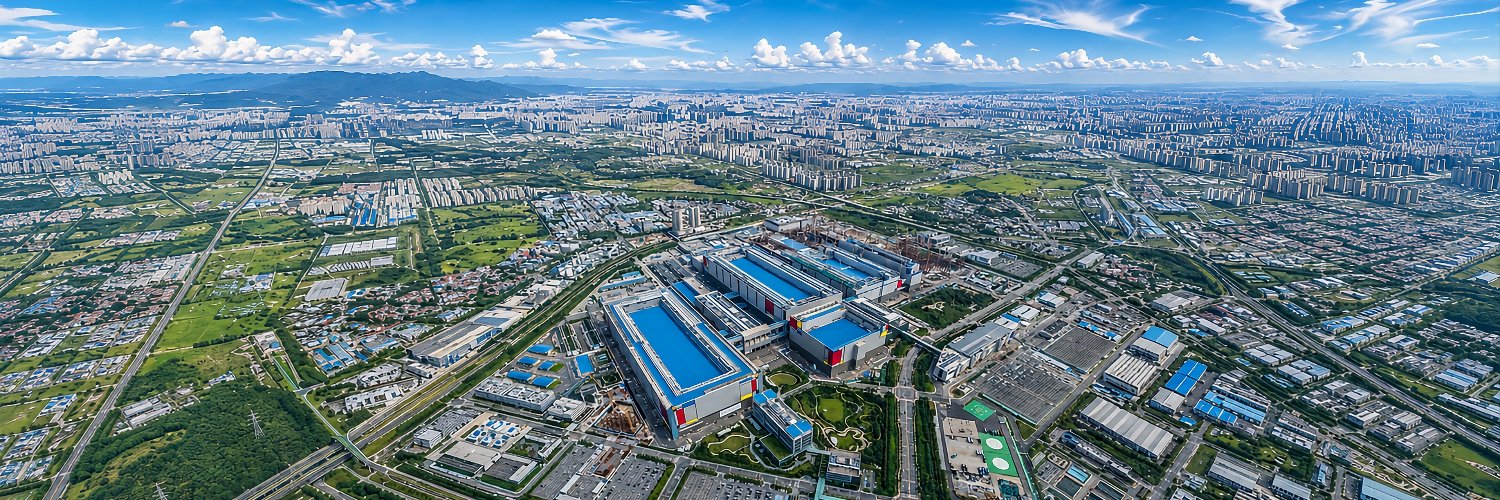
I’m starting a new series: Dissecting a Chip Fab Fabs rely on machines operating at nanometer-level precision, plus automated systems that move, inspect, and process wafers at every step I’ll break down that equipment and the companies behind it, many of which most investors have never heard of
Daniel Romero105,466 görüntüleme • 1 ay önce

$AMD 🚨 Lisa Su said the quiet part out loud Again, no one caught it You can thank me later Listen to her: “As much as we love working with OpenAI, we’re working with other customers as well. There’s a lot of excitement around the industry about MI450, and we’re ready for it.” she said while she could barely hold her smile The moment she starts talking about validation, you can see her carefully choosing her words, not wanting to spill the beans She ends the comment with a proud, happy face If you know, you know.
Daniel Romero570,915 görüntüleme • 1 yıl önce


Dylan Patel believes $NVDA will not use CPO even with Feynman “We’re very bullish on copper and non-CPO optics. We're kinda bearish CPO. $APH is going to perform much better over the next few years than previously expected.” Full quote: “The spending associated with AI chips is currently at or below 10%, but when we move to CPO, networking will grow even further, to 20% or 30%. We are seeing a huge uplift in networking content. CPO is a massive step-function change for the industry, and everyone recognizes it now, but people are getting a little too exuberant. In my view, it is not coming in 2027. It will really arrive toward the end of 2028, with 2029 being the real ramp for scale-up CPO. There have been a lot of manufacturing problems. If we could deploy it today at a good cost, everyone would do it. However, it is really hard. The manufacturing volumes and yields are not there, and the chips are not fully designed for it yet. It is a very complex and difficult technology to ramp, so people are going to stay with copper for as long as they can. That means Rubin is all copper, and Feynman, the next-generation Nvidia GPU after Rubin and Rubin Ultra, is still copper. We are not even shipping Rubin yet. We have a few generations of chips before we get to CPO on the GPU. CPO on switches is coming earlier than on GPUs or AI ASICs. Even without CPO, as cluster sizes get bigger, you need more optics, active electrical cables, and similar components per GPU. We have seen a major shift in the dynamics. On Monday, we released a note for our institutional research subscribers stating that, over the medium term, we are actually very bullish on copper and non-CPO optics, while being slightly bearish on CPO. This is due to delays in downstream chips, such as Feynman not fully utilizing CPO. Copper companies like Amphenol, which make backplane connectors and cables, are going to perform much better over the next few years than previously expected because CPO is being delayed. Ultimately, integrating optics is much more expensive than sending signals electrically. However, electrical signals cannot travel very far without adding repeaters or optics. There is a trade-off continuum, and while CPO will happen, it is currently being pushed out.”
Daniel Romero120,592 görüntüleme • 3 ay önce


Dylan Patel on the importance of memory and storage Two key quotes: "An $NVDA GPU is faster than an $AMD GPU in most cases, but because AMD GPUs have more memory, they can outperform Nvidia in certain workloads." “It is a difficult, multivariable problem. Generally, you need the best GPU, such as a GB300, but you also need the best storage solutions. I will not spoil who comes out on top, but storage solutions matter a lot, memory solutions matter a lot, and frontend networking also matters significantly" Full Quote: “We have over $80 million of compute: GPUs from $NVDA and $AMD, TPUs from Google, and Trainium from Amazon. We constantly run this benchmark using the newest inference engines, drivers, PyTorch versions, and other software. It runs every day through automated CI across the latest Chinese models from GLM, Zhipu, Moonshot, Kimi, Alibaba, and others. Initially, when we were benchmarking the differences between these chips, inference engines, and parallelism schemes, we used fixed context lengths. But with Agent X, we have now analyzed more than $5 million worth of Claude Code traces. This is real production traffic that users have donated to us, combined with internally generated data, so we now understand what an actual agent workload looks like. When we implement those workloads and run the benchmarks, it turns out that the chip you are using is very important, but how you handle memory offload can be even more important. An Nvidia GPU is faster than an AMD GPU in most cases, but because AMD GPUs have more memory, they can outperform Nvidia in certain workloads. Similarly, you can use a less powerful GPU with a much better storage solution and outperform the best GPU when it lacks those solutions. Simply buying the newest GPU does not necessarily give you the best inference economics. You need to layer in other innovations, including storage and memory.” Interviewer: “Who is the top player on your chart? Can you tell us?” Dylan Patel: “It is a difficult, multivariable problem. Generally, you need the best GPU, such as a GB300, but you also need the best storage solutions. I will not spoil who comes out on top, but storage solutions matter a lot, memory solutions matter a lot, and frontend networking also matters significantly.”
Daniel Romero48,978 görüntüleme • 3 ay önce



"Beast is the next $SOFI, $HOOD, $CHYM combined" — Tom Lee, Chairman of $BMNR
Daniel Romero19,787 görüntüleme • 8 ay önce

Daha fazla içerik yok.