
Maroof | Heritage, Storyteller
@maroofculmen • 10,660 subscribers
“In an obsession to find art at the root of life, in experiences and people.” Brand Consultant | Founder: @culmencreative | https://t.co/rgK2IFmg2o
Videos

In Lucknow, breakfast isn't just the first meal of the day; it's a cherished tradition, especially in the old city where the day begins early with the aroma of local shops preparing their morning fare. Lucknow's cuisine is renowned, and the breakfast options reflect this rich culinary heritage. There are typically three kinds of breakfast eaters here. The first kind opts for simplicity, enjoying chai with bun makkhan or indulging in a khasta. The second category prefers a more hearty start with poori sabzi and dahi jalebi. And then there are the pros, who truly embody the saying 'eat breakfast like a king' by choosing Nihari and Biryani as their morning meal. Visiting Lucknow in the winter adds an extra layer of enjoyment to these breakfast experiences. The cool, crisp mornings make savoring these dishes even more delightful. You can find details about these breakfast joints in the highlights section of my profile. I'm curious about your breakfast preferences too! Share your favorite breakfast type in the comments and let's celebrate the diversity of morning meals. #Lucknow
Maroof | Heritage, Storyteller434,130 Aufrufe • vor 2 Jahren


In the heart of Lucknow, where the aromas of rich culinary heritage waft through the air, there exists a delightful winter tradition that is as heartwarming as it is flavorful – the Kashmiri Chai ka Pyala. This is not just a beverage; it’s a symphony of taste and culture, a testament to Lucknow’s love for creating perfect pairings in its cuisine. Picture this: a chilly winter evening in Lucknow, the cityscape a blend of historical grandeur and modern vibrancy. Amidst this setting, Kashmiri Chai, with its distinct pink hue and a creamy layer of malai (cream), offers warmth and comfort. It’s a beverage that carries the essence of Kashmir, yet has found a unique home in the lanes of Lucknow. The magic begins with the preparation of the chai itself – a concoction steeped in tradition, brewing over slow heat, gaining its iconic pink color and a depth of flavor that is hard to replicate. But what truly sets this experience apart in Lucknow is its combination with a local favorite – the Taftan Samosa. Imagine a bowl cradling this unique ensemble. The Taftan Samosa, a flaky, savory delight, is gently placed at the base. Over it, a generous layer of balai adds a velvety richness. Finally, the steaming Kashmiri Chai is poured in, melding with the ingredients, creating a harmony of flavors that is both unexpected and delightful. This combination is not just about taste; it’s a narrative of how different cultures and flavors can come together to create something extraordinary. It reflects Lucknow’s ethos – where every dish has its perfect companion, much like the Galawat ke Kebab has its Ulte Tawe ka Parantha, the Nihari its Gilafi Kulcha, and the Namash its Tunki Roti. To experience Kashmiri Chai ka Pyala in Lucknow is to partake in a ritual that goes beyond mere consumption. It’s about embracing the warmth, the history, and the communal joy that food brings in this city. So, on a cold winter evening, as the fog settles over Lucknow, find your way to a street vendor serving this delightful brew. Take a sip, and let the flavors tell you a story – a story of heritage, of confluence, and of the simple pleasures that make Lucknow, well, quintessentially #Lucknow.
Maroof | Heritage, Storyteller241,371 Aufrufe • vor 2 Jahren

Take a peek inside Danish Mahal or the ‘Palace of Wisdom’, Lucknow’s oldest Urdu bookstore. The city has long been a literary hub, especially for the study of Urdu poetry and literature. If you’re looking for rare Urdu manuscripts, especially by local writers, this is the spot for you. Located in Aminabad, the store can trace its history as far back as 1939. Even today, this old bookstore stands tall despite the changing times, it continues to sell old Urdu weeklies and books. The interiors remind you of the times gone by but also of a place that stands stills in its own time. As if it had created a vortex that defies the parameters of time and space. Urdu is one of the most graceful languages to have evolved from the Ganga-Jamuna tehzeeb of this region. However, in recent years, this language and its discourse is fast-disappearing, with the number of publications in Urdu going down. The number of speakers and scholars of this beautiful language have also gone down in recent years. Yet there is hope as many academics are trying to do their best to keep this language from disappearing or becoming a dead language. This place is a must-visit for all avid learners and lovers of Urdu poetry and literature. Come, visit this magical space where the air resonates with whispered couplets and shayari!
Maroof | Heritage, Storyteller166,964 Aufrufe • vor 2 Jahren


The Story of Mahmudabad Ali Khan Mahmudabad
Maroof | Heritage, Storyteller94,846 Aufrufe • vor 3 Jahren

Basant Panchami at Sufi shrines—something I always heard about growing up in Awadh. Instead of just telling the story, I spoke to Arshad Qawwal from Kakori, who has lived this tradition for 40+ years. His perspective is fascinating. Ever heard of this? Share your thoughts. #OneStoryAtATime
Maroof | Heritage, Storyteller45,388 Aufrufe • vor 1 Jahr

As the world changes around you, it feels heartening to know that some things remain the same. One such thing that has remained the same is the iconic Tunday kebab, still made and served today the same way it was all those years ago. Whether you’re from the city or anywhere else in India, you must have heard of Lucknow ke Mashoor Tundey kebabs. These succulent and sizzling hot kebabs are a favourite of kebab lovers everywhere, and for a good reason, too. These kebabs are melt-in-your-mouth delicious and cannot be found elsewhere. The story behind their name is equally fascinating. While Tunday kebabs was established in 1905, their history goes all the way back to the 17th century, back to the reign of Nawab Asaf-ud-Daula. During this time, the kebabs used to be a bit coarse and chewy as they were made from ground meat and spices. However, as the Nawab aged and lost his teeth, he still retained his fondness for these kebabs and organised a competition where the cooks were instructed to make the most delicious and softest kebabs that could be enjoyed without chewing. The competition was won by a cook named Haji Murad Ali, who had only one arm as he had lost the other arm when flying a kite from his terrace during his childhood. As in the local dialect, any person with a hand disability was referred to as a 'tunday', these kebabs came to be known as Tunday ke kebabs. Now, the recipe for these amazing kebabs is a well-kept secret, although rumours suggest that over 160 ingredients are used to make these lip-smacking kebabs. Whatever the cause, we’re just happy to enjoy these delish kebabs with traditional Mughlai paratha that are made for each other. So, what are you waiting for? Head on over to Tunday Chowk and treat your taste buds to these delicious delights! What’s your favourite memory of enjoying Tunday kebabs, tell us in the comments section below!
Maroof | Heritage, Storyteller74,963 Aufrufe • vor 3 Jahren

Kannauj, the perfume capital of India, has kept the art of attar-making alive for centuries. I had the chance to document this timeless craft with Pranjal Kapoor from ML Ramnarain Perfumers. From hand-picked flowers to traditional distillation, it’s a labor of love. Have you used attars? Share your thoughts! #Kannauj #Attar #HandmadePerfume
Maroof | Heritage, Storyteller42,908 Aufrufe • vor 1 Jahr

Meer Taqi Meer, the legendary Urdu poet of the 18th century, continues to enchant hearts with his soul-stirring verses. His words transcend time, evoking emotions that resonate even today. 🖋️✨ #MeerTaqiMeer #UrduPoetry #LiteraryLegend Voice by: Aamir Azher
Maroof | Heritage, Storyteller71,751 Aufrufe • vor 3 Jahren

For 40 years, Aamna Khatoon has stitched not just ghararas, but stories—each fold, each thread, a legacy of Lucknow’s fading craftsmanship. ‘If something happens to me tomorrow, who will carry this art forward?’ Will we let such traditions vanish? #Heritage #Craftsmanship
Maroof | Heritage, Storyteller40,210 Aufrufe • vor 1 Jahr

Winter in Lucknow brings with it many delights, but one that truly stands out for me is the Kali Gajar ka Halwa. Unlike the more commonly known Lal Gajar ka Halwa, this delicacy is a rare treat, available only during the winter season. The reason? Black carrots have a very limited harvest, and only a handful of farmers grow them. This makes the halwa not just unique but also a fleeting indulgence that we eagerly wait for each year. To give you a closer look, we documented the process at Netram Sweets, where this iconic dessert is crafted with love and precision. From sourcing fresh black carrots directly from farmers to grating, cooking with milk, and roasting in pure ghee, every step is a labor of dedication. The final touch of cashews and almonds adds a richness that sets it apart from anything else. If you’ve never tried Kali Gajar ka Halwa, now’s the time! Head over to Netram Sweets and experience the magic of this winter specialty. And if you’ve already savored this delicacy, share your thoughts in the comments—I'd love to hear your take on it!
Maroof | Heritage, Storyteller39,689 Aufrufe • vor 1 Jahr

Have you ever come across men or women wearing coins on their arms, wrapped up in a piece of cloth and wondered what it is? This practice, followed by Muslims from many schools of thought, is associated with the story of Imam Ali Reza, whose shrine is in Mashad, Iran. Imam Reza is also know as Imam-e-Zamin. Learn why this honorific title belongs to him and find out what lies at the root of the Imam Zamin, which is tied to the upper arm of a traveller or a newlywed. There are many stories about how this practice originated. It begins during the life of Imam Ali Reza who was alive during the reign of the Caliph Ma'moun. The time period of Imam Ali Reza's life marked the start of the practice of "Imam-e-Zamin". It became customary for people at this time to take the coin that had his name on it and wrap it around their arms when travelling. It was believed that when a person travelled with the Imam's name, he would also be protected by the Imam's blessings on his journey. When a person arrived safely at their destination, they would take the coin and give it away as sadaqah or charity, in the name of the Imam Zamin. The practice of Imam Zamin has this name ( the trilateral root za-ma-na in Arabic means to be responsible for, vouch for or guarantee) because it relates to him, the protector who guarantees a safe journey. Another story of its origin is that it started when there was a ban on visiting the grave of Imam Hussein, issued by Harun al-Rashid (an Abbasid ruler and father to Ma'moun). However, this was brought to an end by Imam Ali Reza. Ma'moun implemented a condition that anyone wishing to go to Karbala to pay respects to Imam Hussein had to obtain Imam Reza's personal guarantee. The Imam gave this guarantee to everyone who sought it, establishing the honorific Imam Zamin, the Imam who is a guarantor. Narrated by: Ali Khan Mahmudabad
Maroof | Heritage, Storyteller59,457 Aufrufe • vor 3 Jahren

Every tricolor pinwheel tells a story of heritage and resilience. Manna Nishad, who inherited this craft from her family, has been making these pinwheels with her husband for 27 years. Let’s support artisans like her and choose handmade over plastic. #SupportArtisans #RepublicDay
Maroof | Heritage, Storyteller33,982 Aufrufe • vor 1 Jahr

Dive into the heart of Lucknow with the first episode of #StoriesByMaroofCulmen, where we explore the savory layers of the city’s culinary mosaic, Shir mal. Discover the tale of Mahumdu, an innovator whose creation became a symbol of Lucknow’s rich cultural mosaic, as chronicled in “Guzishta Lucknow” by Abdul Haleem Sharar. From its royal acclaim to its undying legacy, Shir mal is not just food; it’s a piece of history baked into the very essence of Lucknow. Join us, as Maroof Culmen brings to life the stories woven into the heritage, culture, and art of India. Alongside this delicious narrative, we’ve uncovered another piece of oral history. Would you like to journey with us through more tales steeped in tradition and flavor?
Maroof | Heritage, Storyteller36,805 Aufrufe • vor 2 Jahren


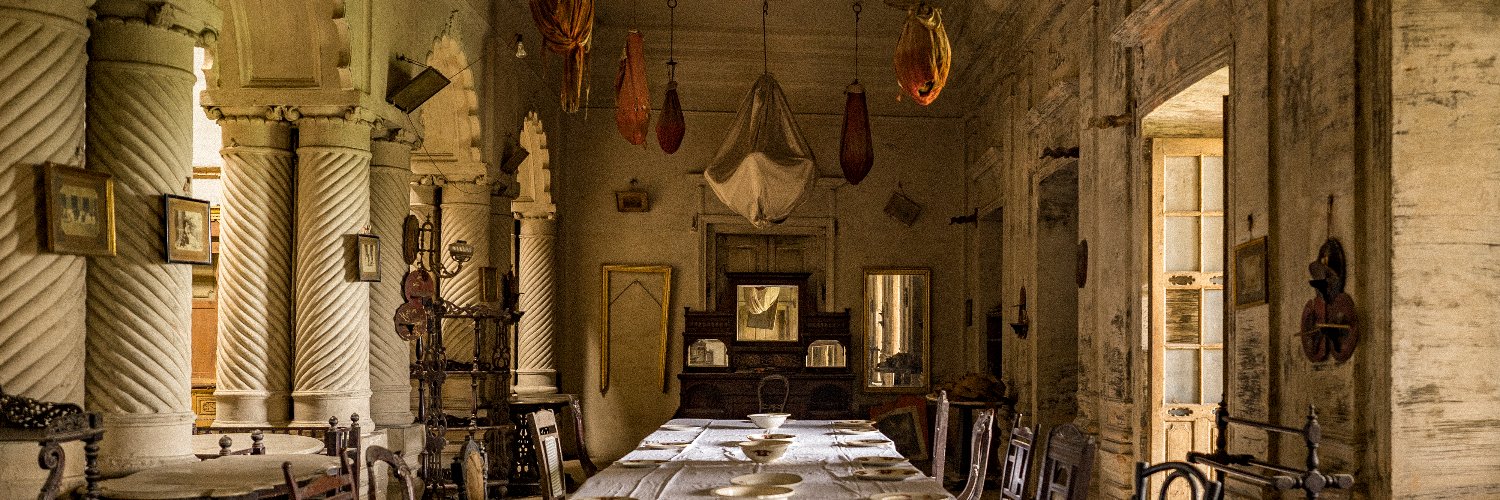
As you all know, I’ve been documenting the culture and traditions of Lucknow, and one of the places closest to my heart is the Mahmudabad House. It’s a space that I feel holds on to its customs and traditions in a way that’s rare to see in today’s time. Whenever I post videos about it, many of you ask me how you can access it and experience it for yourselves. And now, I feel the right time has finally come. The House of Ali Khan Mahmudabad, along with Chef Taiyaba Ali, Aarohi, and Afzal, has curated something truly special—a unique ‘Butterfingers’ menu for you to experience at Qaisar Bagh, Lucknow. So don’t wait—book your slots now and be part of this unforgettable journey into Lucknow’s rich culinary heritage. See you there! To book: call +91 9044412879 or visit
Maroof | Heritage, Storyteller19,279 Aufrufe • vor 1 Jahr

Mehmaan Nawazi and the Quintessence of Roohafza in Lucknow Hailing from Lucknow, a city renowned for its rich culture and heritage, I am constantly reminded of the treasured memories of my childhood. An intrinsic part of my upbringing was the esteemed tradition of hosting guests. I often find myself reminiscing about a couplet my father used to recite, “Shukr kar tu apne dil mein amad-i mehmaan par Rizq apna kharaha hai tere dastarkhwan par”, which translates to, "Give thanks in your heart on the advent of a guest He is eating his own sustenance on your table" The anticipation of hosting guests would often lead to a rush to the local market, eager to procure the perfect assortment of snacks. The 'nashta' or the welcome snack was paramount. Laid out generously were an array of sweet and savoury treats, comprising a variety of 'namkeens' from Ameenabad, along with mouth-watering samosas and imartis from the local halwai shop. Yet, this splendid spread of snacks would remain incomplete without a refreshing beverage to accompany it. Given the sweltering heat that Lucknow grapples with, especially during summer, the ideal choice was always Roohafza. Watching Roohafza being prepared was a delightful spectacle. We would stand eagerly in the kitchen, our eyes following every step, but the moment that always stood out was the crushing of the ice. The sight of it being added to the drink and the knowledge that it would soon be served chilled was sheer joy. Today, Lucknow continues to be celebrated for its impeccable 'mehmaan nawazi' or hospitality, and its unwavering love for Roohafza remains evergreen. So, I invite you to take a moment and reminisce about your favourite Roohafza memories. After all, such shared experiences and stories are what make our heritage so vibrant and alive. Do you have any cherished Roohafza moments that take you down memory lane? Share them with me. Let's celebrate the beautiful tradition of hospitality, Lucknow style. RoohAfza
Maroof | Heritage, Storyteller28,888 Aufrufe • vor 2 Jahren