
Mathelirium
@mathelirium • 81,486 subscribers
Math, Physics & ML visuals - ex İTÜ & McMaster
Shorts


Videos

A Luneburg lens bends an Electromagnetic wave without a curved boundary. Instead its dielectric constant changes continuously from the centre to the edge. This forces different parts of the wavelength to travel at different speeds. Here, we solve the full 2D TM EM wave equation on an unstructured triangular mesh using the Finite Element Method (FEM).
Mathelirium2,031,426 次观看 • 1 个月前
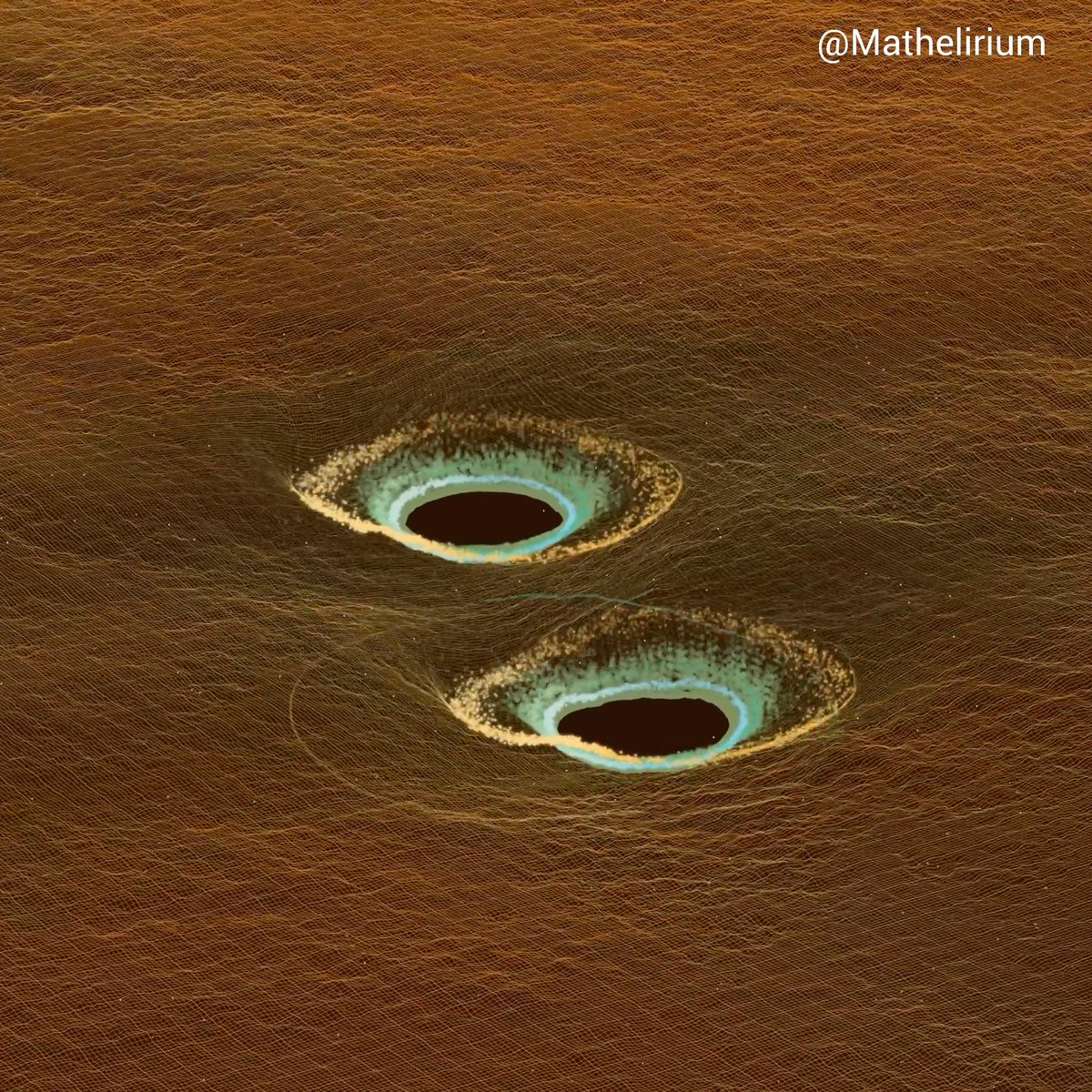


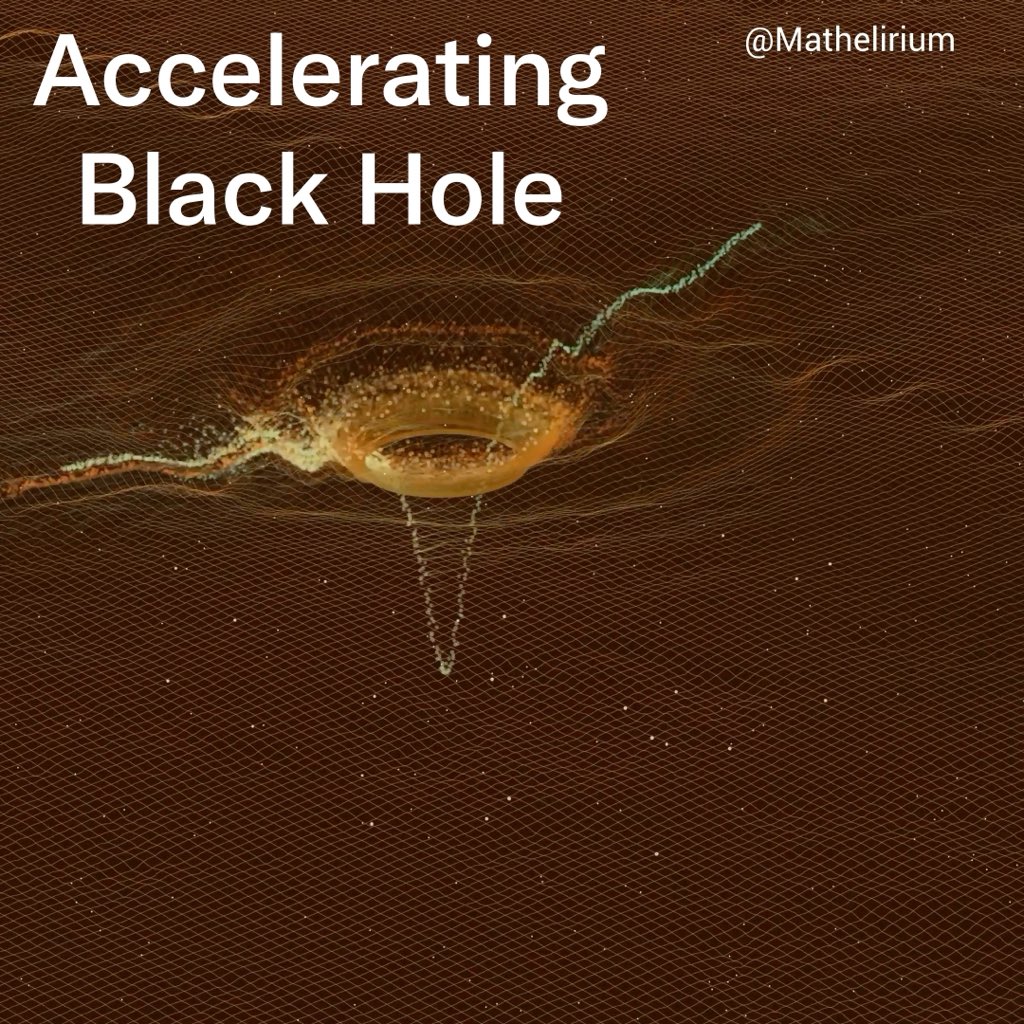
A Black Hole Can Be Dragged Through Spacetime A Black Hole does not have to sit still. Einstein’s equations allow a stranger possibility... a Black Hole that accelerates. This is the C-metric, an exact solution of General Relativity describing an accelerating Black Hole. The Black Hole accelerates because the geometry of Spacetime says it must. The C-metric is one of those exact solutions that reminds us how wild General Relativity really is. Gravity is not just attraction, and Spacetime is not just a stage. Sometimes the stage itself contains the force. #Astrophysics #GeneralRelativity #Einstein #CMetric #BlackHole #CosmicStrings #Spacetime #Cosmology #Mathematics #Physics
Mathelirium789,660 次观看 • 3 个月前
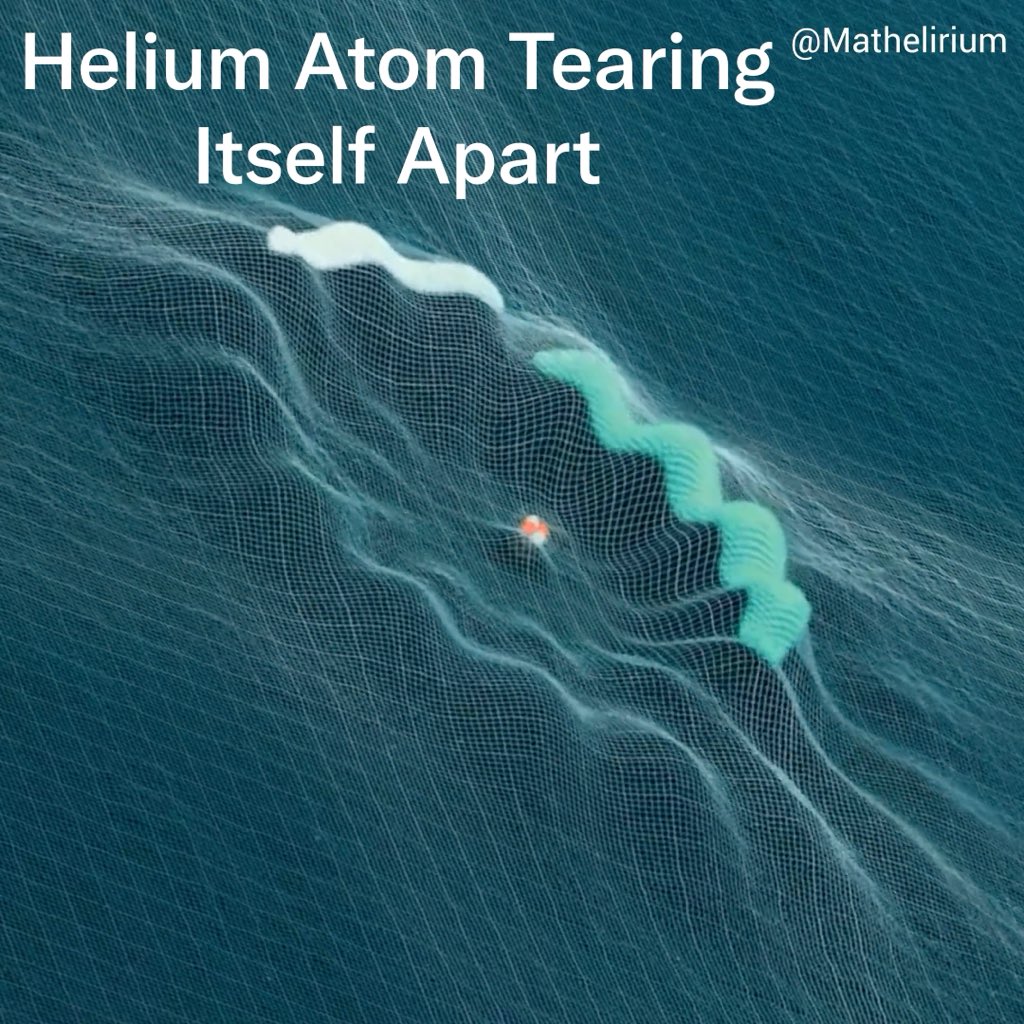
A helium atom tearing itself apart. Two electrons circle the nucleus, swapping energy back and forth. Then one drops inward and kicks the other one out. Those rings rolling across the fabric are the escaping electron. Hydrogen can't do this because it only has one electron.
Mathelirium39,212 次观看 • 6 天前
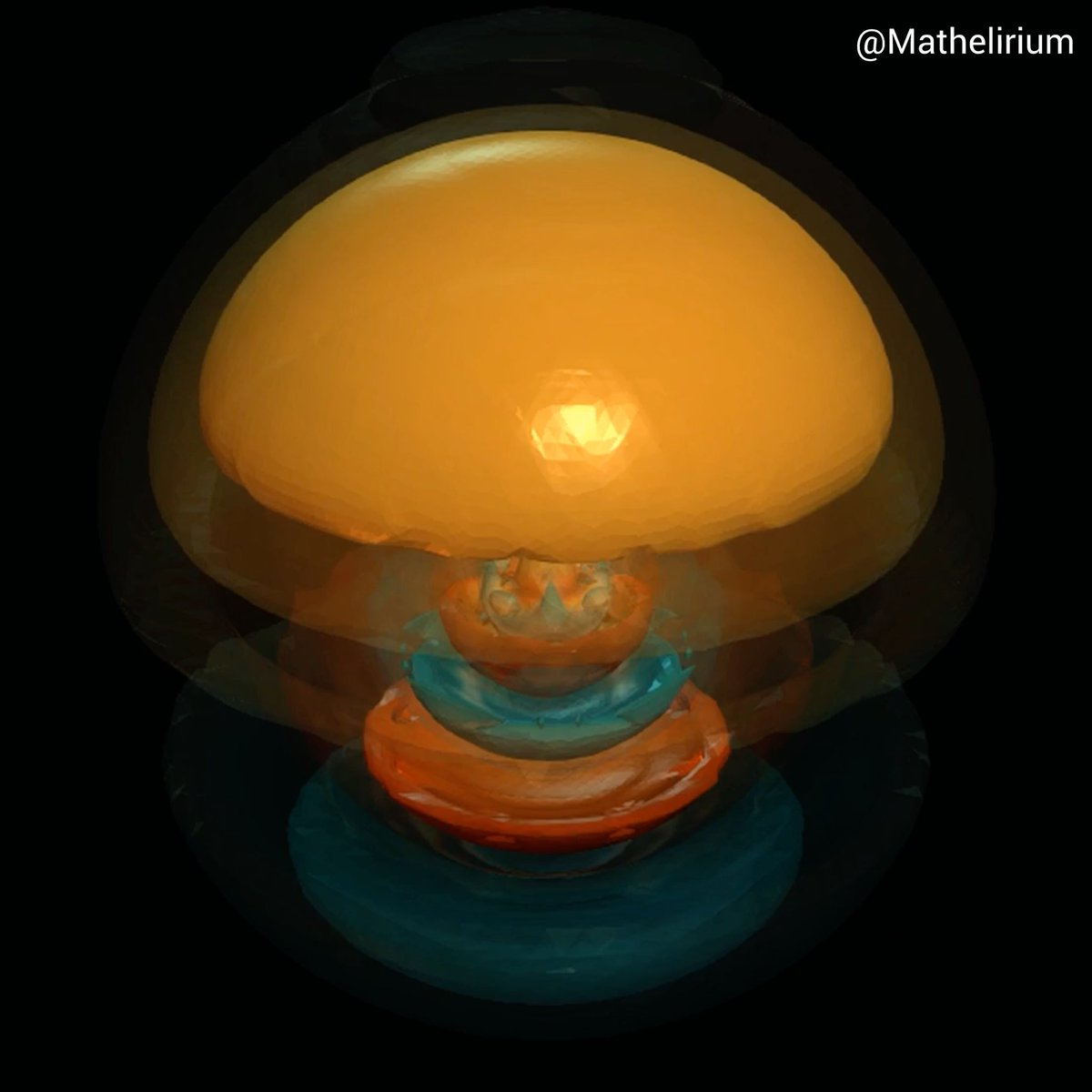
This is Lithium, visualized as a quantum wavepacket. The bright structures are 3D isosurfaces of the outer electron’s probability density, while colour represents the complex phase. Unlike Hydrogen, Lithium’s valence electron moves in a screened potential created by the nucleus and the closed 1s² core. The animation solves that effective Schrödinger problem and follows a coherent mixture of s- and p-type Rydberg states as they beat, breathe, shift and reform around the core.
Mathelirium175,921 次观看 • 1 个月前


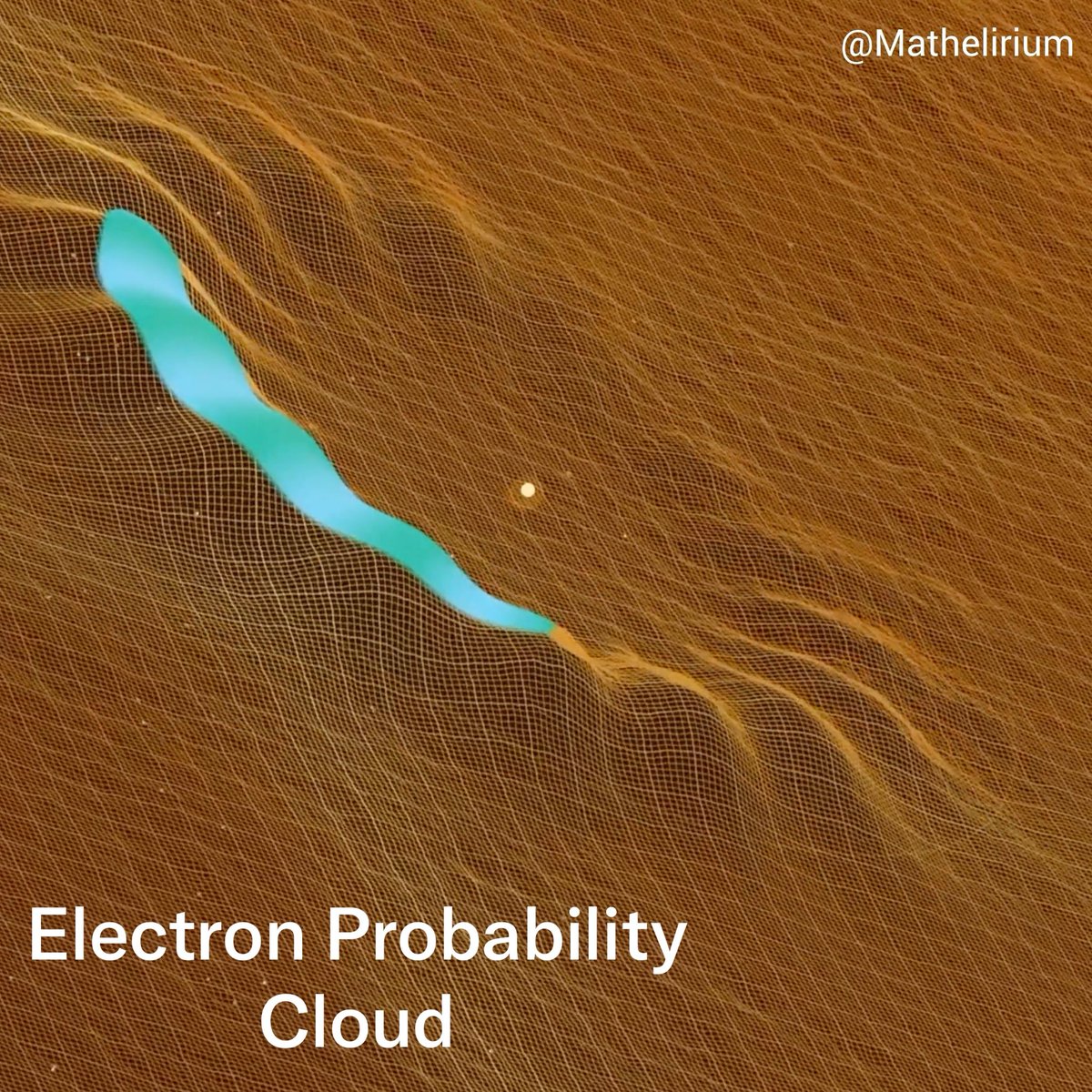


In 1996, James Sethian showed something almost unfair...you can find shortest routes through a messy world by letting a wave expand once...no trial paths, no search beams, just one growing front. Here’s how: we solve for an arrival-time field T(x,y) so that T literally means how long the wave needs to reach this point. The rule is ||∇ T|| = 1/F, where the medium is fast (F large) the front sprints, where it’s slow it trudges, and obstacles are speed ≈ 0, so the front wraps around them because that’s the only way forward. Then comes the satisfying part: once T exists, a path doesn’t need to search at all...drop a bead anywhere and let it follow ẋ ∝ -∇ T, it slides downhill on the time landscape and traces a globally fastest route back to the source. This “wave = optimal control” viewpoint is exactly what Tsitsiklis (1995) made precise from the Hamilton-Jacobi side...compute the value/arrival-time function and the optimal trajectories fall out from it. #FastMarching #EikonalEquation
Mathelirium771,360 次观看 • 10 个月前
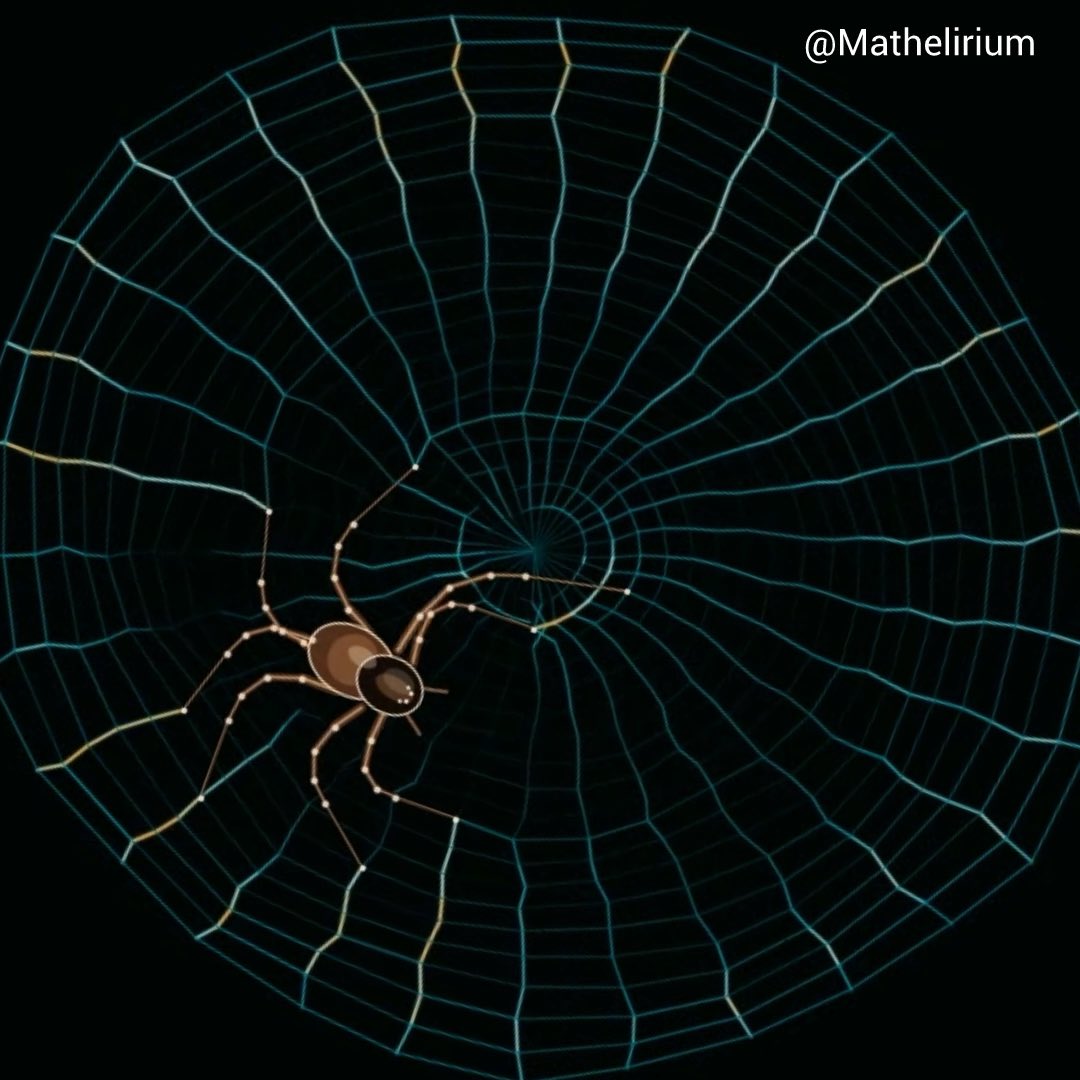
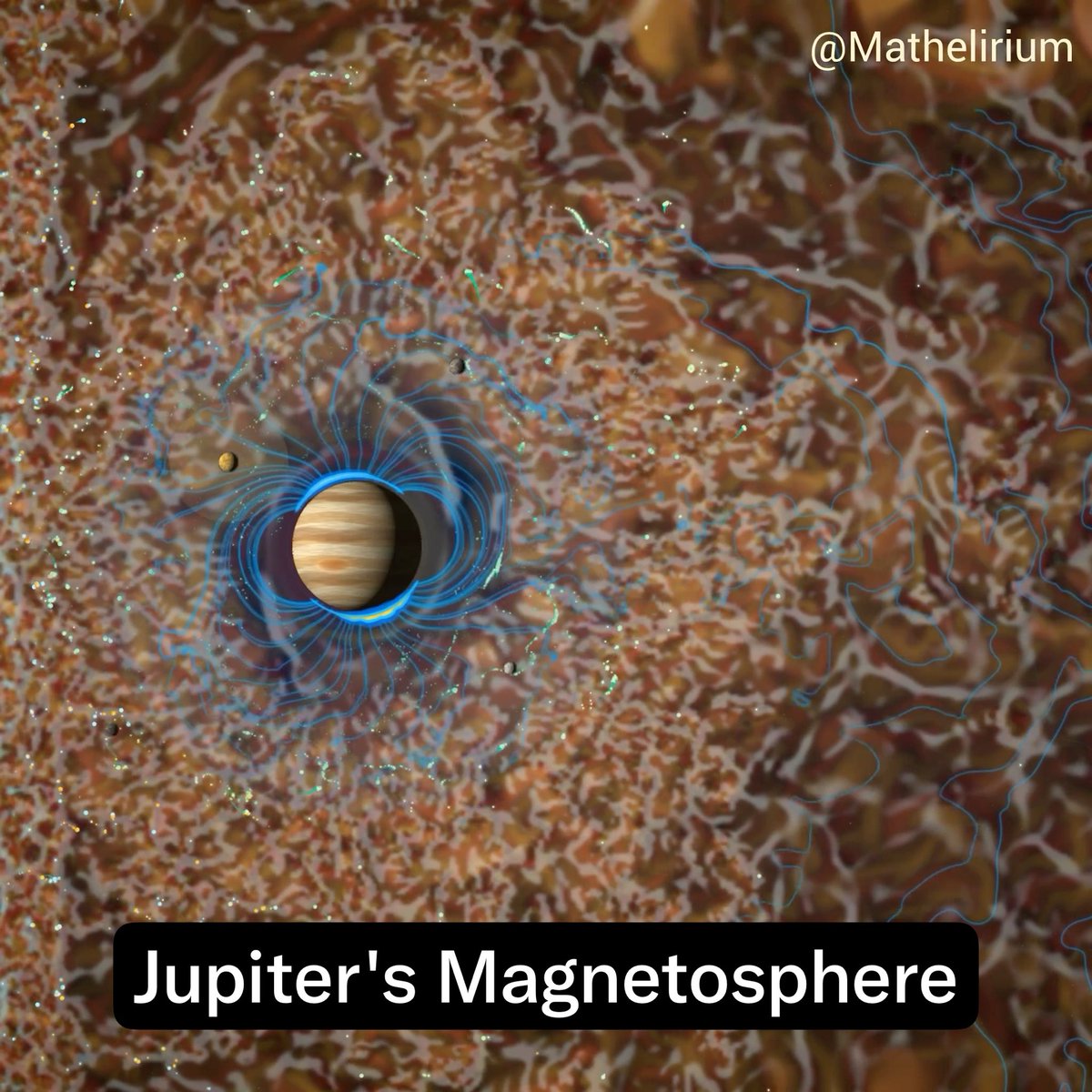
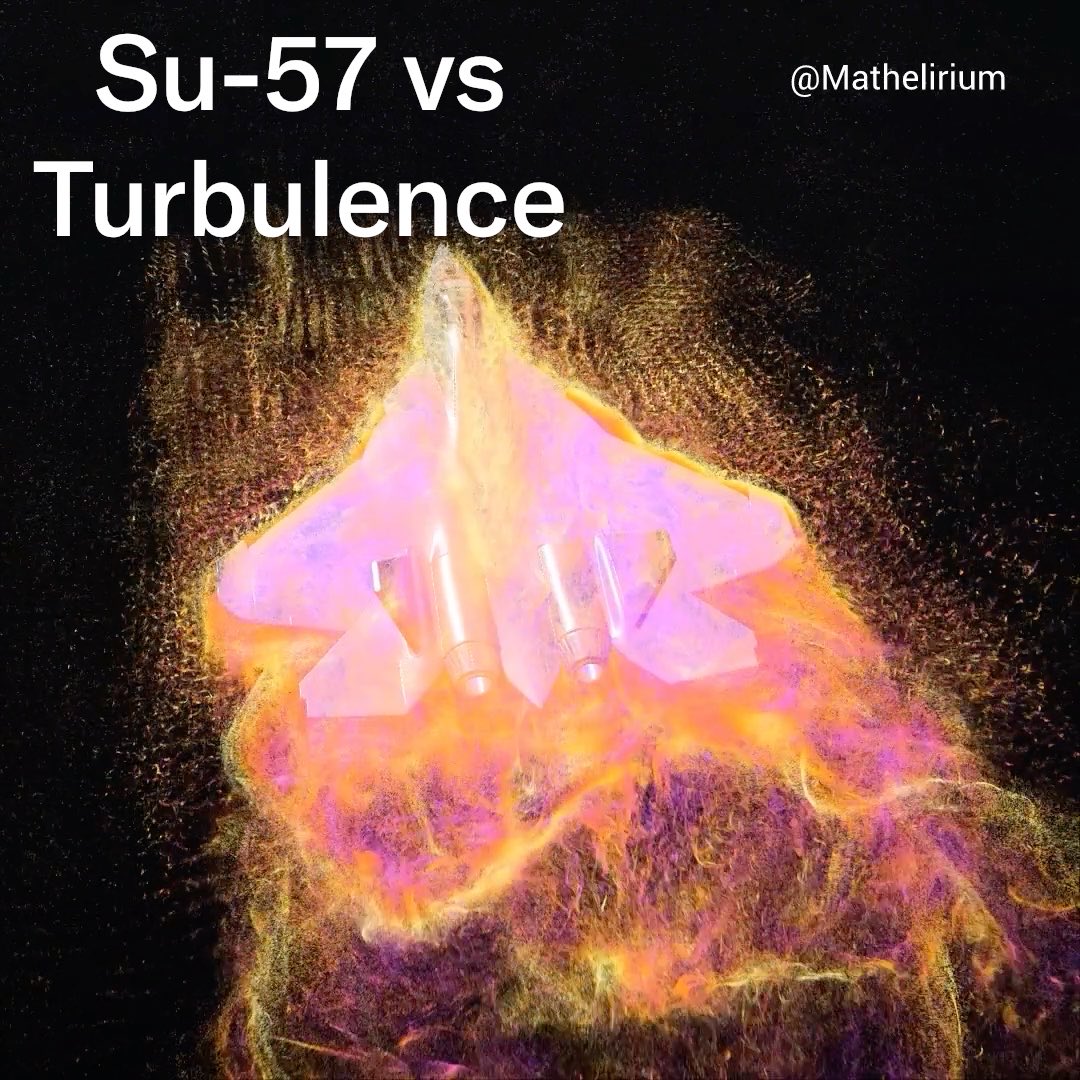
The best video on X right now, no contest! A Su-57 rolls left, rolls right, then rips a full Cobra maneuver. Simulated with the lattice Boltzmann method... a D3Q19 solver with a Smagorinsky turbulence model at Re = 1,000,000 (I learned after the render that its too low for a fighter jet... should've been between 50-100 mil). This took me 12 hrs😑 10 million tracer particles light up the wake by vorticity.
Mathelirium15,365 次观看 • 6 天前


A Neural Sheet Discovers the Shape of Data A self-organizing map (SOM) starts as a flat sheet of neurons with no knowledge of the data around it. For every input sample, it finds the best-matching neuron, c = argminᵢ ‖x - wᵢ‖, and updates that neuron together with its neighbours, wᵢ ← wᵢ + η(t)hᶜᵢ(t)(x - wᵢ). As the neighbourhood radius shrinks during training, the sheet gradually bends and folds onto the hidden geometry of the dataset while preserving its neighbourhood structure. Developed by Finnish computer scientist Teuvo Kohonen, the Self-Organizing Map remains one of the most elegant examples of competitive learning, where order emerges from thousands of simple local updates. #MachineLearning #ArtificialIntelligence #SelfOrganizingMap #NeuralNetworks #DataVisualization #Mathematics #ComputerScience #Finland #TeuvoKohonen
Mathelirium177,493 次观看 • 3 个月前

Did you know that a charged particle can actually outrun light? Not light in a vacuum of course. That limit still stands. But inside a dielectric, light travels more slowly. If an electron moves through that material faster than the local phase velocity, something incredible happens... the EM field can no longer rearrange itself smoothly around the particle. A coherent shock front forms. This is known as Cherenkov radiation, named after Russian physicist Pavel Cherenkov who experimentally observed the effect in the 1930s.
Mathelirium97,374 次观看 • 1 个月前