

Mercatus Center
@mercatus • 38,548 subscribers
The Mercatus Center at @GeorgeMasonU is the world’s premier university source for market-oriented ideas.
Videos

In Praise of Commercial Culture is the 1998 book that put tylercowen on the map as a public intellectual. But publishers rejected it for years. Until Thomas Schelling intervened. In this episode of the Marginal Revolution Podcast, Alex Tabarrok sits down with Tyler to revisit the book Alex himself inadvertently sparked with a Camille Paglia rec. They dig into money as artistic fuel, why great art needs great audiences, payola as legitimate marketing, the cross-subsidy of trash and masterpieces, Brutalism, and why cultural pessimists can't see the ships arriving.
Mercatus Center93,093 görüntüleme • 11 ay önce

Attention inframarginal Marginal Revolution podcast listeners! Alex Tabarrok and tylercowen are pleased to bring you an episode covering some of their favorite economic models: Spence on monopolies, Harberger on tax incidence, and Solow on growth. Per Spence (1975)—or was it Coase (1979)?—this dialogue has been crafted to appeal to you, the diehards. Mass appeal is some other joker’s game. 0:00:19 Spence's monopoly model 0:07:08 How Spence applies (or not) to NYT and HBO 0:16:13 Alex and Tyler's approach to creating a textbook (and blog and podcast and…) 0:20:43 Harberger's model of who pays tax 0:24:44 Harberger's model as applied to congestion and minimum wages 0:33:54 Solow's growth model 0:42:22 What Solow's model misses Watch the full episode here, or follow the links in the next tweet.
Mercatus Center84,288 görüntüleme • 10 ay önce
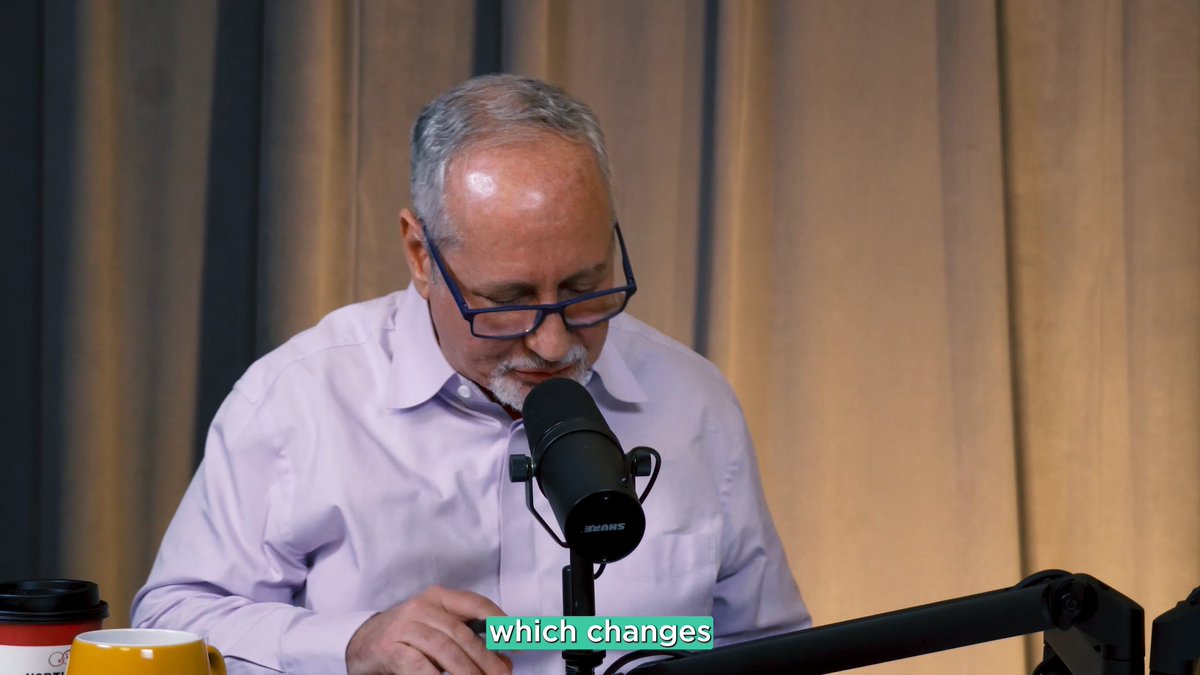
Why did The New York Times shift left? In Season 2 of The Marginal Revolution Podcast, Alex Tabarrok argued it is economics, not politics. When ad revenue dominated, advertisers wanted centrist content for maximum eyeballs. Paywalls changed those incentives. Media outlets now cater to passionate subscribers who want their worldview reinforced, not marginal readers.
Mercatus Center39,595 görüntüleme • 7 ay önce

Debt: it’s the political economy, stupid. Even at $30 trillion, America has the wealth to pay off its debt. The real question is whether Americans are willing to be taxed more or have their government spend less. So why aren’t markets spooked that neither of that is really happening yet? In the Season 2 finale of the Marginal Revolution Podcast, Alex Tabarrok and tylercowen dig in: 0:00:00 - Should We Be Worried About the US Debt? 0:08:19 - R vs. G? It's the Political Economy, Stupid 0:16:52 - The Five Ways Out 0:22:21 - AI's Fiscal Paradox 0:30:44 - Hidden Sovereign Wealth Funds 0:34:56 - The Bottom Line
Mercatus Center15,274 görüntüleme • 9 ay önce

Why do all good things come together in some jobs but not others? In part three of their series on favorite models, Alex Tabarrok and tylercowen explore compensating differentials and selective incentives. The idea of compensating differentials goes all the way back to Adam Smith, who wrote, “The wages of labor vary with the ease or hardship, the cleanliness or dirtiness, the honorableness or dishonorableness of the employment.” And while Tyler’s own sister had a job as a butcher that supported Smith’s contention that unpleasant jobs pay more, he pushes back: in a world of increasing returns and clustering talent, are we moving toward winner-take-all dynamics where all good things come together? Then they turn to Mancur Olson's theory of selective incentives, which explains how groups can overcome the free-riding problems that inhibit collective action. Tyler’s got a family story about that one, too! 0:00:35 - Compensating differentials overview 0:04:48 - Segmentation vs. Differentials 0:13:02 - Amenities and the gender pay gap 0:22:07 - Two Competing Theories 0:24:26 - How fixed costs complicate the picture 0:29:02 - There are many margins of adjustment! 0:31:39 - Mancur Olson and selective incentives 0:38:02 - Special interests or bad voters? 0:41:50 - The Waxing and waning of selective incentives 0:48:22 - Alternatives to selective incentives Watch the episode here on X, or visit the transcript:
Mercatus Center12,723 görüntüleme • 9 ay önce

TARIFFS RETVRN After decades of trade liberalization, tariffs are back in fashion. Alex Tabarrok and tylercowen talk incidence, retaliation, exchange rate confusion, and the Georgist plot twist: what if tariffs on soybeans are really just taxing Iowa farmland? 0:00:00 - The return of tariffs 0:02:44 - The threat of contagion 0:04:14 - Who really pays for tariffs 0:16:39 - How exchange rates muddle the picture 0:20:40 - Are tariffs making bad things more correlated? 0:22:53 - Does Lerner Symmetry hold? 0:29:56 - Differences between dollar depreciation and tariffs 0:33:13 - Retaliation 0:34:28 - Tariffs as a Georgist tax on land rents 0:38:10 - How the US economy will adjust 0:49:42 - The bottom line
Mercatus Center10,601 görüntüleme • 9 ay önce

From program associate to a PhD scholar in 8 years! 🙌 Starting in the monetary policy program under Scott Sumner (TheMoneyIllusion) and David Beckworth, Patrick Horan 📉 worked his way up while earning his master’s and PhD at George Mason University. Hear his story of growth, learning, and the people who made it all possible.
Mercatus Center12,641 görüntüleme • 1 yıl önce
Daha fazla içerik yok.