

Nakul Mandan
@nakul • 7,872 subscribers
Founder: @AudaciousHQ. Host: @KnuckleUpHQ. Helping outlier founders achieve improbable outcomes.
Videos
"10,000 hours? 996? That's rookie numbers. Like... what are we talking about?" Guillermo Rauch (Guillermo Rauch). Founder and CEO of Vercel. Only a founder as intense and energetic as Guillermo can call 996 "rookie numbers", and you still nod along. The man who's coming after every pixel and every token of the internet. Knuckle Up ↓ 00:00 Who is Guillermo Rauch? 02:01 What is Recursive Founder Mode? 07:28 Why did Vercel open source its playbook with skills dot sh? 10:14 What is a "work prompt" interview? 14:33 Why is Guillermo still involved in every hire at nearly 800 people? 18:17 What keeps founders at Vercel when seed money is everywhere? 23:41 Do urgency and taste pull against each other? 26:43 What is the new engineering meta skill? 32:21 How does a 17-year-old show they're exceptional today? 35:47 Why does Vercel route the whole company through one agent? 38:47 Which software survives the agent era? 42:11 How has AI changed Guillermo's job as CEO? 51:39 Does Vercel even need executives anymore? 54:40 If Guillermo started Vercel today, what would he build first? 57:45 What's the story behind v0? 1:03:48 Are there still moats when anyone can build fast? 1:11:24 How does a legendary coder learn the inner game of being a CEO? 1:19:21 Where does Guillermo's energy actually come from? 1:23:07 Quickfire: overrated advice, Chrome, voice AI, Demo Fridays 1:28:38 What does the journey to greatness actually require?
Nakul Mandan808,885 просмотров • 29 дней назад

“This feeling of ‘hey, I have arrived,’ or ‘okay, a company has been built, we have a stable business’ - it's completely elusive right now.” Arvind Jain (Arvind Jain). Glean. The founder in the pole position to own the context layer for AI in the enterprise. Knuckle Up ↓ In this conversation with Arvind Jain: 00:00 Who is Arvind Jain? 01:56 What is Glean's edge as OpenAI, Google, and Notion pile in? 04:56 MCP vs. context graphs: why did Glean go its own way? 07:56 What structural advantage does Glean claim over the frontier labs themselves? 11:00 How does Glean stack up against AI-native platforms like Notion? 12:38 What happens to the SaaS stack by 2027 and 2028? 14:52 Is Glean an app, an agent platform, or core infrastructure? 19:22 How much of Glean's use today is questions versus real agent work? 20:52 What does a knowledge worker's life look like in three years? 24:08 Why doesn't Arvind think AI will let companies shrink their workforce? 27:32 How does Arvind self-serve strategy, talent, and customer insight with AI? 33:19 Is every department at Glean AI-native, not just engineering? 36:44 What did Arvind find flawed in the AI SDR dream? 38:19 How has AI reshaped hiring at Glean, and who thrives there now? 41:07 Are Glean's 1,500 employees secretly doing the work of 2,500? 41:55 Why does Arvind say you never feel like you've “arrived”? 45:38 What's Arvind's advice for anyone who wants his life?
Nakul Mandan266,221 просмотров • 14 дней назад

"I've tried to make it so that the pressure goes down as success goes up. If you're more successful, why are you more stressed about it?" - immad. Immad Akhund. Founder and CEO of Mercury. $650M annualized revenue. $5.2B valuation. 300K customers. Immad has achieved all of this on his own terms: He's anti-996. Remote-first when rest of Silicon Valley has bounced back to fully in-person. Hires for curiosity and low ego. Optimized to be a founder for life. Knuckle Up ↓ 00:00 Who is Immad Akhund? 01:53 Is culture just the founder's personality externalized? 07:53 Is 996 actually less productive? 13:14 Why is Mercury still remote-first when Silicon Valley went back? 15:52 How did Immad hire Mercury's first ten people? 20:33 What is Mercury's famous “curiosity interview”? 25:06 How do you hold the hiring bar at 1,200 people? 28:48 What does Immad’s day-to-day look like? 34:10 How do you know when an exec is no longer right for the job? 37:32 Why does Mercury run on small, autonomous product teams? 40:27 What breaks when a company runs purely on metrics? 47:03 How is AI changing Mercury? 54:09 What does becoming a chartered bank actually change? 56:19 How did the SVB collapse end up helping Mercury? 1:03:40 What does psyche management look like 20 years in? 1:11:19 What does it mean to be at the founder “bonus levels”? 1:15:21 Quickfire: overrated traits, AI blind spots, and being proven wrong 1:17:52 What would Immad tell his 25-year-old self?
Nakul Mandan581,542 просмотров • 3 месяцев назад

"If you just compound and stack day after day after day and give it your best, great things will happen. That's been the story of my life and the story of this business." Garrett Lord. Founder & CEO of Handshake. At a Christmas party in December 2024, Garrett met a researcher from a frontier AI lab who told him about the challenges of model training. Two weeks later, Garrett's company Handshake was recruiting STEM PhDs for that same lab. Fifteen months after that, Handshake AI had gone from zero to a billion dollars in gross annualized revenue, and now is the human data engine behind the frontier labs. This conversation is a dissection of the most audacious reinvention in tech. Knuckle Up ↓ -- 00:00 Who is Garrett Lord? 01:36 How did a Christmas party conversation spark Handshake AI? 11:59 How do you tell your execs and board you're refounding the company? 18:18 What keeps A players motivated in the core business? 22:22 Olympic Pace: why did around 100 team members leave Handshake? 27:02 What broke first going zero to a billion in a year? 31:45 How do you protect quality when 85% of the company is new? 39:36 Why hasn't Garrett upgraded a single exec? 49:00 What does the bear case on human data get wrong? 53:30 How do you make accounting verifiable enough for reinforcement learning? 1:00:08 Will enterprises leave the labs for open source? 1:07:13 What does all this mean for knowledge workers? 1:08:51 The inner game: how is Garrett holding it all together? 1:14:22 What's the mission in this new chapter? 1:18:27 Will vertical AI apps survive the frontier labs? 1:21:23 Quickfire: red flags, overrated advice, jobs of the future
Nakul Mandan330,468 просмотров • 2 месяцев назад

"A week is 2% of the year. The cadence we operate on is: A week is not the shortest timeline. It's the longest timeline. What can we decide by tomorrow?" - Michael Grinich. Michael Grinich. Founder and CEO of WorkOS. The company powering the enterprise adoption of AI. Knuckle Up ↓ -- 00:00 Introduction 01:33 From design-obsessed founder to enterprise infrastructure 04:20 Michael’s year off and what made the WorkOS bet obvious 06:54 Why a great startup idea has to look bad first 09:46 Minimum awesome product beats MVP 11:09 The org with no CRO, no VP of sales, and one PM 13:29 Hiring for curiosity, not credentials 16:25 The "AI pilled" interview red flag 18:25 A week is 2% of the year 26:00 How WorkOS approaches brand 33:00 The future shape of engineering orgs 43:20 Why senior engineers benefit most from AI 44:45 Micro-leadership over micromanagement 49:10 Tough times in the early days 59:04 The reverse Peter principle 1:04:38 Quickfire: red flags, hires too early, and biggest fears 1:10:30 Michael's advice to his 25-year-old self
Nakul Mandan671,989 просмотров • 4 месяцев назад
"You earn the right to stand the night watch." - Cameron McCord Cameron McCord. Founder and CEO of Nominal. Submarine officer turned founder building the software stack for the physical AI era. New episode of Knuckle Up with Nakul is live ↓ 00:00 Who is Cameron McCord? 01:34 What did 484 days underwater teach him about leadership? 10:36 How do you "earn the right to stand the night watch"? 16:28 What was so special about Anduril’s culture? 28:39 What is the "power of ambiguity"? 31:29 How does Cameron think about recruiting? 37:39 Can you recruit “killers” who are also low ego? 46:50 What was the broken old way of testing hardware? 50:50 How do you actually crack selling to the government? 55:12 How did Nominal land four of the five largest defense primes? 1:01:33 What does "physical AI" actually mean? 1:18:14 What is Cameron still working on in his inner game? 1:23:22 Quickfire: military movies, leadership books, and a favorite office? 1:25:07 What advice would Cameron give to his 25-year-old self?
Nakul Mandan457,711 просмотров • 3 месяцев назад
"The pace of building has changed so quickly with AI. You have to give somewhere. And we gave for speed." Ashwin Sreenivas. Co-founder & President of Decagon. You'd be hard pressed to find another startup moving as ferociously as this one. Knuckle Up ↓ 00:00 Intro 02:10 How did Jesse and Ashwin decide what to work on at Decagon? 04:19 Why did they reject the top-down market-sizing approach? 13:16 What does Decagon give up to keep moving fast? 17:54 6 days in-office for founders, 5 for everyone else. 23:33 Why didn't Decagon hire a single employee until $1M in ARR? 27:12 How do you hire 450 people in three years without compromising quality? 31:20 Are Decagon engineers even writing code anymore? 35:08 How does the IC engineer role change with Claude Code and Cursor? 36:32 How does EPD leadership change in the AI era? 40:15 Two types of FDE, and which one do most AI companies actually need? 49:21 How will the human role at Decagon evolve over three years? 57:15 Why is Decagon building its own models with Decagon Labs? 1:00:50 What worries Ashwin most about Decagon today? 1:03:52 How does Ashwin manage his psyche while running this fast? 1:08:00 Hiccups in the startup journey. 1:09:50 Quickfire: overrated advice, AI products, books, red flags 1:12:43 What would Ashwin tell his younger self about Decagon's journey?
Nakul Mandan440,533 просмотров • 4 месяцев назад
“Founders aren’t made when they start companies. They’re made when they interpret their market correctly.” Episode 2 of Knuckle Up with Nakul is live. Qasar Younis (Qasar Younis): Founder and CEO of Applied Intuition. One of the sharpest and most intentional operators you’ll ever meet on the craft of building a company. Full episode ↓ -- 00:00 Intro 01:19 What really makes someone a founder 05:26 The company that almost became Kickstarter 08:12 The most common misread on feedback 13:40 Why most founders don't end up with the best team 19:45 How to pick a co-founder 23:38 Your first 10 hires are really your first 100 28:21 The case for hiring slow and firing slow 33:22 Red, yellow, green: how Applied gives monthly feedback 35:00 The role that knows what’s actually going on in a company 40:01 How to operate with speed and intentionality 42:41 The three things Qasar spends time on 45:57 How Applied is driving AI adoption 52:06 The type of engineer Applied is now looking for 1:01:19 Why this could be the golden age of small companies 1:09:13 Quickfire: red flags, overrated advice, and superpowers 1:12:32 Qasar's advice to his 25-year-old self
Nakul Mandan521,704 просмотров • 5 месяцев назад

I asked Cameron McCord what silicon valley can learn from the Navy. His answer: Building a culture of deep retrospections on things that go wrong. On the submarine, when something went wrong, they ran "critiques" - the five whys, all the way to root cause. "Silicon Valley has traditionally been bad at that because it's just moving so fast... There's this idea that we don't have time to fully unpack that, or we can take a surface level answer for what happened because we'll just build it again, let's move..."
Nakul Mandan257,872 просмотров • 3 месяцев назад

What scares Michael Grinich the most about the next two years? "My biggest concern is that we're still holding on to something from that previous era in how we're behaving and operating, and we're not letting go of it... And we don't know what that is... If you're the dinosaur, you don't know you're the dinosaur."
Nakul Mandan268,899 просмотров • 4 месяцев назад
“We really try to avoid non-player characters (when recruiting) - people who just go through life as if they’re on a stream and they have no agency over themselves.” Will Bryk. Co-founder and CEO of Exa. The founder who listens to the Mission Impossible soundtrack every morning, and finds more inspiration in fictional superheroes than real-life ones, on how he’s building the company powering the internet of agents. Knuckle Up ↓ In this conversation with Will: 00:00 Who is Will Bryk? 01:49 Why do agents need a different search engine than humans? 02:53 How can an independent search company survive the big labs? 07:33 What does the internet look like when agents do the searching? 10:19 How did writing a book on the history of civilization lead to Exa? 15:39 Why does Exa hire first-principles thinkers, not rebels? 18:05 What is a “non-playable character,” and why does Exa screen for it? 19:49 How does Exa win engineers against the labs’ packages? 21:30 Why does Will kill process “before it lays eggs”? 26:27 Does the “bitter lesson” apply to humans? 29:52 What breaks when a company outgrows a single room? 34:47 Are there 100x and 1000x engineers now, not just 10x? 37:32 Why should nothing at Exa ever take a month to ship? 45:30 Where does Will’s drive actually come from? 48:28 Why are Will’s role models fictional, not real? 51:05 What does “We’ll figure it out” mean at Exa? 54:05 Why do Will’s best thoughts happen at 2:00 AM? 57:47 Quickfire: red flags, young founder myths, and Will’s mission impossible
Nakul Mandan91,362 просмотров • 1 месяц назад
"We were go-karting and doing quite well. Now we've moved to Formula 1, and we're in the middle of the pack. We have a shot at the podium but we have to rewire for the race we're in." Akshay Kothari (Akshay Kothari). Cofounder and COO of Notion. Three years from now, most pre-AI companies will be gone. Notion will be one of the few standing stronger than before. This episode is a field study in how they're pulling it off. Knuckle Up ↓ 00:00 Intro 01:27 What were Notion's core founding principles? 06:20 Which early cultural principles scaled, and which broke? 08:22 How did Notion hire its first employees, and where did they come from? 11:48 How does hiring work now that the founders can't meet everyone? 14:35 Why does Akshay, as COO, prefer to have zero direct reports? 19:05 How do Ivan, Simon, and Akshay divide the work? 21:07 Does Notion's intentionality ever conflict with speed? 25:25 What should other founders steal from Notion's culture? 28:11 When did AI become a reason to rethink the whole product? 30:44 Why were the early AI years a "swamp of despair"? 36:05 How do you push AI across a huge product without losing the user? 39:25 Does Notion buy its AI DNA or build it? 40:44 Should Notion be afraid of OpenAI, Anthropic, and fast copycats? 46:58 What's hardest about the reinvention, and what does "meet the LLM" mean? 52:42 Is Notion AI-native in every function yet? 54:36 Are Notion's engineers still writing code, and how has engineering changed? 1:01:07 Once building is cheap, what's the new bottleneck? 1:02:39 How is AI reshaping sales, marketing, and support? 1:09:07 How many agents run inside Notion, and who builds them? 1:11:28 How has recruiting changed for the AI era? 1:13:48 What still worries Akshay about Notion's future? 1:15:22 Quickfire: admired founders, books, overrated AI advice, and Akshay’s superpower 1:19:42 What should a $50M pre-AI company do in the next 90 days?
Nakul Mandan205,031 просмотров • 3 месяцев назад
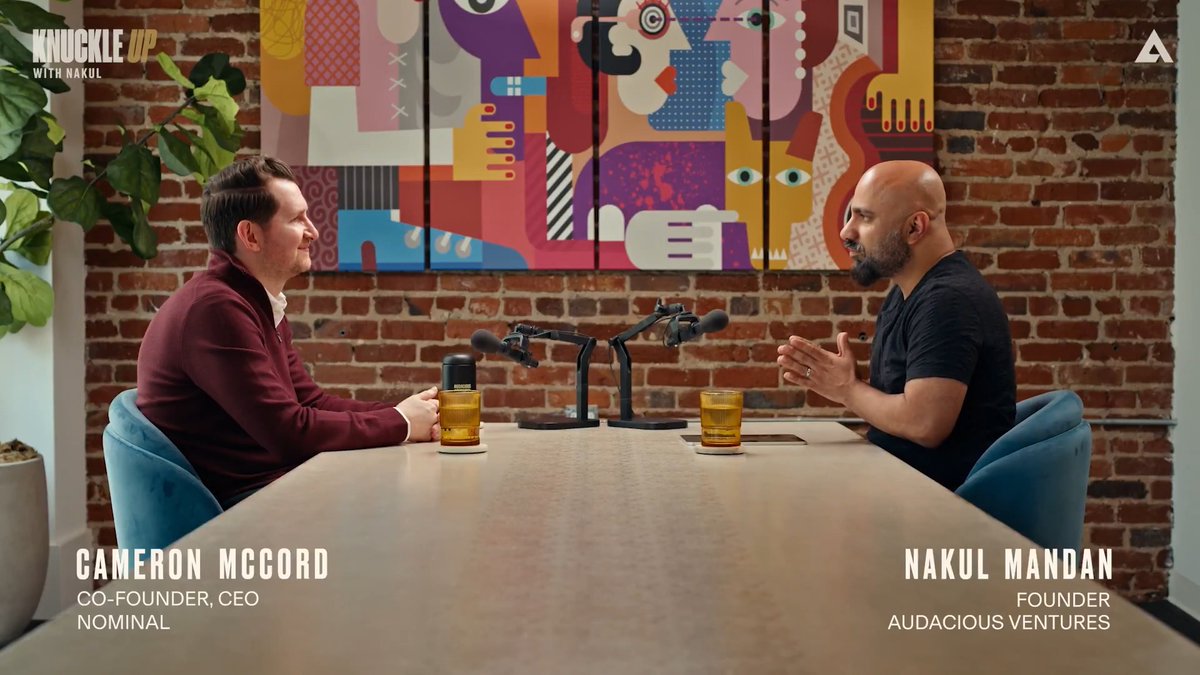
"The submarine is too small of a place to be hiding anything. People see you 24/7. It's too small to say I disagree with that person but we'll sort it out later. There's no later. You have to be direct." - Cameron McCord on what the submarine life taught him about leadership.
Nakul Mandan150,255 просмотров • 3 месяцев назад
Building a company is a confrontational act. Introducing Knuckle Up: conversations with people who’ve operated at the highest level. Recruiting. Culture. Intensity. The inner game of being a CEO. First episode with Frank Slootman drops today. Trailer ↓
Nakul Mandan162,846 просмотров • 5 месяцев назад
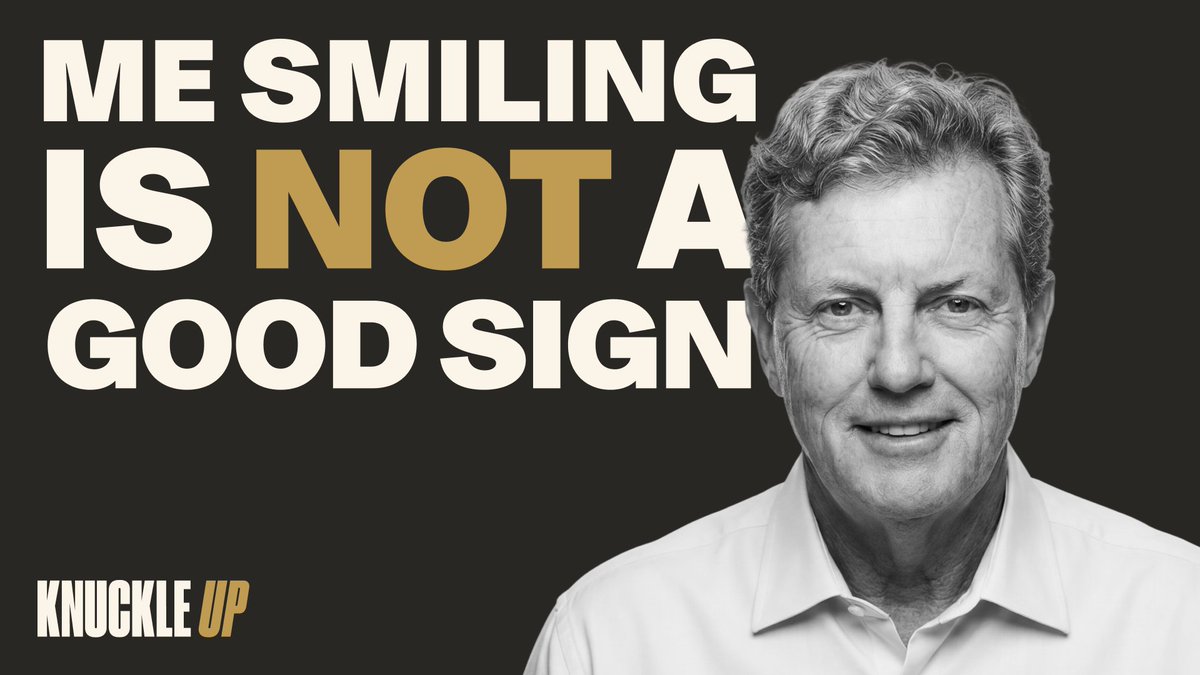
“If you’re not sure you’re a driver, you’re probably a passenger.” Frank Slootman: Snowflake, ServiceNow, Data Domain. One of the best operators of our generation. Knuckle Up with Frank is now live. Full conversation ↓ -- 00:49 Introduction 01:21 Why being a CEO is a confrontational job 03:51 Great people are hungry for hard feedback 08:19 Psychographic profiling: how Frank builds compatible teams 09:52 Drivers vs passengers: how to tell the difference 12:39 Why back-channel references beat interviews every time 16:19 "When there's doubt, there's no doubt" 20:42 Inside Frank's Tuesday operating cadence 22:27 The "go direct" rule that breaks org chart politics 26:19 Why bigger goals force better plans 31:27 Standards are the real culture 38:17 The email Frank wrote every Monday for years 41:35 Advice for navigating today's volatility 47:25 Facing demons for breakfast at Data Domain 54:19 Why Frank fired himself as Snowflake CEO 1:05:19 Coming to Silicon Valley "10 years late" 1:07:59 Why AI is an industrial-revolution-scale shift 1:10:01 Frank's advice to his 25-year-old self
Nakul Mandan133,794 просмотров • 5 месяцев назад

.Guillermo Rauch on Knuckle Up with Nakul: "No one at Vercel has the right to block things. I've been joking a lot about this Dune reference. The spice must flow, the tokens must flow, the products have to be shipped, customers need help. No one is here to say "hold the production lines". Only security can do that... Which means that the onus is on you to veto. You don't get to relax.... "I'm in Ibiza, send me the email, and when I get time to review it, your product goes out"... Malte and I were always obsessed with where are the choke points? Where is it? Where, what is our throughput? We study, we ask our agent. Let's study the change log rate, meaning how frequently are we communicating product improvements to customers. And so this is kind of how we keep that pace."
Nakul Mandan27,868 просмотров • 28 дней назад


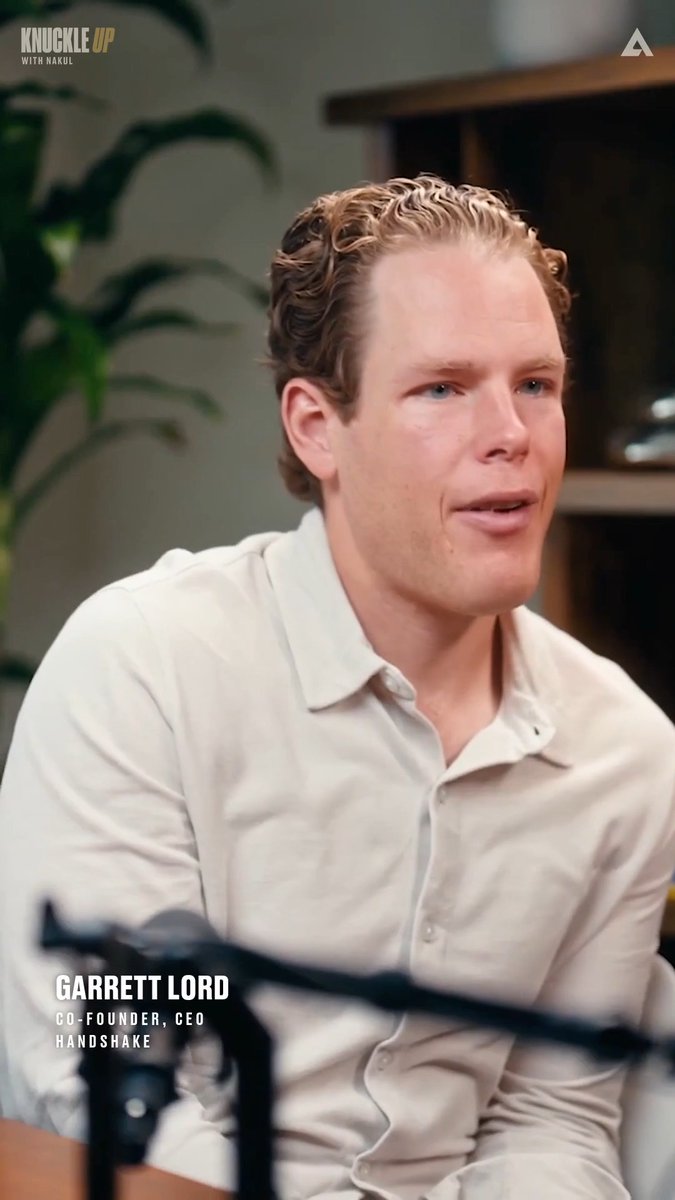
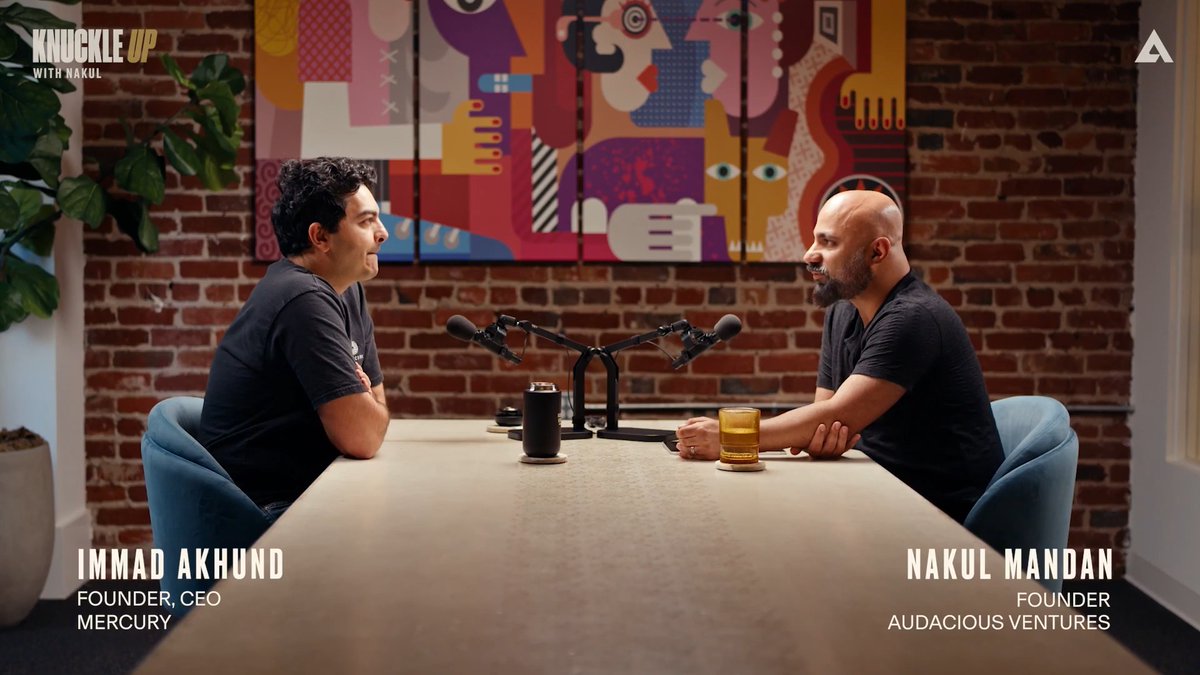
How does one scale the founder's taste in product and other things when you get to 1000+ people? immad's answer: "Complaining is a pretty good skill set..." "I go pretty deep on the things we ship, and I just wanna have an amazing experience and when it doesn't feel like that, I can manifest that user. What are all the things that would bug me if I turned up to use this product? When that slips up, I'm going to complain a lot."
Nakul Mandan14,607 просмотров • 3 месяцев назад