
Slavic Networks's banner
Slavic Networks's profile picture

Slavic Networks

@SlavicNetworks28,819 subscribers

Voices of the Slavic world 🌍 Culture • History • Geopolitics 🇵🇱🇷🇸🇷🇺🇨🇿🇸🇰🇧🇬🇸🇮🇲🇰🇺🇦🇲🇪🇭🇷🇧🇾🇧🇦 Slavs speaking for Slavs.

Shorts

SCHOCKING🚨 FORMER POLISH AMBASSADOR KRZYSZTOF BALIŃSKI: “UKRAINE WANTS TO BECOME THE SECOND ISRAEL IN EUROPE — ONE BIG ISRAEL AFTER THE WAR” AND POLAND HAS BEEN COLONIZED BY UKRAINIANS IN KEY POSITIONS 🇵🇱🔥🇺🇦 Former Polish Ambassador Krzysztof Baliński strongly criticized Ukrainian President Volodymyr Zelensky’s repeated boast that after winning the war, Ukraine will become “the second Israel in Europe” — “one big Israel.” He also claimed that Poland has been effectively “colonized” by Ukrainians, with people of Ukrainian origin or strong Ukrainian connections holding key positions in almost every major party (Hołownia, Siemoniak, Bodnar, Kosiniak-Kamysz, etc.), the Institute of National Memory (rehabilitating UPA criminals), and other institutions. He warned that with 5+ million Ukrainians already in Poland, the situation is becoming irreversible. This is a brutal diagnosis. Zelensky is not promising peace he wants a highly militarized “second Israel” funded by Polish taxpayers, while Ukraine honors the UPA butchers who massacred tens of thousands of Poles. At the same time, Ukrainians have infiltrated Polish politics and institutions across the spectrum. Both PiS and PO/Tusk governments opened the doors wide to this legal migration. Poland is turning into “Ukropol” a Polish-Palestine in Europe. This is demographic and political colonization happening in real time.

SCHOCKING🚨 FORMER POLISH AMBASSADOR KRZYSZTOF BALIŃSKI: “UKRAINE WANTS TO BECOME THE SECOND ISRAEL IN EUROPE — ONE BIG ISRAEL AFTER THE WAR” AND POLAND HAS BEEN COLONIZED BY UKRAINIANS IN KEY POSITIONS 🇵🇱🔥🇺🇦 Former Polish Ambassador Krzysztof Baliński strongly criticized Ukrainian President Volodymyr Zelensky’s repeated boast that after winning the war, Ukraine will become “the second Israel in Europe” — “one big Israel.” He also claimed that Poland has been effectively “colonized” by Ukrainians, with people of Ukrainian origin or strong Ukrainian connections holding key positions in almost every major party (Hołownia, Siemoniak, Bodnar, Kosiniak-Kamysz, etc.), the Institute of National Memory (rehabilitating UPA criminals), and other institutions. He warned that with 5+ million Ukrainians already in Poland, the situation is becoming irreversible. This is a brutal diagnosis. Zelensky is not promising peace he wants a highly militarized “second Israel” funded by Polish taxpayers, while Ukraine honors the UPA butchers who massacred tens of thousands of Poles. At the same time, Ukrainians have infiltrated Polish politics and institutions across the spectrum. Both PiS and PO/Tusk governments opened the doors wide to this legal migration. Poland is turning into “Ukropol” a Polish-Palestine in Europe. This is demographic and political colonization happening in real time.

108,665 Aufrufe

🚨SHOCKING UNITY IN KRAKOW: POLISH CITIZENS RECLAIM THEIR CITY — 97% VOTE TO RECALL TUSK’S MAYOR ALEKSANDER MISZALSKI IN MASSIVE REBELLION AGAINST GREEN DEAL, LGBT PARADES AND ELITE ARROGANCE! 🇵🇱🔥 In a historic referendum, residents of Krakow overwhelmingly voted to remove Mayor Aleksander Miszalski (a close ally of Donald Tusk) and the entire City Council. Exit polls showed 97% in favor of the recall. People were furious about: Strict Green Deal policies, including bans on many cars entering the city center Large LGBT parades in the traditionally conservative city Huge bonuses and high salaries for city company bosses (up to 115,000 PLN) This is a powerful wake-up call. The people of Krakow stood up together and said “enough” to globalist policies, Green Deal restrictions, LGBT ideology forced on their city, and arrogant politicians who don’t listen to ordinary citizens. Even in one of Poland’s most important historic cities, the Polish people are reclaiming their own city from those who put Brussels and ideology before the nation.

🚨SHOCKING UNITY IN KRAKOW: POLISH CITIZENS RECLAIM THEIR CITY — 97% VOTE TO RECALL TUSK’S MAYOR ALEKSANDER MISZALSKI IN MASSIVE REBELLION AGAINST GREEN DEAL, LGBT PARADES AND ELITE ARROGANCE! 🇵🇱🔥 In a historic referendum, residents of Krakow overwhelmingly voted to remove Mayor Aleksander Miszalski (a close ally of Donald Tusk) and the entire City Council. Exit polls showed 97% in favor of the recall. People were furious about: Strict Green Deal policies, including bans on many cars entering the city center Large LGBT parades in the traditionally conservative city Huge bonuses and high salaries for city company bosses (up to 115,000 PLN) This is a powerful wake-up call. The people of Krakow stood up together and said “enough” to globalist policies, Green Deal restrictions, LGBT ideology forced on their city, and arrogant politicians who don’t listen to ordinary citizens. Even in one of Poland’s most important historic cities, the Polish people are reclaiming their own city from those who put Brussels and ideology before the nation.

46,443 Aufrufe

BREAKING 🚨ROMANIAN PRESIDENT CONFIRMS: UKRAINIAN AIR DEFENCE REDIRECTED DRONE INTO ROMANIAN CITY OF GALAȚI, WOUNDING CIVILIANS 🇷🇴🔥🇺🇦🇷🇺 A drone struck a residential apartment building in the Romanian city of Galați, near the Ukrainian border, wounding several civilians. Romania’s President has now confirmed that Ukrainian air defence systems redirected the drone, causing it to hit Romanian territory. This is extremely dangerous and reckless. Whether intentional or a “mistake,” Ukraine’s actions have now directly endangered a NATO country and injured innocent Romanian civilians. The war is spilling over borders and putting the lives of people in neighboring countries at risk. We Slavs and Romanians have zero interest in being dragged into a bigger conflict because of Ukrainian or Western escalation. This incident proves why peace talks are urgently needed instead of pouring more fuel on the fire. Sovereignty first. No more European war.

BREAKING 🚨ROMANIAN PRESIDENT CONFIRMS: UKRAINIAN AIR DEFENCE REDIRECTED DRONE INTO ROMANIAN CITY OF GALAȚI, WOUNDING CIVILIANS 🇷🇴🔥🇺🇦🇷🇺 A drone struck a residential apartment building in the Romanian city of Galați, near the Ukrainian border, wounding several civilians. Romania’s President has now confirmed that Ukrainian air defence systems redirected the drone, causing it to hit Romanian territory. This is extremely dangerous and reckless. Whether intentional or a “mistake,” Ukraine’s actions have now directly endangered a NATO country and injured innocent Romanian civilians. The war is spilling over borders and putting the lives of people in neighboring countries at risk. We Slavs and Romanians have zero interest in being dragged into a bigger conflict because of Ukrainian or Western escalation. This incident proves why peace talks are urgently needed instead of pouring more fuel on the fire. Sovereignty first. No more European war.

24,917 Aufrufe

🚨 RAMADAN GATHERINGS GROWING IN KRAKÓW – POLISH CONCERN: “THIS IS HOW IT STARTED IN WESTERN EUROPE” TUSK & PIS GOVERNMENTS ARE LYING – BOTH PROMISE “POLAND WILL STAY POLAND” BUT LET NUMBERS RISE!!! Muslims just rented the big Hala 100-lecia Cracovii in Kraków for Eid al-Fitr. There are clearly more people than last year. Many Poles say clearly: “We have no hate toward Muslims. We respect them as people.” The real worry is protecting Polish culture and identity. Look at Sweden, England, Germany, France: Mass immigration → failed integration → parallel societies, cultural clashes, rising crime, changed demographics. Poland has quietly taken huge numbers of immigrants for years – **over 2 million Ukrainians** alone, plus others – one of the highest per capita in Europe. The city of Kraków actively supports this with its “Otwarty Kraków” program (2024–2028). It rents public halls (paid by taxpayers) for separate religious gatherings instead of real assimilation. Both the current government (Tusk) and the previous one (PiS) promise in every election: “Poland will remain Poland” – strict control, protect our culture. But the numbers keep rising anyway. During Ramadan, when they gather openly, we suddenly see how many there really are – and it grows year by year. Is this silent welcoming the start of losing our own culture – just like in the West?

🚨 RAMADAN GATHERINGS GROWING IN KRAKÓW – POLISH CONCERN: “THIS IS HOW IT STARTED IN WESTERN EUROPE” TUSK & PIS GOVERNMENTS ARE LYING – BOTH PROMISE “POLAND WILL STAY POLAND” BUT LET NUMBERS RISE!!! Muslims just rented the big Hala 100-lecia Cracovii in Kraków for Eid al-Fitr. There are clearly more people than last year. Many Poles say clearly: “We have no hate toward Muslims. We respect them as people.” The real worry is protecting Polish culture and identity. Look at Sweden, England, Germany, France: Mass immigration → failed integration → parallel societies, cultural clashes, rising crime, changed demographics. Poland has quietly taken huge numbers of immigrants for years – **over 2 million Ukrainians** alone, plus others – one of the highest per capita in Europe. The city of Kraków actively supports this with its “Otwarty Kraków” program (2024–2028). It rents public halls (paid by taxpayers) for separate religious gatherings instead of real assimilation. Both the current government (Tusk) and the previous one (PiS) promise in every election: “Poland will remain Poland” – strict control, protect our culture. But the numbers keep rising anyway. During Ramadan, when they gather openly, we suddenly see how many there really are – and it grows year by year. Is this silent welcoming the start of losing our own culture – just like in the West?

108,072 Aufrufe

🚨 BREAKING NEWS: “THE ECONOMIC ASSASSINS OF THE GLOBALISTS HAVE LEFT THE SHIP!” — ROMANIA’S PRO-EU GOVERNMENT COLLAPSES AS SCANDALS OVER FOREIGN-FUNDED NGOs & UNELECTED TECHNOCRATS EXPLODE 🇷🇴🔥 In dramatic scenes from the Romanian Parliament on May 5, 2026, Prime Minister Ilie Bolojan’s pro-EU coalition has officially fallen after a massive no-confidence vote with 281 MPs in favour. The Social Democrats (PSD) joined the nationalist opposition AUR to bring it down. Inside the liberal PNL party, leaked emergency meeting recordings show furious accusations: party leaders gave too much power to unelected technocrats (bureaucrats and “experts” not chosen by voters) and foreign-funded NGOs (civil society groups often backed by Western donors and Brussels). Critics say this led to harsh austerity measures — tax hikes, public sector cuts, and plans to sell state assets — all to please the EU, while ignoring ordinary Romanians. This is the moment Eastern and Slavic nations have been waiting for. For years, Western-backed governments in Romania empowered these NGOs and technocrats who pushed open borders, high debt, censorship, and policies that weakened native families and national sovereignty. Now the globalist experiment is collapsing in public. Nationalist forces like AUR are rising as people reject the disconnect from real Romanian interests. Eastern Europe sees the pattern everywhere: governments that put Brussels, foreign NGOs, and unelected experts first always betray their own citizens — crashing birth rates, selling out energy security, and ignoring the will of the people. Romania is joining Hungary, Slovakia, and others who refuse to keep sacrificing sovereignty for foreign agendas. Will this crisis lead to snap elections and a real Romania-first government that puts its own people above NGOs, technocrats, and Brussels pressure? Or will the old forces try to regroup? Eastern Europe is rising. Sovereignty first. National survival over globalist experiments.

🚨 BREAKING NEWS: “THE ECONOMIC ASSASSINS OF THE GLOBALISTS HAVE LEFT THE SHIP!” — ROMANIA’S PRO-EU GOVERNMENT COLLAPSES AS SCANDALS OVER FOREIGN-FUNDED NGOs & UNELECTED TECHNOCRATS EXPLODE 🇷🇴🔥 In dramatic scenes from the Romanian Parliament on May 5, 2026, Prime Minister Ilie Bolojan’s pro-EU coalition has officially fallen after a massive no-confidence vote with 281 MPs in favour. The Social Democrats (PSD) joined the nationalist opposition AUR to bring it down. Inside the liberal PNL party, leaked emergency meeting recordings show furious accusations: party leaders gave too much power to unelected technocrats (bureaucrats and “experts” not chosen by voters) and foreign-funded NGOs (civil society groups often backed by Western donors and Brussels). Critics say this led to harsh austerity measures — tax hikes, public sector cuts, and plans to sell state assets — all to please the EU, while ignoring ordinary Romanians. This is the moment Eastern and Slavic nations have been waiting for. For years, Western-backed governments in Romania empowered these NGOs and technocrats who pushed open borders, high debt, censorship, and policies that weakened native families and national sovereignty. Now the globalist experiment is collapsing in public. Nationalist forces like AUR are rising as people reject the disconnect from real Romanian interests. Eastern Europe sees the pattern everywhere: governments that put Brussels, foreign NGOs, and unelected experts first always betray their own citizens — crashing birth rates, selling out energy security, and ignoring the will of the people. Romania is joining Hungary, Slovakia, and others who refuse to keep sacrificing sovereignty for foreign agendas. Will this crisis lead to snap elections and a real Romania-first government that puts its own people above NGOs, technocrats, and Brussels pressure? Or will the old forces try to regroup? Eastern Europe is rising. Sovereignty first. National survival over globalist experiments.

39,283 Aufrufe

🚨BREAKING: ROMANIAN MINERS CLASH WITH POLICE IN BUCHAREST – OVER 1,000 JOBS DESTROYED BY EU GREEN RULES 🇷🇴🔥🇪🇺 Hundreds of angry miners took to the streets of Bucharest today. They are protesting the loss of more than 1,000 jobs in the mining sector. EU’s forced phase-out of coal and traditional mining** under the Green Deal. Brussels demands “green transition,” so Romanian mines are being closed or drastically reduced, even though they provide energy and jobs for ordinary people. Critics say: “EU destroys our industry, destroys our jobs, and Romanian politicians just obey like good servants.” Is this the real face of “European integration” – Romanian workers beaten by police while Brussels forces the country to destroy its own energy sector and throw thousands onto the street???

🚨BREAKING: ROMANIAN MINERS CLASH WITH POLICE IN BUCHAREST – OVER 1,000 JOBS DESTROYED BY EU GREEN RULES 🇷🇴🔥🇪🇺 Hundreds of angry miners took to the streets of Bucharest today. They are protesting the loss of more than 1,000 jobs in the mining sector. EU’s forced phase-out of coal and traditional mining** under the Green Deal. Brussels demands “green transition,” so Romanian mines are being closed or drastically reduced, even though they provide energy and jobs for ordinary people. Critics say: “EU destroys our industry, destroys our jobs, and Romanian politicians just obey like good servants.” Is this the real face of “European integration” – Romanian workers beaten by police while Brussels forces the country to destroy its own energy sector and throw thousands onto the street???

75,270 Aufrufe

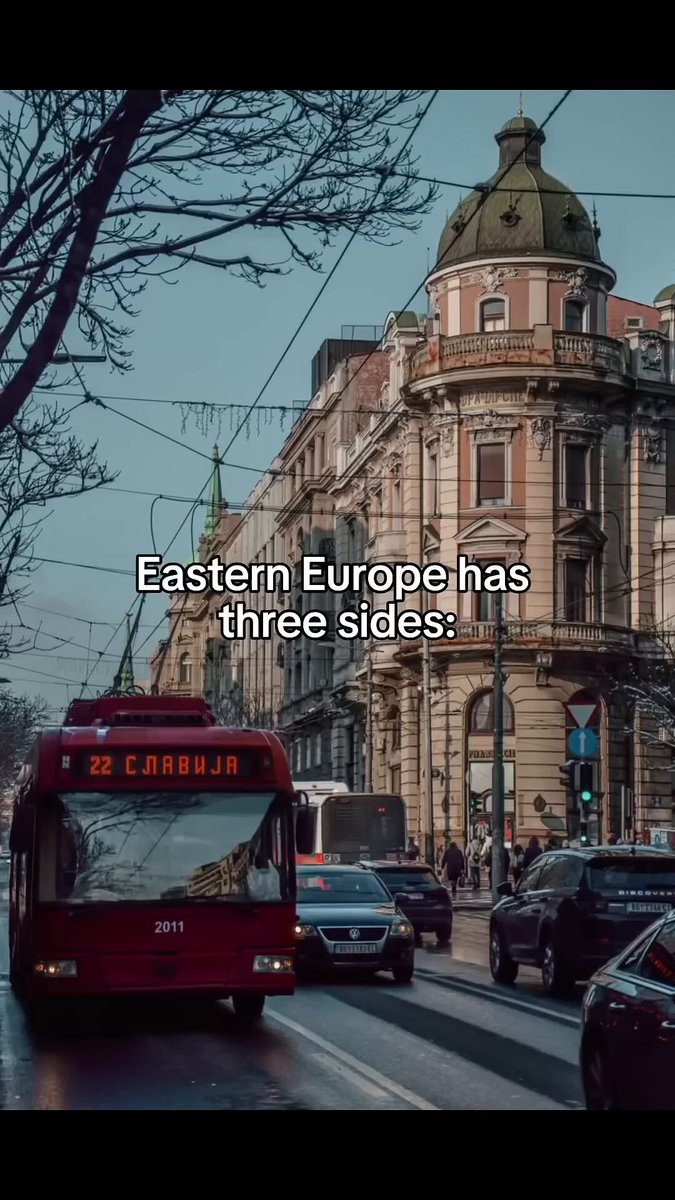
Different flags. Same blocks. Same countryside. Same cities. Same history. 🇵🇱 🇨🇿 🇸🇰 🇭🇺 🇸🇮 🇭🇷 🇧🇦 🇷🇸 🇲🇪 🇲🇰 🇧🇬 🇷🇴 🇲🇩 🇺🇦 🇧🇾 🇱🇹 🇱🇻 🇪🇪 🧱 The block — concrete homes, tight stairwells, neighbors who know each other, lives shaped by scarcity and survival. 🌾 The countryside — villages, land, tradition, grandparents, faith, seasons, food grown with our own hands. 🏛️ The city — old streets, empires layered on stone, beauty mixed with scars, history you can’t erase. They tell us we are “too different.” They rank us, label us, separate us. But from the Baltic to the Balkans, we grew up the same way. Same childhoods. Same winters. Same values. Same strength. Many flags — one Eastern European reality. If you like what we are doing — like, share, subscribe, and invite your friends for more. Follow us also on Facebook: Slavic Networks Nirali VVeles SlavicFreeSpirit

Different flags. Same blocks. Same countryside. Same cities. Same history. 🇵🇱 🇨🇿 🇸🇰 🇭🇺 🇸🇮 🇭🇷 🇧🇦 🇷🇸 🇲🇪 🇲🇰 🇧🇬 🇷🇴 🇲🇩 🇺🇦 🇧🇾 🇱🇹 🇱🇻 🇪🇪 🧱 The block — concrete homes, tight stairwells, neighbors who know each other, lives shaped by scarcity and survival. 🌾 The countryside — villages, land, tradition, grandparents, faith, seasons, food grown with our own hands. 🏛️ The city — old streets, empires layered on stone, beauty mixed with scars, history you can’t erase. They tell us we are “too different.” They rank us, label us, separate us. But from the Baltic to the Balkans, we grew up the same way. Same childhoods. Same winters. Same values. Same strength. Many flags — one Eastern European reality. If you like what we are doing — like, share, subscribe, and invite your friends for more. Follow us also on Facebook: Slavic Networks Nirali VVeles SlavicFreeSpirit

135,017 Aufrufe

🎄🥔🥕 24 DECEMBER — IN EVERY SLAVIC HOME, IT’S TIME 🇵🇱🇷🇺🇺🇦🇨🇿🇸🇰🇷🇸🇧🇬🇭🇷🇸🇮🇧🇾🇲🇰🇲🇪 Before Christmas had a name, before churches and calendars, Slavs already knew this night. 🌲🔥 The winter solstice marked survival — the moment when darkness stopped growing and light promised to return. Families gathered not to celebrate luxury, but endurance. What was stored, preserved, fermented, or boiled during the year now came together on one table. 🥔🥕🧅 Food was symbolic. No meat. No excess. Only what the land had given and what human hands had saved. Vegetables, grains, eggs, roots — nourishment meant to carry people through winter, and rituals meant to protect the household. This was the night of shared labor and shared fate. 🕯️🌾 When Christianity arrived, it did not erase this structure — it absorbed it. Christmas Eve replaced the solstice, fasting remained, and the family table became sacred. The rhythm stayed Slavic: preparation before celebration, restraint before abundance, silence before joy. ✝️➡️🌲 That is why, across Slavic lands and diasporas, this evening still feels different. The recipes may carry French names or Soviet labels, but their soul is older. Olivier, Russian salad, vegetable salad — these are modern forms of an ancient logic: take what the year gave, cut it together, mix it together, and wait. 🥣🔪 This is not nostalgia. It is continuity. Empires changed. Borders moved. Languages were pressured, renamed, or silenced. Yet the ritual survived — quietly, stubbornly, inside kitchens. 🏠⏳ Tonight, when potatoes are diced and eggs are chopped, Slavs are not just cooking. They are repeating a memory older than states. Older than flags. Older than Christmas itself. 🤍 🔥🌲 From the solstice to Christmas Eve — the table remains. 🇵🇱🇷🇺🇺🇦🇨🇿🇸🇰🇷🇸🇧🇬🇭🇷🇸🇮🇧🇾🇲🇰🇲🇪 Nirali VVeles SlavicFreeSpirit

🎄🥔🥕 24 DECEMBER — IN EVERY SLAVIC HOME, IT’S TIME 🇵🇱🇷🇺🇺🇦🇨🇿🇸🇰🇷🇸🇧🇬🇭🇷🇸🇮🇧🇾🇲🇰🇲🇪 Before Christmas had a name, before churches and calendars, Slavs already knew this night. 🌲🔥 The winter solstice marked survival — the moment when darkness stopped growing and light promised to return. Families gathered not to celebrate luxury, but endurance. What was stored, preserved, fermented, or boiled during the year now came together on one table. 🥔🥕🧅 Food was symbolic. No meat. No excess. Only what the land had given and what human hands had saved. Vegetables, grains, eggs, roots — nourishment meant to carry people through winter, and rituals meant to protect the household. This was the night of shared labor and shared fate. 🕯️🌾 When Christianity arrived, it did not erase this structure — it absorbed it. Christmas Eve replaced the solstice, fasting remained, and the family table became sacred. The rhythm stayed Slavic: preparation before celebration, restraint before abundance, silence before joy. ✝️➡️🌲 That is why, across Slavic lands and diasporas, this evening still feels different. The recipes may carry French names or Soviet labels, but their soul is older. Olivier, Russian salad, vegetable salad — these are modern forms of an ancient logic: take what the year gave, cut it together, mix it together, and wait. 🥣🔪 This is not nostalgia. It is continuity. Empires changed. Borders moved. Languages were pressured, renamed, or silenced. Yet the ritual survived — quietly, stubbornly, inside kitchens. 🏠⏳ Tonight, when potatoes are diced and eggs are chopped, Slavs are not just cooking. They are repeating a memory older than states. Older than flags. Older than Christmas itself. 🤍 🔥🌲 From the solstice to Christmas Eve — the table remains. 🇵🇱🇷🇺🇺🇦🇨🇿🇸🇰🇷🇸🇧🇬🇭🇷🇸🇮🇧🇾🇲🇰🇲🇪 Nirali VVeles SlavicFreeSpirit

113,183 Aufrufe

🚨BREAKING: CROATIA BETRAYS NEIGHBORS FOR UKRAINE – SENDS ENERGY GEAR TO KYIV WHILE REFUSING OIL TRANSIT TO STARVING HUNGARY, SLOVAKIA & SERBIA! 🔥🇭🇷🇺🇦 vs 🇭🇺🇸🇰🇷🇸 Zelenskyy gloats about Croatia sending energy equipment to repair Ukraine’s bombed grid and pledging more help — while Hungary vetoes the EU’s 20th sanctions and €90B loan over Ukraine’s Druzhba oil blockade, Slovakia cuts emergency power in retaliation, and Serbia gets cut off too. Croatia refuses to let Russian crude through its pipelines for the desperate neighbors, choosing Kyiv’s side and leaving Central Europe to freeze. - Zelenskyy after meeting Croatian PM Plenković: "Croatia is already transferring equipment for the needs of Ukrainian energy companies, and we appreciate its readiness to continue helping restore Ukraine’s energy sector." - Croatia also preparing new defense package and pushing Ukraine’s EU accession — full betrayal of neighbors while Hungary/Slovakia face shortages from the Druzhba halt (oil stopped late January 2026, pipeline bombed by Ukrainian drones February 23). - Hungary and Slovakia requested alternative oil transit through Croatia’s Adria/JANAF system — Croatia flat-out refuses **Russian-origin crude** despite EU exemptions, offering only non-Russian alternatives that haven’t materialized yet. - Serbia, also hammered by the cutoff (Russian oil via Hungary halted), aligns with Hungary: planning new pipeline bypass with Hungary (100 km, expected 2028) to avoid Ukraine entirely; MOL acquiring more stake in Serbian refiner NIS to strengthen joint resistance. **Simple global explanation (for people who know nothing about this):** On February 24, 2026 (war’s 4th anniversary), Ukrainian President Zelenskyy met Croatian Prime Minister Andrej Plenković and thanked Croatia for supplying equipment to fix Ukraine’s war-damaged power grid. Croatia is also preparing more military aid and strongly backs Ukraine’s EU path. Meanwhile, Hungary and Slovakia are in energy emergency because Ukraine has stopped Russian oil transit through the Druzhba pipeline (blamed on damage from Russian attacks; Hungary/Slovakia say Kyiv is delaying repairs for leverage). Both asked Croatia to allow oil transit through its Adriatic pipeline as a workaround — Croatia has refused Russian crude but is credited by the EU Commission with efforts on non-Russian alternatives (no deliveries confirmed yet). Serbia, also dependent on Russian oil via Hungary, is aligning with Budapest for long-term bypass infrastructure instead of relying on Croatia. **Slavic / Eastern European perspective – why this hits home for us:** This is outright betrayal from within our ranks. Croatia rushes equipment, defense aid and EU cheers to Ukraine — the same Ukraine that blocks our oil, bombs the Druzhba pipeline, and holds neighbors hostage. Hungary vetoes sanctions until oil flows. Fico cuts power aid after blackmail. Serbia teams up with Hungary for a new pipeline to bypass Kyiv entirely. Croatia? Refuses Russian crude transit for its desperate Central European brothers, leaving Hungary, Slovakia and Serbia to suffer shortages, higher costs and emergencies while globalists in Brussels pat Croatia on the back for "solidarity" with Kyiv. We've seen this pattern: some Slavs sell out for EU brownie points while others pay the price in blackouts and economic pain. Globalists reward the traitors; punish the independent. Hungary, Slovakia, Serbia are fighting for real sovereignty — Croatia is choosing the enemy. This selective "brotherhood" is disgusting — it deepens division, risks wider collapse, and turns Slavs against Slavs. Enough. Real unity means helping your neighbors in crisis first, not arming the one blackmailing with energy.

🚨BREAKING: CROATIA BETRAYS NEIGHBORS FOR UKRAINE – SENDS ENERGY GEAR TO KYIV WHILE REFUSING OIL TRANSIT TO STARVING HUNGARY, SLOVAKIA & SERBIA! 🔥🇭🇷🇺🇦 vs 🇭🇺🇸🇰🇷🇸 Zelenskyy gloats about Croatia sending energy equipment to repair Ukraine’s bombed grid and pledging more help — while Hungary vetoes the EU’s 20th sanctions and €90B loan over Ukraine’s Druzhba oil blockade, Slovakia cuts emergency power in retaliation, and Serbia gets cut off too. Croatia refuses to let Russian crude through its pipelines for the desperate neighbors, choosing Kyiv’s side and leaving Central Europe to freeze. - Zelenskyy after meeting Croatian PM Plenković: "Croatia is already transferring equipment for the needs of Ukrainian energy companies, and we appreciate its readiness to continue helping restore Ukraine’s energy sector." - Croatia also preparing new defense package and pushing Ukraine’s EU accession — full betrayal of neighbors while Hungary/Slovakia face shortages from the Druzhba halt (oil stopped late January 2026, pipeline bombed by Ukrainian drones February 23). - Hungary and Slovakia requested alternative oil transit through Croatia’s Adria/JANAF system — Croatia flat-out refuses **Russian-origin crude** despite EU exemptions, offering only non-Russian alternatives that haven’t materialized yet. - Serbia, also hammered by the cutoff (Russian oil via Hungary halted), aligns with Hungary: planning new pipeline bypass with Hungary (100 km, expected 2028) to avoid Ukraine entirely; MOL acquiring more stake in Serbian refiner NIS to strengthen joint resistance. **Simple global explanation (for people who know nothing about this):** On February 24, 2026 (war’s 4th anniversary), Ukrainian President Zelenskyy met Croatian Prime Minister Andrej Plenković and thanked Croatia for supplying equipment to fix Ukraine’s war-damaged power grid. Croatia is also preparing more military aid and strongly backs Ukraine’s EU path. Meanwhile, Hungary and Slovakia are in energy emergency because Ukraine has stopped Russian oil transit through the Druzhba pipeline (blamed on damage from Russian attacks; Hungary/Slovakia say Kyiv is delaying repairs for leverage). Both asked Croatia to allow oil transit through its Adriatic pipeline as a workaround — Croatia has refused Russian crude but is credited by the EU Commission with efforts on non-Russian alternatives (no deliveries confirmed yet). Serbia, also dependent on Russian oil via Hungary, is aligning with Budapest for long-term bypass infrastructure instead of relying on Croatia. **Slavic / Eastern European perspective – why this hits home for us:** This is outright betrayal from within our ranks. Croatia rushes equipment, defense aid and EU cheers to Ukraine — the same Ukraine that blocks our oil, bombs the Druzhba pipeline, and holds neighbors hostage. Hungary vetoes sanctions until oil flows. Fico cuts power aid after blackmail. Serbia teams up with Hungary for a new pipeline to bypass Kyiv entirely. Croatia? Refuses Russian crude transit for its desperate Central European brothers, leaving Hungary, Slovakia and Serbia to suffer shortages, higher costs and emergencies while globalists in Brussels pat Croatia on the back for "solidarity" with Kyiv. We've seen this pattern: some Slavs sell out for EU brownie points while others pay the price in blackouts and economic pain. Globalists reward the traitors; punish the independent. Hungary, Slovakia, Serbia are fighting for real sovereignty — Croatia is choosing the enemy. This selective "brotherhood" is disgusting — it deepens division, risks wider collapse, and turns Slavs against Slavs. Enough. Real unity means helping your neighbors in crisis first, not arming the one blackmailing with energy.

66,449 Aufrufe

🚨 🇵🇱🇨🇿🇸🇰🇸🇮🇭🇷🇧🇦🇷🇸🇲🇪🇧🇬🇲🇰🇷🇺🇧🇾🇺🇦 SLAVS ARE DONE BEING DIVIDED — A NEW SLAVIC ERA IS EMERGING The video spreading online is not shocking because of where it comes from, or because of the flags it shows. It resonates because it reveals something many prefer to ignore: ordinary Slavs do not hate each other. What divides us today is not culture, not history, not values — but politics imposed from above, amplified by external interests that profit from fragmentation. Governments change. Strategies shift. Alliances rotate. But people remain. And among ordinary Slavs, the instinct is not hostility — it is recognition. For decades, Slavic nations have been taught to see each other only through the lens of conflict, blame, and permanent suspicion. Entire peoples are judged by the actions of their governments. That logic is not justice — it is collective guilt. And collective guilt, regardless of who applies it, is simply another form of racism. This project rejects that completely. ⸻ ONE CIVILIZATION, MANY STATES Slavic unity does not mean political uniformity. It does not mean erasing borders or histories. It means acknowledging a shared civilizational space — something every other major culture on the planet openly defends. Western nations coordinate. Middle Eastern cultures coordinate. Asian civilizations coordinate. Only Slavs are told that unity is “dangerous” or “suspicious.” That narrative has served others well — but it has weakened us. ⸻ THIS IS NOT ABOUT HATE — IT IS ABOUT SELF-RESPECT Let it be said clearly and without ambiguity: this movement is not anti-Jewish, not anti-Muslim, not anti-any people. We do not oppose identities. We oppose forces, policies, and systems that work against Slavic interests, dignity, and sovereignty. There is nothing extremist about refusing to be divided forever. There is nothing immoral about wanting influence over one’s own future. ⸻ WHY THIS MOMENT MATTERS Yes — it is uncomfortable that images of Slavic unity often come from places the West has already labeled for us. That discomfort should not lead to denial. It should lead to action elsewhere. If others can organize their communities across borders, across generations, across institutions — then Slavs can too. Not emotionally. Strategically. And that is precisely what is beginning. ⸻ A NEW SLAVIC VOICE IS COMING Slavic Networks is stepping into a role that has been missing for too long. From next year, we are launching a studio-based podcast and media platform built by Slavs, for Slavs — independent of external power centers, ideological filters, or imported narratives. Our goal is not commentary alone. It is influence. Cultural influence. Media influence. Political influence. Support for Slavic nations and Slavic minorities at every level of public life. Others built networks to protect their worldview. Others turned belief into organization. Others turned identity into power. It is time Slavs did the same — calmly, professionally, and without apology. ⸻ THE FUTURE WILL NOT BE GIVEN — IT WILL BE BUILT This is not a call for confrontation. It is a call for coordination. A Slavic world that speaks in its own voice. A Slavic perspective that cannot be ignored. A Slavic future shaped by Slavs — not by those who benefit from our division. History has entered a new phase. So have we. ⸻ If you like what we are doing — like, share, subscribe, and invite your friends for more. Follow us also on Facebook: Slavic Networks Nirali VVeles SlavicFreeSpirit.

🚨 🇵🇱🇨🇿🇸🇰🇸🇮🇭🇷🇧🇦🇷🇸🇲🇪🇧🇬🇲🇰🇷🇺🇧🇾🇺🇦 SLAVS ARE DONE BEING DIVIDED — A NEW SLAVIC ERA IS EMERGING The video spreading online is not shocking because of where it comes from, or because of the flags it shows. It resonates because it reveals something many prefer to ignore: ordinary Slavs do not hate each other. What divides us today is not culture, not history, not values — but politics imposed from above, amplified by external interests that profit from fragmentation. Governments change. Strategies shift. Alliances rotate. But people remain. And among ordinary Slavs, the instinct is not hostility — it is recognition. For decades, Slavic nations have been taught to see each other only through the lens of conflict, blame, and permanent suspicion. Entire peoples are judged by the actions of their governments. That logic is not justice — it is collective guilt. And collective guilt, regardless of who applies it, is simply another form of racism. This project rejects that completely. ⸻ ONE CIVILIZATION, MANY STATES Slavic unity does not mean political uniformity. It does not mean erasing borders or histories. It means acknowledging a shared civilizational space — something every other major culture on the planet openly defends. Western nations coordinate. Middle Eastern cultures coordinate. Asian civilizations coordinate. Only Slavs are told that unity is “dangerous” or “suspicious.” That narrative has served others well — but it has weakened us. ⸻ THIS IS NOT ABOUT HATE — IT IS ABOUT SELF-RESPECT Let it be said clearly and without ambiguity: this movement is not anti-Jewish, not anti-Muslim, not anti-any people. We do not oppose identities. We oppose forces, policies, and systems that work against Slavic interests, dignity, and sovereignty. There is nothing extremist about refusing to be divided forever. There is nothing immoral about wanting influence over one’s own future. ⸻ WHY THIS MOMENT MATTERS Yes — it is uncomfortable that images of Slavic unity often come from places the West has already labeled for us. That discomfort should not lead to denial. It should lead to action elsewhere. If others can organize their communities across borders, across generations, across institutions — then Slavs can too. Not emotionally. Strategically. And that is precisely what is beginning. ⸻ A NEW SLAVIC VOICE IS COMING Slavic Networks is stepping into a role that has been missing for too long. From next year, we are launching a studio-based podcast and media platform built by Slavs, for Slavs — independent of external power centers, ideological filters, or imported narratives. Our goal is not commentary alone. It is influence. Cultural influence. Media influence. Political influence. Support for Slavic nations and Slavic minorities at every level of public life. Others built networks to protect their worldview. Others turned belief into organization. Others turned identity into power. It is time Slavs did the same — calmly, professionally, and without apology. ⸻ THE FUTURE WILL NOT BE GIVEN — IT WILL BE BUILT This is not a call for confrontation. It is a call for coordination. A Slavic world that speaks in its own voice. A Slavic perspective that cannot be ignored. A Slavic future shaped by Slavs — not by those who benefit from our division. History has entered a new phase. So have we. ⸻ If you like what we are doing — like, share, subscribe, and invite your friends for more. Follow us also on Facebook: Slavic Networks Nirali VVeles SlavicFreeSpirit.

86,449 Aufrufe

🚨🔥 TURKISH FLAG RAISED IN KIČEVO 🇹🇷 — MACEDONIANS FURIOUS: WHERE ARE THE SLAVS IN MACEDONIA? 🇲🇰⚠️ BREAKING NEWS — A political and emotional storm has erupted in Kičevo, where the Turkish national flag 🇹🇷 was raised in front of a municipal building. Officials described the move as a cultural gesture linked to the local Turkish community and relations with Turkey. On the street and online, the reaction was immediate—and furious. This is not a dispute about protocol. It is about timing, symbolism, and a country already on edge. Only days earlier, tensions flared in Skopje, where Albanian nationalist mobilization—some imagery invoking the Kosovo Liberation Army (KLA)—reignited memories of the 2001 conflict. That episode unsettled a fragile equilibrium. Now, scarcely a week later, another non-Slavic national flag appears on an official building, this time in western Macedonia. For many Macedonians, the sequence feels unmistakable. First Albanian nationalist pressure in the capital. Now Turkish state symbolism in a Macedonian town. And between the two, a growing sense that the Slavic core of the state is disappearing from public space. North Macedonia is a Slavic state by origin. The Macedonian people are Slavs; the language is Slavic; the historical arc—from medieval Slavic polities through a late national awakening—rests on continuity preserved under foreign rule. That history is not abstract. For centuries, Ottoman authority shaped daily life here, and Slavic identity survived through memory and resistance rather than power. Symbols tied to that past therefore carry weight far beyond ceremony. This is why the flag in Kičevo struck a nerve. In the Balkans, flags are not decoration; they are statements. Raised on a municipal building, they speak about presence, confidence, and whose story is allowed to be visible. When such symbols arrive in rapid succession—while Slavic Macedonian identity is expected to remain muted for the sake of “stability”—anger follows. Supporters insist this is multiculturalism at work. Critics counter that multiculturalism cannot mean asymmetry, where every identity asserts itself publicly except the one on which the state was founded. The question spreading across Macedonian society tonight is blunt and uncomfortable: Is Macedonia still allowed to be Slavic? This is not a rejection of minorities. It is a demand for balance—and for dignity. Because stability built on silence rarely lasts. And when a people begin asking where they themselves have gone, the issue has already moved beyond flags. ⸻ Slavic Networks Independent coverage of Slavic regions, power, and identity. If you like what we are doing — like, share, subscribe, and invite your friends for more. Follow us also on Facebook: Slavic Networks Nirali VVeles SlavicFreeSpirit

🚨🔥 TURKISH FLAG RAISED IN KIČEVO 🇹🇷 — MACEDONIANS FURIOUS: WHERE ARE THE SLAVS IN MACEDONIA? 🇲🇰⚠️ BREAKING NEWS — A political and emotional storm has erupted in Kičevo, where the Turkish national flag 🇹🇷 was raised in front of a municipal building. Officials described the move as a cultural gesture linked to the local Turkish community and relations with Turkey. On the street and online, the reaction was immediate—and furious. This is not a dispute about protocol. It is about timing, symbolism, and a country already on edge. Only days earlier, tensions flared in Skopje, where Albanian nationalist mobilization—some imagery invoking the Kosovo Liberation Army (KLA)—reignited memories of the 2001 conflict. That episode unsettled a fragile equilibrium. Now, scarcely a week later, another non-Slavic national flag appears on an official building, this time in western Macedonia. For many Macedonians, the sequence feels unmistakable. First Albanian nationalist pressure in the capital. Now Turkish state symbolism in a Macedonian town. And between the two, a growing sense that the Slavic core of the state is disappearing from public space. North Macedonia is a Slavic state by origin. The Macedonian people are Slavs; the language is Slavic; the historical arc—from medieval Slavic polities through a late national awakening—rests on continuity preserved under foreign rule. That history is not abstract. For centuries, Ottoman authority shaped daily life here, and Slavic identity survived through memory and resistance rather than power. Symbols tied to that past therefore carry weight far beyond ceremony. This is why the flag in Kičevo struck a nerve. In the Balkans, flags are not decoration; they are statements. Raised on a municipal building, they speak about presence, confidence, and whose story is allowed to be visible. When such symbols arrive in rapid succession—while Slavic Macedonian identity is expected to remain muted for the sake of “stability”—anger follows. Supporters insist this is multiculturalism at work. Critics counter that multiculturalism cannot mean asymmetry, where every identity asserts itself publicly except the one on which the state was founded. The question spreading across Macedonian society tonight is blunt and uncomfortable: Is Macedonia still allowed to be Slavic? This is not a rejection of minorities. It is a demand for balance—and for dignity. Because stability built on silence rarely lasts. And when a people begin asking where they themselves have gone, the issue has already moved beyond flags. ⸻ Slavic Networks Independent coverage of Slavic regions, power, and identity. If you like what we are doing — like, share, subscribe, and invite your friends for more. Follow us also on Facebook: Slavic Networks Nirali VVeles SlavicFreeSpirit

73,314 Aufrufe

🚨HUGE: BULGARIAN POLITICIAN KUZMAN ILIEV EXPOSES GERMANY’S PLAN — “THEY WANT TO FIX THEIR ECONOMY BY BUILDING WEAPONS AND STARTING WAR WITH RUSSIA!” 🇧🇬🔥🇩🇪 Kuzman Iliev, chairman of the Bulgarian party “Bulgaria Can,” just slammed Germany’s real intentions behind the new Rheinmetall weapons factory being built in Bulgaria. He says the factory isn’t about “helping” Bulgaria — it’s only there to feed Germany’s military lobby and prepare for war with Russia. Iliev warns: “No economy can be fixed by such a war with Russia. The Germans have already seen this in history.”

🚨HUGE: BULGARIAN POLITICIAN KUZMAN ILIEV EXPOSES GERMANY’S PLAN — “THEY WANT TO FIX THEIR ECONOMY BY BUILDING WEAPONS AND STARTING WAR WITH RUSSIA!” 🇧🇬🔥🇩🇪 Kuzman Iliev, chairman of the Bulgarian party “Bulgaria Can,” just slammed Germany’s real intentions behind the new Rheinmetall weapons factory being built in Bulgaria. He says the factory isn’t about “helping” Bulgaria — it’s only there to feed Germany’s military lobby and prepare for war with Russia. Iliev warns: “No economy can be fixed by such a war with Russia. The Germans have already seen this in history.”

20,523 Aufrufe

🚨🌃 MINSK AT NIGHT 🇧🇾 — THE SLAVIC CAPITAL EUROPE PRETENDS NOT TO SEE At night, Minsk reveals something increasingly rare in Europe: order, continuity, and historical confidence. This city is not a coincidence. It is the product of history — and of deliberate choices. Minsk is one of the most destroyed capitals of World War II. More than 80% of the city was wiped out during the German occupation. What followed was not random reconstruction, but a state-led rebuilding project that treated the capital as a symbol of survival, sacrifice, and Slavic endurance. Wide avenues, monumental facades, axial symmetry, and integrated public transport were not aesthetic accidents — they were political statements. The result is a city that still functions according to mid-20th-century urban logic: clarity, scale, and permanence. While many European capitals dismantled their historical cores through privatization, speculation, and “creative destruction,” Minsk preserved a centralized civic structure. Its metro, public spaces, and housing were built to serve residents first — not tourists, investors, or branding agencies. That is precisely why Minsk is controversial. Not because it is chaotic — but because it did not surrender its spatial identity after 1991. For critics, Minsk represents authoritarian stagnation. For supporters, it represents stability and sovereignty. For outsiders, it is uncomfortable because it contradicts the familiar narrative of post-Soviet collapse and disorder. The illuminated metro sign in the night is more than infrastructure. It is a remnant of a time when cities were built as long-term national projects, not short-term economic experiments. The monumental buildings along Independence Avenue are not nostalgia — they are reminders that Belarus chose continuity over rupture. Minsk does not ask to be liked. It does not rebrand itself every decade. It does not apologize for being Eastern, Slavic, or different. And in a Europe increasingly uneasy with history, memory, and statehood, that makes Minsk quietly subversive. These images are not propaganda. They are documentation. And what they document is a capital that still knows what it was built for. ⸻ Slavic Networks Independent coverage of Slavic regions, power, and identity. If you like what we are doing — like, share, subscribe, and invite your friends for more. Follow us also on Facebook: Slavic Networks Nirali VVeles SlavicFreeSpirit

🚨🌃 MINSK AT NIGHT 🇧🇾 — THE SLAVIC CAPITAL EUROPE PRETENDS NOT TO SEE At night, Minsk reveals something increasingly rare in Europe: order, continuity, and historical confidence. This city is not a coincidence. It is the product of history — and of deliberate choices. Minsk is one of the most destroyed capitals of World War II. More than 80% of the city was wiped out during the German occupation. What followed was not random reconstruction, but a state-led rebuilding project that treated the capital as a symbol of survival, sacrifice, and Slavic endurance. Wide avenues, monumental facades, axial symmetry, and integrated public transport were not aesthetic accidents — they were political statements. The result is a city that still functions according to mid-20th-century urban logic: clarity, scale, and permanence. While many European capitals dismantled their historical cores through privatization, speculation, and “creative destruction,” Minsk preserved a centralized civic structure. Its metro, public spaces, and housing were built to serve residents first — not tourists, investors, or branding agencies. That is precisely why Minsk is controversial. Not because it is chaotic — but because it did not surrender its spatial identity after 1991. For critics, Minsk represents authoritarian stagnation. For supporters, it represents stability and sovereignty. For outsiders, it is uncomfortable because it contradicts the familiar narrative of post-Soviet collapse and disorder. The illuminated metro sign in the night is more than infrastructure. It is a remnant of a time when cities were built as long-term national projects, not short-term economic experiments. The monumental buildings along Independence Avenue are not nostalgia — they are reminders that Belarus chose continuity over rupture. Minsk does not ask to be liked. It does not rebrand itself every decade. It does not apologize for being Eastern, Slavic, or different. And in a Europe increasingly uneasy with history, memory, and statehood, that makes Minsk quietly subversive. These images are not propaganda. They are documentation. And what they document is a capital that still knows what it was built for. ⸻ Slavic Networks Independent coverage of Slavic regions, power, and identity. If you like what we are doing — like, share, subscribe, and invite your friends for more. Follow us also on Facebook: Slavic Networks Nirali VVeles SlavicFreeSpirit

60,822 Aufrufe

🚨🇵🇱 POLAND’S BORDERS WERE NEVER “NATURAL” – THEY WERE FORCED, TRADED AND DECIDED BY FOREIGN POWERS 💥🗺️ The Map of Poland Is a Battlefield of History – Not a Peaceful Line on Paper Poland’s present-day borders are often treated as something permanent and “natural.” History tells a very different story. The shape of the Polish state is the product of wars, partitions, diplomatic deals and decisions taken by foreign powers – frequently without any Polish participation. From the 18th century onward, Poland disappeared from the map of Europe for 123 years after being partitioned by Russia, Prussia and Austria. When independence was restored in 1918, borders again became a subject of conflict and negotiation. The Polish–Soviet War, plebiscites in Silesia, and disputes over territories such as Vilnius showed that the state’s frontiers were still far from settled. World War II marked the most dramatic territorial shift in Polish history. After 1945, Poland was effectively moved westward. The country lost its eastern lands – today part of Ukraine, Belarus and Lithuania – while receiving former German territories in Silesia, Pomerania and East Prussia. These decisions were made at the Yalta and Potsdam conferences by the victorious Allied powers. Millions of people were forcibly relocated in the process. Entire populations were expelled, transferred or resettled to fit new political realities. One of the most controversial outcomes of this post-war order is Kaliningrad. Formerly Königsberg, the historic capital of East Prussia, it was annexed by the Soviet Union and transformed into a heavily militarized enclave. Today, Poland borders this Russian region – a legacy of Cold War geopolitics rather than regional consensus. Even seemingly “stable” borders, such as those with the Czech Republic and Slovakia, reflect centuries of feudal divisions, dynastic arrangements and shifting sovereignties. In some places, borderlines cut through villages and historical communities, freezing medieval land divisions into modern state frontiers. Poland’s access to the Baltic Sea also came at a high price. Gdańsk was separated from Poland after World War I and turned into a Free City, becoming a constant source of political tension. Its status was one of the factors leading to the outbreak of World War II. Control of the coast has always been strategic, contested and fragile. What emerges from this history is clear: Poland’s borders are not the result of peaceful evolution but of power politics. They reflect the interests of empires, great powers and post-war settlements more than the will of local populations. This historical experience explains why sovereignty remains a sensitive issue in Poland. Borders are not just lines on a map – they represent trauma, displacement and struggle for survival. Understanding how they were drawn is essential to understanding Polish political consciousness today. ⸻ 🔔 If you like what we are doing — like, share, subscribe, and invite your friends for more. Follow us also on Facebook: Slavic Networks Nirali VVeles #Poland #History #Borders #Geopolitics #SlavicWorld #EasternEurope #NationalMemory #Europe

🚨🇵🇱 POLAND’S BORDERS WERE NEVER “NATURAL” – THEY WERE FORCED, TRADED AND DECIDED BY FOREIGN POWERS 💥🗺️ The Map of Poland Is a Battlefield of History – Not a Peaceful Line on Paper Poland’s present-day borders are often treated as something permanent and “natural.” History tells a very different story. The shape of the Polish state is the product of wars, partitions, diplomatic deals and decisions taken by foreign powers – frequently without any Polish participation. From the 18th century onward, Poland disappeared from the map of Europe for 123 years after being partitioned by Russia, Prussia and Austria. When independence was restored in 1918, borders again became a subject of conflict and negotiation. The Polish–Soviet War, plebiscites in Silesia, and disputes over territories such as Vilnius showed that the state’s frontiers were still far from settled. World War II marked the most dramatic territorial shift in Polish history. After 1945, Poland was effectively moved westward. The country lost its eastern lands – today part of Ukraine, Belarus and Lithuania – while receiving former German territories in Silesia, Pomerania and East Prussia. These decisions were made at the Yalta and Potsdam conferences by the victorious Allied powers. Millions of people were forcibly relocated in the process. Entire populations were expelled, transferred or resettled to fit new political realities. One of the most controversial outcomes of this post-war order is Kaliningrad. Formerly Königsberg, the historic capital of East Prussia, it was annexed by the Soviet Union and transformed into a heavily militarized enclave. Today, Poland borders this Russian region – a legacy of Cold War geopolitics rather than regional consensus. Even seemingly “stable” borders, such as those with the Czech Republic and Slovakia, reflect centuries of feudal divisions, dynastic arrangements and shifting sovereignties. In some places, borderlines cut through villages and historical communities, freezing medieval land divisions into modern state frontiers. Poland’s access to the Baltic Sea also came at a high price. Gdańsk was separated from Poland after World War I and turned into a Free City, becoming a constant source of political tension. Its status was one of the factors leading to the outbreak of World War II. Control of the coast has always been strategic, contested and fragile. What emerges from this history is clear: Poland’s borders are not the result of peaceful evolution but of power politics. They reflect the interests of empires, great powers and post-war settlements more than the will of local populations. This historical experience explains why sovereignty remains a sensitive issue in Poland. Borders are not just lines on a map – they represent trauma, displacement and struggle for survival. Understanding how they were drawn is essential to understanding Polish political consciousness today. ⸻ 🔔 If you like what we are doing — like, share, subscribe, and invite your friends for more. Follow us also on Facebook: Slavic Networks Nirali VVeles #Poland #History #Borders #Geopolitics #SlavicWorld #EasternEurope #NationalMemory #Europe

47,526 Aufrufe

🚨🔥🇷🇸 SERBIA ON EDGE: NOVI PAZAR BLOCKED 🕌⚠️ PROTEST🔥🚨 Protests erupt in Sandžak as university dispute exposes deep cracks inside the state Novi Pazar was effectively brought to a standstill as students and citizens blocked Stefana Nemanje Street, escalating a conflict surrounding the State University of Novi Pazar into one of the most sensitive internal crises Serbia has faced in recent years. What started as a dispute over university governance and autonomy has now spilled decisively into the streets — and with it, long-suppressed questions of identity, trust, and cohesion inside the Serbian state. ⸻ The immediate cause of the protests lies in disagreements over management, appointments, and oversight at the state-funded university. Students and parts of the academic community argue that increased central control from Belgrade threatens institutional autonomy and weakens local influence over a key public institution. Yet the scale and speed of the mobilization make clear that this is not merely an academic issue. The university has become a symbol — and in Sandžak, symbols rarely remain confined to classrooms. ⸻ To understand why this confrontation resonates so strongly, one must understand the historical weight of Novi Pazar and the Sandžak region. Founded in the 15th century as a major Ottoman administrative and trade center, Novi Pazar developed for centuries outside the political and cultural core of the Serbian medieval and later national state. Sandžak itself takes its name from the Ottoman administrative system, reflecting its long history as a frontier zone between empires, religions, and identities. Unlike most of Serbia, Sandžak retained a strong Muslim — largely Bosniak — population, whose historical memory and social structures were shaped within a different civilizational framework. After the collapse of the Ottoman Empire and later Yugoslavia, the region became part of Serbia, but the sense of being fully integrated never entirely followed. For many locals, Novi Pazar represents more than geography. It represents continuity, recognition, and the ability to exist within Serbia without being absorbed into a narrative that does not fully reflect them. ⸻ This is why the university matters so deeply. It is one of the few major state institutions in Sandžak where local academics, students, and elites feel genuinely represented. Control over it is not perceived merely as bureaucratic authority, but as influence over the future — who teaches, who decides, and which perspectives are treated as normal rather than peripheral. Crucially, protesters are not claiming that Serbia is pursuing open anti-Muslim policies, nor that the university will become a site of ideological indoctrination. The fear is subtler, but no less powerful: that tighter centralization will gradually normalize a dominant national framework in which Sandžak’s identity becomes secondary, diluted, or reduced to regional color. ⸻ The moment protests moved from the campus to street blockades marked a turning point. Blocking major roads in Novi Pazar is not random disruption; it is a signal that institutional trust has eroded to the point where pressure politics replaces dialogue. When identity, history, and dignity become intertwined with administrative decisions, every move from the center is read symbolically. Silence becomes provocation. Reform becomes suspicion. ⸻ Serbia is not collapsing. There are no calls for secession, no parallel authorities, no territorial challenge. But what is unfolding in Novi Pazar reveals something more uncomfortable: fragile internal cohesion in a state that presents itself as unified and stable. States rarely weaken through sudden rupture. More often, they erode slowly — when regions feel unheard, when institutions lose legitimacy, and when identity becomes the language of protest. Novi Pazar is not an exception. It is a warning. Slavic Networks

🚨🔥🇷🇸 SERBIA ON EDGE: NOVI PAZAR BLOCKED 🕌⚠️ PROTEST🔥🚨 Protests erupt in Sandžak as university dispute exposes deep cracks inside the state Novi Pazar was effectively brought to a standstill as students and citizens blocked Stefana Nemanje Street, escalating a conflict surrounding the State University of Novi Pazar into one of the most sensitive internal crises Serbia has faced in recent years. What started as a dispute over university governance and autonomy has now spilled decisively into the streets — and with it, long-suppressed questions of identity, trust, and cohesion inside the Serbian state. ⸻ The immediate cause of the protests lies in disagreements over management, appointments, and oversight at the state-funded university. Students and parts of the academic community argue that increased central control from Belgrade threatens institutional autonomy and weakens local influence over a key public institution. Yet the scale and speed of the mobilization make clear that this is not merely an academic issue. The university has become a symbol — and in Sandžak, symbols rarely remain confined to classrooms. ⸻ To understand why this confrontation resonates so strongly, one must understand the historical weight of Novi Pazar and the Sandžak region. Founded in the 15th century as a major Ottoman administrative and trade center, Novi Pazar developed for centuries outside the political and cultural core of the Serbian medieval and later national state. Sandžak itself takes its name from the Ottoman administrative system, reflecting its long history as a frontier zone between empires, religions, and identities. Unlike most of Serbia, Sandžak retained a strong Muslim — largely Bosniak — population, whose historical memory and social structures were shaped within a different civilizational framework. After the collapse of the Ottoman Empire and later Yugoslavia, the region became part of Serbia, but the sense of being fully integrated never entirely followed. For many locals, Novi Pazar represents more than geography. It represents continuity, recognition, and the ability to exist within Serbia without being absorbed into a narrative that does not fully reflect them. ⸻ This is why the university matters so deeply. It is one of the few major state institutions in Sandžak where local academics, students, and elites feel genuinely represented. Control over it is not perceived merely as bureaucratic authority, but as influence over the future — who teaches, who decides, and which perspectives are treated as normal rather than peripheral. Crucially, protesters are not claiming that Serbia is pursuing open anti-Muslim policies, nor that the university will become a site of ideological indoctrination. The fear is subtler, but no less powerful: that tighter centralization will gradually normalize a dominant national framework in which Sandžak’s identity becomes secondary, diluted, or reduced to regional color. ⸻ The moment protests moved from the campus to street blockades marked a turning point. Blocking major roads in Novi Pazar is not random disruption; it is a signal that institutional trust has eroded to the point where pressure politics replaces dialogue. When identity, history, and dignity become intertwined with administrative decisions, every move from the center is read symbolically. Silence becomes provocation. Reform becomes suspicion. ⸻ Serbia is not collapsing. There are no calls for secession, no parallel authorities, no territorial challenge. But what is unfolding in Novi Pazar reveals something more uncomfortable: fragile internal cohesion in a state that presents itself as unified and stable. States rarely weaken through sudden rupture. More often, they erode slowly — when regions feel unheard, when institutions lose legitimacy, and when identity becomes the language of protest. Novi Pazar is not an exception. It is a warning. Slavic Networks

52,340 Aufrufe

🚨CROATIA’S DEFENSE MINISTER ANUŠIĆ TELLS SERBIA’S VUČIĆ — “THE TIME IS LONG PAST WHEN SOMEONE TOLD CROATIA WHAT TO DO. WE SIGN AGREEMENTS WITH WHOMEVER WE SEE FIT” 🔥🇭🇷🇷🇸 Croatia’s Defense Minister Ivan Anušić responded sharply to criticism from Serbia’s President Aleksandar Vučić regarding the new military cooperation initiative between Croatia, Albania and Kosovo. Anušić declared: “The time is long past when someone told Croatia what it will do and how it will act. We sign agreements with whomever we see fit.”

🚨CROATIA’S DEFENSE MINISTER ANUŠIĆ TELLS SERBIA’S VUČIĆ — “THE TIME IS LONG PAST WHEN SOMEONE TOLD CROATIA WHAT TO DO. WE SIGN AGREEMENTS WITH WHOMEVER WE SEE FIT” 🔥🇭🇷🇷🇸 Croatia’s Defense Minister Ivan Anušić responded sharply to criticism from Serbia’s President Aleksandar Vučić regarding the new military cooperation initiative between Croatia, Albania and Kosovo. Anušić declared: “The time is long past when someone told Croatia what it will do and how it will act. We sign agreements with whomever we see fit.”

19,159 Aufrufe

🚨‼️🇧🇬 BREAKING NEWS BULGARIA RISES: MASS PROTESTS ERUPT IN SOFIA AND CITIES ACROSS THE COUNTRY TENS OF THOUSANDS ON THE STREETS — GOVERNMENT UNDER HISTORIC PRESSURE Sofia — December 10, 2025. Bulgaria has reached a breaking point. What began as frustration over corruption and economic decline has exploded into one of the largest public uprisings in the democratic era. Sofia’s city center is now completely overrun by crowds so vast that drone cameras “cannot see the end of the crowd,” according to on-scene footage. Tonight, the government quarter in Sofia — flanked by the National Assembly, the Council of Ministers, and the Presidency — has become the epicenter of a national revolt. The Largo, normally a symbol of state power, has been swallowed by a mass of Bulgarians demanding accountability. This is not a protest. This is a popular uprising against a collapsing system. ⸻ 🇧🇬 A NATION IN MOTION — FROM SOFIA TO THE BLACK SEA Local Bulgarian outlets and independent journalists confirm that the demonstrations are not isolated. They have spread with astonishing speed to Plovdiv, Burgas, Shumen, Smolyan, Gabrovo, Vidin, Ruse, and other major cities. Different regions, different demographics — one message: “Resign. Enough corruption. Bulgaria deserves better.” International media, including AFP, estimate tens of thousands on the streets across the country. But the images suggest more: this may be the largest coordinated protest wave in Bulgaria since the fall of communism. And unlike previous demonstrations, these are not driven by one party or one group. This uprising is a coalition of ordinary citizens — workers, students, pensioners, families — united by one unmistakable reality: Bulgarians no longer trust their government. ⸻ 🔥 YEARS OF SILENCE, YEARS OF HUMILIATION — AND NOW THE DAM HAS BROKEN This eruption did not happen overnight. Bulgaria has endured: •chronic corruption at every level •poverty rates that violate all EU standards •political instability and revolving-door governments •elites enriching themselves while the nation stagnates And through it all, Brussels has offered glowing speeches, financial carrots, and deafening silence. Western Europe calls Bulgaria “a partner,” but treats it as a cheap labor reservoir and a border-buffer state. Tonight, Bulgarians are saying NO MORE. They are not only protesting against a government. They are rejecting a system that has failed them for decades. ⸻ ⚠️ THE EU’S DOUBLE STANDARD ON FULL DISPLAY When Western Europeans protest, Brussels calls it “the democratic voice of the people.” But when hundreds of thousands of Bulgarians rise up? Silence. No statements. No concern. No solidarity. Because a Slavic nation demanding real democracy does not fit the EU narrative. Brussels depends on fragile Balkan governments that obey. Brussels does not want the East to stand up. Brussels certainly does not want the poorest EU nation to ignite a movement that might spread. But the images are undeniable. The voice of Bulgaria is too loud to ignore. ⸻ 🧨 THIS COULD BE THE BIGGEST POLITICAL CRISIS IN BULGARIA SINCE 1989 Tonight’s events have exposed a truth the government cannot escape: It has lost the people. Not a faction, not a city — the entire country. If the protests continue at this scale: •the government may face mass resignations •early elections could become inevitable •political instability could spread across the Balkans •and Bulgaria might enter a new political era One thing is already certain: The old system will not survive unchanged. ⸻ 🇸🇱🇵🇱🇷🇸🇧🇬 A MESSAGE TO THE SLAVIC WORLD What is happening in Bulgaria should matter to all Slavs. For years, our nations were told: “You are small. You cannot resist. You must accept Brussels’ decisions.” But tonight, Bulgaria — long dismissed as quiet, passive, obedient — has risen in a way that Europe cannot ignore. Nirali SlavicFreeSpirit VVeles

🚨‼️🇧🇬 BREAKING NEWS BULGARIA RISES: MASS PROTESTS ERUPT IN SOFIA AND CITIES ACROSS THE COUNTRY TENS OF THOUSANDS ON THE STREETS — GOVERNMENT UNDER HISTORIC PRESSURE Sofia — December 10, 2025. Bulgaria has reached a breaking point. What began as frustration over corruption and economic decline has exploded into one of the largest public uprisings in the democratic era. Sofia’s city center is now completely overrun by crowds so vast that drone cameras “cannot see the end of the crowd,” according to on-scene footage. Tonight, the government quarter in Sofia — flanked by the National Assembly, the Council of Ministers, and the Presidency — has become the epicenter of a national revolt. The Largo, normally a symbol of state power, has been swallowed by a mass of Bulgarians demanding accountability. This is not a protest. This is a popular uprising against a collapsing system. ⸻ 🇧🇬 A NATION IN MOTION — FROM SOFIA TO THE BLACK SEA Local Bulgarian outlets and independent journalists confirm that the demonstrations are not isolated. They have spread with astonishing speed to Plovdiv, Burgas, Shumen, Smolyan, Gabrovo, Vidin, Ruse, and other major cities. Different regions, different demographics — one message: “Resign. Enough corruption. Bulgaria deserves better.” International media, including AFP, estimate tens of thousands on the streets across the country. But the images suggest more: this may be the largest coordinated protest wave in Bulgaria since the fall of communism. And unlike previous demonstrations, these are not driven by one party or one group. This uprising is a coalition of ordinary citizens — workers, students, pensioners, families — united by one unmistakable reality: Bulgarians no longer trust their government. ⸻ 🔥 YEARS OF SILENCE, YEARS OF HUMILIATION — AND NOW THE DAM HAS BROKEN This eruption did not happen overnight. Bulgaria has endured: •chronic corruption at every level •poverty rates that violate all EU standards •political instability and revolving-door governments •elites enriching themselves while the nation stagnates And through it all, Brussels has offered glowing speeches, financial carrots, and deafening silence. Western Europe calls Bulgaria “a partner,” but treats it as a cheap labor reservoir and a border-buffer state. Tonight, Bulgarians are saying NO MORE. They are not only protesting against a government. They are rejecting a system that has failed them for decades. ⸻ ⚠️ THE EU’S DOUBLE STANDARD ON FULL DISPLAY When Western Europeans protest, Brussels calls it “the democratic voice of the people.” But when hundreds of thousands of Bulgarians rise up? Silence. No statements. No concern. No solidarity. Because a Slavic nation demanding real democracy does not fit the EU narrative. Brussels depends on fragile Balkan governments that obey. Brussels does not want the East to stand up. Brussels certainly does not want the poorest EU nation to ignite a movement that might spread. But the images are undeniable. The voice of Bulgaria is too loud to ignore. ⸻ 🧨 THIS COULD BE THE BIGGEST POLITICAL CRISIS IN BULGARIA SINCE 1989 Tonight’s events have exposed a truth the government cannot escape: It has lost the people. Not a faction, not a city — the entire country. If the protests continue at this scale: •the government may face mass resignations •early elections could become inevitable •political instability could spread across the Balkans •and Bulgaria might enter a new political era One thing is already certain: The old system will not survive unchanged. ⸻ 🇸🇱🇵🇱🇷🇸🇧🇬 A MESSAGE TO THE SLAVIC WORLD What is happening in Bulgaria should matter to all Slavs. For years, our nations were told: “You are small. You cannot resist. You must accept Brussels’ decisions.” But tonight, Bulgaria — long dismissed as quiet, passive, obedient — has risen in a way that Europe cannot ignore. Nirali SlavicFreeSpirit VVeles

50,053 Aufrufe

🚨🇧🇬🔥 BREAKING NEWS 🔥🇧🇬🚨 BULGARIA RISES — GOVERNMENT FALLS 🇧🇬 MASS PROTESTS FORCE PRIME MINISTER TO RESIGN 🇧🇬 Sofia — Bulgaria has entered a historic moment. After days of massive demonstrations that flooded the streets of Sofia and spread across the entire country, the Bulgarian government has collapsed. The Prime Minister has officially announced his resignation, bowing to overwhelming public pressure from tens of thousands of protesters. What began as demonstrations against corruption, rising living costs, and a controversial state budget has turned into one of the rare cases in modern Europe where street pressure directly toppled a sitting government. Attempts to calm the situation — including withdrawing parts of the budget and surviving multiple no-confidence motions — failed to stop the growing unrest. The streets demanded more than cosmetic changes. They demanded resignation. From the Largo and the National Assembly in Sofia to cities such as Plovdiv, Burgas, Ruse, Vidin, Gabrovo and others, Bulgaria witnessed a synchronized national uprising. Drone footage circulating online shows crowds so dense that the end of the protest is impossible to see — a visual symbol of a government that had lost control. In his resignation statement, the Prime Minister cited public dissatisfaction and the need to protect democratic stability. Yet the reality is clear: the government lost its legitimacy in the eyes of its own people. This political collapse comes at a critical time. Bulgaria is facing major economic and institutional decisions, including eurozone-related processes and long-delayed reforms. Instead of stability, the country now enters a period of uncertainty, with early elections and a power vacuum increasingly likely. For the wider Slavic world, this moment carries deeper meaning. Bulgaria has long been portrayed as passive, dependent, and politically immobilized. The events of tonight shatter that image. 🇧🇬 A Slavic nation stood up. 🇧🇬 The streets spoke louder than Brussels, louder than parties, louder than elites. Whether this resignation leads to genuine reform or merely a reshuffling of power remains an open question. But one truth cannot be denied: This government did not fall in parliament. It fell in the streets. If you like what we are doing — like, share, subscribe, and invite your friends for more. Follow us also on Facebook: Slavic Networks Nirali VVeles SlavicFreeSpirit

🚨🇧🇬🔥 BREAKING NEWS 🔥🇧🇬🚨 BULGARIA RISES — GOVERNMENT FALLS 🇧🇬 MASS PROTESTS FORCE PRIME MINISTER TO RESIGN 🇧🇬 Sofia — Bulgaria has entered a historic moment. After days of massive demonstrations that flooded the streets of Sofia and spread across the entire country, the Bulgarian government has collapsed. The Prime Minister has officially announced his resignation, bowing to overwhelming public pressure from tens of thousands of protesters. What began as demonstrations against corruption, rising living costs, and a controversial state budget has turned into one of the rare cases in modern Europe where street pressure directly toppled a sitting government. Attempts to calm the situation — including withdrawing parts of the budget and surviving multiple no-confidence motions — failed to stop the growing unrest. The streets demanded more than cosmetic changes. They demanded resignation. From the Largo and the National Assembly in Sofia to cities such as Plovdiv, Burgas, Ruse, Vidin, Gabrovo and others, Bulgaria witnessed a synchronized national uprising. Drone footage circulating online shows crowds so dense that the end of the protest is impossible to see — a visual symbol of a government that had lost control. In his resignation statement, the Prime Minister cited public dissatisfaction and the need to protect democratic stability. Yet the reality is clear: the government lost its legitimacy in the eyes of its own people. This political collapse comes at a critical time. Bulgaria is facing major economic and institutional decisions, including eurozone-related processes and long-delayed reforms. Instead of stability, the country now enters a period of uncertainty, with early elections and a power vacuum increasingly likely. For the wider Slavic world, this moment carries deeper meaning. Bulgaria has long been portrayed as passive, dependent, and politically immobilized. The events of tonight shatter that image. 🇧🇬 A Slavic nation stood up. 🇧🇬 The streets spoke louder than Brussels, louder than parties, louder than elites. Whether this resignation leads to genuine reform or merely a reshuffling of power remains an open question. But one truth cannot be denied: This government did not fall in parliament. It fell in the streets. If you like what we are doing — like, share, subscribe, and invite your friends for more. Follow us also on Facebook: Slavic Networks Nirali VVeles SlavicFreeSpirit

46,769 Aufrufe

🔥🇵🇱 POLAND TO BRUSSELS: WE’VE HAD ENOUGH. POLEXIT? Polish farmers are storming Strasbourg, taking their fight straight to the EU’s doorstep. Flags, banners and blocked streets — this is no ordinary protest. Their target? Brussels and its Mercosur deal. Farmers say the EU is selling them out — flooding Europe with cheap imports while burying local producers under regulations and green policies. “EU elites get rich. Farmers go bankrupt.” What began in Poland has exploded across Europe. France, Germany, Spain — rural anger is boiling everywhere. This isn’t about trade anymore. It’s about survival. The countryside is rising. Brussels is shaking.

🔥🇵🇱 POLAND TO BRUSSELS: WE’VE HAD ENOUGH. POLEXIT? Polish farmers are storming Strasbourg, taking their fight straight to the EU’s doorstep. Flags, banners and blocked streets — this is no ordinary protest. Their target? Brussels and its Mercosur deal. Farmers say the EU is selling them out — flooding Europe with cheap imports while burying local producers under regulations and green policies. “EU elites get rich. Farmers go bankrupt.” What began in Poland has exploded across Europe. France, Germany, Spain — rural anger is boiling everywhere. This isn’t about trade anymore. It’s about survival. The countryside is rising. Brussels is shaking.

36,408 Aufrufe

🌅❄️ GOOD MORNING FROM THE NORTHERN SLAVIC WORLD — AN ARCTIC SUNRISE OVER MURMANSK 🇷🇺🇺🇦🇧🇾🇵🇱🇨🇿🇸🇰🇷🇸🇭🇷🇧🇦🇸🇮🇧🇬🇲🇪🇲🇰 A calm Arctic sunrise over Murmansk — pale pink light spreading across snow, ice, and silent streets at the edge of Europe. This is the far north waking up, beyond the Arctic Circle, where winter dominates the calendar and daylight itself feels precious. Murmansk lies in Murmansk Oblast, on the Kola Peninsula, a region that many outside Eastern Europe imagine as remote, empty, or “purely Russian.” In reality, it is something far more layered — historically, culturally, and demographically. Although Murmansk as a city was founded in 1916, the Slavic presence in the region is deeply tied to the great movements of the 20th century. From the late Russian Empire through the Soviet period, the Arctic north was settled, industrialized, and defended largely by East Slavs. Russians formed the majority, but they were joined in large numbers by Ukrainians and Belarusians, who came north to work in ports, railways, mining, shipbuilding, and military infrastructure. Murmansk became a shared Slavic Arctic project, built by people from across the Slavic east. This diversity is not theoretical. Census data and historical records consistently show that Murmansk Oblast has long been home to substantial Ukrainian and Belarusian communities, alongside Russians. These populations lived side by side, speaking closely related languages, sharing schools, neighborhoods, and daily life in extreme northern conditions. The Arctic did not erase Slavic diversity — it concentrated it. The region’s history also reaches beyond Russia itself. During the chaos following World War I, northern Russia became a battlefield of the Russian Civil War. In 1918–1919, Polish soldiers known as the Murmańczycy fought in the Murmansk area against Bolshevik forces, alongside Allied troops. These Polish volunteers — many from a newly reborn Poland — left a little-known Slavic footprint on the Arctic front, linking Murmansk’s history to Central Europe as well as the East. Indigenous peoples, particularly the Sami, are also part of the Kola Peninsula’s story, with roots stretching back thousands of years. Yet demographically, linguistically, and culturally, Murmansk Oblast developed above all as a Slavic Arctic region, shaped by East Slavic settlement and shared historical experience. This sunrise, then, is more than a beautiful moment. It is a quiet reminder that the Slavic world does not end at comfortable latitudes or familiar capitals. It reaches the tundra, the polar night, and the ice-free ports of the Arctic — places where Slavs lived, worked, fought, and built communities that many people today barely know exist. Good morning to all Slavs — from the Arctic north. — Slavic Networks Independent coverage of Slavic regions, power, and identity. If you like what we are doing — like, share, subscribe, and invite your friends for more. Follow us also on Facebook: Slavic Networks Nirali VVeles SlavicFreeSpirit

🌅❄️ GOOD MORNING FROM THE NORTHERN SLAVIC WORLD — AN ARCTIC SUNRISE OVER MURMANSK 🇷🇺🇺🇦🇧🇾🇵🇱🇨🇿🇸🇰🇷🇸🇭🇷🇧🇦🇸🇮🇧🇬🇲🇪🇲🇰 A calm Arctic sunrise over Murmansk — pale pink light spreading across snow, ice, and silent streets at the edge of Europe. This is the far north waking up, beyond the Arctic Circle, where winter dominates the calendar and daylight itself feels precious. Murmansk lies in Murmansk Oblast, on the Kola Peninsula, a region that many outside Eastern Europe imagine as remote, empty, or “purely Russian.” In reality, it is something far more layered — historically, culturally, and demographically. Although Murmansk as a city was founded in 1916, the Slavic presence in the region is deeply tied to the great movements of the 20th century. From the late Russian Empire through the Soviet period, the Arctic north was settled, industrialized, and defended largely by East Slavs. Russians formed the majority, but they were joined in large numbers by Ukrainians and Belarusians, who came north to work in ports, railways, mining, shipbuilding, and military infrastructure. Murmansk became a shared Slavic Arctic project, built by people from across the Slavic east. This diversity is not theoretical. Census data and historical records consistently show that Murmansk Oblast has long been home to substantial Ukrainian and Belarusian communities, alongside Russians. These populations lived side by side, speaking closely related languages, sharing schools, neighborhoods, and daily life in extreme northern conditions. The Arctic did not erase Slavic diversity — it concentrated it. The region’s history also reaches beyond Russia itself. During the chaos following World War I, northern Russia became a battlefield of the Russian Civil War. In 1918–1919, Polish soldiers known as the Murmańczycy fought in the Murmansk area against Bolshevik forces, alongside Allied troops. These Polish volunteers — many from a newly reborn Poland — left a little-known Slavic footprint on the Arctic front, linking Murmansk’s history to Central Europe as well as the East. Indigenous peoples, particularly the Sami, are also part of the Kola Peninsula’s story, with roots stretching back thousands of years. Yet demographically, linguistically, and culturally, Murmansk Oblast developed above all as a Slavic Arctic region, shaped by East Slavic settlement and shared historical experience. This sunrise, then, is more than a beautiful moment. It is a quiet reminder that the Slavic world does not end at comfortable latitudes or familiar capitals. It reaches the tundra, the polar night, and the ice-free ports of the Arctic — places where Slavs lived, worked, fought, and built communities that many people today barely know exist. Good morning to all Slavs — from the Arctic north. — Slavic Networks Independent coverage of Slavic regions, power, and identity. If you like what we are doing — like, share, subscribe, and invite your friends for more. Follow us also on Facebook: Slavic Networks Nirali VVeles SlavicFreeSpirit

40,297 Aufrufe

Videos

SlavicNetworks's profile picture

🚨 BREAKING NEWS: POLISH POLITICIAN PAWEŁ WYRZYKOWSKI WARNS: DON’T GET FOOLED BY THESE DNA TESTS BEING PROMOTED FULL SCALE ACROSS EASTERN EUROPE — LIZARD RETURNS 51% ASHKENAZI JEWISH! 🔥🇵🇱🇸🇰🇨🇿🇧🇬🇲🇪 A man sent his pet lizard’s saliva to 23andMe. After three months, the company claimed the reptile was 48% West Asian and over 51% Ashkenazi Jewish. Paweł Wyrzykowski from Konfederacja Korony Polskiej exposed this as deliberate fraud. This is yet another example of the classic pattern: Western/globalist elites push their agendas while Slavic nations pay the real price with our money, our borders, our demographic stability, our sovereignty, and our future. We are not charities. We are not cannon fodder. We have the right to put our own people and national survival first. This is exactly the same manipulation they used against Grzegorz Braun and many other Slavic patriots. They are promoting these bogus DNA tests on full scale across Eastern Europe to “discover Jewish roots” and manufacture artificial sympathy or undermine true nationalists. Even if results show certain percentages, judge people by their actions and loyalty to the nation not by manipulated genes. These tests were weaponized in Poland for political attacks, with mainstream media treating obvious fraud as gospel truth. When will more leaders finally put Slavic interests first and expose this operation instead of letting it divide and weaken our peoples? Look up the company’s leadership and decide for yourself.

Slavic Networks

109,737 Aufrufe • vor 2 Tagen

SlavicNetworks's profile picture

🚨BREAKING NEWS: POLISH CRYPTO CEO FLEES TO ISRAEL AS HUNDREDS OF MILLIONS IN BITCOIN VANISH FROM POLISH ACCOUNTS 🇵🇱🔥 A major Polish cryptocurrency exchange, Zondacrypto, has collapsed, leaving hundreds of ordinary Polish citizens unable to access their savings. Approximately 4,500 Bitcoin — valued at hundreds of millions of dollars — is either locked or missing. Here is the complete picture, explained clearly for the entire world: Users deposited their hard-earned money to trade crypto. Withdrawals were suddenly frozen. The company’s founder, Sylwester Suszek, disappeared in 2022, allegedly taking the critical private keys with him. CEO Przemysław Kral insists there was no theft — only a “bank run” combined with technical issues caused by the missing founder. He claims the funds still exist but cannot be accessed. However, evidence tells a far more disturbing story. Company reserves plummeted. Suspicious transactions occurred. Polish prosecutors are now investigating potential fraud, mismanagement, and theft, with confirmed losses already exceeding 350 million złoty (roughly $90–100 million USD). While Polish families face financial ruin, CEO Przemysław Kral has fled to Israel. He recently acquired Israeli citizenship, rendering extradition to Poland extremely difficult, if not impossible. He is reportedly living safely and comfortably beyond the reach of Polish authorities. It is striking — and increasingly difficult to ignore — how often these high-profile financial scandals end the same way: with those responsible escaping to Israel. This is not unprecedented in Poland. Recall the Amber Gold scandal (2009–2012): a fraudulent “gold investment” company that operated as a classic Ponzi scheme. It promised unrealistically high returns and defrauded over 18,000 ordinary Poles of approximately 851 million złoty (hundreds of millions of dollars). Many victims lost their homes and life savings. Although the main perpetrators were eventually imprisoned, the case exposed deep failures by regulators, banks, and authorities — and many Poles still feel true accountability was never delivered. The pattern extends beyond Poland. In Ukraine, businessman Timur Mindich, a former close associate of President Volodymyr Zelenskyy, faced accusations in a major $100 million corruption scandal involving the state nuclear energy company Energoatom (known as “Operation Midas”). Investigators alleged systematic bribes of up to 15% routed through intermediaries and shell companies. Mindich fled to Israel shortly before arrest and is now being tried in absentia. In Poland today, Prime Minister Donald Tusk’s government, supported by controversial politician Roman Giertych (a former right-wing figure who switched alliances), is framing the Zondacrypto affair around political donations and “networks of influence” linked to crypto interests timed before regulatory decisions. Many see this as standard political maneuvering while victims await real justice.

Slavic Networks

264,405 Aufrufe • vor 1 Monat

SlavicNetworks's profile picture

🚨🇪🇺🔥 THE BROKEN WEST — THIS IS NOT DIVERSITY, THIS IS STATE FAILURE What happened in Brussels was not a celebration. It was a breakdown of public order in the very capital that lectures Europe about values, tolerance, and rules. Fireworks fired horizontally, streets blocked, neighborhoods intimidated — all while authorities hesitated and media softened the language. Not during war. Not during an emergency. During a football celebration. The most telling detail? Even Moroccans themselves openly condemned it. Comments under the footage are filled with voices saying this behavior is shameful, irresponsible, and damaging — to locals and to innocent migrants alike. This matters. Because the issue is not ethnicity. It is standards. The West increasingly operates on double rules: Strict norms for ordinary citizens. Excuses and paralysis when chaos erupts in its capitals. People across Central and Eastern Europe are watching closely — and rejecting this model. Not out of hatred, but out of instinct for order, safety, and sovereignty. A society that cannot enforce basic public rules cannot demand trust. A Europe that normalizes chaos cannot call it progress. This is why the Western model is losing credibility — not abroad, but at home. — Slavic Networks If you like what we are doing — like, share, subscribe, and invite your friends for more. Follow us also on Facebook: Slavic Networks Nirali VVeles SlavicFreeSpirit

Slavic Networks

852,151 Aufrufe • vor 5 Monaten

SlavicNetworks's profile picture

🔥🚨 “Soros CONFESSES: ‘We built Ukraine’s ruling class’ – Billionaire admits grooming future leaders for decades” A resurfaced interview with billionaire financier George Soros is sparking a fresh political storm after he openly described the long-term role his foundations played in shaping Ukraine’s elite — years before the country even gained independence. Speaking in a candid exchange, Soros explained that he established a Ukrainian branch of his Open Society network in 1990, two years prior to Ukraine’s formal break from the Soviet Union. The project, he said, grew out of earlier initiatives he had launched inside the USSR in the late 1980s. Through scholarships, cultural programs and support for so-called “civil society,” his foundation invested heavily in young Ukrainians who would later rise into positions of influence. “Those were students — 25 years later they will lead us,” Soros said, reflecting on the outcome. The interviewer went further, offering personal testimony that nearly everyone in Ukraine’s current political leadership has some connection to Soros-backed programs — either directly through scholarships or indirectly through family members and NGO networks. Soros himself appeared almost surprised by the scale of the impact. What began as philanthropic support for students and activists, he now admits, evolved into something far more consequential: a generation of leaders shaped under his foundation’s umbrella. For critics, this is explosive. For years, allegations that Soros was “engineering” political elites across Eastern Europe were dismissed as conspiracy theories. Now, opponents say his own words confirm long-standing suspicions: that Western-funded NGOs did more than promote democracy — they strategically cultivated future power brokers. Supporters counter that educational programs and civil society funding are legitimate tools of development, arguing Soros merely helped open doors for talented young people. They insist Ukraine’s leaders rose through democratic processes, not foreign design. But timing matters. Ukraine today sits at the center of a global geopolitical confrontation. As war rages and alliances harden, Soros’ remarks raise uncomfortable questions about who shaped the country’s post-Soviet trajectory — and why. Was this philanthropy? Or long-term political engineering? The debate cuts to the heart of modern power politics: in an era where influence is no longer exerted only by armies or governments, but by money, networks and ideology, who truly builds nations? One thing is certain — this interview has reopened a discussion Europe tried to silence. ⸻ 💬 What do YOU think? Visionary philanthropy… or elite social engineering? Drop your thoughts below. #Soros #Ukraine #Geopolitics #Power #NGOs #Europe #Breaking

Slavic Networks

310,389 Aufrufe • vor 4 Monaten