
Steve Giordano's banner
Steve Giordano's profile picture

Steve Giordano

@SteveNomadic91,231 subscribers

Pilot | Partner @nomadic_OMD | #CockpitCasual on YouTube | Husband/SwimDad | PIC rated on B-737/757/767/777/787/A320/330/340/DC9/DHC8/CE550/IA-JET | PHL Sports

Shorts
On the leg between Guam (PGUM) and Kalaeloa (PHJR) we experienced a fault with one of our 2 AC packs. This left us a single point of failure away from de-pressurization, which would require a descent to an altitude where we could breathe without supplemental O2. Keep in mind, a lower altitude drastically increases fuel consumption. Of course a single pack can maintain cabin pressure all the way up to the aircraft’s service ceiling, but if that pack fails, the aircraft cannot be pressurized. The situation required that Bob Allen & I make a plan as to how to handle the potential loss of our remaining pack. This plan would be dynamic, as the action taken would depend where we were at the time of de-pressurization. Past the ETP (Equal Time Point) turning back to GUM was not an option; and continuing to JRF at a low cabin altitude was ALSO not an option - as we’d be short on fuel. PKMJ was a bit too far south to be of use, but PWAK (Wake Island) and PMDY (Midway) were valid alternates that we could use for diversion and still land with the engines turning. Even though we did have ETOPS planning info on our flight plan, we can’t always rely on it 100% because ferry flying creates some unique challenges due to the fact that we don’t operate the same aircraft all the time, and we have no operational history to set the burn bias. We need to be proactive in the cockpit so on the secondary FPL page of the MCDU, Bob and I played out a few scenarios at different points and compared fuel burns. We decided on a boundary where once crossed, the diversion alternate switched from WAK to MDY. In either case - we’d land with fuel, but it would be pretty minimal. Passing 170W would be the most critical point. The options would be MDY or LIH from there and both would land with under 800 KG of fuel. Because that didn’t inspire much confidence, we took some additional measures and brought 2 POBs (portable O2 bottles) up to the flight deck. This way, we’d have both the crew O2 from the pressure demand bottle (about 30-40 mins estimated) plus the O2 from POBs available to remain a bit higher longer in the event of a depress. Staying higher meant saving fuel and having more options - always a good thing. Anyway, the operational pack remained working, and we were able to get the aircraft to JRF before getting the bad pack back online for the next leg - so crisis averted, but the moral of the story is: you always need to have a plan! Especially when flying over remote areas of the planet..

On the leg between Guam (PGUM) and Kalaeloa (PHJR) we experienced a fault with one of our 2 AC packs. This left us a single point of failure away from de-pressurization, which would require a descent to an altitude where we could breathe without supplemental O2. Keep in mind, a lower altitude drastically increases fuel consumption. Of course a single pack can maintain cabin pressure all the way up to the aircraft’s service ceiling, but if that pack fails, the aircraft cannot be pressurized. The situation required that Bob Allen & I make a plan as to how to handle the potential loss of our remaining pack. This plan would be dynamic, as the action taken would depend where we were at the time of de-pressurization. Past the ETP (Equal Time Point) turning back to GUM was not an option; and continuing to JRF at a low cabin altitude was ALSO not an option - as we’d be short on fuel. PKMJ was a bit too far south to be of use, but PWAK (Wake Island) and PMDY (Midway) were valid alternates that we could use for diversion and still land with the engines turning. Even though we did have ETOPS planning info on our flight plan, we can’t always rely on it 100% because ferry flying creates some unique challenges due to the fact that we don’t operate the same aircraft all the time, and we have no operational history to set the burn bias. We need to be proactive in the cockpit so on the secondary FPL page of the MCDU, Bob and I played out a few scenarios at different points and compared fuel burns. We decided on a boundary where once crossed, the diversion alternate switched from WAK to MDY. In either case - we’d land with fuel, but it would be pretty minimal. Passing 170W would be the most critical point. The options would be MDY or LIH from there and both would land with under 800 KG of fuel. Because that didn’t inspire much confidence, we took some additional measures and brought 2 POBs (portable O2 bottles) up to the flight deck. This way, we’d have both the crew O2 from the pressure demand bottle (about 30-40 mins estimated) plus the O2 from POBs available to remain a bit higher longer in the event of a depress. Staying higher meant saving fuel and having more options - always a good thing. Anyway, the operational pack remained working, and we were able to get the aircraft to JRF before getting the bad pack back online for the next leg - so crisis averted, but the moral of the story is: you always need to have a plan! Especially when flying over remote areas of the planet..

1,466,496 просмотров

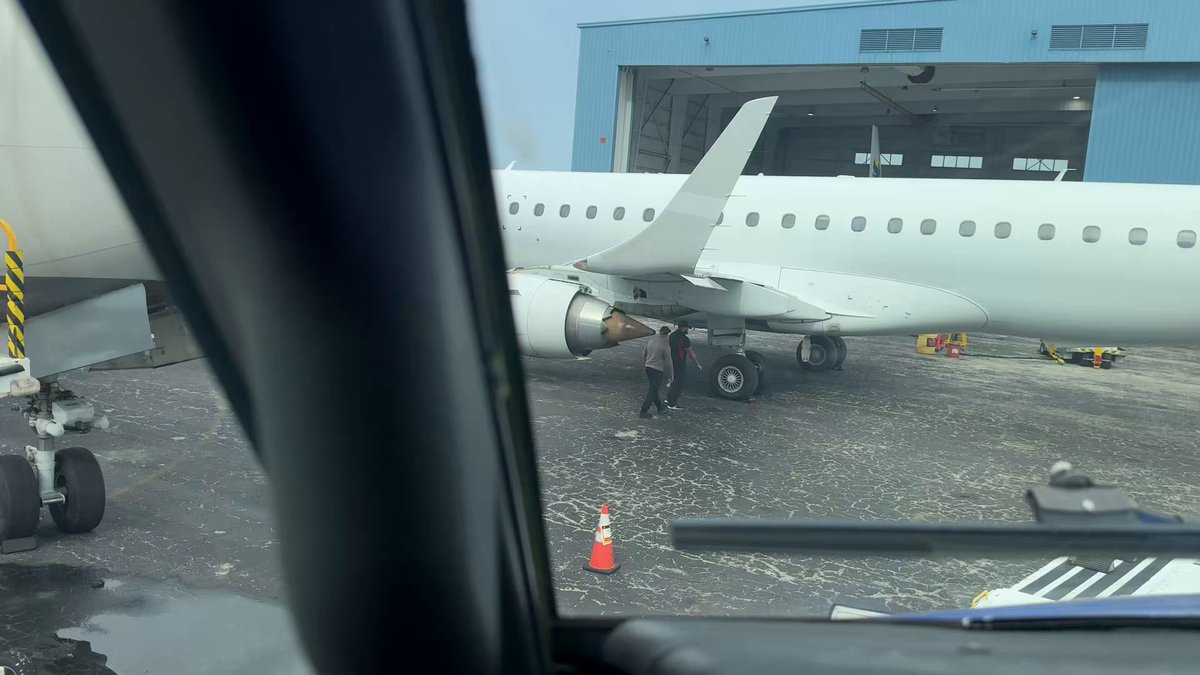
The #spirit birds are piling up here at the Pinal Airpark (KMZJ) - even more at GYR.

The #spirit birds are piling up here at the Pinal Airpark (KMZJ) - even more at GYR.

44,099 просмотров

As ferry pilots, we often fly 20-25 hours across long distances and frequently need to service the engine oil enroute. Especially so with the more tired engines. Turbine oil comes in cans, and since we have to go through security to get to a job, we don’t have tools. Fortunately the on-board crash axe is the PERFECT tool for the job. If you put one finger over the top hole, and move swiftly and smoothly into position and then release your finger - you can pretty easily hit the filler tube with little to no spillage 👍🏼 Unfortunately it’s not possible to do while also filming, so you’ll see no evidence of my (ahem) “perfect pour”

As ferry pilots, we often fly 20-25 hours across long distances and frequently need to service the engine oil enroute. Especially so with the more tired engines. Turbine oil comes in cans, and since we have to go through security to get to a job, we don’t have tools. Fortunately the on-board crash axe is the PERFECT tool for the job. If you put one finger over the top hole, and move swiftly and smoothly into position and then release your finger - you can pretty easily hit the filler tube with little to no spillage 👍🏼 Unfortunately it’s not possible to do while also filming, so you’ll see no evidence of my (ahem) “perfect pour”

752,036 просмотров

12 hours in with 4 to go. The sun will be up in an hour when they cut the corner over Cairo and cross the vast desert of Saudi Arabia before entering the gulf and descending into AUH. At this point we get a second wind and usually all tough it out in the cockpit for the last bit. #OMD275

12 hours in with 4 to go. The sun will be up in an hour when they cut the corner over Cairo and cross the vast desert of Saudi Arabia before entering the gulf and descending into AUH. At this point we get a second wind and usually all tough it out in the cockpit for the last bit. #OMD275

474,710 просмотров

No AC outlet in the cockpit on most AA 757s… so we improvise

No AC outlet in the cockpit on most AA 757s… so we improvise

185,899 просмотров

🧵 Like clouds, #contrails form when water (H2O) condenses on tiny particles in the air. 💦☁️ Gas turbine (jet) engine exhaust 💨contains particles (carbon/soot)🚬 from the combustion of fuel & oxygen. This exhaust plume is about 400C 🔥 rushing out into -50C❄️ ambient air…..

🧵 Like clouds, #contrails form when water (H2O) condenses on tiny particles in the air. 💦☁️ Gas turbine (jet) engine exhaust 💨contains particles (carbon/soot)🚬 from the combustion of fuel & oxygen. This exhaust plume is about 400C 🔥 rushing out into -50C❄️ ambient air…..

106,526 просмотров

The toaster is home #OMD1 Bob Allen

The toaster is home #OMD1 Bob Allen

38,536 просмотров

Just mind-blowingly clear out over Saudi Arabia today. Amazing views. #OMD405

Just mind-blowingly clear out over Saudi Arabia today. Amazing views. #OMD405

22,939 просмотров

Videos

SteveNomadic's profile picture

🚨Brand new A321 NEO factory delivery - quick tour

Steve Giordano

75,882 просмотров • 2 лет назад

SteveNomadic's profile picture

KEF Pizza 🍕

Steve Giordano

67,437 просмотров • 2 лет назад

Больше нет контента для загрузки