
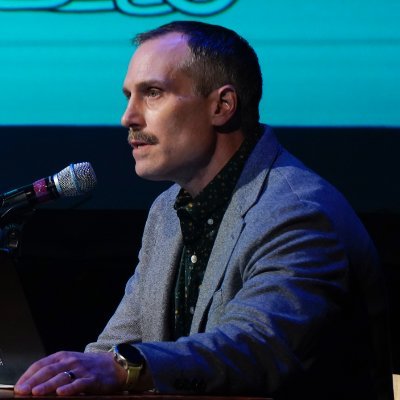
Stephen Lacey
@Stphn_Lacey • 32,052 subscribers
Co-founder and executive editor of Latitude Media. Covering the new frontiers of the energy transition. Co-host of Open Circuit.
Videos

For years, green groups have hailed electrification as a core climate solution. And now that we’re suddenly in the middle of historic load growth, they’re largely unprepared to meet the moment with big ideas. “We should all be embarrassed,” says Jane Flegal on this week's Open Circuit episode. For a long time, the climate community talked about aggressive electrification and the need to expand and modernize the grid. But now that future is arriving, the response has been fragmented or defensive. Some groups have leaned into affordability. Others are debating who should pay. And there are increasing calls for data center moratoriums. But there’s been very little thinking about how to plan and build at the scale this moment actually requires. "There's kind of like a rude awakening happening now, where everyone's like, ‘what was our plan to actually build?' she says. Jane has an idea. She proposes a new kind of grid infrastructure fund to bring hyperscalers, utilities, and policymakers into tighter coordination and to use demand as leverage to invest in the grid in a way that actually serves the public. Jigar Shah and I dug into the idea with her. We are mired in debates about grid-connected vs off-grid data centers, gas vs renewables, and who should pay for it all. But those debates are downstream of a bigger issue: we don’t have a system that can plan, coordinate, and build the grid for this era.
Stephen Lacey90,569 Aufrufe • vor 5 Monaten

Chip Roy lost his bid for Texas attorney general last night. He was one of the solar industry's biggest opponents in Congress. And a group of clean energy investors decided there had to be a consequence. They ran hundreds of thousands of dollars worth of attack ads calling him "not MAGA enough." The ads never mentioned clean energy once. They forced Roy into a runoff, which he lost yesterday. I recently sat down with one of the lead donors to the campaign: Chris Larsen, the billionaire co-founder of Ripple, who is now investing heavily in climate. Chris was one of the lead investors in crypto's Fairshake campaign that turned the industry from a regulatory target into one of the most feared political forces in Washington. It spent nearly half of all corporate political dollars in the 2024 cycle and won over 95% of the races it engaged in. He thinks clean energy can do the same thing. And he does not mince words about what that requires: "This is political warfare. You talk about what works. You talk about what's going to take out that person." I also sat down with his co-founder at the Clean Break Fund: Mike Brune, the longest-serving executive director of the Sierra Club. "The next time someone votes against the solar industry, there's a lot of money that could come after them in the next primary or the next election," Brune said. The clean energy industry has been historically focused on making the affirmative case by highlighting economic benefits, building coalitions, and telling a positive story. But Chris and Mike think that the industry needs to get more serious about delivering political consequences. "The worst thing you want in a political fight is for your opponents to think you're weak," Chris told the room. There's still a massive spending gap between renewables and fossil fuels. In 2024, the entire renewable energy industry donated $2.5 million to political campaigns. Oil and gas donated $75 million just to elect Trump. That gap won't close quickly, but it's the first sign that the industry is serious about taking the gloves off.
Stephen Lacey58,363 Aufrufe • vor 3 Monaten

If you care about AI/energy infrastructure, the best 32 minutes you'll spend today is on Shayle Kann's interview with Amin Vahdat, Google's head of AI infrastructure. We recorded this at our Transition-AI conference, and we just posted the Catalyst w/ Shayle Kann vid on youtube. Lots of really good insight here: They touch on scale. The conventional wisdom has been that bigger is better, and gigawatt campuses are the future. As we head into the inference era, Amin sees a medium number of medium-sized data centers, distributed for geographic latency, with a smaller number of large ones anchoring the fleet. Then there's the reliability question. The 4 or 5 nines requirement is disappearing. Google's internal customers are already choosing more capacity at lower reliability. Of course, that impacts everything downstream, from grid interconnection, to behind-the-meter buildout. On BTM power specifically, he says Google's preference is still grid-connected. Provisioning for reliability yourself is expensive. He sees it purely as a bridge play. Finally, the rise of purpose-built computing. For years, everyone built multi-purpose data centers when compute wasn't so costly. But now they are breaking it up into GPU buildings/TPU buildings based on workload. You give up fungibility, but you gain efficiency.
Stephen Lacey20,198 Aufrufe • vor 3 Monaten
Keine weiteren Inhalte verfügbar