A dramatic moment captures a space rock striking the... Moon’s surface, creating a powerful and sudden impact. The object hits at incredible speed, producing a brief flash and disturbing the lunar surface. With no atmosphere to slow it down, the Moon is constantly exposed to impacts from space rocks, which have shaped its cratered landscape over billions of years. Events like this are happening all the time, but capturing one clearly is rare. This moment gives a glimpse into the dynamic nature of space and how even the Moon continues to change. A brief impact, but a powerful reminder of cosmic activity. #nasa #space #spacexshow more

Physics & Astronomy Zone
497,081 views • 3 months ago
While tracking the Moon through a telescope in daylight,... an unusual object appeared near the lunar surface during a brief observation. The exact nature of the object cannot be determined from a single recording, and multiple explanations may exist, including a meteoroid, satellite transit, or imaging effect. Observations like this are a reminder of how dynamic the space environment can be. A brief passage near the Moon... captured in broad daylight. #moon #astronomy #telescope #space #nasashow more

Physics-astronomy
19,836 views • 1 month ago
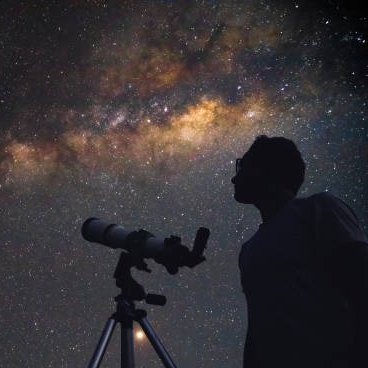
Space objects such as meteoroids and asteroids move across... the solar system and can collide with both Earth and the Moon. However, the Moon shows far more visible impact marks on its surface. One main reason is that Earth has a thick atmosphere that protects the planet. When many meteoroids enter Earth’s atmosphere, they burn up due to friction before they can reach the ground. This process creates the bright streaks of light we call shooting stars. The Moon, however, has almost no atmosphere, so incoming space rocks are not slowed down or burned up. They travel directly to the lunar surface and strike it at very high speed. Each collision creates an impact crater, throwing dust and rocks outward from the impact point. Over billions of years, thousands of these impacts have covered the Moon with craters. Unlike Earth, the Moon also has no wind, water, or weather to erase these craters, so they remain visible for millions or even billions of years. This is why the Moon looks heavily cratered when we observe it from Earth through telescopes.show more
The Astronomy Guy
17,473 views • 3 months ago
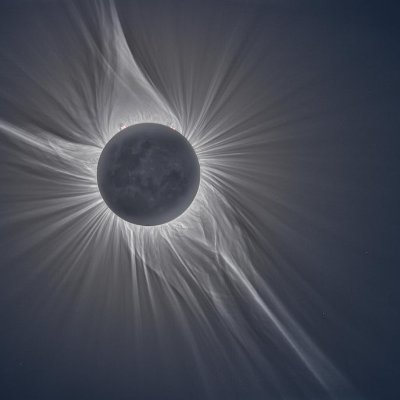
A unique moment of an asteroid impact on the... Moon during the day. Without an atmosphere on the Moon, the asteroid doesn't burn up, but rather slams into the surface at incredible speed, creating new craters—the very same "scars" that have shaped its appearance over billions of years. By ???show more
Black Hole
276,184 views • 9 months ago
When a meteoroid slams into the Moon at incredible... speed, nothing slows it down. In a split second, it unleashes a brilliant flash and violent explosion, blasting dust and rock outward to carve a circular crater. 💥 With no atmosphere, wind, or weather, these craters stay preserved for millions or billions of years. Some impacts are bright enough to be seen from Earth as quick flashes. Over time, these collisions have shaped the Moon into the heavily cratered world we see today — a silent record of its violent cosmic history 🌕show more

Rubi
30,697 views • 4 months ago
While observing the Moon in daylight, a telescope recorded... an unusual object approaching the lunar surface before a brief flash-like event was seen. The exact nature of the object and the event cannot be confirmed from a single observation. Possible explanations include a meteoroid, a satellite transit, or another transient phenomenon. Events like these highlight the challenges and excitement of lunar observation. A rare daytime sighting... captured against the bright lunar surface.show more
Physics-astronomy
75,424 views • 1 month ago
A giant canyon on the Sun On July 15,... a powerful flare occurred on the surface of the Sun, which briefly changed its structure and caused the release of hot plasma into space. As a result of this event, a plasma "scar" about 400,000 kilometers long appeared. This is approximately the distance from the Earth to the Moon. The height of the structure reaches 20,000 kilometers. All this was recorded with high accuracy by NASA's Solar Dynamics Observatory (SDO).show more
Black Hole
16,016 views • 1 year ago
During a Grand Solar Minimum and a geomagnetic excursion,... Earth becomes the dangerous place. A weak magnetic field means unstable radiation belts, ionospheric chaos, satellite failure, GPS collapse, and increased cosmic radiation at the surface. The Moon doesn’t suffer from this chaos. It has no magnetosphere to collapse, no ionosphere to destabilize, and radiation in deep space is harsh but stable and predictable. With just a few meters of lunar regolith, underground bases on the Moon, especially on the far side, become better shielded, more reliable, and more survivable than Earth orbit or even Earth’s surface. That’s why the Moon isn’t a distraction. It’s the logical place to ride out what’s coming.show more

Open Minded Approach
31,564 views • 5 months ago
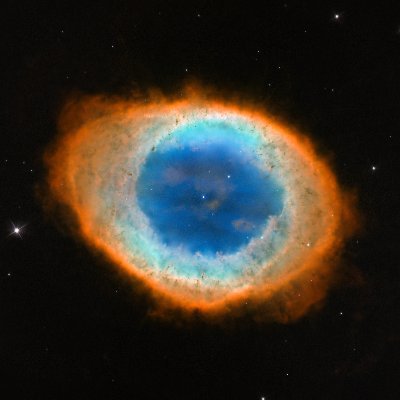
Did you know the James Webb Space Telescope isn’t... orbiting Earth at all? The James Webb Space Telescope operates near the Sun–Earth L2 point, about 1.5 million km from Earth. From there, the Sun, Earth, and Moon stay on the same side of the telescope, allowing its giant sunshield to block their heat and light at the same time. That keeps Webb cold and stable enough to detect extremely faint infrared signals from deep space. Because of this, Webb can peer through clouds of cosmic dust and observe galaxies whose light has traveled for more than 13 billion years. Every image it captures is not just a view across space, but a look back into the early history of the universe.show more
Cosmos Archive
22,557 views • 2 months ago
Artemis II Glides Past the Moon A stunning view... from deep space shows Orion — the spacecraft of NASA’s Artemis II mission — gracefully sailing near the cratered lunar surface. The ancient, rugged Moon fills the frame as humanity’s first crewed voyage beyond low-Earth orbit in over 50 years unfolds in real time.This historic flight carried four astronauts — Reid Wiseman, Victor Glover, Christina Koch, and Jeremy Hansen — on a daring loop around the Moon, pushing farther into space than any humans since the Apollo era. The mission successfully tested Orion’s systems for future lunar landings and beyond.The breathtaking contrast between cutting-edge human technology and the timeless, airless beauty of the lunar landscape captures the spirit of exploration: bold curiosity, technical mastery, and our enduring drive to reach new frontiers. Note: This is a creative or illustrative depiction of the scene. Actual mission imagery from Artemis II shows spectacular views of both the near and far side of the Moon captured by the crew.show more
Black Hole
27,141 views • 3 months ago
Bounce, bounce, baby!😎 Jumping around on the moon not... only sounds fun, it could also prove to be a great addition to a lunar workout too🤸🌕 European Space Agency's Space Medicine team is studying the science of moon hopping & its impact on human muscle & bone health👉show more

Human Spaceflight
102,113 views • 3 years ago
How is it possible that a black hole’s surface... tells us about its interior volume? This finding is a critical clue towards our understanding of the quantum nature of space-time.show more

Quanta Magazine
19,401 views • 1 month ago
The Sabotaging Practice of Over Supply and Sameness in... the NFT Space. The current zeitgeist of the NFT space is that the same artists are doing the same kind of work five times a year, with project after project leaving a trail of disappointment and discontent among collectors and all of us watching in disbelief as huge resources are extracted from the space over work that feels like it could be left as an "artist study." I understand that you can do what you want with your money as collectors, but we are killing the whole space with this incestuous practice. No artist is that prolific to be able to do 5 collections of 100+ pieces each every year and actually deliver innovation and some kind of creative evolution. Of course, they can pretend play that the work has something new, but there is no precedent nor proof that that has ever happened in the speed that it happens in the NFT space. Again, people are free to through away their resources on whatever they want but with this way of doing things, we more and more are going to start seeing the consequences. Oh! There are consequences? Yes. Maybe unintended, but there are. Let's see. Let's start with the loss of belief in the NFT space as somewhere where emerging artists can come and find support for their experiments. Why even bother to bring experiments, innovation, and new ways to think of art on the blockchain if the same people have all the collectors hypnotized with their magical flutes? Why even try to come to a space where taking risks and challenging the status quo (the mission of art!!!) is overlooked? This makes the NFT space a social club and not a space for art. I guess it is fine, but IMO it is a recipe for disaster. New collectors stay away because the art will slowly but surely become stale and un-challenging. Why even bother to come and see what is happening here if you can't, as a collector, see new weird and up-and-coming artists? The amount of noise emitted by the same artists doing the same art over and over, drowns out any new voices. Again. A recipe for disaster. The NFT space is becoming a space of disappointment and doubt. We think that collections going to zero one after the other, over and over, is not damaging? I feel we are kidding ourselves. Disappointment piles up, and again, the people who will hurt are the emerging artists, the new blood, the ones who are willing to risk the most and, in return, put fire in this cold space of sameness. I love this space—don't get me wrong—it has changed my life, and I believe it has a ton of potential, but things need to change for it to become a beacon of light in art. But we need to support new voices. We need to support new ideas. The challenge is huge. I hope to contribute all I can to this change. I hope more and more see how exciting it is to go out and try to discover what else is out there and move this space forward. But again, I understand the leaps of faith needed, but if there is a space that is based on that, it's the NFT space...so there is hope. We will see. 📺by Boldtronshow more

alejandro cartagena
98,261 views • 2 years ago
What’s happening in the video? On the morning... of December 15, 2025, Japanese astrophotographer Daichi Fujii captured something incredible: three bright flashes on the Moon. 🌕✨ The impacts happened at 4:35:55, 4:58:20, and 5:33:08 (Dec 15, 2025) — and observers in other countries reported seeing the flashes too. What caused them? Meteoroids. Three space rocks, each about 1 meter across, likely slammed into the lunar surface 20–30 minutes apart. They were probably part of the Geminid meteor shower. Around that time, Earth was moving through a stream of dust released by the asteroid (3200) Phaethon. Those particles hit Earth’s atmosphere at over 30 km/s, giving us up to ~120 shooting stars per hour. 🌠 But the Moon has no atmosphere — so meteoroids don’t burn up. They hit the ground directly… and we can sometimes see the impact as a flash. 💥 #Moon #astronomy #space #lunarimpact #StarWalkshow more

Star Walk
14,178 views • 6 months ago
On November 27 and 28, a series of powerful... solar flares swept across the Sun’s surface, creating this coronal hole. This phenomenon is a temporary region of relatively cool, less dense plasma in the solar corona where the Sun's magnetic field extends into interplanetary space as an open field. The open magnetic field of a coronal hole allows solar wind to escape into space at a much quicker rate, leading to increased chances of geomagnetic storms upon colliding with Earth’s magnetosphere.show more

Massimo
728,122 views • 2 years ago
Tomorrow is going to be a historic day (June... 12, 2026) The world's most ambitious company is going public: SpaceX For the first time, everyday investors have a chance to own a piece of the company that changed the trajectory of space forever After years of building the future of space travel, reusable rockets, Starlink, and the path to Mars, SpaceX is stepping into the public markets This is a company that has completely redefined what’s possible in space, and now everyday investors can be part of it From Starship to Starlink to the future of humanity's multiplanetary life, SpaceX is the key that unlocks the door Tomorrow marks a new chaptershow more

X Freeze
62,394 views • 1 month ago
Earth + Theia = MOON Once upon a time... — about 4.5 billion years ago — Earth wasn't alone. A rogue planet, Theia, nearly the size of Mars, smashed into it at full speed. The result? A fiery collision that could have created the Moon in just a FEW HOURS, not the millennia previously thought. NASA supercomputer simulations show that the Moon wasn't pieced together from space debris, but was instantly born from molten fragments of Earth and Theia thrown into orbit. That's why the Moon is so similar to Earth — it's not just a satellite, it's a sister.show more
Black Hole
26,433 views • 1 year ago
Crimson Desert has this surface shader.. It has a... transformative effect on the game visuals and it's seemingly applied to every object in the game. It doesn't look like tessellation, it appears to have artifacts from a screen-space effect. I believe they are using the height maps from every PBR material in the game to create some sort of screen space displacement mapping.show more

FR3NKD
203,321 views • 3 months ago
On March 6, 2015, astronomers reported observing a supernova... in a distant spiral galaxy. Although the explosion itself occurred millions of years earlier, the light carrying that event had only just reached Earth after traveling across intergalactic space. This delay is not unusual but a fundamental feature of the universe, where distance and the finite speed of light turn every observation into a glimpse of the past. In this way, telescopes function not just as instruments of sight, but as time machines, revealing events long after they have concluded. Each distant supernova reminds us that the cosmos we observe is a layered history, unfolding to us not as it is now, but as it once was across unimaginable spans of space and time. Credit: NASA/ESA Hubble Space Telescopeshow more
Cosmos Archive
23,079 views • 3 months ago
🚨 NEWS FROM NASA In a bold and decisive... move, NASA Administrator Jared Isaacman just announced a $20 billion plan to build America’s permanent base on the Moon — and they’re doing it in just 7 years. Today, NASA officially confirmed it is cancelling plans for the Lunar Gateway — the small space station that was supposed to orbit the Moon as a waypoint for astronauts. Instead, those components and resources will be repurposed directly for the surface base, accelerating humanity’s return to sustained lunar presence. The goal is clear — move beyond short visits and flags-and-footprints missions. NASA wants a real, long-term foothold on the Moon: habitats, power systems, rovers, scientific labs, and infrastructure that can support crews for months at a time. This base will serve as the foundation for deeper space exploration, resource utilization (like mining lunar ice for fuel and water), and eventually — Mars. The $20 billion investment over the next seven years will reshape major parts of the Artemis program. It comes with real urgency too — China is pushing hard toward its own crewed Moon landing by 2030, and the U.S. is determined to lead, not follow. This isn’t just about science. · A permanent lunar base means:Testing technologies for Mars missions in a real off-world environment · Developing in-situ resource utilization (turning Moon dirt into rocket fuel and oxygen) · Opening the door to a true cislunar economy · Inspiring the next generation of engineers, scientists, and explorers Private industry will play a massive role, as always — with contractors already building key hardware now being redirected. This is the kind of ambitious, focused leadership the space program has needed. From the first boots on the Moon in 1969 to building a thriving outpost there by the early 2030s — what an incredible leap forward. Significanly, the Moon isn’t just a destination anymore: it’s becoming home base for humanity’s expansion into the Solar System.show more
Massimo
241,646 views • 4 months ago
While observing the Moon, a telescope captured a fast-moving... object briefly passing near the lunar surface. The event lasted only moments, making it difficult to identify the object with certainty. Possible explanations include a meteoroid, satellite transit, or another object crossing the observer's line of sight. A split-second observation... and another fascinating moment in lunar astronomy.show more
Physics & Astronomy Zone
359,912 views • 1 month ago