A dramatic moment captures an asteroid striking the Moon’s... surface, creating a sudden and powerful impact. The object hits at incredible speed, producing a brief flash against the silent lunar landscape. With no atmosphere to slow incoming objects, the Moon experiences direct impacts that shape its cratered surface over time. These events happen more often than we realize, but capturing one clearly is rare. This moment highlights the dynamic nature of space, where even the Moon continues to change through constant impacts. A split-second collision… but a powerful cosmic event.show more
The Astronomy Guy
30,228 次观看 • 2 个月前
A dramatic moment captures a space rock striking the... Moon’s surface, creating a powerful and sudden impact. The object hits at incredible speed, producing a brief flash and disturbing the lunar surface. With no atmosphere to slow it down, the Moon is constantly exposed to impacts from space rocks, which have shaped its cratered landscape over billions of years. Events like this are happening all the time, but capturing one clearly is rare. This moment gives a glimpse into the dynamic nature of space and how even the Moon continues to change. A brief impact, but a powerful reminder of cosmic activity. #nasa #space #spacexshow more
Amazing Physics
84,839 次观看 • 2 个月前
A dramatic moment captures a space rock striking the... Moon’s surface, creating a powerful and sudden impact. The object hits at incredible speed, producing a brief flash and disturbing the lunar surface. With no atmosphere to slow it down, the Moon is constantly exposed to impacts from space rocks, which have shaped its cratered landscape over billions of years. Events like this are happening all the time, but capturing one clearly is rare. This moment gives a glimpse into the dynamic nature of space and how even the Moon continues to change. A brief impact, but a powerful reminder of cosmic activity. #nasa #space #spacexshow more

Physics & Astronomy Zone
496,973 次观看 • 2 个月前
A unique moment of an asteroid impact on the... Moon during the day. Without an atmosphere on the Moon, the asteroid doesn't burn up, but rather slams into the surface at incredible speed, creating new craters—the very same "scars" that have shaped its appearance over billions of years. By ???show more
Black Hole
276,184 次观看 • 9 个月前
Space objects such as meteoroids and asteroids move across... the solar system and can collide with both Earth and the Moon. However, the Moon shows far more visible impact marks on its surface. One main reason is that Earth has a thick atmosphere that protects the planet. When many meteoroids enter Earth’s atmosphere, they burn up due to friction before they can reach the ground. This process creates the bright streaks of light we call shooting stars. The Moon, however, has almost no atmosphere, so incoming space rocks are not slowed down or burned up. They travel directly to the lunar surface and strike it at very high speed. Each collision creates an impact crater, throwing dust and rocks outward from the impact point. Over billions of years, thousands of these impacts have covered the Moon with craters. Unlike Earth, the Moon also has no wind, water, or weather to erase these craters, so they remain visible for millions or even billions of years. This is why the Moon looks heavily cratered when we observe it from Earth through telescopes.show more
The Astronomy Guy
17,473 次观看 • 3 个月前
When a meteoroid slams into the Moon at incredible... speed, nothing slows it down. In a split second, it unleashes a brilliant flash and violent explosion, blasting dust and rock outward to carve a circular crater. 💥 With no atmosphere, wind, or weather, these craters stay preserved for millions or billions of years. Some impacts are bright enough to be seen from Earth as quick flashes. Over time, these collisions have shaped the Moon into the heavily cratered world we see today — a silent record of its violent cosmic history 🌕show more

Rubi
30,697 次观看 • 3 个月前
While observing the Moon, a telescope captured a fast-moving... object briefly passing near the lunar surface. The event lasted only moments, making it difficult to identify the object with certainty. Possible explanations include a meteoroid, satellite transit, or another object crossing the observer's line of sight. A split-second observation... and another fascinating moment in lunar astronomy.show more
Physics & Astronomy Zone
359,850 次观看 • 1 个月前
During a Grand Solar Minimum and a geomagnetic excursion,... Earth becomes the dangerous place. A weak magnetic field means unstable radiation belts, ionospheric chaos, satellite failure, GPS collapse, and increased cosmic radiation at the surface. The Moon doesn’t suffer from this chaos. It has no magnetosphere to collapse, no ionosphere to destabilize, and radiation in deep space is harsh but stable and predictable. With just a few meters of lunar regolith, underground bases on the Moon, especially on the far side, become better shielded, more reliable, and more survivable than Earth orbit or even Earth’s surface. That’s why the Moon isn’t a distraction. It’s the logical place to ride out what’s coming.show more

Open Minded Approach
31,564 次观看 • 5 个月前
What’s happening in the video? On the morning... of December 15, 2025, Japanese astrophotographer Daichi Fujii captured something incredible: three bright flashes on the Moon. 🌕✨ The impacts happened at 4:35:55, 4:58:20, and 5:33:08 (Dec 15, 2025) — and observers in other countries reported seeing the flashes too. What caused them? Meteoroids. Three space rocks, each about 1 meter across, likely slammed into the lunar surface 20–30 minutes apart. They were probably part of the Geminid meteor shower. Around that time, Earth was moving through a stream of dust released by the asteroid (3200) Phaethon. Those particles hit Earth’s atmosphere at over 30 km/s, giving us up to ~120 shooting stars per hour. 🌠 But the Moon has no atmosphere — so meteoroids don’t burn up. They hit the ground directly… and we can sometimes see the impact as a flash. 💥 #Moon #astronomy #space #lunarimpact #StarWalkshow more
Star Walk
14,178 次观看 • 6 个月前
ASTEROID 2024 YR4 MAY HIT THE MOON—AND SCIENTISTS ARE... HOPING IT DOES A once-alarming asteroid is now offering a unique lunar science opportunity. Asteroid 2024 YR4, once feared to hit Earth, now poses no threat to our planet—but it might collide with the Moon. The 197-foot-wide space rock, tracked by the James Webb Space Telescope, now has a 2% chance of impacting the Moon, according to new data. Scientists say the impact would be harmless to Earth but groundbreaking for research. Julia de León, planetary scientist: "Honestly, I hope it does." If it strikes, it would mark the first time a 60-meter object has been observed slamming into the Moon live. Source: NASA Asteroid Watchshow more

Mario Nawfal
175,862 次观看 • 1 年前
Legendary Apophis: No Collision Threat, But Expect a Space... Show on April 13, 2029! On Friday, April 13, 2029, a 340-meter asteroid that has already acquired legendary status, Apophis, will fly dangerously close to Earth. For many years, scientists have been looking for an answer to the main question: can a destructive collision occur? Now we know for sure: no. Apophis will fly just 31,000 kilometers above the surface of our planet and will be clearly visible to residents of the eastern hemisphere even through small binoculars. At the moment of maximum brightness, it can reach a stellar magnitude of 3-4 and become visible to the naked eye.show more
Black Hole
19,596 次观看 • 1 年前
Taylor Approximation ✍️ It shows a mathematical "best guess"... evolving to match a complex 3D shape by adding layers of detail one step at a time. The purple surface is the original goal, while the red grid represents a polynomial approximation anchored at the center point. At first, the red surface can only mimic the very middle of the shape. As the calculation adds more terms, visualized by the red grid rippling and shifting, the approximation "learns" how to curve and bend to match the target more accurately. This is a visual demonstration of how math can break down a detailed, wavy landscape into simpler instructions. When these instructions are stacked together, they recreate the entire surface with incredible precision. Video: mathwithmuzaashow more

ScieVision
11,384 次观看 • 5 个月前
Artemis II Glides Past the Moon A stunning view... from deep space shows Orion — the spacecraft of NASA’s Artemis II mission — gracefully sailing near the cratered lunar surface. The ancient, rugged Moon fills the frame as humanity’s first crewed voyage beyond low-Earth orbit in over 50 years unfolds in real time.This historic flight carried four astronauts — Reid Wiseman, Victor Glover, Christina Koch, and Jeremy Hansen — on a daring loop around the Moon, pushing farther into space than any humans since the Apollo era. The mission successfully tested Orion’s systems for future lunar landings and beyond.The breathtaking contrast between cutting-edge human technology and the timeless, airless beauty of the lunar landscape captures the spirit of exploration: bold curiosity, technical mastery, and our enduring drive to reach new frontiers. Note: This is a creative or illustrative depiction of the scene. Actual mission imagery from Artemis II shows spectacular views of both the near and far side of the Moon captured by the crew.show more
Black Hole
27,141 次观看 • 3 个月前
A giant canyon on the Sun On July 15,... a powerful flare occurred on the surface of the Sun, which briefly changed its structure and caused the release of hot plasma into space. As a result of this event, a plasma "scar" about 400,000 kilometers long appeared. This is approximately the distance from the Earth to the Moon. The height of the structure reaches 20,000 kilometers. All this was recorded with high accuracy by NASA's Solar Dynamics Observatory (SDO).show more
Black Hole
15,948 次观看 • 1 年前
And finally....its NOT an Asteroid. Yes.... They are here......... . A mysterious interstellar object, 31/ATLAS, is racing through our solar system and will reach its closest point to the sun October 29. At the same time, NASA is preparing the Artemis II mission for 2026, and aiming to return humans to the Moon by 2027. But the question remains… Is NASA showing us everything? Or is something being kept in the shadows of space?show more

முரளி
90,545 次观看 • 8 个月前
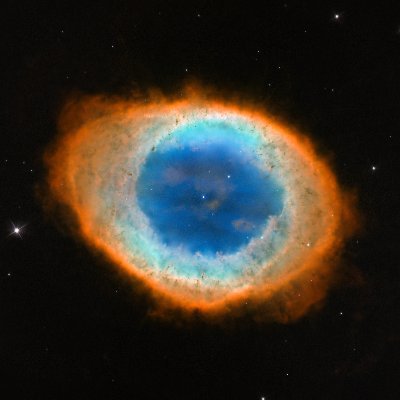
On January 14, 2005, the Huygens probe descending through... Titan’s atmosphere revealed one of the rarest views in space exploration. From Saturn’s moon Titan, Earth and the Moon crossed in front of the Sun as tiny shadows nearly a billion miles away. What makes it even more incredible is how rare the alignment was. A perfectly central Earth and Moon transit from Saturn’s system happens only about twice every 1,000 years. From that distance, our entire planet looked small enough to disappear into the sunlight.show more
Cosmos Archive
35,199 次观看 • 1 个月前
A dramatic moment unfolds along the riverbank as a... powerful Plains Zebra turns aggressive toward a vulnerable Wildebeest Calf. In the wild, survival often brings unexpected and brutal encounters. As the young calf struggles near the water’s edge, the zebra suddenly lashes out with incredible force. Using its strong hind legs, the zebra delivers a series of powerful kicks, striking the small calf and knocking it to the ground. Although zebras are primarily herbivores, they can be extremely territorial and defensive—especially around water sources where many animals gather. In these crowded areas, tension between species can escalate quickly. The zebra may perceive the calf as an intrusion or react instinctively to protect its space. The Wildebeest calf, still inexperienced and vulnerable, stands little chance against the zebra’s muscular build and sharp hooves. Each kick from the zebra is powerful enough to injure or even kill. Scenes like this remind us that life in the African wilderness is not only about predators and prey. Competition, instinct, and survival pressures can sometimes drive even plant-eating animals to extreme aggression. It is a stark and raw example of the unpredictable reality of life in the wild—where every moment can turn into a fight for survival. 🦓🌍show more

Nature Chapter
22,322 次观看 • 3 个月前
El Niño is born! Destined to be the biggest... in 150 years +?? NOAA declares: El Niño Advisory This morning conditions in the Eastern Pacific met the criteria for El Niño. This means Sea Surface Temps reached a certain level above normal, and the ocean and atmosphere “coupled” meaning they are now working in tandem to produce impacts. This event is widely advertised by models to be potentially the strongest on record. El Niño takes very hot water stored in the deep tropical west Pacific, pushing it east and up to the surface, lofting that heat into the atmosphere, which supercharges weather events and throws the climate off-kilter. This typical means more intense heatwaves & floods, but also it restrains the Atlantic hurricane season. So its impacts are both good and bad. One thing seems virtually certain: the heat released into the atmosphere will make for some unprecedented events through 2027, and on top of longterm warming, the hottest global temperatures in many tens of 1000s of years. #ElNino #florida #storm #heatwave #flood #droughtshow more

Jeff Berardelli
166,348 次观看 • 1 个月前
On November 27 and 28, a series of powerful... solar flares swept across the Sun’s surface, creating this coronal hole. This phenomenon is a temporary region of relatively cool, less dense plasma in the solar corona where the Sun's magnetic field extends into interplanetary space as an open field. The open magnetic field of a coronal hole allows solar wind to escape into space at a much quicker rate, leading to increased chances of geomagnetic storms upon colliding with Earth’s magnetosphere.show more

Massimo
728,122 次观看 • 2 年前
What would happen to your body in the Sun?... The Sun would obviously incinerate you instantly, since its surface temperature is 5,499 °C (although the Sun doesn’t actually have a surface — that’s what they call the layer between its core and corona). However, “instantly” is a relative term. Physicist Randall Munro, a former NASA employee, believes that if you were teleported to the Sun for one nanosecond (a billionth of a second) and then returned, you would remain unharmed. Your skin would receive five orders of magnitude less heat than from touching a butane torch for a second, so you wouldn’t even feel anything. But if you were teleported closer to the core, where the temperature reaches 14,999,727 °C, you would evaporate in one femtosecond (one quadrillionth of a second).show more
Black Hole
16,808 次观看 • 1 年前