A negative polarity trans-equatorial coronal hole is visible on... the Sun and will connect to Earth with its magnetic field and high-speed solar wind in ~5-6 days. The last geoeffective coronal hole high-speed-stream impact we had perfectly lined up with the Venezuela earthquake doublet (M7.2 & M7.2) and the M7.2 earthquake that hit Japan on June 24th... With the last 2 weeks being dominated by intense solar flare activity, Earth's ionosphere and global electric circuit is already very highly charged, which suggests that this CH HSS impact could act as a stronger trigger than normal upon critically stressed faults. That said, the coronal hole isn't very wide, so Earth won't be embedded in its solar wind for long. Initial forecast range for a significant bump in global seismic activity from this would be July 9-14th.show more

Stefan Burns
39,582 Aufrufe • vor 1 Monat
In three days starting around July 9th the solar... wind will intensify once again from this coronal hole high-speed-stream impact. We consistently observe, especially with this solar cycle, that geoeffective coronal hole connections result in bursts of high-magnitude seismic activity globally in the days following...show more
Stefan Burns
29,361 Aufrufe • vor 1 Monat
A series of reoccurring coronal holes are starting their... rotation through Earth-center, and the trans-equatorial coronal hole will be geoeffective in ~5 days. Earth was in the high-speed solar wind from this coronal hole after a G2 geomagnetic storm for the M7.8 Philippines EQ.show more
Stefan Burns
17,080 Aufrufe • vor 1 Monat
Here it comes... A reoccurring negative polarity coronal hole... structure is soon to go geoeffective and hit Earth with its high-speed-stream. This follows after a sequence of M-flares have charged up the ionosphere, and a minor CME impact has just come in. Yeehaw!show more
Stefan Burns
849,141 Aufrufe • vor 1 Monat
A large trans-equatorial hole (dark region) is on the... Sun and will blast Earth with high-speed solar wind after connecting to our planet with its magnetic field. Additionally some interesting activity from a sunspot group (4334) just below the coronal hole. Two big shockwave explosions but no CMEs launched outwards according to coronagraph imagery.show more
Stefan Burns
20,078 Aufrufe • vor 7 Monaten
A large coronal hole located in the northern hemisphere... of the Sun has rotated into view. It will be Earth center and then geoeffective in 4 and then ~6 days respectfully. Last time it was located in there ~28 days ago, we observed a burst of global seismic activity (M7.5, M7.3, M7.4) in a short time frame, and there is quite a track record of events linking large Earth-facing coronal holes and high-magnitude earthquakes together. Additionally this coronal hole is a negative polarity meaning its magnetic field easily connects to Earth's magnetic field. This is another important variable. This coronal hole's high-speed-stream will be geoeffective when we're in a convergence of critical planetary geometry (E-Me-Ma-Sa, Me-Sun-Ju, E-V-U, V-Sa-Ne) April 20th (+- 3 days each side) and Comet C/2025 R3 PANSTARRS will be just outside Mercury's orbit for its closest approach to the Sun (perihelion) on April 19th during this convergence. All of these factors together along with numerous outer planet geocentric transits happening as well suggest there's a much higher chance than normal of significant Earth events occurring around this time ~04/20/2026.show more
Stefan Burns
15,447 Aufrufe • vor 3 Monaten
The Earth's magnetic field protects us not only from... solar flares but also from cosmic radiation. When the Sun enters a Grand Solar Minimum, its magnetic field weakens for a long period. This lets more cosmic radiation into the Solar System, and this directly impacts the climate on Earth and increases volcanic activity. The last Little Ice Age occurred during a Grand Solar Minimum. But the coming Grand Solar Minimum is going to hit harder because the Earth's magnetic field is at least 30% weaker and, with the ongoing geomagnetic excursion, is continuing to weaken. This will let in more cosmic radiation, which will directly cause mutations, pandemics, cooling, crop failures, and even crustal displacement. Since the advent of modern technology, we haven't experienced either a Grand Solar Minimum or a geomagnetic excursion, and we are due for both.show more

Open Minded Approach
91,880 Aufrufe • vor 1 Monat
BREAKING – A significant Earth-directed solar flare and associated... coronal mass ejection (CME) just occurred on Friday evening. There is an increasing chance of geomagnetic storms and the potential for a display of the aurora borealis (northern lights) sometime Sunday night into Monday. A "solar flare" is a flash of light and radiation flickering into space. They emanate from sunspots – bruise-like discolorations on the surface of the sun that throb and pulsate with energy. That just occurred associated with sunspot #4100. The flare was a magnitude M8.2; M is one step below X, the highest category. An M8.2 is very close to X-class status. It was followed by a "full halo CME", or coronal mass ejection. That's an explosion of magnetism and solar material that surfs a shockwave through space. We call it a "full halo" because – when it's pointed directly at Earth – it looks like a halo. When CMEs, or coronal mass ejections, arrive at Earth, the electromagnetic energy is absorbed and dissipated by Earth's magnetic field. That energy is transformed into visible light – the aurora. I'll have updates once more information becomes available.show more

Matthew Cappucci
37,948 Aufrufe • vor 1 Jahr
.NASA, NOAA , and the Solar Cycle Prediction Panel... have officially declared that the solar maximum has begun. This marks the peak of the Sun's 11-year activity cycle, characterized by frequent sunspots, solar flares, and coronal mass ejections. The solar maximum brings increased solar activity, which can cause geomagnetic storms affecting Earth’s power grids, communications, and satellites but also leads to beautiful auroras. Scientists cannot predict the exact timing or strength of solar cycles with precision. The Sun's magnetic poles will eventually switch places, and the activity will decrease, but the exact peak of this cycle may not be known for months or years. Although this cycle is stronger than initial predictions, it remains within normal limits. The most powerful flare of this cycle occurred on October 4, 2024, but wasn't the strongest ever recorded. 👉show more

Erika
54,749 Aufrufe • vor 1 Jahr
The majority of people are not even aware that... the Earth's magnetic field is weakening, and that everything started around 1850, coinciding with changes connected to the magnetic pole shift. The magnetic field protects us from solar flares, but also from cosmic radiation, especially during periods of Grand Solar Minimum when solar activity is reduced and the sun's magnetic field is weaker. The weakening of the Earth's magnetic field coincides with climate change, but it is not connected to human activity. This climate change causes global cooling. What occurred during the Bronze Age Collapse around 1200 BC is going to happen again in the near future, but it will be even worse. We are about to enter a Grand Solar Minimum, the first since the Little Ice Age, but this time the magnetic field will be much weaker. Do you know that elites are building doomsday bunkers?show more
Open Minded Approach
178,778 Aufrufe • vor 1 Monat
BOOMSHAKALAKA Another successful long-range #spaceweather forecast completed ✅ On... July 30th a 1.9 m-class solar flare exploded from AR4492 with an unusually Earth-directed coronal mass ejection and triggered a S1 radiation storm in < 2 hours (which we are still in), the first S1 radiation storm since May 26th, one day before I issued my long-range #swx forecast (synchronicity) for this timeframe of end of July/Early August based on precisely geometric heliocentric planetary geometry. There is also strong evidence this was jointly triggered by a sundiving comet to that sector of the Sun under the influence of a Jupiter Cazimi. Considering how the planets and comets how a notable influence over solar activity, the choice is to investigate into the phenomenon further or be left behind as science advances. No other "official" agency or outside commentator that I know of provided any guidance or was so precise.show more
Stefan Burns
26,816 Aufrufe • vor 6 Tagen
🚨 THE SUN JUST PUNCHED EARTH IN THE MAGNETIC... FACE - AND WE LOVED IT On November 11, the Sun fired off an X5.1 solar flare - the biggest of 2025 - and hurled a plasma freight train at Earth at 600+ km/s. Twenty-four hours later, it slammed into our magnetosphere like a cosmic battering ram. NASA’s model shows it perfectly: Earth, a tiny blue marble at the center… Red zones whipping past like solar shrapnel… Magnetic field lines bending, twisting, screaming under the impact. This is what a geomagnetic storm looks like when the universe decides to remind you who’s in charge. The fallout? Satellites jitter. GPS drifts. HF comms get scrambled. And the sky throws a rave - auroras blooming far south of where they have any business being. With the Sun climbing toward peak activity, this won’t be the last hit. Expect more storms, more skyfire, and at least one “Why is the aurora over Chicago?” moment before 2026 is done. Source: Black Holeshow more

Mario Nawfal
613,135 Aufrufe • vor 8 Monaten
🚨 PARKER SOLAR PROBE JUST FOUND HIGH-ENERGY PARTICLES NEAR... THE SUN THAT NO MODEL PREDICTED AND WE DON’T KNOW HOW THEY GOT SO ENERGETIC. During its close passes through the solar corona, NASA’s Parker Solar Probe detected protons accelerated to energies around 400 keV roughly 1,000 times higher than current models of magnetic reconnection at the heliospheric current sheet could explain. The particles appear to be trapped and energized inside magnetic islands that form and merge during reconnection events at the current sheet (the vast surface where the Sun’s magnetic field flips polarity). This mechanism was not expected to produce such high energies so close to the Sun. Why this matters: • It reveals a previously unknown or underestimated source of energetic particles right in the solar corona • Existing models of solar energetic particles have focused mainly on shocks from coronal mass ejections — this suggests reconnection can also be a powerful accelerator • The same process may be contributing more to coronal heating than previously calculated • It has implications for space weather forecasting, since these particles can affect spacecraft and astronauts The deeper implication: Parker is showing us that the physics of the near-Sun environment is more energetic and complex than our models assumed. Magnetic reconnection long known as an important process appears capable of accelerating particles to surprisingly high energies through the merging of magnetic islands. This doesn’t just tweak our understanding of the Sun; it may force revisions in how we model particle acceleration across many astrophysical environments. We’re still in the early stages of understanding what Parker is revealing, but it’s already clear that the corona is more violent and dynamic than we thought. How do you think this discovery might change our models of space weather or solar physics in the coming years? Follow for more updates from Parker Solar Probe and the evolving picture of our Sun.show more

TheNewPhysics
16,192 Aufrufe • vor 1 Monat
*SEVERE geomagnetic storm possible with U.S. aurora borealis display*... *Northern lights possible at mid-latitudes early Sunday morning or Sunday night* *Specifics TBD – map coming later today* On Friday evening Eastern time, a major solar flare occurred from sunspot #4100. A sunspot is a bruise-like discoloration on the sun that throbs and pulsates with energy. Following the solar flare, which is a flash of light and radiation, a significant CME — or coronal mass ejection — was hurled directly toward Earth. Imagine a shockwave of magnetism and high-energy particles rippling through space like an interstellar tsunami. It’s heading for us at speeds around 1,200 miles per second — that’s very fast! We know it’s Earth-directed because our sensors indicate a “full halo” CME. See the solar material appearing to fan out in all directions? That’s an indicator it’s Earth-bound. It’s like if a train is coming right at you — you’d only see the train getting bigger. Once this electromagnetic shockwave reaches Earth, the energy will be absorbed and dissipated by our magnetic field. It will be transformed into visible light — the aurora. Since there’s a LOT of energy, we’ll probably get the aurora borealis (the northern lights) down to the mid latitudes. This could mean parts of the central United States, the Midwest, the Mid-Atlantic and perhaps as far south as northern California. There’s even a chance that parts of the Mid-South could see the aurora IF a direct impact occurs and the orientation of Earth’s magnetic field cooperates. Scientists at the Space Weather Prediction Center in Boulder, Colorado are working to iron that out.show more
Matthew Cappucci
10,381 Aufrufe • vor 1 Jahr
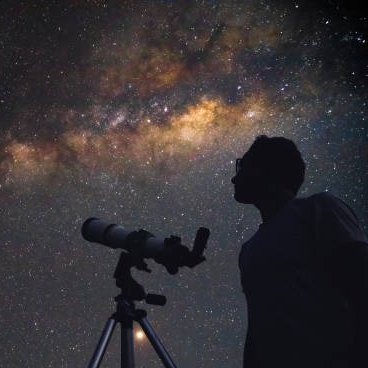
Space objects such as meteoroids and asteroids move across... the solar system and can collide with both Earth and the Moon. However, the Moon shows far more visible impact marks on its surface. One main reason is that Earth has a thick atmosphere that protects the planet. When many meteoroids enter Earth’s atmosphere, they burn up due to friction before they can reach the ground. This process creates the bright streaks of light we call shooting stars. The Moon, however, has almost no atmosphere, so incoming space rocks are not slowed down or burned up. They travel directly to the lunar surface and strike it at very high speed. Each collision creates an impact crater, throwing dust and rocks outward from the impact point. Over billions of years, thousands of these impacts have covered the Moon with craters. Unlike Earth, the Moon also has no wind, water, or weather to erase these craters, so they remain visible for millions or even billions of years. This is why the Moon looks heavily cratered when we observe it from Earth through telescopes.show more
The Astronomy Guy
17,473 Aufrufe • vor 4 Monaten
Here is a 3D visualization of the coming solar... storm using model parameters from NASA's run, NOAA's run (shown below), and the coronagraph views from STEREO-A/COR2 and SOHO/LASCO. The storm is expected to hit Earth early December 9. The 3D visualization clearly shows the low inclination orientation of the solar slinky core inside the larger storm envelope. Of course, the earlier eruption that erupted to the northeast, might deflect this structure a little bit, but likely that will only make the structure move more towards the ecliptic plane, which will give us a larger chance of crossing through the solar slinky core. One nice thing about low inclination flux rope cores is that they almost ALWAYS have southward field in them at some point. So this is good news for aurora photographers-- as long as this solar storm stays true to its launch trajectory and inclination, we could see some organized southward pointed magnetic field. Considering this solar storm is fast-- that usually indicates the storm will not deviate much from its original launch trajectory! Here is the link to a static frame of the 3D frame visualization so you can fly around it yourself:show more

Dr. Tamitha Skov
18,461 Aufrufe • vor 8 Monaten
We've now had two 2.5 x-flares from sunspot 4419... over the last 12 hours, both launching gigantic coronal mass ejections outwards pretty much in the direction of Comet C/2025 R3 PANSTARRS. Surprisingly we're not in a radiation storm yet, and plasma headed to Earth from these events seems to be minimal, but sunspot 4420 is nearly Earth-direct now and 4423 following just behind just blasted off a 1.7 m-flare. As Comet R3 PANSTARRS continues to fly across Earth-facing while cutting through the ecliptic plane just outside the orbit of Mercury, my forecast is that we're most likely to enhanced activity from 4420 and 4423 as well over the next 2-3 days. Keep in mind the comet will begin experiencing #spaceweather from the CMEs very soon, and that will energize it electromagnetically even further, perhaps pronouncing this Comet-Sun effect we're seeing even further...show more
Stefan Burns
16,434 Aufrufe • vor 3 Monaten
We may have some #aurora fun coming! More than... 4 solar storms have been launched in the past few days from Region 4334. Some of them are headed to Earth! Along with the fast solar wind picking up by January 9, we could see a bumpy ride with storm conditions peaking January 11. G1 conditions expected thus far, but another storm just launched so forecasts may be changing rapidly! The first video highlights storms launched since January 6. The second video shows a closeup of Storms 3 and 4, which launched today in the Earth-Strike Zone. More analysis is coming.show more
Dr. Tamitha Skov
15,099 Aufrufe • vor 6 Monaten
The first maglev train in China with a speed... of 600 km/h, with the code name CF600-0001, has shown its majesty under the lens of railway photographers. This maglev train is a major breakthrough for China's railway, marking a new advancement in high-speed rail technology. A maglev train is a high-speed train that utilizes electromagnetic force for levitation and is propelled by magnetic power, capable of traveling at astonishing speeds on maglev tracks. The CF600-0001 is China's first maglev train with a speed reaching 600 kilometers per hour, drawing global attention due to its high speed and advanced technology. The design of this maglev train incorporates the latest materials and techniques, including lightweight alloys, carbon fiber, and other high-strength materials, ensuring stability and safety during high-speed operation. Additionally, advanced control and power systems guarantee the train's high-speed operation and comfort. The successful research and operation of maglev trains by China's railway will bring revolutionary changes to high-speed railway transportation both domestically and internationally. This will not only significantly reduce travel time, but also promote the internationalization and globalization of China's high-speed rail technology. Railway photographers have captured the magnificent sight of this maglev train through their lenses, allowing people to witness the new achievements of China's high-speed rail technology and showcasing China's leading position in the field of transportation and logistics.show more

Johannes Maria
57,724 Aufrufe • vor 1 Jahr
The Geomagnetic Excursion began in the 1850s, and so... did the climate change. The magnetic field started losing, in decades, the amount that it had previously lost in centuries. The speed of the pole shift accelerated between 1995 and 2000 to 50km per year, equivalent to the last geomagnetic excursions, and observers expect it to accelerate even more in the next 5–10 years after the recent jerk in speed (watch Ben Davidson's latest video). Solar flares are not the only threat. You know what is coming, and if we enter a Grand Solar Minimum like the elites expect, then the cosmic radiation will be brutal. That's why they built doomsday bunkers where there are local magnetic anomalies (read my articles for subscribers on X and Patreon).show more
Open Minded Approach
49,432 Aufrufe • vor 29 Tagen
I’ve had the pleasure of assisting Michael S. Kim... with his training for the last 18 months or so. Mike has gotten much stronger and gained ~10lbs in this time frame. We’ve had 3 main areas of focus: 1️⃣ Increase size and strength of the fast twitch muscle fibers with pretty traditionial strength training methods 🏋️. Compound lifts, heavy 5 rep sets. 2️⃣ Practice swinging faster with a radar for feedback, both with TheStack and hitting balls with driver. How much of each adjusts based on the time of season 🏌️♂️. 3️⃣ Ensure nutrition supports the goal of muscle growth and recovery from golf & training. It is very common for tour players to underfuel and lose weight as the season goes on. They have a very high level of energy expenditure from all of the practice, play, and training, so need a lot of food 🍱. Mike is now much more physically capable of higher speeds than previous years. I expect and hope to see a nice little bump in speed as the season goes on. At this level, a 3-4mph gain in club head speed is enormous, and that is what we are targeting! This training speed of 121mph below will hopefully be 123-125mph in the coming weeks, allowing comfortable 118mph or so on the course in tournament play.show more

Fit For Golf - Mike Carroll
107,611 Aufrufe • vor 5 Monaten