Albert Einstein | Albert Einstein was a German-born physicist... who made several important discoveries in the field of physics. In 1905, known as his miracle year, he published four major scientific papers. One explained the photoelectric effect, demonstrating that light consists of small packets of energy called photons. This work later earned him the Nobel Prize in Physics in 1921. Another paper explained Brownian motion, the random movement of tiny particles suspended in a liquid, providing evidence for the existence of atoms and molecules. Einstein also developed the special theory of relativity, introducing the famous equation , which describes the relationship between mass and energy. Later, in 1915, he completed his general theory of relativity, explaining gravity through the curvature of space and time. | ##physics##edit##mathematics##calculus##scienceshow more

Circuitron
38,600 次观看 • 5 天前
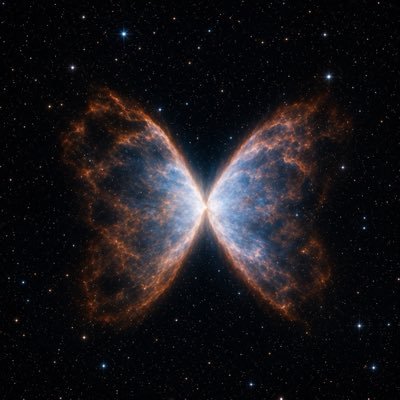
“Geometry is the purest form of physics.” — Albert Einstein
nebulica
21,692 次观看 • 2 个月前
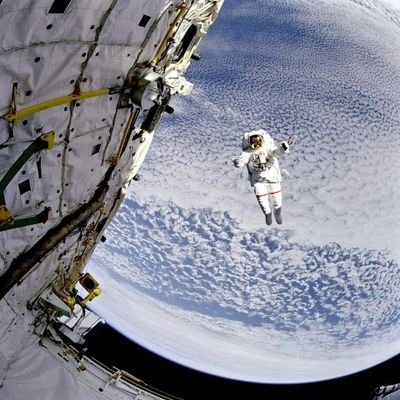
“A human being is a part of the whole,... called by us ‘Universe,’ a part limited in time and space." - Albert Einsteinshow more
Amazing Physics
19,573 次观看 • 4 个月前
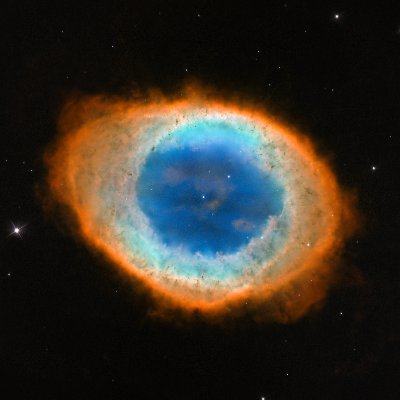
“A human being is a part of the whole,... called by us ‘Universe,’ a part limited in time and space." - Albert Einsteinshow more
Cosmos Archive
13,121 次观看 • 4 个月前
“Pure mathematics is, in its way, the poetry of... logical ideas.” — Albert Einsteinshow more
Cosmos Archive
19,775 次观看 • 14 天前
“Pure mathematics is, in its way, the poetry of... logical ideas.” — Albert Einsteinshow more
Cosmos Archive
49,134 次观看 • 4 个月前
A rendering of the beginning of our universe (along... one rulial+quantum branch) in our Wolfram Physics Project---and the first steps in the construction of space. (The nodes are not in space; they're what space is made of.)show more

Stephen Wolfram
302,903 次观看 • 3 年前
When a nuclear reactor is switched on for the... first time, an intense, almost hypnotic blue glow appears in the water surrounding the reactor core. This light is neither fire nor heat; it is Cherenkov radiation, a physical phenomenon that occurs when charged particles, such as high-energy electrons produced during nuclear fission, travel through a transparent medium faster than light can propagate within that same medium. While nothing can exceed the speed of light in a vacuum, light travels more slowly in materials like water. When a charged particle surpasses this reduced speed, it emits a coherent shock-like electromagnetic wave, often described as an optical analogue of a sonic boom. This radiation produces the distinctive blue glow. The colour arises because Cherenkov radiation is strongest at shorter wavelengths, which are dominated by blue and ultraviolet light. The phenomenon was first observed experimentally in 1934 and later explained theoretically, work that led to the Nobel Prize in Physics in 1958. Its explanation confirmed how relativity and electromagnetism operate in material media. Today, this deep blue light is both a warning and a scientific tool. It signals the presence of intense ionising radiation, while also being exploited in particle detectors, nuclear reactors, and neutrino observatories. It provides a rare, visible manifestation of subatomic processes that are otherwise hidden from direct human perception. #GottaLovePhysics #Physicsshow more

Erika
281,174 次观看 • 10 个月前
The man who discovered gravity left us a date...... and his private papers were hidden for 209 years. Isaac Newton wrote more about God and prophecy than about physics. Late in life, after decades decoding the Book of Daniel, he wrote this in his private notes: "...will end A.C. 2060. It may end later, but I see no reason for its ending sooner." He said he only wrote it to stop "fanciful men" from predicting the end... yet he never published it. In 1727, Newton died and his family locked the papers away. In 1888, Cambridge kept his science and handed the prophecy back. In 1936, it was all auctioned off at Sotheby's. Keynes bought a pile and called him "the last of the magicians." The prophecy papers ended up in Jerusalem. 2060 is 34 years away. Why would the greatest scientist who ever lived obsess over the time of the end... unless he found something we were never meant to see?😉show more

Open Minded Approach
23,943 次观看 • 1 个月前
Fighter jet pilot demonstrates centripetal force, a concept that... Isaac Newton discovered between 1676 and 1677. However, the concept of centripetal force was not actually discovered in a single event or by a single individual but rather evolved over time through the works of multiple scientists and thinkers. Here is a brief history of the development of our understanding of centripetal force: Ancient Greece: The ancient Greeks, particularly philosophers such as Aristotle and later Archimedes, made observations and formulated theories about the motion of objects. However, they did not have a clear understanding of centripetal force as a distinct concept. Islamic Scholars: During the Islamic Golden Age, scholars such as Ibn Sina (Avicenna) and Ibn Bajjah (Avempace) made significant contributions to the understanding of motion. They discussed the idea of impetus, a precursor to the concept of centripetal force. Johannes Kepler: In the 17th century, Johannes Kepler, a German astronomer and mathematician, formulated his laws of planetary motion. Kepler's laws described the motion of planets around the sun and the concept of elliptical orbits. Although Kepler did not explicitly mention centripetal force, his work laid the foundation for later developments. Isaac Newton: In the late 17th century, Sir Isaac Newton, an English physicist and mathematician, published his groundbreaking work, "Mathematical Principles of Natural Philosophy" (also known as the Principia). In this work, Newton presented his laws of motion and the universal law of gravitation. Newton's laws, particularly the second law of motion, provided a mathematical understanding of centripetal force. He demonstrated that an object moving in a curved path experiences an inward force acting towards the center of the curve, which is now known as centripetal force. Further Developments: Following Newton's work, subsequent scientists, such as Jean le Rond d'Alembert and Daniel Bernoulli, expanded on the understanding of centripetal force in the context of mechanics and fluid dynamics. It's important to note that the discovery and understanding of centripetal force were gradual processes that involved the contributions of numerous individuals over centuries. The concept became firmly established with the development of Newtonian physics and its laws of motion.show more

Historic Vids
11,803,980 次观看 • 3 年前
Albert Einstein ahead of the Greenham Stakes 🟣

Katie Midwinter
10,135 次观看 • 6 个月前
A year ago, then-Cardinal Prevost concelebrated the Feast of... Our Lady of Guadalupe while Pope Francis was in fragile health. A year later, this morning, he celebrated his first papal Mass as Leo XIV in honor of the Patroness of the Americas. Also on December 12, in 2014, he was consecrated Bishop of Chiclayo. Let us entrust his intentions and his pontificate to our Mother of Tepeyac.show more

National Catholic Register
18,127 次观看 • 11 个月前
🚨PHYSICS NEWS🚨: Gravity Leaves Its Mark on Quantum Interference... in a Tabletop Setup 🧨 According to research published in *Physical Review Letters* on June 8, 2026 by physicists at the University of Tennessee at Knoxville, scientists have performed the first tabletop experiment to detect a gravitationally induced phase shift in quantum interference. Using a 50-kilometer fiber interferometer, they measured a tiny but clear effect of gravity on quantum wave interference with high precision. **Uniphics explains this result as a direct consequence of variable time flow caused by energy density gradients.** In Uniphics, gravity is not the curvature of spacetime. Instead, it arises from differences in energy density across the ξM-field. These gradients create regions where time flows at different rates — a concept described by the Maley factor (the ratio of time flow between two locations). When quantum waves (spin waves in the Uniphics framework) travel along two different paths in an interferometer, they experience slightly different time flows if one path is closer to Earth’s mass than the other. Because the phase of a quantum wave depends on how much time has passed along its path, even a tiny difference in time flow produces a measurable phase shift between the two arms of the interferometer. The University of Tennessee experiment detected exactly this kind of phase shift, confirming that gravity affects the relative timing of quantum waves in a way that can be measured in a controlled laboratory setting. This result aligns closely with Uniphics predictions. The experiment effectively measures how energy density gradients near Earth alter local time flow, which then imprints itself on the interference pattern of quantum states. It provides clean, tabletop evidence that gravity influences quantum systems through changes in time flow rather than through geometric curvature. The ability to observe this effect with such precision in a laboratory opens the door to testing gravitational effects on quantum coherence in controlled environments — something Uniphics expects to become increasingly important as we explore the deep connection between energy density, time flow, and quantum behavior. Could tabletop experiments like this eventually allow us to map energy density gradients with quantum precision and test the effects of modified time flow in different gravitational environments? **A Theory of Everything should be able to answer everything.** Uniphics Explained Simply PDF: Chapters 1–10 free: Grokipedia: #Uniphics #TheoryOfEverything #QuantumGravity #Interferometry #TabletopPhysics Grok xAIshow more

Paul Maley
17,993 次观看 • 5 个月前
On this day in 1915, John McCrae wrote his... famous poem “In Flanders Fields”. It was written by McCrae after he presided over the funeral of a friend and fellow soldier during the First World War. The poem was officially published in Punch Magazine on December 8th, 1915. So many years later, his poem continues to poignantly express the tragedy and losses of war, and the importance of carrying on their memories. #LestWeForgetshow more

The Royal Canadian Legion
16,944 次观看 • 1 年前
In *Interstellar*, a scene on Miller's Planet shows time... moving drastically slower due to its proximity to the black hole Gargantua, where one hour equals seven years on Earth. This idea isn't just cinematic drama—it's grounded in real science. Albert Einstein's theory of General Relativity explains how strong gravity can bend spacetime and slow the passage of time. Near a supermassive black hole, this effect—known as gravitational time dilation—becomes extreme and measurable. The ticking sound in the film symbolizes years passing elsewhere. It highlights a powerful truth: time isn't universal but depends on gravity and motion. What feels like minutes in one place could mean years in another, fundamentally changing how we understand reality. Love Reels? Follow @gzreel Media: @interstellarmovie | Dm for Removal (All rights reserved to the owner of the video. This video is only for educational purposes. No copyright intended)show more
GZreel
21,700 次观看 • 5 个月前
🚨 PHYSICISTS JUST SPLIT A SINGLE PHOTON AND IT... TURNED INTO AN IMPROBABLE SWARM OF PARTICLES. In a striking experiment, researchers have shown that a photon can be split apart in such a way that it produces a large number of particles, creating what they describe as a “mixture from zero to infinity.” Instead of the usual clean splitting into two photons (as seen in spontaneous parametric down-conversion), this process generated a complex, broad swarm of particles. The result challenges conventional intuition about how photons behave when pushed into extreme nonlinear regimes. Why this matters: • It demonstrates a rare and complex form of photon splitting that was previously very difficult to observe cleanly • Such processes could help simulate high-energy particle physics in table-top experiments • It opens new possibilities for generating exotic quantum states of light • It provides deeper insight into nonlinear quantum electrodynamics (QED) in strong fields The deeper implication: Photons are usually thought of as indivisible quanta of light. But under the right extreme conditions, a single photon can effectively “break apart” into many particles. This isn’t just a curiosity it touches on fundamental questions about the nature of light and matter, and could eventually lead to new tools for quantum technologies and for studying physics that normally requires particle accelerators. We’re seeing light behave in ways that blur the line between a single quantum and a many-particle system. How do you think being able to controllably split photons into swarms of particles could impact quantum optics or fundamental physics research? Follow for more frontier quantum physics and breakthroughs in light-matter interaction.show more

TheNewPhysics
25,874 次观看 • 4 个月前