Big moment for Postgres! Search has always been Postgres'... weak spot, and everyone just accepted it. If you needed a real relevance-ranked keyword search, the default answer was to spin up Elasticsearch or add Algolia and deal with the data sync headaches forever. The problem isn't that Postgres can't do text search. It can. But the built-in `ts_rank` function uses a basic term frequency algorithm that doesn't come close to what modern search engines deliver. So teams end up: - Running a separate Elasticsearch cluster just for search - Building sync pipelines that inevitably drift out of consistency - Paying for managed search services that charge per query - Accepting mediocre search relevance because "good enough" ships faster But this is actually a solvable problem. You can realistically bring industry-standard search ranking directly into Postgres, which eliminates the need for external infra entirely. This exact solution is now available with the newly open-sourced pg_textsearch by Tiger Data - Creators of TimescaleDB, a Postgres extension that brings true BM25 relevance ranking into the database. BM25 is the algorithm behind Elasticsearch, Lucene, and most modern search engines. Now it runs natively in Postgres. Here's what pg_textsearch enables: - True BM25 ranking with configurable parameters (the same algorithm powering production search systems) - Simple SQL syntax: `ORDER BY content 'search terms'` - Works with Postgres text search configurations for multiple languages - Pairs naturally with pgvector for hybrid keyword + semantic search That last point matters a lot for RAG apps. The video below shows this in action, and I worked with the team to put this together. You can now do hybrid retrieval (combining keyword matching with vector similarity) in a single database, without stitching together multiple systems. The syntax is clean enough that you can add relevance-ranked search to existing queries in minutes. pg_textsearch is fully open-source under the PostgreSQL license. You can find a link to their GitHub repo in the next tweet.show more

Akshay 🚀
215,785 просмотров • 8 месяцев назад
The new Product Page Header image in the App... Store will not matter. First you need users to actually want to enter your App Store listing. And the reality is that a lot of users NEVER enter the listing. They search for something, see the app in the search results and download it directly from there. So the important update here is the new Search Results image. It's an app banner inside the App Store search results. And you should think about it as a persuasive ad. COPYWRITING will be what matters. Not the fancy "branding". Users are searching because they want an answer to something. Your creative needs to give them that answer immediately. And this becomes even more important with Apple Ads. You can pay to appear for the keyword, but your creative still needs to convince the user that your app is the answer they were searching for.show more

Teodora @DesignerAnts
69,953 просмотров • 2 месяцев назад
iMessage search is still broken in 2025. So I... fixed it myself. It doesn't even work most of the time. When it does, it's slow, misses messages constantly, and only matches exact words. Search "dinner" and you won't find "let's grab food." iMessage Intelligence fixes all of this while also being insanely fast. Here's how it works: → Full text search index on your messages for keyword matching → On-device ML (MiniLM via CoreML) generates semantic embeddings. Your Mac generates these embeddings in under a minute, then syncs to your phone → sqlite-vec stores vectors locally for similarity search → Hybrid results: keyword hits appear in <10ms, semantic matches merge in <60ms It also has advanced filters iMessage doesn't have: sort options, date ranges, conversation filters, sent vs received, groups vs 1-on-1. Search runs 100% on-device. No cloud processing. Sign up for the waitlist:show more

Seif Abdelaziz
97,261 просмотров • 10 месяцев назад
The most exciting thing that I've been working on... lately in the file search field is the GPU acceleration of file search. You might think that I'm dumb or something, but it is a real next step. fff is already on the edge of what is possible on CPU, but our design with the storage is actually oriented on the embarrassingly parallel search, which couldn't be more effective than on GPU. If you'd think about this deeper: 99% of the time file search happens on the local machine of the user. Your melting macbook pro that is using precious CPU cycles to build your Rust project right now is getting wasted on the smart typo-resistant fuzzy matching which is a quadratic complexity algorithm that needs more resources the longer your query is. What if we use GPU instead? Cause we already have it and it is likely idle if user is typing into a search box. And honestly there are some good results so far. I was able to bring fff down to 20% cpu usage at all times no matter how absurdly long your queries are and no matter how many files you have Here is a little sneak peak. Running on M4 max 1.6TB home dirshow more

Dmitriy Kovalenko
27,008 просмотров • 28 дней назад
🔎 How I Search 29+ Million Public Entities for... FREE Downloading leaked datasets just to search them is the fastest way to waste hours A lot of investigators still do this the hard way: 1. Download the leak. 2. Unzip it. 3. Click through thousands of files manually. That gets old fast. The Library of Leaks, built by (DDoSecrets), works more like a search engine for leak data. You can search for: • Name, • Company • Email address • Phone number • Address across multiple collections at once, instead of digging through raw archives one folder at a time. It currently indexes documents, emails, government records, corporate files, BlueLeaks, and the Kazakhstan Ministry of Energy files. When I'm profiling a company or person, I usually check whether they appear in datasets like this early in the process. It can save hours. Link: P.S. ♻️ Repost if you found this helpful.show more

CyberSudo
11,982 просмотров • 1 месяц назад
Cancel your $200/mo Ahrefs subscription 🤯 Claude Code can... now run your SEO for you. Point it at your Search Console and it finds the wins, writes the fixes, and renders a live dashboard off your own data. All inside Claude Code. Perfect for DTC brands and agencies sitting on months of Search Console data nobody has time to read. Here's what it does: → Connects to your Search Console and GA4 through one guided setup that routes around Google's auth landmines → Finds the keywords sitting at positions 4 to 20 and scores them by the clicks you're leaving on the table → Ships the fix instead of naming it, with the rewritten title, the headings, and paste-ready content → Turns redirect chains, broken canonicals, and slow pages into dev tickets ranked by traffic at risk → Maps every query into hub-and-spoke clusters and flags where your own pages compete with each other → Drops a Monday report with week-over-week movement and exactly 3 priorities What you get: → 9 skills in one plugin, from the Google setup through to the Monday report → A live SEO dashboard with a 0 to 100 health score, rendered as one self-contained HTML file → Orphan pages and money-page link gaps, listed paste-ready → Content drafted from your own search data instead of a keyword tool's guesses Built 100% in Claude Code on your Search Console and GA4 data. 📌 Get the free plugin here:show more

Mike Futia
22,780 просмотров • 1 месяц назад
my team didn't want me to give this away... for free. But I'm going to do it anyway it's the SEO & AI search dashboard I built in Claude Code it connects to your Google Analytics (GA4) and Google Search Console and Claude Code builds it in 5 minutes and I made a Notion document and a skill file so you can build this in Claude Code yourself in literally minutes the dashboard has three tabs: 1. AI Search - How much traffic is coming from ChatGPT, Perplexity, and Gemini ETC. It aggregates the GA4 data and gives single number 2. Paid ads - which keywords rank top 3 for but still pay for ads on, you should cut these to save budget 3. Organic overview - sessions, conversions, top landing pages, demographics. The single view for what is working I built this because this is how I drive our SEO and AEO forward it gives me the insights I need to allocate budget and prioritize what content to work on next I decided to give it away because most companies have no idea AI search is already sending them traffic like this post and comment "AEOdashboard" and I'll send it overshow more

Cody Schneider
79,954 просмотров • 5 месяцев назад
K-Means is simple. Making it fast on GPU isn't.... Flash-KMeans is an IO-aware implementation of exact k-means that rethinks the algorithm around modern GPU bottlenecks. By attacking the memory bottlenecks directly, Flash-KMeans achieves: - 30x speedup over cuML - 200x speedup over FAISS Using the same exact algorithm, just engineered for today’s hardware. At the million-scale, Flash-KMeans can complete a k-means iteration in milliseconds. Here's why this matters today: K-means has always been an offline primitive. Something you run once to preprocess data and move on. These speedups change that. ↳ Vector databases like FAISS use k-means to build search indices. Faster k-means means you can re-index dynamically as data changes, not batch it overnight. ↳ LLM quantization methods need k-means to find optimal weight codebooks, per layer, repeatedly. What takes hours could now take minutes. ↳ MoE models need fast token routing at inference time. Millisecond k-means makes it viable to run this inside the inference loop, not just in preprocessing. The 200x over FAISS is the number to internalize. FAISS is the industry standard. Most production vector search systems sit on top of it. Link to the paper and code in next tweet!show more
Akshay 🚀
36,317 просмотров • 7 месяцев назад
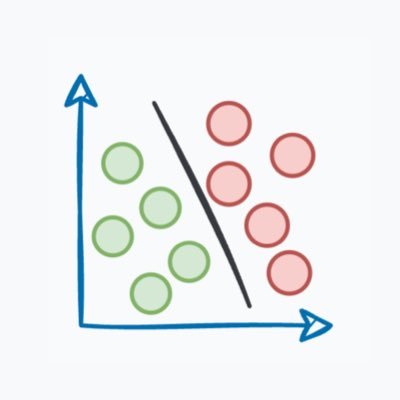
K-Means is simple. Making it fast on GPU isn't.... Flash-KMeans is an IO-aware implementation of exact k-means that rethinks the algorithm around modern GPU bottlenecks. By attacking the memory bottlenecks directly, Flash-KMeans achieves: - 30x speedup over cuML - 200x speedup over FAISS Using the same exact algorithm, just engineered for today’s hardware. At the million-scale, Flash-KMeans can complete a k-means iteration in milliseconds. Here's why this matters today: K-means has always been an offline primitive. Something you run once to preprocess data and move on. These speedups change that. ↳ Vector databases like FAISS use k-means to build search indices. Faster k-means means you can re-index dynamically as data changes, not batch it overnight. ↳ LLM quantization methods need k-means to find optimal weight codebooks, per layer, repeatedly. What takes hours could now take minutes. ↳ MoE models need fast token routing at inference time. Millisecond k-means makes it viable to run this inside the inference loop, not just in preprocessing. The 200x over FAISS is the number to internalize. FAISS is the industry standard. Most production vector search systems sit on top of it. Link to the paper and code in next tweet!show more
Daily Dose of Data Science
23,748 просмотров • 5 месяцев назад
Boom! Grok Tasks Make It One Of The Most... POWERFUL Real-Time AI Systems In The World. — My How to Use Grok Tasks With Hidden Tools For Powerful Daily Output. Grok Tasks are customizable AI workflows that integrate a variety of tools to streamline daily activities, from research and analysis to creative planning and problem-solving. I have been using them for quite sometime and because of the vital heartbeat of news and first person data on X, it is the most powerful AI platform available. By combining Tasks with tools like web searches, X platform interactions, code execution, and media viewers, you can build efficient, automated processes. These tasks work by prompting Grok with a clear description of what you want to achieve, and Grok will intelligently call the necessary tools in sequence or parallel to deliver results. Here's a step-by-step guide to creating and using Grok Tasks: Step 1: Define Your Task Start by clearly outlining the daily activity or goal. Consider what inputs you have (e.g., a URL, a query, or an attachment) and what output you need (e.g., a summary, calculation, or visual analysis). Break it down into subtasks to identify tool needs. For example, if your task involves researching current events, note that you'll need search and browsing capabilities. Step 2: Review Available Tools Familiarize yourself with the tools Grok can access. Here's a quick overview: - Code Execution: Run Python code for calculations, data processing, or simulations using libraries like numpy, pandas, or sympy. - Browse Page: Fetch and summarize content from any website URL with custom instructions. - Web Search: Perform general internet searches, returning results with optional operators like site:. - Web Search With Snippets: Get quick, detailed excerpts from search results for fact-checking. - X Keyword Search: Advanced search for X posts using operators like from:, since:, or filter:. - X Semantic Search: Find semantically related X posts based on a query, with filters for dates or users. - X User Search: Locate X users by name or handle. - X Thread Fetch: Retrieve a full X post thread, including context like replies and parents. - View Image: Analyze an image from a URL or conversation ID. - View X Video: Extract frames and subtitles from an X-hosted video. - Search PDF Attachment: Query a PDF file for relevant pages using keyword or regex modes. - Browse PDF Attachment: View specific pages of a PDF with text and screenshots. Select tools that align with your task. Aim for a mix to handle data gathering, processing, and visualization. Step 3: Craft Your Prompt Write a detailed prompt to Grok describing the task. Include: - The overall goal. - Specific steps or subtasks. - References to tools if you want to guide the process (e.g., "Use web_search to find sources, then code_execution to analyze data"). - Any constraints, like dates or limits. Example prompt: "Create a Grok Task for my morning routine: Search recent X posts about tech news using x_keyword_search, fetch a key thread with x_thread_fetch, and summarize with browse_page on linked articles." Step 4: Submit and Interact Send your prompt to Grok. It will process the task by calling tools as needed, often in parallel for efficiency. Review the output and refine with follow-up prompts if required (e.g., "Expand on that using view_image for visuals"). Iterate to fine-tune the workflow for reuse. Step 5: Save and Reuse Once refined, note the prompt as a template for future use. You can adapt it for similar tasks, making Grok Tasks a habitual part of your day. Finding Grok Tasks To discover existing Grok Tasks or inspiration for new ones, use X searches with tools like x_keyword_search or x_semantic_search (e.g., query: "Grok Tasks examples" with mode: Latest). Browse community-shared threads via x_thread_fetch, or web_search for tutorials on xAI features. Prompt Grok directly: "Show me popular Grok Tasks for productivity." 1 of 3show more

Brian Roemmele
152,242 просмотров • 9 месяцев назад
OpenAI's Deep Research is getting a run for its... money. Deep Lake was just released, and it's a different take on an AI system that can do deep research on your own data. You can use Deep Lake to build AI search with reasoning on your private and public data. (Look at the attached videos to get an idea of how it works.) If you want to research proprietary and sensitive data, Deep Research won't help you because it's limited to public data. Deep Lake, however, will allow you to use your private data. On top of that, Deep Lake supports multi-modal retrieval from the ground up. It uses vision language models for data ingestion and retrieval so that you can connect any data (PDFs, images, videos, structured data, etc.) You can even use mixed-data queries! Deep Lake can search your data from S3, Dropbox, and GCP. It learns from your queries over time, making the results as relevant to your work as possible!show more

Santiago
171,340 просмотров • 1 год назад
New feature in Claude Code 2.1.14 just dropped! You... can now search and install plugins from the marketplaces installed in your current Claude Code session. This is huge if you’re building plugins on top of Claude Code’s marketplace layer (Skills, Agents, Hooks, etc). How it works: - Run /plugin - The official Claude marketplace is installed by default - Use the search bar to find the plugin you want - Select one or multiple plugins with space, then press i to install - Go to the Installed tab to browse and enable them With the exponential growth of Skills and Agent-based components running in the CLI, improving plugin discoverability is a big win. Pretty sure more marketplace-related features are comingshow more

Daniel San
40,994 просмотров • 8 месяцев назад
yesterday, i stumbled onto the most underrated market research... tool. tiktok creator insights. it's a goldmine of consumer behavior data, hiding in plain sight. and it's free to use. here's why it's powerful: 1. shows you what people are desperately searching for 2. highlights topics with high demand but low supply 3. reveals trending questions in every industry 4. tracks search growth over 14-day periods the "content gap" tab shows you problems people are actively trying to solve, but can't find good solutions for. so that's cool for a couple reasons 1. help you create content that has low supply/high demand (better chances of going viral) 2. you can build startups to some of these trends Example: i searched "email management" and found: • "how to clear 10k emails" • "best way to organize work inbox" • "email templates for busy people" thousands searching. hardly any solutions. the beauty of this • it's real-time market research • it's actual user intent • it's completely free • and most founders aren't using it a bunch of smart founders are mining tiktok insights right now it isn't perfect, but you never know what you might find your next startup idea might be hiding in those search trends. So, ill share how to access it because it’s kinda hidden: 1. Go to TT search 2.Type in “creator search insight” 3. Tap view im one of those people that think using data like this is your unfair advantage. if tiktok is the new search engine, then tiktok creator insights is the new google trends. might as well use it.show more

GREG ISENBERG
265,916 просмотров • 1 год назад
Most keyboard apps are built just to help you... type faster. Acti is the world’s first agentic keyboard. It can actually do things for you. I have been using it for a while, and I literally love this one. Let’s say you are chatting with someone and they say: “Let’s meet at XYZ Place” Normally you would open Maps, search the location, copy the link, come back to app, and send it. With Acti, you just stay inside app, copy the text + hold the spacebar, and it adds the location + map link directly in the chat. This works inside WhatsApp, Telegram, Discord, Slack, or basically any chat interface. More use cases 👇 1/5show more

AshutoshShrivastava
15,972 просмотров • 3 месяцев назад
With ChatGPT Atlas, we aim to push the boundary... of what a browser can be — integrating ChatGPT and evolving it into an agent that takes action for you. But even as we build that future, the basics still matter. For most people we talk to, their tab strip is overflowing with too many tabs (mine certainly is!). This week's Atlas release: revamped tab search and a new 'auto organize' your tabs button. Click to remove duplicates, merge windows, or let ChatGPT group your tabs in a way that makes sense. Just hit “update” in the top right to try.show more

Adam Fry
153,798 просмотров • 8 месяцев назад
A good technical LLM interview question: Your RAG chatbot... is working as expected locally. You deploy it behind a load balancer with 3 replicas. Users report that it forgets what they just asked, and answers get worse with each restart. Why did this happen? (answer below) A local setup has one process that owns everything. - The vector index is a variable in memory. - Conversation history is a Python list. - The documents are on local disk. You never treat any of them as infrastructure, because restarting rebuilds all three in seconds and there is only ever one copy. The setup does not carry over to production directly. The vector index might disappear on restart, so the app re-embeds everything on boot and serves empty results until it finishes. Conversation history may belong to one replica, so a follow-up routed elsewhere has no memory of the previous turn. Documents could be on whichever container ingested them, so the three replicas hold three different corpora. None of this is evident with one user and one process. So the actual work in shipping RAG is not just the retrieval logic, but also storing the vector index, the conversation history, and the documents outside the app, where every replica reads and writes the same copy. Which comes down to three requirements: > The vector store needs persistence and has to be reachable from every replica. pgvector inside Postgres keeps embeddings next to the rest of the data instead of adding another system to operate. > Conversation state has to be checkpointed outside the app. LangGraph writes its state to Postgres, so any replica can pick up a thread mid-conversation. > Docs need shared object storage, so ingestion happens once instead of once per replica. If you get those three right, the retrieval logic you wrote in the notebook works unchanged. To learn how all of it is wired together, Akamai's GitHub has a working reference implementation. - rag-langgraph-k8s-quickstart is an airline policy Q&A assistant built with FastAPI, LangChain, and LangGraph. Terraform provisions the LKE cluster, a Postgres instance with pgvector for embeddings, a second Postgres for LangGraph checkpointing, and an object storage bucket for the policy documents, in one apply. - akamai-workshop-ai-inference covers the next step, running the model yourself instead of calling an API, with prefill and decode, KV cache tradeoffs, and continuous batching under real concurrency. Both are available on Akamai's new Developer Hub, alongside their tutorials and code samples. It also links to Edge Case, their Discord, where four developer advocates architect and deploy a production app live every other Wednesday. If you create a new Akamai Cloud account, you can also get $300 in credits for joining. Join here: That said, this post assumes the retrieval logic was right to begin with, and that is doing a lot of work. Most RAG systems fail earlier, at the point where a chunk gets treated as a self-contained unit of meaning. I wrote about the two skills that fix that gap, and why the chunk is usually the wrong thing to embed. Read it below. Thanks to Akamai Cloud for partnering today!show more
Akshay 🚀
31,971 просмотров • 1 месяц назад
A RANDOM STUDENT CREATED A VIRAL TANNING APP AND... NOW MAKES 36K/MONTH the app store is paying $36,000 a month to solo developers shipping utility apps. no team. no funding. no office. the niche is keyword arbitrage. find what people search for, build the exact solution, own the keyword. real numbers from real portfolios: stamp identifier app - $3,200/month sleep tracker niche - $4,800/month 12 apps averaging $500-3,000/month = $36K BEFORE: one app used to take 3 months. designer, backend dev, iOS engineer, product manager. $80,000 minimum to ship. NOW: it's one prompt to Claude Code - working app in days. you describe the feature, Claude builds the logic, RevenueCat handles the billing, App Store handles distribution. the trick isn't the coding. it's the keyword filter. popularity 40–70. difficulty under 60. fewer than 4 competitors with 100+ ratings. that's your $500/month app waiting to be built. app store search drives 75% of all downloads. youtube doesn't care who made the video - app store doesn't care who wrote the code. it cares if the keyword matches the search. the barrier used to be the engineer. now the barrier is who validates the keyword first and hits submit. $60/month in tools. one weekend per app. portfolio of 15 = $36K/month. full keyword filter, Claude prompts, and App Store submission playbook belowshow more

kiosa
97,951 просмотров • 4 месяцев назад
Announcing Personal Intelligence, a more personalized Google Gemini designed... just for you. How it works: — Customized: With your permission, it reasons across your Gmail, YouTube, Google Photos, and Search apps to share hyper-relevant and context-aware responses — Secure: If enabled, you control which Google apps to connect to. This setting is off by default — Useful: From travel plans based on your Google Photos to gym recommendations based on goals you’ve shared with Gemini, you get help tailored to your world Personal Intelligence in beta is rolling out to Google AI Pro and AI Ultra subscribers in the U.S., with expansions to the free tier, more countries, and AI Mode in Search to come. Take a look at the Gemini app's personalized assistance in the clip below, then let us know what you would use it for!show more

Google AI
320,878 просмотров • 9 месяцев назад
This is how you can personalize sports and finance... on Perplexity today. This way, when your favorite team is about to play a game, you didn’t have to go search. Live action widget just takes over your Lock Screen. Similar things planned for earnings calls for the finance watchlist. More personalization and customization are being worked on and coming in March. Idea is for you to not even have to think of asking stuff. The AI should just do that work for you and give it to you without any effort.show more

Aravind Srinivas
47,099 просмотров • 1 год назад
I just built a Claude skill that audits your... entire Google Ads account in under 5 minutes 🤯 One prompt → a full account score, wasted spend breakdown, and a prioritized fix list telling you exactly what to change this week. All inside Claude Cowork. Perfect for DTC brands and agencies who are running Google Ads but have no idea how much budget is leaking. If you're managing Google Ads and your "optimization" process is logging in, staring at the dashboard, sorting by cost, and hoping you spot the problem before it costs you another $500... This audit skill finds it for you: → Connects to your live Google Ads data via MCP → Scores your account across 6 dimensions: wasted spend, search term quality, keyword health, quality scores, budget allocation, and creative performance → Calculates your exact wasted spend in dollars — search terms burning budget with zero conversions → Flags quality score issues dragging up your CPCs → Identifies keyword cannibalization across campaigns → Surfaces your top 5 highest-priority fixes ranked by budget impact → Generates a clean audit report you can hand to a client or share with your team No CSV exports. No pivot tables. No guessing where the money went. What you get: → A single Claude skill file you install once → An account health score (0-100) every time you run it → Exact dollar amount of wasted spend identified → Prioritized action list — not "optimize your account," but "pause these 12 search terms and save $847/month" → Works with any Google Ads account connected I'm giving away the full audit skill — the actual .md file you drop into Claude and run against your own account. Want it? Like this post Comment "SKILL" And I'll send it over (must be following so I can DM)show more
Mike Futia
60,485 просмотров • 6 месяцев назад
Miami-Dade Fire Rescue’s Florida Task Force 1 (#FLTF1) is... on the ground in Playa Grande, La Guaira, Venezuela, standing alongside a community forever changed by the devastating earthquakes. The mission is complex but clear. It's driven by the possibility that a life can still be saved. That thousands of families are waiting for answers about the fate of their loved ones. For many of our rescuers, this mission is deeply personal. As Spanish speakers, they are able to communicate directly with the people they encounter offering not only life-saving expertise, but also reassurance, comfort, and compassion in their own language. In moments of unimaginable loss and uncertainty, a familiar voice, a few words of encouragement, or simply being understood can provide a measure of hope that extends far beyond the rescue itself. Our canine search teams are among the most vital members of this mission. Guided by their handlers, these remarkable dogs use their extraordinary sense of smell to detect the scent of people trapped beneath the rubble, helping our rescue teams search quickly, safely, and with incredible precision. This is what our team has trained for. But no amount of training can prepare you for the emotion of walking into a community devastated by disaster. In the days ahead, they will continue this mission with compassion, and determination. Far from home and working shoulder to shoulder with the Department of State and international partners, our 80-member Type I Urban Search and Rescue team and six extraordinary canines will continue this mission hoping to find life under the rubble. Please keep our team, every other first responder, and the people of Venezuela in your thoughts as this mission continues. Embajada de los EE.UU. en Caracasshow more

Miami-Dade Fire Rescue
30,170 просмотров • 3 месяцев назад