Chang’e-8 lunar probe will verify technologies including lunar surface... telecommunication center and lunar factory construction. The lander might be equipped with some robots, small detectors similar to household sweeping robots to form a network. Full HD:show more

CNSA Watcher
11,069 просмотров • 3 лет назад
China on Thursday announced that it has successfully completed... a comprehensive test for the landing and take off of its manned lunar lander "Lanyue" at a test site in Huailai County in the northern Chinese province of Hebei. The "Lanyue" lunar lander is a newly developed extraterrestrial manned descent and ascent vehicle for China's first manned lunar exploration mission, which is primarily designed for transporting astronauts between lunar orbit and the lunar surface. The lander can carry two astronauts on round trips and is equipped to transport a lunar rover and scientific payloads, supporting astronauts in conducting surface activities and extended stays on the moon.show more

KABClub
205,579 просмотров • 1 год назад
NASA has just launched a new website for its... Moon Base missions, which aims to build a permanent $20 billion U.S. base on the Moon. SpaceX's Starship rocket will play a big role in these missions. "The Moon Base is a home away from Earth for Artemis astronauts who will live and work at humanity’s first lunar outpost. NASA is leading global teams of innovators across international space agencies, industry, and academia to build the Moon Base and establish an enduring human presence near the lunar South Pole for the benefit of all. Phase One (Now–2029): Experiment and Learn NASA will begin with a rapid series of robotic missions to scout the lunar South Pole region, test technologies, and prepare for surface operations ahead of future astronaut missions.: • A major increase in lunar activity, with up to 25 missions, including 21 landings. • Crewed and autonomous rovers for mobility demonstrations and surface preparation, along with four drones known as MoonFall and communications relay and observation satellites. • Early demonstrations of power, navigation, communications, and nuclear radioisotope heater unit technologies designed to endure the long lunar night. • Scientific payload opportunities integrated across landers and rovers. • The first tangible footprint of Moon Base effort, with four tons of payload delivered to test what works on the lunar surface. Phase Two (2029–2032): Early Habitation By 2029, NASA will transition to assembling semi-permanent infrastructure and initiating early habitation and logistics operations: • Deployment of expanded solar power systems and initial nuclear surface power capabilities, potentially including fission reactors and radioisotope power systems. • Upgraded rovers, potential advanced MoonFall drones, and early habitation elements. • Enhanced surface-to-orbit communications networks to provide reliable connectivity across the lunar South Pole region. • Delivery of up to 60 tons of cargo through as many as 24 landings using low-, medium-, and heavy-class cargo landers. Phase Three (2032 and Beyond): Sustained Human Presence This phase will scale operations to achieve a true enduring presence, with routine crew rotations and continuous surface activity. This is when living and working on the Moon becomes a reality: • Semi-permanent habitation modules with spacious interior for crew living and operations. • Operational fission surface power systems capable of delivering steady, reliable energy through the long lunar nights, leveraging in situ resource manufacturing. • Advanced logistics networks supported by crewed and autonomous rovers to keep the base supplied and functioning year-round. • Delivery of up to 38 tons of cargo annually to sustain habitats, power systems, logistics operations, and major science outposts, enabled by low-cost reusable heavy-lift capabilities." Moon base website:show more

Sawyer Merritt
959,591 просмотров • 4 месяцев назад
We're 5 days from landing 🌕 With Success 8... of the Mission 2 milestones recently confirmed, RESILIENCE has completed all lunar orbital maneuvers and the next step will be for it to make its decent to the lunar surface from its current circular orbit. 📡 Live stream begins on X (tent.): June 6, 03:10 JST | June 5, 18:10 UTC | June 5, 14:10 EDT 🕖 Landing: June 6, 04:24 JST | June 5, 19:24 UTC | June 5, 15:24 EDT #Mission2 #LunarLanding #RESILIENCE #HAKUTO_R #VentureMoon #MoonMissionshow more

ispace
19,479 просмотров • 1 год назад
🌙 2 days away. With just 48 hours to... go until landing, daily check-ins with RESILIENCE continue alongside final preparations. During the descent phase, the lander will automatically fire its main propulsion system to gradually decelerate and adjust its attitude, with the goal of achieving a soft landing on the lunar surface. 📡 Be there when we touchdown on the Moon: 🕖 Live stream begins on X (tent.): June 6, 03:10 JST | June 5, 18:10 UTC | June 5, 14:10 EDT #Mission2 #RESILIENCE #HAKUTO_Rshow more
ispace
23,967 просмотров • 1 год назад
Brazilian amateur astronomer captures an object rising from a... lunar crater.🧐🤔🛸🛸🛸 On August 3, 2025, around 9:30 p.m., Brazilian amateur astronomer Ericsson Caldana managed to capture something extraordinary in a lunar crater. He described, astonished, that he had already seen "several strange objects in the sky, but this one coming out from inside the Moon is unprecedented. Minutes earlier, one similar to the U.S. B-2 Spirit had passed by, and right after that, the one in the video appeared." In the footage, something can be seen rising from inside the lunar crater and flying off into space. It is not possible to precisely determine the object's shape. The recording was made with Ericsson's cellphone attached to his Greika 70070 telescope.show more

UFO mania
160,245 просмотров • 1 год назад
If you are wondering why Elon Musk has focused... all his energy and wealth on producing reusable rockets, AI, and robots… Recently, he announced that they will stop the production of some car models and replace it with robot production. The robots will become their workforce and guards. The bunkers will be underground, but the safest bet during a Geophysical Event is to be in space and return later, once everything settles down.show more

Open Minded Approach
231,949 просмотров • 7 месяцев назад
In the future, it might just be humanoid robots... doing the refueling!🤖⛽️ Sinopec plans to introduce humanoid robot workers across its gas stations. They will handle tasks like fueling, picking up items, restocking, and inspections,working alongside human staff, especially during peak holiday periods in China to ease service pressure. With more than 30,000 gas stations across the country (most of them equipped with convenience stores), this implies a deployment of at least 30,000 humanoid robots. The robot is a wheeled humanoid developed by Beijing-based company FIVEAGES.show more

CyberRobo
23,536 просмотров • 5 месяцев назад
🚨 NEWS FROM NASA In a bold and decisive... move, NASA Administrator Jared Isaacman just announced a $20 billion plan to build America’s permanent base on the Moon — and they’re doing it in just 7 years. Today, NASA officially confirmed it is cancelling plans for the Lunar Gateway — the small space station that was supposed to orbit the Moon as a waypoint for astronauts. Instead, those components and resources will be repurposed directly for the surface base, accelerating humanity’s return to sustained lunar presence. The goal is clear — move beyond short visits and flags-and-footprints missions. NASA wants a real, long-term foothold on the Moon: habitats, power systems, rovers, scientific labs, and infrastructure that can support crews for months at a time. This base will serve as the foundation for deeper space exploration, resource utilization (like mining lunar ice for fuel and water), and eventually — Mars. The $20 billion investment over the next seven years will reshape major parts of the Artemis program. It comes with real urgency too — China is pushing hard toward its own crewed Moon landing by 2030, and the U.S. is determined to lead, not follow. This isn’t just about science. · A permanent lunar base means:Testing technologies for Mars missions in a real off-world environment · Developing in-situ resource utilization (turning Moon dirt into rocket fuel and oxygen) · Opening the door to a true cislunar economy · Inspiring the next generation of engineers, scientists, and explorers Private industry will play a massive role, as always — with contractors already building key hardware now being redirected. This is the kind of ambitious, focused leadership the space program has needed. From the first boots on the Moon in 1969 to building a thriving outpost there by the early 2030s — what an incredible leap forward. Significanly, the Moon isn’t just a destination anymore: it’s becoming home base for humanity’s expansion into the Solar System.show more

Massimo
241,928 просмотров • 6 месяцев назад
IN A FEW YEARS, WE WILL LIVE IN A... WORLD WHERE THE LINE BETWEEN BIOLOGICAL AND SYNTHETIC MOVEMENT IS FINALLY ERASED Imagine the streets of future cities, where robots do not just move from point A to point B, but do so with absolute, organic grace. No mechanical stiffness or angular jerks, only flawless biomechanics, instant balance on any surface, and plasticity borrowed from nature itself They will run, step over obstacles, dance, and work with the same fluid flexibility as humans. And at some point, we will stop noticing the difference This will be a world where the artificial body will cease to be a foreign object, and will become a full-fledged part of our familiar space. The era is coming when technologies will acquire a human gait Right now this is AI visualization, but perhaps this is exactly how everything will beshow more

Bober_smart
14,278 просмотров • 1 месяц назад
🚨 This isn't science fiction - it's a real... scientific paper that's now making headlines around the world. Researchers from Ukraine's Main Astronomical Observatory have published a controversial, non-peer-reviewed study based on 2025 high-speed lunar observations, claiming they detected more than 20 unidentified objects moving near and across the Moon. The paper has sparked global debate, although its conclusions have not been independently verified. According to the researchers, some of these objects: 🌑 Were almost perfectly camouflaged against the lunar surface. 📏 Could be up to approximately 40 km across (depending on assumed reflectivity). ⚡ Were estimated to be travelling at around 20 km/s (72,000 km/h). 🛸 Showed unusual movement and brightness characteristics unlike typical satellites or known lunar phenomena. Now consider everything else happening... 🌕 Artemis is taking humanity back to the Moon. 🏗️ Multiple nations are planning permanent lunar bases. 🛰️ The U.S. Space Force is expanding its focus into cislunar space. 🚀 Today, a spent SpaceX Falcon 9 upper stage impacted the Moon, providing scientists with a rare opportunity to study an artificial lunar impact. At the same time, public interest in UAPs is reaching levels we've never seen before. 📂 Congressional hearings have put the subject firmly into the mainstream. ⚖️ Former military and intelligence officials have testified publicly. 📜 More government UAP records have been released. 🔓 There is increasing political pressure for greater transparency and stronger whistleblower protections surrounding UAP programs. Coincidence? Maybe. But it's worth asking... If there were unknown intelligences observing the Moon... Why is humanity suddenly accelerating its return? Why the renewed urgency to establish a permanent presence there? And if something really is there... would a large artificial impact on the Moon simply be ignored, or could it be interpreted as the arrival of an increasingly capable technological civilisation? Or possibly a threat?! Questions aren't evidence. But asking questions is how science begins. What do you think? #UAP #UFO #Moon #Artemis #NASA #SpaceX #SpaceForce #Disclosure #Astronomy #LunarBase #ufox #aliensshow more

STORM ⚡️
139,333 просмотров • 1 месяц назад
🇨🇳 Seems like traffic officers will be the next... ones to get replaced. In China, they’re already out here standing in the rain, waving cars through with perfect form and zero overtime. The robots don’t complain, don’t take breaks, and don’t care if it’s pouring. Human traffic duty just got a very real countdown clock. Writer: Lucasshow more

Mario Nawfal
87,098 просмотров • 1 месяц назад
Two days ago Elon said SpaceX is building a... "self-growing city on the Moon" in under 10 years. Most people don't realize how close the engineering already is. Using the xAI API (Grok) I compiled every peer-reviewed study, mission result, and hardware spec into one document. Here's what the data actually says. The math: Elon Musk's core argument: "We can launch to the Moon every 10 days a 2-day trip. Mars is every 26 months a 6-month trip. We can iterate much faster." Starship lands ~100 metric tons per flight. At 10-20 lunar flights/year, that's 1,000-2,000 tonnes of infrastructure annually. That's enough to build a city. Construction: We already know how to build with lunar dirt. 9 validated sintering methods turn raw regolith into structural material ranging from 26 to 207 MPa compressive strength. For reference: under 1/6 g, lunar structures need a fraction of what terrestrial buildings require. China flew 34 regolith bricks on Tiangong for a full year. Returned November 2025. No cracks or structural damage. 3x standard brick strength. Power: The 14-day lunar night is the hardest engineering problem on the Moon. NASA and DOE signed an MOU in January 2026 for a nuclear reactor on the surface by 2030. The Phase 1 demo spec was 40 kW. The Phase 2 solicitation issued December 2025 calls for at least 100 kW. Both targets: under 6 tonnes, 10-year life, zero crew intervention, autonomous startup. A rover drives it to a safe distance, unreels a cable, and walks away. One of those powers a small city through every lunar night. ISRU: The Moon is 40-45% oxygen by weight. It's locked in the rock, but we know how to get it out. Molten regolith electrolysis: ~6,800 kg of hardware produces 25 t/yr of metal + 24 t/yr of oxygen. Mass payback ratio: 0.14 kg of equipment per kg of annual product. That's an industrial plant. Dust: Lunar dust is electrostatically charged, razor-sharp, and gets into everything. Apollo crews called it the worst operational hazard on the Moon. In March 2025, NASA's Electrodynamic Dust Shield was tested on the actual lunar surface during the Blue Ghost mission. Before-and-after images show regolith visibly cleared from glass and radiators. First in-situ dust removal ever demonstrated on the Moon. Most people missed this entirely. Lava tubes: The best real estate on the Moon is underground. GRAIL gravity data suggests lava tubes up to several kilometers wide may exist beneath the lunar maria. The first cave was directly confirmed by radar analysis published in 2024: the Mare Tranquillitatis pit, at least 45 meters wide with a conduit extending tens of meters further. Interior temperatures in shadowed lunar caves range from -20C to as warm as 17C, stable year-round. Zero radiation, zero micrometeorites, zero thermal cycling. A pressurized lava tube habitat doesn't need regolith shielding, doesn't need thermal control, and has virtually unlimited expansion volume. Timeline: Elon Musk said "less than 10 years." Here's what that looks like with the hardware that exists today: 2026-2028: Robotic cargo flights. 5-10 Starships pre-position 500-1,000 tonnes. Nuclear reactor. ISRU pilot plant. All before crew arrives. 2028-2029: First crew lands to a turnkey site. Monthly cargo flights continue. 20-40 people. 2030-2032: 100-200 residents. Industrial oxygen and metal production. 3D-printed campus. Propellant production begins. 2033-2035: 200-500+ people. Propellant self-sufficiency. Lava tube outpost. A functioning city. Geopolitics: China's ILRS is in active construction phase. Joint Russia-China nuclear power station planned for 2033-2035. Chang'e-7 launches this year with a PSR hopper. A Trump executive order in December called for a permanent lunar outpost by 2030. NASA Administrator Isaacman is accelerating commercial partnerships. The south pole is a strategic race, and SpaceX just entered it as a city-builder. Close: A year ago Elon Musk called the Moon "a distraction." Now it's the overriding priority. What changed isn't the destination. It's the realization that Starship's 100-tonne payload class, combined with ISRU and nuclear power, makes a self-sustaining lunar city achievable this decade, not next. The full technical reference (47 sources, 14 sections) is linked in the comment below. It's the most comprehensive single document that you will find on what it actually takes to build a permanent settlement on the Moon.show more

tetsuo
224,165 просмотров • 7 месяцев назад
Memo is a robot that uses AI to perform... household tasks effectively. Today Sunday announced its Series B, and we’re proud to be investors. Training robots for the home is hard — the environment is messy, dynamic, and full of edge cases. So Sunday is training robots directly on real households. Founders Tony Zhao and Cheng Chi built a glove-based system that lets hundreds of contributors record everyday tasks in their own homes, creating high-fidelity demonstrations that feed directly into robot learning. Home robotics will be defined by the companies that learn fastest from real homes. Sunday is building that loop. More here: Aaref Hilaly Amanda Huangshow more

Bain Capital Ventures
22,024 просмотров • 6 месяцев назад
A Gaussian Splat can become a world where Robots... and AI agents can act. In our latest OVER Research experiment, we placed a robot inside a real-world 3D capture, with a VLM making decisions based on what it sees. At every step, the robot holds a pose in the reconstruction, gets a newly rendered view of the environment, takes an action, moves, and sees the world again from its new position. Why does this matter? Because 3D captures can become more than reconstructions to explore. They can become environments where embodied AI and robots can navigate, act, be evaluated and eventually train across real-world spaces at scale. Capture a place once. Then turn it into a world where AI and Robots can act. The full experiment, including what we discovered once we actually put the loop to the test:show more

Over the Reality 🌐
14,975 просмотров • 28 дней назад
BOOM! Humanoid Robots Just Performed Surgery for the First... Time! REAL VIDEO! In a groundbreaking preclinical breakthrough, researchers at UC San Diego have achieved what many thought was years away: teleoperated humanoid robots successfully completing live surgeries. Published in Nature, the study marks the world’s first use of humanoid robots for in-vivo laparoscopic procedures on large animals (pigs). Two separate surgeries were completed: Key Details •. Procedure: Laparoscopic gallbladder removal (cholecystectomy) •. Team 1: Human surgeon + one humanoid robot (the robot performed core tasks while the human assisted) •. Team 2: Two humanoid robots working together with no human at the operating table •. Robots: Custom “Surgie” humanoids (~5 ft tall, ~60 lbs) using standard surgical tools •. Control: Fully teleoperated by surgeons (remote human control, not autonomous) •. Significance: First demonstration of humanoid robots handling real surgical workflows in a live setting, proving compatibility with existing OR tools and spaces This proof shows humanoid robots could one day help address surgeon shortages, enable remote procedures in rural areas, battlefields, or even space all at a fraction of the cost and space of traditional surgical robots like da Vinci. Read the full publication here: Project page with video: The future of surgery just got a whole lot more interesting. And medical cost for the first time in decades will be scheduled to go down, much further down.show more

Brian Roemmele
107,600 просмотров • 2 месяцев назад
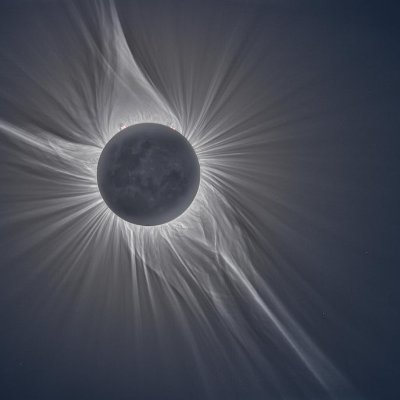
Breathtaking Video from Artemis II: Humanity’s First Close-Up Dance... with the Moon in Over 50 YearsWatch as the Orion spacecraft glides silently around the Moon, delivering jaw-dropping, high-definition footage that feels almost unreal.Craters sharp enough to trace with your finger. Dramatic, ink-black shadows stretching across ancient plains. The stark, airless horizon giving way to the infinite velvet blackness of deep space. Every frame pulses with raw beauty and profound isolation.This isn’t just stunning cinema — it’s history unfolding live.On April 6, 2026, during the mission’s thrilling lunar flyby, the Artemis II crew (Reid Wiseman, Victor Glover, Christina Koch, and Jeremy Hansen) captured these mesmerizing views while traveling farther from Earth than any humans since Apollo. They skimmed just thousands of kilometers above the lunar surface, passed behind the far side (losing all contact with Earth for about 40 minutes), witnessed a total solar eclipse from space, and saw breathtaking Earthrise moments that echoed — yet surpassed — the iconic Apollo images.These visuals are scientific gold: revealing fine geological details, testing Orion’s cameras and navigation in deep space, and giving us an intimate look at our celestial neighbor like never before.Every second of this footage pulls us one giant step closer to a permanent return to the Moon — and eventually to Mars.This is what the new era of exploration feels like: awe-inspiring, humbling, and full of promise. Which part hits you hardest — the rugged beauty of the lunar surface, the endless void of space, or the sheer fact that humans are back there again after half a century? Drop your favorite moment or reaction below!show more
Black Hole
21,945 просмотров • 5 месяцев назад