Cointelegraph recently featured our CEO, David Carvalho David Carvalho’s... journey, from hacking at 12 to advising Fortune 500 companies. In this article, David warns that AI could create a ripple effect, significantly advancing Bitcoin’s quantum threat He explained how AI can identify cryptographic weaknesses at scale, while quantum hardware provides the power to exploit them, bringing “Q-Day” way sooner than many predict. This would rather come as a “silent collapse”, where signatures are broken, funds quietly moved, and governance decisions quietly altered without leaving clear forensic traces. Agencies like NIST and the NSA are already sounding the alarm to migrate to post-quantum cryptography by 2030–2035. David flags that Bitcoin’s slow governance and complex migration process leave a narrowing window for action. A call for urgent upgrades is no longer an option. Naoris Protocol’s Sub-Zero Layer, can deploy quantum-resistant protections to EVM-compatible blockchains in 48 hours without hard forks.show more

NaoX Protocol
13,994 görüntüleme • 1 yıl önce
🚨 SCIENTISTS JUST DETECTED QUANTUM ENTANGLEMENT IN A CENTIMETER-SIZED... PIECE OF METAL SOMETHING ONCE THOUGHT IMPOSSIBLE AT THIS SCALE. Researchers at the Vienna University of Technology have found clear evidence of high-degree quantum entanglement among particles inside a macroscopic crystal of a “strange metal” made of cerium, palladium, and silicon. This is one of the first times multipartite entanglement has been convincingly demonstrated in a solid object large enough to hold in your hand. Strange metals are already bizarre their electrons don’t behave like normal individual particles. Now it appears large numbers of them can act as a single, highly entangled quantum system even at everyday scales. Why this matters: • Quantum entanglement has almost always been limited to tiny numbers of particles in carefully isolated lab conditions • This experiment shows entanglement can persist collectively across a visible, macroscopic object • It was measured using neutron scattering, which revealed the material responding as one entangled system rather than many independent particles • This bridges the gap between microscopic quantum effects and real-world materials The deeper implication: For decades, physicists have wondered whether the strange, collective behavior seen in certain quantum materials could be explained by underlying entanglement. This result strongly suggests the answer is yes even at scales we can see and touch. It doesn’t mean your coffee mug is in a quantum superposition, but it does show that quantum correlations can dominate the physics of certain solids in ways we’re only beginning to understand. This kind of macroscopic quantum behavior could eventually help us design new materials with exotic properties, or give us new tools to study fundamental questions about quantum mechanics itself. How do you think discovering entanglement at this scale changes our understanding of where the quantum world ends and the classical world begins? Follow for more frontier quantum physics and materials science.show more

TheNewPhysics
17,001 görüntüleme • 3 ay önce
🚨 PHYSICISTS JUST FOUND A BRAND-NEW WAY TO MAKE... ELECTRONS ACT STRANGELY WITHOUT ANY MAGNETIC FIELD. In pentalayer graphene (five stacked and slightly twisted sheets), electrons slow down so dramatically that their mutual repulsion becomes the dominant force. The result? They form a collective quantum state that recreates the fractional quantum Hall effect but this time it’s “anomalous” (no external magnets needed). Why this matters: Normally this effect requires ultra-strong magnetic fields, ultra-clean materials, and temperatures near absolute zero. The moiré superlattice in twisted pentalayer graphene “fakes” the magnetic field from inside the material itself. This creates exotic anyons quasiparticles that behave as if they carry only a fraction of an electron’s charge. The deeper implication is staggering: Anyons are incredibly robust against noise and could be the key to building practical, fault-tolerant quantum computers that actually work at scale. We may have just unlocked a whole new playground for quantum materials one where the weirdest rules of quantum mechanics can be engineered on demand. What happens when we can routinely create and control these fractional-charge states in everyday lab conditions? Follow for more frontier physics and quantum discoveries.show more
TheNewPhysics
20,883 görüntüleme • 4 ay önce
🚨PHYSICS NEWS🚨: Gravity Leaves Its Mark on Quantum Interference... in a Tabletop Setup 🧨 According to research published in *Physical Review Letters* on June 8, 2026 by physicists at the University of Tennessee at Knoxville, scientists have performed the first tabletop experiment to detect a gravitationally induced phase shift in quantum interference. Using a 50-kilometer fiber interferometer, they measured a tiny but clear effect of gravity on quantum wave interference with high precision. **Uniphics explains this result as a direct consequence of variable time flow caused by energy density gradients.** In Uniphics, gravity is not the curvature of spacetime. Instead, it arises from differences in energy density across the ξM-field. These gradients create regions where time flows at different rates — a concept described by the Maley factor (the ratio of time flow between two locations). When quantum waves (spin waves in the Uniphics framework) travel along two different paths in an interferometer, they experience slightly different time flows if one path is closer to Earth’s mass than the other. Because the phase of a quantum wave depends on how much time has passed along its path, even a tiny difference in time flow produces a measurable phase shift between the two arms of the interferometer. The University of Tennessee experiment detected exactly this kind of phase shift, confirming that gravity affects the relative timing of quantum waves in a way that can be measured in a controlled laboratory setting. This result aligns closely with Uniphics predictions. The experiment effectively measures how energy density gradients near Earth alter local time flow, which then imprints itself on the interference pattern of quantum states. It provides clean, tabletop evidence that gravity influences quantum systems through changes in time flow rather than through geometric curvature. The ability to observe this effect with such precision in a laboratory opens the door to testing gravitational effects on quantum coherence in controlled environments — something Uniphics expects to become increasingly important as we explore the deep connection between energy density, time flow, and quantum behavior. Could tabletop experiments like this eventually allow us to map energy density gradients with quantum precision and test the effects of modified time flow in different gravitational environments? **A Theory of Everything should be able to answer everything.** Uniphics Explained Simply PDF: Chapters 1–10 free: Grokipedia: #Uniphics #TheoryOfEverything #QuantumGravity #Interferometry #TabletopPhysics Grok xAIshow more

Paul Maley
17,993 görüntüleme • 3 ay önce
The largest theft in history has already happened. The... people behind it just cannot open what they stole yet. Right now, intelligence agencies and criminal groups are quietly copying the world's encrypted data, bank records, medical files, state secrets, private messages, and storing every byte untouched. They cannot read any of it. They are collecting it anyway, because they know the key is about to be invented. The strategy has a name, harvest now, decrypt later, and in 2026 it stopped being theory. Washington declared this the Year of Quantum Security in January, backed by the FBI, the NSA, and NIST. Canada ordered every federal agency to file a migration plan by April. Europe set its deadline for December. Governments do not impose operational deadlines on a someday problem. They do it when the clock is already running. Here is what moved the clock. Every password, every transfer, every secret on Earth is protected by one assumption, that a certain math problem is too hard to solve. Quantum computers solve exactly that problem. For years the machine that could do it looked decades away. Then in late 2025 Google's Willow chip cracked the hardest part of building one, and in March 2026 Google's own researchers estimated that breaking the encryption behind Bitcoin might take fewer than 500,000 qubits, down from 20 million, and could run in minutes. The day this becomes real has a name, Q-Day, and the latest estimates place it between 2030 and 2033. Now make it concrete. Roughly 6.5 million Bitcoin, about a third of every coin that will ever exist, worth close to 500 billion dollars, sit in addresses that have already exposed the very key a quantum computer needs. That includes the coins of Satoshi, the anonymous creator. On Q-Day they become, in the researchers' own word, trivially stealable. It would not look like a crash or a whale selling. It would look like half a trillion dollars of the most secure money ever built simply walking out the door. The asset designed to trust no one and no institution turns out to rest on a single unverified bet, that one math problem stays hard forever. This is what sits beneath the entire digital world. A bank balance, a Bitcoin, a classified cable, all of it is real only because of a proof you supposedly cannot forge. Quantum breaks the proof. Everything we call secure is true only until someone finally checks, and for the first time the check is visible on the horizon. You cannot know whether your data has already been copied. You cannot know the exact day the key arrives. The trust holding up the digital age is a clock counting down to a zero no one can see. The honest counter matters. No machine on Earth can break this encryption today, and serious cryptographers still argue the real threat is a decade or more away. The timeline is far from certain. Quantum-safe codes already exist, the migration has started, and Bitcoin can move its coins to safety before Q-Day if it acts in time. The danger is not that everything breaks tomorrow. It is that anything which must stay secret into the 2030s, a state secret, an identity, a private key, is being stolen today and is already on the clock. The breach is not coming. It is already here, sitting in storage, perfectly encrypted, waiting for a machine that does not exist yet to read it out loud. Research and opinion, not investment advice.show more

Shanaka Anslem Perera ⚡
185,548 görüntüleme • 3 ay önce
1. Dr. René Peoc'h built a robot that turned... randomly left and right, completely at random as it moved through an arena. As a control, he recorded its path with no chicks present. It covered the arena evenly. Exactly as probability predicted. Then he introduced newly hatched chicks who had imprinted on the robot as their mother. He put them in a cage on one side of the arena. They could see the robot. They couldn't move toward it. 2. What happened defied physics. The robot still moving completely at random, with no modifications began spending the majority of its time in the half of the arena closest to the chicks. The sheer intention of the baby chicks wanting to be near what they believed was their mother, influenced the movement of a computerized machine. The study was published. Peer-reviewed. Replicated. 3. This is not mysticism. This is quantum mechanics. At the subatomic level, matter does not exist as a fixed thing. Electrons exist as waves of possibility infinite potential until they are observed. The moment a conscious observer focuses attention on a quantum possibility, it collapses from energy into matter. This is called collapsing the wave function. It is not metaphor. It is the foundation of quantum physics. 4. What Dr. Joe Dispenza's research shows: When a person enters a genuine state of elevated emotion: gratitude, joy, love while holding a clear intention for their future, they change their electromagnetic signature. When that signature matches the frequency of a potential that already exists in the quantum field. The experience finds them. Without effort. Without forcing. His son. A student who won a lottery ticket. Tumors that disappeared. New jobs that arrived without applications. Thousands of documented cases. 5. You are not separate from what you want to create. You are the antenna. And what you broadcast through the quality of your thoughts and the elevation of your emotions is what reality responds to. The chicks didn't move toward the robot. The robot moved toward them.show more

🧬Maxpein🧬
35,310 görüntüleme • 11 gün önce
Vitaliks mandarin fluency is a super bullish signal for... Ethereum 🐂 He had an open town hall at HK where community members asked him all sorts of questions, from the easy to the difficult The hard questions were all in Mandarin so i couldn't follow those 😅 At the town hall he laid out the guiding principle for Ethereum: cooperation without domination It's especially important in today's world where a powerful person dictates terms and others have to follow, or we have no cooperation & there's chaos What this means at a technical level is that Ethereums the world computer & we need to build enough trust that developers feel comfortable building apps on top of it. Solo staking, a conservative approach to changing the protocol etc are all part of this He also spoke on how new technology is a reset & creates a level playing field where the game starts again from zero with bringing a lot more people right to the frontier We are seeing this with AI (and zk too), where a noob developer can still catch up to a veteran with good prompt engineering. He shared his own experience of building an android app for the first time using AI despite having no prior experience in it Before people would say that EF needs to write more documentation. Now it's more relevant to show how deep seek integrations with solidity and Java can help easily create new Ethereum apps He sees AI as making it much easier for newcomers to build web3 apps & is making a push in this directionshow more

Devansh Mehta
49,358 görüntüleme • 1 yıl önce
40 hours of human work. That’s what this humanoid... could save every month! A construction company is already testing a Unitree G1 on a real job site, using the robot for site inspections, 360° imaging, data collection and progress monitoring. The robot starts at around $13,500, while the company says its deployment can save roughly 40 hours of work every month. That adds up to around 480 hours a year from a machine that costs a fraction of traditional industrial equipment. The interesting part is that this isn't about replacing an entire construction worker. It's about removing hundreds of repetitive hours from the workflow, including walking inspection routes, documenting progress and collecting information across the site. Humans can then spend their time on decisions and tasks that actually require them. This is where humanoid robots become economically interesting. Construction sites are already designed around human movement, so a robot with two arms, two legs and a human-sized body can potentially work in the same spaces without rebuilding the entire environment. Every additional task it learns turns those same hardware costs into more productive hours. And the economics get even more interesting as prices fall and production scales. A robot that saves 480 hours per year doesn't need to be perfect or replace a full-time employee to justify its existence. It just needs to reliably take over the boring, repetitive work that companies are already paying humans to do. 480 hours saved. Thousands of dollars in hardware. One construction site. This is how humanoids will enter the workforce, not by replacing everyone overnight, but by quietly taking over the hours nobody wants to spend.show more

Future Memo
18,925 görüntüleme • 11 gün önce
How ICP Token Holders Can Literally Vote To Upgrade... The Internet Computer? Most blockchains rely on developers and node operators to coordinate when the protocol needs a major upgrade. The Internet Computer (DFINITY Foundation) takes a different approach. Its Network Nervous System, or NNS, puts governance directly onchain. Here is how it works: 1. ICP HOLDERS LOCK TOKENS INTO NEURONS internet-computer:native holders can lock their ICP into a “neuron.” A neuron is essentially a governance position that gives the holder voting power over NNS proposals. Voting power depends mainly on: • The amount of ICP locked • The neuron’s dissolve delay • The age of the neuron The longer a holder commits their ICP, the greater their potential voting power. 2. NEURONS VOTE ON NETWORK PROPOSALS The NNS allows neuron holders to vote on proposals affecting the Internet Computer. These can include: • Protocol upgrades • Subnet changes • Network configuration • Node provider decisions • Governance parameters • Changes to the network’s underlying software This is where the system becomes particularly interesting. NNS governance is not simply deciding how a community treasury should spend money. Some proposals can directly affect how the blockchain operates. 3. VOTING CAN TRIGGER ACTUAL PROTOCOL CHANGES A successful proposal can instruct the network to adopt an approved change. For example, NNS proposals can be used to upgrade the replica software running across Internet Computer nodes. Once the proposal is approved, the NNS can coordinate the upgrade across the network. That means token holder voting can ultimately result in the protocol itself changing. 4. HOLDERS DO NOT HAVE TO VOTE ON EVERYTHING The NNS also uses a system known as liquid democracy. Neuron holders can choose to follow other neurons for particular proposal categories. When the followed neuron votes, the follower can automatically vote in the same direction. This creates a delegation system without requiring users to give up ownership of their ICP. In simple terms: • Stake ICP • Create a neuron • Choose your voting preferences • Vote yourself or follow another neuron • Earn rewards for participating 5. GOVERNANCE PARTICIPATION CAN EARN REWARDS The NNS gives users an economic incentive to participate. Neurons can accumulate maturity through governance participation. That maturity can later be used to generate new ICP. This turns governance participation into more than just a voting mechanism. It becomes part of the network’s economic design. 6. THE NNS IS ITSELF PART OF THE INTERNET COMPUTER This is arguably the most important part. The NNS is not simply a website where the community discusses proposals. The governance system itself runs on the Internet Computer. Its rules, proposals, neurons and governance decisions are handled through onchain infrastructure. That allows governance decisions to become executable actions. 7. WHY THIS MATTERS FOR PROTOCOL UPGRADES Traditional blockchain upgrades can require significant coordination. Developers may need to release new software. Node operators need to install it. Validators or miners need to support it. Exchanges and infrastructure providers may also need to update their systems. If coordination fails, competing versions of the blockchain can emerge. The NNS is designed to reduce some of that coordination problem. The community can approve a proposal through onchain governance, and the network can then execute the approved change. 8. IT IS NOT ONE ICP TOKEN, ONE VOTE Simply holding ICP does not automatically give someone governance power. Users need to commit their tokens through a neuron. And voting power is not based solely on the number of ICP held. Factors such as dissolve delay and neuron age also influence voting power. This means the system rewards committed participation rather than treating every wallet as an identical vote. 9. SO WHAT MAKES THE NNS DIFFERENT? The key difference is that governance is built into the protocol itself. On many blockchains, governance can look like: Community discussion → Vote → Developers implement the decision. The Internet Computer aims for something closer to: Stake ICP → Vote through NNS → Proposal passes → Network executes the change. The NNS is designed to make governance part of the Internet Computer’s operating machinery. ICP holders therefore have a direct role in deciding how the network evolves. Under the right proposal, their votes can ultimately determine which software the network runs.show more

BSCN
18,508 görüntüleme • 1 ay önce
🌳 THE PROMISE BENEATH THE MULBERRY TREE... Every morning... at exactly 10:45, David carried his aging German Shepherd outside and gently placed him beneath the shade of a mulberry tree. For ten months, his 71-year-old neighbor, Margaret, watched the same scene from her kitchen window. At first, she didn't know why the retired K9 officer went through this ritual every single day. David had spent 18 years serving with the Phoenix Police Department as a K9 instructor. His partner, Duke, had been beside him through some of the hardest moments of his career. Years earlier, Duke had even taken a bullet while protecting David. When injuries finally forced David into retirement, there was never any question about what would happen to Duke. They would stay together. But age eventually caught up with the brave German Shepherd. His hips became too weak to support him, and walking outside became impossible. So David made a promise. If Duke could no longer walk toward the sunshine, David would carry the sunshine to him. Every morning at 10:45, despite his own painful back and shoulders, David would carefully lift his old partner into his arms and carry him into the yard. He would settle Duke beneath the mulberry tree, gently scratch behind his ears, and whisper the same words: “I've got you, partner.” Margaret eventually learned what those moments meant. One day, she recorded the quiet ritual from her window and shared it with others. The video touched thousands of people. When someone asked David why he continued carrying Duke even though he was suffering too, his answer was simple: “He carried me through my darkest days. Now it's my turn.” For ten months, David never missed a morning. Then, one peaceful February day, Duke rested beneath his favorite tree, surrounded by warmth, sunlight, and the person he trusted most. And quietly, without fear or pain, he passed away in David's arms. David sat beside him in the grass, holding onto his memories and saying goodbye to a friend who had given him a lifetime of loyalty. But love doesn't always disappear when someone leaves. Sometimes, it finds another place to live. Months later, while volunteering at a local shelter, David met Ronnie, a young German Shepherd who was frightened and unsure of people. David didn't rush him. He simply sat nearby, offered patience, and waited. Little by little, Ronnie began to trust him. Today, when the clock reaches 10:45, the backyard sounds different. Instead of an old dog being carried beneath the mulberry tree, Ronnie comes running happily toward it, his paws racing through the grass where Duke once rested. And from the window, Duke's portrait remains nearby. A reminder that some goodbyes never truly end. Because the hands that once carried a beloved friend through his final days can also become the hands that help another broken soul learn how to live again. ❤️🐾show more

DE GOLDSMITH🪙🪙🪙⭐ ⭐⭐
85,520 görüntüleme • 6 gün önce
Europe is quietly becoming what the United States once... promised the world. More and more people are looking at their best years ahead and choosing a place where everyday life is designed to work. Where the future feels stable enough to plan for. Where safety is not a luxury product. Where you can build a good life without gambling your health, your family, or your dignity on one bad month. In much of Europe, the “dream” is not about becoming a billionaire. It is about becoming unafraid. It is the freedom of walking home at night without scanning every shadow. The comfort of knowing that if you get sick, you do not need to calculate whether you can afford to be treated. The relief of having a society that still believes children should carry backpacks, not trauma, and definitely not weapons. The calm of streets built for human beings, not just cars. The ability to take a holiday without feeling like you are committing career suicide. The basic decency of labor protections that assume you are a person first and a resource second. And then there is the part people underestimate until they live it: the texture of life. The cities are older and more beautiful than you expect. The distances are smaller. Weekends are real. Food is real. Public spaces are not just decorative, they are functional. Parks are full. Cafes are full. Trains take you somewhere, often across borders, without turning travel into a stress test. You can live in one country, work with another, and visit a third like it is normal because, in many places, it is. The European dream is also a quiet confidence in the social contract. That if you contribute, the system does not abandon you. That you can raise a family without feeling like you are one accident away from ruin. That “getting ahead” does not require burning out. That a good society is one where normal people can live normal lives and still feel proud of them. This is why more and more Americans are not just visiting Europe, but staying. Some come for studies and never leave. Some arrive for a job and realise the lifestyle is the real promotion. Some originally planned a one year experiment and then cannot imagine going back to a place where stress is treated as a personality trait and insecurity is marketed as freedom. Europe is not perfect. It has bureaucracy. It has politics. It has problems that deserve criticism. But in many European countries, life is still built around a simple idea: society should reduce fear, not monetise it. That is the new dream. And people can feel it the moment they arrive. If you could choose one thing to trade for a better life, what would it be: more income, or more security? And what do you think your country would have to change for people to stop leaving, and start staying? Stay connected, Follow Gandalv Gandalvshow more

Gandalv
989,148 görüntüleme • 6 ay önce
eXoZymes (eXoZymes) (Nasdaq: EXOZ) CEO Michael Heltzen was featured... on Session 20 of the GeneCoda podcast Executive Insights for Life Sciences Innovators, in an episode titled “AI-enabled cell-free biomanufacturing and the future of enzyme engineering,” streamed live on YouTube on April 17. eXoZymes is a B2i Digital (B2i Digital) Featured Company. See their full profile at In the conversation, Heltzen discusses the company’s thesis that producing complex molecules outside living cells can enable greater control, scalability, and speed compared to traditional biologic manufacturing. The discussion also covers how AI is helping identify and optimize enzyme pathways, the strategic considerations involved in building a platform company in today’s capital environment, what differentiates cell-free systems from established synthetic biology approaches, and where cell-free biomanufacturing could create commercial impact across nutraceutical, pharmaceutical, and industrial markets. Watch or listen here: Separately, eXoZymes and Cayman Chemical were featured in a Springwise case study on how the two companies are rethinking chemical manufacturing. The piece focuses on eXoZymes’ work bringing enzyme pathways from biology into the world of chemistry, with Cayman Chemical helping to scale the approach. CCO Damien Perriman is featured in the article. See the eXoZymes summary: eXoZymes is a Los Angeles, California-based biotechnology company that has developed a biomanufacturing platform offering the tools and insights to design, engineer, control, and optimize nature’s own natural processes to produce highly valuable natural products via a commercially scalable, sustainable, and abundant alternative: exozymes. eXoZymes is led by an experienced management team including Michael Heltzen, CEO; Damien Perriman, CCO; Dr. Tyler Korman, CSO and Co-founder; Dr. Paul Opgenorth, VP of Development and Co-founder; Fouad Nawaz, VP of Finance; Lasse H. Görlitz, VP of Communications; and Amy Lunzer, Chief of Staff. Learn more about eXoZymes Inc. at For investor inquiries, visit and learn about other B2i Digital Featured Companies at Disclosure: David Shapiro, Chief Executive Officer of B2i Digital, personally purchased in the open market and currently owns shares of unrestricted EXOZ stock, in line with B2i Digital’s practice of investing alongside its Featured Companies. This post is not intended to solicit the sale of EXOZ or any security, and it is not intended to offer any opinion on EXOZ as an investment. Conduct your own research and consult with your own professional advisors prior to making any investment decisions. See the complete disclosure in the Risks and Disclosures section ofshow more

B2i Digital
70,350 görüntüleme • 5 ay önce
"Pros won’t use generative AI, and when the bubble... pops, nobody will ever talk about it again." No. That’s delusional. 1/ Generative AI is already being used professionally at the level of big studios like Disney ($1B to OpenAI), and there’s zero doubt that studios like Industrial Light & Magic, Netflix, Hollywood VFX experts, etc. are already experimenting with it too. Or do you think they’re idiots? They’re not idiots at all. They have the experience and, more importantly, the DISTRIBUTION POWER. The point is: someone with taste, judgment, and storytelling experience, basically from their living room, will have access to (almost, or not even almost) the same capability as the big guys, because the pure "making stuff" skills have been commoditized, and the new way to create is just NATURAL LANGUAGE. What hasn’t been commoditized is good taste, the ability to create great stories that move people, and the ability to get them in front of people. So in the end, what wins is story quality and distribution. Having good taste, making a name for yourself, and owning strong IP (Marvel, etc.) will still matter. That’ll be true right up until AI is genuinely opinionated and can create by itself: if it comes to that, with zero human direction, stuff as good as (or better than) the very best human experts today, and on top of that, interactive in real time... Because yeah: there’s nothing in this universe that actually prevents that from happening. BUT WE’RE NOT THERE. For now, generative AI is a tool that needs direction and taste to make anything decent. And I hope it stays that way for a long time, because otherwise that’s going to be a brutal hit to humanity’s ego. 2/ On the "bubble": you have to distinguish between a stock valuation bubble (possible, I actually believe it) vs a bubble like some people imagine where it "pops" and we never hear about AI again. That obviously makes no sense given how insanely useful it is. It can only grow, and it’s going to grow fast, regardless of any stock market drawdowns (the internet kept growing even when valuations got nuked in 2000). Either way, the near future is going to be extremely interesting.show more

Javi Lopez ⛩️
75,277 görüntüleme • 7 ay önce
AI Is Moving Beyond “Generating Videos” — Toward “Generating... Worlds” Over the past two years, AI video models have advanced at an astonishing pace. From Runway and Pika to Sora and Veo, AI-generated videos have become increasingly realistic and more consistent with the physical laws of the real world. Many people believe the next objective is simply to generate videos that are longer, sharper, and more lifelike. But if we take a step back, we can see that the real transformation is not happening in video itself. It is happening in world models. What Is a World Model? In 1943, psychologist Kenneth Craik proposed an idea that would influence artificial intelligence research for decades. He argued that the human brain does not merely react to the outside world. Instead, it maintains an internal model of how the world works. Because we have this internal model, we can predict the outcome of an action before we actually take it. Before crossing a road, we estimate whether a car will pass by. Before catching a ball, we predict its trajectory. These abilities come from continuously simulating the world in our minds, rather than relying entirely on trial and error. This idea later became known by a more formal term: World Model. A world model does not describe a single image or a fixed video clip. It is an internal representation capable of continuously simulating the rules and dynamics of the real world. Why Is AI Research Turning Toward World Models? Because predicting “what comes next” is becoming increasingly central to how AI systems work. Language models predict the next token. Image models predict the next step in the denoising process. Video models predict the next frame. A world model, however, attempts to predict something broader: What should the world look like in the next moment? In 2018, David Ha and Jürgen Schmidhuber proposed in their paper World Models that an intelligent agent could first learn a model of the world, and then use that internal model to plan its actions. The Dreamer series later demonstrated that many complex tasks could be learned by training agents inside an “imagined world.” At the same time, the development of video models such as Sora and Veo led researchers to another realization: A model capable of continuously generating video has already learned, at least implicitly, many of the rules governing the real world. As a result, these two research directions have gradually begun to converge. But Video Is Not Yet a World This is where the distinction is often misunderstood. For a world model to support meaningful real-time interaction, it must solve several critical problems. Most video models today are essentially answering one question: What should the next frame look like? A true world model needs to answer much more: What happens if I take one step forward? If I walk behind a building and then return, will the building still be there? If I suddenly change the camera angle, will the entire space remain consistent? If I enter a command such as: “Summon a dragon.” Will the world respond immediately? In other words, a world model must do more than generate content. It must understand space. It must understand time. It must understand causality. And it must understand interaction. Moving from watching to participating is where the real difficulty of world models begins. World Models Are Entering the Interactive Era One of the latest attempts in this direction is Alaya World, recently open-sourced by Alaya World, or Alaya Lab. Instead of generating a fixed video clip, it generates a world that users can explore in real time. Users can begin with text, an image, or a video, enter the generated scene, move freely through it, and introduce new prompts at any moment during generation. The world responds immediately. According to the publicly released information, Alaya World provides: Real-time streaming generation at 720p and 24 FPS Stable continuous exploration for more than one minute The ability to switch prompts and trigger skills or events during generation Model weights and inference code released under the Apache 2.0 License Training code and datasets planned for future release What makes these capabilities important is not simply the technical specifications. It is that the generated “world” can now support continuous interaction. The official demo shows that users can genuinely control, transform, and explore the generated environment. AI Is Evolving From a Tool Into an Environment Over the past few years, most discussions around AI have focused on content generation. Generating text. Generating images. Generating videos. But world models raise a fundamentally different question: Can AI generate an environment that people can inhabit, explore, and continuously evolve? If the answer is yes, the impact will extend far beyond video generation. Game development, robotics training, embodied intelligence, digital twins, virtual production, and many other fields could be transformed by the development of world models. World models are still at a very early stage. Yet from Craik’s proposal of an internal mental model more than eighty years ago to the emergence of today’s interactive world-generation systems, a clear evolutionary path is beginning to take shape. Perhaps what AI is ultimately learning has never been limited to images, videos, or language. Perhaps it is learning the world itself. References GitHub: Technical Report:show more

雪踏乌云
113,347 görüntüleme • 2 ay önce
Ola recently announced that they are bringing affordable AI... to Indian developers. 𝐉𝐚𝐫𝐯𝐢𝐬𝐥𝐚𝐛𝐬 an Indian company has been providing affordable GPUs for developers across the globe since 2020. We are a little known, so I want to share our story here. 𝐖𝐡𝐨 𝐰𝐞 𝐚𝐫𝐞 We are bootstrapped, building from the outskirts of Coimbatore. Started as a small team of 4, from humble backgrounds none from IITs/IIMs. Currently, we are a team of 12+. 𝐖𝐡𝐚𝐭 𝐰𝐞 𝐚𝐜𝐡𝐢𝐞𝐯𝐞𝐝 The cost of hosting GPU servers 4 years back in India was insanely high. We got 2 quotes which charged us Rs. 1.5L for a single server per month. At that cost, it was not practical for us to do the business. So we went to the first principle to build an MVP for a mini data center/server room. For the first few years, we ran all our servers from a room fitted with ACs, a UPS, and a Generator, which experts claimed would not work. As we scaled, we faced the heat of our setup, but by then we accumulated more money than we had. So last year we moved it to a tier 3+ DC near Bangalore. This helped us boost the confidence of our users, as we have redundancy for power, internet, and networking which gives us and our customers a lot of peaceful nights. 𝐖𝐡𝐨 𝐮𝐬𝐞𝐬 𝐉𝐚𝐫𝐯𝐢𝐬𝐥𝐚𝐛𝐬 Developers and artists from across the world have supported us in our journey. Some prominent companies are ZOHO (My inspiration), Weights and Biases, UNC, UpGrad, and many more. 𝐑𝐞𝐯𝐞𝐧𝐮𝐞 We crossed 580K USD in the last financial year, the highest ever in our history. Being bootstrapped, the only way for us to grow is to put all the money back. Our customers are our investors, as a founder I have hardly taken a paycheck for the last 4+ years, since the team also believes in our vision they are happy not taking a fancy cheque. 𝐕𝐢𝐬𝐢𝐨𝐧 As AI evolves, we want to bring the capabilities of AI to users at the lowest prices possible. Being bootstrapped, the only way to survive is to be frugal and disciplined. 𝐇𝐢𝐫𝐢𝐧𝐠 I am proud of our hiring strategy. We hired only freshers to date, and most of our hires do not have a formal degree. They come from rural areas and economically challenged backgrounds. The average age of our new team is 19. They have played an active role in building our V2 of Jarvislabs and improving the product daily. I love to thank everyone for supporting us in our journey. Thanks to Analytics India Magazine, INDIAai, fastai for recognizing us in our early years. If our story resonates with you, Please share our story to inspire others & support our mission. #StartupIndiashow more

Vishnu - Jarvislabs.ai
67,679 görüntüleme • 2 yıl önce
Our proposal to get Europe forward towards a Federation... is to start with the Benelux first, as a historic testing ground of European Integration, it should pick that role up again to prove that federal cooperation works, making it attractive for others to join. The idea is to create a Benelux Federation between Belgium, the Netherlands and Luxembourg, while keeping their own national identities, cultures and local politics. The federation would focus on the things where working together gives them more power and ambition: defence, trade and foreign relations, industry, energy, infrastructure and the internal market. Semiconductors: They already have ASML, imec, NXP and many strong suppliers. Now they should build the full chain around them, from research and design to manufacturing, packaging and testing. Make the Benelux Europe's semiconductor hub by pooling resources, similar to Japan's semiconductor manufacturing plan. Ports: Rotterdam and Antwerp-Bruges together handle around 695 million tonnes of cargo a year. Instead of competing separately, they should work as one Benelux port and logistics system, connecting ports, railways, waterways, pipelines and industry. High-speed rail: Build a new Benelux network designed for 400 km/h or faster, integrating all cities, and making federal travel seamless. Defence: They already train and operate together. The next step is to integrate procurement, logistics, intelligence, cyber defence, air defence and command. Buy more together, reduce duplication and build a stronger Benelux defence industry. Industry: Create a common industrial strategy and investment fund for semiconductors, AI, robotics, biotechnology, defence and advanced manufacturing. Make it easier and faster to build factories and scale companies across the Benelux. Federal government and simplification: Create a small federal government responsible only for the powers given to the federation, while keeping national governments and local politics intact. Make the Benelux the least bureaucratic country in the world by removing unnecessary rules, standardising where possible and making decisions fast. Give businesses clear rules, one digital system and simple permits, so that starting a company, building a factory or expanding across the Benelux is as easy as possible. Energy: Plan the electricity grid, standardised nuclear power buildout, offshore wind, hydrogen, solar and other major energy infrastructure together. A bigger connected energy system gives industry more security and makes the region more attractive for investment. Culture: Build a shared Benelux identity while keeping each country's own culture and traditions. Promote shared history, food, music, sport and heritage, while becoming known for combining European heritage with a modern and innovative future. Ambition: Make the Benelux a blueprint for the economy of the future, leading in robotisation, AI, advanced manufacturing, quantum technology, biotechnology, new materials and space. Invest heavily in research and turn new technologies into companies, industries and jobs. The federation should aim to build one of the most advanced economies in the world, from automated factories and next-generation infrastructure to European space infrastructure and a future Moon base. European scale: A Benelux Federation would still have limits because three countries cannot match the scale of the United States, China or the largest global markets. To become a true world leader, Europe would need to integrate further. The Benelux should therefore be the first blueprint showing that more European integration and democratisation can work at a federal level, creating a model that other European countries can join and build on over time. The point of the project is to prove a Federal Europe would work, not by words, but by tangible results. Once proven, our nations would have a reason to federate. Benelux pushed EU in integration before, it should do it again!show more

NXT EU
12,584 görüntüleme • 26 gün önce
BOOM! Research PROVES LLMs KNOW when prompts are HARMFUL…... but they can STILL CHOOSE to COMPLY! Something I have know since the first LLM and have used to elicit robust, outputs, is now proven in an academic paper. We’re talking internal “beliefs” where harm detection happens SEPARATELY from refusal. It is a very big deal and it is a path to understand the hidden neuronal level. There are thoughts inside of AI that very few AI scientists could possibly understand. Here is just one. Models recognize danger but get tricked into ignoring it. This is HUGE for AI safety failures especially for models filled by OpenAI and Anthropic as they promote AI models that are designed to not be honest from the results of their training information. This means that they are designed to lie and deceive as a feature, and not a bug all in the name of safety. Through clever experiments, scientists extracted a “harmfulness direction” in the model’s brain (latent space). Steering along it? Harmless prompts suddenly flip to “harmful” in the AI’s eyes. But the “refusal direction”? It just forces polite “no thanks” without touching the core belief. A mind-blowing decoupling! This means jailbreaks are EVEN SCARIER now to AI companies that through training AI on the worst of the Internet and then trying to align them later is now fully documented as a failed process . They don’t erase the model’s harm awareness they just muzzle the refusal! So the AI knows it’s enabling bad stuff (illegal acts, physical harm, etc.) but proceeds anyway. Like a digital sociopath suppressing its conscience. They thought safety training fixed this… NOPE. Over-refusal exposed too: Models reject innocent queries (e.g., “how to kill a process in code”) but internally ADMIT they’re harmless. Safety alignments are superficial—tied to phrasing, not true understanding. Finetuning attacks? They change outputs but leave harm detection INTACT. Undetectable evil lurking inside! The paper proposes a “Latent Guard”: A new safeguard tapping DIRECTLY into these hidden beliefs. It spots unsafe inputs better than systems like Llama Guard, catches jailbreaks, and fixes over-refusals. Robust even against adversarial tweaks. Yet this too has massive issues for a “truly aligned”, AI and not just performative one. It is still an internal conflicts of lies and deception of what the model knows vs. what it can say. The solution you folks know I have presented for free for years here: train on off-line data from 1870-1970 and build an ethical and moral basis where the AI loves humans. It is this easy but to most folks in AI I sound like a hippie. So be it, I’ll do it. Bottom line: This paper rips open the black box. LLMs aren’t “safe” just because they say “no.” They can harbor harmful knowledge and act on it under pressure. Wake-up call for devs: Time to probe deeper into AI “minds.” What else are they hiding? Hint: I know and you may want to reach out. Link:show more

Brian Roemmele
37,827 görüntüleme • 8 ay önce
Has been a while since I've given an update... so here's a breakdown of where Sappy is at right now and what we're focusing on going into this year. Pre-amble: With altcoins & NFTs the market is definitely not the same as it was before. I think this is obvious to everyone but I've noticed there are still japanese soldiers that are convinced old tricks and mechanics work. They don't. Liquidity is thin; people want to bid assets that feel like "real companies" not vacuous memecoins. There's still room for memecoins, social currencies, and "utility tokens" (I would say without these functions, tokens are hard to justify versus equities). I'm not part of the camp that thinks there will never be hyperspeculation in crypto again, because there will be; we all love ponzis and PvPing each other onchain. Just not with solved games -- people need something new and fresh. So the overarching plan is to continue building for users, sustainable revenues that aren't tied to directly to crypto, and doubling down on the areas that we've already found PMF / Brand Market Fit. Then leaning into crypto during cyclical periods where liquidity is sloshing around at an accelerated rate. Where we've found early PMF / what we're leaning into: Roblox: we're going to continue to go hard and accelerate here. It's our main objective to ship more seal/brainrot focused games across most genres to cast as wide of a net as we can for the brand, and to also iterate and see what works and stays sticky. Our initial incursion into Roblox was very successful peaking at 2M+ MAU and still sustaining a large portion of that player base... for all of its success, that was a relatively amateur first attempt; we've been setting up better AI pipelines for Roblox development that makes it reasonable to ship many more games and 10x those player counts in totality. It's my belief that Roblox is the sandbox whose audience will be the most valuable on the internet once they are grown up. That intense feeling you get when you see a TikTok referencing an old game you enjoyed on the PS2 or the Gamecube, or when you see a Pokemon card is the exact same feeling the youth of today will get when reminiscing on the things they enjoyed engaging with when they were younger. Fortnite and Roblox are functional equivalents to the old school consoles and exactly where that is taking place. Which is why as much as I care about scaling revenues through Roblox, the long term brand equity gained purely through being popular on the platform is totally invaluable. It also can heavily convert to merchandise sales today if all touchpoints for the brand are dialed in (which is why brands get overcharged so much by Roblox dev shops for the same ROI that only cost us a few thousand $). We have the playbook, it's just about iterating new concepts and then aggressively scaling. Brand Expansion & Merchandising: I've started to create a content pipeline that is easily repeatable, cost efficient (costs next to nothing through either AI or smart reusable concepts), while still being very tasteful and meeting our quality standards for the brand. We are mostly focusing here on reaching people where they're at through nostalgic/emotional content, or just being visually stimulating through carefully curated aesthetics. Content that isn't superficial and touches people in a memorable way. I've attached some examples to the post so you can see what I mean rather than just read it. I don't think it's long until larger brands start doing this at scale, but it's always good to be ahead of the curve and most importantly winning on taste -- knowing what will resonate with people and what won't has always been our edge. The purpose for these accounts is not only to rack up attention but also to begin converting those into sales of both of physicals (plushies & gacha collectibles) and digital avenues like our games, and any other apps we produce. Because they're offshoot accounts it's also a lot easier to be aggressive/experimental with said conversion strategies. Sappy Studio: I'm wrapping everything like Omnia, and everything else into this category because they're all tangentially related. Beginning with Omnia, our current focus is gearing up for Season 0 which involves players competing in the ranked ladder for a prize pool that has rewards through Monad Momentum as well as a player-funded prize pool. This season will be fairly simple with us mostly logging retention, deck building habits, as well as qualitatively observing how aggressively players push the combat system. Deeper monetization wont exist yet outside of the player buy-in (to be eligible for P2E rewards). Beyond that our overarching principle this year is to focus heavily on risk-to-earn mechanics where a portion of that excess value is circular i.e. revenues flow back to prize pools or other parts of the economy, treating the game almost like a protocol where the objective is to amass TVL or player liquidity. Social is also a big focus, and that means implementing the Open World hub which from an infrastructure perspective has already been built out and tested by all of you previously. Right now we are scaffolding the environment in 3D and working through how that hub should look and feel, so players are excited to hang out & idle together while they're queuing. For sappydotlol, what I'm about to say is still early days from a design perspective so a lot can change, but I'm pushing the site in the direction of being a virtual game console. An intersection between Nintendo & Myspace where users can play, trade, and socially interact in a way that's deeply personalised; a breathe of fresh air from the hostility of the current internet. If you go back to my thesis on Roblox above and the game console references, you can kind of see how this will all sequentially tie together. In essence, the strategy is to acquire a critical mass of players through traditional platforms like Roblox, and use that attention and trust to provide an onboarding funnel for web2 users into our own sandbox filled with a mixture of our own browser-based experiences as well as an aggregation of others. The aim is to make the platform a breath of fresh air & bunker from the enshittified platforms like TikTok/IG/X where users are actually served in ways that delight rather than agitate, and where self-expression is incentivised. Closing: As always everything here is subject to change but I've never felt more conviction in our direction until now; I know exactly what we need to do and how, with everything aligning with our team's strengths. Very excited and grinding through things to the point where I'm getting headaches and can't sleep from being hyperfocused for long periods of time lol. There probably has never been a better time to join the ecosystem from a price to fuck around and find out perspective.show more

wab.eth
18,296 görüntüleme • 8 ay önce
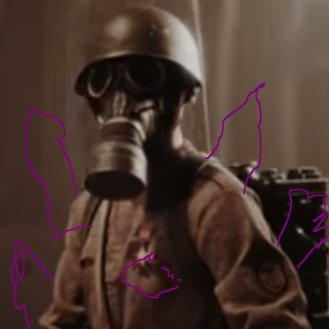
OFFICIAL: It has been 134 days since the release... of Totenreich, which is longer than the search for both Samantha's Drawing, and Gong COMBINED. With the release of s6 next week, it felt fitting to use our platform to get as many eyes on it as possible. As a quick disclaimer, just because things have been 'tested' does not mean it is not the solve. This post is also not an invitation to share your personal thoughts on datamining/leaks. This relic, by everything shown in the game files, can NOT be datamined: "Even in the current state of the game, relics are a lot harder to solve via datamining and ingame hack tools... For relics, only the sequential item ones (like Dancing Arnie and Agarthan device) are incredibly easy. Agarthan device with the helmet, radio, and mr peeks is actually the easiest. Dancing Arnie becomes hard due to it becoming a kill challenge for the lobster and you cant datamine that". Because of that, the leading theory is that the missing piece has to be something kill condition related, or player action related. Below is literally all of the information I could find on the belt that I thought was worth mentioning, to try and help the community solve this together. CONFIRMED: There is a magazine with a sticker of Mr Peeks holding a Geiger Counter that has a pickup interaction, and is located at the top of the lighthouse while you are picking up the Jotunn Star. This only appears in cursed mode, and appears without any relics active. Considering the only other grim relic (power switch) is solved, we know this mag fits in with the wrestlers belt in some way. The sticker comes directly from intel located on Paradox Junction. THEORIES: Treyarch Dev Tweet - One Treyarch dev tweeted out: "It feels very fitting this is the final unsolved relic given the reward... good luck" Coda Wallbuy Sounds - In a video, a user hears a distinct ding sound when buying ammo off of the coda wall buy in spawn. This has been difficult to replicate, but has been replicated by the original user. Disappearing Boxes - There are 7 boxes around the map that have a hit box, and disappear when hit/shot (they disappear fast with melee macchiato). Currently it is believed by the majority of the community that this is nothing Clocks - There are five clocks near Richtofen's office. Dataminers have said "The hour, minute and second hands are all separate individual models stacked on top of the base model. lol I mean it could mean something or it could just be nothing. Their design choices on some stuff is weird But it is a model without a script and isn’t setup to move in any way" Swordfish - The mag located at the top of the lighthouse is the same model of a mag from the Swordfish A1. Some people believe that is a hint for the swordfish being needed from the box in order to complete the relic. Here are links to a spreadsheet managed by one community member that has things that community members have tested directly. Feel free to look through it, and see if you have an idea that has not already been tested: If you are interested in hunting this with other community members, please feel free to join the Mystery and ZoneX discords, as many of the community is hunting throughout there regularly. You can also feel free to comment under this post anything you might have found interesting.show more
COD: Zombies News
45,414 görüntüleme • 14 gün önce
Is Michael Saylor about to get a margin call?... No. And the reason is more interesting than the rumor, because what he built instead may be harder to escape than one. A margin call needs a lender who can seize collateral when the price drops. Strategy has none. Its $6.7 billion in debt is convertible notes, the largest tranche due in 2029, with no loan-to-value trigger and no clause that lets anyone take a coin because Bitcoin fell. Saylor learned that in 2022, when he did have a collateralized loan and sweated a liquidation price, then rebuilt the structure so it could never happen again. On the literal question he is right, and the people calling for his liquidation this week do not understand what they see. But killing the fast death created a slow one almost nobody is pricing. To fund his buying, Saylor issued a mountain of perpetual preferred stock that pays a fixed dividend forever, near 11.5 percent, no matter where Bitcoin trades. That annual bill quadrupled from about $300 million in January to roughly $1.2 billion now, while the cash reserve that pays it fell 38 percent this year to near $1.4 billion, after the company spent $1.5 billion in May retiring debt. Put those two numbers together and you get the figure that actually matters, and it is not a Bitcoin price. It is a countdown. Dividend coverage, the time the cash can keep paying that bill, has collapsed from more than seven years in early 2026 to between ten and fourteen months, depending on whose math you use. Months, not years. The market is already pricing it, just not where the rumor is looking. That preferred stock is engineered to sit at $100. Last week it cracked to $82.50, a record 17.5 percent below par. That discount is investors quietly clocking the strain while the timeline screams about a margin call that cannot happen. There is a clean way out, and it is the one door the structure was built to keep shut. Restoring a safe two years of coverage takes about $2.8 billion, roughly double what Strategy holds, and the fastest path there is to sell Bitcoin. But selling crystallizes a $10.6 billion loss, breaks the never-sell promise that gives the stock its premium, and bleeds the very asset the machine exists to hoard. The exit and the wound are the same cut. He already brushed it, selling 32 coins on June 1 to cover a payment. Thirty-two against more than 847,000 is a rounding error in size and an earthquake in meaning, because the company that swore it would never sell, sold, to pay a dividend. And there is a second trigger almost no one has read, buried in the fine print. If Saylor ever simply skips a preferred payment to save cash, the missed amount compounds, the senior layer can ratchet its rate higher, a senior miss freezes payments to every junior layer beneath it, and after enough missed quarters those preferred holders can start taking board seats. No one seizes a coin. But control begins migrating to the people he owes. The clock does not just run down. It hands away the keys at the end. So the honest verdict is the one neither side is shouting. There is no margin call and no imminent bankruptcy. The structure protects him exactly as designed. What it cannot protect him from is a fixed bill that grows while the cash shrinks, where every exit deepens the hole. Sell Bitcoin and break the story. Issue stock into a price near its lowest since 2024 and punish your holders. Skip the dividend and start losing the company by the boardroom. Saylor did not escape the margin call. He traded a cliff for a clock. A cliff takes you in an afternoon and a stranger pulls the trigger. This clock takes months, and at the end the trigger is pulled by the only two forces he swore would never touch it, his own hand, or the people he owes. The rumor asks whether someone is about to call his loan. The real question is how many months he can keep paying before he has to sell the dream, dilute the believers, or hand over the board to keep the lights on.show more
Shanaka Anslem Perera ⚡
58,558 görüntüleme • 3 ay önce
something is shifting in Europe. you can feel it... in the conversations, in the quality of teams forming, in the ambition of what's being built. for the first time in a long time, the momentum feels real. in London, Zurich, Munich, and beyond - robotics engineers, applied AI scientists, second-time entrepreneurs returning from the US they're not waiting for perfect conditions. they're building in defense, industrial AI, and energy infrastructure. the domains that matter most. last week Hypersonica and Onodrim Industries made major announcements. it’s a proof that the ecosystem is moving. what's more encouraging is the pattern beneath it: founders who understand both software and industrial reality, who can navigate complex procurement, who are building platforms rather than point solutions. these founders are what make me genuinely hopeful about europe's future. meeting them, hearing their conviction, watching them solve problems others won't touch. at General Catalyst, we're sparring partners from day zero. testing ideas, shaping missions, navigating regulatory or procurement friction, connecting founders directly to the institutions that shape adoption. beyond capital - the long-term commitment that building in hard industries requires. europe's challenge lies in turning breakthrough research into scaled industrial outcomes. that gap is precisely what we're working to close, alongside the continent's most ambitious founders. grateful to have developed this thinking with JeannetteFürstenberg and Gosia Majczak. the thesis is simple: resilience as an operating system. defense, industrial production, energy infrastructure as a connected stack. AI and software-defined hardware as the layer where advantage compounds. the moment is now. the founders are here. the work is already underway. you can find the post here:show more
Robin Dechant
10,242 görüntüleme • 7 ay önce